r/arduino • u/Supermanass • 7d ago
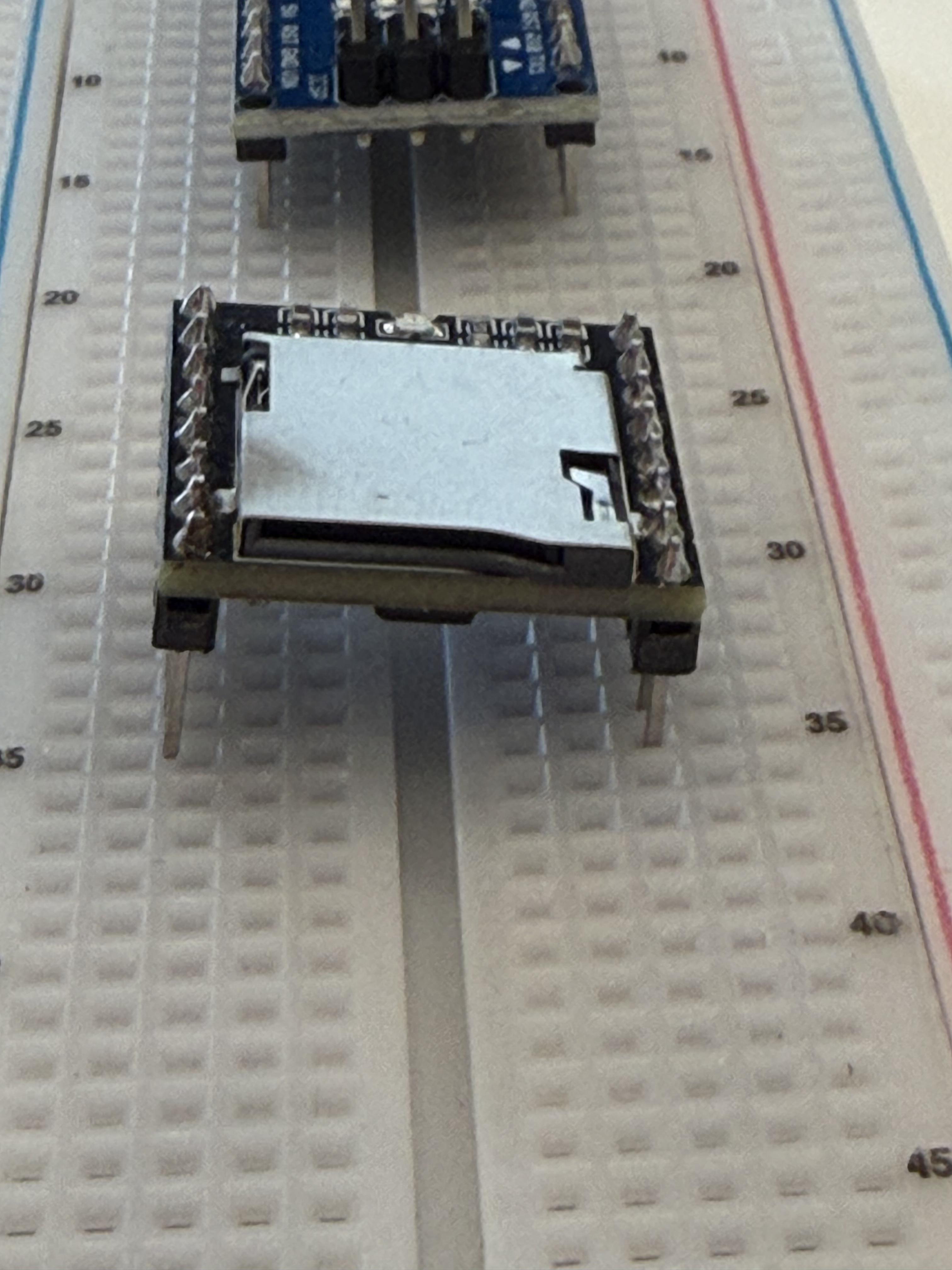
Hardware Help DFPlayer Mini MP3 module not fitting in breadboard
17
Upvotes
r/arduino • u/Supermanass • 7d ago
r/arduino • u/Left_Refrigerator810 • 8d ago
This is my first project, i am excited to see what i can make in the future.
r/arduino • u/chungi-plhi-rooti • 7d ago
I'm building a simple temp/humidity/PM2.5 sensor that reports these stats periodically to my home server with maybe a small screen to display those numbers. I'm using a wemos D1 mini.
My question is how do you guys normally power small projects like these. I'm thinking of using a simple usb phone charger to power the device. Are there any pros and cons? is there a right way of doing this that I'm missing?
r/arduino • u/Ok-Twist3674 • 7d ago

I'm trying to upload my project to my ESP32-C3 SuperMini, but I keep getting this error. My Windows account was originally created with the name "Dari M", but Arduino no longer recognizes it correctly and only detects "Dari", without the "M". How can I fix this problem without changing my Windows account?
Can someoane help me pls?
r/arduino • u/Queasy_Cell_2435 • 8d ago
Okay hear me out, I had this weird hardware idea stuck in my head. Honestly, my electronics skills pretty much stop at making an LED blink, so I definitely can't build this myself. I'm throwing it out here to see if anyone is crazy enough to try—or tell me if this could actually work.
What if instead of a normal screen, you built a 16x16 grid (256 "pixels") out of super thin nichrome wires standing up like a tiny forest (or tiny SMD resistors on a board), painted them matte black so they don't reflect heat like a mirror, and played DOOM by looking at them through thermal goggles?
Here's how I imagine it working (in my non-engineer brain):
Since nichrome wire actually has resistance—unlike copper which would just short-circuit and melt everything—and thin wires or tiny resistors barely hold any heat, pulsing power through them with an ESP32 and some driver chips should heat them up almost instantly.
And for cooling—since thermal cameras are crazy sensitive anyway, you wouldn't need to get the pixels super hot. Just bumping a pixel 3–5°C above room temp is enough for it to glow bright white on a thermal sensor. Put a decent fan underneath blowing air straight through the grid, and a 4°C drop should happen fast enough to avoid awful ghosting at a low frame rate.
Even at 16x16, a basic DOOM-style raycaster could use heat as depth. Far walls = barely warm (dark purple), close enemies or shotgun blasts = hotter (bright yellow/white). Plus, you'd literally feel the heat radiating off the board when an imp gets right in your face.
I know wiring up 256 heaters in a grid without turning the whole thing into a toaster is a headache, and it's way above my "blinking an LED" pay grade. Has anyone ever seen a "thermal display" like this, or does anyone want to take a stab at it?
I work at a college store, and we offer a custom kit/bundle of parts made up of about 24 different things (including an Arduino Uno R3) that are used in an Arduino course for students to purchase. I am struggling to find a good storage solution to assemble the bundle in (such as a tackle box or divided organizer box for other crafts) that is compact, low-cost, fits everything within, and is nice to decent looking.
Does anyone have an idea for what I could explore using?
For clarity, the kit contains the following items.
• Arduino UNO R3
• Red LEDs
• 7-Segment LEDs, com cathode
• 560Ω resistor
• 1k Ω resistor
• 10kΩ resistor
• 4.7kΩ resistor
• 100 nF ceramic capacitor
• 1N4004 diode
• BC548 transistor
• TIP120 Darlington transistor
• 4 Pin DIP Tactile Switch 6x6mm Momentary Push Button Switch
• 4 X 4 hex (numeric) keypad with ribbon cable
• SG90 servo motor
• 3V DC motor
• 28BYJ-48 stepper motor + controller board
• TDK P120 piezo buzzer
• TMP36 temperature sensor
• 74HC595 shift register (16-pin DIP)
• 24LC512 EEPROM (8-pin DIP)
• MCP4152 digital rheostat (potentiometer) - Microchip Technology (8-pin DIP)
• 74LS73 Dual JK Flip-Flop with asynchronous clear (14-pin DIP)
• 10 kΩ Potentiometer (trimpot)
• 1568-1511-ND Male-to-Female ribbon cable
r/arduino • u/AlfansosRevenge • 7d ago
I'm working on a project built around the Elecrow 5.79 in CrowPanel e-paper display, and I'm looking into ways to create graphics. I've seen a variety of graphics libraries online, but I'm unfamiliar with their ease-of-us and what the community has had good experiences with. Many of the libraries have basic draw functions for simple shapes and text, but I'd like to work my way up to more professional looking UI. I've been experimenting with LVGL which seems to have way more functionality than I need, and its documentation leaves a lot to be desired. Are there good middle grounds between the most basic libraries and LVGL? Is LVGL worth using?
One key point that I'm considering is that my hardware uses two SSD1683 driver chips that each control half of the display. Whatever solution I end up using needs to support the SSD1683 and ideally provide convenient ways to split the draw buffer up between them. Elecrow does provide driver code in their examples, so I can also hook up their driver with a graphics library, but their driver documentation is virtually non-existent, so an out-the-box solution would be super helpful.
Also, I don't want to use AI at all for this project, so please don't recommend that approach.
Thanks!
r/arduino • u/OkProperty41 • 8d ago
Look-what-I-made post. The video is the real board on my desk, about 12 seconds: add a mission from my phone, see it land on the screen, then press BOOT to pass or hold BOOT to fail. How it works:- The ESP32 starts its own Wi-Fi network and serves a simple mission form to whatever phone joins it. I fill in a name, an objective, and a reward, then add it to the queue. Nothing is installed on the phone, and nothing is talking to a server on the internet.
I built it because I wanted chores staring at me from the desk, with a physical “done” button, instead of another checklist in my pocket. Happy to answer questions about the AP/web-app side, the display, or the button handling. If you want a pin list or a sketch outline, ask and I’ll write it up in the thread.
r/arduino • u/Extension-Big-4305 • 8d ago

I've Built a WiFi-enabled countdown timer using ESP8266 or Esp12F module, SH1106 OLED display, EEPROM, NTP time sync, and a custom web-based WiFi setup portal.
Features include automatic countdown recovery after power loss, real-time clock display.
Configurable timer with button controls
Alarm notification
Smartphone-based WiFi configuration.
I've been working with Arduino and electronics since 2019, and this is one of my embedded systems projects combining IoT, UI design, and reliable state recovery. 🚀🔧📟
r/arduino • u/timm422 • 8d ago
Hi everyone,
I've already had the chance to program an Arduino Uno R3 board, and I'd now like to buy a complete starter kit to tinker at home and practice for a graded lab exam at the end of the year.
I found two very comprehensive kits from ELEGOO (which I know is a reliable Arduino-compatible brand) that come with the exact same components (4-digit display, RFID reader, LCD screen, matrix keypad, motors, sensors, etc.), but with two different boards: the Elegoo Uno R3 and the Elegoo Mega 2560 R3.
Price and board size don't really matter to me, and I don't have any extra components on the side yet. I'm mainly looking to choose the best board for my learning style and future projects:
Here are the two kits I'm looking at so you can see the exact components included:
Thanks in advance for your advice!
r/arduino • u/No_Location_9481 • 8d ago
so we made a flood-watch device using and esp8266 and an aj-sr04m sensor.
Our issue is since the casing of the device is water tight (screwed in) I'm thinking of soldering the waterproof header to the board only issue is I haven't done this before and I'm only doing it cuz the jst connector (like the white part) is becoming loose.
so if anyone has an idea how or if this even possible (i think it is cuz there's like a box and a circle that looks like its for soldering on the board) pretty pls comment or reach out
r/arduino • u/Vratwork • 9d ago
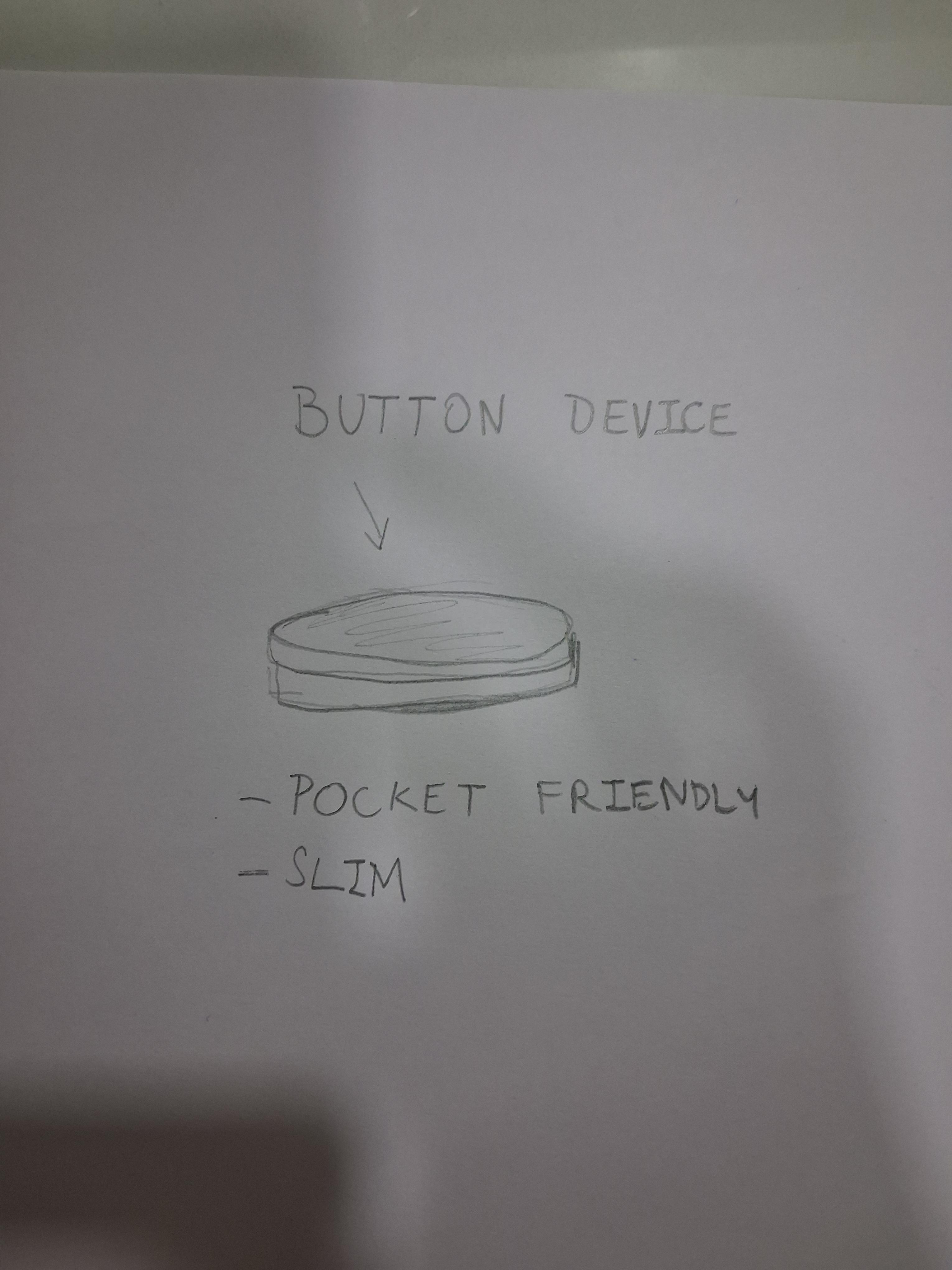
The idea: Two identical pocket-sized devices, each with one big, whimsical red button. When I press mine, the other one vibrates, and vice versa. It’s like the old Facebook “poke,” but physical. No text, call, audio or video, just a little haptic “I’m thinking of you” that you can feel in your pocket without taking your phone out.
Why not just buy one? Couples’ bracelets cost around $140, need Bluetooth pairing with a phone app, and we’re not bracelet people anyway.
My requirements:
One small, non-bulky device per person (no router, no hotspot add-ons)
No phone, no Bluetooth, no Wi-Fi
No recurring cost: no SIM or data pack, since we both already pay for phone data
Works wherever we usually are. We live within about 3-5 km of each other (both in Mumbai), but we work at different places, so it has to work at home, at work and on the move
What I’ve ruled out and why:
Wi-Fi + MQTT: only works near Wi-Fi
Bluetooth bracelets: need a phone
4G Cat-1 module (A7670/SIM7600) with a SIM: works anywhere, but needs a data plan per device and drains the battery fast
JioFi with a button: sealed firmware, no GPIO, and bulky
That leaves LoRa (865-867 MHz in India) as the best fit: no subscription, tiny, low power.
My plan:
Two ESP32 + SX1262 868 MHz boards (e.g. XIAO ESP32-S3 + Wio-SX1262, Heltec, or LilyGO)
Vibration motor (transistor driver or DRV2605L), a big arcade-style button, and a 500-800 mAh LiPo
Receiver sleeps and wakes about every second to check for a packet; sender uses a long preamble so it’s caught
Long-range settings (SF10-12) since the packet is tiny
Test with Meshtastic first to measure real range before writing code (RadioLib after that)
My questions:
Range: Is 3-7 km realistic in dense Mumbai with pocket-level, body-adjacent antennas? Or will I realistically get only 1-2 km?
Indoors and fixed nodes: A home node only helps at home, and we’re at different workplaces during the day. Can a pocket LoRa device reach 3-7 km indoors in concrete offices, or would I need a small fixed node at each workplace (which defeats the “one small device” goal)?
Existing mesh: Is there a Meshtastic community in Mumbai whose rooftop nodes could relay packets and make this more reliable? Is there a coverage map?
Missed nudges: Is store-and-forward (a nudge missed out of range gets delivered when we’re back in range) easy to do with Meshtastic or custom RadioLib code?
Battery: Does the wake-every-second approach realistically give several days on 500-800 mAh? Any better trick (e.g. channel activity detection)?
Antenna: What antenna works best in a tiny enclosure for the 865-867 MHz band? Any pitfalls with body detuning?
Legal: Any India-specific rules I should know (power limits, duty cycle) for license-free 865-867 MHz?
Prior art: Has anyone built a similar “poke” device with LoRa or Meshtastic? Links, schematics and lessons learned would be hugely appreciated.
Budget is around ₹5,000 for a two-board test setup. If the range works, I’ll design a small custom PCB and enclosure (I’m a UI/UX designer, so the whimsical shape and case are the fun part for me).
Thanks in advance for any advice!
r/arduino • u/Comfortable_Alps1389 • 9d ago
Just 8 bucks and tons of parts left over. I have no clue what else to get into any reccomendations?
r/arduino • u/Sad_Environment_3800 • 9d ago
Remember that GTA-style game I posted here a while ago? (Original post: https://www.reddit.com/r/arduino/s/Pa2YOUqijv) I've kept working on it since then, and it's finally getting close to done.
If you missed the first post: I'm making it with PixelRoot32, my own C++17 game engine for the ESP32.
It's grown a lot since that first version. You can drive around a city with 5 districts, steal cars, buy stuff, get chased by the police and take on missions. There's a day/night cycle, pedestrians, traffic lights, weapons and 4 radio stations, plus a bunch of smaller things.
There are 3 main missions so far, along with courier jobs and a small in-game economy. There's also a 5-star wanted system, so things get messy fast if you cause too much trouble.
Two new things since last time:
Sound: The engine now has a Famicom-style sound profile, and the game uses it. The radio and sound effects sound closer to an old NES cartridge, with fuller bass and punchier drums.
Saving: The game now remembers your progress between sessions. If you finish a mission and turn the ESP32 off, it picks up at the next one when you turn it back on. It also keeps your best delivery streak, the most cash you've ever had and your volume setting. Your cash and gear still reset each run, so you can't just farm money.
The display changed too. I started on a 240×240 screen, and the game now also runs on 320×240. That's the version in the video.
It still runs on a plain ESP32, now with 8 buttons. The two new ones work as Start and Select: Start changes the volume and Select shows your records.
The timing is kind of funny with GTA 6 finally coming out. Everyone's getting ready for the next GTA, and I've been trying to get my own little one running on a microcontroller.
If you want to look at the code: https://github.com/PixelRoot32-Game-Engine/PixelRoot32-Demo-Projects/tree/main/games/top_down_city
The README and ROADMAP cover the features and what's still planned.
More ESP32 demos made with PixelRoot32: https://github.com/PixelRoot32-Game-Engine/PixelRoot32-Demo-Projects
r/arduino • u/pumpypogsw • 8d ago
Im new to arduino, microcontroller in general, and ive made proects like led and led with a button.
But all the time when I watch those videos, I wonder, why does that wire go there? Im so confused, no tutorial has really helped me understand why the wire goes there. I find it so stupid just following the person in the video say, "That wire goes in this pin", and no explanation why. A.I hasnt helped.
So I was wondering if anyone could explain how to figure out wire placement. Thanks!
r/arduino • u/multimillionhare • 8d ago
I forgot my password. Is there a way to reset the password without reinstalling the OS?
r/arduino • u/LouisXMartin • 8d ago
Hello sub,
I'm looking for ideas to create a game to teach kids how to count to 10 by making simple additions: 3 + ? = 10.
I have a bunch of hardware, from push buttons to switch, screens, arduino (nano, uno, mini pro), screens, leds of all kinds and so on. The idea is to have something:
I want it to be visual, and will try to avoid using screen (mainly to save energy). I also already have some ideas in mind but I'm willing to see if anyone has a good project to propose.
Thank you!
r/arduino • u/TastyCollege9639 • 9d ago
If you use an ESP8266 (NodeMCU / D1 Mini / ESP-07S) for remote sensors in a yard, garage, or basement, two limits hit pretty quickly:
250 bytes (192 bytes usable after headers) and drops an entire multi-KB log or CSV batch if even one packet gets lost through a wall.80 KB of total SRAM (~22-40 KB free heap once the SDK boots), full TLS / BearSSL or big retransmission buffers eat almost all available memory.I built an open-source MIT library in zero-malloc, zero-float ANSI C99 called NLTP (now in the Arduino IDE Library Manager as NLTP and PlatformIO as indian-aman/NLTP) with an ultra-light sensor flag (-DNLTP_TX_ONLY=1) that shrinks sizeof(nltp_endpoint_t) to 4,760 bytes of static RAM while keeping:
ESP8266 <-> ESP32 ESP-NOW & Wi-Fi UDP: Automatically uses 192-byte shards (242-byte encrypted frames) on ESP8266 ESP-NOW v1 and interoperates seamlessly with ESP32 gateways and Python (pip install pynltp) receivers.GF(2^8) Cauchy FEC): Reconstructs 10-35% dropped RF frames mathematically on the receiver (3/3 SHA-256 verified on an 8 KB NodeMCU -> ESP32 bench sweep at 10%, 25%, and 35% packet loss, where raw ESP-NOW delivered 0/3).LZ4 compression: Compresses CSV/JSON telemetry 4x-7x before transmission (ESP8266_UltraLight_LZ4_Sensor.ino included in examples/).X25519 + ChaCha20-Poly1305 + 512-packet anti-replay: No BearSSL heap allocation and no hardware peer-slot limit, plus bidirectional confirmed popReflex() / sendReflex() control messages.On a clean 0%-loss desk link, unencrypted raw ESP-NOW is faster (2.55 Mbps raw vs 1.29 Mbps encrypted NLTP on 8 KB NodeMCU -> ESP32), so raw ESP-NOW is still great for tiny single-frame readings at short range. NLTP is specifically for multi-KB batches, encrypted links, and weak-signal spots where packets drop.
ESP8266 sketch & RF benchmarks): https://github.com/indian-aman/NLTP-Arduinodraft-bains-nltp-00): https://datatracker.ietf.org/doc/draft-bains-nltp/r/arduino • u/ripred3 • 9d ago

.
This is fascinating, especially from a security perspective. Has anyone played with esp-sdr much ? I just learned about it
r/arduino • u/monkeymalek • 9d ago
I am aware of the MQ-series gas sensors (this video summarizes several), but I haven't been able to find any that achieve the range / sensitivity i am looking for. Specifically for my application i am looking to get a sensor that can detect methane levels in the range of about 0 - 100 ppm with a sensitivity of at least 1 or 2 ppm per division. Does anyone know if something like this exists or can be built easily?
r/arduino • u/OkProperty41 • 9d ago
A GPS bike trip computer on an ESP32-DEVKITC, with a NEO-6M, a 2.8 inch ILI9341 TFT and a microSD reader. The firmware shows live speed as a dial, plus trip distance, top speed, altitude and satellites. It draws a breadcrumb trail on the screen and logs every second of the ride as a GPX file you can open in Google Earth. Pin map:
r/arduino • u/kup2050 • 9d ago
Tldr: Best beginner kit with teaching/ learning support for a tween? (I've been looking at Elecfreaks and Crafting Table; any feedback / reviews are appreciated)
Background: My son is 11 and has been into robotics since he was in preschool. He's built and competed with Vex robots, built lots of kits (Lego based robots, snap circuits, Crunch Labs "Hack packs", Kiwi Co, etc,). He's fairly good at Block-based coding with just a bit of exposure to text-based.
He asked for a microprocessor / circuit building kit for Christmas where he can also learn C++ or Python (we downloaded the Arduino IDE today along with some libraries). My son also specifically stated wants to use breadboards. We have a number of components around the house from various small projects I've started (but haven't finished) and I bought a Elegoo Uno kit a few years ago to play around with but I'm very much a beginner.
I majored in physics and math and I've taught basic circuits and programming as a teacher but my hands on hardware knowledge is lacking. I took one electronics / electrical engineering class in college where we had to build more complex circuits but ... It's been a long time.
Suggestions for the best way to learn that would engage an interested (but ADHD) kid or even a good YouTube series would be great.
r/arduino • u/giuseppe_calvia • 9d ago
Hi everyone!
I'm working on a project to build an electronic water pump control system for a scooter, using an Arduino Nano.
The goal is to replace the traditional way the water pump operates with a system that can gradually adjust its speed and therefore its coolant flow rate based on engine temperature, instead of having it run at full speed all the time when it's not necessary.
Before buying components and building the circuit, I'd like to get some advice from people with more experience to understand which solutions would work best and what potential issues I might run into.
My idea is to install a temperature sensor in the cooling system and use the Arduino to automatically control the pump.
Ideally, I'd like it to behave as follows:
The pump only has two power terminals and presumably has its own built-in motor control electronics.
Initially, I considered using an L298N motor driver, but I decided against it because of its voltage drop and poor efficiency.
I'm now considering using a MOSFET controlled by the Arduino, but I'm not sure which one to choose due to my limited experience with electronics.
I want to build a system that is functional, reliable, relatively inexpensive, and as energy-efficient as possible.
Another important requirement is that the control unit (the "brain" of the system) must be as small and compact as possible, since it will be installed on a scooter where space is limited.
I'd like to keep the electronics simple, minimize the number of components, and avoid bulky motor drivers or unnecessarily large circuit boards, while still ensuring reliability and safety.
Ideally, I'd like to use components available on Amazon or AliExpress and reuse as many of the parts I already own as possible.
The project is still in the planning and research stage, and I haven't performed any PWM tests on the pump yet.
Any advice, personal experience, circuit diagrams, or technical references would be greatly appreciated!
Thanks in advance to everyone willing to help!
r/arduino • u/Shimraa • 9d ago
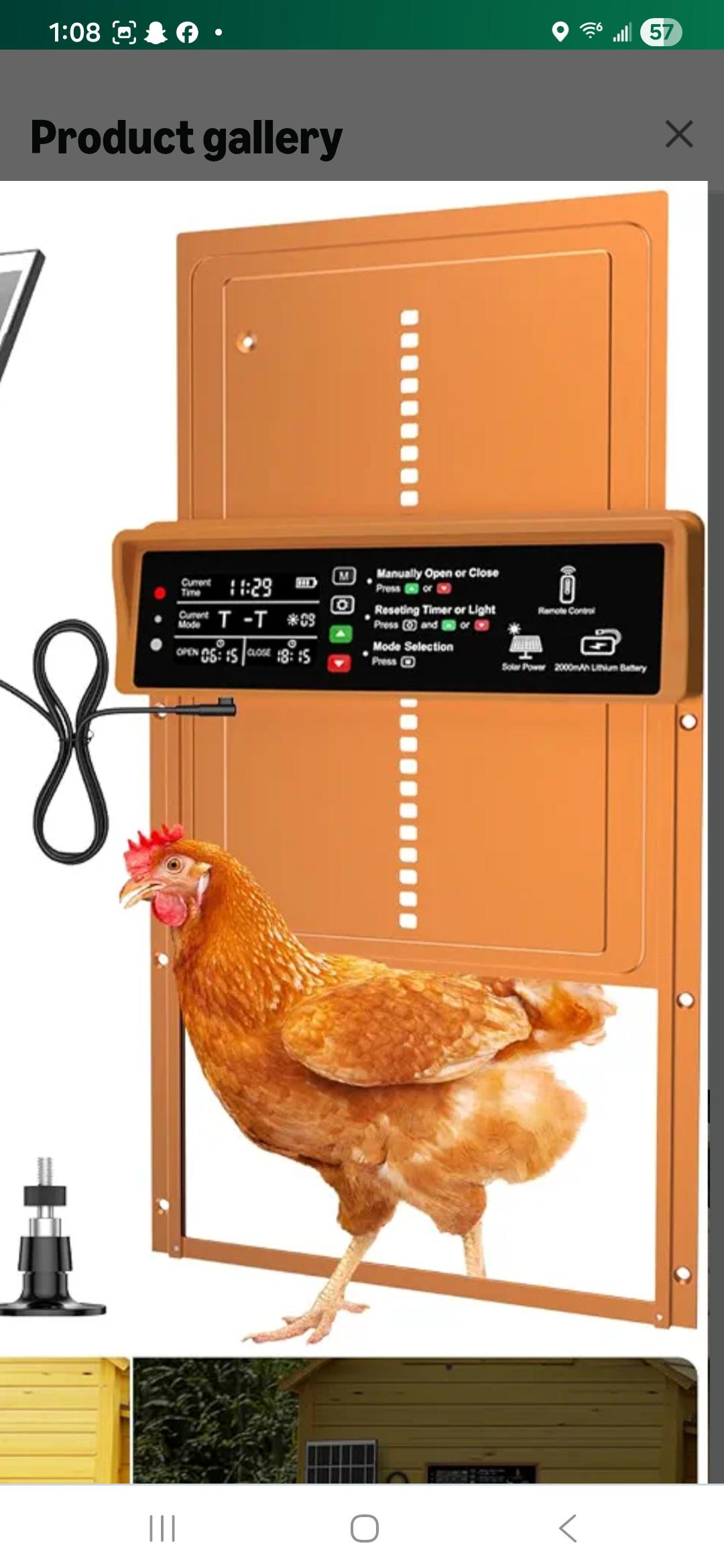
Ive been trying to find myself a web/app based cat door that I can open/close remotely. One that actually rises or opens/closes instead of just using magnetic locks on a flap. Just an actual opening door that I can open and close remotely when I'm outside of the house. I think a diy approach with an Arduino controlling a cheap retail door is the most viable option. Looking to see if this is actually possible or feasible.
Doors that have remote Internet based app controls that are branded for cats or dogs specifically seem to run in the $400-$1200 range. They also come with a wide array of bells and whistles that while nice are completely useless to my situation. Even the cheaper ones with websupport that use a magnetic flap lock and no add ons run at minimum $250-350.
The economic alternative seems to be to use an automatic chicken coop door. Those run around $50-$100 for non-web equipped ones, and $150-$250 for web equipped ones. Chicken coop doors however seem to be built from the ground up to make sure they run on timers, or light detection, which I don't need. Reveiws of the web-capable ones report generally terrible experiences with said web connections. They do however have excellent looking hardware that rises and drops for cheap.
So long context out of the way, I'm looking to take a rising chicken coop door, ripping out the controller and replacing it with an Arduino hooked up to the motor and adding a wifi dongle. I have the wiring and soldering tools from other led lighting projects I have a 3d printer for any custom shaped boxes, but I haven't done any Arduino projects before.
Is this something that can be done and won't cost me hundreds?
I guess I could also totally DIY it without trying to gut anything, but as a total novice I can't tell if that would be better or worse.
See picture for an example of the type of door im looking to gut.