r/computervision • • Sep 11 '26

Discussion CV & ML Space in Barcelona

8 Upvotes

Hi everyone! I'm planning to relocate to Barcelona and I'm hoping to get a sense of the CV/ML community in the area.

I'm mainly looking to get a feel for the Barcelona tech scene and connect with people in the field - so if you work in CV/ML/AI, know of interesting companies hiring, meetups, communities etc. or have any advice about making the move into Barcelona tech scene, id love to hear from you.

Tldr about me, I have a PhD in CV and my work to date mainly focuses on object detection, tracking and action classification.

Thanks 🙂


r/computervision • • Sep 11 '26

Showcase We built a synthetic dataset generator for computer vision

10 Upvotes

Hi everyone, I'm Goran, founder of syntheticAIdata. We've built a platform for generating labeled images for computer vision, and I've attached a short preview showing how it works.

You can select objects from our library or upload your own 3D models, then vary environments, camera angles, backgrounds, and distractors. The platform also includes real-world camera simulations and generates annotations automatically.

The idea is to help create training examples for conditions that would otherwise take time to capture and label. Datasets can be downloaded or sent directly to Edge Impulse.

The platform is free and available at https://app.syntheticaidata.com

I’m interested in technical feedback: which variations would matter most for your applications and what would you want to evaluate before adding synthetic images to your training data?


r/computervision • • Sep 12 '26

Help: Project Recall went 0.41 to 0.77 with no new labels. The bug was training on gate-approved labels only.

Post image
0 Upvotes

If you train a detector on a corpus that is only partially human-reviewed, check how you

select training labels. This one cost me months.

The pipeline auto-labels, then routes everything to human review. I built the trainset

from labels in accepted / auto_accepted state, which felt like the careful choice.

On the actual training frames, that was 7.6% of the objects present. The other 92.4% sat

in review, absent from the export, and were therefore taught to the model as background.

Coverage per class on those frames (labelled / actually present):

sedan 193 / 33,080 0.6%

rider 134 / 14,953 0.9%

traffic signal 158 / 11,064 1.4%

pedestrian 752 / 9,805 7.7%

motorcycle 2,752 / 17,952 15.3%

The fix was to train on every detection a human had not explicitly rejected, keeping only

"rejected" out, since that is the corpus's only genuine negative evidence. Same frames,

same session split, same backbone, same schedule. Labels went 10,053 to 116,618.

On the identical 1,831-frame validation set: micro recall 0.411 to 0.770, macro 0.282 to

0.623. rider 0.000 to 0.468, sedan 0.181 to 0.899, motorcycle 0.343 to 0.865.

Why I don't think this is just recall gaming: v2 emits 8.69 boxes per image against v1's

0.92, on a key holding 1.16, so neither recall nor precision settles it. Drawing the

predictions on held-out frames does. The extra boxes are real traffic the key is missing.

The implausible number was always v1's, since 0.92 objects per frame in Bangalore traffic

is nonsense when the training frames average about 18.

It also explains why a longer schedule and a larger backbone had both returned nothing.

Neither addresses a training signal asserting most of the traffic is absent.

Caveat: precision here is still unmeasurable without a complete key, and v2 is distilling

the previous auto-labeller, errors included. More human review is what turns "the boxes

look right" into a measurement.

Context, if useful: this came out of an annotation stack for Indian roads.

https://github.com/Sherin-SEF-AI/LabeloxAV (public, no licence on it yet)


r/computervision • • Sep 12 '26

Showcase JrsVision: A vision-based toolkit for scene understanding (action recognition for Virtual Humans, scene analysis etc.) in Unity

Post image
0 Upvotes

r/computervision • • Sep 11 '26

Help: Project Best approach for extracting metadata from scanned engineering drawings?

2 Upvotes

I have a large number of engineering drawings for different power plants, many of which are scanned PDFs. I need to extract metadata from the title blocks into structured data.

I've tried traditional OCR and a few LLM/VLM approaches, but accuracy isn't consistent enough, especially with older scans, rotated drawings, small text, and different title-block layouts.

Has anyone worked on something similar? What approach/models would you recommend for highly accurate extraction at scale?


r/computervision • • Sep 11 '26

Discussion Guidence Needed

2 Upvotes

Hello everyone!

I recently completed my learning journey in Classical Machine Learning and have trained several models on tabular datasets.

Moving forward, I want to dive into Computer Vision, particularly because I’m a Materials Science student interested in building a career at the intersection of AI/ML, Materials Informatics, and Computational Materials Science.

I’d really appreciate guidance from anyone working or learning in this area. What would be a good roadmap for learning Computer Vision from a materials science perspective, and what topics, resources, or projects would you recommend starting with?

Any advice or suggestions would be really helpful!


r/computervision • • Sep 11 '26

Discussion PhD: Computer Vision at Adelaide University or IIIT Hyderabad?

0 Upvotes

Which would be a better choice in terms of research experience and industry exposure?


r/computervision • • Sep 11 '26

Discussion Two approaches to 3D machine vision: sensing depth vs. inferring it

Thumbnail
automate.org
0 Upvotes

This article looks at the two main ways machines understand depth.

One approach uses LiDAR, radar, stereo, time-of-flight and other 3D sensors to measure distance directly. The other uses standard 2D cameras and neural networks to estimate 3D structure.

Caterpillar is used as an example of direct sensing and sensor redundancy in autonomous mining, while Tesla represents the camera-based inference approach.

The article breaks down where each method makes sense based on environment, cost, reliability and the consequences of getting depth wrong.


r/computervision • • Sep 10 '26

Showcase A Hitchhiker's Guide to the 3D Ecosystem

Post image
20 Upvotes

Hi, I’m Suva from Hugging Face and I work on the team around all things 3D!

A mesh, a point cloud and a Gaussian splat can depict the same object, but what each one stores is different.

A Hitchhiker's Guide to the 3D Ecosystem - Full Blog

I wrote a visual guide to 3D representations, covering meshes, point clouds, voxels, NeRFs and Gaussian splats, plus what changes when you add motion.

I tried to add some interactive examples that uses the same lamp throughout, so you can see how each representation works! The idea is to cover what the data looks like, how it gets rendered, and the tradeoffs for editing, storage and different applications.

I tried to keep it aimed at people getting into 3D vision who know the names but want to connect the dots. Would love to hear thoughts! Thank you for taking the time!


r/computervision • • Sep 11 '26

Research Publication ECCV Workshop Springer/Meteor Camera Ready Submissions

1 Upvotes

Hello everyone.

Earlier this week, I presented a workshop paper at ECCV 2026.

The workshop publishes its papers to the official ECCV workshop proceedings. I understand this process requires submission to Springer/Meteor. However, it is now approaching the end of the conference, and there has yet to be any emails from Springer/Meteor regarding my submission of the final version to be included in the workshop proceedings.

I want to ask if anyone else is having or have had this issue with late submission links to ECCV workshops? And what should I do now to ensure that the paper is published to the proceedings?

I'd appreciate any info on this. Thank you.


r/computervision • • Sep 11 '26

Help: Project Sequence Detection in PCB Soldering / Parts Assembly

1 Upvotes

Has anyone worked on the problem statement that requires keeping sequence of soldering or assembling of parts into consideration to see if the workers are working in correct manner.

If yes, did you rely on purely object detection/segmentation and frame counting to track the sequence or used motion tracking algorithms ?


r/computervision • • Sep 11 '26

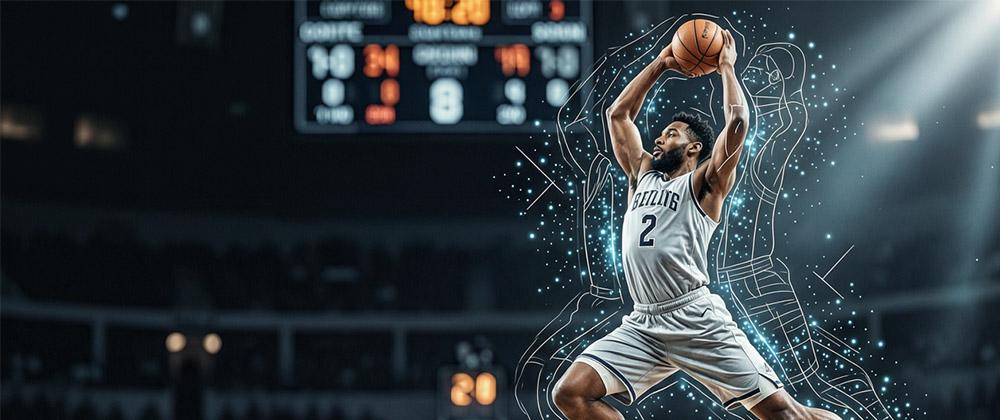
Help: Project We spent 2 years building sports AI vision. Here's what it actually sees (and what it doesn't).

Post image
0 Upvotes

I still remember the day our CV pipeline completely failed on a kids' basketball drill. The model was trained on adult players, and suddenly it was tracking a 10-year-old doing a layup. The skeleton keypoints jumped around like a bad Wi-Fi connection. We spent a week tweaking the person detector, only to realize the real issue was the temporal smoothing—kids move faster, stop more abruptly, and occlude themselves in ways adults don't. That was our first lesson: sports vision isn't just about detecting a person; it's about understanding the context of the movement.

Since then, we've built WIDK, a markerless, single-camera system that tracks athletes in basketball, martial arts, and fitness testing. No wearables, no multiple camera rigs, just a video feed and some serious computer vision. And after two years of deploying this in real training environments, I want to share what the system actually sees—and what it doesn't—because there's a lot of hype around "AI sports analysis" that doesn't match reality.

The pipeline: from pixels to actionable numbers

Here's the actual processing chain, step by step, and the engineering decisions we had to make at each stage.

  1. Video acquisition. We use a single camera, placed at a fixed position (usually 3-4 meters high, covering the training area). The key constraint here is frame rate—we need at least 30 fps to capture fast movements without motion blur, but higher frame rates mean more data to process. We settled on 60 fps for most scenarios, but for martial arts kicks or basketball jumps, we've had to upsample using interpolation. The trade-off is latency vs. accuracy. Real-time feedback requires low latency, but accurate keypoint detection benefits from more frames. We chose to run detection on every frame, but only do temporal modeling on a sliding window of 10 frames.
  2. Human detection. This is where you separate a person from the background. We use a lightweight object detector (YOLOv8-based) that runs at ~30 ms per frame. The challenge is occlusion—when athletes cross paths or when a kid stands behind a coach. Our detector handles partial occlusion by outputting bounding boxes with confidence scores, and we discard boxes below a threshold. But here's the catch: in a crowded gym, you might get false positives from reflections or posters. So we added a simple tracking algorithm (ByteTrack) to maintain identity across frames. If a bounding box disappears for more than 5 frames, we drop it. This isn't perfect, but it's a pragmatic trade-off.
  3. Skeleton keypoint extraction. Once we have a person, we need to map their joints. We use a top-down approach: crop the person, then run a keypoint detection network (similar to HRNet) that outputs 17 keypoints (nose, shoulders, elbows, wrists, hips, knees, ankles). The challenge is accuracy for small persons—when a kid is far from the camera, their joints are only a few pixels wide. We found that training on a diverse dataset of different body shapes and ages significantly improves robustness. But even then, keypoint jitter is a problem. We apply a Kalman filter to smooth the trajectories, but aggressive smoothing can lag behind sudden movements. So we tune the filter's process noise based on the activity type—more noise for basketball, less for static postures.
  4. Temporal modeling. This is where the magic happens. A single frame doesn't tell you if a jump is a layup or a free throw. We need to analyze the sequence of keypoints over time. We use a Temporal Convolutional Network (TCN) that takes a window of 30 frames (0.5 seconds at 60 fps) and outputs a classification of the movement type (e.g., "jump shot", "layup", "dribble", "defensive slide"). The TCN is lightweight enough to run in real-time on an edge device (we use an NVIDIA Jetson Orin). The trade-off here is window size: longer windows improve accuracy but increase latency. For real-time feedback, we use a 30-frame window, but for post-session analysis, we re-run the model with a 60-frame window for higher confidence.
  5. Metric extraction. Once we know the movement type, we can compute relevant metrics. For a jump shot, we measure the jump height (from keypoint displacement), the release angle (from the arm angle at the moment of release), and the time from jump to release. For a sprint, we measure stride length and frequency. For a push-up, we count reps and measure the depth of each rep. These metrics are computed using simple geometric formulas from the keypoints—no complex physics simulation needed. The key is to choose metrics that are meaningful for the sport and that are robust to noise. For instance, jump height is typically underestimated by monocular cameras due to perspective, so we apply a calibration factor based on the camera's height and angle.
  6. Report generation. Finally, we aggregate the metrics into a report that coaches can use. This isn't just a list of numbers; we show trends over time, compare an athlete's performance to their baseline, and flag potential issues (e.g., "left-right asymmetry in squat depth"). We also provide video snippets of key moments—like a missed layup—so the coach can visually verify the AI's analysis. The report is generated as a PDF or interactive dashboard, but we keep it simple: coaches want actionable insights, not data dumps.

What the AI actually understands

Let's be clear: the system doesn't "understand" the sport. It recognizes patterns in the data. It can tell you that a player's jump height decreased by 5 cm over the last 10 attempts, but it can't tell you why—maybe they're tired, maybe they're changing technique. That's where the coach comes in. The AI provides objective measurements that augment the coach's intuition.

We've seen coaches use this to adjust training loads, correct form errors, and even identify talent. For example, in basketball, the system can automatically count the number of successful layups in a drill, but it can also detect that a player is consistently landing on the same foot, which could lead to ankle injuries. That's a pattern that even experienced coaches might miss.

The industry is moving fast

We're not the only ones working on this. In fact, the academic and commercial landscape is buzzing with activity. A recent paper on "hybrid attention mechanisms for action recognition in competitive sports" (you can find it on arXiv) shows how attention models can improve accuracy in detecting fouls in real-time. That's exactly the kind of research we're building on.

On the commercial side, we're seeing more procurement requests for AI-based physical fitness testing. For instance, a recent university procurement notice explicitly requires "smart physical fitness testing equipment" that supports "AI visual recognition and automated measurement" for metrics like height, weight, and body composition. Similarly, a project for "student physical health testing and extracurricular exercise management" in another region mentions "smart devices" that can automatically collect and upload data. These are real signals that the market is moving toward AI-driven assessment, not just in professional sports but in education and fitness.

But here's the thing: most of these systems are still in their infancy. We've seen tenders that ask for unrealistically high accuracy levels without specifying the test conditions. The reality is that outdoor lighting, camera angles, and clothing can all affect performance. We've learned to set realistic expectations with our clients—we say "significantly improved" not "perfect."

What we've learned (the hard way)

Building this system taught us a few lessons:

- Don't overfit to one sport. We started with basketball, but quickly realized that the same pipeline could work for martial arts and fitness testing with minor tweaks. The key is to have a flexible action recognition module that can be retrained on new data.

- Real-time is hard. Coaches want instant feedback, but that requires edge computing and optimized models. We sacrificed some accuracy to achieve real-time inference on a cost-effective device.

- Data is king. We trained on thousands of hours of video, but we still see failures on unusual body types or extreme camera angles. We're constantly collecting more data.

Your turn

I'm curious to hear from coaches and developers: what are the biggest pain points in your current training assessment? Have you tried any AI-based tools? What worked and what didn't? Let's discuss in the comments—I'll answer technical questions about our pipeline, and I'm open to suggestions for improving our system.

If you're interested in trying WIDK for your basketball team or fitness program, DM me—we're looking for beta testers in China. But no pressure—I'd rather have an honest conversation than a sales pitch.


r/computervision • • Sep 10 '26

Commercial Physical AI Workshops and Meetups co-presented by Nebius and Voxe51 are coming to Germany

5 Upvotes

The Physical AI Workshop and Meetup roadshow co-presented by Nebius and Voxe51 is coming to Germany! Join us:

* Sept 22 - Stuttgart Workshop and Meetup

* Sept 23 - Munich Workshop and Meetup

* Sept 25 - Berlin Meetup

* Sept 26 - Berlin Workshop and Meetup


r/computervision • • Sep 11 '26

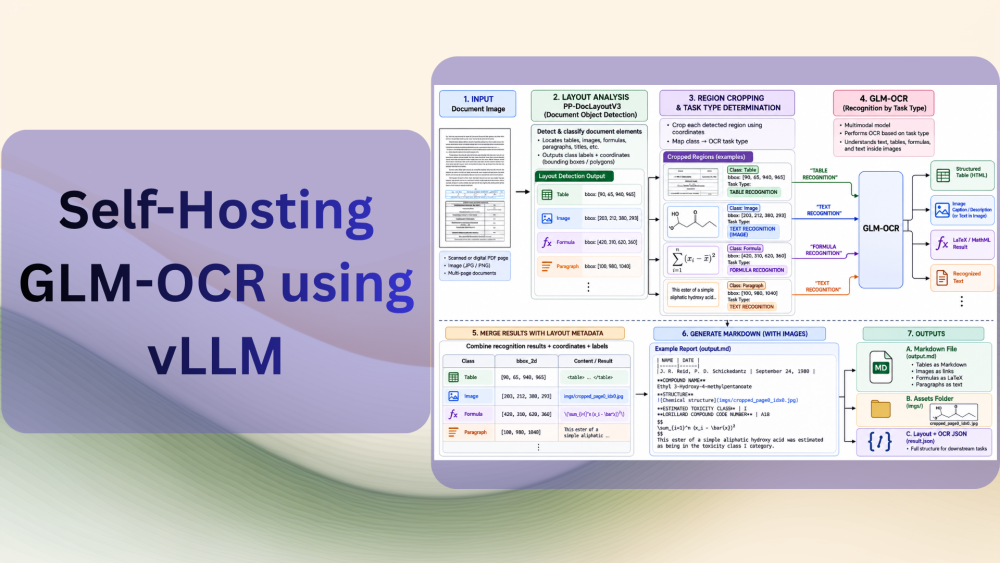
Showcase Self-Hosting GLM-OCR using vLLM – Document Layout and OCR

1 Upvotes

Self-Hosting GLM-OCR using vLLM – Document Layout and OCR

https://debuggercafe.com/self-hosting-glm-ocr-using-vllm-document-layout-and-ocr/4

In this article, we will be self-hosting GLM-OCR for local document processing. This article will focus on local deployment with vLLM.


r/computervision • • Sep 10 '26

Showcase Eye-tracking cursor from a plain webcam

22 Upvotes

r/computervision • • Sep 10 '26

Showcase A toolkit to Design and Generate Camera Trajectories Interactively!

Thumbnail
reddit.com
1 Upvotes

r/computervision • • Sep 10 '26

Help: Project Computer Vision Final Year Project — looking for feedback

1 Upvotes

Hey everyone,

I'm starting my final year of a Bachelor in Software Engineering, and my team of 3 is picking a Final Year Project. We have a full year, some budget, and want something genuinely hard, not a repackaged tutorial project, while still being realistically finishable in two semesters.

Background on me/team: I'm mainly a computer vision guy (detection, segmentation, OCR, tracking etc), with ML/DL fundamentals and some Arduino/embedded experience. I've deployed a few CV projects already, so we're not starting from zero.

What we want:

  • CV has to be the technical core (hardware/other software can be an add-on, not the centerpiece)
  • Real-world value — leaning toward environment, disaster response, agriculture/forestry, or generally underserved problems.
  • Ambitious enough that it's a strong story for both grad school applications and job/freelance recruiters, so it can make our resume stronger.

Would love to hear: what would you actually take seriously as an FYP vs. what sounds cool but is a trap? And if you've done a CV-heavy thesis/capstone yourself — what would you do differently in hindsight?


r/computervision • • Sep 10 '26

Help: Project How would you build a robust preprocessing + OCR pipeline for text on glossy and curved product packaging?

1 Upvotes

I'm building an OCR-based system for extracting printed information from photographs of packaged consumer products.

The input images are real smartphone photographs rather than controlled scans. Some of the difficult cases contain:

- glossy plastic/foil surfaces and specular reflections

- curved cylindrical containers

- perspective/rotation

- wrinkles and folds

- uneven lighting/shadows

- small text

- motion/defocus blur

- low contrast

- compression artifacts

I'm currently using PaddleOCR.

I've already experimented with conventional OpenCV preprocessing such as resizing, grayscale, CLAHE, thresholding, sharpening, denoising, morphological operations and perspective correction, but the results are inconsistent. Some images that are clearly readable to a human still produce poor OCR results.

I'm particularly interested in advice from people experienced with scene text recognition, document image processing, industrial/computer vision, or image restoration.

My main questions are:

  1. Which preprocessing techniques are actually useful for these types of images?
  2. How should I handle specular reflections and uneven illumination?
  3. How can text on curved/cylindrical surfaces be rectified before OCR?
  4. When should I use deblurring/super-resolution/image restoration, and when can these actually make OCR worse?
  5. Should preprocessing be selected dynamically based on image quality rather than applying one fixed pipeline?
  6. At what point is it better to improve/train the OCR model instead of continuing to improve preprocessing?

I'm happy to provide representative images and the corresponding PaddleOCR outputs if that helps.

I'd particularly appreciate suggestions for specific algorithms, papers, or existing open-source implementations rather than just generic preprocessing advice.


r/computervision • • Sep 10 '26

Discussion My near-duplicate check was measuring my augmentation, not my data: 0 duplicate pairs before the lens profile, 619 after

Post image
0 Upvotes

I render aerial crowd frames in UE5 and read the labels out of the engine's instance buffer: boxes, masks and a 13 joint skeleton per person, with a visibility flag per joint. The picture is one frame, 47 people, every joint drawn, with four crops magnified with nearest neighbour so nobody has to take my word for what a 40 pixel person looks like.

If you look for it: some human-shaped things in that square have no box. Those are statues, placed deliberately and labelled as nothing, so a detector has to learn the difference between a person and a person-shaped object rather than being taught that everything upright is one.

Before shipping a set I run a validator over it. Two of its checks are perceptual-hash based: near-duplicate images inside one split, and the same thing across the train/val line, which is leakage and matters more.

The symptom. One capture came back with 37 of 300 frames having a near-twin across the split, another with 17. My assumption was obvious and wrong: the crowd is placed once per run and stands still, so frames of the same place look alike. The obvious fix, re-scattering every person every frame, killed the editor twice, once with the GPU hung in the shadow pass and once out of video memory, so I did the next best thing and ran the capture three times under three seeds, three completely different crowd layouts, merged into one set.

The result: no change at all. Not "a small improvement". The near-duplicate count came back 55 and the cross-split count 17, the same two numbers as the single-seed run. Three different towns on the same streets moved neither.

The measurement that explained it. I hashed the raw renders: 300 frames, 44,850 pairs, zero within the validator's 4 bit radius. Then I hashed the exported images, which is what the validator actually reads, and got 619 pairs. The export applies a per-image lens profile: haze, dirty glass, rain on the lens, low sun. One pair is 36 bits apart as rendered and has an identical hash afterwards, under two different profiles.

Only 59 of the 619 pairs share the same profile, so this is not "the same augmentation twice". dHash compares an 8x9 grid of horizontal gradients, which is the low frequency structure of the image, and that is exactly what a heavy atmospheric profile flattens. Two unrelated streets under fog are two grey ramps.

What I changed. Deduplicate on the clean frames, not on the augmented ones. Then, for the frames that genuinely are near-twins, keep each cluster whole and give it entirely to one split instead of deleting anything: four packs went from cross-split leakage of 5 to 12 per cent down to zero, and their overall grade from around 71 to around 86.

What this data still is not. The bodies come from one commercial pack, so body-shape variety is narrower than a real crowd. From 30 to 45 metres a person is 30 to 50 pixels, and only 1.4 to 4.4 per cent of joints are labelled through an occluder, because looking down at a square is the easy case for occlusion, not the hard one. It is static: nobody moves within a frame, so there is no motion blur and no temporal signal.

The question I actually have. For anyone deduplicating a set that has been augmented: do you hash before augmentation, or use a learned embedding, or something else? Hashing after is clearly wrong and I only caught it because the numbers refused to move. I would rather not find out that hashing before has its own hole.


r/computervision • • Sep 10 '26

Discussion Spectral response

1 Upvotes

Hi everyone,

I'm curious what you use to do a spectral measurement of products for CV. Normally we order custom lights (UV, RGB, NIR etc.) based on customer data or external research.

I keep running into wanting to do this in-house more, especially for testing. What are your experiences or which (flash)lights do you use to test this? I can't really find a supplier that sells most bands except for some forensic equipment labs, not sure if those qualify.

Currently I'm considering building a few lights myself (just for testing purposes). Covering the following wavelengths: 365, 380–385, 390–395, 460, 470, 520–540, 590, 620–630, 660, 730, 850, 940

I've found these two: https://www.shop-schilbach.net/en/p/forensic-flashlight-set-all-wavelengths-schilbach and https://www.alibaba.com/product-detail/Portable-LED-Flashlights-with-Multi-Wavebands_1600916585534.html?spm=a2700.prosearch.normal_offer.d_image.5a1b67afaquOsp&priceId=68aab656d703457b959efea3e482f5b6

But I'm not sure about the first once as its a hefty price tag (Its a business expense so not that bad, but still). And other is from Alibaba, not sure if they're actually true to spec


r/computervision • • Sep 08 '26

Showcase I made a computer vision tool for comparing dancers’ sync!

575 Upvotes

As a dancer who's been learning a lot of choreography recently, I’m always looking to improve my sync with others. A quantitative tool like this can offer frame-by-frame analysis, which can help dancers as they practice.

I used ViTPose+ Large through the VLM Run Gateway for pose estimation, and compared poses between the dancers. The pose similarity metric could be workshopped more, but it's interesting that it still highlights key moments pretty well.

Yes, this is me dancing with my friends Mico and Sydney!

The code is open-source on GitHub! I just created this vision-demos repo so that I can share these projects. Feel free to try it out and let me know what you think! Link in the comments.

🎵: I Want You Back - *NSYNC

Choreography: Scott Forsyth


r/computervision • • Sep 10 '26

Showcase 10 months ago I posted our remote Jetson lab here. Here’s what people actually ended up using it for

0 Upvotes

About 10 months ago I posted here about something we were building because of a problem we kept running into ourselves.

We were buying Jetson boards before we really knew what our workload needed.

Nano turned out to be underpowered, so we moved up to an Orin. Then came the next question: do we need an Orin NX, an AGX Orin, or something even bigger? And before you even got to the model, you've spent time flashing JetPack, sorting dependencies, CUDA versions, etc.

So we built remote access to physical Jetson boards.

While initially people trickled in to check it out occasionally , recent experimentations have blown us about what experiments users are running in the lab and interestingly , it hasn't just been running YOLO.

Some of the things people have used the lab for:

comparing FP16 / FP32 / INT8 performance

measuring actual inference latency and FPS on Jetson

running the same model at 25W, 15W and 7W

watching GPU, CPU, memory, temperature and power while the model runs

testing DeepStream / GStreamer pipelines with multiple video streams

finding out how many camera feeds a board can realistically handle

checking whether a Python/CUDA/framework stack actually works properly on ARM64

taking a model developed on a workstation and seeing what happens when it finally hits the target hardware

One use case we found particularly interesting was a researcher running the same model across different power modes and precisions.

The question wasn't just:

"How fast is the model?"

It was more like:

What performance can I get while staying inside my power budget?

Another team had an even more basic problem.

They already had their CV pipeline.

They simply needed to know:

Will this software stack actually run on Jetson before we commit to the hardware?

That kind of test can save quite a bit of pain later.

We've also added JupyterLab now, which is what I'm showing in the attached video.

So you can basically go:

browser -> Jupyter notebook / terminal -> physical Jetson -> run your workload -> watch the device metrics

The board isn't being emulated and this isn't an x86 GPU VM pretending to be a Jetson. The workload is running on the actual Jetson hardware.

The goal isn't really to replace owning a Jetson.

If you're developing on one every day, you should probably own one.

The use case we're trying to solve is the stage before that:

I have a model / pipeline / idea. Before I spend money on hardware, what actually happens when I run it on the board?

That's also why I increasingly think TOPS is one of the least useful numbers when you're making the final hardware decision.

FPS, latency, memory, thermals, power draw and whether your stack even runs are usually much more useful.

If anyone here has a slightly unusual workload you think we should test, I'd genuinely like suggestions.

TensorRT, DeepStream, OCR, multi-camera CV, quantisation, small local models, power-constrained inference, whatever.

Would also be interested to know:

If someone gave you a Jetson Orin for 3 hours right now, what would you benchmark first?

https://edgeai.aiproff.ai

Full disclosure: this is a product my team at AiProff.ai built, and it has a tier based pricing for access. A 3-hour slot currently starts at ₹399 or $6 and all the experiments shared here are with user permission.


r/computervision • • Sep 10 '26

Help: Project Really need help with setting up paper baseline

0 Upvotes

hello , I just begin year 2 in IT , havent learnt ml or dl. I just go to lab as I want to do research

I'm currently try setting up mmla (imageomics/mmla · Hugging Face) and the problem is that I the prepare split code seems cant detect some sorts of data so I vibe some lines . The problem is that before touching the code the split got me about 67/33 , after changes it goes to 68.5/31.5 , the paper says that it use 58/42 but the code make it 70/30 , I notice that the dataset I downloaded from hugging face missing about just over 1000 images and I dont know why. The biggest problem is that after running that split (68.5/31.5) on both yolo 11 and 26, yolo 11 seems give better result than yolo 26 . It then gives me a reality check if Im doing smth wrong , I've been stucked for days.


r/computervision • • Sep 09 '26

Showcase I built a virtual clothing try-on app.

37 Upvotes

Recently, I have been doing experiments with virtual try-on technology and created this Flutter application. The core functionalities consist of choosing an item of clothing to see how it fits on a person without wearing the item. I recorded the demo on my iPhone.