r/computervision • • Sep 24 '26

Help: Project Help finding dataset

1 Upvotes

Hey guys, I am currently working on a project using yoloe 26, in which i am trying to build a pipeline to find the number of different screws available in the picture, with count of each. So as far I searched, I couldnt get a proper labelled dataset to train the yoloe model, and that too I am focusing mainly on tiny screws used in the electronics like smart phones, smart watches, watches, microphone, ear buds, laptops.

So help me if you find a labeled dataset for this vision.


r/computervision • • Sep 24 '26

Help: Project Student building an in-scene video ad pipeline, looking for someone with computer vision experience (or who knows someone)

1 Upvotes

I'm a student at Ohio Northern building a project that composites products into existing video scenes, basically AI-driven in-video product placement. I've gotten the core pipeline working on my own. It takes an uploaded video, runs scene analysis with a vision model, pulls a product image, and outputs a composited video.

Where I'm stuck is placement targeting. The composite currently renders as a flat 2D overlay in the corner of the frame instead of landing on the intended surface, like a TV screen, wall, or tabletop. I think the gap is in region detection. I need a reliable way to segment the target surface and pull corner points so I can apply a homography / perspective warp onto it.

Longer term I want to add 2.5D compositing (depth-based scaling, shadows, perspective skew from camera angle) and eventually motion tracking so placements hold across frames with a moving camera. Right now I'm limited to static-camera footage.

What I'm looking for:

  • Someone with computer vision, segmentation, or VFX/compositing experience who'd be down for a quick call or a few messages
  • Or anyone who knows someone like that and wouldn't mind connecting us

Not asking anyone to build it for me. I want to learn from someone who's done this and make sure I'm not heading down the wrong path. Happy to share more in DMs.

Appreciate anyone who takes the time.


r/computervision • • Sep 23 '26

Showcase Oct 1 - APAC AI, ML and Computer Vision Meetup

Post image
3 Upvotes

Join us on Oct 1 for the APAC timezone-friendly AI, ML and Computer Vision virtual Meetup! Register for the Zoom.

Talks will start at 6 PM Pacific:

  • Beyond Exact Matches: Detecting Modified 3D Assets at Marketplace Scale - Phani Harish Wajjala at Roblox
  • Sign Language: Towards Sign Understanding for Robot Autonomy - Nicky Zimmerman at National University of Singapore
  • MeMo: Memory as a Model - Arun Verma at Singapore-MIT Alliance for Research and Technology Centre

r/computervision • • Sep 23 '26

Commercial InstinctFlash: real-time 5B world-action model inference on Jetson Thor

0 Upvotes

We open-sourced InstinctFlash, an AGPL-3.0 serving runtime for VLA and world-action models.

Demo: https://youtu.be/nku65iyL5Fw

On Jetson Thor, we get about 1.2x to 7.9x speedups from runtime optimizations. For LingBot-VA, combining them with a distilled few-step scheduler reaches up to 33.78x. Across 50 RoboTwin2.0 tasks and 1,153 episodes per configuration, the 2 visual / 4 action-step setup achieved 90.5% success versus 92.1% for the 25 / 50-step baseline.

Code: https://github.com/General-Instinct/InstinctFlash

Benchmarks: https://general-instinct.com/blog/instinctflash-edge-inference

I’m one of the builders. Feedback on the benchmark methodology and missing vision-action model families would be very helpful.


r/computervision • • Sep 24 '26

Showcase I built a LeetCode-style platform for computer vision and ML. Just dropped lifetime sub to $25 and unlocked half the content for free

Post image
0 Upvotes

Hey all, I'm the founder of PixelBank, a hands-on platform for learning computer vision, ML and LLMs by actually writing code. I haven't posted here in a while, but I thought this update might be useful for students.

Two changes went live this week:

  1. 50% of every study plan is now free: No account tricks, no trial. 14 study plans (CV, ML, LLMs, NLP, Diffusion, VLMs, 3D Vision, RL, Agents, DSA, GPU/Triton, CUDA and more), and every one of them is now at least 50% free.

2. Lifetime Premium sub is now $25: One payment, no subscription. It covers everything that exists now and everything I add later.

3. A weekly Paper Club: Every week, one 45-minute call and one paper. A different member hosts each session and presents it, then we discuss and pick the next paper before anyone leaves. It's part of Premium and has its own exclusive Discord channel for premium members.

What's actually on the site:

- 1,185 coding problems you solve and test in the browser (581 of them free), from NumPy basics to writing GPU kernels

- Study plans with interactive visual demos, and most topics now end with related problems so you practise the idea right after reading it

- 35 paper breakdowns (ViT, SAM, DINO, BLIP-2, ...) with the original figures and results tables and new papers are added everyday

----------------------------------------------------------------------------------------------------------------------------------------------------------------

Why the price drop: Price was a real barrier for students before, especially outside the US, and I'd rather have more people learning on it than fewer people paying more.

Happy to answer questions, and I'd genuinely like feedback on what's missing or what's confusing. If there's a topic you'd want a study plan for, please tell me.


r/computervision • • Sep 23 '26

Showcase Open Source Real-Time Chess Assistant (C++ DirectX, OpenCV, ImGui and Stockfish)

3 Upvotes

I think the result turned out very good!

It's a real-time chess assistant that uses computer vision (OpenCV) to detect chessboard positions directly from your screen and suggests optimal moves instantly using the Stockfish engine. It has a menu built with ImGui and works on any chess website.

You can take a look at it here: https://github.com/rccmb/oracle

If you have any questions make sure to ask!


r/computervision • • Sep 22 '26

Showcase Penalty kick analysis running fully in the browser at ~30 fps with WebGPU

68 Upvotes

Built a small demo that watches a penalty clip and tells you what happened: it spots the kick from the shooter's pose, tracks the ball, marks where it ended up on the goal, and gives a rough speed estimate.

Two vision models run on every frame, object detection and pose estimation, together at around 30 fps on a laptop GPU. Everything runs on-device in the browser through WebGPU.

Inference is done with runntime, an open-source runtime for running vision, speech and text models via TypeGPU: https://github.com/software-mansion/runntime

The speed number is an estimate. It assumes the ball starts 11 m from the line and uses the ball's pixel size to tell when it reaches the goal, so treat it with a grain of salt :).


r/computervision • • Sep 23 '26

Discussion Anybody got their hands on the Evk-GenX320?

1 Upvotes

I am looking to buy it for a student team project debating between the EVK3 or the Raspberry pi starter kit. If theres anybody that has one of these 2 would they be willing to share their experiences and how much they cost?


r/computervision • • Sep 23 '26

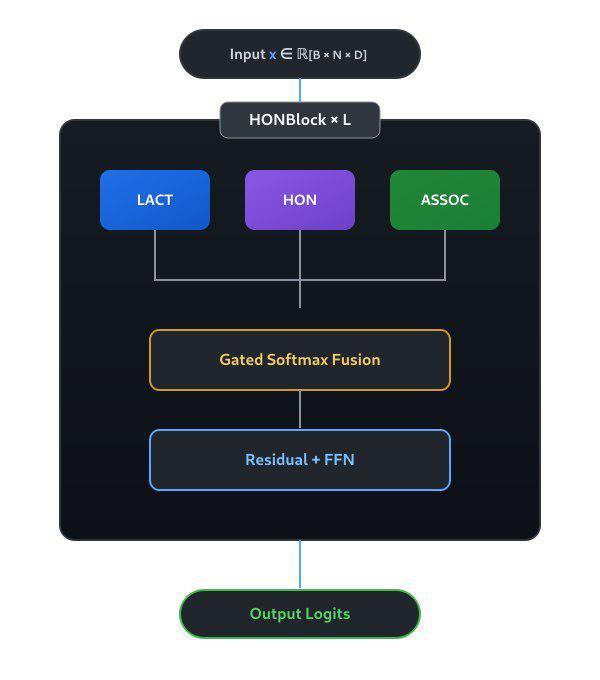
Discussion HON: A Harmonic Oscillator Network for Temporal Memory in Sequence Modeling

Post image
0 Upvotes

r/computervision • • Sep 22 '26

Showcase Update on my Unreal synthetic data generator: 7 scenes now, every box comes from the engine

Post image
25 Upvotes

A month ago I posted the first version here and got a lot of good feedback, mostly "more variety" and "check it against real data". So since then: a Paris street, Dubrovnik, Bologna, a ruined city, a snowy village, a school with ceiling cameras, and a street-level crowd. The clip is 120 frames with 4,063 boxes, all taken from the engine's ID buffer, nothing drawn by hand.

Still the same goal as before, getting a model trained on this to hold up on VisDrone and other real sets. It doesn't yet: on real drone footage the recall drops a lot compared to rendered frames, and the domain gap is the thing I'm working on.

What would you add next: more scenes, more people variety, or camera effects like compression and dirt on the lens?


r/computervision • • Sep 23 '26

Help: Project What edge device would you recommend for a real-time multi-camera 3D AI coach?

1 Upvotes

I’m working on a project to build a real-time AI football coach using multiple cameras and 3D motion analysis.

The pipeline will roughly be:

Multiple cameras → synchronization → detection → pose estimation → tracking → 3D reconstruction → performance analysis

I expect to run several models simultaneously (player/ball detection, pose, tracking, possibly Re-ID) with low latency.

I’m currently considering NVIDIA Jetson Orin NX / AGX Orin, but I’d like to hear from people who have built similar systems:

  • What edge device would you recommend for 3–4 cameras?
  • One powerful device or multiple smaller devices?
  • What are the biggest bottlenecks: GPU, RAM, camera I/O, bandwidth, synchronization, thermals, etc.?
  • How important is hardware camera synchronization for 3D reconstruction?

Any practical experience or things I should consider before choosing the hardware would be greatly appreciated.


r/computervision • • Sep 22 '26

Showcase Tracking a Football Match from One Tactical Camera

16 Upvotes

This experiment demonstrates player and ball tracking from a single tactical-camera recording of PSG vs Bayern.

The objective is to convert ordinary match footage into structured positional data that can support tactical analysis and automated reporting.

Video: https://youtube.com/watch?v=ruk5Y8RswmA

Portfolio: https://mehdihch.github.io/PortfolioMCH/

Open to Computer Vision and Sports AI collaborations. The underlying TactiVision code and model configurations remain proprietary.


r/computervision • • Sep 23 '26

Help: Project Facial Recognition

0 Upvotes

Has anyone attempted use GPT as a facial recognition tool or have it build an app to do it for your family pictures or whatever.


r/computervision • • Sep 22 '26

Showcase Desk pan-tilt tracker (Nim + ORT/OpenVINO + Nano). I debug on apples.

Post image
6 Upvotes

I had an old short “detect → center → follow” page up. Reworked the software; same repo URL.

Not a fruit product. Apples on the desk are just an easy moving target so I can see timing, aim degrees, and how two objects sit in a journal. One is active (followed). The other is watch. If something new walks in while I already have a primary, it stays watch — I don’t jump because the box got bigger.

Neck UI looks a bit like a turret. That’s skin. Underneath it’s the same kind of loop as my EdgeInfer eval build (ImGui, Out/trig, ORT + OpenVINO on CPU), plus journal, servos, optional OLED.

Repo / zip 0.9.0:

https://github.com/olesha-ai/pan-tilt-ai-tracker

EdgeInfer (vision-only, no neck):

https://github.com/olesha-ai/edgeinfer-eval

My desk: i5-11400, OpenVINO CPU, cheap USB cam ~30 fps. ROI is a few ms. Nano → PCA9685 @ 50 Hz → two MG996R. Smoothing on the PC; Nano just eats short serial packs. neck_com_port 0 = run without the neck.

Eval / teaching / poking at it — fine. Commercial production under that license — no. Details on the page.

Happy to answer if something in the zip or the journal behaviour is unclear.


r/computervision • • Sep 23 '26

Discussion What breaks when you ship a model to a fleet of edge devices

0 Upvotes

I've spent the last several years running AI inference on hardware in the physical world - GPU fleets in buildings I don't control, where a bad deploy means someone drives out to a site. This newsletter is notes from that: what actually breaks, and what I'd do differently.

Shipping a new model to a fleet of edge devices looks like a deployment problem you've already solved. It isn't. Every assumption that makes rolling updates safe in Kubernetes quietly breaks when the workload is a model and the target is a device in a building you don't control.

In the cluster, a rolling update is safe because the thing you're replacing is stateless, the readiness probe tells you the truth, and rollback is a control-plane operation that completes in seconds. At the edge, none of those hold. The device may be on a metered link. It may be asleep. The readiness probe will tell you the process started - which is not the same as the model being correct.

A model can be "healthy" and still wrong

This is the part that catches people. A container that starts and answers on its port is, for most services, working. A model that loads successfully and returns predictions at the expected rate can still be substantially worse than the one it replaced, and nothing in your standard health check will notice.

So health has to be defined in model terms before you ship anything:

  • Confidence distribution. If the new model's output confidence shifts noticeably against the previous model on the same device, something changed that you didn't intend.
  • Prediction rate per class. A detector that suddenly finds 30% fewer objects hasn't gotten faster. It's gotten blind.
  • Latency at the tail. p50 lies. A new model that's fine on average but blows p99 will fail exactly when the device is under load.
  • Thermal behavior. A heavier model raises sustained temperature, the device throttles, and throughput degrades hours after the rollout looked clean. This one is invisible in any test that runs for ten minutes.

Collect those on the device, for the old model, for at least a week before you plan to replace it. Without that baseline you have nothing to compare against, and "is the new model okay?" becomes a matter of opinion.

Choose canaries by diversity, not randomly

Random canary selection is a cloud habit that makes no sense here, because your devices are not identical. They differ in hardware revision, ambient temperature, network quality, and - most importantly - in what they actually see. Two devices running the same model on different inputs are running different workloads.

Pick canaries to span that variation deliberately: your oldest hardware revision, your hottest location, your worst network, and the site with the most unusual input conditions. Five deliberately chosen devices tell you more than fifty random ones, and cost less to roll back.

Then wait longer than feels necessary. Thermal problems and memory fragmentation surface over hours or days, not minutes. A canary stage that ends in twenty minutes is theatre.

Rollback has to be local and automatic

The single most important design decision: the device must be able to roll itself back without talking to you.

Anything that requires the fleet-management plane to notice a problem and push a fix assumes connectivity you don't have. The failure mode you care about is the one where the new model breaks and the device's link is flaky and it's Saturday.

That means keeping the previous model on the device - the whole artifact, not a pointer to a registry - and having an on-device supervisor that switches back when the new one fails defined checks. Disk is cheaper than a truck roll.

The checks that trigger an automatic revert should be blunt and unambiguous: the model fails to load, inference latency exceeds a hard ceiling, the process crashes more than N times in a window, or the device can't reach the health endpoint. Subtler quality regressions are a human decision - don't let a device revert itself because confidence dropped 3%.

Two things that save you later: make the revert idempotent, so a device that reboots mid-rollback lands somewhere sane, and make sure a reverted device reports that it reverted. Silent self-healing means you find out about a fleet-wide problem from a customer.

Version the whole bundle, not the weights

A model artifact alone is not a reproducible unit. What actually determines behavior is the model plus the runtime version, the preprocessing code, the input resolution, the batch configuration, and the compiled engine for that specific hardware and driver version. Change any one of those and you have a different system, even with identical weights.

So ship one versioned bundle containing all of it, and record on each device exactly which bundle it's running. When something misbehaves in the field three weeks from now, "which model is on that box?" needs a precise answer - including the fact that a TensorRT engine compiled for one JetPack version isn't valid on another.

What the rollout actually looks like

Stage 1: canaries, chosen for diversity, minimum 24–48 hours. Stage 2: roughly 10% of the fleet, spanning sites and hardware revisions, another day. Stage 3: the remainder, in batches sized so that a bad batch is survivable.

Between stages, compare against the baseline you collected earlier - not against your expectations. Devices that can't be reached simply stay on the old version; that's a feature, not a failure. And keep the previous bundle in place until the new one has been stable across a full weekly cycle, because weekend conditions are different from Tuesday conditions.

The shape of the problem

Cloud deployment optimizes for speed of rollout, because rollback is nearly free. Edge deployment optimizes for safety of rollback, because reaching the device is expensive and sometimes impossible. Once you invert that priority, most of the design follows.

I write more of these at practiceai.ai, running a live cohort on this in November if it's useful


r/computervision • • Sep 22 '26

Commercial Seeking senior computer vision architect for a paid diagnostic

1 Upvotes

We are looking for a senior practitioner to identify the simplest reliable solution to a real world object counting and tracking problem involving occlusion and changing conditions.

This is a short, paid diagnostic. We are not asking someone to implement a predetermined model. Relevant experience includes classical vision, multi object or multi camera tracking, depth or 3D perception, alternative sensing, edge deployment, and field evaluation.

Please message me with one comparable system you personally shipped, your role, and the hardest field failure you encountered.


r/computervision • • Sep 21 '26

Discussion New Roboflow Pricing: Free private data, weights download, and local inference

47 Upvotes

Hey all, I'm one of the co-founders of Roboflow. We just launched new pricing that brings many of our previously-paid features into our free tier.

The following things from our prior paid subscription are now available for free:

You just pay for consumption via the credits you use. On average, our free tier covers about 30 cloud training jobs, 10k Auto-Labeled images with SAM3, or 80k cloud inferences per month (but it depends on the size of your dataset and the models you're using).

We also launched new pricing for our Serverless API which is much cheaper and more predictable with automatically-applied volume discounts. We ran extensive benchmarks and our new Serverless pricing is cheaper than self-hosting for over 90% of our user-base (a blog post on the engineering behind the scenes that enables that is here for those interested) even before accounting for the fact that commercial model weights licensing is included when you deploy via our cloud but, depending on the model, may be required when self-hosting.

Note: while our Core functionality no longer has a monthly subscription required, there are also add-ons available for features like RBAC/SSO and Support, Enterprise functionality targeted at large companies and scaled manufacturing use-cases, and self-hosted commercial model-weights licensing for the models that require it.

Our mission is to democratize computer vision and we hope that this new pricing will enable every hacker, hobbyist, and startup to get started without any barriers to entry! We'll also continue to invest in the community with our open source projects like Inference, RF-DETR, Supervision, and Trackers. We hope you like it!


r/computervision • • Sep 22 '26

Help: Project Questions about building a YOLO-based AI system for package detection and counting in logistics

4 Upvotes

Hi everyone, I'm currently researching a project on "Building an AI system for detecting and counting packages" for logistics applications. I have a few technical questions and would love to get your insights:

- When watching demo videos of real-world AI camera systems in warehouses, I notice the video stream is incredibly smooth despite the system drawing multiple bounding boxes, ROI regions, and continuously calculating distances. In contrast, when I run a YOLO model to run inference on every single frame, my FPS drops significantly and the video lags. How do these production systems achieve such smooth performance?

- In real-world deployments, which aspect is generally more critical to prioritize: optimizing the AI software (models, algorithms) or upgrading the hardware (cameras, edge devices)?

-When training a YOLO model for this specific detection task, is it recommended to use publicly available datasets (like those on Roboflow) or is it strictly better to collect and annotate a custom dataset from scratch?

- I've noticed that in logistics, aside from counting packages, YOLO Pose is sometimes used to track worker behavior and movements. Is it feasible to combine these two models (object detection + pose estimation) to complement each other? My thought process is that the package counting model alone might sometimes undercount or miss items; could integrating the worker's movement/interaction data help reduce this error rate?


r/computervision • • Sep 22 '26

Discussion How bad is it if training and validation data overlap in a student ML project?

3 Upvotes

I’m working on a student machine learning/computer vision project and recently realized that my validation set was not completely independent from my training set.
The project is more focused on comparing different experimental conditions rather than maximizing benchmark performance, but I’m concerned about the implications of this oversight.
From a research or academic perspective:
How serious is train/validation overlap in a student project?
Does it invalidate the entire project or mainly affect the reliability of the reported performance numbers?
If the main goal is comparing different experimental setups under the same evaluation procedure, are those comparisons still useful?
If you discovered this late in the project timeline, what would be the most reasonable way to address it?
I’m trying to understand how researchers, reviewers, and professors would view this situation.


r/computervision • • Sep 22 '26

Help: Project Low resource OCR models

1 Upvotes

I am currently building an OCR system for multiple languages including english, french, chinese, and low resource south east asian languages like burmese, thai etc. My dataset comprise of ~1M legal, invoice and scientific reports and most of the open source models are throwing high cer/wer. Is there any pretained or finetuned model specifically for indic and south east asian scripts which might help?


r/computervision • • Sep 21 '26

Showcase Darts auto scoring with a single camera

12 Upvotes

DartsSpace is my tournament / darts software, already used by many people and organizers.

To enhance the experience about a year ago I started working on a solution that works with a single smartphone camera. Everything is running on device, corrections are sent to my backend for further training.

It's manual calibration free, and as you can see (this was the biggest pain point) it's resilient agains camera shake/wobble.

I think besides the training of the models (which took many! iterations) the general ux/ui and post-processing was important to get a good working product.

Currently beta testing this with a few of my users but feedback has been great so far.

Just was excited to share this with the community. (this is not an open source product)


r/computervision • • Sep 21 '26

Discussion I see a lot of recent posts playing with yolo- are you all buying commercial licenses or just experimenting?

32 Upvotes

I would love to know if you are actually paying for it or have settled on less restrictive model. It’s certainly the fastest but I can’t afford a commercial license. Any tips?


r/computervision • • Sep 21 '26

Help: Project Where to learn computer vision from someone with a deep learning purely theoretical background ?

8 Upvotes

I am from a CS and theoritical/academic deep learning background, but its purely theoritical i have no clue in practical implementations like Yolo or using pytorch to finetune a model and so.

So where do i actually learn that ? Any reference for a book, tutorial, online course, etc will be appreciated !