r/computervision • u/No_Refrigerator_2987 • 7d ago
Help: Theory Help
Hi everyone! I hope you're all doing well. Can I ask which AI tool you think is best for conducting research and writing the literature review for a thesis? Thank you in advance
r/computervision • u/No_Refrigerator_2987 • 7d ago
Hi everyone! I hope you're all doing well. Can I ask which AI tool you think is best for conducting research and writing the literature review for a thesis? Thank you in advance
r/computervision • u/TopExample1905 • 8d ago

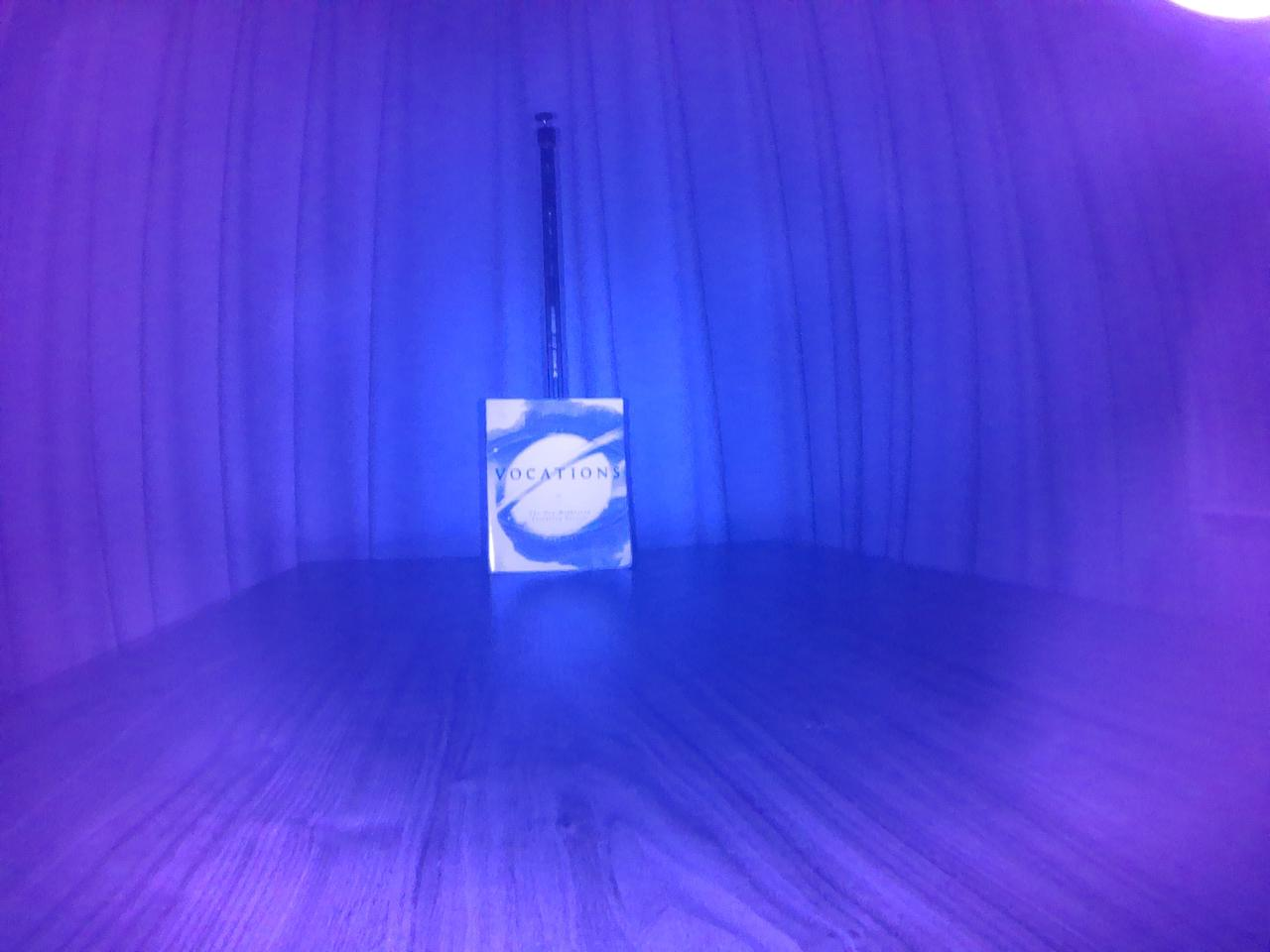
I’ve been trying to get an edge camera to tell me what’s visiting my bird feeder after dark. I ended up with a few camera boards and a DIY IR setup, so I pointed all five at the same indoor scene to see how much detail each one could pull out.
The pair I was most curious about was the MaixCAM 2 and Seeed reCamera Pro. Both use the SmartSens SC850SL, and their frames looked noticeably different. The Pro kept more visible texture and color in this particular scene. You can see it best by flipping between the last two shots in the gallery.


I blacked out the room with curtains and tape. A Testo 540 and a DELIXI DLX-1805 both displayed 0 lux, though I could still see a faint bit of light leaking around the curtains. That’s the lighting condition for these shots. I didn’t measure the light below what the meters displayed.
I used the same tripod position and aimed at the same objects. Each setup used its factory lens, highest image-quality mode, and stock auto exposure. The lenses have different fields of view, so the framing varies a bit. Only the Raspberry Pi + OV5647 rig had an 850 nm IR illuminator running. I put a lights-on phone photo first so you can see what the cameras were looking at.
Here are the samples from this shoot test.


reCamera 2002:

CamThink NE301

OV5647 + IR fill light

MaixCAM 2

reCamera Pro

I went in expecting the two SC850SL cameras to look fairly similar. With the stock settings, they didn’t. Between the factory lenses, auto exposure, gain, and ISP noise reduction, there are several things that could account for the difference. I didn’t match exposure or swap lenses, so all I can say from these frames is how the two complete setups behaved out of the box.
For the feeder project, the next thing I want to know is whether the extra visible detail actually helps the detector. This run was a still-image comparison. A moving animal adds motion blur, and a cleaner-looking frame doesn’t tell me how often the model will get the species right.
If you’ve tuned an 850 nm setup for a feeder or another close-range camera, what helped most with the hotspot? I’m curious how far people are placing the illuminator from the lens when the subject is close.
r/computervision • u/martincsweiss • 9d ago
I was tech chair for ICCV 2021, and had "root access" to the whole process, so I saw (and scrubbed) its barnacly underbelly.
The ICCV organization tried to combat fraud, plagiarism, and cheating, but it was not a fair fight. There were at that point no effective mechanisms for detecting and punishing authors who tried to gain an unfair advantage.
Academic ML needs better policies. And we need to get this right because society needs better ways to build consensus and seek truth.
I wrote this essay to share some meta-science analysis I did over the last few weeks on academic ML and a few policy ideas.
My hope is to engage in discussion about academic ML policy. I believe that the only way we make progress on this is to sample and refine ideas together. So I ask: what are the policies you'd like to see adopted by academic journals and conferences?
(I'm now a postdoc-entrepreneur at Mila with Hugo Larochelle and Chris Pal, working on meta-science, multi-agent games, and AI for science.)
r/computervision • u/FirstPrinciplesRobot • 7d ago
The core idea of VGGT (Visual Geometry Grounded Transformer; Wang, Chen, Karaev, Vedaldi, Rupprecht, Novotny, CVPR 2025), in text, for people who know the usual structure-from-motion pipeline but haven't read this paper:
The usual pipeline. Find the same features across photos, triangulate, then run bundle adjustment until the cameras and points agree. It is careful, and it is also a chain of steps: matching can fail on blank walls, shiny metal or repeating texture, and the solve can take a while.
The swap. VGGT is one feed-forward transformer that looks at the whole photo stack at once. That is the main difference from DUSt3R and MASt3R, which work on image pairs and then need a separate global-alignment cleanup (about 10 seconds a scene in the VGGT paper's telling). VGGT alternates frame-wise attention (within one photo) and global attention (across all photos) for 24 layers. Each frame carries one extra token that becomes the camera pose and intrinsics; the per-patch outputs become depth and a point map. Nobody wrote a triangulation step or a solver into the feed-forward path. It learned from seventeen collections of real and synthetic scenes where the cameras and geometry were already known.
Numbers, with context. The paper's main camera-pose test is RealEstate10K, held out of training, 10 random frames, AUC@30 (0–100), timed on one H100. A COLMAP+SuperPoint+SuperGlue baseline scores 45.2 in about 15 seconds. MASt3R scores 76.4 in about 9 seconds. Feed-forward VGGT scores 85.3 in about 0.2 seconds, about 45 times faster than MASt3R on that timing. If you then hand VGGT's guess to bundle adjustment as a starting point, the score goes to 93.5 in about 1.8 seconds. So the learned guess beats those baselines on this benchmark, and it is also a better place for the old math to start.
The fine print. "About a second" is for roughly 50 frames on a data-center GPU (about 1.04 seconds on one H100 in Table 9). 200 frames take about 8.75 seconds and 40.63 GB peak GPU memory on that same table — and those two figures are for the feature backbone only; each DPT head adds about 0.03 seconds and 0.2 GB per frame. Images are small, about 518 pixels on the long side (the Table 9 examples are 336×518). The output has shape, not true metric scale: it lives in the first camera's frame at a normalized scale. It does not support fisheye or panoramic cameras, it is worse under extreme rotations, and it fails on substantial non-rigid deformation. It is a fast first draft, not a survey.
For people who already run SfM: is a fast, scale-free first draft actually useful as a starting point for bundle adjustment, or is the missing metric scale the deal-breaker?
Paper: https://arxiv.org/abs/2503.11651 (arXiv:2503.11651, v1, Mar 14, 2025; arXiv non-exclusive distribution license). If you'd rather watch it, there's a 7-minute video version: https://youtu.be/CZngQrcpT4Y. Disclosure: it's our channel's video; narration and visuals made with AI tools; the script was researched and reviewed by the channel.
r/computervision • u/OliviaYii • 8d ago
Give an agent a few black-and-white drawings, access to Python, and an hour. Don’t explain the puzzle’s rules or tell it whether its guesses are correct. How far does it get?
That’s the setup behind Visual Cipher Bench, a new study from our research team at Einsia. It contains 40 original puzzles, and the best configuration tested reaches 26.7% accuracy.
One finding worth discussing: on a 10-task subset, stating the underlying mechanism raises pooled accuracy across three tested models from 12.2% to 51.1%. The hints give neither the answer nor intermediate states.
This points to a gap between discovering a rule from visual evidence and carrying it out once it’s known. I’d be interested in approaches that help agents generate and reject candidate rules using the clues already in an image.
r/computervision • u/tenkei_01 • 8d ago
I thought it would be interesting to see how Fable 5.2 would perform on some of the more traditional vision tasks. Considering its hefty price—an estimated $15.19 / 1,000 samples across the suite—I was expecting a lot:
Verdict: Mixed value
Definitely strong at detection, but there are cheaper alternatives that come close on several other tasks.
See the full results and cost comparison:
https://github.com/Tenkei/vlm-tasks/tree/main/benchmarks
r/computervision • u/SpectralAstraeus • 8d ago
I've been exploring Computer Vision, particularly Visual SLAM, 3D perception and reconstruction, through research oriented projects and open-source contributions (Open CV, Kornia and Apache Iceberg).
I'm looking to connect and collaborate with researchers, PhD students, postdocs or master's students working in these areas. I'd be interested in contributing to experiments, projects or ongoing research where my engineering background could be useful.
Also open to research guidance from people working in this space.
r/computervision • u/re_complex • 9d ago
project Iris is an experimental browser-based tool exploring how gaze-assisted communication can work using everyday consumer technology. The goal is simple but important: Can we make gaze-assisted communication accessible without specialized hardware?
High-end eye-tracking systems improve accuracy with dual-camera setups, higher frame rates, and infrared illumination. But the cost and logistical complexity of getting those devices into the hands of people who need them can create significant barriers to access.
While this project has evolved over the past 18-months, I recently dug up the original Python file that first made me believe in project iris. With only ~500 lines of code, it's pretty cool to look back and see just how far things have come.
I'm sharing an updated version of that file here in hopes that someone (or something**) might find it interesting and want to contribute or expand upon the project!**
A couple of ways to get involved:
Try the browser-based experience: https://www.projectiris.app/geoface
Explore the source code and experiment: https://github.com/racheleasen/iris_vision
This is an open-ended project, and there's plenty left to figure out.
r/computervision • u/kamesh_singh • 9d ago
I'm trying to build a golf ball tracking app similar to Shot Tracer and SmoothSwing. I've experimented with several open-source AI models, but I haven't been able to achieve reliable tracking accuracy.
The ball is tiny and moves very fast, making it difficult to track consistently across video frames.
I'm looking for advice from people experienced in computer vision, object tracking or ML:
I'm not looking for a basic YOLO implementation. I'd like to understand how to build a genuinely reliable tracking pipeline.
Any suggestions or experiences would be appreciated!
r/computervision • u/Savings_Durian3268 • 9d ago
Hi everyone,
I am working on a computer vision project for road damage detection using the RDD2022 dataset and YOLO (currently using YOLO11). I've hit a plateau with my baseline and suspect a few "bugs" in how the dataset is structured for deep learning. I am looking for advice on the highest-ROI optimization steps before I spend more GPU hours.
The Dataset (The "Bug"):
Current Results:
My Proposed Approaches (What should I prioritize?):
Question for the community:
If you had limited GPU hours (Colab/Kaggle), what sequence of experiments would you run to break past the 0.52 mAP50 plateau? Should I focus on the resolution, the model size, or the data processing first?
Thanks in advance for any insights!
r/computervision • u/FishermanResident349 • 8d ago
BlueprintML: https://github.com/AbhinandanMandal/BlueprintML
Discord: https://discord.gg/RR5XhNhH4
r/computervision • u/rgc4444 • 8d ago
Hi everyone,
I’ve been collecting upcoming technical webinars in a public events directory, and a few sessions may be useful to people working on industrial computer vision:
• November 24 — A3 / LMI Technologies: 2D and 3D vision for manufacturing and logistics, including robot guidance and inspection. This session is in Spanish.
• November 25 — Siemens / Procter & Gamble: visual inspection use cases and the progression toward more autonomous production.
• December 3 — COMSOL Day: AI for Modeling and Simulation, with sessions covering synthetic training data, surrogate models, and digital twins.
I’ve organized these alongside other robotics and industrial AI events, with dates, times, short descriptions, and links to the organizers’ pages:
https://www.blackscarab.ai/events/virtual
Disclosure: I run Black Scarab, the site hosting the directory. It’s free to browse and doesn’t require an account.
Which recurring computer vision seminars or practical online workshops would you recommend adding? I’m particularly interested in industrial inspection, anomaly detection, 3D vision, and deployment on real hardware.
r/computervision • u/Oli_Bear • 9d ago
I’m working on my thesis and am genuinely curious how other researchers keep up with new papers. How do you decide which ones to skim and which ones to read in full?
I’ve been using LLMs to work through papers. I can get the main ideas quickly, skip sections that are less relevant to my work, and ask follow-up questions when something doesn’t click. It feels like a one-on-one discussion, and I often come away feeling like I understand the material better.
Still, I wonder what I’m missing by reading fewer papers end to end. How do you balance covering more ground with reading deeply enough to really understand the work?
r/computervision • u/tunisiangurl • 9d ago
Hi /computervision!
I work at Tech To The Rescue. We're a nonprofit that matches tech companies with NGOs on pro bono AI projects, and we’re looking for a company team to take this one on.
IFPRI, the International Food Policy Research Institute, runs picture-based crop insurance for smallholder farmers in India and Kenya. Field photos are reviewed by hand today. IFPRI wants a model that detects crop damage and estimates its extent, built into its Indian partner’s claims workflow. The starting point is more than 70,000 labeled photos from over 9,000 farmers.
Only companies can apply, so if this fits what your team builds, bring it to your CTO or founder.
We announce the match publicly and publish a case study about it once the project is done. Companies apply at Matching Day on 3 December. Link in the comments.
r/computervision • u/santlame • 8d ago
OpenCV work inside WSL2 usually dies at capture: usbipd + a rebuilt kernel, then ~5 fps because raw YUY2 1080p is 4.15 MB/frame over USB 2.0.
hvcam takes the other route: capture stays on Windows (Media Foundation, MJPEG negotiated on-chip, ~0.2 MB/frame) and frames stream into WSL2 over Hyper-V sockets. In the guest you get numpy BGR arrays from a small C/Python library — a capture source for your pipeline, not a V4L2 device.
Media types are scored once before streaming (fps plateau first, MJPEG wins ties ≥720p), and the client always pulls the newest frame, so latency never queues. Measured: 1920×1080 @ 30 fps sustained, MJPEG decode 3.0 ms (PyTurboJPEG) vs 7.8 ms (cv2.imdecode).
MIT, ~2,900 lines of C/C++/Python: https://github.com/santleme/hvcam
r/computervision • u/Independent-Ad1984 • 8d ago
A colleague told me that people in Europe aren’t as interested in AI as folks in the US, and that this applies even to manufacturing professionals. Is that actually true?
I’m seeing conflicting data — some surveys say EU manufacturers actually adopt AI and big data at higher rates than US ones, but others say European firms are slower to integrate AI into core processes. What’s your real-world experience? Is the “Europe doesn’t care about AI” take just a stereotype?
r/computervision • u/New_Lab_8940 • 9d ago
What’s the best resource to understand and really understand computer vision from scratch?
We talk logic, basics, solid fundamentals and everything, with hands on projects.
Or is there a plan to start learning to achieve the goal of being a CV expert?
r/computervision • u/Safe-Escape197 • 9d ago
so ik there are way better vision models out there yaar. i built this one just out of curiosity only, cause i wanted to learn how these things actually work from inside.
and to be honest its not entirely mine, i took a lot of help from claude to build it. like the architecture, debugging, training setup, figuring out why my mac was training so slow, all that. but i learned a lot in the process which was the main goal anyway.
its called tiny-vision. its around 24M params and trained completely from scratch, no pretrained weights or anything. i trained it on my macbook pro m5 and it took like 42 min on flickr8k (only 6k images).
basic idea is pretty simple:
image/video → small ViT encoder → adapter → tiny decoder → caption textfor videos it takes frames every few seconds, captions them and makes a timeline like [00:04–00:10] a dog runs on the beach. so any llm can kinda “watch” a video even if it dont support video natively.
i also made an MCP server for it, and tbh i was surprised that it actually gives a little bit better context in claude when i throw images or videos at it. i even tested it with a 10-15 min youtube video and it still worked fine. not perfect at all, but chal raha hai so i’m happy.
i uploaded it to huggingface just to have it somewhere, and also cause i kinda like the open source thing. later when i checked it was at like 44 downloads, and now its 50+. ik thats not a lot bhai, but its my first time putting something open source out in this field so it felt pretty cool ngl. a lot of people have built way cooler stuff than this, i just made it to learn.
some honest stuff:
random thing i learned on mac (MPS):
next i want to train on flickr30k and maybe try making it plug directly into qwen/llama through llama.cpp (mmproj). lets see kitna ho pata hai.
code: https://github.com/amar683/tiny-vision
model: https://huggingface.co/amartomar683/tiny-vision-flickr8k
would love any feedback or tips,
r/computervision • u/tenkei_01 • 9d ago
Recently I benchmarked the Qwen3-VL-235B, and the result was very disappointing, as it showed only marginal improvements over the Qwen3-VL-2B.
The unusually high failure rate tipped me to investigate the results. Initially I suspected the benchmark or provider integration, but checking the saved responses were all pointing to the model direct output.
As Qwen3-VL-235B from our provider did not had a native json_schema, I had to use prompt to generate json_object in response, and surprisingly there were alarming amount of failures (For 100 samples per tasks):
| Task | Failed responses | Invalid JSON | Valid JSON, invalid schema or values | Main issue |
|---|---|---|---|---|
| Grounding (Box) | 53 | 47 | 6 | All coordinates placed under x1, often with a missing closing bracket |
| Grounding (Point) | 50 | 6 | 44 | Coordinate arrays under x, or an array replacing the point object |
| Detection | 26 | 14 | 12 | Malformed coordinate objects, wrong types and out-of-range values |
| Attributes | 5 | 0 | 5 | Values outside the provided vocabulary |
Classification, VQA and captioning had no invalid responses. Probably due to simpler task schema.
For example, instead of separate numeric x and y fields, one response was:
{"status": "found", "point": {"x": [0.55, 0.24]}}This goes beyond a missing bracket. Making the JSON parseable still leaves the wrong structure, and automatically assigning those array elements to different fields would mean interpreting the answer.
And just to be clear most of these failures weren’t caused by the token cap as almost all ended normally, and failed point responses used just 20–28 output tokens against a 4,096-token limit.
The practical approach was correction retries: send validation errors back to the model and let it regenerate, keeping the original schema. No ground-truth answers or scores are provided as feedback:
task = Ground(PydanticAIBackend(model, retries=2), target="the leftmost cat")
results = task('cat-garden.png')That allows up to two additional attempts after an invalid response. A fresh run on the same samples produced:
| Task | Metric | No retries | With retries |
|---|---|---|---|
| Classification | Top-1 Acc | 96% | 96% |
| Detection | F1@0.5 | 16.67% | 28.45% |
| Grounding (Box) | Acc@0.5 | 31% | 81% |
| Grounding (Point) | Point-in-box Acc | 41% | 85% |
| Attributes | Acc | 73.86% | 78.02% |
| VQA | VQA Acc | 68.4% | 64.9% |
| Captioning | ROUGE-L | 0.3841 | 0.3837 |
Failures remain included in the scores. The retry run had zero final invalid responses across 700 samples, but requests averaged 1.2 per sample overall, rising to 1.55 for box grounding and 1.47 for point grounding.
Probably moving to a provider that support json_schema at inference would be the best choice. Sure I can use PydanticAI json_schema but it is not constrained decoding. I did a test run and it helped but then it was not a clear win, but rather a trade-off:
Native JSON Schema was 10% cheaper overall, but 47% slower than the normal prompted run, with Detection driving most of the slowdown:
| Configuration | Input tokens / sample | Output tokens / sample | Requests / sample | Estimated cost / 1,000 samples | Mean latency (s) |
|---|---|---|---|---|---|
| Normal | 812 | 65 | 1 | $0.604 | 1.441 |
| Up to 2 retries | 1,058 | 80 | 1.196 | $0.775 | 1.812 |
| Native JSON Schema | 442 | 116 | 1 | $0.543 | 2.121 |
Compared with normal:
The detection difference was substantial:
| Detection | Normal | JSON Schema | Change |
|---|---|---|---|
| Output tokens / sample | 162 | 499 | +208% |
| Estimated cost / 1,000 samples | $1.169 | $1.728 | +48% |
| Mean latency (s) | 2.915 | 7.554 | +159% |
There’s clearly useful visual capability in Qwen3-VL-235B, particularly in grounding. But unreliable structured output can become a serious pain when you need usable results in an application: extra requests, validation logic, latency and cost.
If you are interested in comparison between variants of Qwen3-VL models, check [Revised] Qwen3-VL: 2B vs 235B on standard vision tasks, if you want a comparison between 2B and 235B.
Code, runs, benchmarks all available at https://github.com/Tenkei/vlm-tasks
r/computervision • u/Unsiloed-AI • 9d ago
We used Unsiloed AI to extract plate numbers from OpenALPR benchmark photos, returning the read and its image coordinates together. This GIF shows twelve selected examples and how a review UI can bring a lower-scoring crop forward.

The enlarged CJ8P4V read has a grounding score of 0.46 and an extraction score of 0.74. The bars in the graphic use grounding scores. The two scores answer different questions, whether the value is supported at that image location and confidence in the extracted value itself.
All twelve displayed plate strings match the collection's reference labels, including the low-scoring one. These are selected examples, rather than an accuracy or calibration benchmark. A low score can route a correct read for review too.
For a production review queue, we'd evaluate the threshold against whole-plate errors on a separate labeled set, then measure both missed errors and review volume. The source coordinates let the reviewer inspect the plate rather than search the full image.
r/computervision • u/23sebyi • 10d ago
Hey everyone!
I've recently started working on Inkray, an open-source image editor inspired by Adobe's Project Deep Brush.
The goal is to let users paint directly onto surfaces in ordinary photographs, or project arbitrary 2D artwork onto them, without requiring explicit surface selection or a traditional 3D reconstruction workflow.
I thought the computer vision side might be interesting to share.
The current pipeline works roughly as follows:
1. Monocular geometry estimation
I use MoGe-3 to estimate depth, surface normals, 3D points, and camera intrinsics from a single RGB image. The resulting point map is triangulated into a structured 2.5D mesh, with depth and normal consistency checks to reject triangles across likely geometric discontinuities.
2. Automatic surface anchoring
When the user starts painting, the application collects a connected local geometry patch and evaluates its planarity using a robust covariance-based plane fit.
Depending on the estimated geometry, it uses planar projection, curved-surface painting, or ordinary 2D painting when the geometry is unreliable.
3. Surface-aware brush propagation
For curved surfaces, I use the local surface metric to account for perspective distortion, together with bounded Dijkstra searches over the continuous mesh connectivity to approximate geodesic brush footprints.
This helps brush strokes follow the reconstructed surface rather than simply being painted in screen space.
4. Artwork projection
Users can also draw on a separate 2D canvas or import an image and project it onto the photograph.
For curved surfaces, the current implementation builds a local surface parameterization by propagating tangent frames across connected mesh vertices, with distortion checks to reject problematic mappings.
5. Appearance estimation and compositing
Marigold IID Lighting v1.1 estimates albedo, shading, and residual components. Since the shading predictions are up-to-scale, the pipeline applies a calibration step before using them for lighting-aware recoloring.
The original photograph is preserved as the base image, and the compositor modifies only painted regions.
Most of the interactive geometry processing and rendering currently runs in TypeScript/WebGL2, while model inference is handled by a Python backend.
Current limitations
This is still an early experiment, and there's quite a bit of room for improvement.
Right now, the geometry and appearance backend mostly uses pretrained predictions without additional geometry refinement or consistency optimization. Errors in the depth/normal estimates can propagate into surface classification, mesh connectivity, brush projection, and occlusion.
The local surface parameterization is also approximate, and I still need to evaluate its distortion and robustness more thoroughly.
I recorded a short demo of the current implementation and would be interested in hearing feedback, particularly on improving geometric consistency, surface-aware projection, and intrinsic decomposition for this kind of application.
r/computervision • u/ergin_malik • 9d ago
Hi all !
Long story short, I need a camera for capturing 3D and RGB images for my studies, including mostly animals in farm conditions. In the past, I used the RealSense D435i, but it needs an extra large connection cable (because the RealSense includes only 1 m of USB cable).
So,
Thanks
r/computervision • u/Subject_Release_7789 • 9d ago
I'm a corresponding author for a CVPR 2027 submission, and we've been receiving automated emails flagging several co-authors for incomplete OpenReview profiles or enrollment forms.
Some co-authors have already gone through every profile section, updated their information, and resubmitted their enrollment forms successfully. However, there's no clear indication of whether CVPR now considers them compliant.
I also noticed that the Reviewer Tasks console looks essentially identical for people who were flagged and those who weren't, so it doesn't seem useful for checking completion status.
Has anyone figured out:
With the deadline approaching, it's difficult to know whether there's anything left to fix.
r/computervision • u/hdw_coder • 9d ago
TL;DR: Digital image forensics means examining an image for clues about how it was created or modified, using metadata, compression artifacts, noise patterns, and other measurable properties. I've been investigating a problem in a multi-detector system: several detectors can react to the same underlying artifact, making the evidence appear stronger than it really is. How do you prevent correlated observations from being counted as independent evidence?
I've been developing a multi-signal, image forensics application and recently re-audited its reasoning engine workings.
One of the problems I encountered was that collecting more forensic observations could produce conclusions that appeared better supported than they actually were.
Consider how a real smartphone photograph after being resized and recompressed may cause several detectors to signal frequency-domain irregularities, noise inconsistencies, compression artifacts and unusual texture statistics.
Straightforward evidence aggregation could interpret these signals as four separate indications of synthetic generation. But they may also be the related consequences of the same processing operations mentioned. So, in this case, four measurements do not necessarily represent four independent pieces of evidence.
This problem became more concrete during a thorough evaluation of the implementation of the scoring mechanism. Some forensic findings were represented at multiple levels: individual detector artifacts, overlapping fragments and summary observations derived from those same measurements.
Although these representations were useful in investigating images, the reasoning engine could assign evidential credit to related observations more than once. This could affect base evidence weights, domain-level corroboration bonuses, and mechanism-level score contributions. We therefore revised the evidence aggregation to account for duplicated contributions and preserve the lineage between observations and their underlying measurements.
Interesting consequences became apparent during regression testing.
For a test image in our ‘Insta-fake’ dataset, the suspiciousness score remained unchanged at 20.4771 after numerical deduplication. The assessment still indicated localized editing with high-confidence. Its relevant contour and localization measurements retained their contributions. For a Midjourney test image, however, the score changed from 6.0375 → 5.4000, because redundant contributions had been removed. The assessment remained at medium-confidence, with an unverified generation declaration in its metadata.
Note, these were not calibrated probabilities and the test cases do not demonstrate improved classification accuracy. They were regression checks on the (scoring) behaviour of the reasoning engine. But as such they do highlight an important finding: deduplication should remove redundant evidential credit, not suppress genuinely distinct observations.
I also encountered a related issue with missing EXIF metadata being always interpreted as suspicious, other early findings too heavily influencing decision routes, and confidence assignments made across different components.
We enforced clearer evidence lineage, more explicit treatment of marginal corroboration and a centralized confidence policy. The revised scoring logic was checked against the existing regression suite with all tests passing.
Thus, I addressed identifiable engineering weaknesses but that does not solve the full statistical problem (structural dependence vs statistical dependence). Explicitly tracking shared evidence ancestry is not quite the same as learning the conditional dependence between forensic measurements.
At a certain point, the challenge becomes less about adding detectors and more about determining how much new information each observation actually contributes.
I'm interested in how others working on ensemble classification and forensic evidence fusion approach this problem. Some questions.
How do you handle conditionally dependent signals? Do you explicitly group correlated observations, learn their joint distribution, use probabilistic graphical models, or rely on calibration of the final ensemble?
And how do you distinguish genuine corroboration from multiple measurements of the same underlying phenomenon?