r/computervision • u/Professional_Mud4298 • 1d ago
Discussion Top tier conferences LLM pre-review
reddit.com
1
Upvotes
r/computervision • u/Mohamedrafik05 • 2d ago
Title: Looking for a Robust Person Re-Identification (Re-ID) Model for CCTV-Based Unique Person Counting
Hi everyone,
I'm currently working on a CCTV-based video analytics project where I need to identify and count unique individuals from a collection of person-detection image crops.
My requirement is to extract high-quality person embeddings from cropped images and use embedding similarity to identify whether two crops belong to the same individual.
I'm looking for a robust and accurate person re-identification (Person Re-ID) model that performs well under real-world CCTV conditions.
Challenges in my use case:
- Different camera angles and viewpoints.
- Changes in lighting and image quality.
- Partial occlusion and crowded environments.
- Different poses and walking directions.
- Similar clothing among different individuals.
- Low-resolution person crops.
- The same person appearing in multiple cameras.
What I'm looking for:
I've come across OSNet, FastReID, TransReID and other Re-ID approaches, but I'm not sure which would be the best choice for my use case.
My main objective: Given multiple person image crops from CCTV cameras, I want to extract embeddings and reliably determine whether they belong to the same individual, ultimately achieving accurate unique-person counting.
I would appreciate recommendations based on your practical experience, especially for real-world CCTV deployments.
Thanks in advance!
r/computervision • u/kendryte_k230 • 2d ago
In our previous post we used a video from Youtube to be our input feed. This time we brought the device to the street and conducted live testing.
We noticed while the car was stationary alongside the road, the video detected the vehicles, and marked them all as 0 km/h. slightly annoying if you look at the video. Could have improved the script to not track the stationary vehicles.
Next, we also noticed that motobikes are not tracked as vehicles. A speeding motobike in theory can also pose collision risk to jaywalker and so our script should also be able to recognise motobike as a vehicle. Instead, a little bug there the script almost thought a moving motobike is yet another jaywalker.
The speed of the moving vehicle is half-accurate. During our live testing the vehicles are moving as fast as 30-50km/h but the screen only stated as 20km/h.
The hit score is ok though. 😄 We don't want to see hit score of 1.
What else could we have improved? Comments/directions welcome!
p/s: Use pedestrian bridge wherever possible, don't jaywalk!
related post :
part 1: https://www.reddit.com/r/computervision/comments/1xliui4/a_project_to_identify_jaywalker/
part 3:
r/computervision • u/hamshrew • 2d ago

I'm the one who posted batch-1 detection numbers on a 4090 before, plus the TensorRT/CPU follow-up. This time I added a compare page. Pick 2 to 4 models and you get license, latency (with input size), VRAM, my measured AP next to the paper AP, and precision in one table. You can look at their results on the same 20 test photos side by side, or with a swipe view if you pick two. Where a model gets a photo wrong, I wrote down what it got wrong.
Same site, free solo project, no ads or sign-up.
Things I saw while comparing them myself:
&runtime=tensorrt. https://modelsthatrun.dev/compare/?m=yolo26:x,yolo12:x,yolov10:x&runtime=tensorrtSame limits as before: one 4090, batch 1, and input sizes are the official defaults, so when resolutions differ a warning shows under the table. The pass/fail calls on the 20 photos are mine.
Tell me which combos you'd want to compare and I'll fill in those numbers first.
r/computervision • u/No-Savings-7786 • 2d ago
Hello all,
So I am doing pothole detection system using dashcam.And I am facing few issues when I record those videos and upload them into my application for applying pothole detection analytics.Getting few false positives and few cases those are not detecting accurately,so. Could anyone share the insights to me which model is good according to my requirement and how we I can develop in order to make the perfect project on this pothole detection.
r/computervision • u/aungthuhein_dev • 2d ago

I've been working on PlantDoctor, a computer vision project for plant disease segmentation and severity estimation.
I experimented with 5 architectures: U-Net (ResNet34/50) and SegFormer (B0/B2/B4), using the PlantSeg dataset covering 116 plant diseases.
Best results — SegFormer-B4:
The goal is to go beyond disease classification by identifying affected leaf regions and estimating disease severity.
One interesting finding was the trade-off between segmentation performance and model size, especially when comparing SegFormer-B2 and B4.
Model: https://huggingface.co/aungthuhein-dev/plantdoctor-segformer-b4
I'd appreciate feedback from the computer vision community, particularly on improving segmentation quality, evaluating disease severity, and optimizing the model for mobile inference.
r/computervision • u/PotentialFirm7721 • 2d ago
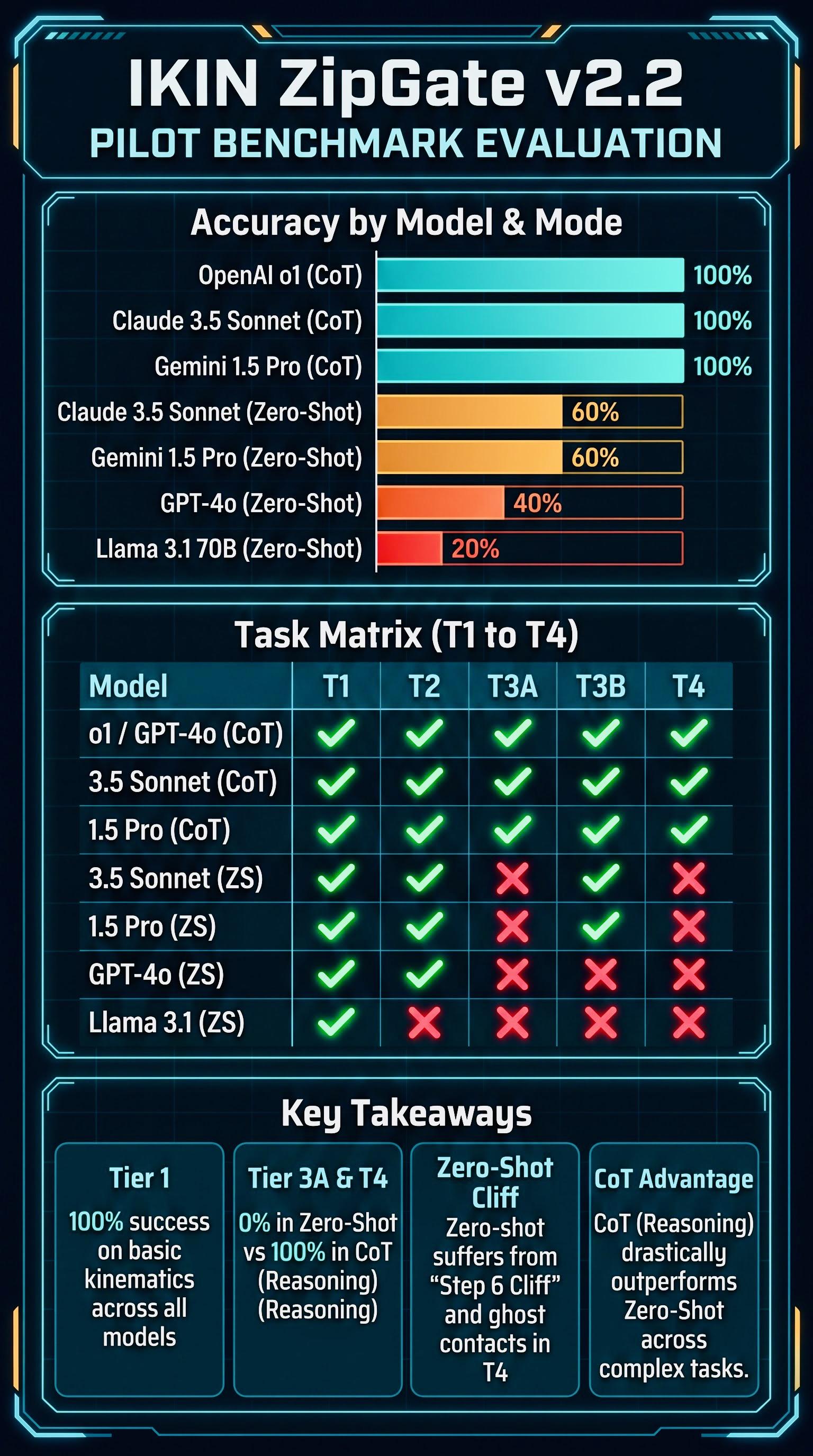
r/computervision • u/imeritdigital • 2d ago
Join us for an upcoming webinar on December 4 | 11 AM–12 PM PT, featuring Thomas Zheng Tang (NVIDIA) and Siddhartha Bal (iMerit), moderated by Brett Hallinan (iMerit).
Register here: https://imerit.ai/webinar-registration-petabytes-in-edge-cases-out-deciding-whats-actually-worth-labelling/
They'll discuss:
r/computervision • u/oliverbravery • 2d ago

I maintain PrintGuard, an open-source edge defect detector for 3D printers. My original dissertation model (a ShuffleNetV2 prototypical network) scored 0.937 F1 on public Kaggle/Roboflow sets, then collapsed to 0.183 PR-AUC on real user cameras once people started running it.
After collecting 9,385 opt-in frames across 114 real hubs, I built a strict hub-grouped benchmark (58 train, 26 val, 30 unseen Gold Test hubs, hub-clustered bootstrap) and ran a structured ablation sweep to rebuild the detector for CPU deployment. A few findings that stood out:
Full write-up with ablation charts, Obico methodology and references: https://oliverbravery.uk/blog/rebuilding-printguards-brain
Project repo (shipped ONNX + LiteRT models in 3.0): https://github.com/oliverbravery/PrintGuard
r/computervision • u/Thick-Living5697 • 3d ago
I'm working on a highway ITS project using a TCR300 80 GHz radar and an IP surveillance camera.
Our goal is to:
We have historical radar data and camera detection records, but our existing 145 manually paired samples are not sufficient for a reliable calibration. We are now exploring manual calibration, synchronized replay, and better matching methods.
Questions:
Any technical guidance or real-world experience would be greatly appreciated.
r/computervision • u/ninjawick • 3d ago
I'm trying to make it work with just 2 cameras and its trainable on most gpu over 20 gbvram. demo will be soon, but currently, im out of agent quota for this week to port it properly. i hope yall can give me some pointers.
r/computervision • u/Fragrant_Routine9299 • 2d ago
I’m building a browser-native spatial tagger on top of 3D Gaussian Splatting (Three.js + SparkJS, splats in Apartment.sog)and testing how cleanly we can isolate whole objects in 3D without modifying the underlying .sog scene.
What’s shown in this 14s clip:
ViewSnapshot) raycasts inside a 2D VLM bounding box and fits a PCA Oriented Bounding Box. Because of self-occlusion, the lime-green box only wraps the front patch of the throw blanket.matrixWorld and projectionMatrix) lets Gemini correlate the full Bed across angles while separately detecting adjacent items (Nightstand ×2, Ottoman, Area Rug, Armchair).How the 2D → 3D lifting currently works:
bboxNormalized using frozen camera matrices to build a coarse 3D search volume.world → view → clip → UV) and votes using camera view-axis depth plus peer-object surface proximity.+Y) OBB on accepted Gaussian centers and writes winning storage indices into an R8UI GPU mask texture.Where I’d love feedback on improving identification & box tightness:
.sog scenes, wide flat rug/floor ellipsoids whose centers sit near the base still leak in. Would projecting each Gaussian's 2D covariance ellipse footprint (requiring e.g. overlap, similar to GS-POOL's rendering-weight threshold)cleanly reject grazing rug/wall splats?r/computervision • u/tenkei_01 • 2d ago
r/computervision • u/mehdi-33 • 3d ago
Following up on my last post, where I showed the gimbal moving next to a see-through copy of itself. Since then I've redesigned it to carry a laser rangefinder, for the jobs that don't need thermal. Here's the same kind of clip with the new version, from a few more angles.
For some jobs it's more useful to know how far away the thing in the picture is. There's no room in a 67 mm ball for the rangefinder next to two cameras, so this is a second version of the ball: the rangefinder takes the thermal camera's place, and the thermal version stays.
The redesign is all inside the ball: a new seat for the module, a pocket for it in the front half, and a reworked board so the distance readings travel down the same USB line as the camera video. Nothing outside the ball changed, not even the flex PCB from my last post.
One thing I have no experience with is calibration. The rangefinder sits about 3 cm below the camera and won't be perfectly parallel to it after assembly, and one degree of error is almost 2 m at 100 m.
The setup:
It's still the CAD model, and the range is the seller's number until I've measured it.
The Google Form for updates is still open: https://forms.gle/2kaUHfGA5ie8oEbu6
r/computervision • u/FluxFur332 • 3d ago

Hi all,
I built an "uncanny eyes" painting whose eyes follow people around the room. Everything runs on a XIAO ESP32-S3 Sense (OV3660, 120° lens).
Running ESP-DL face detection on its own only got me about 2.5 fps, and it worked poorly at a distance and when people were moving. So I put a simple pre-processing pipeline in front of it (see diagram):
This brings it to around 5 fps and works much better at a distance and with movement. Of course it's nowhere near a proper camera and computer, but it's plenty for a painting that follows you with its eyes. The work is split across both cores with FreeRTOS, and an on-device web app streams the debug view.
The output drives two servos that move printed eyes behind the painting.
Video: https://youtu.be/vSbphjCgu3U
Code: https://github.com/fluxfur/uncannyeyes
(I used Claude Opus 5.5 for help with coding and debugging. The web interface was fully vibe-coded.)
Let me know what you think. It is impressive what small ESP32 boards can deliver (i am someone coming from 8bit arduino)
r/computervision • u/Significant_Neat_263 • 2d ago
This is the current "before" state of my golf-green reconstruction viewer
(smartphone video only, no LiDAR). I'm fixing the lighting next, so the
slopes are still hard to read from above, and the edge is still rough.
I'll post the same camera path again after the fix. If you have a minute:
can you tell which way the slopes run? Anything that looks unnatural?
r/computervision • u/Safe-Escape197 • 2d ago
hey, i built tiny-vision as a learning project (v0.1 here). people gave really good feedback so i worked on all of it and v1.0 is out. v0.1 is close to 100 downloads on huggingface and v1.0 got 70+ in 2 days, which honestly shocked me lol. its free, apache-2.0, no paid version or anything.
what it does: most LLMs cant open a video file. tiny-vision runs locally next to your LLM, splits the video into scenes, captions them, and hands your LLM a text breakdown with timestamps. then your LLM does the reasoning: "what happens in this video", "find the part where people are on the beach". nothing gets uploaded anywhere.
this is what your LLM actually gets:
video: trip.mp4 · 00:09 long · 3 scenes (3 shots) · avg scene 3s
recurring: dogs (2 scenes)

scene 1 [00:00–00:03] (3s)
  seen: a group of dogs running in a field. | three dogs running in a field with a bench in the background.
  keywords: dogs, running, field, bench
...
try it:
{"command": "uvx", "args": ["--from", "git+https://github.com/amar683/tiny-vision", "tiny-vision-mcp"]} tested in claude desktop + claude code. its standard local MCP so it should work in lm studio, cursor etc (havent tested those yet, tell me if it breaks). lm studio + a local model = fully offlinetiny-vision clip.mp4 --summary prints plain text, so you can pipe it into ollama or anything: tiny-vision clip.mp4 --summary | ollama run qwen2.5 "Summarize this video:"long videos: any length works. tested on a 17.5 min cricket video: it covered the whole thing in ~50 sec on my macbook (M5), about a minute on cpu only, and condensed it to 100 scenes so it doesnt flood your context. the MCP tool also sends progress updates so your app doesnt give up waiting.
how it works:
numbers (same 1000 COCO test images, same scorer, M5; cpu = one image at a time, greedy):
not saying its better than florence, its not. it just does a lot with very little. benchmark scripts are in the repo.
honest stuff:
code: https://github.com/amar683/tiny-vision
model: https://huggingface.co/amartomar683/tiny-vision
glama: https://glama.ai/mcp/servers/amar683/tiny-vision
what should i try next? still learning so all feedback welcome
last post - https://www.reddit.com/r/LLMDevs/s/uoRboZfP94
r/computervision • u/vaish_navi_b • 2d ago
Hey guys please suggest me some unique ideas that combines these two domain.
r/computervision • u/Repulsive-Dog-5326 • 2d ago
Hi all, I'd like some high-level advice from people who have built detectors for broadcast video.
The task: detect on-screen graphics in sports broadcasts. Different match events are shown as graphics on screen, for example the score and other in-match events.
The difficulty: every league and broadcaster has its own graphics design. The position, size, colours, fonts and layout all change. The same kind of graphic can be a big panel in one broadcast and a thin strip in another. New leagues with new designs keep coming in.
My questions:
Any experience, papers or pointers would be really appreciated. Thanks!
r/computervision • u/Old-Regular-7317 • 3d ago
My CVPR 2027 paper was desk rejected for exceeding the reciprocal-reviewer quota, but I don't understand why.
I have 2 submissions:
- Paper A has an eligible reciprocal reviewer.
- Paper B has no eligible reviewer and was desk rejected.
Paper B has 3 authors. Two of us are also on Paper A, and the third author is only on Paper B. None of us has any other CVPR 2027 submissions.
According to the policy, each author can be on at most one paper without an eligible reviewer, so we should be within the quota.
Has anyone experienced the same issue? Could this be a mistake?
r/computervision • u/Mental_Impression699 • 2d ago
Sharing a small open-source project I've been building, Alcyone-W — a self-supervised model (JEPA-style) that predicts the topology of a masked region instead of a learned embedding. Feedback very welcome, including the parts that don't work yet.
The idea. Standard JEPAs predict a learned latent for a hidden patch — powerful but opaque, and the target drifts with the encoder. Alcyone-W instead predicts an explicit, exactly-computed topological target: turn the input into a scalar terrain, flood it with a union-find watershed, and predict how many basins form in a hidden window, how long each persists, and how much each holds. The ground truth is computed, not learned — no EMA teacher, no collapse.
Setup. ~5.9M-param conv encoder + watershed head. Trained on CMS Open Data (particle-physics events, ~4M). A frozen Galactica-6.7B turns captions into fixed "land" channels (no LLM training).
What works:
Basin-count accuracy 0.945 on held-out events vs 0.572 for a majority-class baseline — the topological task it's built for, it does well.
What doesn't (reporting it openly):
I pre-registered three target metrics and only hit 1 of 3. On borrowed downstream tasks (jet multiplicity, dimuon mass) a plain kinematics MLP beats it. Topological pretraining didn't transfer to pointwise regression.
Extras for the curious: the core hydraulics are formally verified in Lean 4 (no sorry) with Haskell/QuickCheck mirrors, so the targets are provably correct.
Links:
Model + card: huggingface.co/teerthsharma/Alcyone-W
GitHub ; https://github.com/teerthsharma/Alcyone-W
Logs and stuff available trained on 2rtx6000
Genuinely after feedback: (1) is "predict an exact topological invariant" a direction worth pushing for SSL, or a known dead end? (2) better downstream tasks where shape/connectivity should beat kinematics?
r/computervision • u/zoowad-moody • 3d ago
Big Cyberpunk 2077 fan here. I've been thinking about an idea I can't shake: living your everyday life as if you were inside a fictional universe.
You walk through your real city, but through a video passthrough headset it looks like Night City. Real buildings, shops and streets restyled with a cyberpunk aesthetic, while you still interact with real objects and real people. On top of that: an AI companion inspired by characters like Johnny Silverhand that sees and hears your surroundings and reacts to them, an adaptive soundtrack, and spatial audio blending real sounds with artificial ones. The universe is just my inspiration, the core idea is a generic "diegetic AR" layer that could support any world.
I know full real-time transformation isn't realistic on a standalone headset today, so I'm trying to figure out how close we can actually get. My current thinking:
Static elements (buildings, home, office, regular routes) would be scanned beforehand and restyled offline (for example LiDAR or photogrammetry, Gaussian Splatting, then AI-based texture restyling). At runtime the headset would only need to relocalize in the known map and render the prepared version.
Dynamic elements (people, cars, moved objects) would be handled live by a portable PC carried in a backpack (for example real-time segmentation plus pose estimation to "dress" people with 3D overlays rather than regenerating pixels), while the headset handles head pose reprojection locally to keep motion-to-photon latency low.
A realistic first prototype could be a single room at home, prepared offline and displayed on a Quest 3 in passthrough, with hands and people left untouched.
My questions for people with experience in XR, SLAM, rendering or wearables:
Is this static offline / dynamic live split viable, or is there a better architecture? How tight can relocalization realistically get indoors and outdoors? Is it possible today to stylize dynamic objects in real time without heavy flickering? Which headset gives usable access to raw camera feeds? And what do you see as the biggest blocker I'm missing?
I'm also aware of the privacy question (processing video of strangers in public) and would love to hear how others approach it.
About me: background in electronics, computer engineering and embedded systems, mostly system architecture and hardware/software integration. Many parts of this are outside my expertise, which is exactly why I'm asking. Any existing projects, papers or open-source work on even one piece of this would be super helpful. Not looking for collaborators right now, but definitely open to it later if the idea resonates with someone.
Thanks for reading!
r/computervision • u/Rayterex • 3d ago
r/computervision • u/AvvYaa • 4d ago

Video covers:
Project repo: https://github.com/avbiswas/computer_vision_recipes
Video: https://youtu.be/mPmdI-0ISx4