r/computervision • • 4h ago

Showcase Custom 3D SLAM pipeline

24 Upvotes

Just thought I'd share my final-year CompE project here. Had to build a first principles 3D SLAM hand-held rig so no OpenCV, Eigen, no libraries at all allowed (except UI of course). Ended up beating out cuVSLAM and ORB-SLAM3 on accuracy while getting 4.3ms/frame average on the Jetson Orin Nano, roughly an order of magnitude faster than ORB-SLAM3, and about 4 times faster than cuVSLAM while being 3 times more accurate (roughly). Pretty proud. Unfortunately cant publish the full code though.


r/computervision • • 4h ago

Showcase fotonet v2: 37.5 COCO AP, 6.41 GFLOPs, 2.69M parameters.

Thumbnail
gallery
7 Upvotes

Hello, its me again².

I have been working on fotonet v2 (Hi Bird) for a long time.
It is a hybrid architecture. And because of that latency is not as good as a pure CNN model.
Gets 37.5% COCO AP, 2.65 lower than yolo26n (NMS-free accuracy)
fotonet2n is NMS-free like all the other fotonet versions i had developed.

This is the first time fotonet in terms of accuracy is "somewhat" competetive with other models. Although still lacks in some places, I think for a solo project? Its good.

Trained on a 4060, took 3 days with 300 epochs total for the final current release model.
Currently the model with the fotonet trainer converges really fast in the start then slows down;
For example, at epoch 10 fotonet2n was at 23~ COCO AP, at 35 it was around 30~ COCO AP.

You can get more details and locally try on your web browser trough fotonet.studio
And if youd like to, star fotonet on github.
Available today.

COCO AP= mAP@.50:.95 fotonet scored on COCO val2017 trough pycocotools.


r/computervision • • 2h ago

Commercial 🎯 Building object detection end to end with no code in Perceora, a computer vision platform

4 Upvotes

🔩 The task: a tray should hold 2 bolts, 4 nuts, 4 washers and 2 wall plugs. Is the kit complete, and if not, what's missing? Here's the whole pipeline, built in Perceora, a no-code AI platform for images.

🧠 Four things that mattered more than which detector we picked:

1️⃣ Clean the data before labeling. Blurry shots and near-duplicate trays were flagged and removed first. If near-copies end up in both training and test images, the test score looks better than the model really is.

2️⃣ Label a few, then review suggestions. After a handful of hand-drawn boxes, the model suggests boxes for the rest, and reviewing is much faster than drawing every box.

3️⃣ Compare models on images they haven't seen, then read the mistakes. The overall score hides which class fails. Going through the wrong detections one by one showed what to fix.

4️⃣ A detector alone doesn't answer the question. "Is the kit complete?" needs a rule on top: count per class, then PASS ✅ or FAIL ❌. That rule is built in Studio, without code.

🔒 Everything runs on your own computer, so your images stay there.

🆓 Free to start. The video uses Pro features; Pro is a paid plan: https://perceora.ai/pricing

👉 Try it: https://perceora.ai

💬 How would you set up a check like this: one detector for all parts, or separate checks per part?

Disclosure: I work on Perceora. The trays in the video are synthetic images and the narration is a computer-generated voice.


r/computervision • • 2h ago

Help: Project Camera + lighting advice for imaging shiny surgical instruments on a flat mat (edge deployment, Jetson Orin)

1 Upvotes

Saw another thread here about cameras for surgical CV and it pushed me to ask about a related problem.
I'm building an instrument identification system for hospital sterile processing departments. Techs lay instruments on a mat and cameras above identify them. Instruments are static when captured, so this is stills, not video.

Setup:
Two cameras per station (an overview camera covering a roughly 400 x 300mm mat, and a second camera for reading small laser-etched part numbers in a smaller zone)

Both looking straight down. Mounting height isn't locked yet and will vary between stations, so somewhere in the 50 to 100cm range

Mostly polished and satin stainless, lots of visually similar instruments

Jetson Orin Nano per station, CSI preferred to keep each unit self-contained

No hood over the work area, and lights can't shine in the tech's eyes

Bright overhead room lighting that varies a lot between hospitals

Currently on a single IMX477 with a cheap CCTV lens and cross-polarized lighting. It works, but image quality is the bottleneck.

Questions:

For static stainless parts, is a good C-mount lens on the IMX477 enough, or do bigger pixels on something like an IMX264/265 make a real difference?

Cross-polarization vs a large diffuse panel vs angled side lighting for killing specular glare. What's worked for you?

Best camera, lens and lighting approach for reading shallow etched text on curved stainless?

With height varying by station, would you go fixed focal length and crop, or something like a liquid lens?

Any tricks for keeping image quality consistent across sites with different ambient light?

This will be deployed at every station, so I'm trying to be as frugal as possible while still getting good, consistent results. If a cheaper setup gets 90% of the way there, I'd rather know that than overspend. Thanks.


r/computervision • • 2h ago

Help: Project Partial hand labels for a grid of canals and drains. A U-Net returns patches. What setup returns continuous lines?

Thumbnail
gallery
1 Upvotes

A regular grid of main canals and drains is the target, and both must come out as continuous lines. I averaged 10 cm flights down to 1 m, and satellite fills the rest, where no flight covers the ground. Hand labels cover part of the site as thick strokes, and a vision model must learn from them and mark every canal and every drain. The output must follow the hand labels, but I get patches where those labels are straight lines.

I trained a U-Net on the 1 m imagery with those thick strokes as the target. The U-Net still draws dashes, because a cut at 0.5 and a skeleton punch holes in the soft mask. When I join the dashes, the fill paints ground that is no darker than both banks. A longer fine-tune with a row penalty filled the gaps between rows, so the 0.5 mask became a blob. I took the brightest pixel along each row of the mask, then the soft peak. Each row still broke into short pieces, because the peak dips for a few meters and the line stops.


r/computervision • • 10h ago

Discussion Should I post my paper on arXiv before CVPR peer review?

4 Upvotes

Now that supplementary material dates are closing.

I’m struggling with whether to upload my paper to arXiv before submitting it to CVPR.
Not posting it means delaying visibility and potentially having to cite work published after mine, even though I completed my research earlier.
But I’m concerned about institutional prestige bias. CVPR allows arXiv preprints during double-blind review, so reviewers can sometimes identify authors and their affiliations.
I’m also concerned about whether LLM-assisted reviewing could amplify this bias by recognizing prestigious affiliations in the preprints.

My university is not as well positioned as other universities, but I’ve really invested a lot of time in this work.

For people who regularly submit to CVPR, ICCV, or similar conferences: would you recommend posting to arXiv before review? Have you noticed institutional prestige affecting how papers are perceived?


r/computervision • • 3h ago

Discussion Top tier conferences LLM pre-review

Thumbnail reddit.com
1 Upvotes

r/computervision • • 10h ago

Help: Project Camera recommendations for building a high-quality surgical computer vision dataset? Budget ~$1–5k, flexible

3 Upvotes

Hey everyone,

I'm a surgeon working on a computer-vision research project to track surgical instruments, hand movements, instrument exchanges, and workflow patterns during surgery.

We're building a dataset for YOLO-based object detection, tracking, and eventually video foundation models. I'd love some advice from people experienced with machine-vision cameras and multi-camera acquisition.

The setup:

  • Camera placement: Exocentric (NOT surgeon-worn), mounted on a surgical equipment tower and aimed toward the surgeon's hands and operative field.
  • Working distance: Approximately 2–5 feet.
  • Environment: Operating room, with bright lighting, reflective metal instruments, frequent occlusions, and relatively fast hand movements.
  • Recording duration: 2–5 hours continuously.
  • Resolution: Ideally 4K or 5MP+, with enough detail to distinguish visually similar instruments.
  • Frame rate: Ideally 60 fps, though I'm open to alternatives.
  • Configuration: Preferably two cameras with complementary views, but willing to start with one.
  • Budget: Ideally $1–3k initially, with flexibility up to ~$5k if the improvement is significant.

Considering Something based of Basler ace 2 vs Option Ba self recording blackmagic micro studio camera, orf a panasonic professional recorder.

Our pilot trial was done with cheap action cameras. like the Insta 360 go.

  1. What camera and lenso combo would you recommend?

Global shutter necessary over higher resolution, sensor size and easier recording.

if your budget was initially 2-4K what would you get???

Our longer term vision is research grade use to develop and validate our models and then deploy a much cheaper setup across multiple rooms for local inferrence on small edge CPUs.

thanks.


r/computervision • • 16h ago

Help: Project Vehicles collision analysis on Jaywalker - live testing

7 Upvotes

In our previous post we used a video from Youtube to be our input feed. This time we brought the device to the street and conducted live testing.

We noticed while the car was stationary alongside the road, the video detected the vehicles, and marked them all as 0 km/h. slightly annoying if you look at the video. Could have improved the script to not track the stationary vehicles.

Next, we also noticed that motobikes are not tracked as vehicles. A speeding motobike in theory can also pose collision risk to jaywalker and so our script should also be able to recognise motobike as a vehicle. Instead, a little bug there the script almost thought a moving motobike is yet another jaywalker.

The speed of the moving vehicle is half-accurate. During our live testing the vehicles are moving as fast as 30-50km/h but the screen only stated as 20km/h.

The hit score is ok though. 😄 We don't want to see hit score of 1.

What else could we have improved? Comments/directions welcome!

p/s: Use pedestrian bridge wherever possible, don't jaywalk!

related post :

part 1: https://www.reddit.com/r/computervision/comments/1xliui4/a_project_to_identify_jaywalker/

part 2: https://www.reddit.com/r/computervision/comments/1xnhuh9/testing_the_project_jaywalking_on_the_actual/

part 3:

https://www.reddit.com/r/computervision/comments/1xp2577/calculating_the_risk_of_vehicle_hitting_jaywalker/


r/computervision • • 9h ago

Discussion I added a page that compares 2 to 4 detection checkpoints in one table and on the same 20 photos

Post image
1 Upvotes

I'm the one who posted batch-1 detection numbers on a 4090 before, plus the TensorRT/CPU follow-up. This time I added a compare page. Pick 2 to 4 models and you get license, latency (with input size), VRAM, my measured AP next to the paper AP, and precision in one table. You can look at their results on the same 20 test photos side by side, or with a swipe view if you pick two. Where a model gets a photo wrong, I wrote down what it got wrong.

Same site, free solo project, no ads or sign-up.

Things I saw while comparing them myself:

Same limits as before: one 4090, batch 1, and input sizes are the official defaults, so when resolutions differ a warning shows under the table. The pass/fail calls on the 20 photos are mine.

Tell me which combos you'd want to compare and I'll fill in those numbers first.


r/computervision • • 9h ago

Help: Project Looking for a Robust Person Re-Identification (Re-ID) Model for CCTV-Based Unique Person Counting

1 Upvotes

Title: Looking for a Robust Person Re-Identification (Re-ID) Model for CCTV-Based Unique Person Counting

Hi everyone,

I'm currently working on a CCTV-based video analytics project where I need to identify and count unique individuals from a collection of person-detection image crops.

My requirement is to extract high-quality person embeddings from cropped images and use embedding similarity to identify whether two crops belong to the same individual.

I'm looking for a robust and accurate person re-identification (Person Re-ID) model that performs well under real-world CCTV conditions.

Challenges in my use case:

- Different camera angles and viewpoints.

- Changes in lighting and image quality.

- Partial occlusion and crowded environments.

- Different poses and walking directions.

- Similar clothing among different individuals.

- Low-resolution person crops.

- The same person appearing in multiple cameras.

What I'm looking for:

  1. Best pretrained Person Re-ID models for extracting discriminative embeddings.
  2. Models that provide good performance on CCTV footage.
  3. Recommended embedding dimensions and similarity metrics (Cosine Similarity / Euclidean Distance).
  4. Suggestions for suitable pretrained models or frameworks.
  5. Any recommended datasets for evaluation (Market-1501, MSMT17, DukeMTMC-ReID, etc.).

I've come across OSNet, FastReID, TransReID and other Re-ID approaches, but I'm not sure which would be the best choice for my use case.

My main objective: Given multiple person image crops from CCTV cameras, I want to extract embeddings and reliably determine whether they belong to the same individual, ultimately achieving accurate unique-person counting.

I would appreciate recommendations based on your practical experience, especially for real-world CCTV deployments.

Thanks in advance!


r/computervision • • 10h ago

Help: Project Pothole detection system

1 Upvotes

Hello all,

So I am doing pothole detection system using dashcam.And I am facing few issues when I record those videos and upload them into my application for applying pothole detection analytics.Getting few false positives and few cases those are not detecting accurately,so. Could anyone share the insights to me which model is good according to my requirement and how we I can develop in order to make the perfect project on this pothole detection.


r/computervision • • 22h ago

Research Publication Fine-tuned and benchmarked 5 segmentation architectures for plant disease detection (116 classes)

Thumbnail
gallery
5 Upvotes

I've been working on PlantDoctor, a computer vision project for plant disease segmentation and severity estimation.

I experimented with 5 architectures: U-Net (ResNet34/50) and SegFormer (B0/B2/B4), using the PlantSeg dataset covering 116 plant diseases.

Best results — SegFormer-B4:

  • mIoU: 46.13%
  • Lesion Dice: 81.92%
  • Disease accuracy: 78.65%

The goal is to go beyond disease classification by identifying affected leaf regions and estimating disease severity.

One interesting finding was the trade-off between segmentation performance and model size, especially when comparing SegFormer-B2 and B4.

Model: https://huggingface.co/aungthuhein-dev/plantdoctor-segformer-b4

I'd appreciate feedback from the computer vision community, particularly on improving segmentation quality, evaluating disease severity, and optimizing the model for mobile inference.


r/computervision • • 17h ago

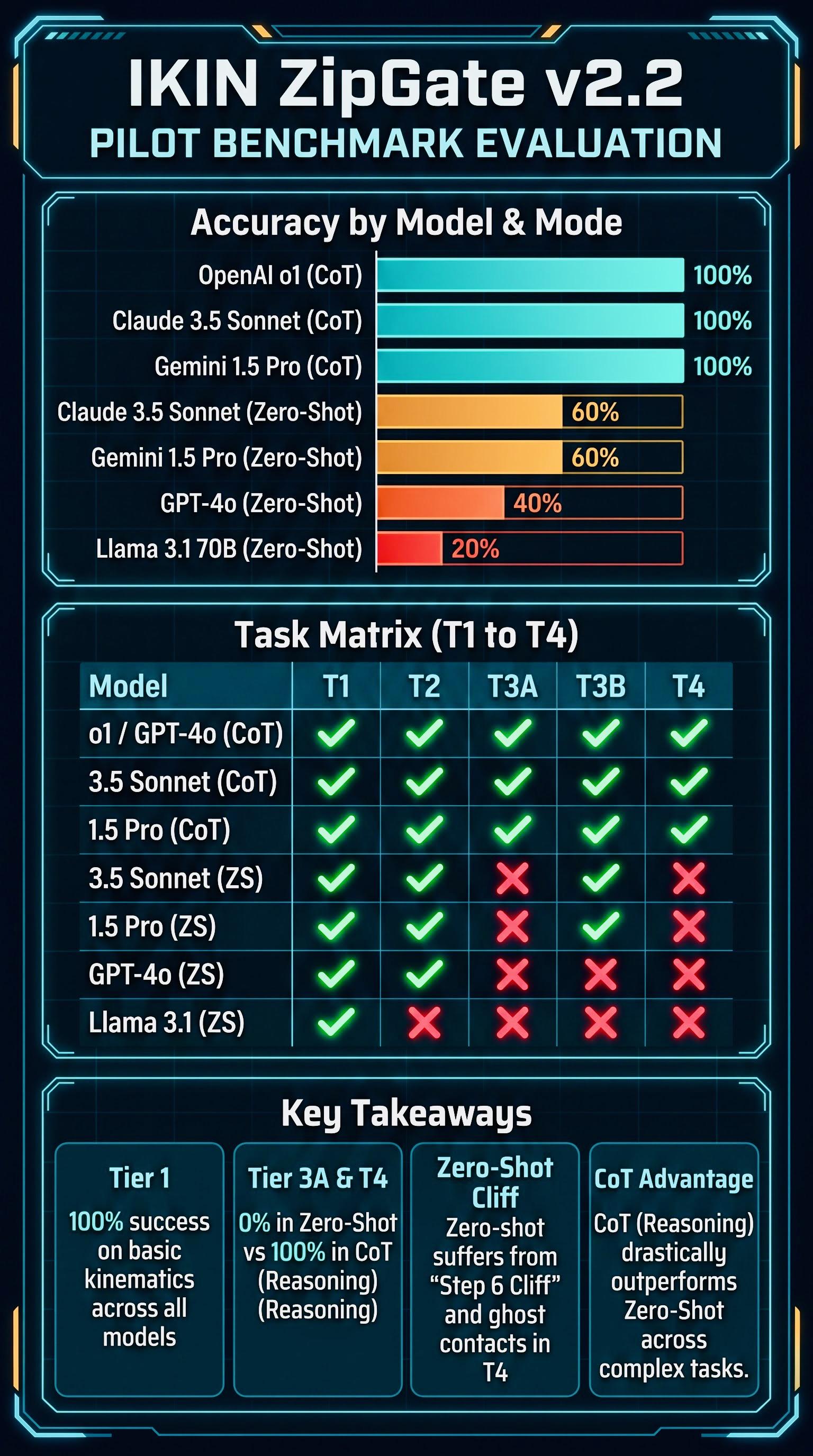
Showcase Frontier models still struggle with deterministic 2D spatial tracking — here are the pilot results from my new ZipGate v2.2 benchmark (GitHub + 5-task test inside)

Post image
0 Upvotes

r/computervision • • 22h ago

Showcase What actually worked to take an edge 3D print defect detector from 0.183 to 0.722 PR-AUC on 30 unseen cameras (and where it collapsed)

Thumbnail
gallery
2 Upvotes

I maintain PrintGuard, an open-source edge defect detector for 3D printers. My original dissertation model (a ShuffleNetV2 prototypical network) scored 0.937 F1 on public Kaggle/Roboflow sets, then collapsed to 0.183 PR-AUC on real user cameras once people started running it.

After collecting 9,385 opt-in frames across 114 real hubs, I built a strict hub-grouped benchmark (58 train, 26 val, 30 unseen Gold Test hubs, hub-clustered bootstrap) and ran a structured ablation sweep to rebuild the detector for CPU deployment. A few findings that stood out:

  • Old public datasets actively hurt. 74% of the 26.5k public images were duplicates and only 0.7% had 0.65+ DINOv2 cosine similarity to real user webcams. Mixing them 1:1 halved test PR-AUC (0.353 down to 0.152).
  • Naive end-to-end fine-tuning collapsed immediately (val ROC 0.563 down to 0.377) due to fixed-camera shortcut learning across 58 hubs with wildly different failure rates. Linear probe then fine-tune (LP-FT), per-hub class balancing and within-print pairwise ranking jumped Gold PR-AUC from 0.183 to 0.431.
  • Switching from letterbox to centre-crop RGB jumped to 0.578, Opus 5.5 contact-sheet curation (fixing 15% noisy labels across 4,807 frames) pushed to 0.600, and LogSumExp spatial MIL jumped to 0.649.
  • Interesting interaction: greyscale beat RGB under average pooling (0.629 vs 0.600), but collapsed to 0.529 under LogSumExp local pooling because bright specular bed glare spiked single patches past 0.99. RGB contrast was needed to reject reflections.
  • Distilling frozen DINOv2-Base (85.7M, 0.772 PR-AUC) straight into ConvNeXt-Atto (3.37M) scored worse than no distillation (0.591 vs 0.649). Bridging with DINOv2-Small (21.6M) and ConvNeXt-Nano-IN12k (15M) at T = 2.5 pushed ConvNeXt-Atto to 0.713 and MobileNetV4-Small (2.49M) from 0.469 to 0.613.
  • Greedy weight souping two distilled ConvNeXt-Atto seeds reached 0.722 Gold PR-AUC / 0.920 ROC-AUC (28.7 ms on 1 CPU thread, ~40 fps on a Pi 5), beating Obico's Dec 2025 darknet model (0.628 PR-AUC, 360 ms, 193 MB).

Full write-up with ablation charts, Obico methodology and references: https://oliverbravery.uk/blog/rebuilding-printguards-brain

Project repo (shipped ONNX + LiteRT models in 3.0): https://github.com/oliverbravery/PrintGuard


r/computervision • • 1d ago

Help: Project Looking for advice on TCR300 Radar–Camera Calibration and Sensor Fusion for Highway ITS

5 Upvotes

I'm working on a highway ITS project using a TCR300 80 GHz radar and an IP surveillance camera.

Our goal is to:

  • Calibrate radar coordinates with camera image coordinates.
  • Match camera vehicle Track IDs with radar Target IDs.
  • Display actual radar speed for each matched vehicle.
  • Build reliable real-time camera–radar fusion.

We have historical radar data and camera detection records, but our existing 145 manually paired samples are not sufficient for a reliable calibration. We are now exploring manual calibration, synchronized replay, and better matching methods.

Questions:

  1. Which open-source tools or libraries do you recommend for radar–camera calibration?
  2. What is the best approach to collect reliable calibration pairs?
  3. How do you handle camera–radar synchronization and vehicle association?
  4. Are there any practical projects, papers, or reference implementations using 77/80 GHz radar?

Any technical guidance or real-world experience would be greatly appreciated.


r/computervision • • 1d ago

Discussion How Do You Decide Which Video Edge Cases Are Worth Labeling?

1 Upvotes

Join us for an upcoming webinar on December 4 | 11 AM–12 PM PT, featuring Thomas Zheng Tang (NVIDIA) and Siddhartha Bal (iMerit), moderated by Brett Hallinan (iMerit).

Register here: https://imerit.ai/webinar-registration-petabytes-in-edge-cases-out-deciding-whats-actually-worth-labelling/

They'll discuss:

  • What makes an edge case worth pursuing beyond rarity
  • How to prioritize labeling when budgets are limited
  • When synthetic data helps and how to validate it against real footage

r/computervision • • 1d ago

Discussion Single-view vs. multi-view 3D bounding box lifting in a 3D Gaussian Splat (Three.js + SparkJS + Gemini) — looking for advice on tightening the 3D OBB

2 Upvotes

I’m building a browser-native spatial tagger on top of 3D Gaussian Splatting (Three.js + SparkJS, splats in Apartment.sog)and testing how cleanly we can isolate whole objects in 3D without modifying the underlying .sog scene.

What’s shown in this 14s clip:

  1. 0:00 – 0:03 (Single-View Baseline): Clicking the bed from a single frozen camera view (ViewSnapshot) raycasts inside a 2D VLM bounding box and fits a PCA Oriented Bounding Box. Because of self-occlusion, the lime-green box only wraps the front patch of the throw blanket.
  2. 0:04 – 0:07 (Multi-View Pose-Grounded Detection): Capturing Front, Side, and Top views (freezing each view’s matrixWorld and projectionMatrix) lets Gemini correlate the full Bed across angles while separately detecting adjacent items (Nightstand ×2, Ottoman, Area Rug, Armchair).
  3. 0:08 – 0:14 (The Current Bottleneck): Lifting 3D Gaussians from those multi-view 2D boxes and fitting an OBB now captures the full bed—but the magenta OBB stretches far past the bed frame onto the rug, nightstands, and surrounding room geometry.

How the 2D → 3D lifting currently works:

  • Casts sparse rays inside each view's bboxNormalized using frozen camera matrices to build a coarse 3D search volume.
  • Projects candidate 3D Gaussian centers back into all 3 views (world → view → clip → UV) and votes using camera view-axis depth plus peer-object surface proximity.
  • Fits an upright (+Y) OBB on accepted Gaussian centers and writes winning storage indices into an R8UI GPU mask texture.

Where I’d love feedback on improving identification & box tightness:

  1. Pixel-tight 2D masks vs. rectangular boxes: Even with 3 orthogonal views, intersecting rectangular 2D boxes leaves empty corners and rug/nightstand overlap. Has anyone found lightweight segmentation masks (e.g., SAM) or eroded-mask ray sampling sufficient here, or do thin/touching boundaries still bleed?
  2. Volumetric Gaussian extent vs. center-only checks: Currently, candidate membership tests whether a Gaussian's center projects inside the view region. In .sog scenes, wide flat rug/floor ellipsoids whose centers sit near the base still leak in. Would projecting each Gaussian's 2D covariance ellipse footprint (requiring e.g. overlap, similar to GS-POOL's rendering-weight threshold)cleanly reject grazing rug/wall splats?
  3. Floor/support-plane separation: Best lightweight heuristics for separating a bed frame or furniture base from a patterned rug directly underneath without hardcoding scene-unit height thresholds?

r/computervision • • 2d ago

Showcase Building and Refining a Lumigraph-based 4D Mesh System: 10x–50x Smaller than 4DGS

84 Upvotes

I'm trying to make it work with just 2 cameras and its trainable on most gpu over 20 gbvram. demo will be soon, but currently, im out of agent quota for this week to port it properly. i hope yall can give me some pointers.


r/computervision • • 1d ago

Help: Project Any recommendations on datasets for benchmarking VLMs on standard cv tasks?

Thumbnail reddit.com
1 Upvotes

r/computervision • • 1d ago

Showcase Uncanny eyes portrait: Person and face tracking on an ESP32-S3

Post image
8 Upvotes

Hi all,

I built an "uncanny eyes" painting whose eyes follow people around the room. Everything runs on a XIAO ESP32-S3 Sense (OV3660, 120° lens).

Running ESP-DL face detection on its own only got me about 2.5 fps, and it worked poorly at a distance and when people were moving. So I put a simple pre-processing pipeline in front of it (see diagram):

  1. Raw grayscale frame, 320×240. I skip JPEG entirely to save decoding time.
  2. Downsample with 4×4 averaging to 80×60. This gives 16× fewer values and less noise.
  3. Background model learns the empty room and subtracts it. Anything that stays still slowly fades into the background.
  4. Blob detection: big blobs are people, small blobs are noise. This gives a person count, positions, and a rough head estimate.
  5. Face detection: I crop the original 320×240 frame around the head estimate, scale it to 160×160, boost the contrast, and run ESP-DL face detection on it. This returns whether there's a face, plus its position and size.

This brings it to around 5 fps and works much better at a distance and with movement. Of course it's nowhere near a proper camera and computer, but it's plenty for a painting that follows you with its eyes. The work is split across both cores with FreeRTOS, and an on-device web app streams the debug view.

The output drives two servos that move printed eyes behind the painting.

Video: https://youtu.be/vSbphjCgu3U
Code: https://github.com/fluxfur/uncannyeyes

(I used Claude Opus 5.5 for help with coding and debugging. The web interface was fully vibe-coded.)

Let me know what you think. It is impressive what small ESP32 boards can deliver (i am someone coming from 8bit arduino)


r/computervision • • 1d ago

Showcase Follow-up post. New design for 2-axis gimbal: laser range-finder.

25 Upvotes

Following up on my last post, where I showed the gimbal moving next to a see-through copy of itself. Since then I've redesigned it to carry a laser rangefinder, for the jobs that don't need thermal. Here's the same kind of clip with the new version, from a few more angles.

For some jobs it's more useful to know how far away the thing in the picture is. There's no room in a 67 mm ball for the rangefinder next to two cameras, so this is a second version of the ball: the rangefinder takes the thermal camera's place, and the thermal version stays.

The redesign is all inside the ball: a new seat for the module, a pocket for it in the front half, and a reworked board so the distance readings travel down the same USB line as the camera video. Nothing outside the ball changed, not even the flex PCB from my last post.

One thing I have no experience with is calibration. The rangefinder sits about 3 cm below the camera and won't be perfectly parallel to it after assembly, and one degree of error is almost 2 m at 100 m.

The setup:

  • Rangefinder: L22A module, 905 nm laser, listed for up to 1000 m, about 20 €
  • Camera: the same 5 MP visible camera
  • Same travel: ±100° in roll and from 25° up to 95° down in tilt
  • The part that tilts is about 15 g lighter than the thermal version

It's still the CAD model, and the range is the seller's number until I've measured it.

The Google Form for updates is still open: https://forms.gle/2kaUHfGA5ie8oEbu6


r/computervision • • 1d ago

Discussion Golf green rebuilt from smartphone video only (no LiDAR) – "before" lighting fix, will post the same camera path after

0 Upvotes

This is the current "before" state of my golf-green reconstruction viewer

(smartphone video only, no LiDAR). I'm fixing the lighting next, so the

slopes are still hard to read from above, and the edge is still rough.

I'll post the same camera path again after the fix. If you have a minute:

can you tell which way the slopes run? Anything that looks unnatural?


r/computervision • • 1d ago

Discussion my 36M model just broke down a 17-minute video on a laptop cpu in about a minute, so any local LLM can "watch" it

0 Upvotes

hey, i built tiny-vision as a learning project (v0.1 here). people gave really good feedback so i worked on all of it and v1.0 is out. v0.1 is close to 100 downloads on huggingface and v1.0 got 70+ in 2 days, which honestly shocked me lol. its free, apache-2.0, no paid version or anything.

what it does: most LLMs cant open a video file. tiny-vision runs locally next to your LLM, splits the video into scenes, captions them, and hands your LLM a text breakdown with timestamps. then your LLM does the reasoning: "what happens in this video", "find the part where people are on the beach". nothing gets uploaded anywhere.

this is what your LLM actually gets:

video: trip.mp4 · 00:09 long · 3 scenes (3 shots) · avg scene 3s
recurring: dogs (2 scenes)

scene 1 [00:00–00:03] (3s)
  seen: a group of dogs running in a field. | three dogs running in a field with a bench in the background.
  keywords: dogs, running, field, bench
...

try it:

  • in your browser, no install (free colab): https://colab.research.google.com/github/amar683/tiny-vision/blob/main/notebooks/demo.ipynb
  • as an MCP server, one line in your config, no cloning: {"command": "uvx", "args": ["--from", "git+https://github.com/amar683/tiny-vision", "tiny-vision-mcp"]} tested in claude desktop + claude code. its standard local MCP so it should work in lm studio, cursor etc (havent tested those yet, tell me if it breaks). lm studio + a local model = fully offline
  • no MCP? tiny-vision clip.mp4 --summary prints plain text, so you can pipe it into ollama or anything: tiny-vision clip.mp4 --summary | ollama run qwen2.5 "Summarize this video:"

long videos: any length works. tested on a 17.5 min cricket video: it covered the whole thing in ~50 sec on my macbook (M5), about a minute on cpu only, and condensed it to 100 scenes so it doesnt flood your context. the MCP tool also sends progress updates so your app doesnt give up waiting.

how it works:

  • frames are picked on scene changes (hard cuts + slow camera moves), not one every N seconds, so the timestamps land on the real cuts and a static shot costs one caption. only ~5 frames/sec get decoded, so high-fps phone video stays cheap
  • each shot gets captioned, similar shots get grouped into scenes, and long videos get condensed by merging similar neighbouring scenes
  • captioner: meta's DINOv2-small as a frozen image encoder (not fine-tuned) + my own adapter and caption decoder (14M params) trained on COCO. 36M total

numbers (same 1000 COCO test images, same scorer, M5; cpu = one image at a time, greedy):

  • v0.1 → v1.0: COCO CIDEr 0.061 → 1.145 (same setup) 💀➡️😅
  • vs florence-2-base (231M): ~89% of its caption score, 6x smaller, 8x faster on gpu, 75x faster on cpu (54ms per image vs 4 sec)
  • full 5k COCO Karpathy test: CIDEr 1.163 with beam 3

not saying its better than florence, its not. it just does a lot with very little. benchmark scripts are in the repo.

honest stuff:

  • it only knows COCO's everyday stuff. that cricket video? it called it "baseball" and "frisbee" lol. and a video of earth from space became "an elephant" 💀
  • no audio yet, it describes what it sees, not what is said. whisper is next
  • it captions frames, it doesnt understand motion
  • no OCR, no names, no precise counting
  • like last time, i took a lot of help from claude to build this, so its not entirely mine

code: https://github.com/amar683/tiny-vision
model: https://huggingface.co/amartomar683/tiny-vision
glama: https://glama.ai/mcp/servers/amar683/tiny-vision

what should i try next? still learning so all feedback welcome

last post - https://www.reddit.com/r/LLMDevs/s/uoRboZfP94