r/FunMachineLearning • • 8d ago

We’re building an ML course from first principle where nothing is allowed to stay magic.

Post image
2 Upvotes

Hi r/FunMachineLearning,

You know that moment when a model does something so clever it feels like a magic trick? I’m building Demagicked to show you how the trick is done. Knowing doesn’t ruin the trick; it makes it better.

I previously did ML research at MIT and ICL, and I’ve always found that the “how” is more exciting than the “wow.” Once you see what’s happening underneath, ML gets more impressive, not less.

We’re starting with Linear Algebra for Machine Learning. Four lectures are live(as of this moment), each with a hands-on playground on our website where you can stretch, rotate and squish space yourself and watch what a matrix actually does. Every lecture starts with a real problem and builds the idea step by step, until the magic turns into “oh, that’s all it is.”

It’s being built with colleagues from MIT, Harvard and Stanford, and the full curriculum is planned for January 2027.

This is a soft launch, so I’d love your help with:

  • Which moment made something click? And which one fell flat?
  • What ML “magic trick” should we demystify next?

We’re a small team and most of my colleagues aren’t on social media, so our reach is pretty limited. If you know someone who’d enjoy this, a share would mean a lot.

The site is still a work in progress, so please tell me where it falls short. No eigenvalues need computing before you comment.

Have a good day!


r/FunMachineLearning • • 9d ago

Zipping my code for Claude by hand turned into a tool. The hard part wasn't the zip

1 Upvotes

I assumed the useful part would be picking the right files. It turned out to be the trip back. AI tools return a ZIP with paths flattened, or wrapped in an extra folder, or with a file cut short and a comment saying "rest unchanged", and meanwhile I've edited two of those files myself.

So contextzip keeps a snapshot of what it sent and, when the reply comes back, compares three versions of every file: what I sent, what's on disk now, what came back. Clean edits go in, mine are merged around, and anything it isn't sure about waits for me.

It's free and open source: https://github.com/akadeepesh/contextzip. There's a no-install version at https://www.contextzipcli.com if you want to try it on a folder.


r/FunMachineLearning • • 9d ago

A programming language + neural network, both built from scratch on Android.

Post image
1 Upvotes

r/FunMachineLearning • • 9d ago

Funkiest Zoom meeting EVER (Surprise video) - Two Minute Papers

Thumbnail
youtube.com
2 Upvotes

r/FunMachineLearning • • 9d ago

I made a visual explanation of how Transformers actually work

Thumbnail
reddit.com
1 Upvotes

r/FunMachineLearning • • 9d ago

Exploring a LoRA Optimization Research Idea

Thumbnail reddit.com
1 Upvotes

r/FunMachineLearning • • 9d ago

Tool-calling LLM Agents

Thumbnail
youtube.com
1 Upvotes

r/FunMachineLearning • • 10d ago

I made some improvements and would love to hear your feedback

2 Upvotes

Hey everyone,
I've been building ModelAnalysis.si, a free site that lets you compare AI models side by side on quality, price and speed. It also helps you work out what it would cost to run them for your own use.
I've just made a round of improvements and fixed some bugs and inconsistencies and made a general
cleanup so everything feels smoother
You can try it here: https://modelanalysis.si
I'd love your honest feedback.
What's confusing, what's missing, and what would make it more useful to you? Anything you'd like to see added?


r/FunMachineLearning • • 10d ago

My ARC-AGI-3 experiment on agents forgetting vs trusting old rules

1 Upvotes

I’ve been working on a side project around ARC-AGI-3 (the interactive puzzle-game benchmark) and wanted to share it and get some feedback.

The question I looked at is pretty narrow. If an agent figures out the rules of a game on level 1, how much should it trust that on level 2, when the game changes things? Trust everything and you’re fast but you can get stuck. Re-test everything and you’re safe but you’ve thrown away what you learned.

I kept the agents really simple on purpose, no neural nets and no LLMs. They just keep counts of which clicks actually do something. That way you can see exactly which belief caused a failure.

Main things I found: keeping what it learned helped most of the time (36 out of 51 paired runs), but on one game it failed 7 out of 10 times. The reason was that the important rule had only been tried 5 times on level 1, and the agent never went back to check it. Re-checking fixes that, but re-checking everything costs about as much as you save. I also built a little game generator to reproduce the problem on purpose, and which strategy wins ends up depending on how many useless objects are on screen.

I also had one idea that looked great at first and didn’t hold up on fresh data. I left it in the paper because I think that’s worth knowing.

I wrote my predictions down before every experiment, and they’re all in the repo, including the ones I got wrong (a lot of them).

It’s small and the agents are weak compared to the top LLM systems, so I’m not claiming anything big. I’d really appreciate feedback on the method, especially the stats.

Paper + code: https://github.com/shareduser94/arc3-transfer-recheck


r/FunMachineLearning • • 10d ago

I asked Llama how sure it was on 600 trivia questions. It said "100%" two times in three. A quarter of those were wrong.

1 Upvotes

Then I opened it up. A simple linear probe on its activations, read before it says a word, tells its right answers from its wrong ones far better than its own words do (AUC 0.81 against 0.59).

It is the last act of a documentary on knowing what you know, which starts with Socrates, a dolphin with an "I'm not sure" paddle and monkeys that know when they remember.

Video (the AI part from 27:17): https://www.youtube.com/watch?v=D1s6vZ67yGo&t=1637s

Code and data, rerunnable on a laptop: https://github.com/Cogspace-org/knowing-what-you-know


r/FunMachineLearning • • 10d ago

ActWorld-JEPA: Action-Conditioned JEPA World Models Meet Latent Planning for End-to-End Autonomous Driving

Thumbnail reddit.com
1 Upvotes

r/FunMachineLearning • • 10d ago

I built a lightweight, adaptive training guard (limen_pulse) to catch LLM, RL, and AMP silent crashes before they burn your GPU hours — Looking for beta testers (Free Crash Audit)

1 Upvotes

Hey everyone,

If you’ve ever left a fine-tuning run, an RL policy update (PPO/GRPO), or a mixed-precision (FP16/FP8) job running overnight only to wake up to a silent NaN explosion, reward hacking, or a flatlined loss curve, you know how painful wasted GPU hours can be.

Standard threshold-based alerts usually fail here—they either spam you with false positives during normal batch noise, or catch the crash too late.

To solve this, I built limen_pulse (v0.6.0)—an adaptive, real-time training stability monitor and crash auditor.

How it works under the hood:

  • Zero-Math Lightweight Client SDK: You drop a clean, isolated Python client into your training loop. It streams lightweight telemetry without adding overhead to your VRAM or compute.
  • Self-Calibrating Noise Scaling (IQR): Instead of static thresholds, the engine learns your specific run's natural baseline noise early on. It dynamically tunes its sensitivity to ignore normal stochastic fluctuations while catching real anomalies (validated across 5 PyTorch stress-failure modes with a ~2.5%–3.4% false-positive rate).
  • Regime-Aware Monitoring: It adapts its detection strategy depending on what you are training:

    • Supervised Learning: Distinguishes normal mini-batch variance from genuine plateaus or LR-induced divergence.
    • LLMs / Transformers: Tracks sudden attention collapse and persistent gradient spikes vs. transient noise.
    • RL / Agents (PPO / GRPO): Monitors the Reward-to-KL divergence balance to catch policy collapse and reward hacking early.
    • Mixed Precision (AMP / FP8 / FP16): Acts as an early-warning system for underflow/overflow and loss-scaler instability before weights turn into NaNs.
  • Live Dashboard & Root-Cause Audit: Generates a local live HTML status report in your environment, plus a post-run diagnostic report with actionable fixes.

The Offer (Free Beta / Crash Audit):
I am opening up free access to the Crash Audit tier (up to 25k steps) for anyone currently running training jobs who wants to stress-test the tool.

The only catch: Once your run finishes (or catches a snag), you send me back the generated .md / .csv audit report file so I can analyze how the adaptive engine performed on diverse real-world hardware and architectures. (Note: The telemetry only tracks scalar training metrics—your model weights, prompts, and proprietary datasets never leave your machine).

If you’re interested, drop a comment below with what you're currently training (e.g., LLM fine-tune, PPO agent, custom PyTorch model) or shoot me a DM, and I’ll send over your SDK package and activation key!


r/FunMachineLearning • • 11d ago

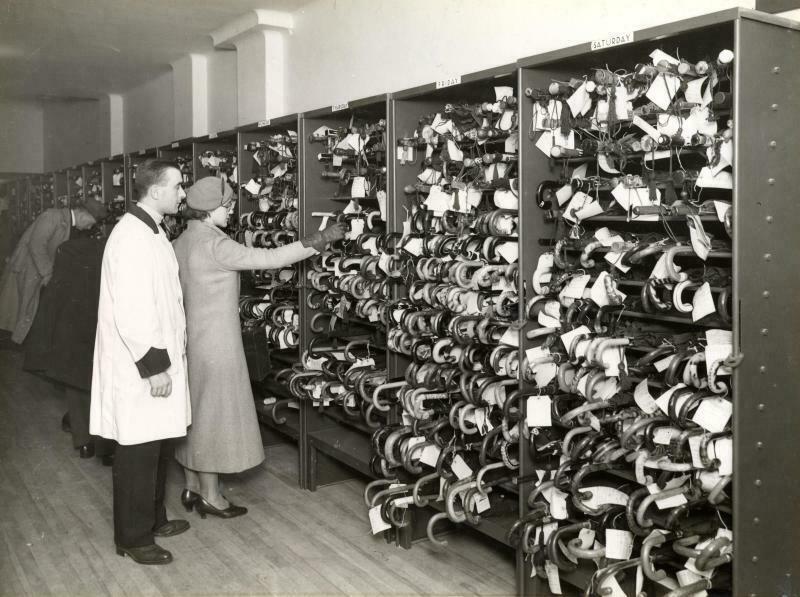
Lost a Saturday? Take a ticket.

Post image
1 Upvotes

The lost-property receptionist has seen this before. A wasted Saturday, the final hour of a holiday, the afternoon spent choosing a film nobody watched.

For an original sketch, each missing thing gets an illustrated item: a packed picnic fading into a ticket machine, a sun caught behind a closing gate, an empty cinema with an enormous menu. I’d use the seven days of unlimited image generation in CapCut Web’s offer to look for a related visual language for the set.

The receptionist should ask whether the customer has any proof the afternoon belonged to them.


r/FunMachineLearning • • 11d ago

DeepMind’s AI Just Did The Impossible - Two Minute Papers

Thumbnail
youtube.com
1 Upvotes

r/FunMachineLearning • • 12d ago

Teenie: A Small Model that tries to infer hidden integer relations based on examples

1 Upvotes

Try it out on browser at https://teenie.lupyd.com/try

It can get something like this

((a|b) ^ (a&b)) + (a^b) + max(a,b) - min(a,b)

never trained on it btw, about right 2 out of 16 times.

I'm not guaranteeing. But even those numbers feel impressive to me for such a tiny model. It is not trying to solve or reverse engineer a problem, It is guessing with the limited number of examples. They just look like random numbers with no pattern at all for us. Hence the objective is, can it recognize any pattern. Maybe use it to infer some hidden relations between numbers we never even thought existed.

You can make different combinations and your own custom rules.

It can't do multiplication well. It can't get many things right tho. So I'm not gonna exaggerate as a breakthrough, but an interesting experiment.

Maybe scaling it more and training more might improve it. Or a different architecture, because whatever I tried it still sucks at something like (a * b) + (a - b), if multiplication is involved.


r/FunMachineLearning • • 12d ago

The hero can lift a boulder. The teacup requires a separate plan.

Post image
2 Upvotes

A stop-motion character with enormous hands, trying to pick up a tiny teacup. That’s the whole scene I’d like to build.

The design question comes first: how large can the hands get while the gesture still looks careful?

With CapCut Web’s offer of seven days of unlimited image generation, I’d sketch a few versions of that same problem. Long fingers, round fists, a cup that nearly disappears between them.

Then make a rough physical hand-and-cup test: the wrist turns, the cup tilts, the other hand quietly comes to help. A character with world-saving confidence can still need complete silence to manage a sip.


r/FunMachineLearning • • 12d ago

Implemented a full KAN network from scratch and tested against micrograd

Thumbnail
reddit.com
1 Upvotes

r/FunMachineLearning • • 13d ago

LogillamaAI

Thumbnail reddit.com
1 Upvotes

r/FunMachineLearning • • 13d ago

I built a handwritten digit recognizer Neural Network completely from scratch in C++ (No Python, No ML Libraries, Custom Matrix Math)

Post image
2 Upvotes

r/FunMachineLearning • • 13d ago

The Science of AI Photoshop Clones - Two Minute Papers

Thumbnail
youtube.com
1 Upvotes

r/FunMachineLearning • • 13d ago

10 empty sparks

2 Upvotes

Hey,

I started GPUwerk a few months ago. I had two DGX Sparks sitting idle and wanted someone to actually use them, so I built a simple platform where people can list their Sparks and earn a bit from them.

Right now I have 10 empty Sparks. Rather than let them sit, I'd rather give the hours away to people who will actually use them and tell me what they think.

You don't need a card, and it isn't a trial that starts billing later. Just time on a full DGX Spark (128GB unified memory) if you'll give me honest feedback after you try it.

If you want hours on one, comment what you'd like to use it for and I'll follow up.

Thanks.


r/FunMachineLearning • • 13d ago

What is the best AI for learning natural language patterns?

Thumbnail reddit.com
1 Upvotes

r/FunMachineLearning • • 14d ago

Breakup recovery day 1: Zero Pandas knowledge, zero projects. Now we enter the ML zone out of pure emotional damage.

1 Upvotes

Hey everyone,

So a recent breakup happened, and instead of normal coping mechanisms, I took the ultimate overthinking route: learned Pandas completely from scratch with zero prior context. No grand portfolio project, no SaaS startup—just pure data wrangling to keep the brain busy.

Now that the dataframes are sorted, it's time for the next stage of the healing process: diving headfirst into Machine Learning. Because if my personal life is going to be stochastic, my models might as well be too.

Dropped a long video walkthrough of the whole zero-to-pandas journey here if anyone wants to watch someone code through the existential dread:

📺 Video Link: yt link .................................clk

Would love to know what bizarre tech rabbit holes you've fallen into when life decided to break production!


r/FunMachineLearning • • 15d ago

Cross-platform taste transfer from Instagram exports, and how my first eval result turned out to be an artifact

1 Upvotes

Project: build an interest profile from a GDPR Instagram export (Meta's interest categories, hashtags, captions), embed locally with bge-small, cluster, and recommend from a TMDB catalog of Netflix and Prime titles.

Lessons that might be useful:

- On ~400 short phrases, silhouette scores were flat (0.05 ± 0.01) at every k, so choosing k by silhouette was choosing on noise. I switched to a size-based k with weighted k-means, and detect the leftover grab-bag cluster by its low cohesion (z ≤ -1.5).

- Evaluated against my own Netflix history with popularity and random baselines. The first run showed recall@20 4× popularity, with a bootstrap interval excluding zero. The cause was that the candidate set was "trending titles + watched titles", so watched titles were identifiable by not being trending. Adding each service's most-voted titles removed that tell, and the result went to roughly a tie. A time split (tune on older watches, test on newer) confirmed it.

n=1, so it's a pilot. Code and write-up: https://github.com/aaryamanbisht22/taste-passport