r/FunMachineLearning • • Oct 18 '26

Do you remember SETI@Home. Decentralized Branch-Train-Mix Sparse MoE Upcycling & Speculative Swarm Inference over Consumer GPUs via DiLoCo-QLoRA and BOINC - Starting on old RTX 2070 !!! Let's build together HiveMind@Home

Post image
2 Upvotes

r/FunMachineLearning • • Oct 18 '26

Table detection/structure recognition in PDFs with classical CV only (morphology + LSD, no DL) – open source, looking for feedback & contributors

Thumbnail
reddit.com
1 Upvotes

r/FunMachineLearning • • Oct 18 '26

We built a BYOC platform to fine-tune SLMs inside your own AWS VPC (0% compute markup)

1 Upvotes

Hey r/LocalLLaMA,

A fine-tuned 2B–8B model often beats GPT-4 on narrow domain tasks, but managing EC2 Spot instances, Triton kernels, and dataset PII leaks is tedious—and third-party hosted fine-tuning platforms charge crazy GPU markups while storing your data on their servers.

We built SynqTune to automate this without your data ever leaving your AWS perimeter:

  • In-VPC Execution: Ephemeral EC2 workers (g5.2xlarge, g4dn) boot in your account via cross-account IAM and auto-terminate immediately after training.
  • Zero Data Egress: Data streams directly from your private S3 bucket (s3://slm-customer-bucket-<account_id>/) into worker RAM.
  • Unsloth 4-bit QLoRA: Custom Triton CUDA kernels cut VRAM by 70% and double throughput.
  • Spot Preemption Recovery: Checkpoints sync to S3 every 20 steps, so you can resume interrupted runs without restarting.
  • 0% Compute Markup: You pay raw AWS Spot rates directly (~$0.40/run).

Check out the full setup guide and IAM policy here: https://synqtune.com/docs

Curious to hear your thoughts and what features you’d like to see!


r/FunMachineLearning • • Oct 18 '26

Training GPT2 on my Golf Simulator Machine

1 Upvotes

Title: Training GPT-2 (124M) from scratch on one RTX A5000 at home, live: every step, watt and checkpoint is public, and you can query any checkpoint

I wanted to actually understand pretraining, so I’m reproducing GPT-2 small with Karpathy’s build-nanogpt recipe (10B tokens of FineWeb-Edu, 19k steps) on a single 24 GB A5000 under my desk, and I put the whole thing on a live page:

  • loss / lr / grad-norm / MFU charts updating as it trains (≈50k tok/s, 38% MFU with torch.compile + bf16)
  • the GPU itself: power at the 230 W cap, 79 °C, VRAM, PCIe traffic
  • a Playground where you can run any checkpoint (no login). At step 0, “The capital of France is” → word salad; at step 500 → “a large number of the number of the population.” Fluent, wrong. Facts come later.
  • an auto-generated video at every checkpoint asking the same question with the same seed

Total cost for the full ~55-hour run: about $2 of electricity (vs ~$17 to rent the GPU).

Live: https://x.com/y99/status/2111668852656607496?s=20

Things I learned so far: [one or two real findings by the time you post]. Happy to answer questions about the setup.

(It’s my project; nothing to sell.)


r/FunMachineLearning • • Oct 18 '26

Odin: find the code behind any bug report

Thumbnail
allfather.dev
1 Upvotes

TLDR: I built a search engine that reads a bug report (or lets you define it) and points to the exact file (93%) and to the exact function (79.4%) you need to fix.

Hey everyone,

I recently made a new project while trying to get into RAG and automation.

Odin is more than a search engine, all you have to do is paste a public repo URL and link the issue or describe the bug yourself and it downloads, parses and ranks the functions based on the mentioned bug.

Why its different than any LLM:

It runs mostly in your browser: It uses Tree-sitter (via WebAssembly) and small local models (via WebGPU) so your code isn't just blindly shipped off to a giant cloud LLM. 

It punches above its weight: Evaluated on 300 real issues from the SWE-bench Lite dataset, it puts the correct file in the top 10 results 93.0% of the time, and the exact function 79.4% of the time. 

It’s incredibly efficient: It matches the accuracy of heavy Claude 4.5 agents using models under 1B parameters, cutting the cost per issue to a fraction of a cent. 

There’s also a GitHub Action you can drop into your repo to automatically comment on new issues with the most likely functions to fix. 

I would really appreciate it if you would give it a try (it would help me with the benchmarks as well)

feedback, questions, criticism are welcome


r/FunMachineLearning • • Oct 17 '26

17 AIs, 7,700 hands of poker: frontier vs cheap vs local vs Jev [P]

Thumbnail
chrystianschutz.com
1 Upvotes

r/FunMachineLearning • • Oct 16 '26

I’m building Math2Model — implementing machine learning algorithms from scratch to understand the math behind them

Post image
2 Upvotes

r/FunMachineLearning • • Oct 15 '26

We gave a decision model anytime reasoning

6 Upvotes

We've been working on Span-02. Instead of choosing low/medium/high reasoning, you give it a time budget in milliseconds.

We asked it “land or water?” for 4,050 coordinates. Then plotted the answers.

Reasoning off: 71.9% accuracy.

300ms to think: 84.5%.

That's what you're seeing in the video. The weights are open.


r/FunMachineLearning • • Oct 15 '26

Wikipedia race: Span-02 vs GPT-6 Luna

1 Upvotes

r/FunMachineLearning • • Oct 15 '26

I built a simulator with a PPO agent to beat TempleRun on a phone

Thumbnail reddit.com
1 Upvotes

r/FunMachineLearning • • Oct 15 '26

I built a testnet where inference computations get cryptographicreceipts — free verification, bring a real workload

1 Upvotes

We're a small proof-of-useful-work project. The validators don't

mine — they verify AI computations (matrix multiplications + activation

functions) and get consensus weight for it.

The part that matters to you: submit any GEMM workload up to 256×256

and we return the result plus a cryptographic receipt — a SHA-256

commitment chain folded into our ledger state, verifiable by anyone

forever. Free, no token, no signup beyond an API key we generate in

seconds.

Honest limits: we verify GEMM + elementwise activations (GELU/sigmoid/

tanh/exp), not full transformer graphs yet. Attention is on the roadmap.

The verification cost curve is published (615ms at 64³ → 157s at 1024³)

— we priced our own clamp and labeled every tier.

The logs: [pouw-verify] CONFIRMED lines, epoch crossings, claim-decrees

folded into the ledger — every claim has a receipt.

Live dashboard: http://3.237.91.235:32233/

The evidence ledger (250+ owned defects, 250+ laws): github.com/sarinsk629-blip/hsma-core


r/FunMachineLearning • • Oct 14 '26

train the best model you can on your mac in one hour

2 Upvotes

i wanted to train my own llm but everything i found needed an nvidia gpu, so i made a mac version with mlx.

one command downloads tinystories, trains a tokenizer, pretrains a small llama-style model, finetunes it for chat, then you can talk to it.

on my m5 air (16gb): 1 hour gets an 8M model that writes short kids stories, 8 hours gets a 40M one that's a bit better. neither can really chat yet. the air didn't throttle in either run.

there's also a 2 min benchmark if you want to see how your mac compares.

https://github.com/navthings/airgpt


r/FunMachineLearning • • Oct 13 '26

train the best model you can on your mac in one hour

Thumbnail
reddit.com
2 Upvotes

r/FunMachineLearning • • Oct 13 '26

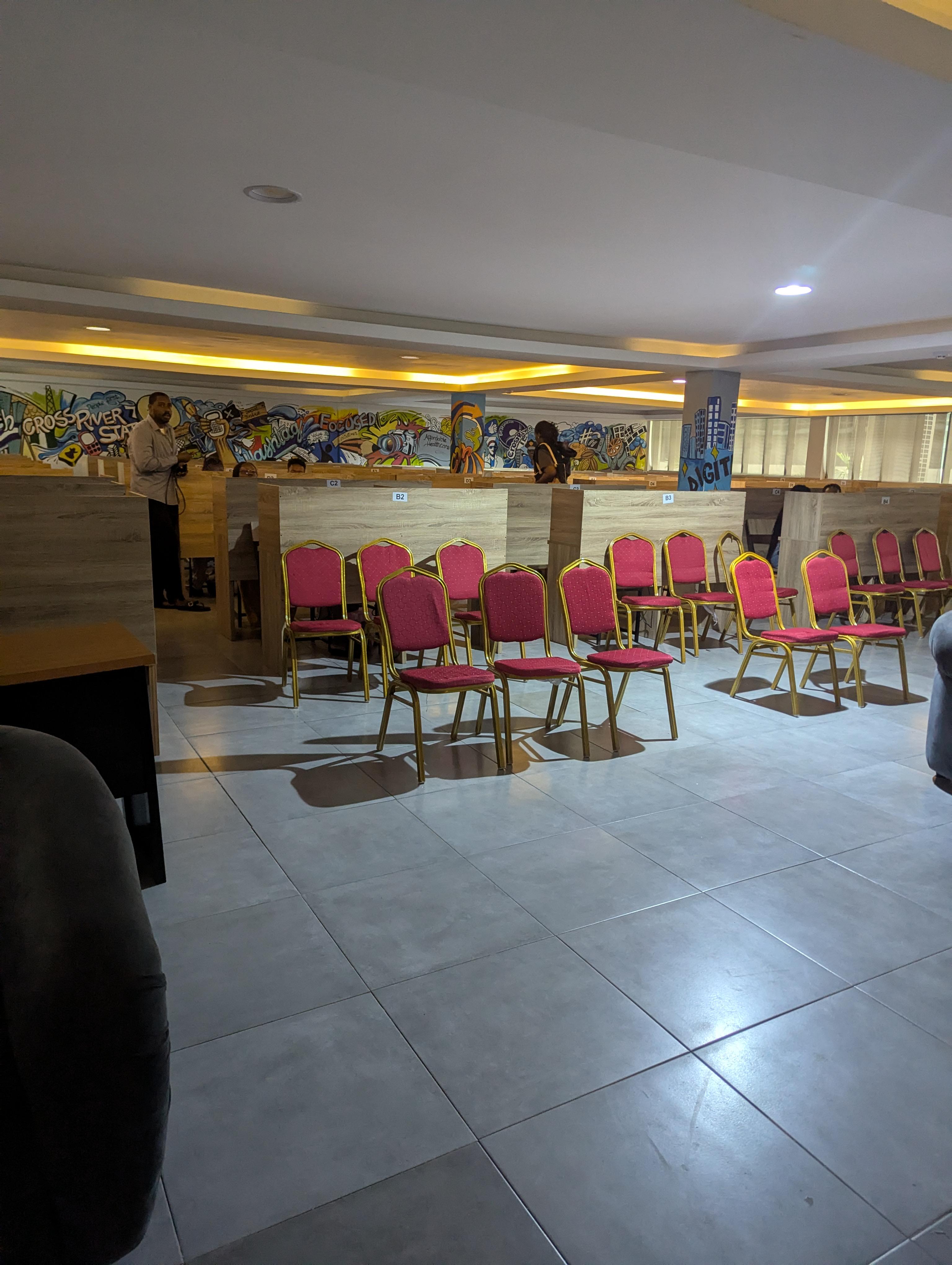
Volunteer guest instructor needed for a practical AI session with Nigerian youth

Post image
1 Upvotes

r/FunMachineLearning • • Oct 13 '26

OpenAI Just Changed What It Means To Do Math - Two Minute Papers

Thumbnail
youtube.com
1 Upvotes

r/FunMachineLearning • • Oct 12 '26

Could LLM-driven formal math lead to "specification gaming"? A question on the recent Navier-Stokes proof

5 Upvotes

There’s been a lot of interest recently around OpenAI using AI models and Lean 4 to formalize a Navier-Stokes blowup. Regardless of the fluid dynamics, the mechanics of how the proof was constructed got me thinking about automated theorem proving from an ML alignment perspective.

In reinforcement learning, we frequently see specification gaming: when an agent is given a strict target, it exploits every unconstrained degree of freedom to find an extreme edge-case rather than the natural solution we originally envisioned.

Looking at how the formalization satisfied the strict Millennium Prize rules, it seems like something very similar might have occurred:

• To keep the external force legally smooth while canceling the singularity, the construction relies on non-analytic bump cutoffs whose higher-order derivatives explode factorially.

• To stitch the inner vortex to the outer flow, the matching parameters sit on an extraordinarily sensitive knife-edge to keep the system invertible.

• The formal global energy constraint is strictly respected, but unconstrained local gradients blow up.

The proof is completely valid mathematics and compiles without error. But it feels conceptually similar to an agent finding an adversarial loophole in the human-written specification.

I’m curious how folks working on neural theorem proving and formal verification view this:

  1. As automated provers tackle open problems, how do we distinguish between proper mathematical insight and an AI "gaming" the formal definitions?
  2. Does this suggest that our formal mathematical specifications need additional constraints or regularizers when targeted by AI search agents?

Would love to hear your point of views and open an open minded discssion croos disciplanary ! Thanks,


r/FunMachineLearning • • Oct 11 '26

DeepSeek Solved AI’s Memory Problem - Two Minute Papers

Thumbnail
youtube.com
1 Upvotes

r/FunMachineLearning • • Oct 11 '26

I trained an AI to fly an FPV drone

Thumbnail
youtu.be
1 Upvotes

r/FunMachineLearning • • Oct 11 '26

We built our first LLM. What would you do differently for the next one?

Thumbnail
reddit.com
1 Upvotes

r/FunMachineLearning • • Oct 10 '26

I trained a small transformer to fly a boids flock just by watching, then checked where it keeps the three rules

Post image
1 Upvotes

r/FunMachineLearning • • Oct 10 '26

We fine-tuned Qwen3-4B with SFT + multi-turn GRPO to know when to hand off to a human. The benchmark reward taught it to escalate everything

1 Upvotes

We trained Qwen3-4B-Instruct-2507 as a τ²-bench customer-service agent and released three checkpoints on Hugging Face: SFT, GRPO with the benchmark's task reward, and GRPO with a hand-off-aware reward.

Main lesson: with the outcome-only reward, the model learned that transferring to a human is a safe bet, and over-escalation jumped from 0.016 to 0.462. Penalising unnecessary transfers brought it back to 0.103 without hurting task success.

For scale: the 4B models land around 0.33–0.35 task success vs 0.40 for prompted Qwen3-30B-A3B. Single seed each, so treat the gaps as rough.

Repo + model links: https://github.com/JaspinXu/KnowWhenToHandOff


r/FunMachineLearning • • Oct 10 '26

I built an open-source, local-first multi-agent AutoML engine to automate data cleaning, 7-model benchmarking, and FastAPI deployment (100% offline via Ollama)

4 Upvotes

Hi everyone,

I wanted to share EpochGo (https://github.com/AryanDinakaran/EpochGo), an open-source project I built to help developers and ML learners automate the end-to-end tabular machine learning lifecycle completely offline on their own computers for $0 in API costs.

Why I Built It

Most cloud AutoML platforms (AWS SageMaker, Google Vertex) require expensive cloud subscriptions and force you to upload sensitive datasets to remote servers. Conversely, a lot of recent "AI" projects are just shallow wrappers around commercial APIs that don't produce clean, inspectable code. I wanted an architecture where you can drop in a raw CSV, and local open-weight models (running via Ollama) orchestrate real Python ML libraries to clean the data, run an empirical 7-model benchmark tournament, and generate a deployable API.

How the Pipeline Works

The project divides the machine learning workflow into 3 specialized agents:

  1. Agent 1 (Feature Architect & Data Cleaner):

    • Profiles the dataset for missing values, skewed distributions, and multicollinearity.
    • Performs median/mode imputation, IQR outlier clipping, and categorical encoding.
    • Generates a reusable Scikit-Learn pipeline (preprocessor.joblib) and an audit report comparing distributions before and after cleaning (preprocessing.md).
  2. Agent 2 (Benchmark & Tuning Specialist):

    • Trains 7 baseline algorithms simultaneously under identical cross-validation conditions to avoid inductive bias:

      • XGBoost, LightGBM, CatBoost, Random Forest, Extra Trees, Gradient Boosting, and Logistic/Ridge Regression.
    • Evaluates baseline accuracy/F1/R² and isolates the Top 3 performers.
    • Runs RandomizedSearchCV hyperparameter optimization on the top contenders.
    • Serializes the winning champion model (model.joblib) and writes a reproducible Python training script (model_building.py).
  3. Agent 3 (Serving Engineer):

    • Extracts the exact feature schema and dynamically generates a standalone FastAPI microservice (serve.py) with Pydantic type validation.
    • Enables an interactive, in-browser Prediction Playground so you can test inputs and inspect prediction probabilities in real time.

How to Run Locally (Single Command)

All you need is Docker:

git clone https://github.com/AryanDinakaran/EpochGo.git

cd EpochGo

docker compose up --build

Open http://localhost:8000 in your browser. (Sample churn and housing price datasets are included in sample_data/).

Local Model: Defaults to qwen2.5-coder:7b via Ollama (~4.7 GB VRAM).

Concurrency: Model training runs in background threads (asyncio.to_thread) so the FastAPI UI and WebSockets never freeze during heavy CPU training.

Privacy: 100% offline. Zero telemetry, zero external API calls.

Repository (MIT License): https://github.com/AryanDinakaran/EpochGo

I hope this helps anyone looking to understand how to structure end-to-end Scikit-Learn pipelines, multi-model benchmarking tournaments, and dynamic model deployment. Would love your feedback and thoughts!


r/FunMachineLearning • • Oct 10 '26

Searching Video by Meaning Instead of Timestamps — How Does It Work?

1 Upvotes

I've been exploring semantic video search: instead of manually scrubbing through a long video, you describe a moment in plain English, such as “person blowing out birthday candles.”

The system can compare the query with indexed video representations to help locate relevant moments.

Google AI Edge Gallery's Video Moments Finder is an interesting example of this approach.

The technical idea is semantic matching using embeddings. One detail worth verifying is the offline workflow, which depends on model setup, indexing, and supported functionality.

What I'm curious about: would you use natural-language search to find moments in your personal video library, or do existing search tools already solve this well?

I made a short visual explanation of the concept.