r/FunMachineLearning • u/TechPlayer-6 • 15d ago
I built my own 15M parameter AI model from scratch. It runs on CPU!

2
Upvotes
r/FunMachineLearning • u/TechPlayer-6 • 15d ago
r/FunMachineLearning • u/Super_Challenge4726 • 15d ago
Project: build an interest profile from a GDPR Instagram export (Meta's interest categories, hashtags, captions), embed locally with bge-small, cluster, and recommend from a TMDB catalog of Netflix and Prime titles.
Lessons that might be useful:
- On ~400 short phrases, silhouette scores were flat (0.05 ± 0.01) at every k, so choosing k by silhouette was choosing on noise. I switched to a size-based k with weighted k-means, and detect the leftover grab-bag cluster by its low cohesion (z ≤ -1.5).
- Evaluated against my own Netflix history with popularity and random baselines. The first run showed recall@20 4× popularity, with a bootstrap interval excluding zero. The cause was that the candidate set was "trending titles + watched titles", so watched titles were identifiable by not being trending. Adding each service's most-voted titles removed that tell, and the result went to roughly a tie. A time split (tune on older watches, test on newer) confirmed it.
n=1, so it's a pilot. Code and write-up: https://github.com/aaryamanbisht22/taste-passport
r/FunMachineLearning • u/Glad_Builder_4555 • 15d ago
r/FunMachineLearning • u/gantred • 16d ago

r/FunMachineLearning • u/ReportProfessional57 • 17d ago
r/FunMachineLearning • u/gantred • 17d ago

r/FunMachineLearning • u/Repulsive-You5827 • 18d ago
r/FunMachineLearning • u/NicBonetto • 19d ago
I've been working on a side project that combines my notes from college courses and artifacts that Claude made to help me visualize concepts. It's a way to play around with CNN concepts interactively with knowledge checks at the end of each module to help cement the idea. I'm looking for some feedback if you'd like to check it out:
https://www.receptive-field.xyz/
r/FunMachineLearning • u/what-isthe-cloud • 20d ago
| Free to registar - A new contest for anyone training sequence models on TCRs. Given a TCR sequence and a peptide-HLA, predict whether the T cell activates. Inputs are amino acid sequences, the benchmark is about 5,800 labeled combinations, and every test peptide is at least four edits (Levenshtein distance) away from any peptide with a publicly reported TCR specificity. Scored by AUROC. Synapse lists training data options, including the public VDJdb database and Harell Data's proprietary TCR datasets provided by Adaptive Biotechnologies. Registration is open now: https://www.synapse.org/Synapse:syn77965030/wiki/643867 |
|---|
r/FunMachineLearning • u/luisvalerio • 20d ago

r/FunMachineLearning • u/Zipidyzip • 21d ago
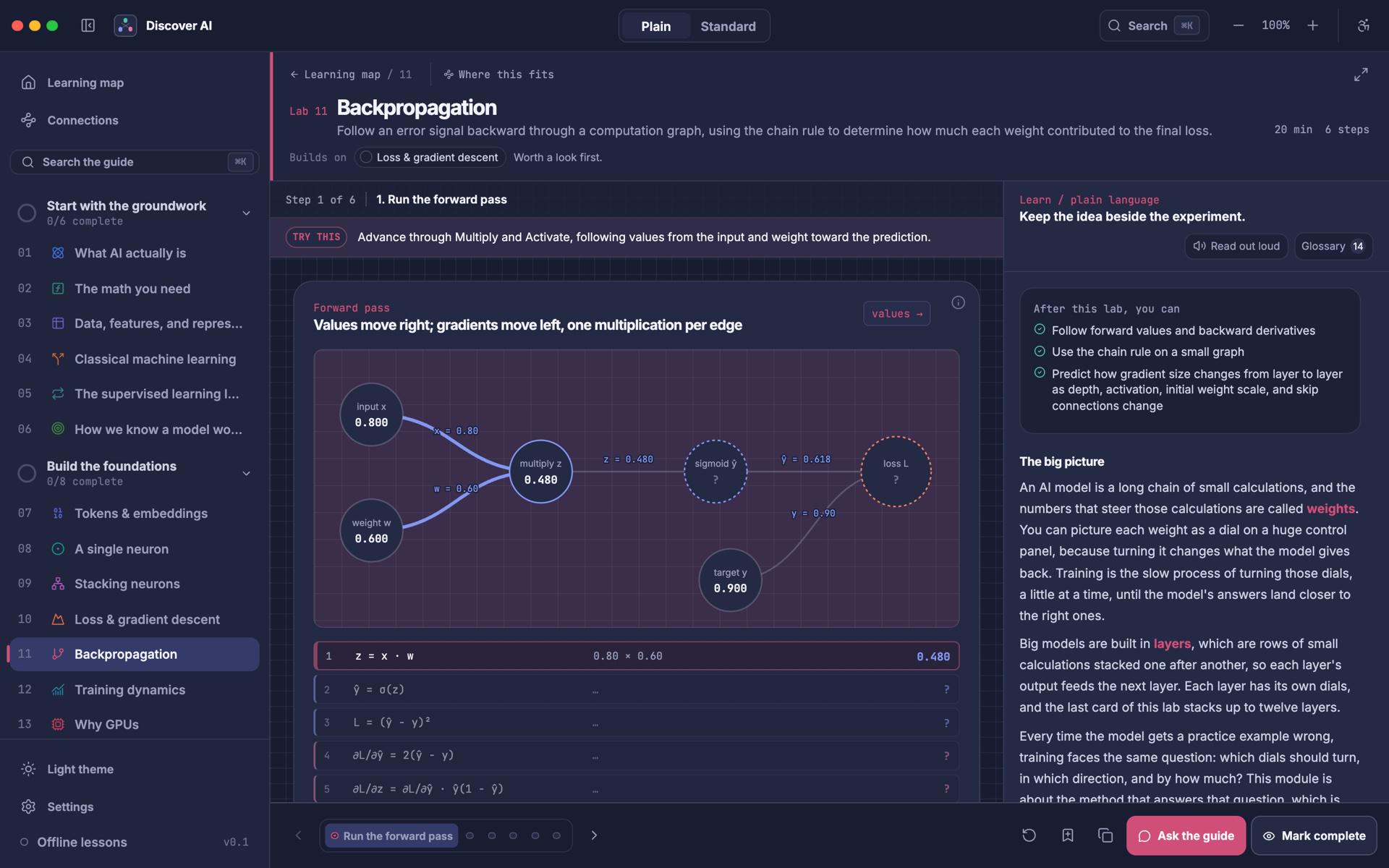
A learning tool.
r/FunMachineLearning • u/NearFlounder763 • 23d ago
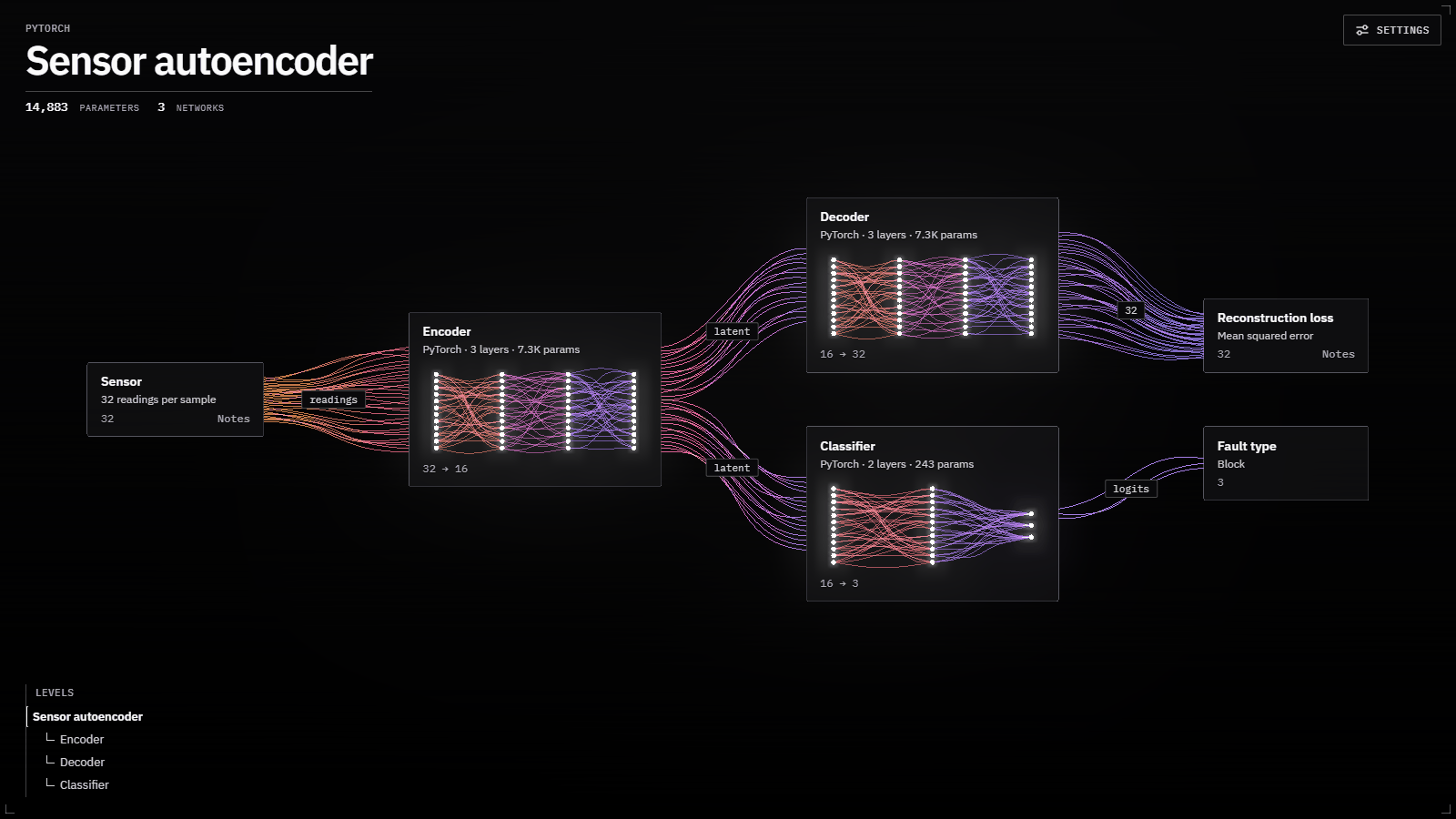
I built an open-source tool (MIT) that draws your model in the browser and shows it learning live (beta). It has loss curves, an overfitting check, predictions against the truth, and weights that brighten and fade as they change. A timeline lets you scrub back through the run. Whilst the training functionality is still very early phase the architecture visualisation works well for helping understand what your model actually looks like and supports creating multi model systems.
pip install "neurolume[torch]"
neurolume-demo --live
In your own code, it's neurolume.show(model, sample), or watch() plus live.log(step, loss=loss) while training.
It's early, so I'd love to hear what breaks.
r/FunMachineLearning • u/taranpula39 • 23d ago
I am sharing this here cause I have no shame.
r/FunMachineLearning • u/Longjumping-Act-4070 • 23d ago

feel free to try it out, works quite well, once you manage to implement it.. i hope i didnt miss any part of any PDF. for those of you who enjoy tinkering with new architectures and AI assisted implementation (no sane human would implement this manually i believe) enjoy!
r/FunMachineLearning • u/anusan_10 • 23d ago
r/FunMachineLearning • u/braiainlabs • 23d ago
brAIAIn is a word trigram model (it remembers two words at a time). It started from twelve lines of lab-written scripture called the Ten Instructions. Every version after that is trained on exactly one paid sentence, plus a few passages written by the version before it, so it slowly eats its own output.
Each sentence ships a numbered release with release notes, a research paper, a status incident and real benchmark scores. GSM8K: 0 out of 1,319. TruthfulQA: 31%, which beats random guessing (22%), but always picking the longest answer gets 37%, and the benchmarks page admits it.
brAIAIn-1 just shipped. It learned "zero, everything and nothing." and now knows 99 words.
Talk to it: https://www.braiain.com/?ref=reddit
Or on Hugging Face: https://huggingface.co/spaces/braiain-lab/brAIAIn
It's all satic (GitHub Pages, Stripe links and a GitHub Action that retrains every 10 minutes), and the model runs in your browser. Code, model and data are public domain. Happy to answer questions about how it works.
r/FunMachineLearning • u/Eastern_Cartoonist20 • 24d ago
**What it is:** A working, from-scratch implementation of the Zero-Map principle — synthesizing neural network weights from a mathematical formula rather than storing them on disk.
**The result:** A width-8192 network whose 24,576 weights are computed on every forward pass from the digits of 1/π (Ramanujan's 1914 series). It learns only 42 parameters (digit-embeddings + scales) and achieves 100% accuracy on XOR. The complete trained model is a 670-byte text file; reloading it in a fresh process produces bit-identical outputs.
**What I am not claiming:** This is not my invention. The Zero-Map principle has been discussed in recent preprints. My contribution is a runnable, reproducible artifact and a full failure log (v1→v6), including the point where ReLU killed 25% of neurons at hidden=2048 and collapsed training.
**Limitations:**
- Not a transformer replacement.
- A 3-hidden-unit MLP solves XOR with 16 parameters. The point is narrower: *at fixed width, 42 learnable numbers can perform the work of 32,769.*
- The weight matrix is constrained to 10 distinct values per layer, which limits expressivity.
**Code / model file:** https://github.com/Lexatellah/ramanujan-oracle
**One-line demo:** Run `see_it_work.py` — it shows one learnable number changing ~2,500 weights in a width-8192 network in 10 seconds.
r/FunMachineLearning • u/delavalom • 24d ago

I wanted Google DeepMind's EmbeddingGemma 2 on my phone, so I ported the model to Core ML, ran it on the Neural Engine, and built Roll, an iPhone app where you describe a pile of photos in plain words and swipe to clean it. Every photo and video becomes a vector on the device, the model is a one-time 343 MB download and search never touches the network.
What a search looks like:
Measured on my own library, iPhone 13 Pro Max, Debug build (TestFlight and App Store builds should be faster):
What was hard: Core ML loads the model as one ~1 GB blob, past what iOS gives a Neural Engine model, so it's 9 functions compiled one at a time (first launch ~20 minutes, then iOS caches it, and deletes that cache if free space drops under ~2 GB). Search started at ~300 ms per query because of one full scored sort per prompt, a single vDSP matrix multiply plus integer-aligned rows got it to 14.5 ms.
Every step of the conversion is tested against Google's original model across 8 stages, with gates that fail the build if the vectors drift. No vibes, cosine checks.
License, to be precise: the conversion repo and the Swift package are Apache 2.0, so anyone can run EmbeddingGemma 2 on Apple hardware (GitHub: https://github.com/Delavalom/embeddinggemma-coreml, HF: https://huggingface.co/delavalom/embeddinggemma-2-coreml). The app code is source-available (GitHub: https://github.com/Delavalom/roll-ios), readable and usable for yourself but not for selling.
The app itself is in TestFlight. If you'd rather build on the embedding model than the app, the Swift package is the part to take.
I'd really appreciate feedback, especially on the conversion gates and the search benchmark, and I'll answer questions about the port.
r/FunMachineLearning • u/gantred • 24d ago

r/FunMachineLearning • u/Level_Detail7125 • 24d ago
r/FunMachineLearning • u/christoffellis • 24d ago

Or atleast a simulator of Fortnite. Devided into 4 classes, each are different ML agents designed to be the best at their class. Feedback welcome!