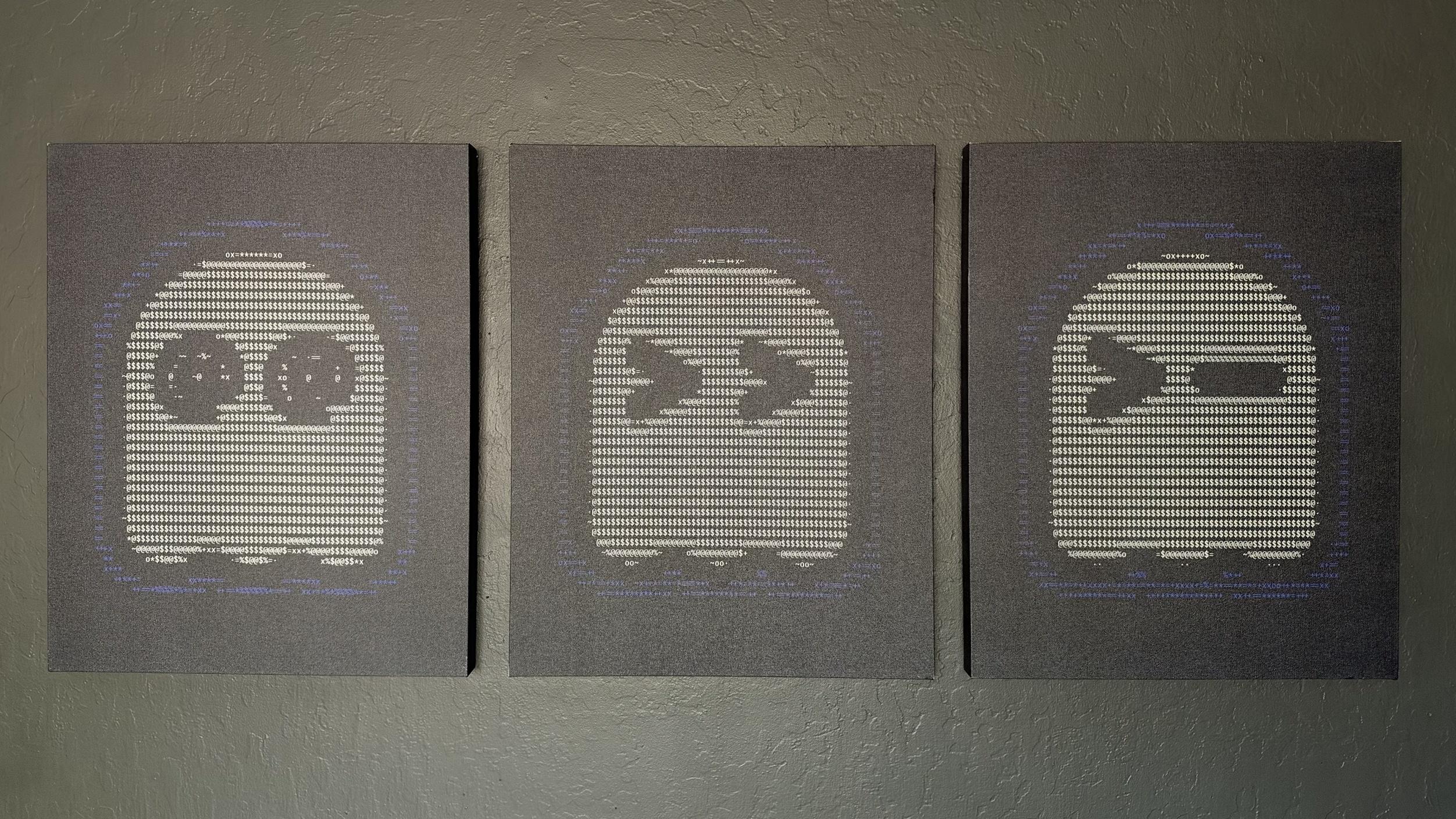
I think it's worth sharing here. Just to express my thoughts on Ghostty and Rex. I believe this is really something special. From an Emacs user's perspective.
Flow 0.51.0 is out, this one's an incremental release but it has some nice ux improvements. I changed the default command pallete to workspace instead of tabs and panes, you can still go back to previous setup from the keyboard settings. Plus some other under the hood improvements. I did this becuase I think most people don't want to search each tab/pane they just want workspace search.
Can someone explain what the Tailscale integration in Rex is actually meant for?
I initially thought it would allow me to access my Tailscale network directly from the Rex terminal without having to install or enable Tailscale on my Mac.
However, from what I've seen so far, it seems like the integration is mainly for adding the Rex Terminal to your Tailnet, allowing you to connect to it remotely via SSH without managing SSH credentials (assuming Tailscale (rex pkg) is installed and configured on the server).
Is that really all it does, or am I missing something?
I was hoping Rex could act as a gateway to my Tailnet, so I could access devices on my Tailscale network through the Rex terminal without running Tailscale locally on my Mac.
Hi r/Ghostty! A few weeks ago I shared ghostty-config, a full-screen TUI to configure Ghostty from inside Ghostty: themes, fonts, shortcuts and every setting, with live previews. It has grown a lot since, so here is what's new.
A redesigned settings screen
Window, Input, Session and the other tabs were rebuilt from the ground up:
Each group of settings is its own card, with a clear title, so you always know where you are.
Every control lines up on the same edge: sliders, toggles, segmented choices. Long lists of values open as a menu instead of a cramped stepper.
The side panel is no longer empty: it shows the Ghostty key and its default, what every value does (the current one highlighted), and the exact line that will be written to your config.
Changed settings get a dot; hover it and it becomes an "undo" arrow back to Ghostty's default.
Install terminal programs from inside the app
Extensions → Programs lists 37 command-line tools that make the most of Ghostty, in 8 groups:
Shell: starship, zoxide, fzf, atuin, carapace, lig
Images in the terminal (Kitty graphics): yazi, superfile, presenterm, fastfetch, kitten icat, chafa, viu, tdf
Editors and sessions: neovim, helix, micro, zmx, zellij
One Enter (after a confirmation) installs it with Homebrew if you have it, or from the project's GitHub release into ~/.local/bin, checked against GitHub's SHA-256. Never as root. The line that starts it goes into one marked block of your .zshrc / .bashrc / fish conf.d, backed up first. Switching a program off removes its line, Ctrl+X uninstalls it, and lines you wrote yourself are left alone.
Fonts and theme packs
70 monospace font families download in one Enter: the whole Nerd Fonts release, Google Sans Code, Maple Mono, JuliaMono. Icons included, no admin rights. The list shows a specimen set in the font itself.
1071 themes: a curated collection of 252, the 819 that ship with Ghostty, and 5 extra packs (cyberdream, onedarkpro, nightfly, vscode, oasis).
16 shaders: cursor trails (smear, blaze, warp, sweep…) and screen effects (bloom, CRT, VHS, starfield, black hole), each with its source and licence shown before install.
Clearer organisation
212 Ghostty options (macOS, Ghostty 1.4), each hidden when your platform or Ghostty version doesn't have it.
Within each section, the groups come in the order people actually reach for them: Window opens on opacity and blur, Input has the cursor right after the keyboard, and so on.
Three layouts for the same settings: Atelier (sections and the theme wall), Palette (one search box over everything) and Guided (six plain questions, one at a time). Switch any time with F4.
Even faster
It's a single Go binary, no Python, no runtime.
Startup to first frame went from 103 ms to 42 ms.
Redrawing the window preview when you change a value went from about 85 ms to 2 ms, so dragging the opacity slider is smooth.
Unchanged frames take under 2 ms.
Safe with your config
Each setting is rewritten on its own line, and your comments are kept.
Every file is backed up before its first change.
After each write, the config is checked with ghostty +validate-config, then Ghostty is asked to reload.
Install
curl -fsSL https://ghostty-config.vitruves.workers.dev/install.sh | sh
or pip install ghostty-config. macOS and Linux, Intel and ARM.
Font in use: Dosage Mono. I drew it by hand, pixel by pixel, trying to make a pixel font that’s easy to read, especially in TUIs. It also comes with a proportional (non-monospace) version.
Ghostty has no Accessibility text API, so Termhint has zsh ask Ghostty for the cursor cell and cell size and places the popup from that. No Accessibility permission needed.
You get subcommands, flags with descriptions, npm scripts and paths in a dropdown at the cursor, plus prompt themes, 23 color schemes applied to Ghostty, tab titles, and a Nerd Font set up so icons show instead of boxes. There's also a runtime manager for 14 languages.
I'm the developer. macOS 14+, Apple silicon, 7-day free trial: https://termhint.com
Just testing the limits of what is possible here using the kitty graphics protoccol on ghostty. This is actually just the original ps2 game decompiled to C++ and recompiled into wasm using the ps2 runtime from https://github.com/snuri00/ps2-web-recomp...
But that is not what we care about here!
katnav is a experimental webbrowser using CEF (because nothing else would run gta on terminal so well so I just used chromium) and kitty graphics protccol: https://github.com/h4ks-com/katnav
Chrome renders WebGL normally and katui will convert it into rectangular tiles that we dynamically downscale in resolution, diff trying to update only what changed (which makes some sense for UIs but not as much for a game stream like that), compresses and base64 it in parallel. Most of the heavy lifting is done by the library itself.
According to my benchmarks I can get 36MB/s on kitty allowing 32 fps, while for ghostty 85 MB/s allowing 61 fps when 100% of the tiles change. Of course this varies between harware.
And yes you can use katnav for browsing the normal web, it is an actual browser, check the github ;)
I am making this experiment mostly for fun, so it is pretty much fully vibecoded, but I tried to keep the maximum architetrual overview and coverage with static analysis checks. Feel free to reach me out if you find this interesting and would like to bring it further. In theory now I could put any graphical application in the terminal. Not sure if someone has already done that?
Ghostty brings your tabs back after a quit or a crash, but not what was running in them. For me that meant losing Claude Code sessions in the middle of long jobs every time Ghostty auto-updated or I hit ⌘Q instead of ⌘W.
So I made revenant. Every Ghostty tab runs inside its own invisible tmux session: its own socket, no status bar, no prefix key, it never touches your ~/.tmux.conf. When Ghostty restores a tab, revenant re-attaches exactly that tab's session, matched by Ghostty's surface UUID, so Claude Code, dev servers, ssh and REPLs just keep going. Close a tab on purpose and it still dies like a normal tab.
Install: brew install zerotool/tap/revenant && revenant install, then open a new tab. macOS only for now (it uses Ghostty's AppleScript API), MIT licensed: https://github.com/zerotool/revenant
Full disclosure: I built it with a lot of help from Claude Code. Feedback welcome, especially from people with unusual Ghostty setups.
BLUF: I love the terminal and Rex is an Ode to terminal geeks.
I have been bouncing around different harnesses, agents and iOS apps and have not found the right combination that allowed me and old graybeard to drive a bunch of terminal agents quickly and easily. Rex has changed that forever. Once I signed up for the iOS beta and found that y'all had built tailscale directly in it finally clicked. Combine that with Qwencloud Qwen4max token preview at 80% off and I burned through almost 3.5B tokens in a 4 day period. I have been crushing the todo lists on my open-source projects and since I have been holding back talking about them now I am going to have to post about them. Sorry not Sorry.
Thanks again Ghostty team and congratulations on Rex, it is a solid tool for the tool belt and it particularly has solved the core problem I had which is I love the terminal and I want to control my terminal remotely like it is a terminal. You have increased my productivity 10x and my wife is happy I am not staring at my laptop during tv we both can stare at our phones. I just happen to be controlling 10 agents implementing code.
vtmux a tmux 3.8 drop-in replacemnt using libghostty-vt.
Disclaimer; Agents wrote most of the code.
tmux 3.8 compliant; same CLI, config, formats and control mode.
173 of tmux's own 174 regress tests pass, run unchanged.
449 scenarios recorded from real tmux (screens, output, control-mode streams) replay identically.
What it does better than tmux:
- Stable rendering: each client gets one finished frame at a time, with only what changed, inside synchronized output and with the cursor placed once. There's no cursor jumping or tearing under heavy output.
- Pane blend: Inactive panes dim, every cell, like Ghostty's unfocused splits.
- Live upgrade: you swap the binary under a running server and shells and clients stay put. 10 panes with 100k lines each move over in under a second.
- Compressed scrollback: 1M lines settle at 103 MB against tmux's 622 MB.
Lig brings IDE-style completions to your terminal: subcommands, options, branches and packages in a popup as you type.
It now runs on every major OS: macOS, Linux and Windows, in zsh, bash, fish, PowerShell and cmd, with the same popup everywhere. It also supports more commands, has better configuration, and fixes a lot of bugs.
Tmux Control Mode (https://github.com/tmux/tmux/wiki/Control-Mode) is a way to use native tabs and splits in tmux sessions, making them persistent if you close Ghostty and you can have remote tmux sessions as native windows, tabs, panes.
Mitchell does not accept vibe coded PRs but I made this for personal use in the first place but I want to share on the off chance that anyone has had the same need.
This feature is also being implemented officially, at a slower and more well-maintained way, but until then, you can use it with this fork.
So, i opened ghostty and noticed that my font is displayed incorrectly, or at least it doesnt looks like it used to, how do i fix this? 😭 i hope im not going crazy
recol is a fast and lightweight command-line color scheme manager. Browse, preview, apply, adjust, and generate color schemes from images - all from one tool.
7 built-in targets: Ghostty, Kitty, Alacrity, WezTerm, Neovim, Vim and Pi
Designed for a consistent color experience across your development environment.
tot (terms of torment) is a terminal game I made for myself, it is an auto-shooter dungeon crawler inspired by HallsOfTorment/VimpireSurvivors and Diablo.
Still WIP but I have had fun with it. It has a game-schema and you can have a local ClaudeCode agent of yours generate a level for you. I plan to keep adding features (meta-progression/skills-tree) and polish gameplay.
This release adds a command pallete and an agents pallete, which i've been working on for a while, I also added some quality of life improvements like cmd+v to paste images and homebrew installation.