r/Historydom • • 14d ago

General Discussion IMPORTANT UPDATE: SELF PROMOTION IS WELCOMED! While almost every subreddit prohibits self promotion, we allow it! The ONLY restriction: DO NOT POST YOUR VIDEOS IN OUR VIDEO-LIBRARY!

Post image
19 Upvotes

r/Historydom • • 17d ago

VIDEO-LIBRARY Watch our new episode: What you should know about the pre-Sumerian town Tepe Gawra

Thumbnail
youtu.be
2 Upvotes

r/Historydom • • 1d ago

🗺️ Hidden Stories of Nations & States James the Just a.k.a. Brother of Jesus. He became the first bishop of Jerusalem. James was martyred in ca.62-69 A.D.

Post image
55 Upvotes

r/Historydom • • 1d ago

🗺️ Hidden Stories of Nations & States Why it happened? Indians refused Buddha and Israelites refused Christ, but both established the world religions

Post image
0 Upvotes

r/Historydom • • 3d ago

Forgotten Origins of Civilization Jeulmun Pottery Period (8000-1500 B.C.), Korea - Don’t you think its pottery looks like Mesopotamian one?

Thumbnail
gallery
16 Upvotes

r/Historydom • • 4d ago Helpful Bravo

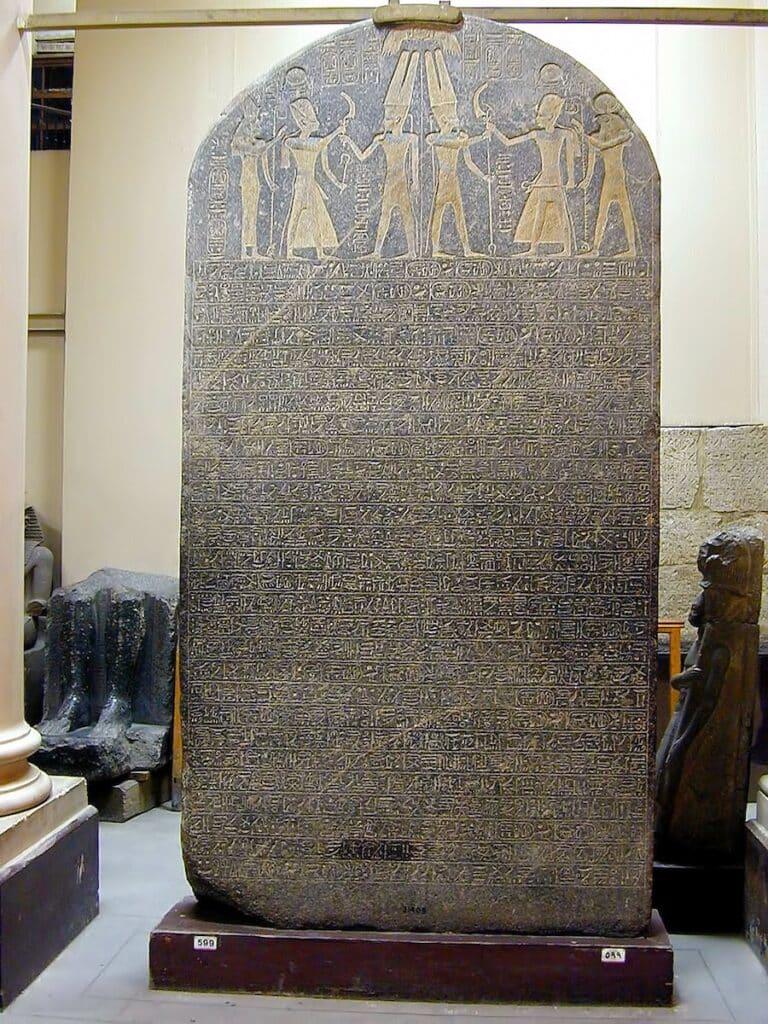
🗺️ Hidden Stories of Nations & States The ~3,234 year old Egyptian "Merneptah Stele" identifies (land of a man named) Israel as a distinct group of people living in the Canaan region.

Post image
382 Upvotes

The Individual: Jacob's Name Change to Israel

Timeline: ~4,000 years ago

  • The origin of the region named "Israel" begins with the (most respected leader of a group) patriarch named Jacob. According to the foundational legend Jacob took the name Israel ("one who struggles with God") because he believed he had wrestled with a divine being. At this stage, the name was purely personal, identifying a specific individual and his perceived experience.
  • This established a lineage-based, group identity, named after a man named Israel, from a place his descendents would then say is the "Land of Israel" (or "Israel" for short).
  • Indigenous Evolution: Modern research indicates these people were largely indigenous to the Levant, developing a unique "Israelite" cultural and religious identity from within the local Canaanite populations.
  • As Jacob's/Israel’s descendants (the twelve tribes) grew in number, the name shifted from a man to a well known collective group known as the Israelites.

The People: From a Family to the Israelite Civilization

Timeline: 3,234 years ago (1208 BCE)

  • Archaeological Record: Non-biblical evidence for the Land of Israel being well known in Egypt is the Merneptah Stele, an Egyptian granite monument. It identifies "Israel" as a distinct group of people living in the Canaan region. It reads: "Israel is wasted, its seed is not".
  • Regardless of whether or not a man named Jacob/Israel existed: the Merneptah Stele uses a specific hieroglyphic symbol for Israel that defines them as a distinct socio-ethnic group (a people), rather than a settled city-state or fixed geographic territory.
  • Jewish tradition still contains laws and holidays (some over 3,000 years old) that celebrate the agricultural cycles the Land of Israel depended on for food and survival.
  • Passover (Pesach): Known as the Festival of Ripening (Chag HaAviv), it marks the beginning of the spring barley harvest.
  • Shavuot (Feast of Weeks): Known as the Festival of the Harvest (Chag HaKatzir), it celebrates the end of the barley harvest and the beginning of the summer wheat harvest, as well as the bringing of First Fruits (Bikkurim) to the Temple in Jerusalem.
  • Sukkot (Festival of Booths): Known as the Festival of Ingathering (Chag HaAsif), it marks the final autumn harvest of fruits, including the olive harvest (which later supplies the olive oil celebrated during Hanukkah)—and the end of the agricultural year in the fall.
  • Tu B’Shevat: The "New Year for Trees," celebrated when trees begin to bloom after the winter rains in Israel. Today, it is a major day for ecological awareness and tree planting.
  • Shemini Atzeret: Following Sukkot, this holiday includes specific prayers for rain to ensure a successful planting season for the coming year.
  • Shmita: A mandated seven-year agricultural cycle where the land is left to rest and recover during the seventh year, often called the "Sabbath of the land."
  • Tu B’Av: Historically a mid-summer matchmaking day that also functioned as a celebration of the grape harvest.

The Place: From the Land of Israel to a Powerful Kingdom

Timeline: ~3,000 years ago (1047–930 BCE)

  • United Kingdom of Israel emerged as a significant power in the Southern Levant under Kings Saul, David, and Solomon.
  • This era marked a peak of Hebrew unity, with King David having established Jerusalem as the capital and Solomon building the First Temple.

The Early Eras of Invasions and Identity Erasure

Timeline: 3,076 to 509 years ago (1050 BCE – 1517 CE)

  • The land was frequently invaded by foreign powers seeking to control the strategic crossroads between Africa, Asia, and Europe.
  • Following the appearance of Israel as a distinct place and people, the Philistines arrived on the southern Levantine coast, beginning a multi-century effort to expand inland. Operating from five major city-states, the Philistines exerted pressure on the Israelite tribes, reaching a height of territorial influence around 3,076 years ago (1050 BCE) after the Battle of Aphek. This expansion reached its zenith with the death of King Saul at the Battle of Mount Gilboa in 3,036 years ago (1010 BCE). However, the occupation was effectively halted and pushed back to the coastal plains by King David around 3,026 years ago (1000 BCE), establishing a stable border until the Assyrian conquests.
  • 2,766 years ago (740 BCE): The Neo-Assyrian conquest began under Tiglath-Pileser III, reducing the Northern Kingdom to a vassal state. This culminated with the fall of Samaria and mass deportation of its inhabitants, effectively dissolving the Northern Kingdom. The Southern Kingdom of Judah survived a devastating siege by Sennacherib in 2,727 years ago (701 BCE), but remained a subservient tributary state.
  • Around 2,638 years ago (612 BCE): Assyrian dominance ended following the fall of Nineveh, shifting control of the Levant to the Neo-Babylonians.
  • 2,089 years ago (63 BCE): The Roman Invasion begins with Pompey. Later, in 70 CE, the Romans destroyed the Second Temple. In 135 CE, following the Bar Kokhba revolt, Roman Emperor Hadrian renamed the region "Syria Palaestina"—after the Philistines (extinct Greek-linked enemies of the Jews)—to attempt the erasure of Jewish identity and suggest the Jews no longer belonged there.
  • 1,388 years ago (638 CE): The Islamic Conquests. Islam was founded. Islamic Arab armies from the Arabian Peninsula invaded and captured Jerusalem, beginning a centuries-long period of gradual (cultural and linguistic shift not entirely ethnic) "Arabization."
  • 927 years ago (1099 CE): Crusader Kingdom. European Christians captured the land sacred to them, but lost Jerusalem to Saladin in 1187.
  • 766 years ago (1260 CE): Mamluk Conquest. Based in Egypt, the Mamluk Sultanate defeated both the Mongols and the last Crusaders.
  • 509 years ago (1517): The Ottoman Empire. The region was conquered by the Ottoman Turks, who ruled for four centuries until World War 1.

The British "Mandate for Palestine" & The UN Partition

Timeline: 106 to 79 years ago (1920–1947)

  • 106 years ago (1920): The British Mandate. Following the Ottoman defeat, the British formalized the region's borders under the historical name "Palestine" (derived from Palaestina/Filastin), and everyone living in the region became known as "Palestinians". Britain was tasked by the League of Nations with creating a "Jewish National Home".
  • 87–90 years ago (1936–1939): The Arab Revolt. Arabs and Arabized Palestinians fought the British to end the Mandate and stop Jewish immigration.
  • 79 years ago (1947): The UN Solution. The UN proposed a "Two-State Solution" (Resolution 181) to create an "Arab state" and a secular Jewish-friendly state.
  • The Outcome: Jewish Palestinian leaders accepted the plan; Arab and Arabized Palestinian leaders rejected it, choosing war instead of a shared peace. Israelites/Jews in the "Land of Israel" were forced to defend themselves or be exterminated, by a culture and religion from the Arabian Peninsula.

1948: Independence, Invasion, and the "Nakba"

Timeline: 78 years ago (1948)

  • 78 years ago (May 14, 1948): The Jewish Palestinian community in the British Mandate declared the independence of the State of Israel, which was immediately followed by an invasion from neighboring Arab and Arabized states.
  • The 1948 war resulted in the Nakba, the displacement of 700,000+ non-Jewish people. This exodus was driven by a complex mix of factors: direct expulsions of civilian populations in areas of resistance, psychological warfare, and panic.
  • Simultaneously, some residents left due to the collapse of local leadership or localized instructions from Arab officials to clear battle zones. While some Jewish leaders urged their neighbors to remain, the broader conflict transformed the land from a region that had undergone centuries of Arabization into a sovereign Jewish-friendly democratic state.
  • 78 years ago (1948): Azzam Pasha, Sec-Gen of the Arab League, declared: "This will be a war of extermination and a momentous massacre."
  • Memoirs of Khaled al-Azm (Syrian PM 1948-49): "We ourselves are the ones who encouraged them to leave*... we brought destruction upon a million Arab refugees."*
  • 72 years ago (Sept. 6, 1954): The Jordan newspaper Ad-Difaa reported: "The Arab Governments told us: 'Get out so that we can get in.' So we got out, but they did not get in."

The Aftermath: Two Different Realities

Timeline: 1948 to Present

  • The "Stayers": Roughly 150,000 remained in the newly established state of Israel. Today, their descendants are among the 2 million+ Arab Israelis who now enjoy full voting rights, serve in the Knesset (Parliament), and sit on the Supreme Court.
  • The "Leavers": Those who fled, were expelled, or followed local evacuation orders moved to Gaza, the West Bank, or surrounding countries. They lost the war and were largely kept in refugee status by their own leadership to be used as political leverage to "return" to land they vacated.
  • Jordan and Egypt occupied/ruled West Bank and Gaza (1948–1967): Following the 1948 Arab-Israeli War, Jordan took control of the West Bank and East Jerusalem. Egypt controlled the Gaza Strip, except for a brief interruption in 1956.
  • Jordan annexed the West Bank (1950): On April 24, 1950, Jordan formally annexed the West Bank. This action was not widely recognized internationally, with only the UK, Iraq, and Pakistan granting recognition.
  • No Palestinian Sovereignty Granted (1948–1967): During the 19 years of Jordanian and Egyptian rule, there was no independent Palestinian state or sovereignty established in the West Bank or Gaza. Jordan granted citizenship to West Bank Palestinians, but Egypt did not for those in Gaza.
  • Impact of 1967: As a preemptive measure against an imminent attack, Israel took control of the West Bank and Gaza Strip from Jordan and Egypt during the 1967 Six-Day War.

r/Historydom • • 3d ago

🗺️ Hidden Stories of Nations & States In 1940s Mandatory Palestine the conical cap in this colorized photo was worn by married Christian Palestinian women of the Bethlehem region, who alongside Jews and Samaritans are the Closest Living Relatives to the ancient Israelite populations.

Post image
67 Upvotes

The indigenous religion of the ancient Land of Israel evolved from Canaanite polytheism into Yahwism, and eventually into Second Temple Judaism, before some inhabitants converted to Christianity and later Islam.

Within this history, Jews, Samaritans, and Druze are considered ethnoreligious groups, meaning their identities combine shared ethnicity, ancestry, history, and culture with a traditional religion. In contrast, the term "Palestinian" historically referred to a geographic region rather than a single ethnicity, much like "American," which encompasses people of many different backgrounds.

Genetic Composition of Populations in Israel, the West Bank, Gaza, and Jordan

Population GroupEstimated Ancient Levantine / Canaanite AncestryPrimary Outside AdmixtureGenetic Profile & Clustering
Samaritans (West Bank / Israel)~90% – 95%Minimal (Extremely high isolation)Highest genetic continuity with Iron Age Israelite profiles due to strict, millennia-long religious isolation.
West Bank & Gaza Christians~85% – 93%Minimal (Minor Southern European)High continuity with Bronze/Iron Age Levantine samples; virtually un-impacted by later historical migrations.
Druze (Galilee, Golan, Jordan)~80% – 90%Minimal (Minor Armenian / Anatolian)Represents an ancient Levantine genetic isolate. Highly endogamous since the 11th century.
West Bank & Jordanian Muslims~70% – 82%Arabian Peninsula, Egyptian, East AfricanHigh Levantine base, with shifts reflecting the 7th-century Islamic conquests and regional trade routes.
Musta'arabi & Mizrahi Jews (Indigenous / Now Israeli)~65% – 80%Mesopotamian, PersianThe original Arabic-speaking Jews who never left the Levant. They cluster directly with West Bank Christians and Druze.
Gaza Muslims~60% – 75%High Egyptian, North and East AfricanRetains a clear Levantine core but shows significantly higher North African and Egyptian admixture due to geographic proximity.
Sephardic Jews (Old Yishuv / Now Israeli)~50% – 70%Southern European (Iberian), North AfricanHolds a strong Levantine core but pulled toward the Mediterranean due to the post-1492 exile in Europe and North Africa.
Bedouins (Negev and Jordan)~40% – 60%High Arabian Peninsula, Northeast AfricanPossesses a Levantine genetic layer but heavily shifted toward the Arabian Peninsula due to nomadic tribal origins.
Ashkenazi Jews (Now Israeli / Global)~30% – 50%Southern European (Italian/Greek), Eastern EuropeanShares the same ancient Levantine core as local populations, but genetically pulled toward Southern Europe due to historical diaspora intermarriage.

NOTE: Core genome analysis is a methodological approach in pan-genome research, focusing on analyzing the set of genes shared by all individuals within a specific population or species. https://www.cd-genomics.com/pop-genomics/core-genome-analysis.html

  • The Gaza-Egypt Gradient: Separating the data by sub-region highlights a distinct geographic gradient. Because Gaza directly borders the Sinai Peninsula, Gaza Muslims exhibit a measurably higher degree of Egyptian and African admixture compared to populations in the West Bank and Jordan.
  • The West Bank Core: Populations native to the mountainous interior of the West Bank (such as West Bank Christians, Samaritans, and local Muslims) show the highest overall baseline of ancient inland Levantine ancestry due to historical relative isolation from coastal trade routes.

The Process of Arabization

This genetic continuity matches historical data on linguistic change. Following the Arab conquests of the 7th century CE, the local Israelite and Jewish farming peasants (fellaheen) stayed on their land. Over centuries, these Israelite and Jewish farmers gradually converted, first to Christianity under Byzantine rule (4th–7th century CE), and later to Islam to avoid heavy religious taxes (jizya) or voluntarily. Over generations, they slowly adopted the Arabic language and culture through a social process called Arabization, while their biological DNA remained Levantine, non-Arab.

References

Below is a compiled list of frequently cited, peer-reviewed genetic studies exploring the Southern Levant, modern Palestinian populations, and various Jewish diaspora groups, complete with direct links to the publications.

Studies on Y-Chromosomal Lineages and Shared Middle Eastern Roots

  • Hammer et al. (2000) – "Jewish and Middle Eastern non-Jewish populations share a common pool of Y-chromosome biallelic haplotypes" (Proceedings of the National Academy of Sciences).

    • Focus: This baseline paternal lineage study examined Y-chromosomal markers, demonstrating that European, North African, and Middle Eastern Jewish diaspora groups clustered tightly alongside non-Jewish Middle Eastern populations like Palestinians and Syrians, confirming a shared ancestral source pool in the ancient Levant.
  • Nebel et al. (2000) – "High-resolution Y chromosome haplotypes of Israeli and Palestinian Moslem Arabs" (Human Genetics).

    • Focus: This paper mapped the paternal markers of Palestinian Muslim Arabs and compared them directly to Ashkenazi and Sephardic Jewish communities. The research revealed that 70% of the tested Jewish individuals and 82% of the Palestinian individuals shared the exact same chromosome pool, proving direct shared regional ancestry.
  • Nebel et al. (2001) – "The Y Chromosome Pool of Jews as Part of the Genetic Landscape of the Middle East" (The American Journal of Human Genetics).

    • Focus: An expansion of their previous study using higher-resolution microsatellite haplotypes. The data reinforced that Palestinian Muslim Arabs and modern Jewish populations represent closely related historical branches of an indigenous Levantine lineage.

Genome-Wide and Autosomal DNA Landscape Studies

  • Atzmon et al. (2010) – "Abraham's Children in the Genome Era: Major Jewish Diaspora Populations Comprise Distinct Genetic Clusters with Shared Middle Eastern Ancestry" (The American Journal of Human Genetics).

    • Focus: Utilizing genome-wide analysis across seven distinct Jewish populations, researchers confirmed a cohesive, shared genetic architecture tracing directly back to the Middle East. It noted strong genetic proximity between these diaspora groups and modern non-Jewish Levantine populations, including Palestinians and Druze.
  • Behar et al. (2010) – "The genome-wide structure of the Jewish people" (Nature).

    • Focus: This large-scale paper analyzed 14 Jewish diaspora communities against 69 global populations. It demonstrated that almost all Jewish groups trace their primary ancestry to a shared Levantine source pool, which overlies and clusters closest with modern Palestinians, Druze, and Lebanese populations.
  1. Agranat-Tamir et al. (2020) – "The Genomic History of the Bronze Age Southern Levant" (Cell).

    • Focus: A landmark paper that sequenced ancient genome-wide DNA from 73 individuals across five different archaeological sites in Israel, Palestine, and Jordan spanning the Bronze and Iron Ages. The model concluded that over 50% of the ancestry of all present-day Levantine populations (including Palestinians and various Jewish diaspora groups) traces directly back to these ancient inhabitants.

r/Historydom • • 5d ago

🗺️ Hidden Stories of Nations & States What is the earliest source when the word “India” was used to describe this country?

Post image
35 Upvotes

r/Historydom • • 6d ago

🗺️ Hidden Stories of Nations & States Characteristics of Palestine Youth (1947)

Post image
69 Upvotes

At the top is the emblem later adopted as the flag of the State of Israel when the British Mandate ended.

  • Author: Eliezer Spector
  • Publication Year: 1947 (prior to the establishment of the State of Israel)
  • Publisher: Lion the Printer, Tel Aviv, Eretz Israel
  • Content: 63-page illustrated sociological survey of the young Jewish population (Yishuv) living in Mandatory Palestine. Written on the eve of the British departure and the end of the Mandate, the booklet explains how a generation born or raised in the land was being educated, organized, and prepared to sustain an independent, self-governing society.

Below is a comprehensive breakdown of the most important concepts, observations, and arguments presented in the text.

1. Purpose and Historical Context of the Text

  • Defining "Palestine Youth": In 1947, prior to the establishment of the State of Israel, "Palestine" (rendered in Hebrew on contemporary emblems as Palestina [E.I.]—Eretz Israel) was the standard English administrative name for the British Mandate territory. Spector uses the phrase "Palestine Youth" specifically to describe the young Hebrew-speaking Jewish population growing up in the territory.
  • Preparing for Self-Reliance: The core premise of the booklet is that the survival and development of the community depended on transforming a historically urban, dispersed, and vulnerable population into a rooted, physically capable, and self-reliant generation ready to take responsibility for the territory once British administration ended.
  • The Sabra (Native-Born) Character: Spector highlights the distinct psychological and physical traits of youth born and raised in the land. Unlike their immigrant parents—who often carried the anxieties, linguistic barriers, and habits of European or Middle Eastern diasporas—the local youth are depicted as direct, uninhibited, physically robust, deeply attached to the local landscape, and fluent in modern spoken Hebrew as their natural mother tongue.

2. Demographic Makeup of the Younger Generation

Spector divides the young Jewish population into four primary social groups, analyzing how distinct backgrounds were being blended into a single civic culture:

  • The "New Yishuv" Youth (Urban and Agricultural): Children of modern immigrants living in newly built cities (such as Tel Aviv and Haifa) or in rural farming communities. They formed the cultural backbone of the modern Hebrew school system and youth organizations.
  • The "Old Yishuv" Youth: Young people from long-established, deeply traditional religious communities centered primarily in Jerusalem, Safed, Tiberias, and Hebron. Spector notes the contrast between their insular, traditional upbringing and the outward-looking civic culture of the newer towns, while documenting gradual points of contact through vocational training and religious youth groups.
  • Youth Aliyah (Aliyat HaNoar) Arrivals: Thousands of young refugees rescued from Europe before, during, and immediately after World War II. A major focus of the text is the psychological and physical rehabilitation of orphaned or traumatized adolescents through structured group living, agricultural education, and peer integration in rural youth villages.
  • Oriental (Mizrahi) Jewish Youth: Young people from long-standing Middle Eastern and African communities. Spector addresses the socioeconomic disparities many of these youths faced in urban neighborhoods—often entering the workforce early to support their families—and describes efforts by educational institutions and working-youth organizations to provide them with evening schooling, trade apprenticeships, and social mobility.

3. Upbringing, Education, and the Work Ethic

A central pillar of Spector’s analysis is how education in Mandatory Palestine deliberately departed from purely academic or clerical schooling in favor of practical, hands-on capability:

  • The Dignity of Manual Labor: The text emphasizes an educational philosophy that elevated physical work—farming, construction, road-building, and mechanical trades—to the highest social value. Young people were taught that building a viable society required working the land and mastering essential crafts rather than relying on outside labor.
  • Communal Education in Collective Settlements: Spector devotes significant attention to upbringing on kibbutzim (collective agricultural settlements) and moshavim (cooperative smallholder villages). In the kibbutz system, children lived in dedicated "children's houses," studied in classrooms emphasizing nature, agriculture, and self-governance, and gradually took on daily farm chores alongside adults. This environment fostered intense peer solidarity, mutual responsibility, and practical independence from an early age.
  • Urban Vocational and Working Youth: For adolescents in cities who could not attend full-time secondary schools, Spector describes networks of trade schools, agricultural schools (such as Mikveh Israel), and evening classes designed to prevent child labor exploitation while equipping teens with industrial and agricultural skills.

4. Survey of Organized Youth Movements

Rather than functioning as casual social clubs, the youth movements catalogued by Spector served as the primary civic, moral, and organizational training grounds for adolescents across the territory. He categorizes them by their organizational structure and social focus:

CategoryRepresentative GroupsCore Focus and Activities in the Text
Labor & Pioneering MovementsHaNoar HaOved (Working Youth), HaShomer HaTzair, HaMachanot HaOlim, GordoniaProtecting teenage workers' rights, vocational education, and forming agricultural training groups (hachshara) to establish new farming settlements.
Non-Partisan ScoutingHaTzofim (Hebrew Scouts)Outdoor woodcraft, hiking, civic service, self-reliance, and frontier settlement without political party affiliation.
Religious MovementsBnei Akiva, EzraCombining traditional Torah study and religious observance with modern farming, scouting, and cooperative village life.
National-Discipline MovementsBetarEmphasizing Hebrew language revival, ceremonial discipline, physical fitness, and national self-reliance.
  • Geographic Mastery via Hiking (Tiulim): Across nearly all movements, Spector highlights multi-day hikes across mountains, valleys, and deserts as a defining youth activity. Knowing every trail, water source, and topographic feature of the land was treated as both an educational necessity and a practical preparation for living in and protecting remote areas.
  • Settlement Nuclei (Gar'inim): Upon finishing secondary school, members of these movements routinely organized themselves into cohesive peer groups that spent a transitional period working on established farms before founding new agricultural communities in undeveloped regions like the Negev desert or the Galilee.

5. Cultural Life, Recreation, and Visual Record

To balance the emphasis on hard work and pioneering discipline, Spector documents the cultural and recreational habits that shaped everyday youth life:

  • Revival of Hebrew Culture: Youth movements and schools were the primary engines for standardizing modern Hebrew in daily speech, folk music, choral singing, and folk dancing (Hora), creating a shared national culture among youth whose parents spoke dozens of different languages.
  • Sports and Physical Culture: Organizations such as Hapoel and Maccabi promoted gymnastics, track and field, swimming, and team sports as essential components of healthy youth development.
  • Photographic Documentation: The booklet is illustrated throughout with black-and-white photographs that reinforce its themes. Rather than formal studio portraits, the images capture young people in action: plowing fields, tending livestock, working at carpentry and metalworking benches, marching in scout uniforms, hiking in the hills, and gathering for music and outdoor recreation.

Summary of the Booklet's Core Message

Taken as a whole, Characteristics of Palestine Youth presents a portrait of a younger generation consciously molded to bridge the transition from a dependent immigrant community under British Mandate administration to a self-sustaining, Hebrew-speaking society. By combining agricultural training, trade skills, group solidarity, and deep familiarity with the physical geography of the territory, the institutions described by Spector aimed to ensure that the youth were practically equipped to build, govern, and maintain the land as soon as the Mandate came to an end.


r/Historydom • • 6d ago

🗺️ Hidden Stories of Nations & States From Agrarian Soil Cycles to Purim's Celebration of Courage: How Ancient Traditions Demonstrate an Indigenous Connection to the Land of Israel/Palestine. (Pictured: Young Jewish Palestinian woman in traditional festive Levantine Purim attire, 1938, B&W and Colorized)

Thumbnail
gallery
44 Upvotes

Drawing on Levantine survival strategies that (as in Recent African origin of modern humans) date back over 100,000 years, through to the region's earliest farming traditions, the early Israelites codified the seasonal cycles of their homeland into a unified national calendar long before modern concepts of religion existed.

Today, these observances are widely categorized as religious "Jewish holidays" but they are fundamentally indigenous cultural traditions centered on farming, soil stewardship, and physical survival rather than religious scripture. Because the Jewish people are indigenous to the land, they preserved this agricultural and ecological calendar for centuries in the diaspora, tracking the rainfall, harvest cycles, and seasonal shifts of their ancestral home even when living thousands of miles away.

The Lunisolar Calendar

To ensure agricultural events consistently match the correct season, the ancient Hebrew calendar is lunisolar. Months follow the cycles of the moon (29 to 30 days). Because a lunar year falls 11 days short of a solar year, a leap month is periodically added so that spring events always align with the local barley harvest and autumn events align with the regional fruit harvest.

The Agricultural Harvest Cycles

Rather than purely abstract religious rituals, these core observances were built around the practical realities of ancient farming:

  • The Spring Barley Harvest (Passover / Chag HaAviv**):** Marks the ripening of the first grain crop of the year. Historically, it was the first of three major pilgrimage festivals (Shalosh Regalim), requiring farmers to travel to Jerusalem with unleavened bread made from the fresh grain.
  • The Summer Wheat & First Fruits Harvest (Shavuot / Chag HaKatzir**):** Marks the end of the barley harvest and the start of the summer wheat harvest. Farmers brought their Bikkurim—the first and finest of the Seven Species, including figs, grapes, pomegranates, dates, and olives—to Jerusalem, anchoring the region's agricultural wealth.
  • The Autumn Ingathering (Sukkot / Chag HaAsif**):** The climax of the agrarian year, celebrating the final orchard and olive harvest as well as grape and olive pressing (which supplied the pure olive oil later celebrated during Hanukkah). Farmers built temporary field huts (sukkot) to live in during the intensive autumn harvest, and the cycle concluded with community prayers (Shemini Atzeret) for the vital winter rains necessary for survival.
  • The Mid-Summer Grape Harvest (Tu B’Av): An ancient folk festival where unmarried women dressed in white and danced in the central highland vineyards to celebrate the grape harvest and foster community matchmaking.

Indigenous Land Management & Ecology

These observances established early environmental protections and agrarian laws tailored to the region's soil and climate:

  • The "Sabbath of the Land" (Shmita): A sustainable soil management practice mandating that agricultural land lie completely fallow every seventh year. This restored soil nutrients while allowing the poor and wild animals to forage freely. The next Shmita land-fallow cycle begins on September 20, 2028, and runs for a full calendar year through September 9, 2029.
  • The New Year for Trees (Tu B’Shevat): Originally a practical cutoff date for calculating agricultural tithes on fruit and olive trees based on the peak of the winter rains in the hill country. Today, it functions globally as an ecological tree-planting day.
  • The Autumn Olive Harvest (Zaytoun): A multi-year, climate-dependent ecological event—reflecting olive trees' natural alternate-bearing (biennial) yield cycle—that generally takes place between mid-October and mid-November each autumn, triggered dynamically by the arrival of the first regional rains (Yoreh) that swell the fruit for oil pressing.

Purim: A Spring Carnival of Survival and Courage

While harvest holidays center on field labor, Purim stands as a cultural celebration of community resilience and civic courage against existential threat.

Falling in late winter/early spring, Purim serves as a bridge between the winter tree blooms and the intensive spring harvests. It is a vibrant community celebration known for street parades (Adloyada) and costuming. Historically, the narrative is set during the diaspora in ancient Persia, heavily linked to Persian spring festivals like Nowruz:

  • The Plot: Haman, a royal vizier, becomes consumed by rage when Mordecai, a local Jewish leader, refuses to bow to him. Haman manipulates the King into authorizing the total destruction of the empire's Jewish population.
  • The Reversal: Queen Esther, who had concealed her Jewish identity, risks her life to expose Haman's genocidal plot to the King, resulting in Haman's execution on the very gallows he built for Mordecai.
  • The Moral: At its core, Purim is a secular story about overcoming persecution through wit and solidarity. It highlights how a single marginalized individual can dismantle systemic oppression, reminding vulnerable communities that they can survive against overwhelming odds.

Young women in the early 20th-century Palestine did not have access to commercial costume stores. Instead, the most common "costumes" they wore for Purim celebrations were Queen Esther or traditional Middle Eastern and Ottoman attire, particularly the vibrant regional garments that allowed them to dress up in historical and royal splendor.

Modern Cultural Continuity

Because these observances are fundamentally rooted in land and survival, modern secular movements easily integrated them without religious theology. In the 20th century, the secular Kibbutz movement explicitly reclaimed holidays like Shavuot and Sukkot purely as regional festivals of water, tractor parades, and the Earth's bounty. Similarly, the annual Autumn Olive Harvest (Zaytoun) functions today as a massive cultural event that unites local farmers through shared agricultural labor, transcending religious bounds.

------------------------

Photo Source: Young Woman in Purim Costume, Jerusalem, 1938, The Oster Visual Documentation Center, ANU – Museum of the Jewish People, the Mevorach family collection

For the colorized picture the parameters were set to approximate what they actually were, and where unsure show thread colors commonly used at the time, which is helpful information for fashion designers who need to know the color range they have to work with.

The traditional dress is called a thobe (also spelled thob), and the embroidery style is known as tatreez. As for the Bulgarian shevitsa both traditions share deep historical roots in counted cross-stitch (fallahi stitch in Palestine), heavy use of red and black silk or cotton threads on white linen, and symmetrical geometric and floral motifs. Because both regions were part of the Ottoman Empire for centuries, textile techniques, dyes, and protective symbolic motifs traveled across the Mediterranean and Balkans. [1, 2, 3, 4]

Like shevitsa, the colors, stitch density, and specific patterns acted as a visual language. They identified a woman's home village, marital status, and wealth. [1, 2, 3]

Where to Explore More:


r/Historydom • • 7d ago

🗺️ Hidden Stories of Nations & States The earliest surviving Christian temple in the world - Dura Europos, Syria. Photo is taken in 1932

Post image
107 Upvotes

r/Historydom • • 7d ago

General Discussion The oldest Arabic book mentioning Alexander The Great & Cleopatra (English Translation inside)

Post image
17 Upvotes

Futuh Misr wa Akhbaruha, often translated as The History of the Conquest of Egypt, is a foundational Arabic historical text written by the Egyptian Arabian historian Abd al-Raḥman ibn Abd al-Hakam (801–871 CE). It is widely regarded as the earliest surviving account from Arab sources of the Muslim conquest of Egypt and the West. Because earlier works on the subject have been lost, later historians have relied heavily on this book, making it a primary source for the political, social, and religious history of early Islamic Egypt.

Ibn Abd Al-Hakam depends on oral narratives, and this was the common methodology of the time.

------------------------------

The Building of Alexandria

The one who built Alexandria and laid its foundations was Dhu al-Qarnayn** (the Two-Horned One), the Roman*, whose name was Al-Iskandar (Sic).

Alexandria was named after him. He was the first to produce ornamental woven fabrics (brocade), and his father was the first of the Caesars.

Abd al-Malik ibn Hisham narrated to us, saying:

"His name was Al-Iskandar."

ibn Musa narrated to us, from Saʿid ibn Bashir, from Qatadah, who said:

"Al-Iskandar is Dhu al-Qarnayn."

It is also said that the one who built the Lighthouse of Alexandria was Queen Qilbtrah (Sic). She was the one who directed her canal until she brought it into Alexandria. Water had not previously reached the city; the canal used to branch off from a village called Kassa, opposite al-Karyun. She dug the canal until she brought it into Alexandria, and she was the one who paved its bottom.

---------------------------

* a title given to the Greek-speaking Byzantines

** For centuries, many classical and modern Muslim commentators have linked Dhu al-Qarnayn to Alexander the Great (Iskandar). This connection is heavily influenced by the pre-Islamic Alexander Romance—a popular collection of legends (including Syriac and Ethiopic versions) where Alexander is depicted traveling to the edges of the world, wearing or being depicted with two horns (as seen on coins showing him with the horns of the ram-god Zeus-Ammon), and building a gate against Gog and Magog.


r/Historydom • • 7d ago

👑 Forgotten Kingdoms & Empires He knew Pompeii would be buried today. He stayed anyway.

3 Upvotes

Pompeii, 24 August 79.

Marcus already knows how the day ends. He warns the forum. They laugh at him. So he takes bread, water, and a lamp, finds one family that will listen, and walks them out while the stones are still falling.

First long video on my channel, EpochScale.

https://youtu.be/CqoQB2KFFMs


r/Historydom • • 8d ago

🌍 Hidden Stories of Great Powers AMADA - Egyptian Temple in Nubia constructed by Thutmose III which is converted into a Christian church in 6th century.

Thumbnail
gallery
45 Upvotes

r/Historydom • • 8d ago

Forgotten Origins of Civilization Cigar-shaped mud-bricks from Chogha Mami, Iraq

Post image
19 Upvotes

r/Historydom • • 8d ago

VIDEO-LIBRARY Latest episode: Pre-Sumerian village that buried its children beneath their homes | Tell es-Sawwan

Thumbnail
youtu.be
4 Upvotes

r/Historydom • • 9d ago

General Discussion (Updated Article) Pharaohs and Queens of Ancient Egypt in Arabian & Coptic Folklore: A Chronological List with Historical Identifications and Etymologies

Post image
8 Upvotes

It took me much effort to complete this ...

For me as Egyptian I love to compare Medieval Arabic manuscripts with 19th-20th century Post-Champollion deciphering of Hieroglyphs!

So I present to you this second and new edition of the previous list saturated with new figures and quotes from Arabian sources ..

This list presents the pharaohs and queens of Ancient Egypt as preserved in medieval Arabian and Coptic literature. It is a composite of Manetho transmitted through Christian chronographers, Qur’anic and Biblical sacred history, Coptic folklore, and popular legend.

It reflects a long chain of translation and linguistic mediation: from ancient Egyptian into Greek, then into Coptic during Greco-Roman period in Egypt, and finally into Arabic in the medieval period.

The list does not claim complete historical authenticity or correctness; it is just an attempt to show how ancient Egyptian rulers were transformed into legendary and religious names in Coptic Arabic memory.

P.S.

Most Arabian historians didn't know anything about Manetho, so it seems they got information via oral narratives.

— — — — — — — — — — — — — —

Arabian sources:

  1. Futuh Misr wa al-Maghrib (The Conquest of Egypt and the Maghreb)

— Ibn Abd al-Hakam (c. 801–871 CE)

2. Muruj al-Dhahab wa Kitab Al-Tarikh (Meadows of Gold and Book of History)

— Al-Masudi (Herodotus of Arabs) (c. 896–956 CE)

3. Mujam al-Buldan (Lexicon of Countries)

— Yaqut al-Hamawi (c. 1179–1229 CE)

4. Nihayat al-arab fi funun al-adab (The Ultimate Ambition in the Arts of Erudition)
— Al-Nuwayri (1279–1333 CE)

5. Al-Mawa’iz wa al-I’tibar bi-Dhikr al-Khitat wa al-Athar (The Admonitions and Reflections on the Districts and Monuments of Egypt, known as the Khitat)
 — Al-Maqrizi (c. 1364–1442 CE)

6. Al-Nujum al-Zahira fi Muluk Misr wa al-Qahira (The Shining Stars Concerning the Kings of Egypt and Cairo)

— Ibn Taghribirdi (c. 1411–1470 CE)

7. Husn al-Muhadara fi Tarikh Misr wa al-Qahira (The Agreeable Discussion of the History of Egypt and Cairo)

— Al-Suyuti (c. 1445–1505 CE)

8. Ahmad Kamal (1903). "Notes sur la rectification des noms Arabes des anciens rois d'Égypte accompagnée d'une notice explicative de quelques coutumes"

9. Okasha El-Daly (2005). Egyptology: The Missing Millennium

— — — — — — — — — — — — — —

The Arabic name Misr — Masr (مصر)

Misr is an ancient Semitic name, not originally Egyptian: it appears in Akkadian as Musur and Hebrew as Mizraim or Mitsrayim, likely meaning “settled land” or “protected borderland.” Pre-Islamic Arabs used it, and it became the standard Arabic name for Egypt, while the ancient Egyptians called their land Kemet (“Black Land”). In religious tradition, the name is linked to Misrayim, son of Ham son of Noah, the biblical ancestor of the Egyptians.

Quote:

"And Baysar ibn Ham ibn Noah had grown old and weak, so his son Misrayim drove him, along with all his brothers, to Egypt, and they settled there, and for that reason it was named Misr."

Source: Ibn Abd Al-Hakam

— — — — — — — — — — — — — —

The Antediluvian Pyramid Builders (Before biblical flood)

Yaqut al-Hamawi (1179–1229) said in his book Muʿjam al-Buldan (Lexicon of countries):

“And in the time of Shaddad ibn Aad, the pyramids were built, according to what is reported from some of the transmitters. But we have not found with any of the people of knowledge among the people of Egypt any knowledge concerning the pyramids, nor any established report, except the opinion that they were built before the Flood, and for that reason their history became obscure; had they been built after it, their account would have been known to people.”

— — — — — — — — — — — — — —

Manqaus (منقاوس)

In Arabian literature, Manqaus is a king of Egypt, the son of King Shadad, who succeeded his father and ruled with resolve and wisdom. He is credited with bringing forth the books of wisdom, restoring the priests to their ranks, building the first bathhouse in Egypt, and building Memphis for his thirty daughters, settling them there. He is also said to have built a temple for the images of the planets, made numerous talismans, instituted twelve annual festivals, and accumulated immense wealth through the work of alchemists.

Historical identification: Menes (Narmer), the first king of the First Dynasty and unifier of Upper and Lower Egypt, traditionally credited with founding Memphis.

Etymology and reasoning: The identification is phonetic and narrative. The names Manqaus and Menes are phonetically similar: both share the consonantal core m-n-s, with the q in Manqaus appearing as an intrusive or secondary element in Arabic transmission. The narrative role assigned to Manqaus —founding Memphis and establishing kingship there— matches the classical and modern tradition about Menes Narmer, reinforcing the identification.

Quote:

"And authority passed after him to his son Manqaus the king, who stood in his father's place and ruled with resolve and wisdom... And some of the people of tradition said that he is the one who built Memphis for his daughters, and they were thirty daughters, and he settled them there."

Source: Al-Mas'udi

— — — — — — — — — — — — — —

Khaslim (خصليم)

Khaslim is an early legendary king of Egypt credited with building a Nilometer. He placed two bronze eagles — male and female — at the site. Priests read incantations; if the male eagle whistled, the Nile flood would be good and high, but if the female whistled, the flood would be disastrous and drought would follow.

Historical identification: The proposed candidate is Khasekhemwy, last king of the Second Dynasty

Etymology and reasoning: The name Khaslim may be an alteration of Khasekhemwy (Egyptian Ḫʿsḫmwy). The reasoning is phonetic but weak: the consonantal skeleton kh-s-kh-m could be reduced and reshaped in Coptic/Arabic transmission as kh-s-l-m, with l replacing the second kh. The identification is supported mainly by narrative structure: Khasekhemwy was an early Memphite ruler associated with unification and control of the Nile, and Arabic tradition assigns Nilometers and waterworks to early kings.

Quote:

"And after him [ruled] Khaslim, who was the first to make a Nilometer for the rise of the Nile… and on the edge of the basin were two brass eagles, male and female… If the male whistled, the water would be full; but if the female whistled, the water would be deficient."

Source: Al-Suyuti

— — — — — — — — — — — — — —

Disara (ديساره)

In Arabian literature, Disara is a wise king of Egypt who built the Lapis Lazuli Niche and whose tomb is within it. The Copts had a feast in honour of him called the "vine festival".

Al-Nuwayri (1279–1333 CE) also visited the South tomb of the pyramid complex of Djoser in Saqqara, identifying it as the tomb of "Disara" and describing a vault decorated with lapis lazuli, as well as a large court with a large granite door inscribed with 30 lines of hieroglyphs.

Historical identification: Djoser (Netjerikhet), Third Dynasty pharaoh, builder of the Step Pyramid.

Etymology and reasoning: The identification is phonetic. Disara may be derived from Djoser, or from Manetho’s form Tosorthros, reshaped in Arabic as Disara.

Quote:

As for the Lapis Lazuli Niche: It is in the land of Memphis, and Memphis is what is called Old Egypt. The arch of the niche is said to be finer than the arch of the bridge of Ṣanja mentioned earlier. The niche is built of dressed stones, each stone more than fifteen cubits long. In it are carvings, inscriptions, and talismans coated with lapis lazuli. It runs from east to west, and at its head is an open space containing a lofty structure with a slab of black flint on it, on which thirty lines are written in the Barbari script. It is said to be the tomb of the one who built the niche, and that he was Disara: a sage king who was in Egypt. The Copts have a feast called Disara; it is the feast of this king and is called the Feast of Grapes.

Source: Al-Nuwayri

— — — — — — — — — — — — — —

Sourid ibn Salhuq (سوريد بن سلهوق)

In Arabian literature, Sourid is the great antediluvian king of Egypt who foresaw the Flood in a dream and ordered the building of the Pyramids of Giza to preserve knowledge and serve as his tomb. He is often linked with Idris/Enoch or Hermes Trismegistus.

Historical identification: Khufu (Cheops), builder of the Great Pyramid.

Etymology and reasoning: The identification is phonetic. Sourid maybe was derived from Souphis, which is the name the Egyptian historan Manetho gave for Khufu.

Quote:

"The one who built the pyramids was Sourid ibn Salhuq, and it was before the Flood, he saw in a dream as if the earth was overturned with its people, so he gathered the chiefs of the priests, they informed him of the Flood, so he ordered the building of the pyramids."

Source: Al-Suyuti

"It was found written on the pyramids in the ancient script and its meaning was: “I am Sourid the king. I built these pyramids in six years. Whoever comes after me and claims to be like me, let him demolish them in six hundred years, for demolition is easier than construction."

Source: Ibn Abd Al-Hakam

— — — — — — — — — — — — — —

Hujib (هوجيب)

In the same tradition, Hujib is the son of Sourid and is said to be buried in the second, western pyramid at Giza.

Historical identification: Khafre (Chephren), builder of the second pyramid.

Etymology and reasoning: The identification rests mainly on structural mapping. Arabic tradition assigns the three Giza pyramids to a father/son/grand son sequence. (P.s. which is historically correct!)

Historically, the second pyramid belongs to Khafre, a son of Khufu. The name Hujib is maybe altered from Hotep, but its narrative role as second pyramid builder and royal relative fixes the identification with Khafre.

Quote:

"And when Sourid died, he was buried in the pyramid with his treasures... Then his son Harjib (Hujib) ruled after him, and he was like his father, wise and learned in the science of magic and talismans, and he performed wondrous works... and he built the pyramids of Dahshur and carried to them immense wealth... And when he died, he was buried in the pyramid with all his wealth and treasures."

Source: Al-Maqrizi

— — — — — — — — — — — — — —

Karuras (كرورس)

In Arabian literature, Karuras is the son of Hujib and is buried in the third, smaller pyramid at Giza, often called the “Colored Pyramid.”

Historical identification: Menkaure (Mycerinus), builder of the third pyramid at Giza.

Etymology and reasoning: The structural reason is decisive: Arabic tradition makes the third pyramid belong to the son of the second pyramid’s builder. Historically, the third pyramid belongs to Menkaure, son of Khafre (Hujib) and grandson of Khufu (Sourid).

Manetho’s form was Menkheres. In the long oral and written transmission, the initial Men- was lost or weakened, and the remaining consonants (kheres / kherres) were reshaped in Arabic as Karuras.

Quote:

“When Sourid died, he was buried in the eastern pyramid; Hujib was buried in the western pyramid; and Karuras was buried in the pyramid below it — its lower part of Aswan stone and its upper part of kudan (a type of limestone)…” (P.s. which is historically correct!)

Source: Yaqut al-Hamawi

— — — — — — — — — — — — — —

After the Flood

Tutis (طوطيس)

The first of the Pharaohs of Egypt and the Pharaoh of Abraham. He tried to seduce Sarah, Abraham’s wife; his hand withered when he reached for her, and after repenting he returned her and gave her Hagar as a maidservant who bore him Ishmael, the father of Arabs. Some versions say he embraced Abraham’s faith.

Historical identification: Proposed candidates include Sanakht (Third Dynasty) and Nebkaure Khety IV (Tenth Dynasty), but he appears in no ancient Egyptian king-list.

Etymology and reasoning: The name has been linked to the Egyptian Taautos or Tet/Teta, and to a suggested Semitic root meaning “to light” or “set on fire.” The reasoning is phonetic and comparative, not a direct derivation. The tradition also explains the title “Pharaoh” itself: Tutis was the first to be called Pharaoh because he was cruel and tyrant.

Quote:

"It is an ancient canal, the first to dig it being Tutis ibn Maliya, one of the kings of Egypt who dwelt in the city of Memphis. He is the one during whose days Abraham the Friend of Allah came to Egypt, and he took from him his wife Sarah, and gave her Hagar, the mother of Ishmael, as a servant."

Source: Al-Maqrizi

"And the Copts claim that this Tutis is the first of the seven Pharaohs, and he is the Pharaoh of Abraham, the Friend of Allah the Merciful."

Source: Al-Maqrizi

— — — — — — — — — — — — — —

Joryaq (جورياق)

According to Arab historian al-Maqrizi, Joryaq was the daughter of the first Pharaoh, Tutis, and seized the throne after killing her father Tutis. She is described as a powerful ruler who promoted priests and magicians. Joryaq ruled Egypt after her father, and in her reign, the Amalekite king of Syria sent an army against Egypt led by Jirun, but in other narratives, it is more likely that the Amalekite “Al-Walid bin Dum’a” was the one who invaded Egypt.

Historical identification: No single historical counterpart. She may be a legendary composite drawing on memory of figures such as Nitocris or Sobekneferu.

Etymology and reasoning: The name does not correspond to any known Egyptian queen’s name and appears to be a literary invention within the Arabic legendary cycle.

Quote:

“And when Joryaq, daughter of Tutis sat upon the throne of kingship after she had killed her father, she promised the people beneficence and set about amassing wealth, so that there gathered for her what had never gathered for any king.”

Source: Al-Maqrizi

“And Joryaq was the first woman to rule Egypt from among the descendants of Noah, peace be upon him.”

Source: Al-Maqrizi

— — — — — — — — — — — — — —

The Amalekite / Hyksos / Shasu Dynasty

Al-Walid ibn Duma’ (الوليد بن دومع)

In Arabic chronicles, al-Walid ibn Duma’ is the first of five Amalekite kings who ruled Egypt after its native rulers weakened. He is described as a Syrian conqueror who ruled for about a hundred years before being killed by a wild beast.

Historical identification: No direct Egyptian counterpart. He is best understood as a legendary refraction of the Hyksos period, when foreign rulers from the Levant controlled Egypt.

Etymology and reasoning: The name Duma’ has no Egyptian etymological root. Arabic tradition remembers a Syrian conqueror founding a foreign dynasty, which mirrors the Hyksos takeover. The name itself is likely derived from a real Hyksos pharaoh name. especially since Arabs thought that Amalekites were the Hyksos or the Shasu and thought of them as one of the “The Extinct Arabs”. So it is not strange that he got an Arabic name

Quote:

"And Al-Walid ibn Duma' the Amalekite entered Egypt and ruled it. He plundered its people, seized its wealth, and tracked down whatever treasures of it he could reach."

Source: Al-Mas'udi

“He ruled them for about a hundred years, then he tyrannized, grew arrogant, and committed lewdness. So Allah set a beast upon him, which tore him apart and ate his flesh.”

Source: Ibn Abd al-Hakam

— — — — — — — — — — — — — —

Al-Rayyan ibn al-Walid (الريان بن الوليد) sometimes called Nahraus (نهراوس)

Al-Rayyan succeeds his father and is remembered as the Pharaoh of Joseph. He is presented as a just ruler who appointed Joseph over the granaries and eventually embraced his monotheistic faith.

Historical identification: Apepi (Apophis) or Khyan, a Hyksos kings.

Etymology and reasoning: The name al-Rayyan has a strong, monumentally attested phonetic link to the name Ra-i-a-n associated with the Hyksos king Apepi. The alternative name Nahraus has been linked, on phonetic grounds, to the Hyksos king Khyan according to the modern Egyptian scholar Ahmad Kamal. Kamal read the cartouche of the Hyksos king Khyan as Ne Re Ous and argued this is the origin of Arabic Nahraus.

The Hyksos-era setting also fits the prophet Joseph story.

The Wadi Al-Rayyan nature reserve in Fayoum is said to be named after Al-Rayyan ibn al-Walid, based on a legend where the king and his army sat down there to rest.

Quote:

“And Al-Rayyan ibn al-Walid was a fair and just king... When he saw Joseph, peace be upon him, and what Allah had given him of knowledge, he believed in him and followed his religion, and Joseph said: ‘This is the religion of my fathers Abraham, Isaac, and Jacob.’ ”

Source: Al-Maqrizi

“And it is said that Nahraws believed in Joseph, peace be upon him, and concealed his faith for fear of the corruption of his kingdom. And Nahraws ruled for one hundred and twenty years, and in his time Joseph, peace be upon him, developed Fayoum for the king’s daughter...”

Source: Al-Mas'udi

— — — — — — — — — — — — — —

Darim ibn al-Rayyan (دارم بن الريان)

Darim succeeds his father al-Rayyan. Arabic sources say prophet Joseph died during his reign.

Historical identification: No direct historical counterpart (Maybe unknown Hyksos king)

Etymology and reasoning: The name Darim has no known Egyptian royal root. It appears to be a literary/genealogical invention bridging Pharaoh al-Rayyan and the later Pharaoh of Moses.

— — — — — — — — — — — — — —

Kaimis ibn Ma’dan (كامس بن معدان)

Kaimis is the fourth Amalekite king in this sequence, ruling after Darim and before the Pharaoh of Moses.

Historical identification: No direct historical counterpart.

Etymology and reasoning: Like Darim, the name has no Egyptian etymological root. It functions as a narrative placeholder in the Arabic king-list.

— — — — — — — — — — — — — —

Al-Walid ibn Mus’ab (الوليد بن مصعب) also called Talma ibn Qumus (طلما بن قومس)

This is the name most commonly given to the Pharaoh of Moses, the archetypal tyrant who opposed prophets Moses and Aaron, and oppressed the Israelites and was drowned in the Red Sea during his chasing of them with his counselors and army.

Historical identification: Most widespread identification is Ramesses II, though Merneptah and Thutmose III are also mentioned. But some say that the Pharaoh of Moses was a Hyksos or Amalekite.

Etymology and reasoning:

The name “Talma ibn Qumus” is not an Arabic literary invention but a preserved Coptic memory of the Exodus Pharaoh. The Arabic sources explicitly attribute this name to the Copts.

The reasoning is not etymological, since the name “Al-Walid ibn Mus’ab” is Arabic. It rests on narrative convergence: Arabic tradition places the Exodus in a period of monumental building and imperial power, matching the Ramesside era. The Qur’anic phrase “dhu al-awtad” (“possessor of the stakes”) has been linked by some to obelisks and massive constructions of Ramesses II. also in the Bible in Exodus 1:11, which states: “So they put slave masters over them to oppress them with forced labor, and they built Pithom and Rameses as store cities for Pharaoh.”

Quote:

Talma ibn Qumus the king sat upon the throne of kingship and took possession of all that was in their treasuries; and he is the one whom the Copts assert to be the Pharaoh of Moses. As for the people of tradition, they assert that he is Al-Walid ibn Mus'ab, and that he was of the Amalekites."

Source: Al-Maqrizi

— — — — — — — — — — — — — —

Queen Figures Around the Exodus

Assiya (آسية)

Assiya in Islamic tradition is the righteous wife of Pharaoh who secretly believes in God, rescues the infant Moses from the Nile, and is venerated as one of the four perfect women. She is a figure of faith and moral resistance within Pharaoh’s household.

Historical identification: She is a theological and literary archetype, not a specific historical queen.

Etymology and reasoning: The name Assiya is Arabic and serves a moral and salvific purpose in the Qur’anic story. No etymological link to a historical Egyptian queen is intended.

Quote:

“And Assiya, the wife of Pharaoh, had believed in Moses, peace be upon him, and concealed her faith, and she is the one who brought Moses out of the Nile and raised him.”

Source: Al-Maqrizi

— — — — — — — — — — — — — —

Daluka (دلوكة)

Daluka is a legendary warrior-queen who rules Egypt after the drowning of the Pharaoh of Moses. She is credited with building a massive wall around Egypt, the “Wall of the Old Woman,” and with constructing the Lighthouse of Alexandria and a Nilometer at Memphis.

Historical identification: Tausret (Tawosret), last ruler of the Nineteenth Dynasty.

Etymology and reasoning: The reasoning is literary preservation of memory. Tausret’s reign was remembered into the tenth century CE in Egyptian tradition, and in Arabic chronicles she appears as Daluqa. The name Daluka is a transformation of Tausret through oral and written transmission. The legendary elaboration is secondary; the core identification rests on continuity of a female royal memory from the New Kingdom into Islamic-era literature.

Quote:

“And when Pharaoh and those with him of the soldiers were drowned, and those remaining in the land of Egypt—the children, the women, and the slaves—feared that the kings of Syria and the Maghreb would invade them, they appointed over themselves a woman of sound judgment and resolve called ‘Daluka’. She built upon the land of Egypt a wall encompassing all the lands, and placed upon it watchtowers, guards, and men whose voices were connected by proximity to one another. The trace of this wall remains to this day... and it is known as the Wall of the Old Woman.”

Source: Al-Mas'udi

— — — — — — — — — — — — — —

Al-Maqrizi’s Later Dynastic List

Al-Maqrizi preserves twenty-seven “Coptic kings” said to have reigned after Daluka. Their names are altered transmissions of Manetho’s list. Examples include Sumanas (possibly Sneferu), Sesunakhosis (Senusret), and Uafris (Apries).

Quote:

"Then after Daluka, twenty-seven kings of the Copts ruled, the first of them Sumanas, then Susunakhosis, then Wafris... And these names are taken from the books of the Copts, and they have been altered from their original form, and the transmission concerning them is confused. And it is said that Sumanas is the one who built the Step Pyramid of Saqqara."

Source: Al-Maqrizi

— — — — — — — — — — — — — —

The End …


r/Historydom • • 12d ago

🗺️ Hidden Stories of Nations & States Once Nubia was Christian… Bishop Petros with Saint Peter the Apostle, Fresco,10th century (A.D.974–997)

Post image
165 Upvotes

r/Historydom • • 12d ago

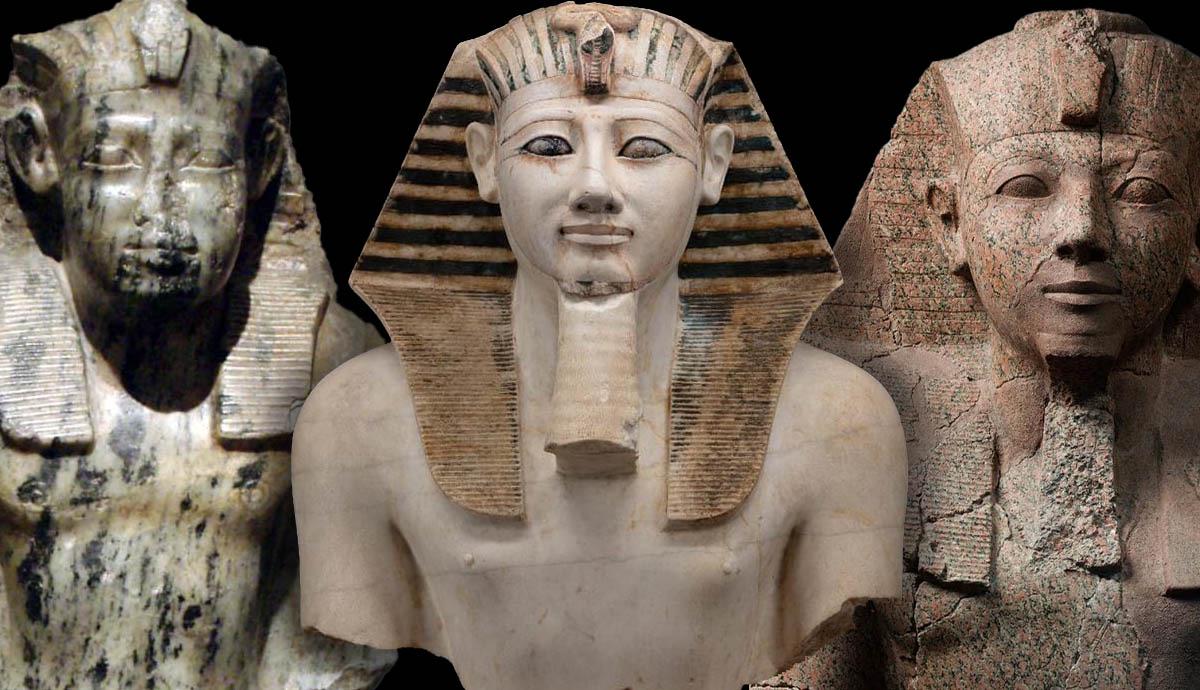
🌍 Hidden Stories of Great Powers Who was the most successful ruler of ancient Egypt in terms of personal strength, intelligence, strategic thinking, and leadership? I am not interested in pharaohs whose success was primarily due to the competence of their advisers or administrative staff.

Post image
14 Upvotes

r/Historydom • • 13d ago

Forgotten Origins of Civilization Meet Tell Halula - one of the earliest established village of the first farmers in the territory of the Neolithic Syria

Thumbnail
gallery
32 Upvotes

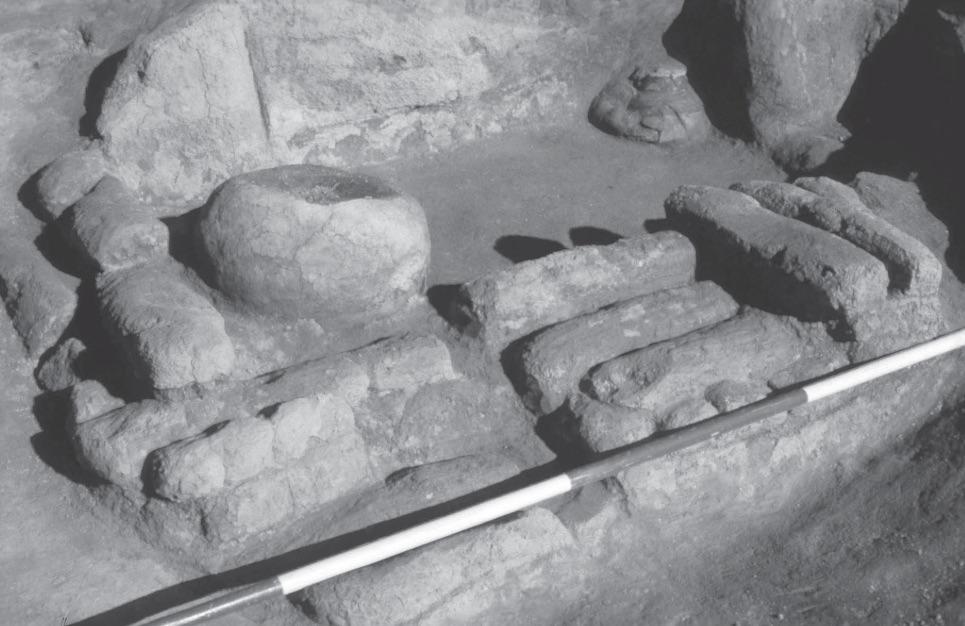
On the second photo: one of the graves in Tell Halula.

UK researchers from Durham and Liverpool Universities analyzed teeth from 71 individuals found in five archaeological site in what is now modern Syria and spanning the entire Neolithic period in southwest Asia - from 11,600 to 7,500 years ago.


r/Historydom • • 14d ago

🌍 Hidden Stories of Great Powers How did the burning of the Library of Alexandria impact on our knowledge of the ancient world? What did we actually lose?

Thumbnail
gallery
405 Upvotes

r/Historydom • • 15d ago

🪨 Human Prehistory Shanidar Cave, Kurdistan Region, Iraq - excavations found the remains of seven adult and two infants Neanderthals, dating from around 65,000–35,000 years ago.

Thumbnail
gallery
165 Upvotes

r/Historydom • • 15d ago

👋Welcome to r/Educatedelitists - Introduce Yourself and Read First!

3 Upvotes

r/Historydom • • 16d ago

Forgotten Origins of Civilization Mother of God or Mother Goddess is not the invention of Christianity for sure. Meet Mother goddess from Tell es-Sawwan, Iraq, 6000-5800 B.C. Alabaster figurine.

Post image
8 Upvotes

r/Historydom • • 19d ago

🌍 Hidden Stories of Great Powers Maybe Hannibal is one of the most significant leaders in history who was too close to the victory but failed. Why on earth he did not attack Rome when had a real chance?

Thumbnail
gallery
142 Upvotes