r/HorseRacingGlobal • u/Ok-Reference6993 • 18m ago
Asia (Lore/Trivia) Pilsudski Japan Cup 1997, one of the most impressive Japan Cup wins
4
Upvotes
Japan
r/HorseRacingGlobal • u/Billy5545 • 7d ago
Good day to you all. So, I'd like to make a brief announcement that the post flair categories need to be adjusted a bit to reflect the direction of the sub ever since it was first created almost a month ago. It pertains to consolidating the categories.
Hopefully the change will expand the scope of which posts can be made, make it easier for discussions, and reduce confusion among readers. Thank you for the consideration.
r/HorseRacingGlobal • u/NatureNox17x119 • 20d ago
Hello everyone, it has officially been almost two weeks since this subreddit was created and honestly it has been doing pretty well. As of right now we sit at almost 10000 visits and 135 members. Of course this is just the beginning and the current state of the subreddit is quite barebones, but we plan to change that with time so we can truly make this place an amazing resource for horse racing in general as well as to serve as a place where even the most niche parts of the sport can exist along with the mainstream. To this end, we have a few plans of changes and additions to the subreddit already in the works and we wanted to inform you all about them so you know what to expect or look forward to.
#Wiki
We will be making a wiki for this subreddit so we can both preserve good posts and make information easily accessible. For now the plans include making 2 sections which will be :
1.Horses
2.Races
The Horses section will be further split into Posts about individual horses and Posts about horses in general, the first part for posts that detail or go into a specific horses history, accomplishments or simply writeups about them and the second for posts such as this post on broodmares which delve into information on horses more broadly.
Meanwhile the Races section will include posts made to highlight races of all types, whether giving information about them or their history, this section will most likely be split into sections on flat racing, harness, steeplechase, etc as we get posts about them. Perhaps the Horses section will also have to be split into race types as well.
Whenever a there is a post that qualifies for this gets added, you will most likely see a [Added to Wiki] in its comments
#Guides to the races in different nations
You may have already seen the first post of this series Global G1 Race Guide : France(Spring) . Our head mod u/Billy5545 is making these guides for people new to the sport or simply wanting to know more about different parts of it, there will be more and as they get made they will also be added to the wiki when it comes up.
#Post of the week
Beginning in December we plan to host a competition every week for the best post, we will go through and choose the post we find is the most high effort, unique or well made and pin it for an entire week to highlight it.
Other than these plans we're also thinking about changes to the post flairs we have currently, which are simply divided into different types of post for each continental region(Sometimes multiple), this isn't a problem right now but as posts increase we might start finding it harder to sort and focus posts. However we're not sure what regions to separate out for their own flairs. For now we're thinking of USA, UK, JAPAN, FRANCE, HONG KONG, LATIN AMERICA, and AUSTRALIA but if you have other suggestions do let us know, even disregarding post flairs if you have any ideas or suggestions please do comment them under this post, so we may take them into consideration.
r/HorseRacingGlobal • u/Ok-Reference6993 • 18m ago
Japan
r/HorseRacingGlobal • u/TheLimitlessVOID2 • 12h ago

r/HorseRacingGlobal • u/Least-Bobcat-7186 • 13h ago

I read many posts talking about horses, about jockeys, about race results and the many interesting anecdotes of such an amazing sport, but I rarely saw posts talking about the places that make everything possible: the racecourses.
Thus, I have decided to make a small guide, divided into different posts, about the racecourses of my own country. I hope you will find find them to your linking.
I'll start with the racecourses that host flat racing, since that's the most popular type, but eventually I'll also cover harness racing, hurdle, steeplechase and cross-country. If a racecourse can host more than one type of racing, it will be mentioned.
[*]
Maia Racetrack (Merano)
The Maia Racetrack (“Ippodromo di Maia”) is renowned for steeplechase and obstacle racing. It’s located in Merano, in the province of Bolzano, South Tyrol, in a setting characterised by the Alpine landscape.
The history of horse racing in Merano is closely connected with the development of the town as a tourist and spa destination during the Nineteenth century. The growing popularity of Merano among European visitors, particularly members of the aristocracy and upper classes, encouraged the development of sporting and leisure activities, including equestrian events.
Merano’s first races took place as early as 1896, in the meadows near the former Hotel Meranerhof. In 1900, a 900-meter track was inaugurated within the Maia Bassa sports grounds. The First World War interrupted the development of the sport, and the original facility was eventually abandoned in 1929.
The Maia Racetrack was inaugurated in 1935, its construction providing the town with a permanent venue for organised horse racing. It was designed by architect Paolo Vietti Violi, an internationally recognised specialist in sporting facilities who had also worked on major Italian and European racecourses. His project transformed the existing sports area into a dedicated horse-racing complex.
The first “Gran Premio Merano” race was held in the year 1935, although construction of the main grandstand continued well into 1936. The development also included a trotting track and “Borgo Andreina”, known as the Horse Village.
The construction of the racetrack was also associated with the establishment of the “Lotteria di Merano” (“Merano’s Lottery”), whose proceeds contributed to the financing of the project and its activities.
2. Location and architecture
The racetrack is situated in Maia Bassa, a district of Merano, close to the town centre. It occupies an area of approximately 400,000 square meters, making it one of the largest and most significant equestrian facilities in Italy.
Its architectural design reflects the principles of Rationalism, with an emphasis on functionality, clean lines and geometric forms. The main grandstand is particularly distinctive: approximately 150 meters long, it features two levels and a flat roof with a cantilever.
The location is also one of its defining characteristics. The racetrack is situated in an Alpine setting, with the Texel Group mountains providing a backdrop to the grandstands and racing grounds.
3. Racing disciplines
The main racing specialities held at Maia include:
- Hurdle racing: horses jump over a series of obstacles distributed along the course.
- Steeplechase: a more demanding discipline involving larger obstacles and a technically challenging course.
- Cross-country: races involving varied obstacles and more complex terrain, requiring considerable jumping ability and endurance.
Although Maia is primarily associated with jumping competitions, flat racing also has an established place in its calendar. The summer months, particularly July and August, provide suitable conditions for flat racing events.
4. The Gran Premio Merano
The “Gran Premio Merano” race is the most important event hosted by the racetrack and the competition most closely associated with its international reputation.
Its first edition took place on 20 October 1935. The race was established alongside the construction of the new facility and the “Lotteria di Merano”. From the very beginning it attracted many international competitors, reflecting the ambition to establish Merano as a major centre for obstacle racing.
The first winner was the French horse “Roi de Trèfle”. “Or Jack” and “Aegior” each achieved three consecutive victories in different periods. “L'Estran” achieved four consecutive victories between 2019 and 2022, while “Speed Emile” won in both 2024 and 2025.
5. The racing season
The racing season generally runs from May to October, with a short interruption in July. Races are usually organised on Sundays, sometimes coinciding with public holidays.
More than 140 races take place at the facility each year. The programme includes obstacle races and flat races, with horses competing in different age categories.
In addition to the Gran Premio, the racetrack hosts other competitions and events that contribute to its sporting and social importance. One particularly distinctive tradition is the Haflinger horse racing event, a breed originating in South Tyrol.
6. Management and ownership
The Maia Racetrack is jointly owned by the Autonomous Province of Bolzano and the Municipality of Merano. Following an agreement approved in 2023, the transfer of 60% of the ownership to the Autonomous Province of Bolzano was formally completed in May 2024, leaving the Municipality with the remaining 40% share.
The operational management of the facility is entrusted to Merano Galoppo S.r.l., a company responsible for organising and managing the horse-racing activities under a service concession agreement with the public authorities.
[*]
Mediterraneo Racetrack (Siracusa)
The Mediterraneo Racetrack (“Ippodromo del Mediterraneo”), located near Cassibile in the municipality of Siracusa (Sicily), originated from a long-standing local ambition to establish a major horse-racing facility in the province. Since the 1970s, horse racing had attracted considerable interest in the area, particularly through traditional events such as the “Palio dell’Ascensione” in Floridia and the “Palio di Santa Venera” in Avola.
The project began to take concrete shape in 1988, when the company Marconi Italia S.p.A. purchased a large rural estate near Cassibile. The land had previously belonged to Baron Gaetano Francicanava. Following a complex authorisation process, construction work started in 1993.
The first functional section was completed in 1995, and the racetrack was officially inaugurated on 8 December of that year. The opening ceremony attracted approximately 20,000 spectators and was attended by institutional representatives and prominent figures from the horse racing scene. Three internationally renowned jockeys, Lester Piggott, John Riddle and Willie Carson, participated in the inaugural event. Willie Carson won the first major race, the “Gran Premio UNIRE”, riding Lord Carmelo.
The following years saw the progressive expansion of the facilities and the racing programme. In 1996, the racetrack hosted its first national Tris race, while the second functional section was inaugurated in 1997. The number of racing meetings increased considerably: 43 meetings were organised in 1998, followed by 39 regular meetings and more than 25 morning sessions in 1999.
An important development occurred in 2000, when the facility introduced trotting races alongside flat racing. Five trotting meetings were held in August of that year. On 8 December 2000, the first edition of the “Gran Premio Francesco Faraci” was organised, becoming one of the principal events in the racing calendar, alongside the traditional “Gran Premio UNIRE”.
In 2001 and 2002, the number of racing meetings reached approximately 80. Another significant improvement came on 7 December 2002, when a major lighting system was inaugurated, making night racing possible.
On 15 January 2006, the racetrack opened its new multi-purpose, multi-storey grandstand, an architectural development described by its management as unique in Italy. The same day saw the first edition of the “Nastro d’Oro di Sicilia”, a Listed Race featuring jockeys Oliver Peslier and Michael Kinane. Peslier won aboard Ira Funesta.
The racetrack also developed an international dimension through its participation in the Mediterranean Jockeys Championship, organised by the Union of Mediterranean Horseracing. Siracusa hosted the final event on 2 June 2006, promoting sporting and cultural exchanges between countries bordering the Mediterranean.
2. Location and general characteristics
The racetrack is situated in Contrada Spinagallo near Cassibile, approximately 10 kilometers south of Siracusa.
The complex covers approximately 550,000 square meters and is dedicated to both flat racing and trotting. Its principal figures include:
- A 2,200-meter grass track.
- A 1,800-meter grass track.
- A 1,650-meter sand track.
- A 1,400-meter trotting track.
- Two grass training tracks.
- A sand training track.
- Approximately 12,000 square meters of usable public areas.
- Seating capacity of approximately 3,000 people.
- 400 horse boxes in the stable area, divided into equipped buildings with saddling facilities, feed stores, sanitary services and reserved paddocks.
- A parking area capable of accommodating over 2,000 vehicles
3. Racing disciplines and major competitions
The Mediterraneo Racetrack is one of Sicily's principal centres for organised horse racing. Flat racing has been the facility's main activity since its inauguration in 1995. Trotting was introduced in August 2000, expanding the sporting programme.
Among the most important historical competitions is the “Nastro d’Oro di Sicilia”, inaugurated in January 2006 as a Listed Race over 1,700 metres. The competition subsequently became an important event in the Sicilian racing calendar. Beside the first winner Ira Funesta, historical winners include: Tibroso (2007), Once More Dubai (2008), Absolut Taft (2009), Kurt (2010) and Douce Vie (2011).
Another important competition is the “Gran Premio Città di Siracusa”, dedicated to trotting. Its historical record begins in 2000, with the first edition won by Zoot Air, driven by S. La Gala.
4. Infrastructure and facilities
One of the defining characteristics of the racetrack is its multifunctional design. The spectator facilities include covered grandstands, betting facilities, bars, restaurants, panoramic terraces and hospitality areas. The complex also features spaces dedicated to the presentation of horses before races, saddling facilities and technical services.
The 2002 lighting installation was another major technological improvement, allowing the organisation of evening and night meetings.
5. Tourism and cultural activities
The most important hospitality facility within the complex is the Eureka Palace Hotel, which offers accommodation, restaurants, meeting rooms and a wellness centre. The hotel is particularly associated with the racetrack because of its location within the hippodrome grounds, allowing guests to observe horse-racing activities from the hotel.
Its facilities include a SPA, indoor and outdoor swimming pools, a gym, restaurants, conference rooms and spaces for private events.
The racetrack also hosts exhibitions, conventions, fairs, festivals, celebrations, theatrical performances, concerts and other public events. Among the significant events hosted there are the “Carosello Storico dei Carabinieri”, which took place in 1997, 2009 and 2024.
6. Management and ownership
According to the racetrack's December 2025 anniversary announcement, more than 1,000 people work professionally around the establishment, while more than 800 Sicilian horses have competed there in recent years.
Two individuals are particularly associated with the development of the establishment: Concetto Mazzarella, administrator of Marconi Italia S.p.A., and Francesco Faraci, one of the project's earliest supporters and its former president. Fabio Faraci subsequently continued the family's involvement through Ippomed S.r.l., which is in charge of the racetrack’s management and the organisation of its activities.
r/HorseRacingGlobal • u/Billy5545 • 9h ago
Japan hosted three domestic G1 (JPN1) races on 3 November, 2026, the date when they celebrated Culture Day. The races were the following:
JBC Classic
The JBC (Japan Breeding Farms’ Cup) Classic is a JPN1 1800-2100 m medium dirt race held at a rotating set of racecourses, emulating the model of the American Breeders’ Cup. It is open to horses of all sexes who are at least 3 year old. This year, the race was held at Kanazawa Racecourse at a distance of 2100 m. It has often been held around 3 November alongside the other JBC races, with a few deviations.
The race was created in 2001 as a G1 race for the Japanese dirt scene, pitting representatives from JRA and local competitors under the NAR banner. It was run at the Oi Racecourse in its first run, with subsequent venues at Morioka, Nagoya, Kawasaki, Sonoda, Funabashi, Kyoto, Urawa, Saga, and Kanazawa.
The race was won by Outrange, a 6 year old son of Regalo and representative from JRA. He managed to fight for the lead early, allowing him to power through for a dominant 4 length victory. With this, he was finally able to get the G1/JPN1 win that had eluded him for so long, as he previously had won at G2/G3 level but placed third in a G1 race and second at a JPN1.
News:
JBC Ladies’ Classic
The JBC Ladies’ Classic is a JPN1 1400-1860 m sprint-medium dirt race held at a rotating set of racecourses. It is open to fillies and mares who are at least 3, making it a distaff counterpart to the Classic. This year, the race was held on Kanazawa at a distance of 1500 m. The race has been held around November 3-5 each year since its establishment.
The race was first created in 2011, 10 years after the Classic and Sprint. It started out as a locally graded race, where it was run at Oi, before it achieved domestic G1 status in 2013. Since then, the race has been hosted in tracks like Oi, Kawasaki, Kanazawa, Morioka, Kyoto, Urawa, Saga, and Funabashi.
Anzu Ame, a 4 year old daughter of Drefong and a representative of JRA, won the race by 1.5 lengths from Memoria Cafe, who had won the JPNII Ladies’ Prelude trial race, thus proving she could handle near-mile distances. This victory also gave her trainer, Daisuke Takayanagi, his first JPN1 win, while following up on his huge success with another dirt sprinter, T O Elvis, in the BC Sprint in America.
News:
JBC Sprint
The JBC Sprint is a JPN1 1000-1400 m sprint race held at a rotating set of tracks. It is open to any horses who are at least 3 years old. This year, the race was held at Kanazawa at a distance of 1400 m.
The race was established in 2001 alongside the Classic. Over the years, the race has been held in Oi, Morioka, Nagoya, Kawasaki, Sonoda, Funabashi, Kanazawa, Kyoto, Urawa, and Saga. At one point, the race was held as a 1600 m mile race.
The race was won by Meisho Hachiro, a 4 year old son of Sinister Minister and a representative of JRA. Despite losing ground by a slow start early on, he was able to mount a comeback to win from the highly-favored Wilson Tesoro. His victory came straight from another JPN1 victory just weeks prior in the Nambu Hai. With this victory, he’d be targeted next for the February Cup if he could keep his form without exhaustion.
News:
r/HorseRacingGlobal • u/Billy5545 • 10h ago

Race video
The Cape Classic is a South African G3 1400 m turf sprint race held at the Kenilworth Racecourse. It is open only to 3 year old horses of all sexes. It is sponsored by Hollywoodbets and serves as a sort of a trial for the G1 Cape Guineas.
The Cape Classic has been held since at least the last decade. Several winners of this race had gone on to become a G1 winner. In 2023, the race was briefly switched to the Durbanville Racecourse, which is also sponsored by Hollywoodbets like Kenilworth.
The race was won by Kalahari King, a 3 year old gelding son of Vercingetorix, in his fourth start, being gelded following his third start. The calmer temperament shined through as he achieved victory by 3.5 lengths against the second placer, Vibe Check, who had been setting the pace. Meanwhile, the favorite of the race, Aquae Calidae, got beaten to last place, once again losing to Kalahari King after the two first met at their debut. With this victory, his sire is able to further embellish his record as an excellent sire in South Africa and maintain his standing as the top leading sire, attained since 2024.
News:
r/HorseRacingGlobal • u/Billy5545 • 13h ago
On 31 October, 2026, there were two G3 races hosted in South Africa, both as the supporting races for the Charity Mile.
Graham Beck Stakes
The Graham Beck Stakes is a G3 1400 m turf sprint race at Turffontein Racecourse. It is open only to 3 year old horses of all sexes, serving as an early season race to test their mettle for top races, chiefly the G2 Dingaans, as well as Classic colt races. It is now sponsored by TAB.
Established around the early 2000s as a Listed race, the race is named after Graham Beck, a major racing owner in South Africa. Starting out as a coal mining and winery magnate, he used his wealth to purchase the Highland Farms in South Africa. He also acquired the Gainesway Farm, which used to be owned by the historic Phipps American racing family as the Greentree Farm. He passed away in 2010, and the race is thus now run in his memory. The race was promoted to a G3 around 2010 and briefly became a G2 in 2023.
The race was won by Fierceness (not to be confused with the older American racehorse), a 3 year old gelding son of Hawwaam. Ridden by Muzi Yeni, an experienced jockey within the South African scene, he stormed down a gap to finish by 2 and a quarter lengths from Wild and Free despite the fast pace, thus fulfilling Muzi’s promise not to let him lose.
News:
Starling Stakes
The Starling Stakes is a G3 1400 m turf sprint race at Turffontein Racecourse. It is open only to 3 year old fillies, making it the distaff counterpart to Graham Beck. It is sponsored by TAB and serves as a stepping stone towards the G3 Fillies Mile and Classic filly races.
The race was initially established as a Listed race before being promoted to a G3 in 2010. The race was sponsored by Princess Charlene of Monaco between 2012 and 2024.
The race was won by Alice B Toklas, a 3 year old daughter of Master of My Fate. She was ridden by French jockey Mickaëlle Michel, who has been making South Africa her breakthrough scene on her quest to get a long-term license to jockey in Japan, following the footsteps of Christopher Lemaire. The small filly won the race by ½ lengths from Flower Island. After the victory, her team is now targeting her for the Fillies Mile.
News:
r/HorseRacingGlobal • u/Billy5545 • 16h ago

Finally made the first post about African horse racing, and it’s a bit of a throwback to 31st October as it’s near the current time of the November race results I’ve been trying to publish, which would be 3rd November (not counting the recent G1s). I’ll be covering about the biggest scene on the African continent, the South African scene
The Allied Steelrode Onamission Charity Mile is a G2 turf 1600 m mile race hosted at Turffontein Racecourse. It is open to 3 year old and older horses of all sexes. The race is sponsored by steel manufacturer Allied Steelrode and has a unique charity format, where each runner is paired with a charity that will be gifted money based on the runners’ placements. It was held on 31st October, 2026.
The race was first held in 1963 as the Lion Export Stakes at Germiston Racecourse, which has since been closed for horse racing. Germiston itself had a storied history. Aside from being the birthplace of the Charity Mile, it was also the birthplace of the South African Classic (formerly Benoni Guineas), now the second leg of the South African Triple Crown. Germiston had witnessed many notable moments in both racing, such as Horse Chestnut’s way to become the first winner of the SA Triple Crown in its modern format in 1999, as well as non-racing matters, when Pope John Paul II hosted a Mass at the wider Gosforth Park area in 1995. Germiston was eventually closed in 2001 and redeveloped into the WesBank Raceway for motorsport racing in 2003, but it only lasted until 2007. Gosforth Park is now an industrial complex.
As for the Charity Mile itself, it was eventually renamed Germiston November, which was won by multiple local legends. In 2002, the race was briefly moved to the Newmarket Racecourse (not to be confused with the British one) until Germiston’s closure. A major overhaul happened in 2006 when the event was permanently moved to its current venue at Turffonstein and given its charity format, one that would later be emulated by the Golden Eagle.
The race was won by Zeitz, a 5 year old gray gelding son of Vercingetorix, who had previously won two G3 races. He won by a narrow margin of 1/2 lengths after surging from the pack, with second placer Cosmic Speed trying to rapidly close the gap but falling short in the end. With this victory, Zeitz won Rs 140,000 for his partnered charity, Jicama 89, which works to support the education of children with various forms of disabilities.
News:
r/HorseRacingGlobal • u/Ok-Reference6993 • 1d ago
First and foremost, Derby is not tied for most valuable British race any more! It'll be gapped £500,000 by King George leaving it at 2nd most valuable race in UK.
To cover and summarize the rest of it
> "Developmental" Races being races that are not black type or handicap such as Maiden races are having their minimal prize increased by £1000. This brings the minimum to below values
Open Staying - £13k
Open Non-Staying - £11k
Restricted Staying - £11k
Restricted Non-Staying - £9k
Novice/Maiden Chase - £16k
Novice/Maiden Hurdle - £11k
The goal of this is to keep prizes competitive and promote owning and breeding in UK.
Side note by me, I had no idea chase apparently pays more?
> Jumps prize increase for grade 2 3 by varying amounts to keep it competitive and attractive. Leaving the minimum at
Grade 2 Chase - £90k
Grade 2 Hurdle - £85k
Grade 2 Novice Chase - £80k
Grade 3 Chase/Hurdle - £80k
> Elite midsummer G1 prize increase, the series includes July Cup (6f), Sussex Stakes (mile), International Stakes (mile and quarter) and King George (mile and half). The increase is a bit vague except for King George, they say it'll increase by a "minimum" Of £200,000 but don't give a exact number. This leaves these races at
King George - £2.5mil (new highest and no longer tied with Derby)
International Stakes - £1.7mil minimum
Sussex Stakes - 1.7mil minimum
July Cup - £1mil minimum
> Great British Bonus extension, this was a program to give bonus money to local bred fillies who win jump races and it is now being extended to local bred male horses. They are still only getting 50% of what the fillies would, capped maximum of £10k.
I can see why they went for fillies only at first because they are the ones that can continue a jump pedigree but it is also bit bruh that there is gender favouritism for prize money lol
> lower and middle tier race prize increase. Again to make owning and breeding more attractive and keep up with increasing costs. The new minimums come to
Flat
Class 4 - £10.75k
Class 5 - £7.5k
Class 6 - £6k
Jump
Class 3 Chase - £13.5k
Class 3 Hunt - £11.8k
Class 4 Chase - £8.8k
Class 4 Hunt - £8k
Class 5 Chase - £6.3k
Class 5 Hunt - £6k
r/HorseRacingGlobal • u/Lost_Success_1835 • 22h ago

r/HorseRacingGlobal • u/Least-Bobcat-7186 • 1d ago

JAPAN
On Sunday, November 22, Calandagan, Ethical Diamond, Goliath, Minnie Hauk, Ombudsman and Teao completed their first real canter sessions on Tokyo Racecourse’s dirt track, following the initial days devoted to acclimatization and light work in the international stables area.
The general consensus emerging from the official JRA reports is that the horses have arrived in good condition: normal appetites, stable weights and, above all, no particular problems adapting after their respective journeys.
For Calandagan, the defending Japan Cup champion, Sunday marked his first real contact with the main track. The five-year-old trained by Francis-Henri Graffard completed a slow canter lap alongside Eliman, immediately displaying great composure.
Jeremy Lobel noted that the horse has not lost any weight, is eating and drinking regularly, and handled his first workout without any issues. In the days that followed the intensity was gradually increased, and on Tuesday Calandagan also completed the gate test without any problems. The most important workout is scheduled for Thursday.
Goliath also completed his first lap on the dirt track alongside Ame d’Or, moving with great ease. His team highlighted, above all, that his weight remained steady at 505 kg and the gelding’s ability to adapt quickly to international travel. Tuesday’s gate test was completed without incident, and a speed workout is also scheduled for him on Thursday.
Ethical Diamond followed a similarly smooth path; on Sunday, he completed one lap and one-eighth of a canter after warming up on the indoor track. Willie Mullins’ charge gradually increased his pace in the following days and passed the gate test without issue.
His team highlighted a trait already demonstrated throughout the season: Ethical Diamond has traveled between Dubai, the United States, and now Japan without showing any particular difficulty in adapting.
There were also early positive signs from Minnie Hauk, the only filly in the international group. Aidan O’Brien’s four-year-old alternated between trotting and cantering for about five furlongs each on Sunday, showing good energy and gradually increasing her weight following the trip.
On Tuesday, she also successfully completed the gate test. Her entourage mentioned only a minor previous issue with one foot, however it has not been a cause for concern since the mare arrived in Japan. Her tactical versatility and proven effectiveness over distances between 2,000 and 2,400 meters are two important factors heading into the Japan Cup.
All eyes were inevitably on Ombudsman, who is set to make his final career start before being retired to stud. On Sunday, the five-year-old owned by John and Thady Gosden completed about six furlongs of cantering alongside Devil’s Advocate, following a period of walking and trotting. Andrew Stringer described him as bright, alert, and perfectly at ease after the workout: so much so that he returned to his stall and went straight to the feed trough.
The schedule continued smoothly in the following days, and on Tuesday, Ombudsman successfully completed his gate test. Thady Gosden confirmed that the horse handled the trip very well and will undergo one final, more strenuous workout between Thursday and Friday.
Of the six, Teao was the one who was asked to give a little extra on Sunday. The four-year-old Chilean, currently trained in the United States by John Sadler, first jogged and cantered, followed by a gallop of about a mile and a quarter. Cerapio Figueroa described him as strong and particularly at ease on the track, also noting that he ate everything after the workout.
For Teao, too, the move to the starting gates on Tuesday went smoothly, and the horse continues to adapt very well to both the climate and the environment in Tokyo.
Source (original site is in Italian, I have translated the text in English): https://italianpostracing.it/verso-la-japan-cup-gli-stranieri-prendono-confidenza-con-tokyo-primi-canter/
r/HorseRacingGlobal • u/Lost_Success_1835 • 1d ago

Feel free to discuss who could qualify as that. But do not ask what I thought of the 1st horse in the picture
Encke - Snubbed a TC from Camelot
Blame - Robbed Zenyatta of an undefeated record and Breeders Cup Classic double
r/HorseRacingGlobal • u/Ok-Reference6993 • 1d ago
r/HorseRacingGlobal • u/Ok-Reference6993 • 2d ago
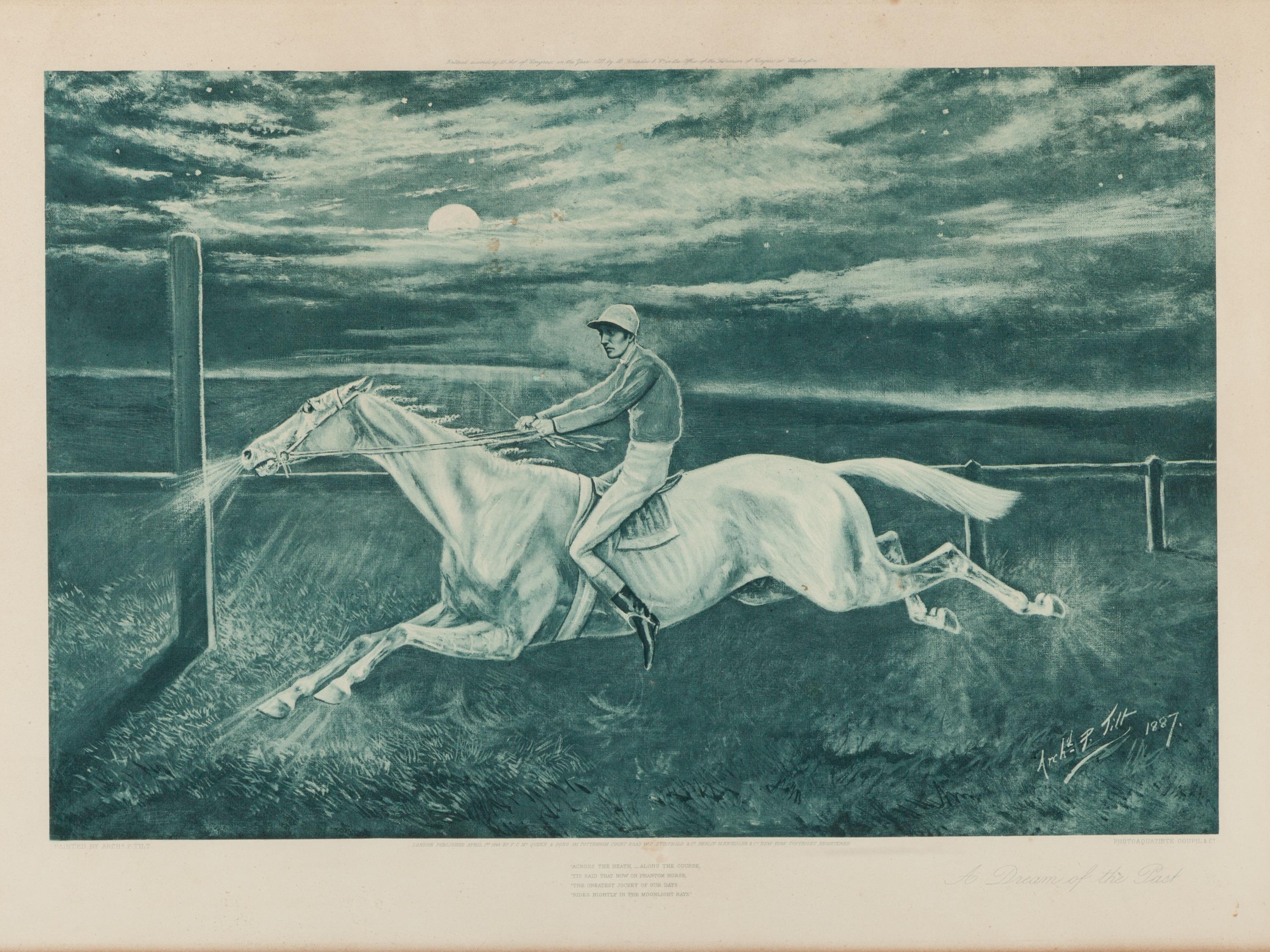
UK
Fred Archer is a legendary jockey that still holds the record for most consecutive champion jockey titles, all the way from his debut year to the year of his early, untimely death.
It is said that people saw his ghost floating along with horses and jockeys in races at Newmarket where he had most his successes, apparently horses would swerve to avoid colliding with him mid run in races. This painting is based on the story that a mother and her daughter saw Fred's ghost riding his pet mare at night.
Attempting to communicate with his ghost seems to still be a thing for young jockeys at Newmarket based on a documentary I watched of him recently. https://www.youtube.com/watch?v=alD9THzyyq0&t=596s
r/HorseRacingGlobal • u/TheLimitlessVOID2 • 2d ago
r/HorseRacingGlobal • u/Lazy_Bell_1061 • 2d ago
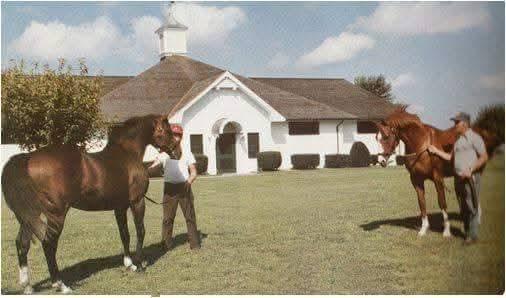
The game is now in English, all that is left is to do a bunch of testing on my end but from what I have done already it looks pretty good, just some lines wrapping in the dialogue and a few other little things I have missed which is super easy to fix but just tedious. Will release it in a few days after a test it and see if everything is sweet and looks good.
r/HorseRacingGlobal • u/Least-Bobcat-7186 • 3d ago
UNITED KINGDOM
On Friday, 20 November 2026, 20-years old Billy Loughnane pulled off another sensational feat at Wolverhampton Racecourse: six wins, one in each of the races reserved for professional jockeys. A hat-trick priced at 3,188/1.
The first victory came in partnership with Michael Bell, thanks to Oliaku (Havana Grey) in the "Midnite: Built For 2026 Not 2006 Novice Stakes". Then came the first of three wins for trainer George Boughey, with My Amanah (Ghaiyyath) in the first division of the "AWC Finals Day At Newcastle 26th March Maiden Fillies' Stakes". Again for Boughey, Sayidah Iffraaj (Iffraaj) won the second division, while Asuka (Night of Thunder) won the "All Weather Championship Handicap".
Lastly, Gunfighter (Siyouni) claimed the "AWC Season 14 Selling Handicap" and Exotic Baby (Too Darn Hot), trained by Ian Williams, dominated the "Midnite Built Different Handicap".
"Wolverhampton is a place that brings me a lot of luck. Here I secured my first win, my first double, my first triple, my first four-win streak, my first five-win streak and now even my first six-win streak: it really is a special place for me.” Billy told the journalists.
r/HorseRacingGlobal • u/Ok-Reference6993 • 3d ago

Japan
Sired by Caravaggio out of Erdana by Sea The Stars
2 G1 wins and probably the best miler in the world
r/HorseRacingGlobal • u/Least-Bobcat-7186 • 3d ago

FRANCE
Run for the first time in the year 1957, the Prix de Bretagne was originally conceived as a preparatory race for the Prix d'Amérique. Over time, it became an important international Group 2 race in its own right. Together with the Prix du Bourbonnais, the Prix de Bourgogne and the Prix de Belgique, it forms the traditional series of four major preparatory races known as the "Quatre B" ("Four B").
The G1 Grand Prix d'Amérique has been held annually since 1920 at the Vincennes Racecourse near Paris. It was established to thank the US for the help given to France in World War I, and is widely considered the most prestigious harness race in the world.
The Prix de Bretagne is run over a distance of 2700 meters at Vincennes Racecourse, on the same track and over the same distance as the Prix d'Amérique. It's open to all horses of age between 4 and 10 years old, geldings excluded, and whose total career earnings are not inferior to €130,000. The four first-placed horses earn a direct qualification for the Amérique.
The 2026 edition of the Bretagne took place on Sunday, 22 November 2026. The winner was Inmarosa (Amiral Sacha), with Leo Abrivard in the sulky. Abrivard made his decisive move halfway up the straight opposite the stands, when he moved his mare into the third lane, gaining several positions to first draw level with Frank Gio (Face Time Bourbon) and then challenge the leader, Borups Victory (Googoo Gaagaa). On the bend, Inmarosa took the lead before pulling clear on the home straight, whilst behind her, Free Time Jepson (Face Time Bourbon) found the space to make his move and secure second place. Third place was taken by Keep Going (Follow You), and fourth place by Kuiper (Face Time Bourbon).
The winner's time was 1.11.6, close to the 1.11.2 record set last year by Josh Power (Offshore Dream).
r/HorseRacingGlobal • u/lispyjimmyfan • 3d ago
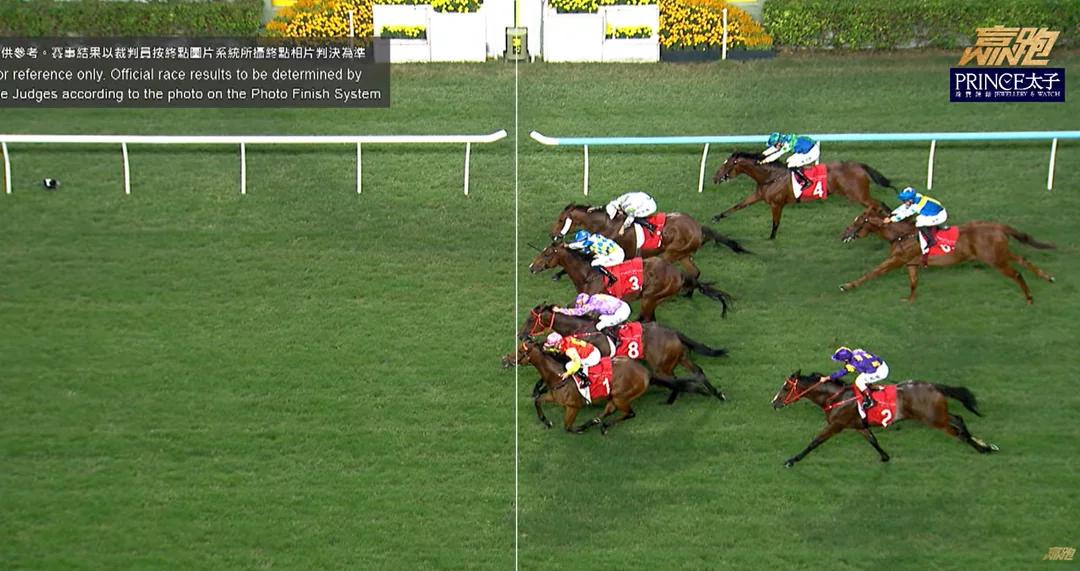
My Wish surges from behind, beating out a good effort from 2026 Classics runner Little Paradise and also Galaxy Patch + Patch of Theta
r/HorseRacingGlobal • u/thanhlebabyakuya • 3d ago

This race has 9 horses and the trainers of all of them is W P Mullins
r/HorseRacingGlobal • u/TheLimitlessVOID2 • 3d ago
While i see every comment either from uma musume fans or even horse racing fans that how Darley Arabian dominates through his sireline, what is the overall contribution of the other two foundational stallions?
r/HorseRacingGlobal • u/lispyjimmyfan • 3d ago

He beats out big favorite Numbers (3rd) as well as 2025 triple crown Voyage Bubble (5th)
r/HorseRacingGlobal • u/ZatIzTrye • 4d ago
By coincidence the 1981 Japan Cup has been brought up a few times recently on this subreddit, and what good timing that is. While Japanese accounts mostly focus on what an absolute disaster the race was (both in the results and the organisation itself - look no further than how Dersim's forey into the race), Mairzy Doates herself is often overlooked despite being incredibly important her victory was for kickstarting Japan's horseracing scene into what it is today. While an unassuming horse in many ways, I do find her very inspirational in what she achieved, especially considering she had to overcome a very one-sided rivalry with The Very One to finally stand proud in a G1(ish) race. How interesting it is that she was nearly pulled out the race only hours before it began...
While it still appears to be a mystery why she got transferred to France at the end of her life, compared to the stub she had this time last year, this is the complete tale of a horse's unexpected rise to the top of the world.
https://en.wikipedia.org/wiki/Mairzy_Doates
For the interested, here's the race footage: https://youtu.be/PRtSJa2BID4?is=PMp-JEAZk8HdmVSI
For the really dedicated, here's a live broadcast showing the pre match parade and post match award cermony. Shoutout to the commentators spending most of The Very One's intro talking about her "motherly" hips https://youtu.be/TfdiO4LZCWE?is=JWQ6AASLyIcILA4r