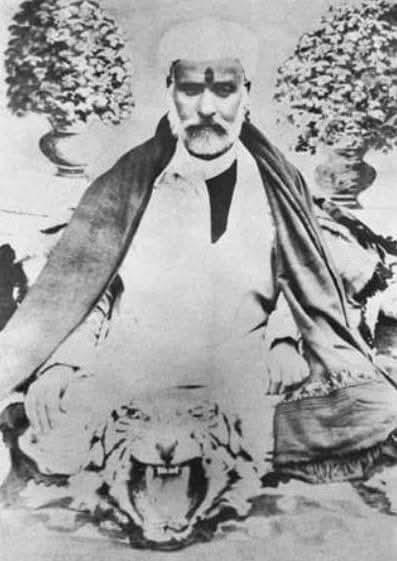
A tantric renaissance occurred in 9th to 14th century Kashmir. By then, tantra was already a well-established phenomenon. Tantric traditions with still-surviving texts date back as early as the fifth century, and even those traditions drew upon earlier proto-tantric traditions for inspiration and precedent. What happened in Kashmir was a series of realized teachers—particularly Vasugupta, Somānanda, Utpaladeva, Abhinavagupta, and Kṣemarāja—synthesized the existing tantric traditions into a single system that would forever shape the practice and philosophy of tantra throughout the Indian subcontinent. These teachers (ācāryas) brought forth the underlying philosophy of how and why these tantric texts and ritual practices actually worked alongside introducing subtler, more powerful, and more accessible modes of practice that expanded who could engage in tantra. This philosophy and these practices rapidly diffused beyond Kashmir to all the major centers of tantric practice throughout the Indian subcontinent. While this tradition contracted in Kashmir in the wake of foreign invasions and occupation, it continued quietly within the Kashmiri paṇḍita community, until it experienced a worldwide revival in the 20th century through the teachings of Swami Lakshmanjoo.
In this way, Kashmir Śaivism today is an inclusive term that refers to: (a) the renaissance period in which the core texts were written and essential practices were refined, (b) the living communities of practice within the Kashmir paṇḍitas, (c) the students worldwide who learned of the tradition through Swami Lakshmanjoo's teachings, and (d) the living communities of practice in related tantric systems that were heavily influenced by the renaissance period and have continued these practices in other parts of the Indian subcontinent.
Bhairava and Bhairavī
How do I begin?
To begin your journey, start with The Secret Supreme by Swami Lakshmanjoo (book). This book distills the core insights of the central Kashmir Śaiva text, the Tantrāloka, which was written by Abhinavagupta, perhaps the key figure in the 11th century Kashmir Śaiva renaissance. These insights were explained by Swami Lakshmanjoo, who is the key figure in the Kashmir Śaiva revival of the 20th century. In this way, you get exposure to and make connections with two of the most important figures in the lineage.
Absolutely do not expect to understand these topics intellectually on your first read. What you're looking for, to determine if you're a strong candidate for Kashmir Śaivism, is a sense of wonder (camatkāra), a flash of intuitive insight (pratibhā), where you feel like you've always known these things, but never had words to articulate them before, or where you occasionally have to put the book down and just marvel at the way these teachings put together all these different aspects of reality from letters of the Sanskrit alphabet, to cycles of sleeping and waking and deep sleep, to energy patterns within the subtle body, and more. (If all this is a bit too complex for where you are currently in your understanding, Self-Realization in Kashmir Shaivism (book), also by Swami Lakshmanjoo is a good and accessible alternative).
Based on your readiness, the desire to receive Śaiva teachings (śaktipāta) may awaken in you to varying degrees. If you feel such a desire to receive the teachings, as the immediate next step in the journey, begin the foundational breath meditation practice as taught in the Vijñāna Bhairava Tantra (post). You can do this simple and safe practice in short and regular sessions throughout your day. It's especially helpful to do it before (and after) you are about to receive further teachings in the tradition (whether these teachings are received through reading, video lectures, in-person sessions, etc.). As you go deeper into this practice, you'll have experiential glimpses of what Kashmir Śaivism is talking about, helping you integrate theory and practice.
How do I progress further?
Then, there are several important next steps you can take to progress further into the tradition. You can start from any of the following five options and move between them, as they all mutually build on and support each other. Pick a topic and medium that suits your disposition: maybe you are more into the philosophy or the practice, maybe you like reading or watching videos, etc. Whatever you choose, you cannot go wrong here.
For a good overview of the beliefs, history, and practice of Kashmir Śaivism:
Read the bookAspects of Kashmir Śaivism by Ācārya B. N. Pandit
Read the bookFrom Dualism to Non-Dualism: A Study of the Evolution of Saivite Thought by Ācārya Moti Lal Pandit
Watch the workshopAn Introduction to Kashmir Shaivism by Ācārya Sthaneshwar Timalsina
To understand the foundational text of Kashmir Śaivism, the Śiva Sūtras of Vasugupta:
Read the commentary by Kṣemarāja alongside the oral commentary by Swami Lakshmanjoo (book)
Take the Foundational Śaivismcourse, covering the foundational texts of both Kashmir Śaivism (Śivasūtra) and Śaiva Siddhānta (Śivajñānabodha) by Ācārya Sthaneshwar Timalsina
To understand the philosophy that underpins Kashmir Śaivism, read the Pratyabhijñāhṛdayam of Kṣemarāja:
You may be wondering how Kashmir Śaivism relates to other traditions, both tantric and non-tantric. Below are some helpful sources to help you situate Kashmir Śaivism within the broader mosaic of traditions.
To understand how Kashmir Śaivism understands classical pan-Hindu texts like the Bhagavad Gītā, read: the Gītārtha Saṃgraha of Abhinavagupta (book by Arvind Sharma, book by Sankaranarayanan, book by Boris Marjanovic) and the oral commentary of Swami Lakshmanjoo (book)
To understand how Kashmir Śaivism infused and inspired popular Hindu tantric traditions like Śrī Vidyā, read: Yoginīhṛdaya (book by André Padoux)
Finding Community
As you gain greater interest in Kashmir Śaivism, you may wish to enter into a kula, or community of practice. Śaivism is historically and currently practiced within the context of a community and there are several communities that offer teachings, listed below (in alphabetical order).
Please note that, owing to this subreddit's focus on authentic teachings, only communities are listed that are public, accessible to newcomers, and directly authorized within a classical saṃpradāya (lineage). There are therefore two things to note. First, other communities with authentic lineages exist that are, by their own design, intentionally less publicly accessible—and do not appear here to respect their wishes. Second, there are communities that are not from within a classical lineage and therefore do not meet the criteria to appear on this list. Such communities may or may not provide value to you, and you are advised to exercise caution and good judgment in whether/how you engage with them. As such, the following list of communities is not exhaustive, but is only indicative of reputable places to learn Kashmir Śaivism. Also keep in mind that each of these communities has a different organizational structure and style of conveying the teachings. Many are led by people who do not position themselves as gurus, but as senior and sincere practitioners who delight in sharing what they know of the tradition. Thus, as you look at entering a community, it makes sense to find one that works for you in terms of style, structure, and substance.
Anuttara Trika Kula: This kula was founded by by Mark Dyczkowski and offers multiple weekly courses on core Śaiva texts as well as access to recorded courses and workshops, including his ongoing teachings on the Tantrāloka by Abhinavagupta, the massive encyclopedic text of Kashmir Śaivism that he recently translated in full (website).
Bettina Sharada Bäumer: This kula offers semi-annual workshops on core Śaiva texts and has a video archive with past workshops, along with links to much of her important translations and scholarly work on several topics related to the tradition (website).
Ishwar Ashram Trust: This kula was founded by Indian students of Swami Lakshmanjoo and offers regular sessions on core Śaiva texts as well as access to books and lectures by Swamijī in multiple languages including English, Hindi, Kashmiri, and Sanskrit (website).
Lakshmanjoo Academy: This kula was founded by American students of Swami Lakshmanjoo and offers weekly pūjās and study sessions on core Śaiva texts as well as access to books and lectures by Swamijī in English (website, overview).
Vimarsha Foundation: This kula was founded by Ācārya Sthaneshwar Timalsina and offers twice-yearly courses on core Śaiva texts as well as access to recorded courses and a pathway toward initiation into the ritual and yogic practices of classical Śaiva-Śākta tantra (website).
===
Note: This post is envisioned to be a living document, to be updated with additional resources and information as time goes on. Please contribute any additional materials below. Welcome to Kashmir Śaivism.
We describe Mahadev as Nirguna Brahman, yet we worship him as many different forms such as Sadashiv, Nataraja, Ardhanarishvar, Dakshinamurthy, Bhairav, Pashupati and countless other forms.
The Svetashvatara Upanishad 3.2 says , एको हि रुद्रो न द्वितीयाय तस्थुर्।, meaning Rudra is indeed one; there is no second beside him.
Then if the ultimate Shiva is one, infinite and beyond all attributes, are his different forms merely different ways for the human mind or forms created by different philosophers, saints and gurus to approach the infinite? Or do these forms represent genuinely distinct cosmic functions?
Is Nirgun Shiva the ultimate reality and Sagun Shiva the accessible form of that reality?
I would like to hear an interpretations from people who study the Shaiva Agamas, Panchabrahma and other texts.
Abinavagupta argues in the Tantrasara, If an object possesses cognizability (vedyatva) as its own intrinsic quality, then that quality should also be cognizable. This generates an infinite regress: the cognizability of the cognizability would itself need to be cognizable and so forth. The same assumption also results in ascribing two contradictory attributes to one thing (viruddha-dharma-yoga) which is faulty reasoning - the object would have to be both fully manifest and not yet known.
He addresses the above conundrum by saying that cognizability does not belong to the object as its own nature (svarupa). It belongs instead to the energy (Shakti) of the subject. What an object is, on it's own is simply the locus in which that energy comes to rest. The “restfulness” or settled character of the object is therefore the resting of the subject’s own power, not an independent property the object carries.
Because the object’s innermost nature is this resting of consciousness’s own energy, it is self-luminous. It does not shine “for” something else or “by reference to” something else. An object's shining is the shining of the consciousness in which it appears.
Once cognizability is relocated from the object to the subject’s free energy, the threats of infinite regress and of contradictory attributes no longer arise.
In short: objects are not self-standing entities that possess the quality of being knowable. They are the modes in which the subject’s own energy settles and appears.
--
From the Advaita Vedanta perspective, the shining of the object is the shining of the mind under the cover of ignorance, not the free resting of energy that remains itself while appearing as form.
I am curious to know what your thoughts are on this topic? Do you agree with Abhinavagupta's analysis which is consistent with the Trika framework it rests upon or do you have an alternate explanation about the cognizability of objects?
--
Original text in quotes from Tantrasara by Dr. H.N Chakravorty: "Now the question arises: If an entity does possess the quality of being cognizable or perceptible (yedyata) as its own form, then it would be knowable to all. The quality of being cognizable would itself also be knowable; this would involve the fault of infinite regress. Then the universe, although fully manifest; would be blind and in deep slumber because it would involve the fallacy of association with two contradictory attributes: the capacity to be cognized and the quality opposite to it (viruddhadharmayoga). That question is answered in the following way: the capacity to be cognized (vedyatva) does not belong to the knowable object as its very self because the capacity to be cognized, belonging to the unique nature (svarupa) [of an object], has been stated to be something different. That which first takes its repose in the energy (sakti) of the subject, and then in the subject itself, is indeed the sharer of restfulness. That sharer of restfulness is indeed the innate nature [of any given object]. That innermost nature is indeed self-luminous and it shines with reference to none. Therefore, the question of omniscience, infinite regress, and contradiction between two opposing attributes has been refuted."
I am having a hard time seeing how spandavada is not inherently dualistic unless you concede and say that in reality spanda is only an apparent happening and not a real one.
(Sorry the reality of the world is my biggest sticking point in Trika, especially when it claims to be as adherent to logic and reading as Buddhism and Advaita Vedanta, so lots of my posts have to do with that)
But on the spandakarikas it states “submergence (from one point of view) is also emergence (from another point of view), and similarly emergence (from one point of view) is also submergence (from another point of view).”
And that is clearly a dualistic view. To sustain Advaita it must include
“In reality, however, nothing arises and nothing subsides”
Which is the same as ajativada and distinguishing reality and appearance, giving two levels of truth, which on numerous cases people say Trika does not utilize.
We warmly invite you to gather with us in our new Meditation Hall in Oregon, USA for Swamiji’s Mahāsamādhi Havan, followed by four days of study and practice.
We’ll spend time with Swamiji’s oral teachings on Kashmir Shaivism, gather for meditation and puja, and share vegetarian and vegan meals.
If you’d like to join us, please add your name to the interest list. We’ll email you the dates and details as they become available and let you know when registration opens.
There exist numerous versions of Siva Sutra by various authors and great seekers providing multiple perspectives. Its very 1st sutra "Chaitanyam Atma" has fascinated many for extremely deep meaning. I don't remember whether i have read it somewhere in scriptures, but may be a fresh perspective
I just started to explore Spanda Karikas, found it fascinating, mainly want a simpler way to briefly high-level explore those 52 points, with simple words, examples, and some illustrated images help, so I turned to AI, to help come up with universal/humanly(my instruction to AI) generated 52 images that (hopefully) help me understand/get it better (is okay I still confused), I just started only, yet feel want to share what I have, so shared it here, through google drive. Enjoy if you like it :)
I'm Chinese, so generated chinese version 1st, and translated it to english images pdf for sharing here.
I found kashmiri shavisim philosophy and the general idea of bhairav interesting. I come from central India so it all is very new to me. I wish to know what should I start with, since I've heard there are also tantra and other things that are easy to misinterpret.
From a secular perspective it's clear thousands of years passed no matter what country or religious population you look from businessmen, to government, to teachers, to police, the amount of saints or human angels is not just so over flooding it's the norm.
It makes me doubt that enlightenment is even possible! Why would one take faith on something there isn't serious evidence on?
People thousands of years ago also claimed many things.
I'm having my doubts like how can this possibly be real. If these people were really enlightened they'd be wanting to share the road to high happiness everywhere.
So since they're not they must not believe in it and it's simply a business.
According to Advaita, our real nature is the Brahman, and that is “singular” so would it be a correct understanding to say that if myself and 9 other people were standing in front of a mirror, I am equally all of them as much as I feel that I am one of them?
And if one really has that realization and not just intellectual knowledge, could the switch perspectives between all of them or become none of them? Or even have the perspective of all of them at once?
Consciousness feel that it is a singular person due to ignorance and self limitation, but without ignorance why does the self still keep an apparent singular perspective?
From a tantric perspective, am I myself the bindu and the entire world the expansion into the broader mandala? Does that make my own perspective more special than others “according to my phenomenal and ontological existence?”
I am reading the Tantrasara of Acharya Abhinavagupta, translated by H.N. Chakravarty. In chapter 5, Abhinavagupta discusses uccara. He says, 'One desirous of moving his vital energy upward should first make it rest in the heart, the void, and then, through the rising of prana, should have it rest in external objects.'
As far as I know, 'heart' here refers to the central vein, or sushumna nadi, but what does 'void' mean here?
Yesterday I stumbled on a post by this lady regarding books on Kashmir Shaivism and she had quite a list of books showing but then I found she makes other Kashmir Shaivism posts as well. She posts on Instagram as vaidehi.joshiii
I'm relatively new here so I hope this is an appropriate question. I'm not sure where else to ask.
I am trying to decide between initiation with Om Swami or the Vimarsha Foundation. My gut is telling me that Vimarsha Foundation going to offer more actual teaching. But I have no way to really compare the two.
My goals are spiritual advancement and self-realization.
A while back our honorable moderator made a great post on the radical stance of SwamiJi concerning vegetarianism and non-violence. Apparently, reddit doesn't bring posts back up if there are new comments on them, so I figured I'll make a new post.
Firstly, wanted to hear thoughts on the strictness of SwamiJi's approach. What about people who live in places like Tibet or herding societies. Would they be all sinners? I am vegetarian myself but I avoid saying things like "meat is murder" first and foremost because vegetarianism is a privilege not everyone are able to enjoy both because of environmental conditions as well as health issues (famously Dalai Lama had to give up vegetarian diet for health reasons). It doesn't seem right to call such people murderers, sinners, etc.
This is not meant as criticism of this great master's position, since it is informed by his high level of realization; it would probably be impossible for him to think otherwise. However, I do wonder how universal his position is among masters of Trika, especially the more ancient ones.
Secondly, how close is ahimsa related to pacifism within Trika circles? Did anyone like Abhinavagupta write on the matter? For instance, is there a concept of just war/dharma-yuddha among paradvaitins? I realize Trika deals with mostly metaphysical matters but the greats did speak about a great deal of things. Most of us probably believe that, say, Mahatma Ghandi's approach is preferable or even the best in many cases; in my opinion, however, it can't be applied universally to all problems.
Any thoughts related to these two issues would be appreciated.
I have noticed that in many Advaita circles, people refer and pray to shiva exactly like he is just another kind of abrahamic god, for example: “May Shiva let me go to India, may shiva heal my son, or help me do such and such, and while I am not opposed to this, is this being authentic to the tradition of Trika or has it been smuggled into it by the abrahamic religions?
Does creating this duality of shiva and ones as helper and helped conducive to the goal of recognition?
When we refer to Paramasiva in this way, who or what exactly are we referring too?
Hello all, I'm exploring an app to make Kashmir Shaivism easier to learn. Most material is in books or long lecture archives. The idea, starting with the Shiva Sutras: A daily sutra with Sanskrit, transliteration and a simple meaning Short audio or video explanations Core concepts (spanda, tattvas, upayas) explained simply Short guided practices from the Vijnana Bhairava Bookmarks, notes and a reading path from beginner to advanced I want to stay faithful to the tradition, so I'd have the content reviewed by someone knowledgeable. A few questions: Would you actually use something like this? What would you most want in it? Would you pay for it, or should it stay free?
I built something for my own practice and would love feedback from people who know this text far better than I do.
112 Doors (https://livingbooks.app/112-doors/) presents each of the 112 dhāraṇās as a small space you can enter, with a little light and sound to sit with. The Sanskrit sits beside every line and opens word by word, with a plain translation and a short note on context. It's free, with no account or sign-up, and your progress stays on your device.
I'm not a scholar, and I'm sure I've got things wrong. I'd especially value notes on the translations, how individual dhāraṇās are framed, and whether the interactive parts help or get in the way of actual practice.
Does nature spirits, the unseen folks, or the hidden gods—do they have tattva's as well? Given that they do not merely govern natural causations of physical nature, but are genuinely real agencies (with voices, and whims, and free will).
(1)The purva mimamsa sect believes that the vedas are authorless without a god and they have always existed eternally
(2) Advaita Vedanta modifies this claim and says vedas too are apaurusheya but they reside within saguna brahman and a released after every big bang, the sages see this mantra instead of hearing it.
(3)Does trika shaivism argues that agamas are not apaurusheya but were recieved during meditation by the sages?and it's not necessary that they would really be revealed in next cycle of creation unless one goes into deep meditation?
(4)One of the way certain Buddhists like dharmakirti argue the omnipotency of buddha is that his omnipotency is not knowing how many ants are there in the world, but knowledge related to 4noble truths and methodology of cessation of suffering? I see a similar argument within agama school is that agamas are only valid for proves like metaphysics and ethical view of behaviour.
(5)The reason why Buddhists agree that why is his omnipotency valid in terms of his methodology of reducing suffering, the argument given is that sakyamuni has gone through a long number of times of rebirth hence his methodology of solving problem of suffering is perfect;
How does trika shaivism argues that why should be the agamas trusted to solve problems of suffering? And how is their methodologies 100% certain?
I've generally preferred lurking on Reddit to posting. I enjoy reading what others are passionate about, learning from their perspectives, and occasionally discovering something that sends me down an entirely unexpected path.
This year, one of those paths introduced me to Kashmir Śaivism.
I've encountered many fascinating philosophical considerations along the way, but Kashmir Śaivism has been particularly captivating. Its conceptual depth, its exploration of consciousness, and its understanding of Śiva and Śakti have left me simultaneously intrigued, delighted, and occasionally overwhelmed. In the best possible way.
For a little personal context, my spiritual orientation is Śākta. Devī, MahāŚakti, is central to my life and devotion. NilaSaraswati is my Iṣṭadevatā, my Beloved, and my relationship with Her is deeply meaningful to me. My growing exploration of Kashmir Śaivism has been especially wonderful because of the ways its philosophical understanding of Śiva and Śakti resonates with questions and experiences already important in my life.
I'm here to learn, explore, and enjoy the conversations.
But there's something else I wanted to say.
I've been lurking in this community for a while, and I've noticed something frankly suspicious about you people. LOL!
People ask questions. You answer them thoughtfully.
People express uncertainty. You encourage exploration.
You disagree without insulting one another.
You share knowledge without demanding intellectual submission.
And perhaps most unexpected (almost disturbingly so!), you appear genuinely pleased when someone else learns something.
What the hell is going on here?! 😂
In all seriousness, this community has been a wonderful departure from much of what I've encountered elsewhere on Reddit. The generosity, depth, mutual respect, and willingness to engage with one another have made this a particularly welcoming place to explore an extraordinary philosophical tradition.
Thank you for that.
I'm looking forward to learning from you, participating in the conversations, and perhaps contributing something worthwhile along the way.
And since I'm introducing myself, I'd love to hear what initially drew some of you to Kashmir Śaivism.
My investigation into your suspiciously civilized behavior will, of course, continue. 😂🙏
Before you answer my post I hope you guys are aware of pureland practice in buddhism, where by keeping faith in amitabha you can react to its pureland...
Atleast in honen and shandao school, rules are more strict and you have to practice amitabha devotion for lifetime without breaking the important percepts...
Now the thing is even individuals on pureland path without burning negligible karma can enter within the sukhavati...(Lay individuals are not even asked to maintain celibacy as long as it between consensual adults and causes no harm)
Is an equivalent path available in shaivism? As far as I know you can't really enter shiva loka without burning huge amount of your karma
Coming from Christian background, I always had sense of awe and profound truth in the golden rule "do unto others what you want others do to you" and also "love your enemies. do good to those who persecute you"
I know that for a realized person there is no set of rules, no absolute guideline on right and wrong. Does that mean that under certain circumstances a liberated person might kill another? Is it anywhere explicitly mentioned that the full realization of Self implies even loving your enemies or dying for another person? Is there any example of someone going to those lengths?
This excerpt is from the paramarthasara of Abhinavagupta, 28, and 29 but my question is, is this assessment of Advaita Vedanta fair? I do not believe it is. And with that doubt, how is Trika different from advaita? It also states in a prior sloka that maya cannot be explained or discussed fully, so how is that not different from the anirvachaniya of Vedanta?
“In the same way the matters like piety and sin, heaven and hell, birth and death, pleasure and pain, social castes and stages of life, and so on, do never exist in reality, but appear in the self on account of the effect of delusion. No diversity is the real truth. Its existence is simply apparent. It shines in the Atman as reflections shine in a mirror. All this appears to a bonded being on account of the delusion caused by May. Saivism, taking in this way the phenomenon as a mere apparent entity, comes very close to the Advaita Vedanta. But Maya the basic cause of such reflectional appearance of the pheno- menon, has been taken in Saivism as the divine power of the Atman, while it is being accepted in the Advaita Vedãnta as a foreign entity coming into contract with the Atman and manifes- ting it falsely as God, soul and insentient substances. Saivism propounds thus a highly theistic absolutism, while the fundamen- tal principle of the Advaita Vedanta is sufficiently nihilistic in character.”