This ain't good. Article below:
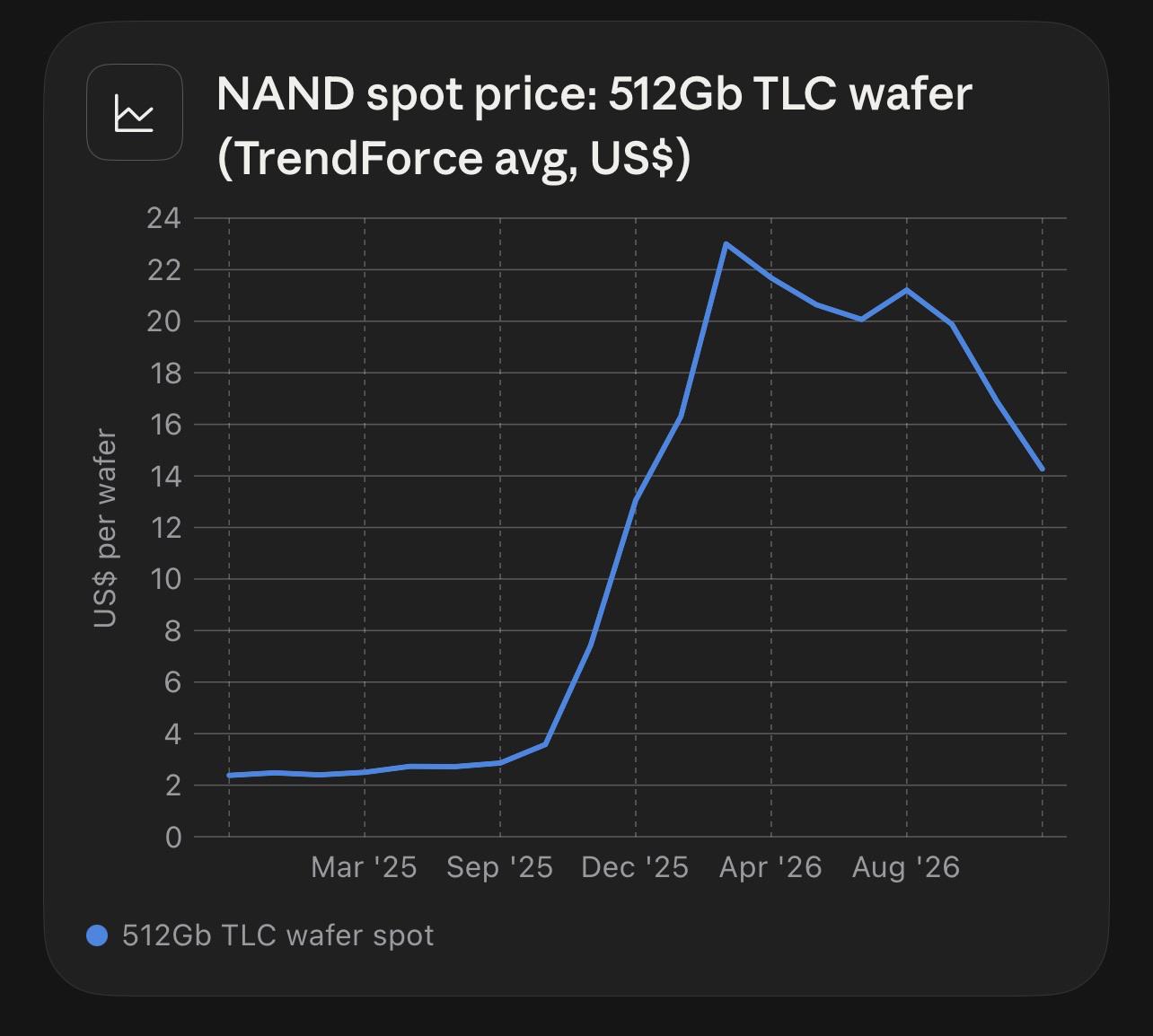
Kioxia Holdings delivered a profit outlook that trailed estimates, warning that an AI-fueled surge in flash memory chip prices was fading after several quarters of breakneck growth.
The Tokyo-based rival to Samsung Electronics, SK Hynix and Micron Technology said it expects an operating profit of ¥2 trillion ($12.7 billion) in the current quarter, falling well short of estimates for ¥2.35 trillion and suggesting nearly flat quarter-on-quarter price rises. That’s after the company’s average selling price of NAND flash memory rose a mid-20% in the three months to September, compared with 70% in the prior quarter, it said.
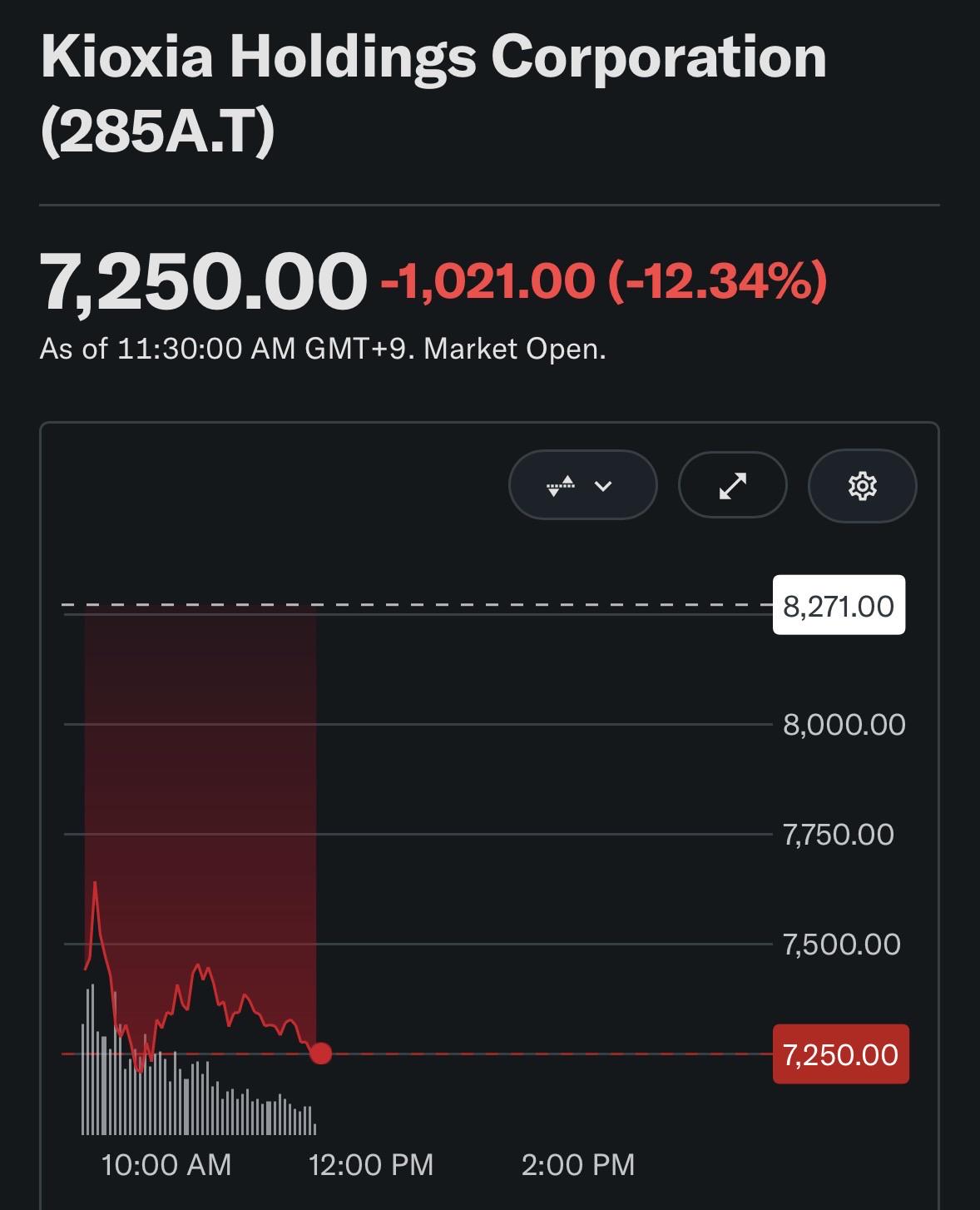
Shares of Kioxia fell 11% Friday on Tradegate after the results.
The chipmaker’s outlook suggests the unprecedented price spikes of the past year or so are starting to level off. The surge in memory chip prices has been a key part of the AI investment story with soaring profits supporting the shares of companies like SK Hynix and Samsung, but investors have been on edge about whether the boom times will continue.
“Given how much selling prices have already risen, it remains unclear at this point whether prices will continue rising in fiscal 2027, even at a gradual pace,” Akira Menju, head of the finance department, said on an earnings call.
There have been other signs of AI weakness over the past week. Alphabet warned that its core advertising business is struggling even as it hikes AI spending, erasing nearly $500 billion in market value. Concerns about the AI expansion spread further as Amazon.com and Intel reported disappointing financial results.
Kioxia’s surprise outlook miss comes even as Menju and other executives reiterated that memory shortages will continue through the next fiscal year. Production capacity is sold out for all of 2027, and Kioxia’s secured long-term agreements from hyperscalers for well over half of projected shipments for 2028, they said.
Analysts showed flashes of outrage and confusion as the executives laid out their forecasts. Several seemed baffled by the idea that pricing would be roughly flat when demand is so strong.
“You say supply and demand will be extremely tight heading into the next fiscal year, but that the (price) outlook is uncertain. From a market perspective, you would normally think prices would continue to rise for a while,” UBS Securities Japan’s research head Kenji Yasui said. “Are you just being conservative?”
Shares of Kioxia have tumbled around 60% from their peak in June. Samsung and SK Hynix’s bullish projections briefly boosted chip-related stocks last week, only to see them tumble in a broad selloff Friday.
Kioxia's chip plant in Kitakami, Iwate Prefecture | Bloomberg
Kioxia’s disappointing projections follow a rousing year in which the former Toshiba unit benefited from soaring memory demand from those big tech providers, but its executives have warned against excessive price rises for fear of alienating customers. The Japanese company posted an over twentyfold surge in operating profit to ¥1.99 trillion in the September quarter, in line with estimates. And it announced an interim dividend of ¥90 per share — its first dividend ever.
Emboldened by lucrative multiyear contracts from the likes of Meta Platforms and Amazon.com, chipmakers have rushed to build production capacity and capitalize on shortages projected to last through at least 2027. That means the shortfall between demand and supply should moderate over time — though investors remain divided as to how long shortages will run.
Kioxia is preparing to float its own American depositary receipts next year to help fund the more than ¥5 trillion in capital spending it plans in Japan with production partner Sandisk over the next six years. A U.S. listing could raise at least $10 billion.
Like SK Hynix, which listed ADRs earlier this year, Kioxia seeks to temper volatility and strengthen pipelines with financial institutions outside Asia through an official debut in the U.S.. That push has coincided with aggressive share buybacks at home: In August, Kioxia completed an ¥800 billion buyback 10 days after announcing it.
Kioxia, which for years struggled with volatile demand from consumer electronics companies including Apple, is expanding output in a bet that AI will transform the market for flash memory chips. While AI may run on graphics processing units such as Nvidia’s, it increasingly depends on flash memory to store and feed vast amounts of data those chips consume.
Data centers comprise a growing portion of business at Kioxia, which hopes that such reliable customers will eventually make up more than 60% of overall sales and boost visibility.
The company is now developing new solid-state drives that would sit closer to AI accelerators, and provide an extra tier of memory to reduce the amount of data that has to fit in expensive DRAM-based high-bandwidth memory.