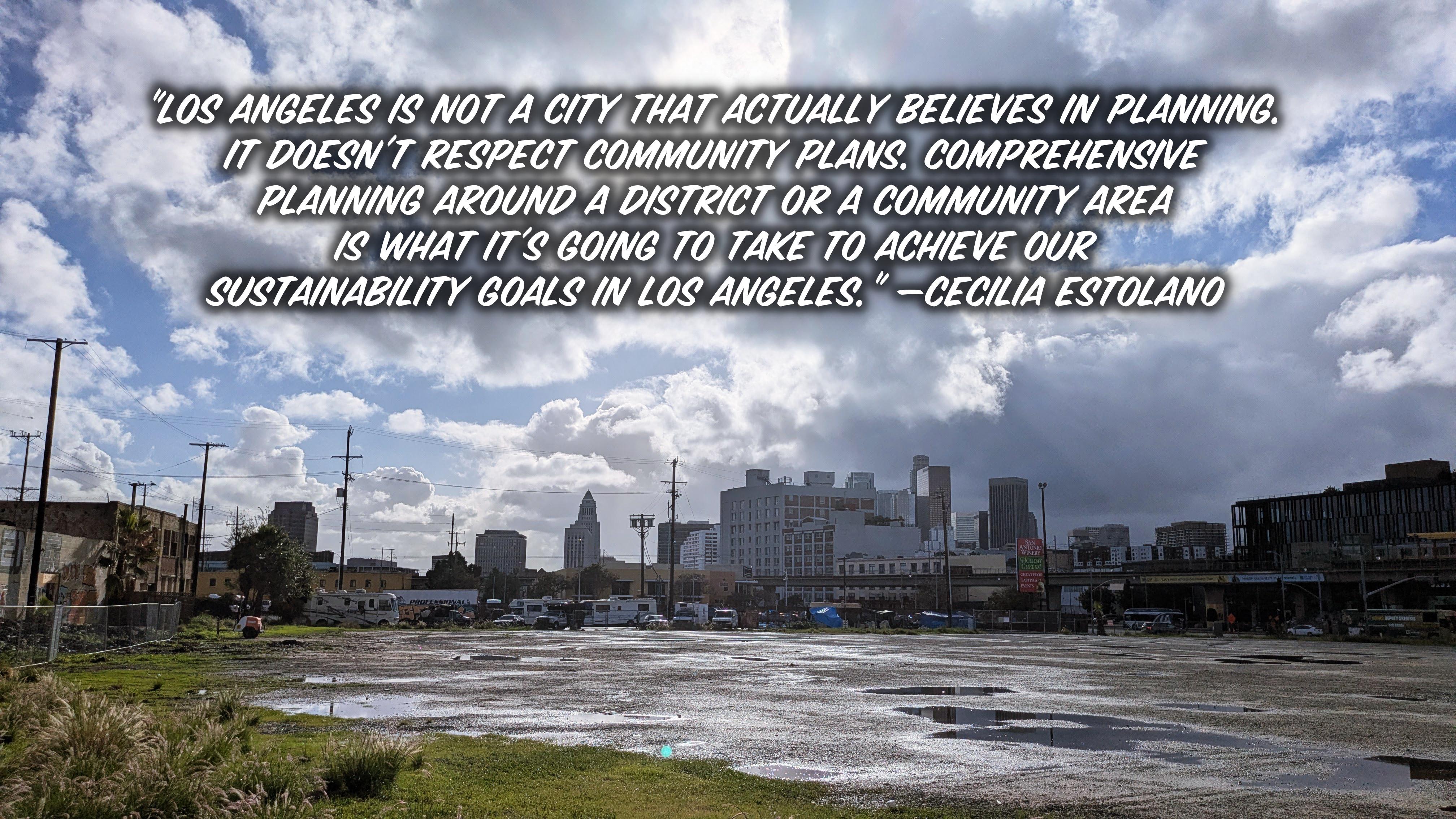
Los Angeles residents should pay attention to what's happening with First & Broadway Civic Center Park (FAB Park), one of the most prominent publicly owned properties in the city, directly across from Los Angeles City Hall, in Downtown Los Angeles.
AltaMed is pursuing its El Corazón Art Park proposal for the site.
AltaMed is a Southern California nonprofit healthcare organization founded in East Los Angeles in 1969. It has grown into a major regional healthcare provider, offering medical, dental, behavioral health, and other services, particularly to underserved communities. Its primary mission is healthcare: not operating public parks or cultural institutions.
That distinction deserves attention. The proposal raises fundamental questions about whether a private healthcare organization should establish an institutional presence on public parkland, what the public actually receives in return, and whether a temporary agreement could eventually become a pathway to long-term control of valuable City property.
This is much bigger than a Downtown LA neighborhood dispute. It's about who controls public land and whether Los Angeles is increasingly turning to private institutions to occupy and manage public property because the City lacks the funding, political will, or capacity to develop and maintain it itself.
The history: This was supposed to be a major public park.
Following the demolition of the former California State Building after the 1971 Sylmar earthquake, the City explored ways to activate this prominent Civic Center location.
More recently, Los Angeles pursued an ambitious vision for a community park through an international design competition and the selection of architectural firms to design FAB Civic Center Park.
But on February 16, 2023, the Board of Recreation and Park Commissioners suspended the park development. Approximately $14,375,248.83 in Quimby fees was subsequently reallocated to the 6th Street Bridge project. The decision followed reported pressure from the Office of then-Councilmember Kevin de León.
The City's existing vision for a major public park was effectively derailed.
Then came AltaMed.
How did a healthcare organization become the proposed operator of this public property?
On August 7, 2025, an AltaMed museum project proposal was discussed at a Recreation and Parks Commission Task Force meeting.
On February 5, 2026, Recreation and Parks agenda item 26-030 proposed a license agreement with the AltaMed Museum of Chicano and Mexican Art for the design and operation of El Corazón Art Park.
The central concern is that one private organization appeared to be advancing a proposal for a highly valuable public property without an open, competitive process that allowed the public to evaluate alternative uses or organizations.
And the identity of the organization matters.
AltaMed's primary institutional role is healthcare services. The proposal's materials have referenced a wellness center and medical services, alongside cultural programming, site improvements, utility upgrades, ADA improvements, and temporary activations connected to major events.
Art and cultural programming may be part of the project, but the public deserves a clear understanding of the full proposed operation.
A healthcare facility on public parkland is not the same thing as a public park or a community arts program.Healthcare services can provide real public benefits. But a private organization's mission does not automatically make its use of public land the best use of that property.
Even a major public-sector union has opposed the proposal and filed a CEQA appeal.
There is another important development that deserves attention.
SEIU Local 721, the union representing thousands of City of Los Angeles Recreation and Parks employees, formally opposed the project and filed an appeal under the California Environmental Quality Act (CEQA).
On May 18, 2026, the union filed an appeal challenging the City's determination that the project qualified for a categorical environmental exemption.
The union's appeal raised concerns about the adequacy of the project description and environmental review, including the proposed uses of the property, private events, potential food and alcohol service, medical services, and the large digital display. It also questioned whether the license agreement could permit uses inconsistent with the property's status as public parkland.
This is especially significant because SEIU Local 721 represents approximately 2,300 City Recreation and Parks Department employees. These are public-sector workers whose work is directly connected to the City's parks system.
Is a temporary agreement a pathway to something permanent?
Public records indicate that AltaMed previously explored a much larger development involving a proposed 35–55-year ground lease for a permanent museum, restaurant, bar, and clinic.
That is a substantial potential commitment of public land.
It raises the question of whether today's temporary arrangement could become a stepping stone toward a much longer institutional presence.
Other concerns include:
\- Private events and commercial activities.
\- A proposed large digital advertising display.
\- Continued public access to the park.
\- Medical and wellness operations.
\- Construction and infrastructure improvements.
\- The possibility of extensions or a longer-term agreement.
\- Whether applicable public park, land-use, and environmental review requirements have been properly addressed.
The Downtown Los Angeles Neighborhood Council has raised concerns about transparency, project details, community engagement, and the need for a more meaningful public process. Other community organizations, including the Downtown Los Angeles Residents Association and the Downtown Homeowners Association Alliance, have also raised objections.
The bigger question: Is Los Angeles giving away control of its public land?
This is where the issue extends far beyond First & Broadway.
Los Angeles owns valuable properties throughout the city, many next to City Hall, major civic buildings, cultural institutions, and transportation hubs.
When the City cannot afford to develop, operate, or maintain a public property, does that become the justification for granting a private corporation or institution long-term control?
Are public assets being committed to private organizations because the City lacks the funding or political will to fulfill its own public responsibilities?
If the City cannot afford to maintain a public park, shouldn't Angelenos have an opportunity to debate how that park should be funded and managed before its use is committed to a private organization?
And when agreements are negotiated without an open competitive process, how can the public know that the arrangement represents the best possible use of its property?
The public may still legally own the land, but that does not necessarily mean the public retains meaningful control over it.
Public ownership should mean more than the City's name remaining on a deed. It should mean public access, public accountability, transparent decision-making, and the ability of future generations of Angelenos to determine how their land is used.
This is not an argument against museums, healthcare services, cultural institutions, or public-private partnerships. They can provide meaningful benefits. But those benefits must be clearly defined, accessible, and protected by enforceable agreements.
The issue is whether one private healthcare organization should gain a potentially long-term institutional presence on one of the City's most prominent public properties without a transparent process that allows Angelenos to evaluate alternatives.
If this becomes an accepted approach, what prevents other public properties across Los Angeles from gradually becoming controlled by private institutions through licenses, leases, management agreements, and extensions?
Public meeting: November 24, 2026
AltaMed's proposal and the future of this property deserve public scrutiny before additional commitments are made.
Tuesday, November 24, 2026 — 6:30 PM
Little Tokyo Branch Library — Meeting Room
203 S. Los Angeles Street
Los Angeles, CA 90012
Meeting agenda:
https://dlanc.com/wp-content/uploads/2026/11/AGN_PLUC_-2026_11_24.pdf
If you care about public land, parks, government transparency, or the future of Los Angeles, consider attending.
READ THE DOCUMENTS — REVIEW THE ACTUAL PROPOSAL
- DLANC February 2, 2026 Continuance Letter
https://dlanc.com/wp-content/uploads/2026/04/Item-26-030-Proposed-Agreement-for-1st-and-Broadway-Park-FAB-Park.pdf
2. AltaMed Presentation, April 2, 2026
https://dlanc.com/wp-content/uploads/2026/04/DLANC_El-Corazon-Presentation_4.1.26.pdf
3. DLANC April 14, 2026 Position Letter
https://dlanc.com/wp-content/uploads/2026/04/FINAL-AltaMed-Museum-of-Chicano-and-Mexican-Art-_-Design-and-Operation-of-the-El-Corazon-Art-Park-Project-1st-and-Broadway-Civic-Center-Park.pdf
4. Recreation & Parks Staff Report 26-098
https://recreation.parks.lacity.gov/sites/default/files/pdf/commissioner/2026/may07/26-098.pdf
5. City Council File 26-0737 — CEQA Appeal and Project Documents
https://cityclerk.lacity.org/lacityclerkconnect/index.cfm?cfnumber=26-0737&fa=ccfi.viewrecord
7. DLANC Opposition Letter and Appeal Support
https://d22tgksh1zpp6f.cloudfront.net/OnlineDocs/2026/26-0737_cis_06-12-26.pdf
8. LA Times Investigation — The Vacant Lot Near City Hall That Will Become an Art Park
https://www.latimes.com/california/story/2026-07-13/vacant-lot-near-city-hall-will-become-art-park-why-are-some-people-objecting