r/medieval • • Sep 29 '24

Subreddit Update

67 Upvotes

Heyo.

I peruse this subreddit every now and then and yesterday noticed that there were no mods here and posting was restricted to only a handful of users. I put in a Reddit request and immediately got it, so I reopened posting for everyone and cleared out some modmail.

As far as I can tell (and it's a little difficult because a lot of the modlog involves one or more deleted accounts) the guy who created this sub did so 14 years ago and never really did anything with it. He then stopped using reddit 14 years ago. Someone else put in a request and seemingly held it for a while, then either left or handed it over to another etc.

In the past few months, it looks like one guy adjusted a bunch of rules and settings, invited someone to help with that (that person then left) and the original guy deleted his account or left as well, leaving the subreddit unmoderated. If he deleted his account, someone new put in a request for the sub (or it was the same guy, maybe he accidentally left?) and adjusted all the settings again. He then deleted his account a few days later, making sure to do so after restricting posting, wiping automod's settings, and archiving posts older than six months (making it so that no one can comment on old threads/ensuring that eventually no one would be able to post or comment at all).

Basically, it looks like one or two old mods tried to just kill this place off. The most recent one had invited someone to be a mod just before doing all that and deleting their account, I presume to continue this weird cycle, but my request went through before they decided to accept or not.


I have no immediate plans for this place other than keeping it open and running. I am adding a rule that AI content is banned, which prior mods allowed. If there are any other changes you would like to see or if anyone has ideas for anything, let me know.


r/medieval • • 23h ago

History 📚 Murder of Louis, Duke of Orléans

Post image
32 Upvotes

In the first decade of the 15th Century King Henry IV was too busy quashing rebellions against his usurpation of the throne of England to take notice of France.

The French, then, in the absence of the English, started fighting among themselves. It began with a power struggle between Louis, Duke of Orléans, brother of the mentally unstable King Charles VI, and John the Fearless, Duke of Burgundy, Louis and Henry's first cousin.

Things escalated when John the Fearless had Louis assassinated, admitting the crime, and justifying it as the removal of a tyrant. Louis's son Charles then began the thirty-year Armagnac1–Burgundian civil war with John the Fearless. John was assassinated in 1419.

The Life of Charles VI by a Monk of St Denis Volume 3 describes the assassination:

Accordingly, for the space of seventeen days they lay hidden in a certain house near the Barbette courtyard, well suited for an ambush, waiting for a suitable opportunity. On the aforesaid day, therefore, after nightfall, when the duke, having enjoyed a cheerful supper at the queen's residence, was making his way to the royal residence of Saint-Pol accompanied by only five companions, that most wicked enemy, most like Judas the traitor, seeing that the opportunity suited his wishes and that no obstacle remained to what he had previously planned, summoned his partners in wickedness and ordered the deed to be carried out.

O blind mind of mortals, ignorant of the dangers that threaten and of what the next hour may bring! In the middle of the road Louis, Duke of Orléans was suddenly surrounded by seventeen ambushers, worthy of both divine and temporal punishment. At that same moment Raoul, the chief agent of the crime, committing the heinous deed with diabolical audacity, swung an axe and with a single blow cut off the duke's left hand at the wrist, then drove the weapon into his brain, from which wound, alas, came the end of the life of that most illustrious duke. Nor did the bloodstained murderer leave the weapon in the wound, but struck again from behind and, as the duke fell to the ground from the mortal injury, spilled his brains upon the royal roadway. Terrified, his companions fled, except for a certain Fleming who threw himself upon the lifeless body and repeatedly cried, "Spare the Duke of Orléans, the king's brother." Unable to be dragged away from it, he was at last mortally struck down by the swords of those who were lashing out indiscriminately.

Thus, the envious course of fate, hostile to the fortunate, in order more readily to bring their condition to ruin, casts the powerful down and leads them to destruction through hidden and unseen snares, lest, having foreseen what was coming, they should be able to protect themselves by taking precautions. When the foul crime had been committed, a deed which even all barbarous nations would have regarded with horror, the most wicked traitor dragged the corpse ignominiously into the neighbouring filthy mire; and there, by the light of a burning torch of straw, since he had no other light, when he saw that the crime had been accomplished, he returned rejoicing, as though after a deed well done, to the residence of the Duke of Burgundy with his detestable companions, no one pursuing them.

When the crime had been committed, however, a deed more cruel or abominable than any perpetrated against anyone, as the annals relate, the people immediately rushed together in sudden crowds when they heard of the horror of that most savage act; and as everyone flocked from all sides to the execrable spectacle, it was horrifying to behold the body pierced by many mortal wounds and mutilated in one arm. More horrible still was the necessity of gathering and searching for the brain and the left hand in the filthy mire, so that they might be buried with the body.

With the queen, all those of royal blood likewise heard of the enormity of the crime with the greatest displeasure, except only the Duke of Burgundy, who at first did not even believe the traitor when he brought him news of what had happened, until, going with his household as though equipped for war to the church of Saint-Guillaume, he found the body already brought there. From that moment, feigning the appearance of grief and putting on mourning clothes like the others, he joined them without a trace of shame when they carried the body to the church of the Celestines of Paris, where he himself had wished to be buried while still alive. There, after two days had passed, when they had most solemnly performed the bloody funeral rites with much lamentation, they took counsel together, asking one another with bitterness of heart who had been the author of so great a crime.

Note 1. The Armagnac's are named after Charles' father-in-law Bernard VII, Count of Armagnac.

Repost to another community


r/medieval • • 1d ago

Art 🎨 Medieval Killer Rabbits, by me(@teulu_dewr)

Post image
137 Upvotes

r/medieval • • 1d ago

History 📚 Death of Robert de Vere, Duke of Ireland

Post image
49 Upvotes

On the 22nd November****1 1392 Robert de Vere was fatally 'struck by a wild boar while hunting' [Otterbourne] aged thirty while in exile in Louvain 'in a pitiable state of mental anguish and material poverty' [Walsingham].

A childhood friend of King Richard II, he succeeded as Earl of Oxford aged nine. He married, aged fourteen, Philippa de Coucy, a first cousin of King Richard and granddaughter of King Edward III. Richard continued to favour him making a Marquess, the first creation of the title in England, placing him above all the nobility in the Kingdom excepting the Dukes of the Royal family. A year later he was created Duke of Ireland - the first non-royal Duke.

In 1386 he divorced his wife, and married his mistress Agnes Launcekrona, a Lady of the Bedchamber to Richard's Queen Anne of Bohemia, causing scandal, and the further enmity of the nobility.

De Vere's demise began at the 1387 Battle of Radcot Bridge when the Royal army, commanded by him, were prevented from crossing the River Thames, by the army of the Lord's Appellant, commanded by Henry, Earl of Derby [future King Henry IV]. Being surrounded, many attempted escape, with many drowning in the process. 'Meanwhile, the Duke of Ireland, fleeing, came to a river. When he wished to cross by a bridge, he found it broken. Reaching another bridge, he encountered archers who blocked his passage. Thus, turning away from them and searching for a ford, he urged his horse into the river. There, soon transformed from a rider into a swimmer, he reached the other bank.' [Walsingham]

He escaped England, travelled to the Low Countries, eventually ending up in Louvain where he met his death five years later.

Three years after Richard had his remains returned to England, and buried. Annals of Kings Richard II and Henry IV: "In this year, in the month of September, the King of England had brought from Louvain the body of his former beloved, Robert de Vere, Earl of Oxford, a man who would indeed have been fortunate if he had resolved to keep within his proper bounds, but who through over-great advancement was overcome by misfortune. At the Priory of Colne in Essex, the King caused solemn obsequies to be performed, attending there in person and magnifying the funeral office in whatever ways he could. He had the cypress-wood coffin, in which the body lay embalmed with balsam, opened; he looked upon the face and touched the fingers, which, as is said, were enriched with precious gold rings that were to be buried with the body. And he publicly showed to the dead man the affection which he had formerly bestowed upon him while alive. There were present there, with the King and the mother of the deceased, the Archbishop and several other bishops, together with abbots and priors and other religious men. But few nobles attended, because the hatred which they had conceived against him had not yet been digested."

Note 1. The date of the 22nd November isn't mentioned in any contemporary chronicle. It is mentioned by Wikipedia as the date of his death and his reburial three years later without a source being cited.

The image taken from the Gruthuse manuscript of Froissart's Chroniques, around 1475.


r/medieval • • 1d ago

Art 🎨 Medieval Silver Treasure Found in Moldova Contains Sound-Making Jewelry and Snake-Headed Clasp

Thumbnail
arkeonews.net
3 Upvotes

r/medieval • • 1d ago

History 📚 Hermann von Salza tomb

Thumbnail
gallery
12 Upvotes

According to the chronicles, Hermann von Salza, leader of the Teutonic Knights, is buried here.

The church on the right was established by the Teutonic Knights in the 1200s. Barletta served as the headquarters for all the knightly orders in Southern Italy.

One day, I hope there will be a cenotaph here.


r/medieval • • 2d ago

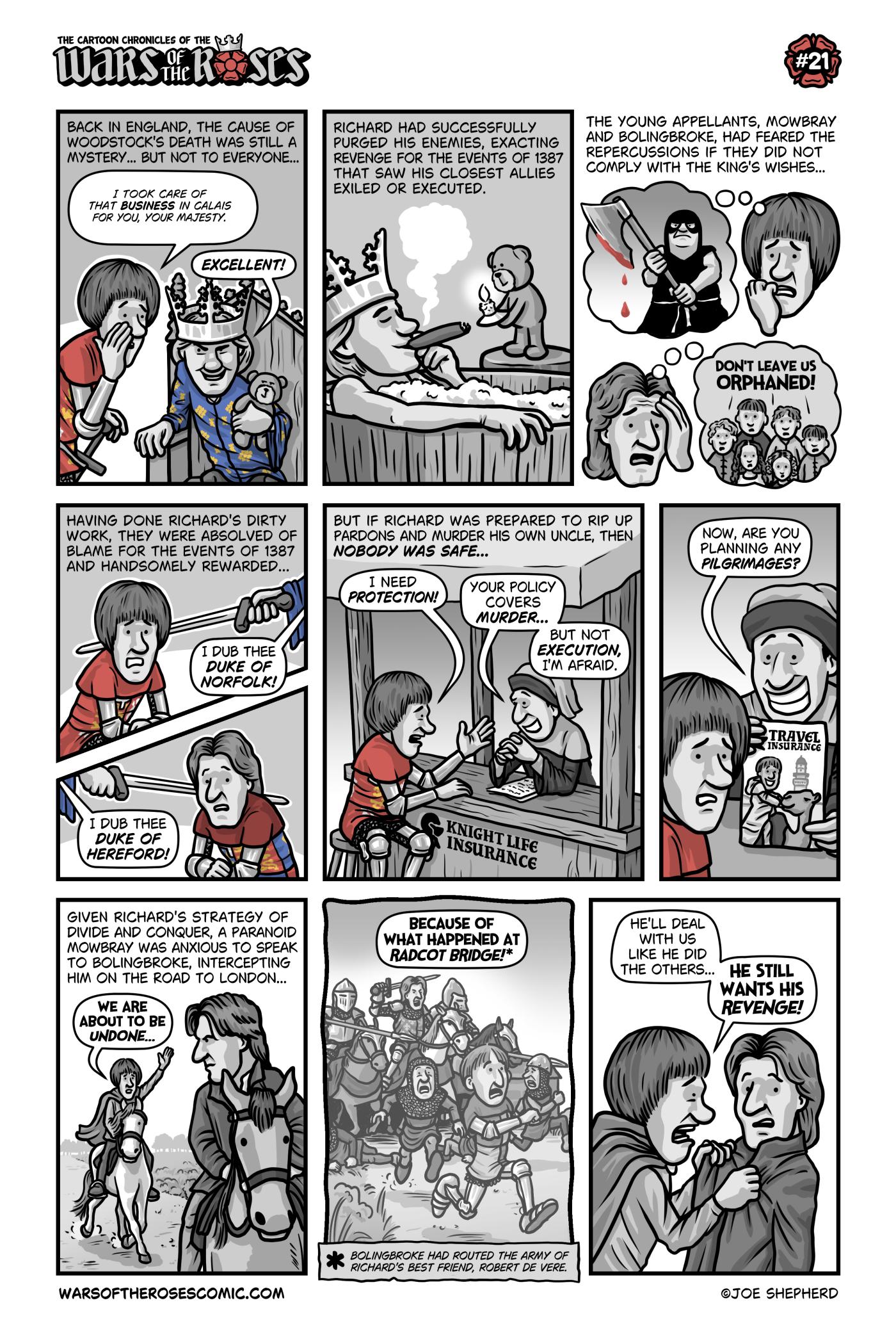
Art 🎨 The Cartoon Chronicles of the Wars of the Roses: Family Feuds #21

Post image
17 Upvotes

After the older appellants have been dispatched, the younger appellants start to be overcome by fear and paranoia...

Catch all the updates for free at warsoftherosescomic.com


r/medieval • • 2d ago

Culture 🥖 The Middle Ages created unique views

Post image
107 Upvotes

Between the cathedral and the castle, Barletta, Italy


r/medieval • • 2d ago

History 📚 When Hungary and Albania stood together in late Medieval Europe: Rediscovering the Hunyadi–Skanderbeg alliance

Thumbnail
dailynewshungary.com
5 Upvotes

r/medieval • • 4d ago

Culture 🥖 Chivalric orders tombstones Barletta,Italy

Post image
143 Upvotes

Tombstones discovered in Italy in 1970: two belong to the Knights Templar and one to the Order of St. John (Knights Hospitaller).

Today, they are on display in the city's castle.


r/medieval • • 3d ago

History 📚 Nicola de la Haye

Thumbnail
gallery
45 Upvotes

In a quiet corner of the quiet church of St Michael's Church, Swaton, Lincolnshire, lies the effigy of Nicola de la Haye, hereditary constable of Lincoln Castle and Sheriff of Lincolnshire, who died [traditionally] on 20th November 1230.

Twice she held her castle against besiegers.

The first time in 1191 against bad Bishop William Longchamp, King Richard I's regent whilst he was away crusading, and who gave up after a month and restored her titles.

The second time in 1217, shortly after the death of King John, when an army of Prince Louis attempted to take the castle, she held out, until William Marshal and Bishop Peter de Roches came to her aid, and defeated Louis' army at the Second Battle of Lincoln, also known as Lincoln's Fair.

The Annals of Dunstable has: "There, together with Gilbert de Gant and the other barons who were present, they besieged Lincoln Castle, in which a noblewoman named Nicola [de la Haye] defended herself manfully."

Anonymous of Béthune: "Here, however, the castle, which was under the command of a lady, Nichola [de La Haye], who had it by inheritance, held out steadfastly against him."

The History of William Marshal, in verse, is more detailed:

And the Bishop of Winchester
who greatly wished to know their state
went willingly towards the walls
with a great company of crossbowmen.
Then he told them to wait for him there,
or to remain there a little while,
for he would return quickly.
With only one servant
he entered into the castle,
and on entering he met
my lord Geoffrey de Serland,
who had been in great fear.
They saw the walls thrown down and broken,
and greatly lamented them.
The bishop saw the damage
to walls, houses and people,
which the stone-throwing engines
were hurling, casting down and overturning.
Some of those who were inside
warned him, and begged him,
for God’s sake, to draw back
because of mangonels and stone-throwers
which were smashing everything around,
and he entered into the tower.
There he found the good lady,
whom God keep in body and soul,
who was lady of the castle,
and defended it as best she could.
The lady counted herself fortunate,
and greatly rejoiced at his coming,
and he comforted her very well
with the news that he brought.
He stayed there little, I tell you,
by a postern he went out on foot
into the town, for he wished
to see how it stood.


r/medieval • • 3d ago

Literature 📖 Smithsonian Magazine: Medieval Readers Saw Floods, Plagues and Comets as Omens of Doom—So They Created a Mysterious Manuscript of Apocalyptic Artworks to Peruse at Will

Thumbnail
smithsonianmag.com
11 Upvotes

r/medieval • • 4d ago

Art 🎨 An effigy (Markenfield 1398) scabbard I made in 2024

Thumbnail
gallery
187 Upvotes

Though the sword didn't match the profile exactly and some changes were made, most of the design was kept to match the effigy. Done in cast bronze. The core is a felt wool line poplar wood, wrapped in veg-tan leather.


r/medieval • • 5d ago

History 📚 Monument to Nicholas Fitzherbert, 1473

Thumbnail
gallery
258 Upvotes

On 19th November 1473 Nicholas Fitzherbert died aged 73 at Norbury, Derbyshire. He was buried at the Church of St Barlok, Norbury. Finely carved in alabaster from the nearby Fauld quarries. Armour from the Fluted Period; the Wars of the Roses. Fine set of weepers. Note the mail Standard that protects his neck, the lacings on the armour, the Suns and Roses collar, the two piece breastplate. Short hair with no moustache; after 1450, or thereabouts, carved effigies changed from having moustaches to not having. The Clenched Fist Crest unusually left-handed whereas the Fitzherbert crest usually right-handed; probably a mistake by the sculptor since left-hand suggests illegitimacy. Probably carved by Harpur and Moorecock of Burton on Trent.


r/medieval • • 4d ago

History 📚 Hat Identification

Post image
31 Upvotes

Hello, i recently found this image and i was wondering if someone knows or has seen this type and design of hat anywhere else. Any help and info is welcome and thanked!


r/medieval • • 4d ago

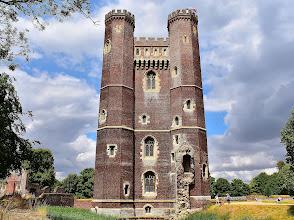
History 📚 Tattershall Castle built 1231, but largely rebuilt 15th century. Considered the finest Medieval Brickwork in England with 700,000 bricks used.

Post image
41 Upvotes

Near Sleaford, Lincolnshire. Robert de Tattershall original builder. Ralph Cromwell did the expansion in 15th century.


r/medieval • • 4d ago

Questions ❓ Help finding gift for girlfriend

12 Upvotes

I’m hoping someone can help me out here a bit, my girlfriend is a history masters student with an affinity for empress Matilda during the English anarchy and I would love to get her something related to her for Christmas. I don’t know an awful lot about Matilda and when I’ve tried to research I’ve ended up more confused about it all than I was to start with. Can anyone with a bit more knowledge give me a hand? I’m open to any suggestions


r/medieval • • 5d ago

History 📚 1278 Arrest of the Coin Clippers

17 Upvotes

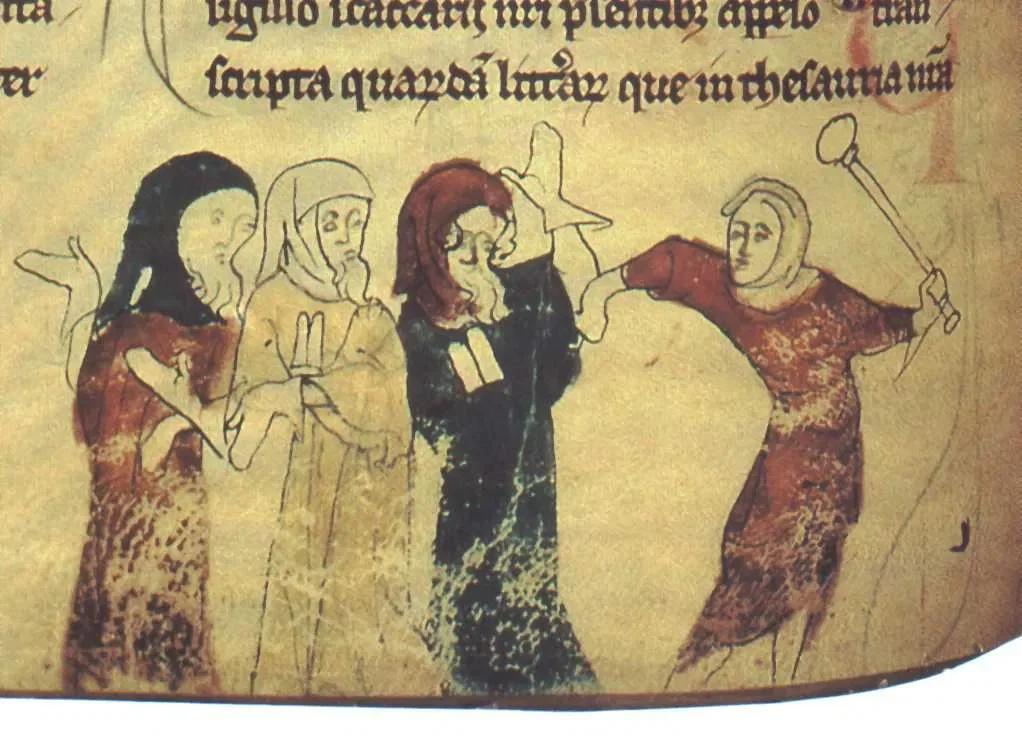
On 18th November 1278, in simultaneous raids across the country, hundreds were arrested for coin clipping by order of King Edward I in an effort to crack down on the longstanding debasement of currency.

French Chronicle of London: "In the same year, upon the Octaves of Saint Martin [18th November 1278] which was a Friday, just before tierce, all the Jews of England were seized by reason of the coin, which was vilely clipped and falsified, and, upon the Feast of Saint Lucy [13th December 1278] after, all the goldsmiths of London, and all those of the Exchange, and many of the good folks in town were seized, by reason of the purchase of bullion and the exchange of large coin for small, for which they had been indicted by the Wards. And on the Monday next after the Tiffany, the Justiciars sat at the Guildhall for delivery thereon, namely, Sir Stephen de Pevencestre, Sir Walter de Helyon, and Sir John de Cobham, and such as they might think proper to associate with them; and by reason of such doings, three Christians and 293 Jews were drawn and hanged, for clipping the coin."

Annals of Dunstable: "In the same year, in the month of November, all the Jews throughout England were arrested on one and the same day, and imprisoned in London, because of the clipping of the king's coin. And many Christians were accused by the Jews of being in agreement with them, especially among the more prominent men of London. Of the Jews of both sexes, two hundred and twenty were hanged at London for the aforesaid offense; and in the other cities of England, a very great number. For the ransom of the Christians the king received an immeasurable sum of money; yet some of the Christians were nevertheless handed over to execution by hanging."

Annals of Waverley: "Also, on the 18th November, at the same hour of the same day, all the Jews throughout the kingdom of England were arrested and imprisoned. All their houses and private chambers were diligently searched, and a very great quantity of clipped coin was found among them, which passed entirely into the royal treasury, to the great loss and injury of the whole kingdom. Thereafter, the said Jews were taken to the Tower of London and confined in close imprisonment, together with very many Christians who were found guilty of complicity in the wrongdoing."

Chronicle of Walter of Guisborough: "A separate investigation was made concerning clipped coinage by the Jews, and on the 18th of November 1278, they were arrested throughout all of England. When the fraud was discovered, many of them were hanged. In the following year, a new coinage was issued that was unclippable, including round farthings and halfpennies, which was harmful to the poor and to the Church."


r/medieval • • 6d ago

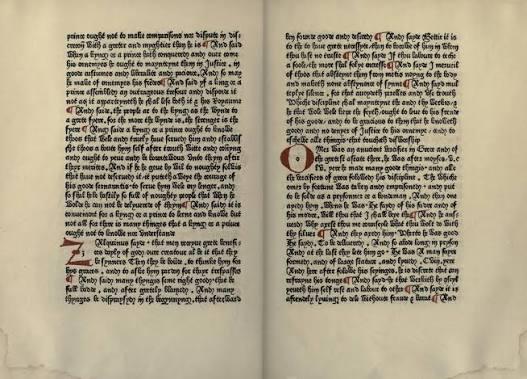
History 📚 William Caxton prints the first book in the English language Dictes and Sayings of the Philosophers- 18th November 1477

Post image
15 Upvotes

r/medieval • • 6d ago

History 📚 How a 16-Year-Old Leper King Humiliated Saladin: The Battle of Montgisard

Thumbnail
mythandmemory.org
30 Upvotes

Imagine being just 16 years old, suffering from a debilitating disease, and facing one of the most powerful military commanders of the medieval world.

That was the extraordinary situation Baldwin IV, the Leper King of Jerusalem, faced in November 1177.

Saladin had invaded the Kingdom of Jerusalem with a powerful army, expecting little resistance. The Crusader kingdom appeared vulnerable, and its young king seemed unlikely to pose a serious threat.

But Baldwin had other plans.

At Montgisard, he assembled the forces available to him, including the formidable Knights Templar, and launched a counterattack that caught Saladin's army off guard. What followed was one of the most remarkable Crusader victories of the 12th century.

How did Baldwin overcome the odds? What role did the Templars play? And why did this stunning victory fail to prevent Saladin from eventually capturing Jerusalem?

Read through the full article to learn more about the lead up to the battle and how Baldwin managed to defeat Saladin's forces.


r/medieval • • 7d ago

History 📚 How do historians work out how long it would have taken one scribe to complete the Codex Gigas? I've seen estimates ranging between 5-20 years.

Post image
63 Upvotes

There are over 300 pages of vellum in the Codex Gigas and handwriting analysis suggests that it was one scribe. People who have attempted to replicate it have given estimates of five years plus of continuous writing. Others have given an estimate of twenty years.

Just wondering how they come up with such estimates? Are they assuming the scribe could write a certain number of pages per day and that there was no ruling, illumination or vellum preparation? Also, would those of you who are medievalists think it is most likely that it was just one scribe? Could there have been more people involved?

If anyone can recommend any reading on how much time was spent by scribes in the medieval scriptorium, it would be much appreciated.


r/medieval • • 6d ago

History 📚 Ruins of Coudenberg Palace - Home of Emperor Charles V - Below the City of Brussels

Thumbnail
youtu.be
4 Upvotes

The Coudenberg Palace in Brussels was once one of the grandest royal residences in Europe before a devastating fire burned it down in 1731.

For nearly seven centuries (from the 12th to the 18th century), this hilltop fortress and palace served as the main seat of power for counts, dukes, kings, and emperors—including Charles V. When it was rebuilt and leveled over decades later, the entire palace essentially vanished beneath the modern city.

Today, you can actually walk through its ghost-like underground ruins—including old vaulted chambers, medieval street levels, and foundations—right beneath Brussels' Place Royale.


r/medieval • • 6d ago

History 📚 Execution of Edmund Fitzalan, Earl of Arundel

9 Upvotes

On 17th November 1326 Edmund Fitzalan, Earl of Arundel, who was, with the Despensers, one of King Edward II's primary supporters, was summarily beheaded following his capture in Shrewsbury. Back in 1312 he had been one of the Lord Ordainers who tried and executed King Edward II's favourite Piers Gaveston. Thereafter, he became closely allied with Edward, possibly because Fitzalan's son had married Isabella, daughter of Edward favourite Hugh Despenser the Younger.

Life of Edward II of Caernarfon by a Monk of Bridlington: "Likewise, Edmund, Earl of Arundel, was captured at Shrewsbury by Sir John de Charlton on the feast of Saint Hugh [17th November], bishop and confessor, and was immediately beheaded."

Life of Edward II by a Monk of Malmesbury: "In the same year, on the Feast of Saint Hugh [17th November], the Earl of Arundel was captured in the region of Shrewsbury, but was beheaded at Hereford. In the same week, the King of England was captured at Neath in South Wales and was sent to be held at Kenilworth Castle. Hugh Despenser the Younger, who had been captured with the king, was drawn, beheaded and hanged at Hereford [on ##24th November 1326]. His body was divided into four parts, and his head was sent to London Bridge."

Annales Paulini: "In the same year, on the fifteenth day before the Kalends of December [17th November] the Earl of Arundel was beheaded at Hereford. He confessed, as was said, to having plotted the death and overthrow of Lady Isabella, Queen of England."

Adam Murimuth Continuation: "Lord Hugh Despenser the Younger, Robert de Baldock, and Simon of Reading were brought to the Queen, who was at Hereford. However, before their arrival, the Earl of Arundel, John Daniel, and Thomas de Micheldever were beheaded in Hereford through the agency of Lord Roger Mortimer, who harboured a deep hatred for them and whose advice the Queen followed in all matters."

Chronicle of Henry Knighton: "Shortly thereafter, Lord Edmund, Earl of Arundel, was captured by Lord John de Charlton in Shropshire and brought to Hereford, where the queen had assembled with the nobles of the realm. Because he had given his son in marriage to the daughter of Hugh Despenser, and because he had been secretly part of the king's council and, as was said, had worked harm against the queen during her absence, and had also been involved in procuring the death of the noble Earl Thomas of Lancaster, together with Lord Aymer de Valence, Earl of Pembroke, who had died suddenly while abroad, the said Edmund was sentenced to death. He was drawn and hanged on the 17th of November, along with his squire, named John Daniel, who had led him astray with his counsel in many things."

Froissart: "When the queen, the barons, and the others were comfortably lodged, they laid siege to the castle as closely as they could. Then the queen had Sir Hugh Despenser the elder and the Earl of Arundel brought before her eldest son and all the barons who were there, and said that she and her son would give them justice and a fair trial, according to their deeds and actions. Then Sir Hugh replied: 'Ah, lady, may God grant us a just judge and a fair judgment; and if we cannot have it in this world, may He give it to us in the next!' Then rose Sir Thomas Wake, a good knight, wise and courteous, who was marshal of the army. He recited all their deeds from a written record and then turned to an old knight who was there, so that he might deliver a judgment, based on the faith owed by men in such matters, and on the nature of such crimes. The knight consulted with the other barons and knights and then delivered his full judgment: that they had well deserved death, based on the many horrible deeds recounted there against them, which were held to be true and clear. And they had, by the diversity of their crimes, deserved to be executed in three ways: first to be drawn, then beheaded, and finally hanged from the gallows. And just as they were judged, so were they immediately executed before the castle of Bristol, in sight of the king and of the said Sir Hugh the younger, and of all those inside, who were filled with deep grief and outrage. And it may be understood that they were in great anguish of heart. This execution was carried out in the year of grace 1326, on the feast of Saint Denis, in October."

It isn't known what Froissart's source was, noting he places the execution in Bristol rather than Hereford, and on the 7th October rather than the 17th of November.

The illustration of Arundel and Hugh Despenser the Elder before Queen Isabella from a 15th century edition of Froissart's Chronicles.


r/medieval • • 7d ago

Questions ❓ Examples of soled hose?

9 Upvotes

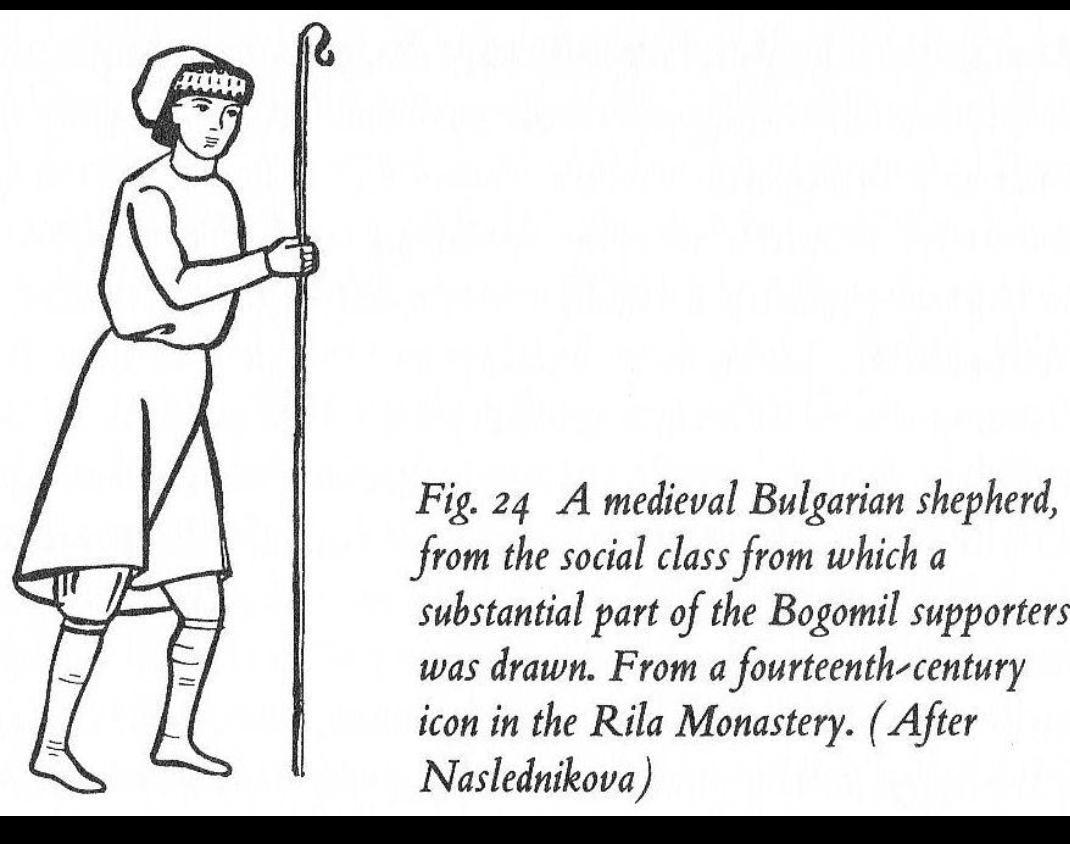
I've been looking a bit into medieval era hose, specifically from around the 1300s. From what I've looked up, everyone says soles were sewn into the hose. Which makes sense from a logical perspective, though I've never actually seen this depicted in period artwork.

So is it just speculation that they would put in soles, or so we have evidence? If so, were they usually put on the outside or inside, and whats the source?


r/medieval • • 7d ago

History 📚 Food & ingredients available in Medieval Europe before contact with the Americas

Thumbnail
fakehistoryhunter.net
10 Upvotes

Let me know if I forgot something or if you spot something that shouldn't be there.