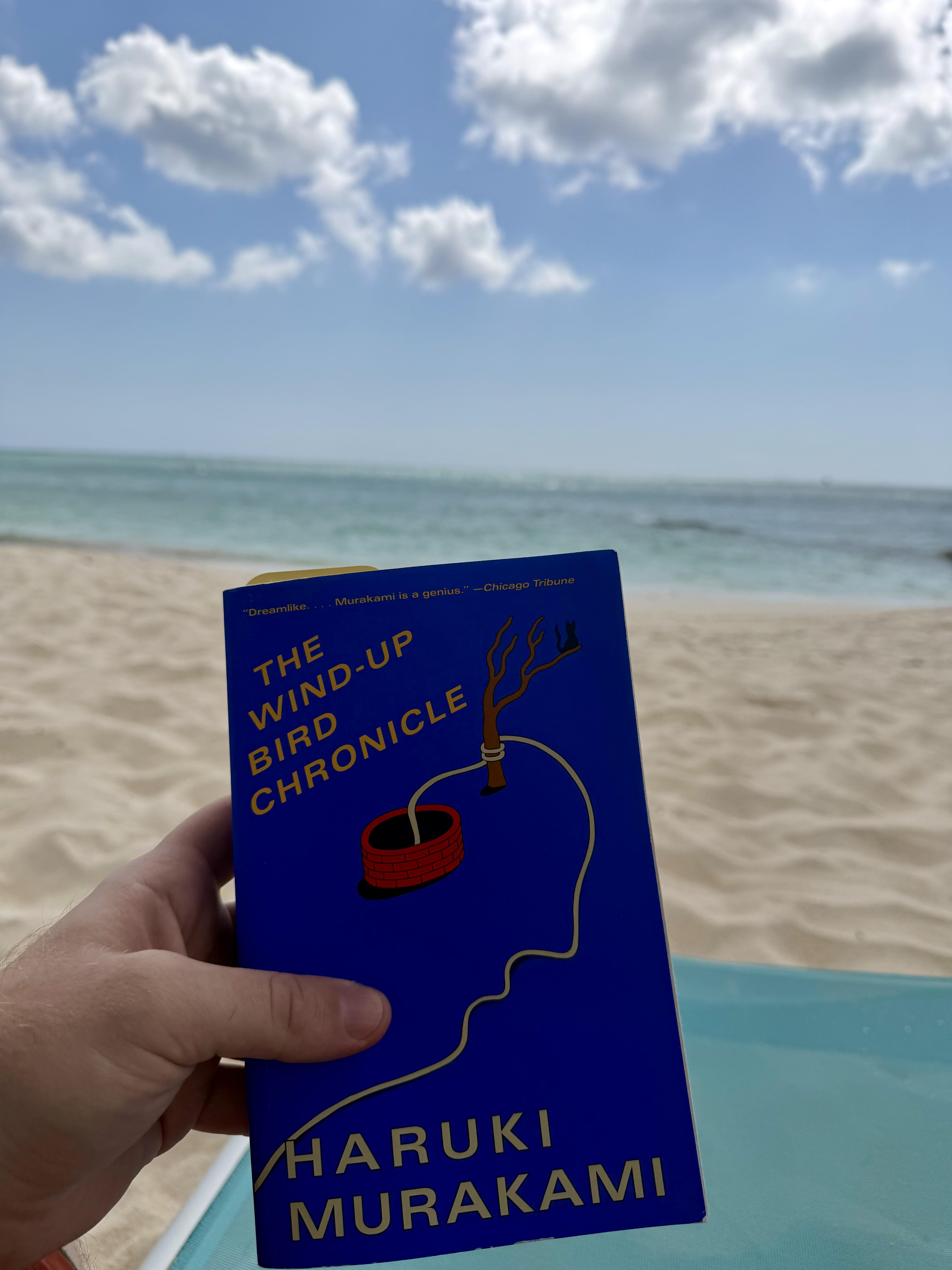
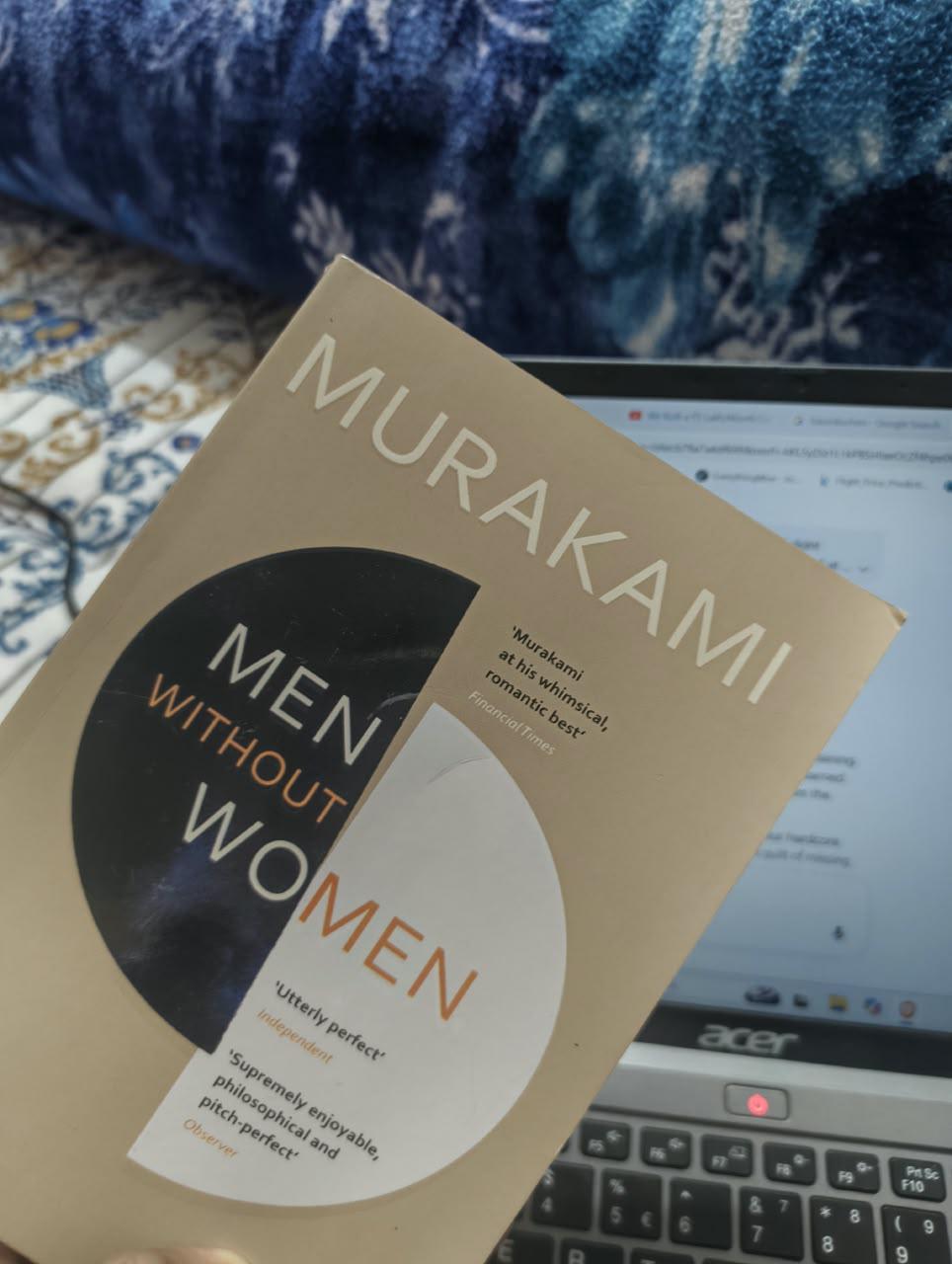
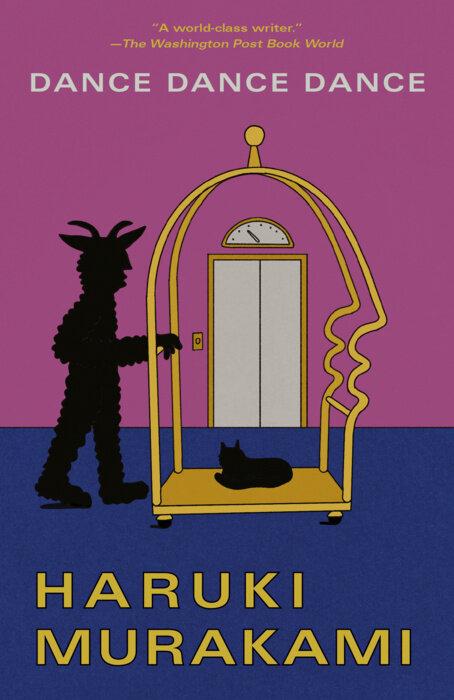
I like writing short-stories and wondered how many Murakami tropes I could fit into 1000 words? One of the things I love most about Murakami is the repetition of ideas, character traits, plot themes - no-one loves a Murakami library more than me. Anyway, here’s my attempt. What did I miss?
That evening I was sitting alone in my favourite Shibuya bar, gently nursing a single malt and thinking about Misaki. As was usual in that bar, an old jazz record was playing - just now it was Charlie Mingus, ‘Ah Um’ - and the music from the excellent speaker system made me think of my college days, Misaki and I holding hands in her room as her own jazz records played. How the feeling of that hand pressed into my memory, even though we’d held hands only once, before she got up to turn the record over. I’d spent too much time thinking about that hand and not enough time thinking about my studies - so much so that I only just scraped through my exams. But I left college with a lifelong love of jazz at least - as well as a lifelong fear of the side of a record ending; which might explain why I later preferred CDs.
The bar-man was moving swiftly and smoothly to serve a glut of customers who had just come in. One of them, a young woman maybe in her late teens, had a slight limp I noticed and was dragging her left foot behind her in a rather deliberate way. She looked a lot like Misaki - not the most beautiful of women - with a plain but interesting face. I couldn’t help but see the swell of her small breasts, and her delicate ears peeking out from shoulder length hair. She ordered a cocktail and the bar-man moved quickly to serve her, having already greeted her calmly and politely. He was so efficient he must be gay, I thought. He turned and nodded at me as if to confirm that unspoken assumption.
My situation with Misaki was unresolved, at least I felt it was. I spent all my time in the library, researching the fleeces of unicorns, while she found a job of some kind - I didn’t ask her about it and she didn’t tell me. But last time she stayed over, she left two scallions in the bed which made me think she was either menopausal or just angry with me for being an incurious loser. Or both. I didn’t ask her about that either. Some things are best left alone.
‘There’s a call for you,’ said the bar-man, softly.
‘How do you know it’s for me?’ I asked - I’d never given him my name, even though I spent most week nights there after the library closed.
‘They said they wanted to speak to the average-looking college student guy nursing a whisky at the bar so it must be for you.’ He nodded towards the pay phone. Mobiles hadn’t been invented then.
‘Hello?’ I said. Silence on the other end, no breathing, just a peculiar darkness, like the empty noise you’d hear after the world had ended if you were alone down the deepest of wells. Whoever it was hung up. Then the phone rang immediately again so I answered it. The caller said something I couldn’t understand.
‘Say that again please’, I said.
‘It’s Kinako’. A gasping, grating voice.
The only Kinako I knew was Misaki’s cat.
‘’Can I help you?’ I asked cautiously.
‘Misaki has disappeared,’ said Kinako. ‘You have to help me find her.’ The cat sounded close to the edge, at least as far as I could tell, having never spoken to a cat on the phone before.
I gripped the phone as if I was about to choke out an answer but then - sadly and with a heart-sinking feeling - I replaced the receiver. The sound of the click of the phone going dead was as delicate as anything I’d ever heard. If I wasn’t an only child, I reflected, or was better looking, I definitely would have helped. But I had to get up early the next morning to fly to a knitwear convention in Sapporo: unicorn wool was very much in fashion just then. So I finished my drink and - later walking home through Ueno Park - found myself staring at the moon, hoping that Misaki would soon come back safely. I was potentially building quite the scallion collection after all, and soon might have enough for a whole scallion-themed dinner.
At that moment, a voice called out my name - seemingly from some bushes near the National Museum. A small figure shuffled out into the light - it was the young woman with the limp. I realised, under the lights, how much she resembled my mother, who was long dead. Or was she?
‘I’m your sister,’ she said simply. ‘Or I might be.’
‘Well that’s cleared that up,’ I said.
I helped her to a bench. ‘I had to run quite fast to catch up with you,’ she said panting a little. ‘Difficult with my leg, although I don’t normally like to mention it. Why did you leave the bar so suddenly? Do you not like ‘Ah Um’? Or was it bad news on the phone?’
‘My girlfriend has disappeared,’ I said.
‘Do you think she might have been admitted to a sanatorium?’ she asked, concerned.
‘Why do you say that?’ I asked.
‘Lucky guess?’ she shrugged. ‘I mean, your relationships haven’t been very stable in the past, have they.’ A full stop, not a question.
Sensing my confusion she went on: ‘I’m your sister. For years I thought I was an only child and, now I’m not, I’m suddenly flooded with all these insights about my sibling and what an incurious loser he might be. But as Wittgenstein said, the limits of my language are the limits of my world - so I might well be wrong.’
A line from Shakespeare came to me, ‘The course of true love never did run smooth’ I said. Was it from ‘As You Like It’ or ‘King Lear’? I couldn’t remember.
We sat on the bench not talking for a very long time. Eventually I said sadly, ‘I think Misaki might be dead’. The young woman nodded and took my hand.
Just at that moment the sun began to rise and slowly colour returned to Tokyo. The sound of birdsong, too, overwhelmed the park, a great wave of emotion released from the pull of the dark.
‘Come on,’ she said, ‘let’s go home. I have a lot to tell you.’