r/RacketStringers • • Oct 18 '26

is this normal????

Post image

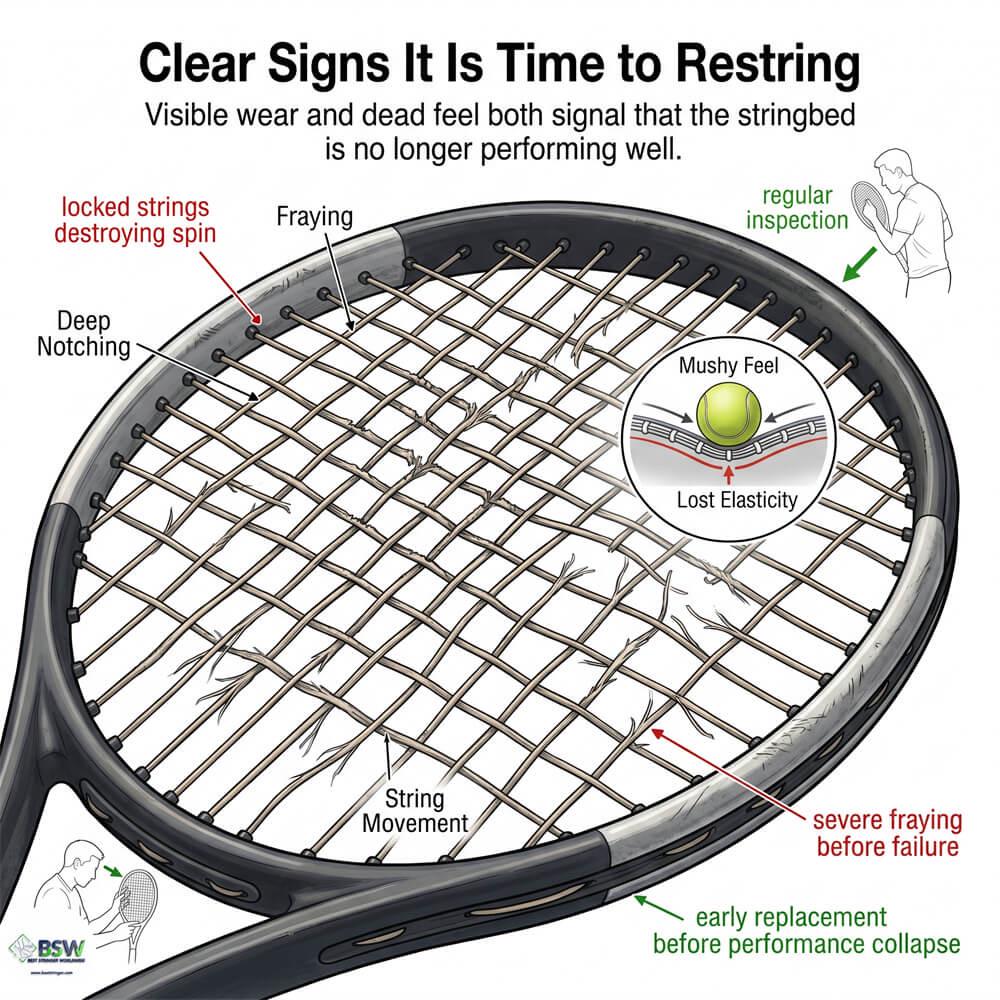
It’s only been around four days of using my freshly strung racket, but I noticed that my strings have been moving far too quickly compared to before. Like, after a long rally or a powerful forehand or serve, I have to adjust my strings as there are columns that are so wide apart. The only difference is that I’m now using an 18 gauge Mach 10 vs my previously 17 gauge Mach 10 on my Ezone. In my previous setup, it took around 2 weeks or so for me to notice the string movement. They’re strung pre-stretched at 46lbs. I’m only a 4.0 player so I’m wondering if this is normal? Thank you!

0 Upvotes

25 comments sorted by

View all comments

Show parent comment

-2

u/5DollarBurger Oct 18 '26

Multis should absolutely be prestretched

3

u/DeaconFrost613 Oct 18 '26 edited Oct 23 '26

If you are prestretching something like NXT, you are wasting time.

Idk who you string for, but that's not common practice and is not how it was designed to be strung. There's no professional who would prestetch a multi. It's some internet opinion that gained traction without proper testing. It's not going to do anything positive.

Give me data from a babolat RDC that shows a difference. You can't.

I'd be willing to bet $100 you've never used or seen an RDC.

Edit: For clarification since someone is lacking information. RDC will also provide a reading on the stringbed. This reading changes over time and provides numerical data to tell us when a stringbed is dead

Edit 2: ERT is not accurate in the least lol. Yes, you need an actual RDC machine. The ERT is a cheap piece of junk that attempts to "pull/push" the string to measure DT properly. The RDC has a piston that depresses an artificial ball into the stringbed. Your data is not accurate and you provided no baseline to compare to. I know a DT number might be fractionally higher at the onset of a stringing, but does it hold its tension any better over time?

Not a fan of machine prestretching. If you want to do a test, do something like no stretch vs machine vs manual stretch to see a true difference. Manual prestretching is the way. I appreciate the fact that you wanted to test DT but an ERT is a gimmick. I've measured the same stringbed with that device back to back times and had 2/3 number variance. The old handheld devices with the coil that you twist are about as accurate. Anyways, get an RDC then come back to me.

Criminal that you have a Baiardo but no RDC. Using the Porsche of stringing machines but testing with a Tourna stringmeter. Only had a chance to string on them when they first came out and was impressed. The base clamp feature can really save some time if you are used to them. Lots of crazy features for ergonomic stringing

2

u/Raptor169 Oct 22 '26

Stringers will do whatever client wants. Also RDC is for balance and swing weight. How does prestretching affect that?

1

u/Accomplished-One5703 Oct 23 '26

You don't need a $4,000 legacy Babolat RDC to track stringbed stiffness.

An ERT300 measures Dynamic Tension (DT), which is the exact numerical data you’re talking about for monitoring stringbed degradation.

Here is the actual DT data for hybrid setup I have been stringing for about a year (Luxilon Element 1.25 mains / Wilson NXT 16G crosses at 47 lbs) pulled on a Wilson Baiardo L, tracked across dozens of string jobs.

The Physics:
NXT is a polyurethane-bonded multifilament. PU exhibits significant initial creep. If you do not pre-stretch the NXT crosses in a poly/multi hybrid, they shed tension much faster than the poly mains. This leaves the mains doing all the work, shifting the launch angle and resulting in a mushy stringbed. Applying a 10% electronic pre-stretch physically settles the PU fibers before clamping, artificially aligning the multi's tension decay curve closer to that of the modern poly.

The Data:
Tracking this 47/47 hybrid with the 10% cross pre-stretch via an ERT300 shows highly stable tension maintenance.

Off-machine: DT 34–35.

48-hour relaxation (zero play): Settles predictably to DT 31.

Match play: Locks in at DT 29–30 and holds that tension through the first several hours of heavy competitive hitting.
It eliminates the immediate tension cliff that raw PU multifilaments are notorious for. It’s not an "internet opinion"; it’s basic material science verified by stringbed measurement.

0

u/5DollarBurger Oct 18 '26

No wonder your multi string jobs get noodly within a few hits