r/ReZeroSucks • u/TheRZCritique • 4d ago
What are Tappei's pros and cons in terms of writing, character design, plot design, business, writing speed, etc.? How do you rate them?
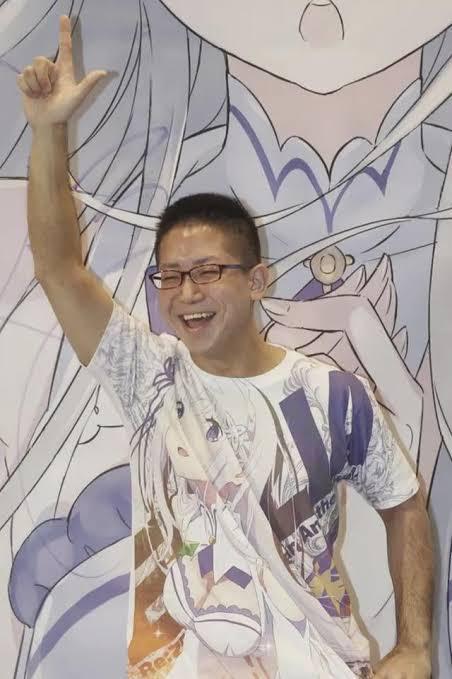
Saw this one in the ReZero sub.
For me, I'd say Tappei is fantastic at certain aspects of writing, but quite poor at others.
1. Psychological writing vs. human writing
Good: He's genuinely fantastic at exploring trauma, identity, self-worth and the psychological aspects of his characters.
Bad: His characters sometimes don't feel like actual people who exist outside of the plot. They conveniently ignore obvious questions, overlook suspicious circumstances or make decisions purely because the narrative requires it.
2. Stage-setting vs. worldbuilding
Good: Tappei is excellent at setting a stage. Give him a location, a cast and a conflict, and he'll build something genuinely compelling around it.
Bad: His broader worldbuilding is unfortunately quite poor imo.
He's created this gigantic world that's so desperately underutilised. There's little linguistic diversity, inconsistent power scaling, unclear magical limitations, and even something as simple as travelling rarely feels dangerous unless the plot specifically requires it.
There's plenty of lore, but the world itself often feels surprisingly linear.
3. Tension vs. consequences
Good: His tension-building is genuinely phenomenal.
Bad: Unfortunately, the stakes can sometimes feel nonexistent.
RBD contributes to this, but Tappei also seems reluctant to impose permanent consequences unless they serve a specific narrative purpose.
You rarely see an important character simply die tragically in battle because Subaru couldn't save them. Permanent deaths generally involve deliberate sacrifices or major thematic moments.
Even Subaru's psychological breakdowns rarely cause irreversible consequences for others. His mental resilience has become so absurd that he can go through something absolutely fucked up, pull himself together and somehow save everyone.
I'm not asking for constant deaths, but I do want to genuinely believe these characters are in danger.
4. Arc openings/endings vs. pacing
Good: He's fantastic at opening and concluding arcs. Arc 8's ending pretty much saved Arcs 7–8 for me.
Bad: The middle portions of his arcs can fucking suck.
They're often unnecessarily long, repetitive and filled with characters making questionable decisions or conveniently not asking questions that would've resolved situations much earlier.
5. Subaru's psychological writing vs. believability
Good: Subaru is genuinely one of Tappei's greatest achievements psychologically.
Bad: Subaru as an actual person is sometimes incredibly difficult to believe.
His extreme idealism, ridiculous mental resilience, capacity for forgiveness and decision-making are just so far removed from what I'd expect from a 17-year-old kid.
I also dislike how easily Subaru sometimes outperforms actual professionals.
I'm sorry, but RBD or not, Subaru shouldn't be making experienced military commanders look incompetent at their own profession.
Knowing the future doesn't suddenly give you decades of experience in military strategy, logistics or leadership. This became particularly annoying in Arcs 7–8.
6. Politics and societal realism
Probably one of my biggest criticisms.
The four nations have supposedly complex political systems and social hierarchies, yet their societies often don't behave like they actually function.
Just look at Subaru.
An unknown commoner makes a complete fool of himself at the Royal Selection, insults the knightly order, and shortly afterwards becomes instrumental in defeating the White Whale and Sloth.
Two threats that some of the most powerful people in the world couldn't eliminate for centuries.
And he achieves all this whilst having practically no visible abilities that explain his accomplishments.
Where's the sustained political scrutiny? The investigations? The suspicion? The powerful individuals trying to exploit him or figure out how the fuck he knows so much?
Yes, the Sage Council has reservations, and Arc 10 finally addresses some of this, but these consequences should've been far more prominent throughout the story.
7. Character design
I genuinely hate Re:Zero's character designs.
They're far too childish and overly "anime-like" for my taste. The exaggerated features, youthful appearances and sometimes ridiculous outfits make it difficult to take certain characters seriously.
This becomes particularly annoying when supposedly mature adults, experienced warriors and influential political figures look like children playing dress-up.
There's such a strange disconnect between the psychological maturity of the story and the almost cartoonishly youthful appearance of its characters.
Obviously, Otsuka is responsible for the illustrations, but I really dislike the overall visual direction.
8. Main story vs. side stories
This is another major criticism I have of Tappei's writing.
He has this incredibly annoying habit of spending countless chapters dragging out conflicts whilst relegating genuinely important character development and worldbuilding to side stories.
Arcs 7–8 are probably the worst offenders.
Priscilla's background and relationship with Arakiya, Balleroy's history, Sphinx's past and even aspects of Rem's development receive significantly more attention in supplementary material.
And yet these are characters and relationships we're supposed to be emotionally invested in when they become important to the main narrative.
I'm sorry, but I SHOULD NOT NEED TO READ A FUCKING SIDE STORY TO GIVE A SHIT ABOUT A CHARACTER IN THE MAIN STORY.
Side stories should expand on already established characters, not carry so much of the responsibility for making those characters interesting or their relationships emotionally meaningful.
It's particularly frustrating when Tappei clearly has the time to spend dozens of chapters on repetitive conflicts and unnecessary detours, but can't incorporate enough of that character development into the actual story.
I shouldn't need supplementary reading to properly appreciate the emotional significance of a major character's death or the resolution of a relationship.
...
Overall, Tappei is a fantastic psychological writer who's exceptionally good at setting a stage, building tension and delivering memorable climaxes.
But his broader worldbuilding, politics, pacing and ability to make characters behave like actual human beings leave a lot to be desired.
He writes incredible moments. I just wish the world and characters surrounding those moments felt equally believable.
What are your takes?