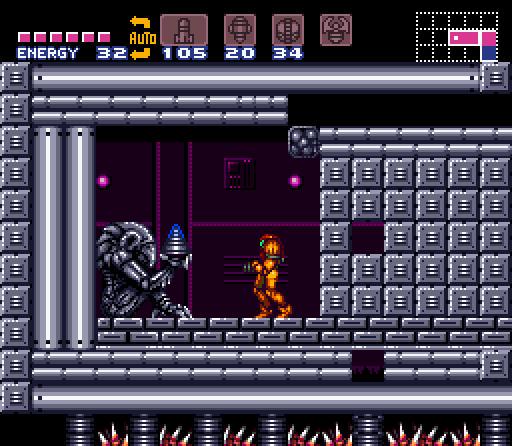
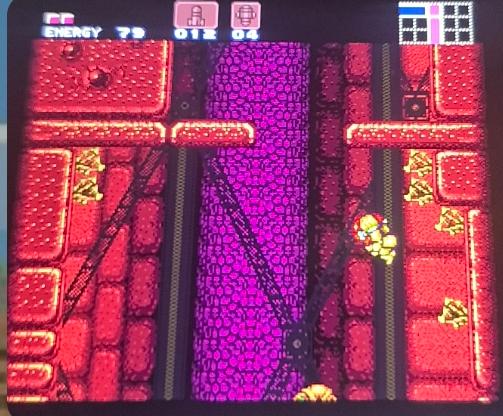
My last update introduced SMIDI, the Super Metroid Integrated Development Interface, and the visual workspace I’m building alongside Dead Signal. This time I can show the wider toolset taking shape around that editor: independent world exports, creature creation, music, and room events.
BEYOND THE SIXTEEN-ROOM PROFILE
The standalone development compiler can now build independently authored worlds of up to 256 rooms, within its supported engine and memory limits. Projects can choose their own starting room and position rather than depending on the original Dead Signal room sequence.
That capacity still uses one native area map. Graphics, save identities, object counts, and ROM space remain finite, and broader export validation is ongoing. Full vanilla multi-area ROM importing is separate work.
BOSS STUDIO AND ENEMY STUDIO
The creature tools now have working development interfaces for converting artwork into sprites, assigning animations, editing hurtboxes and damage, and building behavior from reusable states.
Boss Studio offers 35 editable behavior templates, with movement, attacks, vulnerability windows, and health-based phase changes. Enemy Studio adds eight starting templates for regular enemies that respawn when a room reloads. Reusable bundles let artwork and behavior travel together between projects.
AUDIO STUDIO AND THE SONG ARRANGER
Audio Studio now provides recording import, waveform trimming, loop controls, BRR conversion, and source-versus-converted listening. The memory readout makes the cost of a clip visible while working.
Song Studio builds on those reusable clips with a multichannel timeline, repeats, pitch and fit controls, and intro/loop settings. The focus is arranging samples within the game’s audio budget; unlimited recording playback and automatic transcription of a mixed song remain outside the current workflow.
MESSAGES, ESCAPE SEQUENCES, AND ENDINGS
Room-entry, zone, and item-collection events can now trigger messages, start an escape countdown, or invoke the game’s ending. Doors can also be configured as ending doors. This gives a room more purpose than terrain and enemies alone: a pickup can start a timed escape, or entering a zone can deliver a message.
These are the first focused event tools. The broader Script Studio remains planned work.
A MORE USABLE WORKSPACE
The editor now exposes all 29 native tileset banks, shows a draggable starting-position marker, and has more flexible panel layouts. Pointer-based zoom and paste, scrolling, native object previews, and mobile access to room settings have also received attention.
There has been substantial work on the generated ROMs too, including pickup behavior, corner transparency, door transitions, camera framing, and enemy placement. I’m checking native cases in both Snes9x and BSNES while continuing to work through heavier scenes and release validation.
STILL IN DEVELOPMENT
SMIDI and its browser demo are not ready for public use yet. For now, I’m sharing current screenshots and development progress at https://idistudios.io/SMIDI.
The core editor will be free, including Audio Studio and Boss Studio, with planned premium additions. Dead Signal remains the project driving this work: real rooms, original artwork, audio, and encounters keep giving me practical problems for SMIDI to solve.
Thanks for tagging along. Follow us on Patreon to keep up to date with development progress and planned live release.
https://www.patreon.com/IDIStudiosInc?utm_campaign=creatorshare_creator