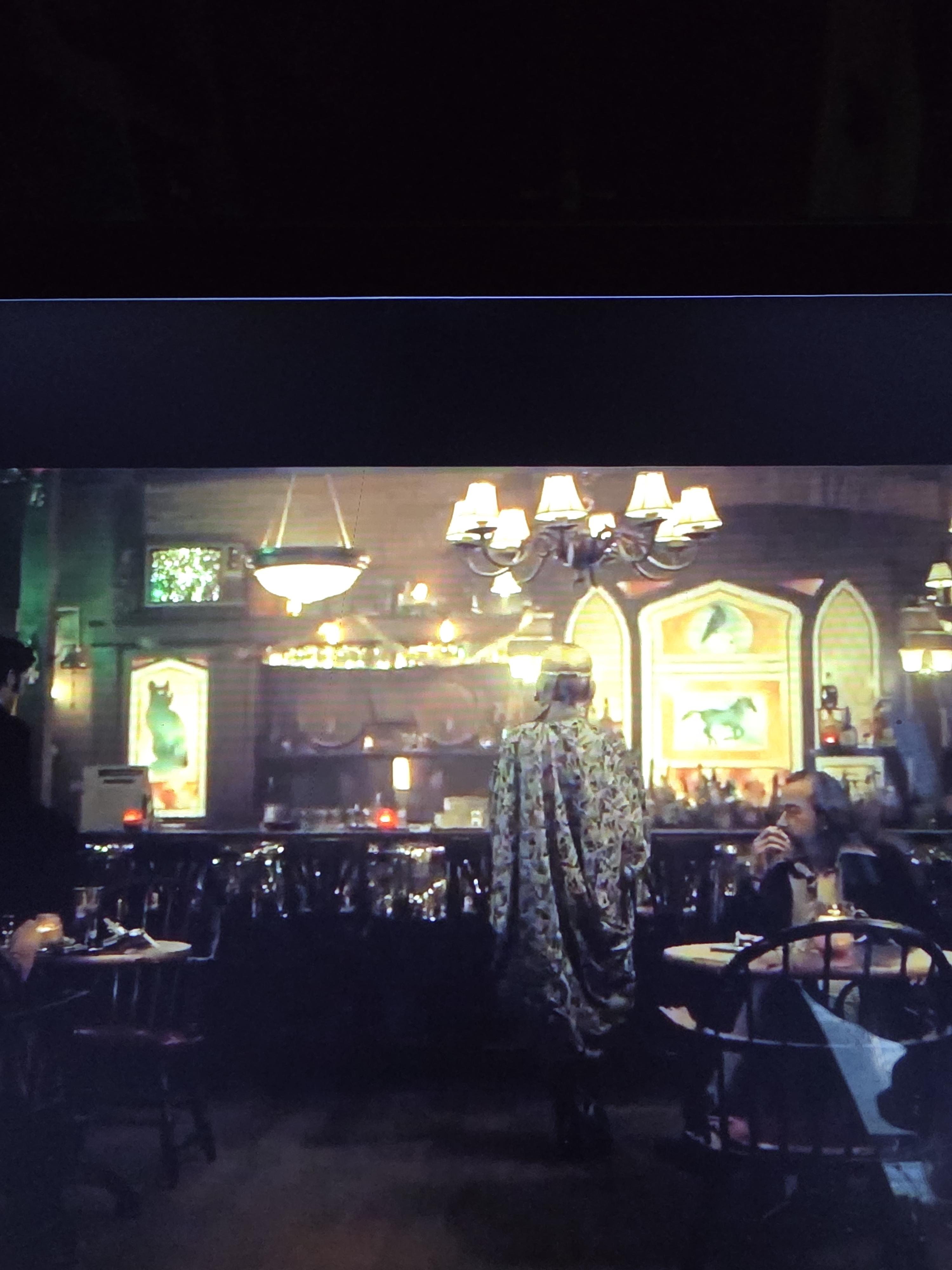
I've seen several comments here, and under a particular YouTube video, claiming that Madeline and Roderick finally got what they deserved, that Verna represents karma, and that their deaths were some kind of cosmic justice.
And I think those interpretations say more about the audience's moral expectations than they do about the actual story.
People project their own morality onto the show. They consider themselves good, so they desperately need to believe that evil must eventually be punished. They want evil to disfigure the flesh of those who embrace it. They want suffering to be inevitable, as though the universe itself were obligated to enforce their moral standards.
But reality doesn't work that way.
Madeline and Roderick enjoyed decades of unimaginable wealth, influence, luxury, and power. They built an empire on human suffering and spent most of their lives enjoying the rewards.
Yes, they died horribly. Yes, they lost their family. But does that really mean their entire existence was some kind of punishment?
I don't think so.
In fact, I would argue that, from a certain perspective, it was worth it.
Madeline failed to achieve artificial immortality, but she achieved another kind of immortality entirely.
She will live forever in the memories of those addicted to Ligodone, in the memories of families destroyed by Fortunato, and in the history of the pharmaceutical industry.
Within the show's universe, I can easily imagine future generations studying the Usher twins as two of the most notorious figures in pharmaceutical history.
They will be remembered, whether for good or evil.
And isn't that a form of immortality?
For Madeline, a genuinely miserable fate would have been an ordinary domestic existence. A quiet, impoverished, insignificant life, defined by the very limitations she spent her entire existence despising.
Instead, she lived as an extraordinarily wealthy, powerful, intelligent woman who refused to submit to the life society had once expected her to accept.
She didn't get eternity. But she got decades of almost everything else.
I also find myself comparing the Ushers to Jezebel in the Bible.
Jezebel suffered a gruesome death, her body ultimately devoured by dogs. But before that, she spent years enjoying royal power, wealth, and influence.
Does a terrible ending retroactively transform an entire life of privilege into a miserable existence?
I don't believe it does.
And that's what I find so fascinating about the Ushers.
People seem determined to interpret their deaths as proof that evil eventually loses. But perhaps that's simply a comforting narrative we tell ourselves because the alternative is too disturbing.
Perhaps some people really do spend their lives benefiting from cruelty, enjoying everything their victims never had, and only paying a price when there's almost no life left to lose.