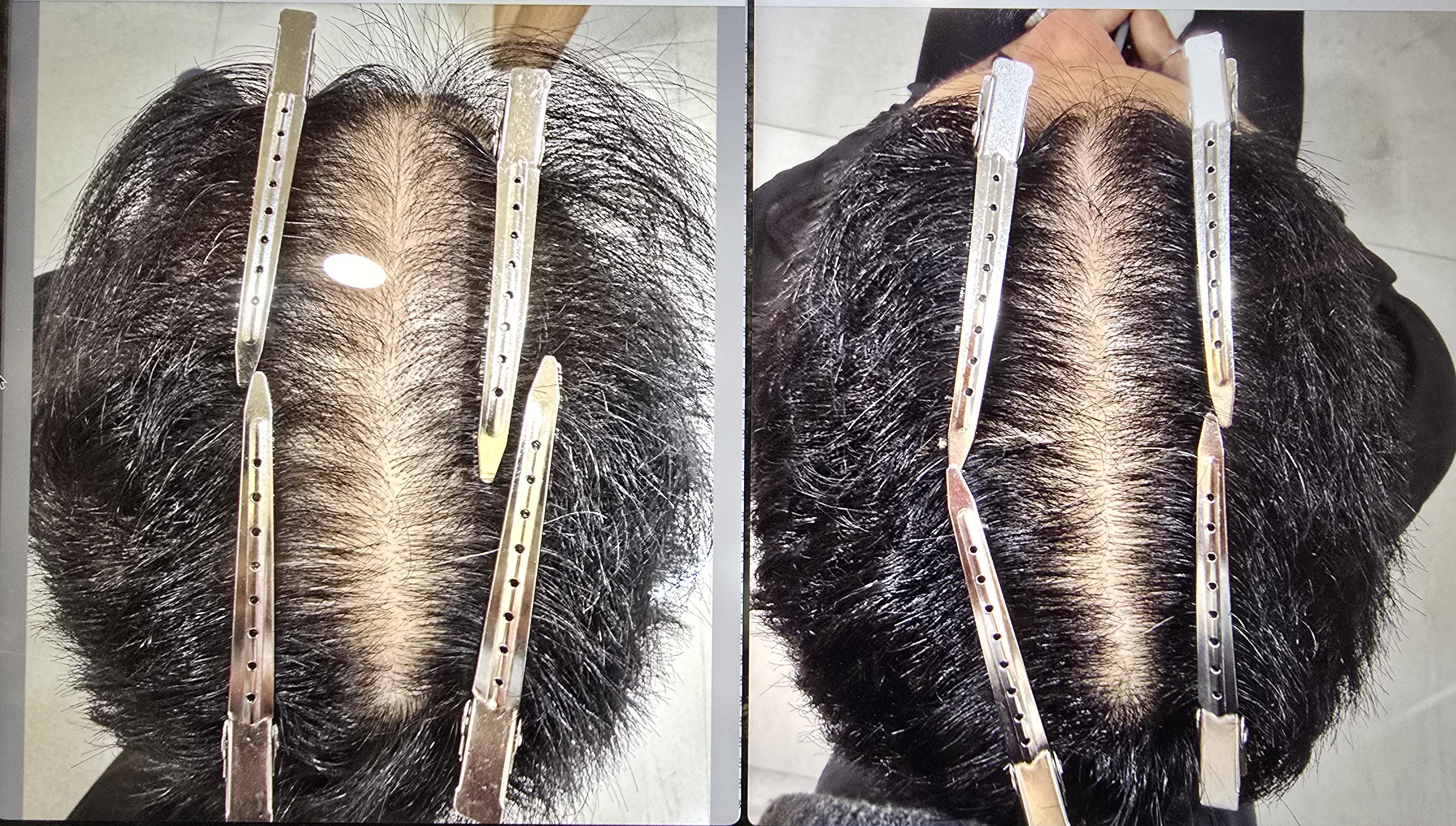
Hey guys, as the end of 2023 nears, I thought I'd do a post for those coming to this sub in desperate need of help.
In this post I’m going to be talking about the science of hair loss and what to do if you are balding and want to stop it.
I’m a medical student and have donated a lot of my personal time to pharmacology, hormones and hair protocols through research and experimentation. There’s a lot going on here on Reddit, and as a beginner it can be very daunting to decide on what to do. Obviously everything should be discussed with your doctor, but below is my best attempt at a guide to explain a little bit about hair loss:
-
I first noticed I was balding around 12 months ago, and rather than get caught up in the genetics of hair loss and trying to figure out whether it was Dad, my Mum’s Dad, my Mum’s Dad’s Dad or the goldfish he owned when he was 10, I thought to myself:
I can’t change my genetics. Whatever my DNA sequencing (genomic regions) has in store for me in regards to balding, that’s pretty much set. The best I can do is fight as long as I can using the highest quality science, products and methodologies to offset it.
And that’s what I’ve been doing, with good success, over the past 12 months.
Let’s get into it, and I’m going to do this in order of most important to least (in my opinion).
Getting to the root cause: DHT
Okay, so if we look at the entire testosterone/HPT axis pathway, cholesterol is converted to testosterone and some people think that’s the end of the line, but it’s actually not; 5-alpha reductase (5A1/2 in the image below) is the enzyme responsible for converting Testosterone (T) to its much more potent form DHT (dihydrotestosterone).
5-alpha reductase converts Testosterone to DHT, the hair killer.
Now, interestingly, 5-alpha reductase for whatever reason is very high prevalent in skin tissue - including the human scalp. And side note: this is why guys who take testosterone gel or cream often have very high levels of DHT compared to guys who take injections, because the cream is being converted through the skin into DHT at a much higher rate than injectable esters into muscle bellies. But, basically, it is this 5-alpha reductase activity in the scalp that is converting testosterone to DHT, and DHT through a variety of mechanisms leads to follicular miniaturisation (hair thinning, and eventual loss of your hair follicles).
But why? Well, there are hundreds of factors: hormonal (androgen receptor density & sensitivity to said androgens), physical, genetic, environmental. The list goes on.
Note; this study goes into a lot more depth for those of you interested.
But, how do we actually combat balding?
Most men tend to lose their hair in patterns as described by the famous Norwood Scale.
With how much I’ve spoken about 5-alpha reductase and DHT, it seems logical that stopping this conversion of Testosterone to DHT is the absolute first line of defence against hair loss.
To really, truly combat hair loss, the first mechanism is as follows: you absolutely need to reduce your hair follicles’ exposure to DHT.
And how do we do this? Well, finasteride is a drug that acts as a 5-alpha reductase inhibitor. Sold under the name Propecia, the molecule is a strong 5-alpha reductase inhibitor, and has been shown to inhibit around 70% of serum (blood) levels of DHT from peak. The usual starting dose is 1mg daily. Dutasteride (sold under the name Avodart) is an even more potent inhibitor (usual starting daily dose is 0.5mg), and can block up to 98% of conversion from T to DHT: it is a much more potent inhibitor of the enzyme that converts T to DHT. Dutasteride would be an option if you wanted a nuclear option to block almost all DHT. In fact, one of my favourite studies compared the difference between Finasteride vs. Dutasteride, and as you can see below, the suppression of DHT levels from Dutasteride was significantly more than Finasteride. Not only this, but the half life of Dutasteride is significantly longer than Finasteride (~8 hours vs. 5 weeks!), and you can see that in the Dutasteride group after stopping treatment (Follow-up Period), DHT levels remained suppressed for a much longer time.
DHT vs. Finasteride - what a study.
Side effects from 5-alpha reductase inhibitors are rare, although we should speak about them. Online, through various forums, Reddit posts, YouTube videos and TikTok’s time and time again I see posts about nasty Finasteride side effects, post-Finasteride syndrome and how Rob can’t get his Johnson hard anymore because of Finasteride, so his girlfriend left him.
Now, don’t get me wrong, side effects have been noted, although current research puts the risk of side effects at around 1-3% of people, so even though online there is a lot of noise about finasteride and its side effects, I personally don’t think the research supports this scaremongering. There is also going to be a natural selection bias with the stories online, because the guy for whom Finasteride is working well and who is not experiencing any side effects, he isn’t really going to post. Because why would he? He’s doing fine.
However, I absolutely sympathise with the people who just cannot tolerate 5-alpha reductase inhibitors. Side effects can be very real, and this is why it is vitally important to always consult with a qualified doctor before deciding on any medication: I’m just presenting the science. Everyone reacts slightly differently, and these can be strong medications - so it's important to be well-informed and sensible with whatever path you and your medical practitioner decide to go down.
Topical Minoxidil 5% (Rogaine):
Minoxidil is a compound that has been shown to increase the rate of DNA synthesis in anagen (growth phase) bulbs of hair follicles. Basically minoxidil stimulates hair cells to move from telogen (resting phase) to anagen (growing phase) - so instead of having hair follicles resting, it is telling the body to move them back into a growth phase by shortening the resting phase. The idea here is that you get more ‘regrowth’ of hair follicles.
Minoxidil stimulates hair cells to shorten the resting (telogen) phase and go back into an anagen (growing phase). Often, progress pictures will show significant new regrowth or ‘baby’ hairs growing with minoxidil treatment.
I apply Rogaine, a 5% strength Minoxidil foam twice daily in areas that I feel are receding. The nice thing about the foam is that it isn’t super sticky (unlike some people report with the gel), and it also acts as a nice way to hold my hair throughout the day, like hair product.
As you can see from the photo below, there is a vast difference between telogen (resting phase) and anagen (growing phase), and the idea is that the more hairs you can keep in anagen, the more healthy your hair will be, by limiting the amount of follicles that inevitably go through an anagen restart and die off.
There is also the option of oral minoxidil, which anecdotally at least seems to be very powerful at regenerating ‘baby’ hairs (or, new regrowth). Again, oral minoxidil can have some pretty significant side effects and drug interactions with blood pressure medications, so speaking through with your doctor is key!
Ketoconazole Shampoo:
This shampoo is primarily an anti-dandruff shampoo, but research has shown it may increase the proportion of hairs in anagen phase (growth phase) - resulting in reduced hair shedding. This study showed that 1% ketoconazole shampoo increased hair diameter over baseline after 6 months of use and reduced shedding. Interestingly, participants’ hair diameter also increased over baseline, showing that it may play a role in creating thicker hair.
Nizoral is a common brand here in Australia of 2% strength ketoconazole shampoo.
What is good about ketoconazole, is that it’s also a weak androgen receptor antagonist. What does this mean? It means it competes with DHT and Testosterone for binding to the active binding domain on the human AR (androgen receptor). If a compound can bind to a receptor without influencing its usual effects, it is said to be an antagonist. Basically, if ketoconazole can get into an androgen receptor before Testosterone or DHT, it will occupy that site and block T/DHT from binding and starting their usual process of killing off hair follicles (follicular miniaturisation).
Goodbye DHT, nobody wants you here.
Dermarolling
Derma-what?
Dermarolling is the process of creating micro punctures in the scalp skin to induce a wound healing response, with an array of tiny microneedles.
In this study, the dermarolling + minoxidil treated group was statistically superior to the minoxidil only treated group in promoting hair growth in men with balding patterns, for all primary efficacy measures of hair growth. In fact, the microneedling group outperformed even the minoxidil group in terms of how much hair was regrown after 12 weeks:
The mechanism seems to be that continued microtrauma to the scalp skin leads to a release of platelet derived growth factors and other growth factors that are sent to the area of scalp, to aid in the skin wound regeneration. The added benefit is that there seems to be some carry over effect to hair growth, as dermarolling seems to activate stem cells or ‘unspecialised’ cells that are yet to be differentiated, and differentiate them into hair follicle cells, meaning more hair growth. Basically, its a wound healing response that brings growth factors to the area of the scalp to increase hair growth.
I have played around with a few different protocols, but I use a 1.5mm roller and roll horizontally, vertically and diagonally for about 30 seconds in areas where my hairline is thinning or receding. I do this every 10 days. You don’t want to press so hard that you draw blood, but it should also hurt slightly. I mean, putting hundreds of tiny spikes into your scalp isn’t really my idea of Sunday night fun. But hey, if it regrows some hair why not?
There are also derma-stamps and motorised tools, all of which assist with the end goal: creating a wound healing response to bring growth factors to the scalp, and potentially assist the penetration of Minoxidil deeper into the scalp skin tissue.
Natural DHT blocking compounds:
Natural DHT blockers are also options, although obviously the results aren’t going to be nearly as strong as what is mentioned above.
Some people have good results (anecdotally) with rosemary oil applied topically, green tea and saw palmetto are options here. However, the science is very hit and miss, and in any event, I can’t see natural compounds competing against the 'Big 4'.
RU58841:
Now, that’s all good, but what if you need a nuclear chemical. Something that would attack the androgen receptor at a direct level in your scalp? Well, that compound is below. But a quick warning: I do not recommend this compound. A lot of people use it, but that doesn’t mean it’s safe. There is no (yes, zero) long-term safety data on the compound below, and whether you choose to take a completely untested chemical is up to you. But I don’t recommend it - have I said that enough?
Alright so, apart from sounding like a bunch of random letters because your cat ran over your keyboard, RU58841 is a strong DHT blocker (it has been shown to inhibit around 70% of DHT binding to the androgen receptor), but not in the way that Finasteride or Dutasteride work.
The chemical structure of RU58841.
Instead of finasteride and dutasteride which work on inhibiting the 5-alpha reductase enzyme, RU58841 works on the AR itself - occupying the active site, so that when DHT tries to get in and exert its hair destructive effects in the scalp, it can’t, it’s literally blocked from accessing the active site of the androgen receptor.
RU58841 operates like an androgen receptor antagonist (3rd receptor, on the right). It binds to the receptor and stops testosterone and DHT from binding, meaning that DHT cannot then exert its hair miniaturisation effects.
And in this study, RU58841 was found to inhibit 70% of DHT binding. Combining something like finasteride or dutasteride which attacks 5-alpha reductase converting T to DHT with RU58841 which stops ~70% of DHT binding to the androgen receptor, and you’d now be attacking hair loss from 2 vectors: T to DHT conversion, as well as at a receptor level. Now you can start to understand why this is a nuclear option for hair loss, and incredibly powerful.
However, despite how good all of that sounds in practice, just remember, RU58841 is completely untested in regards to side effects. There is no long-term safety data on how it may or can impact human health, so what I’m saying (for legal reasons) is don’t use it. Get what I’m saying?
Final Thoughts:
And, there it is guys. Now, just a quick note, this isn’t a super comprehensive list of all supplements for a hair regrowth/hair protection protocol, but is a solid start.
There are certainly more ‘niche’ options, or compounds in development now that may be promising (or not, looking at you Phase 3 of Pyrilutamide trials), but this guide was just the bare basics for a beginner to wrap his head around (no pun intended) the science and how to start combatting AGA.
In particular, if you want to save your hair, it’s going to be the ‘big 4’: finasteride (or Dutasteride), Minoxidil, Ketoconazole shampoo and derma-rolling roughly once a week to every 2 weeks.
This would follow the best possible science that we have at the moment, in terms of targeting as many vectors as possible:
T to DHT blockade (5-alpha reductase inhibitors, Fin/Dut)
Use this thread for general questions and advice,“Am I balding?”, “What are my options?”, “Does anyone else experience this?”, as well as discussing side effects, treatment experiences, or looking for opinions on your hairline photos and treatment options.
Please don't rely on other users to diagnose conditions or guide your treatment decisions. While you can share personal experiences, what worked for you may not be safe or appropriate for someone else. If you're experiencing symptoms, concerned about side effects, or considering treatment, please talk to a doctor rather than relying on internet advice.
If you want useful feedback on your hair, post good photos: high resolution, multiple angles, good lighting, and ideally both wet and dry.
Mention what changes you’ve noticed and over what period of time. Some people naturally have thinner hair, a higher hairline, or less density, so context helps members give you better feedback. It's vital to take identical photos every few months. Remember that consistent lighting is important.
Age and family history are worth mentioning.
You might not get an answer if your question is too basic or common. Nobody can predict if a treatment will work for you.
This is a community, and you can help out fellow members by commenting under their photos and upvoting people that leave you comments.
EXCLUSIVE: Disgraced star Russell Brand has been sentenced to 10-and-a-half years after being convicted of rape and sexual assault, and he has now been dealt an even bigger blow
I found it funny they said balding is an even bigger blow than being convicted for rape.
So pretty much the only thing that’s been stopping me from doing the Minoxidil/Finasteride combo is the side effects of Fin. I know the chance is rather low, but the fact that itcanbe permanent is what really puts me off. If I’m trying so hard to keep my hair I don’t want to risk losing the “benefits” if you will that would come from having nice hair.
I still have a decently okay amount of hair, no one can really tell there’s thinning unless they come right up to me and look at the right spots, and I should mention the type of hair loss is retrograde alopecia, but I’ve been keeping an eye on breezula because apparently it’s suppose to do what Fin does just minus the hormonal side effects, but does anyone know of anything better? Hair cloning is 5 years away in about 5 years from now, but does anyone who is a research savant know of anything coming relatively soon?
I've had decent results on the topical fin/min but still have ways to go. Both the red light and microneedling options have been suggested to complement the topical solution. Have any of you had better luck with one over the other?
I have been using finasteride 1mg oral for close to 2 months now because of hairfall I was facing. I got the blood test done because I felt something off with my hormones. I feel a greater increase in sex drive. At the same time don't feel like not doing anything at all. Somehow things felt like it got me mixed up.
So, to my surprise my testosterone did increase a lot to the level shown in the picture. Before fin, it used to be 700.98. is this normal to have such an increase in testosterone?
Also, I have been taking my vitamins for 3-4 months now.
The d3 levels are close to 99.8, which I believe is low due to a skip weekly dose. Is it good to have more than 100 d3 levels?
Please tell me it is nothing to be worried about!!
Hi, been reading about 'problems' with sperm parameters and fertility, and honestly, looks a bit scary. There are a couple of studies about this focusing mainly on dut, even one saying that after 2 years parameters could be ireversible, but, I would like to ask here about personal experiences and if anyone that tried to have kids while treatment, actually had any problems
Here are your options. Stop scouring through dozens of posts trying to find a magical answer. There isn’t one. Nobody can tell you what your threshold for DHT reduction is that will result in zero gyno development. It isn’t standard and is dependent on your personal anatomy/hormonal profile.
1) You start with microdose topical and titrate up, like .005% fin > .01% > .025% and so on. If you’re confirmed to have fin induced gyno, oral is simply off the table for you. You need to minimize systemic reduction of DHT. If you get symptoms of gyno development (burning nips, itchiness, swelling, etc) at any point, reduce your dosage. It’s a major pain in the ass. Also, your hormonal profile changes over time. You get older, maybe gain some weight, testosterone decreases over time, etc. What works now may not work in the future and you have to restart this experiment with your gyno progressing further each time.
2) You get gyno surgery. I mean FULL GLAND gyno removal. Look into dr Law and dr caridi. Their methodology is the only one you should be considering. I’m sure you can find surgeons with similar philosophies to them but looking into them will educate you on the type of procedure you need if you want gland removal without regrowth from fin. Recurrence of the gland tissue SHOULD NOT happen. If it does, it’s due to a clinically significant amount of gland tissue left behind. Choose a skilled surgeon but also understand that even Steph Curry, the free throw GOAT, misses a free throw every now and again.
3) You accept the gyno and continue taking the medicine. Understand that the gyno may continue to develop over time.
4) You quit DHT blockers. Understand that the gyno may not go away. You can consider taking a round of prescription medication like tamoxifen to block estrogen from reaching the receptors in your gland. This can allow the gland to shrink over time. This has varying rates of success for each individual who takes it.
Be incredibly careful taking SERMS and AI just to block gyno. Gyno can occur on finasteride with healthy estrogen levels. Estrogen likes to bind to the receptors in your breast tissue but gets blocked by DHT. Thus, decreasing DHT can allow more estrogen to bind without elevated estrogen levels. This is to say that taking AI oftentimes won’t even stop the gyno from developing. It will just lower your estrogen without stopping the problem. SERMS and AI are not intended for long term use. They can have a nasty list of side effects. Also, taking an AI, you NEED to be getting routine bloodwork. Low estrogen is not a fun time and you need to monitor yourself. SERMs are generally okay for the general population so long as you’re using it after you quit finasteride. It should only be taken in a cycle and not something you take long term alongside a growth stimulant like finasteride.
Whichever option you choose, make sure to take photos of yourself and document your weight at the time of the photos. Good lighting and from multiple angles. You need to document your process and not try to go based off memory.
Anyways, good luck to you any anybody else scouring Reddit looking for solid advice! I hope this finds all who seek it.
I’m 27, been losing hair since about 17 and got on rogaine. I agree I was not regular and didn’t see a lot of regrowth so I stopped, then had a couple of sessions of PRP and saw great improvement but I started shedding so bad after 3-4 months and I got depressed and stopped. Have not tried any medication or remedies after that, and at this point I would say I’m close to NW 5-6. Finally started 0.25mg fin and 2.5mg min(both oral) around 5 weeks ago, over the past 2 weeks I lost my morning wood and I’m having trouble staying erect after penetration, I know people will say I should try switching to topical fin but I use toppik to keep my self esteem and I do not think I can use topical. What should I do? Should I just stop?
Overall happy with the results. I think I will end up doing another smaller procedure to get full density in the front, it didn’t really come in in the front like it did in the corners. But that’s more for perfectionisms sake, I no longer stress about my hairline like I did before!
I had about 80% of current thickness by month 6, 90% by month 9, and the remaining 10% slowly over the last 3 months. TBH it has looked the same to me in the mirror since month 6 but you can tell in the pictures it’s thicker now.
5-month update after switching from Finasteride to Dutasteride
I switched from finasteride to dutasteride (0.5 mg daily) about five months ago after having good results with finasteride for a few years. I've also been taking oral minoxidil (2.5 mg daily) throughout this period.Since the switch, I've experienced significant shedding, a noticeable decrease in overall density, and some hairline recession. My hair is still considerably worse than it was before switching.
However, over the past few weeks, I've noticed some new hairs appearing around my temples. I'm still experiencing shedding, although it seems to have decreased slightly.
These pictures show the difference between month 3 and month 5. I'm still unsure whether these hairs are actual regrowth or miniaturized hairs, but they seem to be getting longer.I'm trying to remain neutral about the situation and give dutasteride a full year before drawing any conclusions.
I was on FIN for about two years and made the switch to DUT about 9 months ago. DUT seems to have caused some sort of regrowth in areas where I already had plenty of hair, but has so far largely destroyed whatever was left of my hairline and corners.
I initially ignored the horror stories I heard here and decided to follow the research studies which pointed to much better results for DUT relative to FIN.
For those who say that DUT needs years to work and to stick with it, that's contrary to the research studies, nearly all of which were based on 3 or 6 month timelines. I think the studies count total hair growth rather than focus on the front hairline, and don't evaluate the effect of switching from FIN to DUT.
This is only my experience but if anyone out there is considering making the jump like I was I would just say if Fin is doing a decent job it might be worth considering just sticking with it and not risking it.
I def regret making the switch but of course ymmv.
Im looking at chess grandmasters and they have pretty good head of hairs. Look at Magnus Carsen, extremely thick. Is this because they think a lot that it increase brain/bloodflow activity?
Almost 3 months on 2 mg oral minoxidil – genuinely surprised by the results
The amount of progress I’ve made in less than three months of taking just 2 mg of oral minoxidil daily and using Nizoral shampoo is genuinely insane.
My hair feels noticeably thicker, and my scalp is significantly less visible. I’ve reached a point where I no longer feel the need to use hair fibres to cover up my thinning whenever I go out.
I’ve recently added microneedling once a week to my routine, but considering how recently I started, I think most of my progress so far is attributable to minoxidil.
I genuinely wasn’t expecting such a noticeable difference this early into treatment, especially on a relatively low dose.
I’ve been taking oral Finasteride 1mg for about 1.5 years, but I’ve noticed that my hair has actually continued to get thinner. especially on the top of my head. My temples have barely gotten any worse.
Has anyone experienced something similar or have any tips?
1 year update on my hair recovery journey. No side effects at all.
My daily stack:
Oral Minoxidil: 2.5 mg once daily at night
Oral Finasteride: 2.5 mg once daily at night (half of a 5 mg tablet)
Topical Minoxidil (Polaris NR-11): 5 sprays in the morning and 5 sprays at night
My dermatologist mentioned that this might be pretty much all the progress we get at this point, and from here on out it's all about maintaining the hair I've gained, which is already quite a bit.
My donor area, especially the back and sides are extremely thin. I haven't noticed any improvement in there, Despite the fact that I've been taking finasteride 1.25 mg daily since January (over 10 months), and the fact that I've noticed some new hairs and improvement at the top scalp due to Fin.
I'm curious about other people's experiences. Have any of you had similar donor-area thinning? Did you ever investigate the cause through blood tests, scalp analysis, or visits to a dermatologist? What did you discover?
Most importantly, has anyone actually managed to recover or thicken their donor area? What was your experience, what did you do, and did you eventually see real improvement?
I'm just trying to hear from people who've experienced the same thing and learn what happened in their cases.
I posted a 5 year update last year where my hair was gradually declining (see profile). I feel like it’s been accelerating lately so the comments recommended oral minoxidil. I’ve been on oral minoxidil 2.5 mg/day for over a year now and I’m not seeing any growth. Finasteride seems to be losing its effectiveness as well. Here is the schedule I was on over the past few years and progress pictures from the last year
2020-2025
1 mg finasteride MWF
Topical minoxidil everyday (on and off throughout 5 years)
Although shedding has decreased, my scalp is more visible than ever and I now struggle to style with bangs to cover my corners. The density just isn’t there anymore especially at the front. I don’t want to take dutasteride, but is there anything else I can do?
I'm not having good results with minoxidil + topical finasteride. I'd like to start microneedling. I was wondering if anyone has done this treatment consistently. What's the best protocol? Is it worth buying a dr. pen?
I'm 26 and dealing with androgenetic alopecia. Minoxidil was my biggest hope, but unfortunately, after my very first application of topical minoxidil, I experienced heart palpitations, chest tightness, shortness of breath and dizziness.
The experience scared me, so I stopped using it.
I'm curious to hear from people who have experienced similar side effects.
Did anyone else experience these symptoms after topical minoxidil?
For those who discontinued it, what alternative treatments have you explored?
Have you managed to maintain or regrow your hair without minoxidil?
I'd really appreciate hearing your personal experiences and learning about treatment alternatives worth discussing with a dermatologist.