r/VintageNBA • • Sep 26 '21

VintageNBA Guidelines, Expectations, and Rules

43 Upvotes

Welcome all! Please read the following about VintageNBA, the best on-line community for discussing NBA history!

OUR AIM: VintageNBA is for discussing and learning about old-school NBA, which is the period we define as ending with the most recent season in which fewer than five current NBA players were active (currently that's 2007-08). We are a community that works together toward furthering an understanding of the true history of basketball/NBA. Yes, we skew older than most of reddit, but we're certainly not ancient.

VINTAGENBA GUIDELINES: Posts and comments should provide at least one of the following:

  • information or links that directly introduce or address a topic
  • context, nuance, or analysis
  • personal experience or thoughtful opinion
  • a question not easily answered on the internet

VINTAGENBA EXPECTATIONS: Posts and comments should be generally serious and not low-effort. Be nice, and be community-minded in your responses. It's fine to correct a post/comment that is factually incorrect, but go easy on the down-voting. Repeat: be nice and go easy on the down-voting. Feel free to tell someone you disagree and why, but don't troll, don't call anyone or their ideas "dumb", don't be aggressive in any way, etc.

WHAT THIS SUB IS NOT:

  • Cool Pictures or Videos: Any post that looks/feels like "Hey look at this cool video or picture" will get deleted. If that seems to be what you do across reddit, you'll be banned. There are other basketball subs with far more members that will gladly give you karma for this type of stuff. CAVEAT1: If your post is a picture, you need to provide meaningful context/information in the title and body so that it can lead toward a meaningful conversation, and the focus is not just the picture. CAVEAT2: Feel free to link a cool or weird or interesting picture/video in the comments of a relevantly connected post. CAVEAT3: If you find old newspaper articles or documents that illuminate something interesting that isn't common knowledge, post those.
  • Stuff You Own: We're not here to identify, price, or upvote your vintage basketball shoes or hat, and please don't sell stuff here. CAVEAT1: If you own every card in the famous 1961 Fleer card set, please post about it (ex). CAVEAT2: If you want to talk about hoops books, including showing a photo of which ones you own, we're usually cool with that (ex). CAVEAT3: Could the item tie directly into a discussion about how the NBA or a player's abilities were portrayed, so there's a legit link to the game? (ex)
  • Twitter Links: Twitter links are banned.

MISC. THINGS:

  • Resources: As always, I like to draw attention to our Reference Posts page where I've curated some posts & links that might be helpful to someone studying basketball history.
  • Bans: We don't like banning users, but we do ban people who seem to be posting for karma, are aggressive or trolling (don't be a dick), or who go overboard with biased opinions without participating in a back-and-forth discussion.
  • Sub History: Here is some information about this sub's history and evolution (started April 10, 2019), including some relevant links in the comments of that post.
  • Flair: We have tons (350) of amazing flairs for you to choose from, including 106 legendary players and every team logo ever. Sometimes we'll even make you a custom player flair if you ask. Please add some flair to your username.
  • Logo: If you're curious what exactly our red, white, and blue logo is and why, here you go.
  • True History: Up above, I said we work toward "an understanding of the true history of basketball/NBA". This sub's community has developed a healthy distrust for the "official" stories of the game's history as pushed by the NBA and by the Hall of Fame, that are then repeated ad nauseam. This sub is probably the best on-line resource for finding original/primary documents that provide the actual account of things back in the day. Please know this about our sub so that you don't feel talked down to if you're corrected about something you thought was commonly accepted (ex: The NBA's first season was 1949-50, not 1946-47.). It's ok to ask "Wait, what do you mean?", but please don't rely on the HOF or NBA if the primary sources are available and say otherwise.

r/VintageNBA • • 1d ago

The Names of Darryl Dawkins Dunks

Post image
66 Upvotes

I am currently researching a piece on the Darryl Dawkins rule that was introduced in 79-80 season. As part of my research I was looking at the sixers media guide for 1980. There is a whole half page dedicated to the name of Dawkins Dunks, I found this quite amazing.

Can anyone think of another player who names their dunks or shots?


r/VintageNBA • • 2d ago

Was Hakeem's 1994 championship run one of the best individual playoff performances ever?

15 Upvotes

Hakeem Olajuwon carried a huge responsibility for Houston that postseason, and the Finals against the Knicks were especially impressive.

He won both the regular-season MVP and Defensive Player of the Year in 1994, then capped it off with a championship and Finals MVP.

What stands out to me is how complete his game was. He could score from the post, defend the rim, and make life difficult for opposing big men.


r/VintageNBA • • 3d ago

Did Chris Ford really make the first 3-pointer in NBA history?

52 Upvotes

This has been bothering me for years. I grew up in the DC area and was a die hard Washington Bullets fan throughout the '70s and '80s, but above all, I loved the game of basketball.

I vividly remember watching the Bullets play the Philadelphia 76ers live on October 12, 1979, and seeing Kevin Grevey hit what I believed to be the first three-pointer in NBA history, and it was in the very beginning of the game.

Of course, the NBA officially credits Chris Ford with that accomplishment, but here's where things get interesting.

The Boston Celtics and Houston Rockets tipped off at 7:30 p.m. ET at Boston Garden. The Washington Bullets and Philadelphia 76ers tipped off approximately 35 minutes later at 8:05 p.m. ET.

Ford hit his 3-pointer toward the end of the first quarter, whereas Grevey hit his very early in the game.

I've read articles where Grevey believes he clearly made the first NBA 3-pointer.

From my understanding, the NBA credited Ford based on which game tipped off first, rather than the actual time the basket was made.

I've always wondered if anyone has gone back and compared the actual timestamps of the two shots. Are there any other old-school NBA fans who remember this as well?

I genuinely believe this could be one of the most overlooked historical record errors in professional sports.


r/VintageNBA • • 4d ago

Who was Reggie Miller talking about when he said Bill Russell wasn’t the best player on his own team, let alone the best player ever?

Thumbnail
youtube.com
10 Upvotes

Watched this and it doesn’t clarify in the video or comments who he’s talking about. Havlichek?


r/VintageNBA • • 4d ago

AI playing at his size with that kind of fearlessness was something else. Not many will understand

21 Upvotes

Iverson was barely 6 feet tall and still attacked the paint like he had absolutely no fear of anybody. You remember that step over on Ty Lue in the Finals? I know his efficiency gets brought up in every discussion, but I feel like people sometimes forget just how much pressure he put on a defense every single time. How would you evaluate his game if you separate the highlights from the actual impact?


r/VintageNBA • • 5d ago

The forgotten edition of the dunk contest

13 Upvotes

All-star weekend, mid-season, 8 players. Terms associated to the NBA slam dunk competition. Since its first implementation at the ABA All-Star festivities in 1976, all of the following contests have been in February as part of the renowned All-Star weekend. All? All, but one.

Dr. J's dunks in the 1976 edition caused a frenzy in the basketball world and the NBA wanted to adopt it after the merger with the ABA. Nevertheless, the first NBA dunk contest would be held during ¡the Regular season games!. Yes, while the two teams' players were cooling down and listening to their coaches at half-time, two members of the teams would face off each other at CBS broadcasted games. Each player had to do five straight dunks. 22 players took part in these showdowns, including Hall of Famers such as Kareem Abdul-Jabbar or Moses Malone. As the months went by and the filed became smaller and smaller, two not-so-known names were the last men standing: Darnell Hillman of the Indiana Pacers and Larry McNeil from the Golden State Warriors. They did their dunks at half-time of game 5 of the finals of 1977, and Hillman lifted the trophy.

All in all, the year long contest was not an astonishing success, and it wasn't until 1984 that the league introduced the official dunk contest to its' magical weekend. Michal Jordan, Dominique Wilkins or Vince Carter have been some of the stars that have astonished the world and have left the mouths of countless fans open with their windmills, free-throw or between-the-legs jams. Few people remember, however, that once upon a time there was a half-time competition where ¡22! players took part and was won by a player dubbed "Dr. Dunk": Darnell Hillman.


r/VintageNBA • • 6d ago

Who’s a player you loved when you were a kid but when you got older you realize he wasn’t nearly as good as you thought?

170 Upvotes

The obvious answer I think is Jason Williams. Incredible passer and a champion. But his highlights make you think he was among the best guards of the early 2000s and he wasn’t close.


r/VintageNBA • • 6d ago

The 2007-08 Celtics deserve more attention for their defensive chemistry

24 Upvotes

Now that the 2007-08 season is officially within VintageNBA's timeline, I think that Celtics team deserves a closer look beyond the Big Three.
KG was obviously the defensive centrepiece, but what impressed me was how Pierce, Allen and Rondo fitted into a team that became so difficult to score against. It wasn't just individual talent. Their defensive communication and willingness to buy into their roles made the difference.


r/VintageNBA • • 6d ago

Worst MVP year of the 2000s?

6 Upvotes

r/VintageNBA • • 7d ago

Who's behind Hudson?

Post image
23 Upvotes

The 1984 NBA, West Team


r/VintageNBA • • 6d ago

NBA / ABA player who disappeared into central Africa?

11 Upvotes

I remember watching a video earlier this year and it was talking about an NBA player, he might have played in the ABA, or in both. The video mentioned him not being picked up on contract renewal and he went to Africa- an area like the Congo.

I think he was in trouble in the US for some crimes. They know he ended up in central Africa, but he kinda disappeared from there.

Hopefully this checks out- I'll admit I might have fallen asleep while watching the video.

Anyone know what player this was?


r/VintageNBA • • 9d ago

1947 BAA Re-Draft

Post image
35 Upvotes

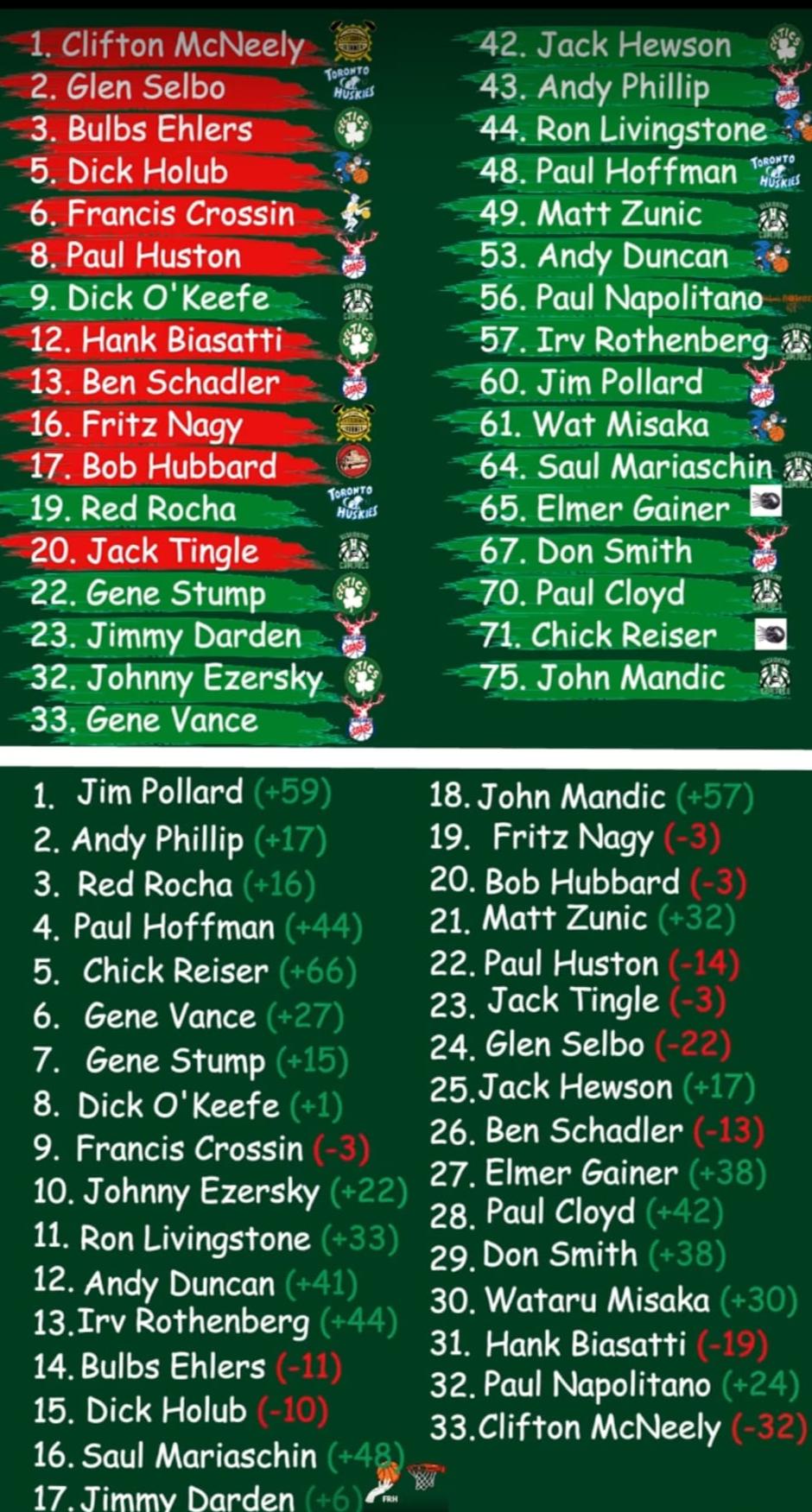
I wanted to make a video series about re-drafting every draft ever. So I started with the 1947 one, and wanted to ask probably the best place on internet did I make too many mistakes here. I skipped over guys who haven't played a game in the league except McNeely because he was the first ever pick so wanted to honor him. What do y'all think?


r/VintageNBA • • 9d ago

The first LeBron

28 Upvotes

A widespread-highlights mixtape, a national spotlight on him, magazine covers, sneaker companies hounding him, etc. And all that at 14 years old. No, we are not talking about LeBron. Some years before him, a player that caught the eye of every college recruiter, AAU coach or fan made waves throughout the country: JaRon Rush.

The oldest of three brothers, JaRon grew up in Kansas City. By middle school, he was already known as one of the best players in the area. But the real circus started in High School. Teaming up with his younger brother at Pembroke Hill, he dominated his league showing a ridiculous superiority over his peers. However, it was in the AAU summer circuit where he made his name. Playing alongside players such as Corey Maggette or Korleone Young, JaRon established himself as the top player of his High School class (1998), grappling for that honor for years with players such as Al Harrington or Rashard Lewis. After considering going to the University of Kansas and play for Roy Williams, in the end he decided to go to the bright lights of Los Angeles and joined Dan Gadzuric and Matt Barnes in UCLA to make that group of players the no. 1 recruiting class in America.

Sounds like a fairytale, right? Unbeknownst to the general public, there were several issues boiling under the surface. On one hand, in December of his freshman season it was discovered that him and his AAU teammates had been paid by a coach who got money and sneakers from Nike. It also affected the aforementioned Maggette, Young and his younger brother Kareem. This resulted in sanctions and penalties. In JaRon's case, he had to sit out the end of his freshman season and the beginning of his sophomore season. On the other hand, he turned to the bottle to deal with all the scrutiny and pressure that surrounded him. Rumours were he had started drinking in High School. Nevertheless, it was in college where it began to take its' toll. He even returned late to UCLA once after a Christmas break because he had been partying with his friends. After two disappointing seasons in California where he averaged around 12 points per game, JaRon decided to enter the NBA draft. Many people rolled their eyes at this decision. According to the Kansas native, he was worried that more sanctions would be coming in his junior seasons as a result of the AAU scandal, and he decided not to risk that scenario. He continued hitting the booze and as a results the NBA team workouts were a fiasco, leading to him not being chosen in the draft.

As luck would have it, the old ABA league was making a comeback that summer of 2000. and it seemed the teams in that league were not as demanding as NBA teams when it came to drafting. His hometown team (Kansas City Knights) drafted him. However, they traded him to the Los Angeles Stars before the season started, and JaRon picked up where he had left off. Partying resumed, only now he didn't have to go class the next day and he was getting paid. Eventually, the situation became unsustainable and he entered rehab  in 2001. After getting sobered up, he worked out really hard and got in great shape for the 2001 fall training camps. He was hoping a team would give him a chance. Would his story have a good ending after all? He did very well in the Seattle Supersonics camp, doing everything the coaches were asking from him. It wasn't enough, though. He was the final cut before the season began. So near, so far. In the end, after a brief stint in the NBDL (the D-League back then) he was signed by the Kansas City Knights again and started to live in his mother's basement. He had come a long way from being the No. 1 player in the nation. 

Every cloud has a silver lining, though. Hitting that low made JaRon realise that things had to change. He stopped playing basketball, and he felt more content with life. Maybe the pressure brought by basketball had been his undoing? After some years away from the game (he only played pick-up hoops with his friends in the local  YMCA) he gained enough maturity and did some soul-searching to decide that he could still contribute to the game in small doses. He started training kids' teams and that led to him founding his own company, "Rush training LLC", becoming a personal trainer to players that wanted to reach the next level. 

A satisfying ending for a rollercoaster career with its' fair share of ups and downs. A journey that didn't involve NBA championships and glamour, nor Olympic gold medals and celebrity friendships. However, there is no money to pay the relaxation, serenity and happiness of JaRon's current life.


r/VintageNBA • • 11d ago

The NBA's War Heroes

10 Upvotes

As you probably know, the NBA was born shortly after the end of World War II. Active NBA players have since been drafted into the Korean and Vietnam war efforts, volunteered to serve in the war in Iraq, and former Knicks and Bucks center Marshall Plumlee continues that legacy as an active-duty U.S. Army Ranger-Qualified.

As we recognize Veteran's Day today, I thought it would be nice to celebrate those select few NBA players whose acts of valor reached a point for which they earned official military decoration for their service. This list does not include players who died in combat, of which there is one in the ABA and quite a few from pre-NBA professional basketball. I post about them on Memorial Day, and that information can be found here.

---

Cliff Barker was a left waist gunner in a Boeing B-17 Flying Fortress as a member of 2nd Lt Ron Rohner's crew. They flew five missions over Cognac, Tours, Notre Dame de Ferme (Pas-de-Calais), Frankfurt, and Braunschweig. On January 30, 1944, during the fifth mission en route to Braunschweig, the aircraft the Rohner Crew was operating was shot down by a Focke-Wulf Fw 190 and crashed near the German village of Beienrode. Five of the ten men (2Lt Ron Rohner, 2Lt Emil Smetana, FltOff Stan Johnson, S/Sgt John Morreale, and Sgt Ken Dickerson) were killed in the wreckage, while the other five, including Barker, were captured by Nazi German forces and held as prisoners of war. Barker would spend the next 16 months as a POW in Stalag Luft IV until the camp was liberated by the U.S. Ninth Army on April 12, 1945. For this, he received a Prisoner of War Medal.

Upon his return from service, Barker played for Kentucky, where he became an important role player for a team that won two National Championships. He also won a Gold Medal for Team USA in 1948. Recruited by Leo Ferris into the Indianapolis Olympians co-ownership model, Barker became the Olympians inaugural player-coach and commenced a three-year NBA career, after which he coached at the high school level for many years.

Earl Dodd was a member of a ski-trooping unit with the U.S. Army serving in northern Italy. He was wounded by shell fragments in the back and head. Details are hard to come by, but I believe this to have been sustained during the Battle of Riva Ridge. He also seems to have displayed a certain level of heroic bravery in the situation, although I'm not sure in what exact way. For this, he received both a Purple Heart and a Bronze Star. If anyone comes across this who knows more details of Dodd's service, I would be very grateful.

Dodd then played for Kirksville, where he co-starred with Harry Gallatin, and ended up on the Denver Nuggets in the first post-merger NBA season. He was waived after seven weeks in the league, having played limited minutes in nine losses with the woeful Nuggets. He caught on with the barnstorming Detroit Kings for the rest of the season, before retiring citing a flareup of injuries suffered during the war. He spent the rest of his career as a construction foreman.

Murray Mitchell served in what his obituary terms "the Ardennes Rhineland Campaign," perhaps signifying that he may have been involved in both the Battle of the Bulge and the Rhineland Offensive. For his part in the war, Mitchell was awarded two Bronze Stars. If anyone comes across this who knows more details of Mitchell's service, I would be very grateful.

Mitchell returned to Sam Houston, where he'd already played his first two seasons of college ball before his service. After being cut by the Celtics as a prospective rookie in preseason of 1948-49, Mitchell gave up basketball, but came back briefly for a two-game pro stint with the Anderson Packers the next year. He then quit the team and moved back to Texas, where he continued to play semi-professionally for two seasons and coached until the mid-sixties. He then spent the rest of his career as an engraver and later a cattle rancher.

Chuck Mrazovich served in the 44th Infantry Division for three years and participated in the Battle of the Bulge, the Liberation of Strasbourg, and the captures of Mannheim, Heidelberg, and Ulm. For his part in the war, Mrazovich was awarded a Bronze Star. If anyone comes across this who knows more details of Mrazovich's service, I would be very grateful.

Mrazovich attended and played for Eastern Kentucky after his time in the war, and was drafted by the Indianapolis Olympians in 1950. A midseason casualty of the waiver wire, he spent only half a season in the NBA before latching on with the NPBL's Anderson Packers and earning a starting spot in wake of an injury to Leo Klier. After the NPBL shut down, he went east and played two seasons for the minor league Wilkes-Barre Barons, playing a major role for a team that won an ABL Championship in 1951-52. Mrazovich coached and taught at high schools in his home state for the next two decades.

Andy O'Donnell landed in Normandy on D-plus-six, serving as a soldier in the 38th Cavalry Reconnaissance Squadron in five battles including the Battle of the Bulge. He was also one of the first Americans to march down the Champs-Élysées in the Liberation of Paris. On September 5, 1944 on the way to liberate the Belgian city of Bouillon, O'Donnell was hit in the leg with shrapnel soon after crossing the France-Belgium border. For this, he received a Purple Heart.

Following his wartime effort, O'Donnell spent a year back at home, with his only basketball that season being at the local YMCA, before playing three and a half seasons at Loyola (Maryland). He graduated early and earned special dispensation to join the NBA midway through 1949-50, earning the last spot in Baltimore's rotation as a backup point guard following player-coach Buddy Jeannette's career-ending injury. That turned out to be his only NBA season, and he only played part-time in the minor leagues for the next three years as he embarked on a long and fruitful career with the Social Security Administration.

Goebel Ritter served in the U.S. Marine Corps from June 3, 1943 to October 19, 1945, right after graduating from high school. During his stint in the military, Ritter participated in the Battle of Guam, in which he was grazed on the head by a Japanese sniper bullet on July 26, 1944. He later served in the Battle of Iwo Jima, in which he was hit by shrapnel to the hand and knee on February 24, 1945. He received two Purple Hearts for the two times he was WIA in combat.

Ritter ended up as teammates with Mrazovich at Eastern Kentucky after the war, and in 1948 managed to make the Knicks' roster as the 75th pick in the BAA Draft. One of the lowest-selected players to find a role in the league, Ritter proved to be a useful backup SG for New York for three years (one in the BAA, two in the NBA), ending his career with a loss to Rochester in the Finals before spending the next 41 years coaching.

Carl Shaeffer was part of an anti-tank company attached to the 424th Infantry Regiment of the 106th Division at the time that the Battle of the Bulge broke out. The day after the counteroffensive ended over a month later, it was reported that Shaeffer had been missing in action ever since December 16, 1944, the first day of the Battle of the Bulge. I can't find official confirmation, but I believe he was captured in the early hours of the Battle of St. Vith. By the weirdest coincidence, the POW camp that the Nazis sent him to was Stalag Luft IV (the same camp Cliff Barker already was held in) where Shaeffer would remain for five months until the camp's liberation. For this, he received a Prisoner of War Medal.

Shaeffer was discharged almost immediately after being liberated, and utilized a temporary NCAA rule to play the next four years at Alabama despite having already spent his freshman season with Indiana. He was a defensive ace for 'Bama, and ended up signing with the Indianapolis Olympians on the recommendation of player/coach Cliff Barker, with whom he'd become friends during their time as POWs together. He never carved out much of a role with the team though and was waived early in his second season. He then operated a tavern. A victim of PTSD due to his experiences in the war, Shaeffer took his own life on his 50th birthday.

Carlisle Towery, already in the midst of his professional career as a member of the Fort Wayne Zollners, volunteered to serve despite all Fort Wayne players being eligible for a II-B exemption. Not much about his service is publicly available, but was an infantryman, possibly with the 97th Infantry Division. If that theory is correct, he would have been a participant in the Battle of the Ruhr Pocket and the liberation of Flossenbürg concentration camp. For his part in the war, Towery was awarded a Bronze Star.

Already very well-established in the basketball world, having started for the NBL's title-winners the year before he entered the service, Towery returned to Fort Wayne and remained one of few familiar faces as Bobby McDermott's antics tore the team apart during their final NBL years. Traded to the Indianapolis Jets shortly after the franchise became the BAA's Pistons, he put up his best numbers there but the team went under at the end of the season. Towery then spent his one and only NBA season with Baltimore, where he played quite well considering he had to switch positions from PF to SF as a 29-year-old, but made headlines more than anything for his knockout punch of Jim Pollard in December. After being stabbed in the face and arm by a summer-gig coworker over the offseason, Towery jumped leagues to the NPBL, where he finished out his career splitting his eighth professional season between Grand Rapids, Kansas City, and Evansville. Post-basketball, Towery was a farmer.


r/VintageNBA • • 11d ago

Floor Game vs Air Game

6 Upvotes

There used to be two different ways of splitting basketball in half.

One of them, I'd posit you're probably still aware of: offense vs. defense.

But for the first 30-35 years of the sport's existence, basketball sportswriters slightly preferred a different way of splitting up what happens in a basketball game: they would praise/condemn players for how they played the "floor game" and the "air game."

Air Game: any part of basketball that involves actions to get the ball into the air or out of the air. Examples: shooting proficiency, shooting efficiency, rebounding, boxing out, finishing, blocks, tip-ins, jump-balls, lobbed passes, outlet passes, cross-court skip passes, intercepting passes, tipping passes/loose balls to a teammate, safely receiving high passes, free throws, shot fakes, contesting shots, winning loose balls in the air, absorbing in-air contact on shots/rebounds, tap-out ORebs, drawing fouls on low-percentage looks...

Floor Game: any part of basketball that involves actions primarily related to keeping the ball near the playing surface. Examples: Ball-handling, short/mid-range bounce/chest passes, man-on-man defense, defensive positioning, offensive positioning, creating distance from a defender, decision-making, court vision, secure hands, on-ball steals, avoiding turnovers, evasive dribbling maneuvers, inbounds plays, off-ball movement, controlling/facilitating continued possession, affecting pace of play, preventing opponent from attempting shots, running the floor, not allowing opposition fast breaks, winning loose balls on the ground, drawing charges, forcing travels/backcourt violations, committing timely fouls that don't lead to free throws...

I'm curious who are some players you think would be considered historically elite at each of these two categories wholesale if we had kept that way of talking about things instead of shifting to pretty much just using the offense/defense binary that we're by now far, far more familiar with.


r/VintageNBA • • 11d ago

Kinds of blocks

Post image
7 Upvotes

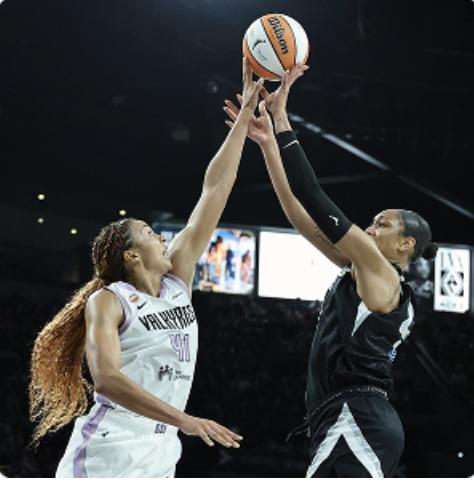
As the Valkyries ran the defending champs (3-0 in best of 5), I noticed Kiah Stokes often blocked the ball to her teammates. Obviously I've heard stories about Russell doing this. Any other examples of people who could block to get their team a possession not just spoil the opponents?


r/VintageNBA • • 12d ago Bravo

Happy Veterans Day! Players whose careers were impacted by serving

19 Upvotes

On this Veterans Day, I'd like to thank all veterans who have served their country!

And since we're an NBA history sub, here is a list of several noteworthy NBA players whose careers were impacted by serving, which obviously happened far more in the 40s, 50s, and 60s than it has since then. Many of these players are Hall of Famers, and I believe everyone I've included were All-Stars or All-NBA during their careers, so obviously there are many more players who served, just not as individually impactful to pro basketball as the players below.

  • David Robinson - served in the Navy for 2 years before entering the NBA at 24
  • Elgin Baylor - missed huge chunks of the '62 season while on active duty, but still put together an insane 38-19 stat-line
  • Lenny Wilkens - missed almost his entire 2nd season while serving (the same '62 season that Baylor missed part of)
  • Paul Arizin - led the NBA in scoring and FG% in '52 at 23 years old (25.4 ppg, .448 FG%) then missed the next 2 seasons while serving in the Marines
  • George Yardley - the high-scoring 50s SF served in the Navy for 2 years, so he didn't enter the NBA until he was 25
  • Sam Jones - served for 2 years in college before entering the NBA at 24
  • Bill Sharman - Cousy's famous backcourt partner served in the Navy for 2 years after HS, eventually joining the NBA at 24
  • Joe Fulks - high-scoring forward of the late-40s didn't enter the NBA until he was 25 after serving for 4 years, including being enlisted during his final year in college
  • Nat Clifton - served in the Army for 3 years before joining the Rens prior to the NBA's official integration in 1950
  • Carl Braun - 5x All-Star missed the 1st two ASG's ('51, '52) while serving in the Army
  • Jim Pollard - served for 3 years during WWII before starring for the Lakers in the late-40s and early-50s
  • Larry Costello - served for 2 years after HS and for most of his first 2 pro seasons, eventually starting his first full season at 25
  • K.C. Jones - served in the military before entering the NBA 2 years after being drafted
  • Jo Jo White - missed the first 12 games of his career due to his time in the Marines (his 2-year commitment was somehow reduced down to a dozen games by Red Auerbach)
  • Bob Davies - served 3 years in the Navy during WWII, so he entered the NBL 3 years after graduating college
  • Harry Gallatin - served in the Navy for 1 year before college, but he still entered the NBA at 21 (he graduated college in 2 years)
  • Slater Martin - served in the military for 2 years during college; entered the NBA at 24
  • Bill Bradley - served in the Air Force for 6 months which delayed the start to his NBA career by a couple months
  • Al Cervi - star 40s/early-50s PG served in the military for 5 years (~'40-45)
  • Adrian Smith - was in the military for 2 years in the early-60s before entering the NBA
  • Terry Dischinger - was in the military for 2 years right after making the All-Star team his first 3 years in the league
  • Frank Selvy - after being the #1 draft pick in '54 and his promising rookie season, Selvy served in the Army for 2 years
  • Johnny Green - spent a few years in the Marines during the Korean War before joining the NBA shortly before turning 26
  • Tom Gola - after helping the Warriors win the '56 title as a rookie, Gola served in the Army for a year
  • Bob Feerick - star 40s player who served in the Navy for 2.5 years during WWII, missing time between his tenures in AAU and in the NBL
  • Jack George - didn't enter the NBA until he was 25 after serving in the Army for 2 years
  • Andy Phillip - entered the NBA at 25 after serving in the Marines for 3 years during WWII
  • Cliff Hagan - served in the Air Force for 2 years before joining the NBA
  • Dick McGuire - served for 2 years during college, entered the NBA shortly before turning 24
  • Jack Coleman - was in the military for 3 years between HS and college before entering the NBA at 25
  • Cazzie Russell - missed some weekend games during his career while completing reserve duty, including during the Knicks' '70 championship season
  • Max Zaslofsky - served in the Navy for 2 years before a one-season college career; entered the NBA shortly before he was 21
  • Richie Guerin - was a Marine reservist for 7 years, including his first 2 years in the league; this appears to have delayed the start of his NBA career by 2 years
  • Frank Ramsey - after his rookie season, he missed most of the next 2 seasons while in the Army
  • Fred Scolari - he was unable to serve due to a broken ear drum (he was deaf in one ear), but he worked at a bank for 3 years during the war to fulfill his service
  • Ed Sadowski - one of the best offensive big men of the 40s served in the Air Force for 4 years during WWII, delaying his NBL career
  • Butch Beard - was drafted into the Army after his rookie season, serving for a year during the Vietnam War but never sent overseas to battle - He's the only NBA player who was drafted into the Vietnam War.
  • Bob Verga - decent ABA player who was selected to the 1968 ASG but was unable to participate since he got drafted into the Army shortly before the contest (his replacement was Larry Brown who was the ASG MVP) - Verga played in the 1970 ABA ASG
  • The only other players who were drafted during the Vietnam War were the ABA's Hal Hale and Les Powell. Powell's case is particularly tough since he was drafted on the same day he signed his rookie ABA contract, and he later died in combat so he never made it into the pros.
  • John Macknowski was the last living former NBA player who served in WWII. He died at 101 years old on April 8, 2024. He served for 3 years in the middle of his time at Seton Hall, later making it to the league with the Syracuse Nationals.

Basketball-Reference usually posts a red poppy flower at the top of the player stats pages for guys who served (ex: David Robinson's stats page - but again, the poppy is only there if you are checking the page on November 11). BBR said "We chose the poppy as it is already a symbol in wide use worldwide to recognize those who served."


r/VintageNBA • • 12d ago

Players who could be described as cerebral, not just smart, tactical, instinctual, etc.

8 Upvotes

This isn't a well defined question or set of questions, but I think that's because I'm having a hard time understanding what is usually meant by a player who is/was labeled as cerebral.

Question 1: What do you take it to mean if a player is called cerebral? Not smart or cunning, but specifically cerebral, because it's a word I see often enough that it has some sort of wide-spread understanding/meaning (or maybe people throw in the word as a catch-all je ne sais quoi without an understood meaning). The first thing that comes to mind is good passing, but it can't just describe every good passer. Is there something specific about the type of passer one is to have their passing get called cerebral? What other qualities might a player display, that intelligent fans can actually identify, that would cause one to label them as cerebral?

Question 2: Who are some players you think fall under the banner of 'cerebral'? Other than Bill Walton, because he seems like the most obvious historical player we'll all say (and Jokić modernly). Do they have to be comparatively less-than-athletic, like Andre Miller or Kyle Anderson? If not, how does their athleticism play into "figuring out" if they are cerebral or not?


r/VintageNBA • • 12d ago

Rick Carlislie as a Player (~1985)

Thumbnail
gallery
85 Upvotes

Just like Pat Riley and Phil Jackson before him, Rick Carlisle was a former player. He played from 1984-1990 (With some time in the CBA there aswell), primarily as a backup guard for the Celtics, Knicks, and Nets, winning a chip with the Celtics in '86. He was obviously never a star, but he was good enough to play 188 career games, averaging 2.2ppg, 0.8rpg, and 1.1apg which isnt great but its better than nothing.


r/VintageNBA • • 13d ago

"No politics, just straight numbers" - Tim Duncan once explained why he appreciated the NBA's forgotten "IBM Award"

Thumbnail
basketballnetwork.net
134 Upvotes

The IBM Award was different from the MVP, and Duncan appreciated that.


r/VintageNBA • • 16d ago

I feel like people forget just how good prime Shawn Marion was

69 Upvotes

Man, The Matrix was so fun to watch. The weird shot, the crazy athleticism, the rebounding, those fast-break finishes. He was everywhere on the court. Nash and Amare got most of the attention on those Suns teams, but Marion was just as important to what they were doing. You could put him in almost any lineup and he'd find a way to contribute. I loved watching that guy play.


r/VintageNBA • • 17d ago

How NBA photographers got their photos to the papers in time?

92 Upvotes

I had never given it much thought of how the photos of NBA games ended up in the papers the next day before the internet. How this video changed the perspective.

My assumption is that the first half photos would make the early edition and if something happened in the second half then those pictures would make the later edition.


r/VintageNBA • • 21d ago

New podcast episode. Guest: Kevin Calabro

Post image
46 Upvotes

🚨 New podcast episode 🚨

Kevin Calabro - Voice of the Sonics.

From Indiana to the Kansas City Kings, two decades calling the SuperSonics and the ongoing fight to bring the NBA back to Seattle. A nostalgic chat w/ one of the game’s great broadcasters.

🎧 basketballrecord.com/149