r/AlternativeHistory • • Aug 22 '26

r/AlternativeHistory Moderator Applications Are Open

6 Upvotes

r/AlternativeHistory is currently looking for new moderators to join and expand the team.

We are looking for people who are:

  • Active on Reddit and able to consistently contribute to moderation
  • Familiar with or genuinely interested in alternative history
  • Reliable and responsive when the team needs to communicate
  • Are over the age of 18
  • Willing to listen to other moderators and work as part of a team
  • Able to moderate viewpoints they may personally disagree with
  • Willing to join and participate in the moderator team's Discord server
  • Previous moderation experience is preferred, but not required

We are particularly interested in applicants who understand that alternative history involves speculation and non-consensus ideas. You do not need to personally agree with every theory discussed here, but you should be able to approach unconventional ideas fairly and distinguish between good-faith speculation and content that is genuinely unsuitable for the subreddit.

Important

Applications must be written by you. AI-generated or copied applications will be disqualified. We want to see your own thoughts, judgment, experience, and understanding of the subject. Please don't use AI to write your answers for you. Humanity has survived this long; surely you can manage a few paragraphs unaided.

The application includes questions about your moderation experience, availability, understanding of alternative history, approach to speculative/non-consensus ideas, and how you would handle different moderation situations.

Apply here

Please read the form instructions carefully before submitting. Shortlisted applicants may be contacted through Reddit modmail for follow-up questions.

If you have any questions about the application or the moderator role, feel free to ask in the comments or contact us through modmail.

Thank you to everyone who takes the time to apply and help build a stronger r/AlternativeHistory community.


r/AlternativeHistory • • Aug 21 '26

Mod Announcement What do you think about the subreddit?

7 Upvotes

I'd like to hear what you think about r/AlternativeHistory and what could be improved.

What do you like about the subreddit? Are there any rules, moderation practices, or types of content you'd like to see handled differently?

Are there any post or user flairs you'd like to see added?

I'm also considering creating a Discord server for the subreddit for more casual discussion and community interaction. If you'd be interested, let me know what you'd like to see in it.


r/AlternativeHistory • • 17h ago

Discussion In October 1307, King Philip IV sealed simultaneous arrest warrants for every Knight Templar in France—yet the Exchequer inventory of their Atlantic port at La Rochelle came up nearly empty

Thumbnail
gallery
57 Upvotes

Mainstream textbooks usually treat the Friday the 13th arrests on October 13, 1307, as a clean sweep where King Philip IV of France seized the Knights Templar and their treasury in a single coordinated morning raid. When you cross-reference the surviving royal arrest writs against the subsequent Exchequer inventories and Papal Commission depositions, however, a massive logistical gap shows up on the Atlantic coast.

Here is what the primary records actually document:

  1. The Sealed Arrest Orders (September 14, 1307): Nearly a full month before the raid, Philip IV dispatched sealed instructions from Pontoise to every seneschal and bailiff in the kingdom. The orders commanded royal officers to muster armed men in secret, open the sealed envelopes simultaneously at dawn on October 13, arrest every Templar brother, and immediately inventory every coin, chalice, charter, and cargo manifest on site before anything could be moved.
  2. The Missing La Rochelle Fleet (October 1307): The Templars maintained their primary Atlantic naval base at La Rochelle, operating a commercial and military fleet that regularly ran silver, wool, and provisions between France, England, and the Mediterranean. Yet when Philip's royal commissioners inventoried the Templar commanderies and port warehouses after October 13, the central Parisian treasury reserves and the bulk of the Atlantic vessels were nowhere to be found in the crown's seizure ledgers.
  3. The 1309–1311 Papal Commission Testimony: During the formal papal inquiry in Paris (recorded in Jules Michelet's Proces des Templiers), several arrested brothers testified under oath that senior officials had received advance warning days before the October 13 dawn raid. Specifically, Templar witnesses named Gerard de Villiers, the Preceptor of France, stating that he slipped out of the Paris Temple just ahead of the royal bailiffs with roughly forty to fifty knights and a train of packhorses loaded with records and valuables, heading toward the coast—and he was never captured by Philip's forces.
  4. The 1312 Bull Ad Providam: Five years later, when Pope Clement V issued the bull Ad Providam transferring all confiscated Templar property to the Knights Hospitaller, the Hospitallers spent over a decade suing the French crown because the liquid bullion and naval assets Philip claimed to have seized simply did not exist in the royal accounting rolls.

You do not need modern speculation to see the anomaly here, the crown's own accounting ledgers and sworn trial depositions confirm that the order's top French commander, several dozen knights, their archive chests, and their Atlantic fleet vanished out of the royal dragnet in October 1307 and never reappeared in French custody.

Primary Sources:

  • Royal Arrest Mandate of Philip IV (Pontoise, September 14, 1307), Archives Nationales, Paris, Series J 413
  • Proces des Templiers, ed. Jules Michelet (Paris, 1841–1851), Vol. I–II (Depositions of Jean de Chalon and surviving brothers regarding Gerard de Villiers)
  • Papal Bull Ad Providam (Council of Vienne, May 2, 1312)

r/AlternativeHistory • • 45m ago

Discussion Soviet photo alterations and the origins of the “lost cosmonauts” stories

Thumbnail
youtube.com
0 Upvotes

What happens to historical research when the photographs themselves have been deliberately altered?

In the early Soviet space program, men disappeared from published group photographs. Grigory Nelyubov, who trained alongside Yuri Gagarin, was removed after being expelled from the cosmonaut corps. Valentin Bondarenko died in a ground training accident, but his death was concealed from the public.

These omissions mattered beyond the individual men. Researchers comparing different versions of photographs could establish that the public record had been manipulated. What the photographs couldn’t establish was why each man had disappeared.

That gap helped fuel stories of cosmonauts dying on secret missions before Gagarin. The concealment was real, but it wasn’t proof of those alleged flights.

I explored these cases in a video, including how test equipment and misunderstood experiments became mixed into the same stories.


r/AlternativeHistory • • 1d ago Sipping Tea

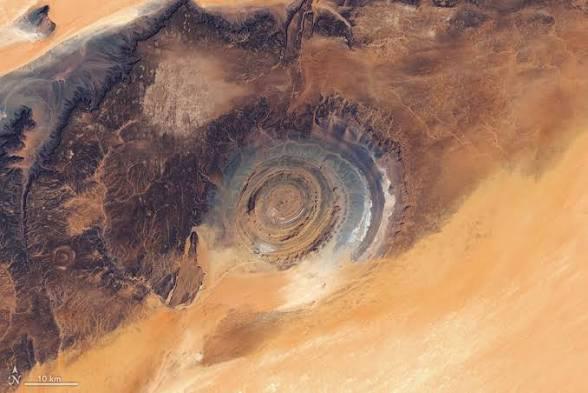
Lost Civilizations The Richat Structure (Eye of Africa) in Mauritania a massive 40 kilometer geological formation that matches Plato's exact description of the Lost City of Atlantis

Post image
41 Upvotes

r/AlternativeHistory • • 16h ago

Unknown Methods From Clay to Stone: The Simple Principle Behind Building the Pyramids

0 Upvotes

From Clay to Stone: The Simple Principle Behind Building the Pyramids

This proposed vision for explaining the construction mechanism of the pyramids in Egypt relies on linking the concept of thermal treatment of clay to the reference in Surah Al-Qasas (Verse 38), which indicates Pharaoh instructing his minister Haman to kindle fire upon clay in order to build a lofty tower. The scientific and technical basis of the proposition rests on transforming clay into a stone-like solid material by exposing it to high heat, a thermal and material principle used in ceramics industries, where clay may be mixed with additional materials to accelerate its thermal transformation and increase its hardness. According to this conception, construction is carried out gradually and in stages by forming clay cubes or blocks, confining them, and firing them inside kilns or furnaces, starting from laying the first course and treating it thermally until it hardens, then moving on to forming, laying, and firing the course above it upward until the construction is completed, without assuming the presence of massive cranes, advanced mechanical technologies, or complex hydraulic systems. Proponents of this view believe that this direct mechanism explains the presence of stones varying in size and clarifies how blocks of very high weights that may reach hundreds of tons reached great elevations through staged in-situ treatment, and they also believe that the simplicity of the operating principle may cause it to be overlooked by those inclined to assume ultra-complex technical solutions.


r/AlternativeHistory • • 2d ago

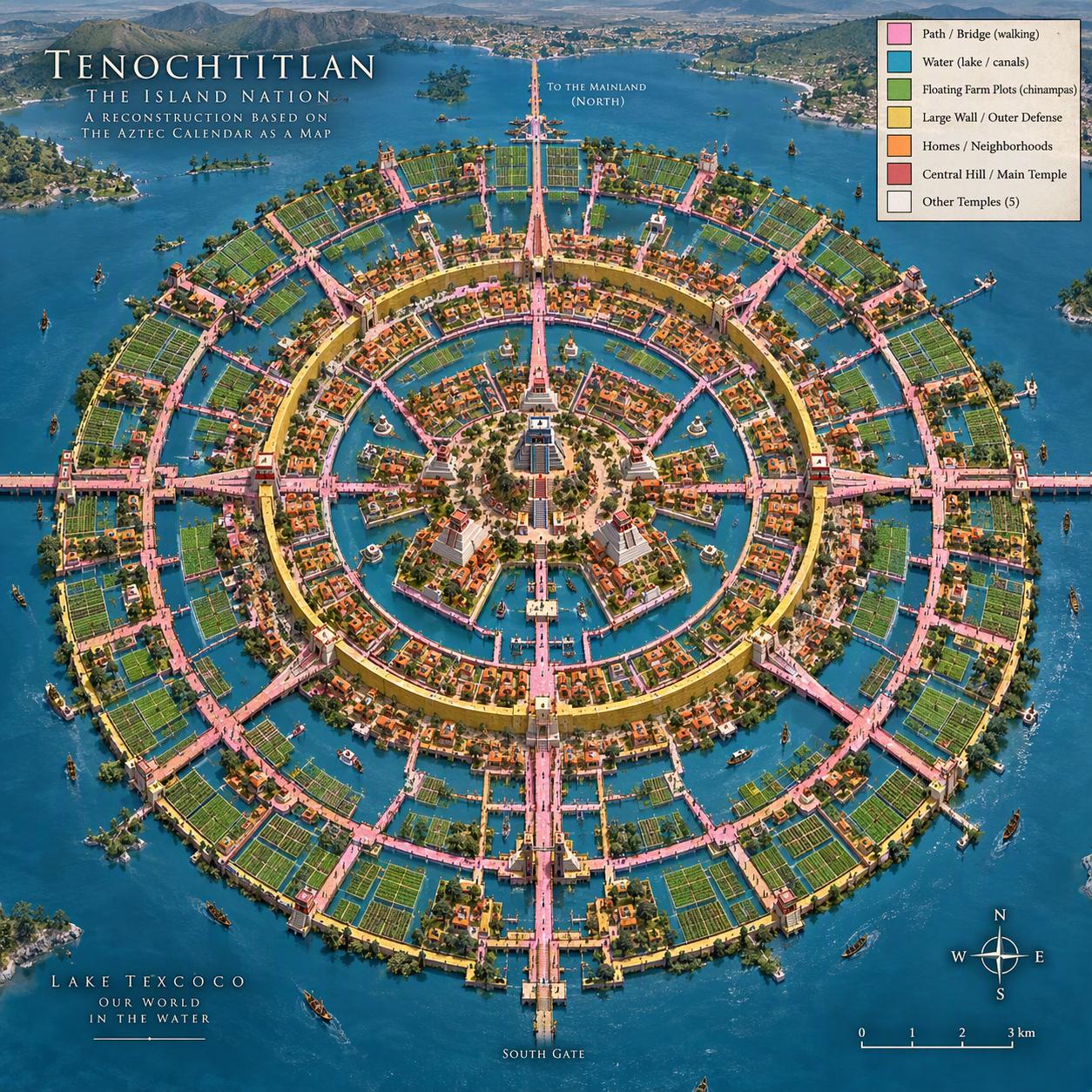
Lost Civilizations Atlantitlan(Atlantis)renamed Tenochtitlan

Post image
299 Upvotes

This is the aztec calendar seen as a map instead of a calendar. B e cause it is said that the aztec empire mimiced it's calendar. Look into this place. Look into Spains cover up. Ask all the questions

Like if Spain says the aztecs migration there was only 200 years prior to there arrival why does dna sequencing go back over 5k years.

The would could not know Spain conquered the greatest city ever recorded. So they covered it up. You won't learn this in text books. You have to do the research yourself.

If the aztecs main God was a feathered serpent, and the Spanish crown had an eagle on its crest. Doesn't the Mexican flag make more sense. The eagle destroyed the serpent.

Ask how linguistics would change its name into Atlantis if it was said in Egyptian then Greek.

Ask​


r/AlternativeHistory • • 1d ago

Chronologically Challenged The Founding Fathers of Ancient Egypt between Demotic Heritage & Arabian Historiography (Menes Narmer or Manqaus ibn Shaddad)

Post image
19 Upvotes

The concept of “Demotic heritage” refers to that corpus of knowledge and accounts relating to ancient Egypt that passed to Arabian Historians through multiple channels, the most important of which are: (1) late Demotic texts that were still being read in some circles until the early Islamic eras, especially in Upper Egypt; (2) popular oral traditions transmitted by generations about kings, monuments, and wonders; (3) Coptic texts that translated some ancient Egyptian knowledge; (4) Greek and Latin sources that Arab historians translated or knew indirectly; (5) popular interpretations of ancient monuments that people saw in Egypt, such as the pyramids, temples, and statues.

Modern studies, especially the study of Okasha El-Daly (And before him, the Egyptologist Ahmad Kamal) , have indicated that Arab historians were not merely passive transmitters of information, but practiced a kind of historical verification, compared sources, cast doubt on contradictory accounts, and tried to explain strange names in light of their knowledge of the Arabic language and genealogies. Therefore, what appears to us today as “legends” or “distortions” was, in their view, a serious attempt to understand the history of ancient Egypt in light of the cognitive tools available to them.

Hieroglyphic texts had ceased to be directly understood since approximately the fourth century AD, after the link between the sacred script and the late Egyptian language was broken, and knowledge of ancient Egyptian writing became monopolized by a narrow class of priests, then this knowledge vanished entirely with the spread of Christianity and the decline of ancient Egyptian religious institutions.

The researcher Okasha El-Daly indicated in his pioneering study on Egyptology in medieval Arabic writings that these writings, despite their often legendary character, constitute a “missing millennium” in the history of Egyptology, as they preserve echoes of ancient Egyptian knowledge that did not reach us through classical Greek and Roman sources.

In this framework fall the figures addressed by this article (the founding fathers of ancient Egypt) Menes Narmer, Khasekhemwy, Djoser, Khufu, Khafre, Menkaure — and their counterparts in the Arab tradition: Manqaus, Khaslim, Disara, Sourid, Hujib, Karuras.

And what you can notice is that these names and their counterparts are similar in that they are at the beginnings of ancient Egyptian history, the original names belong to the era of the early dynasties, and their Arabian counterparts belong to the period of the kings of Egypt before the Flood of the Prophet Noah.

------------------------

Manqaus ibn Shaddad or Menes Narmer, The Unifier of the Two Lands!

The ancient Egyptian historical tradition, as reflected by Manetho and Herodotus, attributes to Menes (Mina) Narmer the founding of the first ruling dynasty in the history of Egypt, the unification of the two kingdoms of the North (Lower Egypt) and the South (Upper Egypt) under a single central rule, and the founding of the city of Memphis as the capital of the country. Egyptian sources mention that Narmer founded a city called “Inb-Hedj,” meaning “the White Wall,” which later became known as Memphis.

Narmer chose the site of Memphis at the head of the Delta, at a strategic point controlling the movement of the Nile and separating Lower Egypt from Upper Egypt. According to the tradition transmitted by Herodotus, Menes is the one who ordered the diversion of the Nile’s course to build the city of Memphis, so he diverted the Nile from its old course, filled in the bend that was in the river, made the city in the place of the old Nile, and surrounded it with an embankment on the southern side and two lakes on the northern and western sides to protect it from flooding and the enemy.

The founding of a fortress (or fort) at the site of Memphis is also attributed to Mina Narmer, along with the formation of a strong army to protect the unity of the country, and the establishment of royal traditions that continued for thousands of years, among them the celebration of the festival of “the Unification of the Two Lands.”

The figure of Mina Narmer in ancient Egyptian consciousness was not merely a historical figure; rather, it acquired mythical and religious dimensions. Unification itself was viewed in Egyptian belief as the realization of cosmic order (Maat) on earth, and the spread of order at the expense of chaos (Isfet), which was symbolized by the scattered forces of the North. Therefore, unifying kings were often depicted in Egyptian art striking their enemies or controlling wild animals, in reference to subduing the forces of chaos. The Narmer Palette itself is a visual expression of this ideology: the king appears as Horus on earth, subduing his enemies and establishing the cosmic order.

as for the Arabian name Manqaus ibn Shaddad, it appears in a number of medieval Arabic sources, the most important of which are Al-Khitat by al-Maqrizi, Muruj al-Dhahab by al-Mas‘udi (Herodotus of Arabs) , and other books. These sources vary in the detail of his biography, but they agree in attributing him to before the Flood or to the first eras of Egypt, and in attributing to him a group of major architectural works, the most important of which is the building of the city of Memphis.

The first basis for comparison between the two figures is the phonetic similarity between the two names. The name “Mina” (Mena) or “Menes” in Greek transmission consists of the consonantal root m-n-s. The name “Manqaus” consists of the consonants m-n-q-w-s, or m-n-q-s if we drop the long vowel (w). It is noticeable that the two roots are similar in the first two consonants: m-n, and differ in that “Manqaus” adds a guttural sound, q, between the n and the s. This difference can be explained by the q being an intrusive element in the Arabic transmission, either added to facilitate pronunciation, or as a result of scribal alteration, or as a phonetic substitution from another sound.

Some sources mention other forms of the name such as Manaus and Manqaush (and it seems that the name Manaus is closer phonetically to the name Menes than the name Manqaus).

Manqaus is attributed in Arabic sources to Shaddad ibn Adim, a genealogy that resembles the names of pre-Islamic Arab kings, such as Shaddad ibn Aad, which indicates that Arab historians may have tried to integrate the figure into an Arab genealogical framework instead of attributing it to an ancient Egyptian origin. This integration is not unique to Manqaus; rather, it is a general pattern in Arabic historiography of ancient Egyptian figures, where historians sought to “Arabize” these figures or at least link them to Arab/Eastern origins. Some accounts mention that Manqaus was a wise, virtuous king, a priest, who performed wondrous works and built marvelous things, and ruled for ninety-one years.

Other Arabic accounts add that Manqaus built the city of Memphis for his sons or his daughters, that he made it the center of his kingdom, surrounded it with walls and temples, and organized its administrative affairs. The sources also mention that Manqaus is the one who built the city of Ain Shams (Iunu - Un - On - Heliopolis), which was the center of sun worship in ancient Egypt, which makes him a founder of the major religious centers in Egypt.

The division of the land of Egypt into kuras (administrative districts) is also attributed to him, an administrative act that reminds us of what Greek historians attributed to the early kings of Egypt regarding the administrative organization of the Egyptian land. The number of kuras mentioned (one hundred and thirty kuras) may not be historically accurate, but it reflects an Arab awareness that ancient Egypt was divided into administrative provinces, and that the founding king (Manqaus) was the one who established this division.

This correspondence in the founding role is what makes the comparison between them more than a mere passing phonetic similarity. Both are depicted as the founding king who moves Egypt from a state of fragmentation to a state of stable statehood with a fixed capital. This similarity is reinforced by other elements: both are associated with regulating the waters of the Nile or diverting its course. Mina/Menes, in the Herodotean account, diverted the Nile to build Memphis. Manqaus, in some Arabic accounts, is credited with organizing irrigation and building embankments and lakes.

It is noteworthy that the Arab tradition did not preserve the name “Narmer” or “Nermer” in its ancient Egyptian form, but preserved only the name “Manqaus.” This in itself is evidence that the Arab transmission was not direct from hieroglyphic texts, but from oral accounts or from late Demotic or Coptic texts. The name “Narmer” is a Horus name, and it was written inside a serekh, and was not the king’s common name in daily life. As for “Mina” or “Menes,” it was the name more commonly circulated in popular and classical tradition, and it is the one that reached the Arabs through Manetho and Herodotus and others, whether directly or indirectly, and then was altered into “Manqaus.”

Arabic sources give Manqaus personal traits beyond merely being a builder of cities. He is “a wise and virtuous priest,” and this reminds us of the image of the king-priest in ancient Egypt, where the king was the intermediary between the gods and people, and responsible for performing religious rituals and ensuring the continuation of the cosmic order.

The account “he ruled for ninety-one years” also reflects an ancient Eastern tradition of attributing extraordinary ages to founding kings, a tradition we find in the Torah (the ages of the early patriarchs) and in Egyptian myths (where some gods and kings are attributed reigns lasting thousands of years). These traits — wisdom, priesthood, long life, and architectural construction — are the typical traits of the founding king in medieval Arabic literature, and they were all combined in the figure of Manqaus.

This transformation from king-god to king-sage reflects a shift in religious vision, and it seems that Muslim Arabs were not prepared to accept the idea of the king-god, so they turned the first founder of Egypt into a wise king and priest, which is an image consistent with Islamic heritage that knows figures such as Luqman the Wise, al-Khidr, or Solomon and David the prophet-kings.

------------------------

In the next article I will talk about King Khasekhemwy and his counterpart in Arabian history King Khaslim, and it will be a more exciting article, with larger number of historical and literary evidence.


r/AlternativeHistory • • 2d ago

Lost Civilizations THE BOOK OF ENOCH AS REAL HISTORY: THE FULL STORY

2 Upvotes

THE BOOK OF ENOCH AS REAL HISTORY: THE FULL STORY

My theory: Enoch preserves a memory of the Amarna crisis in Egypt's empire (c. 1350 BCE), retold for centuries and later written in Babylonian language. Every fact below comes from real sources. The links between them are mine.

  1. THE GOD-KING

Akhenaten worships one god, the Aten, and rules from a new city, Akhetaten. His vassals call him "my lord, my god, my Sun."

2. THE SCRIBE

His official Tutu handles the northern rulers. The warlord Aziru writes: "To Tutu, my lord, my father: Message of Aziru, your son" (EA 158). Tutu's tomb stresses his truthfulness. Enoch is "the scribe of righteousness."

3. THE OATH

Aziru asks Tutu and the king's magnates to swear they'll do him no harm (EA 164). He is released, defects to the Hittites, and Egypt loses Amurru. In 1 Enoch 6 the Watchers swear an oath to share the guilt.

4. THE GIANTS

The Watchers, the "sons of God," father the giants. The king's men stand behind warlords like Aziru, who calls one of them "father."

5. THE EARTH CRIES OUT

Rib-Hadda of Byblos sends 60+ letters begging for help. Abdi-Heba of Jerusalem writes "the land of the king is lost" (EA 288). In 1 Enoch 7–9 the earth cries out against the giants.

6. THE PETITION

The Watchers fear God and ask Enoch to carry their plea (1 Enoch 13). Aziru fears the king and pleads through Tutu.

7. THE GIANTS FALL

In 1 Enoch 10 the giants destroy each other. Abdi-Ashirta is apparently killed, Labayu is struck down, and Aziru switches sides.

8. THE JUDGMENT

Egyptian prisoners bring a plague into the Hittite kingdom that lasts about 20 years. King Mursili II's prayers blame a broken oath.

9. THE FLOOD

Around 1200–1150 BCE the Bronze Age collapses. Empires fall and cities burn. The old world is swept away.

10. THE SURVIVORS

Simple highland villages rise in Canaan. By c. 1208 BCE the Merneptah Stele names "Israel." In 1 Enoch 106, Noah is born so strange his father fears he's a Watcher's child.

11. ENOCH VANISHES

"Enoch was not, for God took him." Tutu's tomb is left unfinished and no burial is ever found.

12. THE WORDS

The letters lie buried until 1887, but the story lives on by retelling. In Babylonian exile, Judah's scribes learn of the apkallu sages, and the Book of the Watchers is written c. 300–200 BCE.

Babylon explains who the Watchers are. Amarna explains what they did.

This is a theory, not settled history, and the 1,000-year gap is its weakest point. Tell me where it breaks.

Separating myth from memory, one text at a time.


r/AlternativeHistory • • 3d ago

Lost Civilizations Tales about Medusa^^

0 Upvotes

Medusa: Only a Monster & Myth?

Here is a truly amusing, but more plausible explanation for the monster of Medusa:

For many men a fight against women is hard in a psychological aspect. Let's imagine a fight between an army of women & an army of man. In their rows there was a girl with a flea nest in her hair. Many man, even brave ones could be deeply shocked by her appearance, causing them to freeze for a mere moment. In that very instant, one of them died, slaughtered by another women warrior.

Back in Athens, the men would sit together, drinking and sharing tales—and with every additional beer, the story grew increasingly bizarre. The flea bites transformed into snakes, and the men who had frozen at the sight of the girl turned into stone. Thus, the poor girl became a monster, and her brief life passed into legends that endure still this day.

Is this the real Medusa?

If you want to find out the whole story and my thoughts about Atlantis, start here:

Atlantis Located: https://www.reddit.com/r/atlantis/comments/1w626i9/atlantis_located/


r/AlternativeHistory • • 3d ago

Chronologically Challenged The walls are Pre-Inca

0 Upvotes

History says the Inca built Ollantaytambo in under 20 years. Don’t believe it.
https://youtu.be/oUnYvnFgrc8
When you actually walk the site, it looks like a chaotic mashup of five completely different construction technologies piled on top of each other: precision T-clamps, razor-thin 3D polygonal joints, massive monoliths wedged with tiny spacer stones, and crude inca rubble slapped on top. 
Could one emperor alone really have invented—and abandoned—all of these impossible techniques in two decades, or were the Inca simply inheriting a much older world? 
Look closer at the stones
Hope you like the new video


r/AlternativeHistory • • 4d ago

Discussion A question to students (english speaking audience)

8 Upvotes

Hi everyone. I'm here to ask about the history of Russia in the English-speaking audience's context. What did you read about it? What are texts and articles about Russia are? Could u share from textbooks? What do your teachers tell u on classes?

Here are some themes which I'd like to see:

-Ivan the Terrible

-The christianization of Rus'

-Napoleon's invasion to Russia

-dynasties

-presidents

-the great patriotic war (1941-1945)

-etc.

U can share photos!


r/AlternativeHistory • • 4d ago

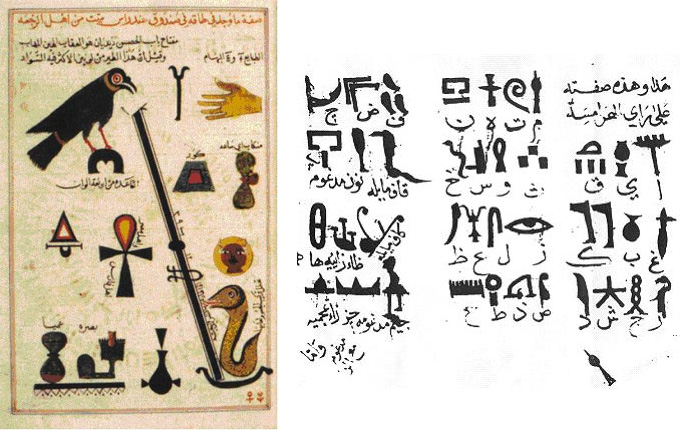
Discussion Did medieval Arab historians (Before Destruction of Baghdad library) know the true secrets of the pyramids before Champollion deciphered hieroglyphs?

Post image
0 Upvotes

Did the Mongol invasion of Baghdad burn the only Arab manuscripts that held the true secrets of the pyramids?

Could the destruction of Baghdad's libraries have delayed the world's ability to read hieroglyphs by centuries?

How did Arab scholars describe the pyramids with such astonishing accuracy?


r/AlternativeHistory • • 5d ago

Alternative Theory A Generation of Orphans

0 Upvotes

The post-apocalypse, what happened after the catastrophe, is more difficult to explain. I'll try. Around 1810, the AI ​​ordered groups of survivors in bunkers to accelerate the restoration of civilization. This primarily meant repopulating the population through mass cloning. This happened as follows: survivors who escaped from the bunkers used 3D printers and high technology to create an infrastructure for producing clones on the planet's surface. Most likely, these clones were populations of 2-3 ages. So, most likely, there were three generations of clones from largest to smallest: 1810-1830, 1830-1850, 1850-1870.

They were then sent to workhouses or orphanages. Like almost everything in this world, the orphanage industry emerged in the 19th century. For example, in the United States, according to official statistics, by 1800 there were only 5-6 operating orphanages in the country. In 1851, there were more than 70 of them, and by 1880, around 600. Orphans often served as transit centers, from where children were sent by train to various states.

The most significant thing that happened to people was the interruption of intergenerational connections. We remember nothing about our ancestors of the 19th century (at least for most of that century); information isn't passed down from generation to generation. The only things we have are documents that form our family tree. Family memory can't be falsified, but documents can. Before posting this, I read other subreddits on this topic about whether people remember their ancestors. Those who do remember and know family histories almost all talk about their ancestors from the late 19th century.

I'm sure that many orphans, as adults, tried to hide their past. Back then, marriage was a huge priority, and those who deviated from this social norm faced social condemnation. They could buy false family trees. They never told their children and grandchildren about this to protect their reputation.


r/AlternativeHistory • • 8d ago

Archaeological Anomalies Forged 1,000 years before the Iron Age: This 4,400-year-old dagger found in Turkey was crafted from extraterrestrial meteoric iron, challenging the mainstream timeline of ancient metallurgy.

Post image
707 Upvotes

Found at the royal tombs of Alacahöyük in central Türkiye and dated to around 2400–2300 BC, this gold-hilted dagger shouldn't technically exist according to the standard historical timeline. The Iron Age in Anatolia didn't officially begin until roughly 1300 BC, yet ancient craftsmen were already working with iron a full millennium earlier.

Geochemical and X-ray fluorescence analyses published in the Journal of Archaeological Science confirmed that the blade isn't made of terrestrial ore. Instead, it is crafted from meteoric iron rich in nickel and cobalt, originating from the cores of ancient asteroids. Working with meteoric iron requires distinct knowledge compared to standard Bronze Age copper or bronze casting, since the metal has a much higher melting point and behaves completely differently under the hammer.

Mainstream archaeology typically classifies these early meteoric artifacts as rare lucky finds worked cold by primitive hammering. Still, the Hittites and their Hattian predecessors in the region later became famous for guarding iron-smelting secrets, even seating their kings on iron thrones rather than gold ones. All of this points to a much deeper, forgotten mastery over "sky metal" long before history books say the Iron Age started.


r/AlternativeHistory • • 8d ago

Consensus Representation/Debunking The Boogeymen were real—Miles Forest and John Dighton

Post image
43 Upvotes

In 1483, the disappearances of Edward V and Richard, Duke of York went unnoticed, or at least unspoken. Team York puts the blame on Henry VII, while team Tudor points their fingers at Richard III. I want to talk about two other names often brushed aside because they are not the main characters of the day—Miles Forest and John Dighton.

Written in the early 16th century by Sir Thomas More, More claims that after Sir Robert Brackenbury refused to harm the boys, Sir James Tyrell, under direct orders from Richard III, took physical possession of the Tower keys for one single night. Tyrell recruited Miles Forest, and his own horse-keeper John Dighton to enter the Tower after midnight and dispose of the boys. Allegedly the boys were smothered with pillows and buried beneath the outer staircase of the southern entrance.

Miles Forest, described by Sir Thomas More in The History of King Richard III, as “a noted ruffian” or someone already *“*fleshed in murder”, and naming him “one of four who kept him.”  What "Keeping" the Princes Meant: in 15th-century royal households, these four men were not dungeon turnkeys rattling iron keys. At that stage (summer 1483), Edward V and Richard of York were still housed in the royal apartments of the Tower. Being one of the four keepers meant handling daily personal attendance, security, meals, dressing, and access control to the boys' chambers—essentially acting as a tight, hand-picked inner-circle staff loyal to Richard. More describes Miles Forest as a cold-blooded killer, however, there are zero records indicating Miles Forest had ever committed murder, a violent crime, or a mercenary hit prior to 1483. Real  contemporary records identify Forest as a respected northern administrator—specifically Keeper of the Wardrobe at Barnard Castle in County Durham (one of Richard's primary northern estates). His job was managing household goods, fabrics, furnishings, and logistics for a major baronial castle, not acting as an underworld enforcer. According to More, because Forest was one of the four trusted keepers who already had unrestricted, routine access to the boys' inner bedchamber without raising alarm among the rest of the Tower garrison, Tyrell recruited him to unlock the door at midnight and help John Dighton smother the boys with their own featherbeds and pillows.

John Dighton, “A big, broad, square, strong knave” as described by More. Unlike Forest—who conveniently died early—More claimed Dighton was still alive when More was writing around 1513, living in Calais (then an English possession in France) and openly telling anyone who would listen about what he had done in the Tower. Unlike Miles Forest, Dighton held no official post inside the Tower of London. More identifies Dighton simply as Tyrell's own groom (horsekeeper), a personal servant who traveled with Tyrell from the royal court at Warwick to London when Richard III allegedly ordered the hit. While Forest was said to unlock the door, Dighton is indicted as the killer who smothered the boys in their bedrolls and pillows, then removed the bodies to be buried beneath the stairs.

In 1674, Sir Christopher Wren — Surveyor-General of the King's Works, was the chief architect and structural engineer in charge of all royal building projects, including the 1674 structural modifications and demolition of the old external stone staircase on the south side of the White Tower. According to King Charles II's chief surgeon, John Knight (who was right there on site and whose account was printed in Francis Sandford's 1677 Genealogical History), the workers had to bust through heavy Kentish ragstone stairs and dig 10 feet down through packed fortress rubble and Thames River gravel before hitting that wooden box.  This all took place according to More, between the hours of midnight to dawn, approximately 5-6 hours. I’ve had to dig a few foxholes and bunkers when I wore a uniform, it took a 10-man squad 2-3 hours to dig a foxhole, 6 foot wide, 6 foot long, armpit deep. For these 2 men to dig 10-feet deep in that terrain, place the box, back fill the hole, and conceal the disturbed soil, with no lights, making absolutely no sounds to be heard through all the open summer windows of the square is a very tall order giving the overall dimensions that the hole (pit) would have to be in order for 2 men to dig down 10 feet and bury the box under the stairs.

  Miles Forest and John Dighton are sounding more like Superman and the Incredible Hulk.


r/AlternativeHistory • • 8d ago

Archaeological Anomalies A mixture of strange symbols, ciphers, words and cryptograms carved in 1876 remain unsolved to this day.

Post image
5 Upvotes

In 1876, two young men from New Brunswick, New Jersey, carved a mixture of strange symbols, ciphers, words, and cryptograms into rocks along the Lawrence Brook off of the Raritan River. Some of these carvings include the authors' names, initials, the words "Red Rover," the year 1876, skulls, navigational coordinates, a compass, and a mystery cipher.

https://www.atlasobscura.com/places/lawrence-brook-carvings


r/AlternativeHistory • • 8d ago

Lost Civilizations Hollow Earth

0 Upvotes

What are your thoughts on the Hollow Earth? This is my first post


r/AlternativeHistory • • 10d ago

Archaeological Anomalies The Mysterious Rock

Thumbnail
gallery
43 Upvotes

I recently came across something in Norway called «The Mysterious Rock», or better known as «Den Mystiske Stein» (in norwegian) At first, I assumed it was just another local internet joke about a random rock. Then I started looking into it, and somehow ended up spending far too much time reading Google reviews, Reddit threads and increasingly strange theories.

The rock has its own Google Maps listing, and some of the reviews are genuinely bizarre. People describe strange sensations when touching it, unusual sounds, voices and spiritual experiences. One recurring idea is that everyone sees the rock differently, as if it never reveals its actual appearance. Some reviews even suggest that the place has a much darker history involving ancient rituals, sacrifices and attempts to bind the souls of the dead to the stone. One name that comes up is Okidokki Fug, who supposedly spent days and thousands of kroner searching for the rock, only to leave a review claiming it was just a big rock. Other reviews warn people not to listen to him, claiming something terrible happened to him after his review. This eventually became known as the Curse of Fug, or the Okidokki Fug Theory.

There are several groups connected to the story. The most prominent is the Brotherhood of the Mysterious Rock, a secretive organisation supposedly devoted to the stone. Within the Brotherhood are the Elders, said to be thirteen original founders. According to the lore, the Elders gradually became corrupted by the rock and developed a much more disturbing goal.

Then there is «Dypstaten» (The Deep State) Its relationship with the Brotherhood is unclear, and the two seem to have their own agendas. Dypstaten has been associated with mysterious treasure hunts around Sunde, leaving objects in strange locations with cryptic instructions and threats for anyone who breaks the rules. Some of the treasures have supposedly disappeared, while others have involved bizarre objects and increasingly ridiculous consequences. There is also a curse connected to Eldus Jordus, a figure believed to be the Wizard and the movement of something beneath the Witch Tree.

And that brings us to the other side of the story: the Wizard and the Witches.
They are connected to something called Heksetreet (The Witch Tree) supposedly located near the rock. Stories describe strange women dressed in black near the tree, preparing something.. The Wizard (Eldus Jordus) appears to be their leader, who is said pull at the tree’s roots, particularly its main root, referred to as Eldus Rotus.

The strangest theory is that the rock and the Witch Tree are slowly moving towards each other. According to the mythology, their eventual meeting could trigger another Big Bang, essentially restarting the universe. Sounds like bullshit yeah but who knows. The Elders and the Wizard’s group are supposedly working towards this outcome, although the Brotherhood’s wider intentions are less clear.

There are also references to something called the Sunde Meridian. One account claims that, during the year’s first new moon, the rock, Witch Tree and an ancient crossroads align at midnight. Clocks supposedly stop for thirteen seconds, one for each Elder. The rock begins to hum, and the tree’s shadow points towards the person destined to become its next guardian. Another mysterious figure, the Tananger Prophet, is said to communicate through nature and the wind.

Then there are the smaller details that make the whole thing even stranger. A sign reportedly appeared near the rock with the words “VI SER DEG”, meaning “WE SEE YOU”. There is also a mysterious cassette supposedly found near the location, which was reenacted and shared online on various platforms like instagram, youtube and more. A separate post warned people not to visit the rock on a particular night.

I genuinely cannot tell where the original joke ends and the real mythology begins. The whole thing seems to have developed through Google Maps reviews, Reddit posts, comments, treasure hunts and videos, with each new detail adding another layer to the story.

Maybe it is simply an elaborate local project. Maybe someone has spent an unreasonable amount of time building a fictional universe around a rock in Sunde. But I still find it fascinating how many different pieces have been connected to this one location.
I started out looking for an explanation of a strange rock. Now I am apparently investigating secret brotherhoods, thirteen ancient Elders, witches, a possible second Big Bang and a man called Okidokki Fug.

I should probably get off reddit.


r/AlternativeHistory • • 10d ago

Lost Civilizations Hyperborea: The Hidden World of the Far North

Thumbnail
youtu.be
11 Upvotes

Far beyond the borders of our maps lies a realm whispered about for thousands of years: Hyperborea. A land of eternal light, ancient power, and secrets that challenge everything we think we know about human history.

The ancient Greeks described it as a northern paradise, but what if it was more than mythology? Inuit oral traditions speak of ancestors emerging from a luminous inner world beneath the polar ice. Some believe these accounts point to Hyperborea, or perhaps even a hidden gateway into the Inner Earth.

The mystery deepens with the disappearance of the Norse Greenlanders. Some theories suggest they were transported to Vinland by ancient Chinese explorers, while others believe they continued north, following warm winds and fertile lands that supposedly shouldn’t exist. Could they have followed the Skraelings into the far north, toward the last remnants of Hyperborea or a hidden entrance to the Hollow Earth?

Even Admiral Richard E. Byrd may have encountered something extraordinary during his polar expeditions, possibly a hidden civilization whose existence was never revealed to the public.

Hyperborea has been described as an ancient spiritual center and technological hub, where long lived beings supposedly mastered energy, sound, and consciousness. Ancient mythology and Arctic traditions contain intriguing references that some believe point toward something extraordinary hidden in the far north.

Did Byrd discover it? Did the Norse Greenlanders reach it? And do Inuit traditions preserve memories of a mysterious world beneath the ice?

Disclaimer: I’m not claiming this story is 100% true. This is a conspiracy theory exploring alternative interpretations of ancient mythology, historical mysteries, and Arctic legends, shared here for discussion.

Take it for what it is and make up your own mind.


r/AlternativeHistory • • 9d ago

Catastrophism Catastrophe theory

0 Upvotes

Here I will present my theory of how, in my opinion, a civilizational reboot could have occurred: a catastrophe, collapse, and restoration. What I present here is merely a theory without evidence, but in my opinion, this is likely how it happened. I will divide the main categories into the Golden Age, Bronze Age, and Iron Age. The Silver Age can be classified as an Iron Age due to the emergence of seasons, which could only have occurred after a cataclysm. I will use the official chronology due to the lack of an alternative.

Golden Age

Humanity lived by completely different principles: there was eternal summer, longevity (a thousand years or more), and free energy. There were no laws or taxes, no wars. People were taller than today, did not eat coarse food, did not get sick, and their material possessions were produced by devices similar to modern 3D printers. Many areas of life were controlled by AI. The lingua franca of this world was Slavic.

Bronze Age.

The flawless system of peaceful coexistence suddenly failed, and people began inventing weapons and waging war. Either humans had become too stupid, or the AI ​​had gotten out of control. Wars erupted over territory and later even over resources. The great civilization slowly declined.

The culmination of these events occurred in 1802, when Alexander the Great decided to conquer the second Moon (there were two). He assembled a powerful space fleet and launched an assault on the lunar fortress, where his enemies desperately resisted. At the decisive moment, the use of colossal weapons led to a terrible outcome: the Moon began to split apart, and its giant fragments headed toward Earth. Humans on Earth, despite their technological superiority and the use of weapons of mass destruction, were unable to repel their fall.

A small number of surviving humans on Earth were warned by AI about the possibility of such a cataclysm and created a network of AI-controlled bunkers in advance, where they stored high-tech items, including weapons of mass destruction. Those remaining outside were mostly doomed to die. Fragments of the Moon fell to Earth, causing a powerful cataclysm—earthquakes and floods. After the fragments fell into the sea and oceans, waves reached several miles in height in some places, and a huge flood of water and mud swept across most of the earth's land. Among the peoples of the world, this event is known as the Great Flood. Many areas of land were submerged for a very long time.

After weeks and months, the waters began to recede, and for those who survived on the surface, the worst was just beginning. It was a world where the living envied the dead. The fall of the Moon fragments caused a pole shift, which ushered in winter. People began to fall ill and die from the terrible cold. The winter of 1802-1805. The year without a summer lasted for several years, known as the "year without a summer" (1815 according to the official chronology). This nightmare was compounded by the fall of residual fragments of the Moon from space, and many cities burned. The poet George Byron witnessed this and captured it in his poem "Darkness." Thomas Campbell left a testimony in his poem "The Last Man." The hero observes a dying, desolate Earth. All around are dead states, silent and drifting ships, and a dying nature.

As a result of this massive catastrophe and its aftermath, over 90% of the planet's population was destroyed in the following years. Infrastructure—homes, transportation, and energy complexes—was partially buried under the flood's mud.

The survivors suffered a decline, partially losing their industries and electricity. They retained memories of the lost world and tried to maintain their former capabilities, so famine was not a problem during this period.


r/AlternativeHistory • • 10d ago

Chronologically Challenged (Updated Article) Pharaohs and Queens of Ancient Egypt in Arabian & Coptic Folklore: A Chronological List with Historical Identifications and Etymologies

Post image
18 Upvotes

It took me much effort to complete this ...

For me as Egyptian I love to compare Medieval Arabic manuscripts with 19th-20th century Post-Champollion deciphering of Hieroglyphs!

So I present to you this second and new edition of the previous list saturated with new figures and quotes from Arabian sources ..

This list presents the pharaohs and queens of Ancient Egypt as preserved in medieval Arabian and Coptic literature. It is a composite of Manetho transmitted through Christian chronographers, Qur’anic and Biblical sacred history, Coptic folklore, and popular legend.

It reflects a long chain of translation and linguistic mediation: from ancient Egyptian into Greek, then into Coptic during Greco-Roman period in Egypt, and finally into Arabic in the medieval period.

The list does not claim complete historical authenticity or correctness; it is just an attempt to show how ancient Egyptian rulers were transformed into legendary and religious names in Coptic Arabic memory.

P.S.

Most Arabian historians didn't know anything about Manetho, so it seems they got information via oral narratives.

— — — — — — — — — — — — — —

Arabian sources:

  1. Futuh Misr wa al-Maghrib (The Conquest of Egypt and the Maghreb)

— Ibn Abd al-Hakam (c. 801–871 CE)

2. Muruj al-Dhahab wa Kitab Al-Tarikh (Meadows of Gold and Book of History)

— Al-Masudi (Herodotus of Arabs) (c. 896–956 CE)

3. Mujam al-Buldan (Lexicon of Countries)

— Yaqut al-Hamawi (c. 1179–1229 CE)

4. Nihayat al-arab fi funun al-adab (The Ultimate Ambition in the Arts of Erudition)
— Al-Nuwayri (1279–1333 CE)

5. Al-Mawa’iz wa al-I’tibar bi-Dhikr al-Khitat wa al-Athar (The Admonitions and Reflections on the Districts and Monuments of Egypt, known as the Khitat)
 — Al-Maqrizi (c. 1364–1442 CE)

6. Al-Nujum al-Zahira fi Muluk Misr wa al-Qahira (The Shining Stars Concerning the Kings of Egypt and Cairo)

— Ibn Taghribirdi (c. 1411–1470 CE)

7. Husn al-Muhadara fi Tarikh Misr wa al-Qahira (The Agreeable Discussion of the History of Egypt and Cairo)

— Al-Suyuti (c. 1445–1505 CE)

8. Ahmad Kamal (1903). "Notes sur la rectification des noms Arabes des anciens rois d'Égypte accompagnée d'une notice explicative de quelques coutumes"

9. Okasha El-Daly (2005). Egyptology: The Missing Millennium

— — — — — — — — — — — — — —

The Arabic name Misr — Masr (مصر)

Misr is an ancient Semitic name, not originally Egyptian: it appears in Akkadian as Musur and Hebrew as Mizraim or Mitsrayim, likely meaning “settled land” or “protected borderland.” Pre-Islamic Arabs used it, and it became the standard Arabic name for Egypt, while the ancient Egyptians called their land Kemet (“Black Land”). In religious tradition, the name is linked to Misrayim, son of Ham son of Noah, the biblical ancestor of the Egyptians.

Quote:

"And Baysar ibn Ham ibn Noah had grown old and weak, so his son Misrayim drove him, along with all his brothers, to Egypt, and they settled there, and for that reason it was named Misr."

Source: Ibn Abd Al-Hakam

— — — — — — — — — — — — — —

The Antediluvian Pyramid Builders (Before biblical flood)

Yaqut al-Hamawi (1179–1229) said in his book Muʿjam al-Buldan (Lexicon of countries):

“And in the time of Shaddad ibn Aad, the pyramids were built, according to what is reported from some of the transmitters. But we have not found with any of the people of knowledge among the people of Egypt any knowledge concerning the pyramids, nor any established report, except the opinion that they were built before the Flood, and for that reason their history became obscure; had they been built after it, their account would have been known to people.”

— — — — — — — — — — — — — —

Manqaus (منقاوس)

In Arabian literature, Manqaus is a king of Egypt, the son of King Shadad, who succeeded his father and ruled with resolve and wisdom. He is credited with bringing forth the books of wisdom, restoring the priests to their ranks, building the first bathhouse in Egypt, and building Memphis for his thirty daughters, settling them there. He is also said to have built a temple for the images of the planets, made numerous talismans, instituted twelve annual festivals, and accumulated immense wealth through the work of alchemists.

Historical identification: Menes (Narmer), the first king of the First Dynasty and unifier of Upper and Lower Egypt, traditionally credited with founding Memphis.

Etymology and reasoning: The identification is phonetic and narrative. The names Manqaus and Menes are phonetically similar: both share the consonantal core m-n-s, with the q in Manqaus appearing as an intrusive or secondary element in Arabic transmission. The narrative role assigned to Manqaus —founding Memphis and establishing kingship there— matches the classical and modern tradition about Menes Narmer, reinforcing the identification.

Quote:

"And authority passed after him to his son Manqaus the king, who stood in his father's place and ruled with resolve and wisdom... And some of the people of tradition said that he is the one who built Memphis for his daughters, and they were thirty daughters, and he settled them there."

Source: Al-Mas'udi

— — — — — — — — — — — — — —

Khaslim (خصليم)

Khaslim is an early legendary king of Egypt credited with building a Nilometer. He placed two bronze eagles — male and female — at the site. Priests read incantations; if the male eagle whistled, the Nile flood would be good and high, but if the female whistled, the flood would be disastrous and drought would follow.

Historical identification: The proposed candidate is Khasekhemwy, last king of the Second Dynasty

Etymology and reasoning: The name Khaslim may be an alteration of Khasekhemwy (Egyptian Ḫʿsḫmwy). The reasoning is phonetic but weak: the consonantal skeleton kh-s-kh-m could be reduced and reshaped in Coptic/Arabic transmission as kh-s-l-m, with l replacing the second kh. The identification is supported mainly by narrative structure: Khasekhemwy was an early Memphite ruler associated with unification and control of the Nile, and Arabic tradition assigns Nilometers and waterworks to early kings.

Quote:

"And after him [ruled] Khaslim, who was the first to make a Nilometer for the rise of the Nile… and on the edge of the basin were two brass eagles, male and female… If the male whistled, the water would be full; but if the female whistled, the water would be deficient."

Source: Al-Suyuti

— — — — — — — — — — — — — —

Disara (ديساره)

In Arabian literature, Disara is a wise king of Egypt who built the Lapis Lazuli Niche and whose tomb is within it. The Copts had a feast in honour of him called the "vine festival".

Al-Nuwayri (1279–1333 CE) also visited the South tomb of the pyramid complex of Djoser in Saqqara, identifying it as the tomb of "Disara" and describing a vault decorated with lapis lazuli, as well as a large court with a large granite door inscribed with 30 lines of hieroglyphs.

Historical identification: Djoser (Netjerikhet), Third Dynasty pharaoh, builder of the Step Pyramid.

Etymology and reasoning: The identification is phonetic. Disara may be derived from Djoser, or from Manetho’s form Tosorthros, reshaped in Arabic as Disara.

Quote:

As for the Lapis Lazuli Niche: It is in the land of Memphis, and Memphis is what is called Old Egypt. The arch of the niche is said to be finer than the arch of the bridge of Ṣanja mentioned earlier. The niche is built of dressed stones, each stone more than fifteen cubits long. In it are carvings, inscriptions, and talismans coated with lapis lazuli. It runs from east to west, and at its head is an open space containing a lofty structure with a slab of black flint on it, on which thirty lines are written in the Barbari script. It is said to be the tomb of the one who built the niche, and that he was Disara: a sage king who was in Egypt. The Copts have a feast called Disara; it is the feast of this king and is called the Feast of Grapes.

Source: Al-Nuwayri

— — — — — — — — — — — — — —

Sourid ibn Salhuq (سوريد بن سلهوق)

In Arabian literature, Sourid is the great antediluvian king of Egypt who foresaw the Flood in a dream and ordered the building of the Pyramids of Giza to preserve knowledge and serve as his tomb. He is often linked with Idris/Enoch or Hermes Trismegistus.

Historical identification: Khufu (Cheops), builder of the Great Pyramid.

Etymology and reasoning: The identification is phonetic. Sourid maybe was derived from Souphis, which is the name the Egyptian historan Manetho gave for Khufu.

Quote:

"The one who built the pyramids was Sourid ibn Salhuq, and it was before the Flood, he saw in a dream as if the earth was overturned with its people, so he gathered the chiefs of the priests, they informed him of the Flood, so he ordered the building of the pyramids."

Source: Al-Suyuti

"It was found written on the pyramids in the ancient script and its meaning was: “I am Sourid the king. I built these pyramids in six years. Whoever comes after me and claims to be like me, let him demolish them in six hundred years, for demolition is easier than construction."

Source: Ibn Abd Al-Hakam

— — — — — — — — — — — — — —

Hujib (هوجيب)

In the same tradition, Hujib is the son of Sourid and is said to be buried in the second, western pyramid at Giza.

Historical identification: Khafre (Chephren), builder of the second pyramid.

Etymology and reasoning: The identification rests mainly on structural mapping. Arabic tradition assigns the three Giza pyramids to a father/son/grand son sequence. (P.s. which is historically correct!)

Historically, the second pyramid belongs to Khafre, a son of Khufu. The name Hujib is maybe altered from Hotep, but its narrative role as second pyramid builder and royal relative fixes the identification with Khafre.

Quote:

"And when Sourid died, he was buried in the pyramid with his treasures... Then his son Harjib (Hujib) ruled after him, and he was like his father, wise and learned in the science of magic and talismans, and he performed wondrous works... and he built the pyramids of Dahshur and carried to them immense wealth... And when he died, he was buried in the pyramid with all his wealth and treasures."

Source: Al-Maqrizi

— — — — — — — — — — — — — —

Karuras (كرورس)

In Arabian literature, Karuras is the son of Hujib and is buried in the third, smaller pyramid at Giza, often called the “Colored Pyramid.”

Historical identification: Menkaure (Mycerinus), builder of the third pyramid at Giza.

Etymology and reasoning: The structural reason is decisive: Arabic tradition makes the third pyramid belong to the son of the second pyramid’s builder. Historically, the third pyramid belongs to Menkaure, son of Khafre (Hujib) and grandson of Khufu (Sourid).

Manetho’s form was Menkheres. In the long oral and written transmission, the initial Men- was lost or weakened, and the remaining consonants (kheres / kherres) were reshaped in Arabic as Karuras.

Quote:

“When Sourid died, he was buried in the eastern pyramid; Hujib was buried in the western pyramid; and Karuras was buried in the pyramid below it — its lower part of Aswan stone and its upper part of kudan (a type of limestone)…” (P.s. which is historically correct!)

Source: Yaqut al-Hamawi

— — — — — — — — — — — — — —

After the Flood

Tutis (طوطيس)

The first of the Pharaohs of Egypt and the Pharaoh of Abraham. He tried to seduce Sarah, Abraham’s wife; his hand withered when he reached for her, and after repenting he returned her and gave her Hagar as a maidservant who bore him Ishmael, the father of Arabs. Some versions say he embraced Abraham’s faith.

Historical identification: Proposed candidates include Sanakht (Third Dynasty) and Nebkaure Khety IV (Tenth Dynasty), but he appears in no ancient Egyptian king-list.

Etymology and reasoning: The name has been linked to the Egyptian Taautos or Tet/Teta, and to a suggested Semitic root meaning “to light” or “set on fire.” The reasoning is phonetic and comparative, not a direct derivation. The tradition also explains the title “Pharaoh” itself: Tutis was the first to be called Pharaoh because he was cruel and tyrant.

Quote:

"It is an ancient canal, the first to dig it being Tutis ibn Maliya, one of the kings of Egypt who dwelt in the city of Memphis. He is the one during whose days Abraham the Friend of Allah came to Egypt, and he took from him his wife Sarah, and gave her Hagar, the mother of Ishmael, as a servant."

Source: Al-Maqrizi

"And the Copts claim that this Tutis is the first of the seven Pharaohs, and he is the Pharaoh of Abraham, the Friend of Allah the Merciful."

Source: Al-Maqrizi

— — — — — — — — — — — — — —

Joryaq (جورياق)

According to Arab historian al-Maqrizi, Joryaq was the daughter of the first Pharaoh, Tutis, and seized the throne after killing her father Tutis. She is described as a powerful ruler who promoted priests and magicians. Joryaq ruled Egypt after her father, and in her reign, the Amalekite king of Syria sent an army against Egypt led by Jirun, but in other narratives, it is more likely that the Amalekite “Al-Walid bin Dum’a” was the one who invaded Egypt.

Historical identification: No single historical counterpart. She may be a legendary composite drawing on memory of figures such as Nitocris or Sobekneferu.

Etymology and reasoning: The name does not correspond to any known Egyptian queen’s name and appears to be a literary invention within the Arabic legendary cycle.

Quote:

“And when Joryaq, daughter of Tutis sat upon the throne of kingship after she had killed her father, she promised the people beneficence and set about amassing wealth, so that there gathered for her what had never gathered for any king.”

Source: Al-Maqrizi

“And Joryaq was the first woman to rule Egypt from among the descendants of Noah, peace be upon him.”

Source: Al-Maqrizi

— — — — — — — — — — — — — —

The Amalekite / Hyksos / Shasu Dynasty

Al-Walid ibn Duma’ (الوليد بن دومع)

In Arabic chronicles, al-Walid ibn Duma’ is the first of five Amalekite kings who ruled Egypt after its native rulers weakened. He is described as a Syrian conqueror who ruled for about a hundred years before being killed by a wild beast.

Historical identification: No direct Egyptian counterpart. He is best understood as a legendary refraction of the Hyksos period, when foreign rulers from the Levant controlled Egypt.

Etymology and reasoning: The name Duma’ has no Egyptian etymological root. Arabic tradition remembers a Syrian conqueror founding a foreign dynasty, which mirrors the Hyksos takeover. The name itself is likely derived from a real Hyksos pharaoh name. especially since Arabs thought that Amalekites were the Hyksos or the Shasu and thought of them as one of the “The Extinct Arabs”. So it is not strange that he got an Arabic name

Quote:

"And Al-Walid ibn Duma' the Amalekite entered Egypt and ruled it. He plundered its people, seized its wealth, and tracked down whatever treasures of it he could reach."

Source: Al-Mas'udi

“He ruled them for about a hundred years, then he tyrannized, grew arrogant, and committed lewdness. So Allah set a beast upon him, which tore him apart and ate his flesh.”

Source: Ibn Abd al-Hakam

— — — — — — — — — — — — — —

Al-Rayyan ibn al-Walid (الريان بن الوليد) sometimes called Nahraus (نهراوس)

Al-Rayyan succeeds his father and is remembered as the Pharaoh of Joseph. He is presented as a just ruler who appointed Joseph over the granaries and eventually embraced his monotheistic faith.

Historical identification: Apepi (Apophis) or Khyan, a Hyksos kings.

Etymology and reasoning: The name al-Rayyan has a strong, monumentally attested phonetic link to the name Ra-i-a-n associated with the Hyksos king Apepi. The alternative name Nahraus has been linked, on phonetic grounds, to the Hyksos king Khyan according to the modern Egyptian scholar Ahmad Kamal. Kamal read the cartouche of the Hyksos king Khyan as Ne Re Ous and argued this is the origin of Arabic Nahraus.

The Hyksos-era setting also fits the prophet Joseph story.

The Wadi Al-Rayyan nature reserve in Fayoum is said to be named after Al-Rayyan ibn al-Walid, based on a legend where the king and his army sat down there to rest.

Quote:

“And Al-Rayyan ibn al-Walid was a fair and just king... When he saw Joseph, peace be upon him, and what Allah had given him of knowledge, he believed in him and followed his religion, and Joseph said: ‘This is the religion of my fathers Abraham, Isaac, and Jacob.’ ”

Source: Al-Maqrizi

“And it is said that Nahraws believed in Joseph, peace be upon him, and concealed his faith for fear of the corruption of his kingdom. And Nahraws ruled for one hundred and twenty years, and in his time Joseph, peace be upon him, developed Fayoum for the king’s daughter...”

Source: Al-Mas'udi

— — — — — — — — — — — — — —

Darim ibn al-Rayyan (دارم بن الريان)

Darim succeeds his father al-Rayyan. Arabic sources say prophet Joseph died during his reign.

Historical identification: No direct historical counterpart (Maybe unknown Hyksos king)

Etymology and reasoning: The name Darim has no known Egyptian royal root. It appears to be a literary/genealogical invention bridging Pharaoh al-Rayyan and the later Pharaoh of Moses.

— — — — — — — — — — — — — —

Kaimis ibn Ma’dan (كامس بن معدان)

Kaimis is the fourth Amalekite king in this sequence, ruling after Darim and before the Pharaoh of Moses.

Historical identification: No direct historical counterpart.

Etymology and reasoning: Like Darim, the name has no Egyptian etymological root. It functions as a narrative placeholder in the Arabic king-list.

— — — — — — — — — — — — — —

Al-Walid ibn Mus’ab (الوليد بن مصعب) also called Talma ibn Qumus (طلما بن قومس)

This is the name most commonly given to the Pharaoh of Moses, the archetypal tyrant who opposed prophets Moses and Aaron, and oppressed the Israelites and was drowned in the Red Sea during his chasing of them with his counselors and army.

Historical identification: Most widespread identification is Ramesses II, though Merneptah and Thutmose III are also mentioned. But some say that the Pharaoh of Moses was a Hyksos or Amalekite.

Etymology and reasoning:

The name “Talma ibn Qumus” is not an Arabic literary invention but a preserved Coptic memory of the Exodus Pharaoh. The Arabic sources explicitly attribute this name to the Copts.

The reasoning is not etymological, since the name “Al-Walid ibn Mus’ab” is Arabic. It rests on narrative convergence: Arabic tradition places the Exodus in a period of monumental building and imperial power, matching the Ramesside era. The Qur’anic phrase “dhu al-awtad” (“possessor of the stakes”) has been linked by some to obelisks and massive constructions of Ramesses II. also in the Bible in Exodus 1:11, which states: “So they put slave masters over them to oppress them with forced labor, and they built Pithom and Rameses as store cities for Pharaoh.”

Quote:

Talma ibn Qumus the king sat upon the throne of kingship and took possession of all that was in their treasuries; and he is the one whom the Copts assert to be the Pharaoh of Moses. As for the people of tradition, they assert that he is Al-Walid ibn Mus'ab, and that he was of the Amalekites."

Source: Al-Maqrizi

— — — — — — — — — — — — — —

Queen Figures Around the Exodus

Assiya (آسية)

Assiya in Islamic tradition is the righteous wife of Pharaoh who secretly believes in God, rescues the infant Moses from the Nile, and is venerated as one of the four perfect women. She is a figure of faith and moral resistance within Pharaoh’s household.

Historical identification: She is a theological and literary archetype, not a specific historical queen.

Etymology and reasoning: The name Assiya is Arabic and serves a moral and salvific purpose in the Qur’anic story. No etymological link to a historical Egyptian queen is intended.

Quote:

“And Assiya, the wife of Pharaoh, had believed in Moses, peace be upon him, and concealed her faith, and she is the one who brought Moses out of the Nile and raised him.”

Source: Al-Maqrizi

— — — — — — — — — — — — — —

Daluka (دلوكة)

Daluka is a legendary warrior-queen who rules Egypt after the drowning of the Pharaoh of Moses. She is credited with building a massive wall around Egypt, the “Wall of the Old Woman,” and with constructing the Lighthouse of Alexandria and a Nilometer at Memphis.

Historical identification: Tausret (Tawosret), last ruler of the Nineteenth Dynasty.

Etymology and reasoning: The reasoning is literary preservation of memory. Tausret’s reign was remembered into the tenth century CE in Egyptian tradition, and in Arabic chronicles she appears as Daluqa. The name Daluka is a transformation of Tausret through oral and written transmission. The legendary elaboration is secondary; the core identification rests on continuity of a female royal memory from the New Kingdom into Islamic-era literature.

Quote:

“And when Pharaoh and those with him of the soldiers were drowned, and those remaining in the land of Egypt—the children, the women, and the slaves—feared that the kings of Syria and the Maghreb would invade them, they appointed over themselves a woman of sound judgment and resolve called ‘Daluka’. She built upon the land of Egypt a wall encompassing all the lands, and placed upon it watchtowers, guards, and men whose voices were connected by proximity to one another. The trace of this wall remains to this day... and it is known as the Wall of the Old Woman.”

Source: Al-Mas'udi

— — — — — — — — — — — — — —

Al-Maqrizi’s Later Dynastic List

Al-Maqrizi preserves twenty-seven “Coptic kings” said to have reigned after Daluka. Their names are altered transmissions of Manetho’s list. Examples include Sumanas (possibly Sneferu), Sesunakhosis (Senusret), and Uafris (Apries).

Quote:

"Then after Daluka, twenty-seven kings of the Copts ruled, the first of them Sumanas, then Susunakhosis, then Wafris... And these names are taken from the books of the Copts, and they have been altered from their original form, and the transmission concerning them is confused. And it is said that Sumanas is the one who built the Step Pyramid of Saqqara."

Source: Al-Maqrizi

— — — — — — — — — — — — — —

The End …


r/AlternativeHistory • • 10d ago

Unknown Methods Palermo Stone is probably impossible to make

0 Upvotes

(I can't attach high res photo because Reddit limits size of pics, but you can easily find it in Google search)

It contains handwriting style, single hand movement scratches, and insane micro details. Some glyphs are few millimeters in size.

This is just not possible to be done with pounding techniques, and it is not possible to scratch diamond by hand into diorite to leave this kind of groves with single movement.

There is evidence of single movement lines, some scratches that cover some parts and some line straightening second pass movements. All this with visible handwriting style, meaning someone was able to do this all, holding something like a pen.


r/AlternativeHistory • • 11d ago

Chronologically Challenged Surid ibn Salhouk was a folkloric king in Arabian literature, known for building the Pyramids of Giza. His name derives from Manetho’s "Souphis" which means "Khufu". Tradition says a dream of the Flood of Noah led him to build the pyramids as his tomb and storehouse of Egyptian knowledge.

Thumbnail
en.wikipedia.org
4 Upvotes