r/askscience • • May 20 '13

Chemistry How do we / did we decipher the structure of molecules given the fact they are so small that we can't really directly look at them through a microscope?

Hello there,

this is a very basic question, that I always have in my mind somehow. How do we decipher the structure of molecules?

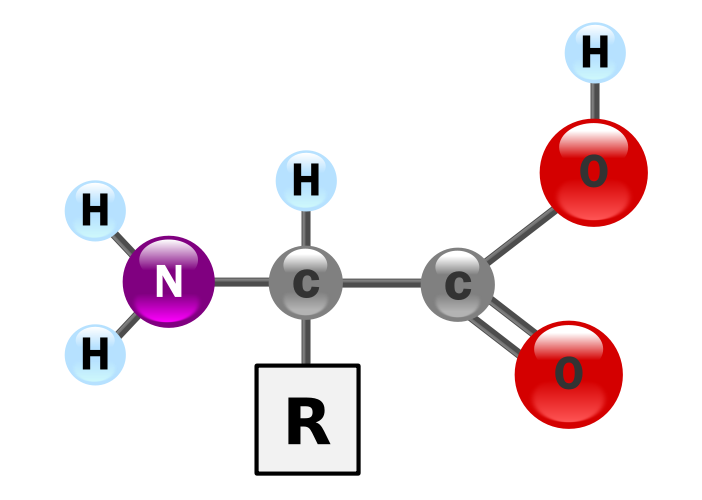
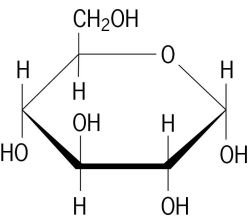
You can take any molecule, glucose, amino acids or anything else.
I just want to get the general idea.

I'm not sure whether this is a question that can be answered easily since there is probably a whole lot of work behind that.

1.0k Upvotes

208 comments sorted by

View all comments

Show parent comment

74

u/punnymoniker May 20 '13

Im sorry, but how does am NMR machine determine the structure of a molecule? Im studying petroleum engineering and we use it to find the volume and dispersement of water throughout a rock. I know its the same concept of an MRI but how does that apply to structure of a molecule?

75

u/boonamobile Materials Science | Physical and Magnetic Properties May 20 '13 edited May 20 '13

NMR spectroscopy can be used to determine crystallographic orientation. This is because, in a very basic sense, the nuclear spin energy levels of an atom can be split depending on how it is bonded to its neighbors, and how many nearest neighbors it has. This splitting can show up in NMR, thus providing information about the local environment of a certain atom.

See, for example, this paper (there are plenty of others if you do a quick google scholar search)

Edit: ESR/NMR mix up...rookie mistake. thanks flangeball!

16

u/flangeball May 20 '13 edited May 20 '13

the electron energy levels of an atom can be split depending on how it is bonded to its neighbors

In the context of NMR, you mean the energy levels of the atom's nuclear spin, right? Electron energy level splitting is more relevant to EPR/ESR (which is what that paper is discussing) or other types of spectroscopy.

→ More replies (1)

12

u/stop-chemistry-time May 20 '13

NMR spectroscopy can be used to determine crystallographic orientation.

You can determine some stuff about crystal structure using solid state NMR (and computers). I don't know what you mean by "crystallographic orientation" though.

But most NMR is solution NMR, where you're not looking at crystals but isolated molecules. Solution NMR typically gives a lot more information than solid-state NMR, due largely to line broadening thanks to anisotropy etc in the latter.

Typically, simple NMR gives two key pieces of information (though the technique is fantastically extensible to all sorts of problems):

  1. Chemical shift - ie tells you about the "chemical environment" of each nucleus. This gives clues about how the atom is bonded.
  2. Spin-spin coupling arises by a mechanism something like what you describe and describes bond-bond connections between atoms, through 2-4 bonds (usually).

More explanation for casual readers:

A molecule is made up of atoms. Each atom comprises electrons (negatively charged) around a nucleus (positively charged). The nucleus and electrons have a property called "spin" - this property is difficult to define classically - it's a quantum mechanical property. Now, NMR (nuclear magnetic resonance) considers nuclei, so we're going to think about them.

Nuclei, then, are charged and have "spin" - in a classical approximation (which is a simplification to avoid quantum mechanics), we can imagine that they therefore have a magnetic field. In other words, a spinning charge makes a magnetic field - a concept familiar from elementary physics.

So we can think that each of our nuclei is a mini bar magnet with north and south poles. Typically these bar magnets are randomly aligned. We can put a sample of our molecules into a strong magnetic field and most will align with the field - this is the lower energy state.

If we then apply a pulse of radio-frequency radiation to the sample, we can push the directions of the bar magnets to a different angle. Thinking about an individual nucleus, the bar magnet (aka the spin) is now lying at a different angle (eg 180°) to the preferred direction of the strong magnetic field - it wants to get back there. It's spinning, and so it precesses back to the original position (for an intuitive idea of precession, think of a spinning top). This results in the release of energy in the form of radiofrequency, which is measured and processed to give an NMR spectrum. The amount of energy released is equal to the amount of energy needed to flip the spin to be opposed to the applied magnetic field.

The spectrum shows that different spins precess at slightly different frequencies (and release different amounts of energy) – this is a consequence of their "chemical environment" - what they're bonded to and what they're next to. More precisely, the differing frequencies are a function of electron density. They are converted to "chemical shift" during spectral processing.

Coupling results from energy level splitting of the two possible spin states - the stabilised form where the nuclear bar magnet is aligned with the magnetic field, and the opposite, destabilised form where the bar magnet is opposed to the magnetic field. When we have two spins in proximity to eachother, their splittings can interact with eachother - ie the splitting of atom A depends on the state (aligned or not) of atom B. This causes a change in energy levels available and so changes in spectral peak patterns. So we can determine arrangement of spins, sometimes, with NMR.

A lot of this is best considered pictorially, and I recommend J Chui's poster: http://www.jkwchui.com/2011/12/interpreting-proton-nmr-overview/

4

u/MJ81 Biophysical Chemistry | Magnetic Resonance Engineering May 20 '13

Solution NMR typically gives a lot more information than solid-state NMR...

Solution NMR - one averages out the chemical shift anisotropy, homonuclear and heteronuclear dipolar couplings, and the quadrupolar interaction is generally strongly attenuated.

Solid-state NMR - one can attenuate and reintroduce the above interactions with a fair amount of adeptness at this point in time. As I noted on another thread just today, there are - for example - techniques capable of eliminating the homonuclear dipolar coupling between protons and refocusing the chemical shift evolution in order to obtain heteronuclear dipolar couplings between protons and carbon-13 nuclei and then associate those dipolar couplings with a 13C chemical shift value. Structural and dynamic information can then be extracted from such datasets. Mind you, this was on a non-trivial biological sample of some interest.

There is NMR crystallography, although certainly the technique is complemented by other methods, including computational ones.

4

u/stop-chemistry-time May 20 '13 edited May 21 '13

In the context of solid-state, I would agree that chemical shift anisotropy and dipolar and quadrupolar couplings are important - since this is where the structural information comes from.

However, to determine the structure of (small) molecules, these factors are unimportant because you aren't typically interested, at a first pass, in crystallographic properties - this comes after you've pinned down the individual molecule structure (and would probably come from XRD). For this you need high resolution, which can be difficult to achieve even with magic-angle spinning (MAS) and decoupling pulse sequences. Line broadening is an issue. In this sense, more useful information can be extracted in a simple solution 1H/13C/2D spectrum, owing to the higher resolution. I'd argue that in the context of the question: "how do we decipher the structure of molecules", solution state NMR is more relevant since it provides the initial spectroscopic data for most synthetic chemistry.

Also, in terms of "more information", it's only useful to compare like with like. For example, solution state can delivery diffusion coefficients (DOSY) and permits observation and measurement of exchange phenomena (1H or EXSY). Also molecules can be explored in a biologically relevant context (H2O or D2O).

On the other hand, solid state NMR is essential for characterisation of solid state materials (you can't make a solution of them) and has increasing applications for proteins and there are very exciting (to me) experiments which can be performed with it. But if I had a sample of, say, aspirin, solution state NMR would give me more info about the structure of the molecules, while solid-state might be used to characterise crystals - though XRD would probably be preferred.

The experiment you describe sounds like what would be a heteronuclear 1H-13C NOESY in solution phase.

→ More replies (1)

0

u/[deleted] May 20 '13

[deleted] — view deleted comment

0

u/[deleted] May 20 '13

[deleted] — view deleted comment

5

u/[deleted] May 20 '13 edited May 20 '13

I just finished a graduate class on organic spectroscopy and I can pretend like I understand the theory, not much more.

2

u/specofdust May 20 '13

Did a masters level module on advanced NMR techniques which was 50% theory of how it works. Looked at lots of pictographic representations of spin and relaxtion time. I'm about the same. Having interrogated some organic lecturers on the subject, it seems not that many of them have a strong grasp on the subject either. The only person I know who does is the Prof, and he wrote the bible on it.

→ More replies (12)
→ More replies (2)

2

u/dabedur May 20 '13

Well its just like anything else... you don't have to fully understand it to be functional and productive with it. Do I understand how the keys I press correspond to different characters on screen? Conceptually, yes –realistically, no.

10

u/flangeball May 20 '13 edited May 20 '13

NMR is based on the Zeeman effect. This in essence says that a magnetic moment mu in a magnetic field B has the potential energy

E = -mu . B

If the spin is aligned with the magnetic field (mu = +1), it's in a lower energy state than if it were aligned against the field (mu = -1). Many isotopes of atomic nuclei have magnetic moments, such as 1H and 13C. This means if you were to stick a sample of something into a magnetic field and pump radio waves at it, you'd see that the sample starts absorbing (and emitting back) them particularly well at a certain frequency corresponding directly to the difference in energy between the up state and the down state.

However, this alone isn't a tremendous amount of use as all it really tells us is what types of nuclei we have in our sample (hydrogen, carbon, oxygen, etc.). Where it gets interesting is that there's a measurable magnetic shielding effect. What this means is that the electrons in the material react against (induced currents which create their own magnetic field) the externally applied magnetic field and shield some of its effect (in the case of diamagnetic materials), so the nucleus doesn't actually `feel' the full effect of the external field. This shielding is different for atoms in different chemical environments e.g. a hydrogen atom bonded to an oxygen will have a different shielding than a hydrogen bonded to a carbon. This means our energy level splitting is slightly different depending on where in the molecule our nucleus is:

E = -mu . (B_external + B_induced)

Where B_external is our external magnetic field and B_induced is the magnetic field induced by our electrons. This means that when we shine radio waves at the sample you'll see it absorbing particularly well at several different frequencies, corresponding to different types of chemical environment. From there, you can try to work out what molecules might match your spectrum by looking up the different resonances in chemical tables compiled from experiment, or use quantum chemical calculations.

Beyond this there is also direct spin-spin coupling and J-coupling, which is that the tiny magnetic fields from nearby nuclei actually split your resonances further and tell you about the nucleus' neighbours, and electric field gradients which couple to quadrupole nuclei and tell you about symmetry, but mostly just mess up your spectrum.

I've approximated things a bit in the "shining radio waves and looking for absorption" bit, but it comes down to looking for radio-frequency resonances. Also relaxation times and such. I'm not really an experimentalist so I've left all those gorey details out.

4

u/Jerlko May 20 '13

You find the specific signals given by the various atoms of the molecule, and work it out from there.

34

u/[deleted] May 20 '13 edited May 20 '13

In NMR you excite a specific type of atom at a time and your record how this excitation decays in time. The trick is that each decay changes with the chemical environment.

Imagine a molecule such as CH3-CH2-CH3, and you do a simple Hydrogen NMR. What you will get are two signals, one very intense due to the 6 H atoms attached at the end of the chain, and one less intense due to the 2 H attached to the C in the middle. Now imagine you have FCH2-CH2-CH3: the 2 H at the beginning and the 3 H at the end are not equivalent anymore, thus you will get a third signal appearing in the NMR spectrum.

If you have more complicated molecules with lots of different H nuclei attached to many different atoms in various configuration, you can figure out how they are distributed and what the molecule looks like.

Generally one technique is not enough though, and NMR is coupled with others such as InfraRed, UV-Visible or crystallography.

EDIT: Edited the first sentence following the friendly suggestion below.

86

u/skullpizza May 20 '13 edited May 20 '13

While I realize your probably trying to make things more accessible to people, when you wrote "a specific type of atom (called a nucleus)" I visibly cringed.

14

u/[deleted] May 20 '13

Not the best expression. What I meant was that with each NMR experiment you only excite one atom type at the time, and that is the nucleus that determines the experiment.

8

u/[deleted] May 20 '13

Please edit the comment to make it factually correct. Right now, it sounds like bullshit because that first sentence is.

Since you are talking about hydrocarbons anyway, just use the example with: http://en.wikipedia.org/wiki/Proton_NMR

→ More replies (2)

7

u/improvingoak May 20 '13

By nucleus, do you mean the nucleus of any atom or an atom that has been stripped down to just it's nucleus (H+ ion)?

9

u/[deleted] May 20 '13

In NMR-speak, a nucleus is basically an isotope. Not all isotopes are NMR-active, and sometimes we are lucky and we can work with the most abundant isotope (see 1H, for example), other times we have to deal with relatively rare isotopes (take 13C, which is only 1.1% of the total abundance of Carbon in nature).

Of course you can prepare enriched samples, or you can use the different sensitivities of different isotopes to understand how reactions progress. For example, 6Li and 7Li are both NMR active. You can figure out which-lithium-comes-from-and-goes-where if you appropriately mark the compounds used in a Li-ion battery.

5

u/btmc May 20 '13

Hydrogen atom, and I've heard it referred to as a proton, but never a "nucleus."

4

u/[deleted] May 20 '13

Not just hydrogen atoms, you can get an nmr for many different elements, so long as it's spin doesn't equal zero.

→ More replies (2)

6

u/rupert1920 Nuclear Magnetic Resonance May 20 '13

I've written a little on the basics of NMR in this thread.

In short, we can extract information on the chemical environment around the nuclei via different NMR experiments, many of which are mentioned by others here. For example, Nuclear Overhauser effect (NOE) tells us spatial information, while normal chemical shift and scalar coupling constant can give us chemical bonding information - and this is one of the more straightforward and powerful ways of getting the structure of a compound. Other parameters, such as relaxation time and lineshapes, can reveal the mobility of molecules. Further experiments that combine information from multiple nuclei (such as HSQC and HMBC) are even more powerful in terms of clear-cut bonding information.

→ More replies (9)

2

u/radiorock9 May 20 '13

different atoms respond with different characteristics, and the atoms have an effect on each other in the molecule. One part of an NMR spectrograph can show a peak denoting a functional group, and that same peak has characteristics that will show what is next to it spatially, since the magnetic resonance of one atom may have an effect on the atom next to it.

2

u/[deleted] May 20 '13

The structure of a molecule determines how much chemical shift a proton (in the case of H1 NMR which is common) experiences. The electronegativity of surrounding groups as well as the proximity of other Hydrogen atoms causes the NMR shift to change and in the case of other Hydrogen atoms, causes multiple chemical shifts to be observed (because they're all affecting that Hyrogen atom differently since they're at different distances from it). H1 NMR basically tells you what the environment is like around a given Hydrogen atom. Now given that you know the chemical formula of a certain molecule, you can generate a number of different possible chemical structures and weed them out by taking a look at the NMR shifts you observe.

1

u/[deleted] May 20 '13

With a 1H NMR, you will see splitting patterns, peak shifts, integration of hydrogen atoms on a molecule. All these relents if you know how to read a spectrum will help you figure out the structure.

13C NMR will tell you how many carbons there are, if it is bound with any protons and the functional group based on shift.

I never did NMR with any other types of atoms but you can do it.

→ More replies (7)