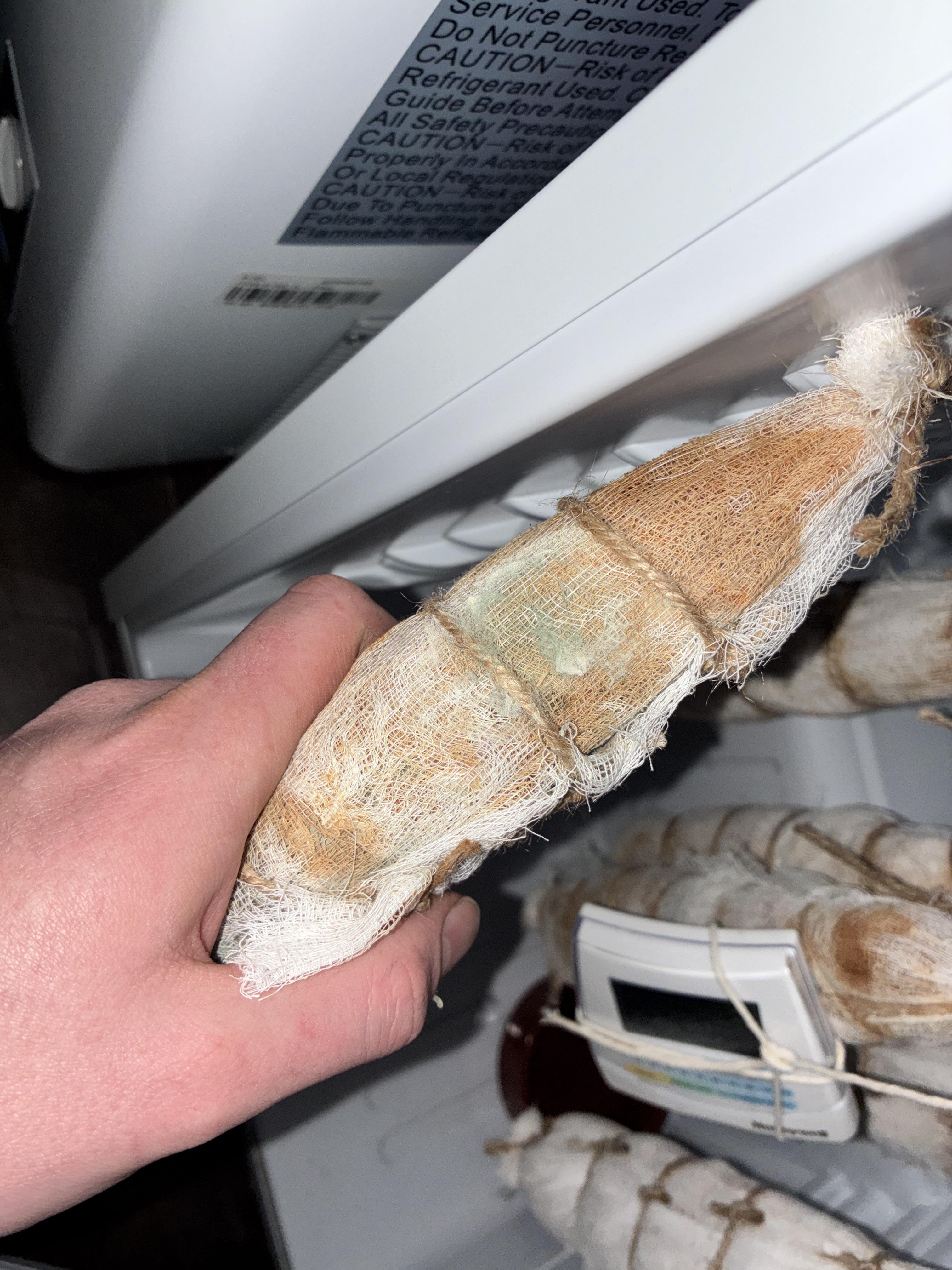
I have been looking through a list of all of the posts in /r/Charcuterie looking for some threads with good information to cobble together a beginners reading list for the sub. I have noticed (and you probably have noticed too!) we have a lot of the same questions pop up from people wanting to get into the hobby of producing homemade cured and air dried meats. We also have a lot of firsts! We have had just over 6k posts in the 7 years this sub has been around, 11% of them contain the word 'first'.
And duck prosciutto is really, really, popular.
This isn't a big sub and self posts don't get a lot of views or generate a lot of discussion. So the purpose of this thread is collate some of the community expertise into one place for the people who come here with questions about their first projects.
If anyone wants to expand on any of these points feel free to do so and I will update them. If there is a popular beginner question or resource I have missed or something is wrong let me know in the comments. Hopefully together we can build this into a fairly complete beginners resource.
This is not intended to be a detailed step by step guide or a substitute for doing your own research.
Curing/drying chamber - what is it and how do I make one?
A curing/drying chamber is an area that creates the ideal temperature and humidity conditions for drying whole muscles or salami. The exact temperature and humidity will vary by preference to but ranges from refrigerator temperatures (less than 4C/39F) to 15C/59F (Staphylococcus aureus can multiply and produce toxins at temperatures above 15.6C (60.08F) so it is important to keep your curing chamber below this temperature). Generally they are kept at at 10-15C (50-59F) and 60-80% humidity. As most of us don't live in an area that has these ambient conditions, we need to create an artificial environment that does.
Most people do this by modifying a refrigerator or freezer to run warmer than usual by interrupting the cooling cycle with a temperature controller, and using humidifiers/dehumidifiers to keep the humidity at the required level. A higher humidity is preferred at the start of drying, especially when making sausages and cased whole muscle as it helps prevent case hardening, allows the casing to adhere to the meat (if the humidity is too low the casing will dry out, creating air pockets between the casing and the meat), and encourages mold growth.
Things to consider when choosing a fridge/freezer to convert into a meat curing chamber:
- It needs to be frost free (dehumidifies as it cools). Otherwise water collecting on the sides of the fridge will drop onto the meat.
- Refrigerators with glass doors are a nice aesthetic and a popular choice, just be aware prolonged exposure to the light will cause fat to go rancid, so you might need to cover the door or keep it in a dark room.
- It needs to be big enough to hold a humidifier and/or dehumidifier as well as the product you will be making. An overcrowded chamber can cause airflow problems so it's a good idea to go bigger if possible.
- Wine fridges are popular as they are made to sit in the temperature range for curing (and they look pretty stylish with blue lights and a glass window). However depending on your ambient conditions the cooling cycle runs very frequently to keep the temperature constant. A small beverage fridge and temperature controller might be a better choice.
The exact setup is going to vary depending on the ambient conditions in the room you will be keeping the chamber and your climate - for example extremes of heat may cause the cooling cycle in the refrigerator to run too often, causing case hardening. You might need to run the AC or consider packing everything down over the summer months. Ideally you don't want the cooling cycle to run much more than 5 minutes in every half an hour. Some airflow is required for the moisture to evaporate from the surface of the meat, so if the refrigerator powers on too infrequently, you might need to use a small fan on a timer to make sure there is some air movement inside the chamber.
So as you can see the temperature and humidity readings are only one part of the conditions inside the chamber, something like a sensorpush can give you a better picture of what is going on.
Although the more professional looking chambers have holes drilled into the side of the appliance for the humidity/temp probes and appliance power cords, it isn't essential. You can pass the probes through the door seal.
Links to previous examples of curing chambers and discussions can be found at the bottom of this post.
General steps for making cured and dried whole muscles
- Weigh the piece of meat you intend to cure.
- Cure the meat - you can do this in two ways:
Salt box (excess salt cure): The meat is dredged in a cure mixture of salt and spices (enough to coat the surface), and left for a period of time about 1 day per pound (or 2 days per kg), flipping the meat and redistributing the cure at the halfway point. This timing will change depending on the shape of the meat, and whether there is skin on or off. This is a very traditional method, and is as much an art as a science - too much time on the salt will cause the dried product to be over salty, not enough time and the meat will not cure properly, and is at risk of spoilage.
Equilibrium Cure: This is where the desired about of salt content of the finished produced is measured out (approx 2.75 %) as well as nitrates (.25% Prague powder #2 - note that as the vast majority of PP#2 is salt, so this will result in a product with very close to 3% salt content), and rubbed onto the meat, then sealed (generally using a vacuum sealer) and left for a much longer time to ensure the cure has had sufficient time to penetrate. Nitrates should always be used when equilibrium curing. It will take longer for the meat to cure than with an excess salt cure, a general rule is one week per inch of meat, with a minimum of two weeks. Flip the bag occasionally to ensure the whole surface of the meat comes in contact with the cure. Some more discussion on equilibrium curing here: https://www.reddit.com/r/Charcuterie/comments/8i2vzi/how_long_to_cure_for_equilibrium/ - Dredge with a second flavouring spice layer (optional)
- Apply a casing (optional)
- Truss the meat and hang it to dry.
- Rest under vacuum seal in the refrigerator to equalise moisture (optional)
How do I know when it is ready?
Periodically weigh the meat, and pull it from the chamber when it has reached the desired dryness (water weight loss). This will differ depending on the product. Fat contains less water than muscle and therefore doesn't need to lose as much weight, so a fatty duck breast or pancetta will have a different texture at 35% weight loss than lean muscle like a loin or bresaola. A figure of 35% is given as a rule of thumb for many recipes, however most people find this too 'raw' in texture and will take it further - to 40-45%. With practice you will get a feel what you prefer.
What is case hardening?
Case hardening is caused by low humidity, or too much airflow within the drying environment. The water in the meat needs to travel outwards from the middle to the surface, where it evaporates. If the humidity is too low or there is too much airflow the surface will dry out too quickly (harden) and the internal moisture is no longer able to exit. In extreme cases this can cause rotting within the meat. You can tell by texture when squeezing the muscle - there should be a bit of 'give' - if it feels completely hard (but hasn't lost much weight), you may have a problem with case hardening.
Sometimes uneven drying can be remedied by vac sealing the meat and refrigerating it for some time, but in extreme cases or if the meat has spoiled inside, it will not be salvageable. It is best to prevent it getting out of control by monitoring your curing chamber conditions and regularly checking on the state of the products inside.
Previous /r/Charcuterie post showing case hardening: https://www.reddit.com/r/Charcuterie/comments/5jxypy/first_cured_meat_lost_more_then_35_but_definitely/
What are nitrites, and do I really need to use them?
Most experienced people here would say yes, especially as a beginner and when making salami, smoked products, or rolled pancetta. Nitrites inhibit the growth of clostridium botulinum, the bacteria that creates the botulism toxin. C. botulinum requires an anaerobic (without oxygen) environment to grow and produce the toxin, and likes moist and warm conditions - so basically the inside of a sausage or salami being hung at temperatures above refrigeration. Botulism should be taken very seriously.
As the botulism bacteria are only found on the outside of the meat and do not become a problem until they are introduced into the inside through cutting or grinding, nitrites/nitrates are not essential for whole muscle cures, however many people choose to use them anyway as they provide other benefits such as improving colour, and slowing rancidity and spoilage.
What is the difference between Prague Powder #1 and Prague Powder #2
Prague Powder #1 contains 6.5% sodium nitrite (93.5% salt), and is used when the curing time is short, the product is to be smoked, or cooked or a cured flavour and colour is desired - for example bacon or ham. As the nitrites get quickly used up, if a product is to be air dried for longer, then Prague Powder #2 needs to be used, PP#2 contains 6.25% sodium nitrite and 4% sodium nitrate which eventually converts to nitrite. Think of PP#2 as a "slow release" curing salt. PP#2 should be used for all salami and for whole muscles that will be air dried.
It is important to use the correct curing salt for the application - sodium nitrate cannot be safely consumed until the nitrates have converted to nitrites, so PP#2 can only be used in products that will be air dried for a long time (weeks + months). Do not use PP#2 in fresh or cooked products.
As a general rule, both Prague Powders are added at 0.25% of the starting weight of the meat. There are also European style curing salts such as "Peklosol" that have a much lower concentration of nitrite (0.6%), and they are used as a replacement for all of the salt in the recipe (around 3%).
Curing salts are often dyed pink to distinguish them from regular salt, and therefore can sometimes referred to as "pink salt". They are not interchangeable with Himalayan "pink salt" which is rock salt with a natural pink colour.
Mold.
The oft-repeated mantra about mold here is white powdery = good, white and fuzzy or green = wipe it off, black = throw it out without question. This is overly cautious, although white powdery mold is desired, some green molds are okay (the problem is figuring out yours is the good or bad kind...), and a small amount of black mold isn't necessarily enough to justify abandoning a project. One way around the mold issue is to use a commercial freeze dried mold culture (such as bactoferm-600). This way you can cultivate good mold growth early on as it will prevent less desirable molds taking over. Undesirable mold can grow out of control very quickly if the conditions are conducive (high humidity, low airflow), so it is best to keep an eye on things, and use a 50/50 solution of water and vinegar to wipe off any undesirable mold that starts to form. Even black mold is salvageable if it is caught early enough.
If freeze dried Penicillum Nagliovese (Bactoferm-600) is not available where you live, Penicillum Candidum (the mold found on the rind of white bloomed cheese) can be substituted. You can also try hanging some commercial salami with white mold to seed the chamber. I find it isn't necessary to reapply the Bactoferm-600 to everything - once a good level of growth is established it will spread around quite well by itself.
Meat that has been smoked before hanging will resist growing mold as smoking acidifies the surface slightly.
Here are some examples showing you that the mold issue isn't as clear cut as just colour: http://wedlinydomowe.pl/en/viewtopic.php?t=7840&postdays=0&postorder=asc&start=0
We've seen some gnarly mold here over the years, some good discussions to read: https://www.reddit.com/r/Charcuterie/comments/9h103q/fil_insists_this_is_still_good_everything_ive/ https://www.reddit.com/r/Charcuterie/comments/500pn2/prosciutto_after_3_months_need_help/
Lastly, do your research, and follow a recipe
When you are starting out it is important to follow a recipe, and make sure you understand the reasoning behind the process, and the purpose of the ingredients. Do more research before you create your own recipe or modify anything. This isn't like other kinds of fermentation where there isn't too much that can go wrong - incorrectly cured meat has the potential to make people very sick. Even more so for salami (which is why we suggest whole muscle cures for beginners). Don't be afraid to start small, there is nothing worse than making a huge batch of a product only to have something go wrong in the process and have to throw it out. Be patient, this is slow food after all.
Some popular projects for beginners:
Want to try a bigger project but not ready to commit to building a chamber? Have a look at UMAI Bags
Online resources, how-tos, blogs and recipe collections:
Previous curing chamber discussions on this sub
Also check out /r/CuringChamber for more examples.