r/coolgithubprojects • • 23h ago

Free Next.js 16 starter for local business websites: typed config, LocalBusiness schema, lead form, CSP, llms.txt

Thumbnail github.com
1 Upvotes

I build sites for local service businesses and kept rebuilding the same foundation, so I cleaned up the core and open sourced it under MIT. One typed config file drives the pages, schema, sitemap, and theme. Happy to answer anything about how it's built.


r/coolgithubprojects • • 23h ago

Dex Debugger- Universal Root Cause and Explainer

Post image
1 Upvotes

Hey everyone! I recently built and deployed Dex (Dex Debugger), a browser-based AI debugging assistant designed to help developers quickly figure out why their code is breaking and how to fix it without getting stuck in endless trial and error. Instead of just dumping a wall of generic text, it lets you paste broken code into a clean interface, explains the root cause in plain language, and suggests working fixes in real time.

Under the hood, I kept the stack focused and lightweight using a Python and Flask backend (app.py, run.py, and chatbot.py) paired with conversational AI logic. It’s deployed live on Render at dex-debugger.onrender.com, and the full source code is available on GitHub atgithub.com/Advik212659/Dex-Debuggerif anyone wants to poke around the implementation or offer suggestions.

I'd love to hear any feedback on the UI, debugging accuracy, or ideas for features that would make it more useful for your daily coding workflow!


r/coolgithubprojects • • 1d ago

I updated my open-source Firefox extension for exporting ChatGPT conversations — now with Gemini support, bulk ZIP exports and faster conversation reading

Post image
1 Upvotes

A few months ago, I shared my Firefox extension, Dialogue Export, here. It started as a small personal project because I wanted to save long ChatGPT conversations without manually copying everything.

Since then, the project has evolved quite a bit.

What's new:

  • Gemini support.
  • Bulk export of ChatGPT conversations into ZIP archives.
  • Faster direct reading of saved ChatGPT conversations without endless scrolling.
  • Improved handling of images, citations, tables and code blocks.
  • Progress tracking and export cancellation.
  • Automatic splitting of large exports.
  • A dedicated project website and a 60-second feature demonstration.

The extension supports Markdown, PDF, HTML, TXT and JSON.

Still free, open-source and local-first. No accounts, ads, analytics or external data collection.

GitHub: https://github.com/vaulthunt3r/dialogue-export

Website: https://vaulthunt3r.github.io/dialogue-export/

Thanks to everyone who provided feedback on the original post. I'd love to hear what you think of the current version and what features you'd like to see next!


r/coolgithubprojects • • 1d ago

ReDash360 – an Xbox 360-style dashboard that turns a Linux PC into a couch console

Thumbnail gallery
35 Upvotes

GitHub: https://github.com/kevin11dev/ReDash360

ReDash360 is a dashboard you sign in to instead of a normal desktop, made for a controller and a TV.

- Qt 6 / QML, running as its own session on KDE Plasma or Hyprland

- A 360-style sign-in screen (an SDDM theme) with profiles and animated avatars

- Steam, Heroic and Faugus games in one library, plus the emulators you already have

- A Guide button that works over any game or app

- Your own backgrounds, avatars and UI sounds

Walkthrough: https://www.youtube.com/watch?v=u-hlxG0jiac

It's still early and only tested on my own setup (CachyOS), so expect bugs. It's source-available under PolyForm Strict: free for non-commercial use, but not open source.


r/coolgithubprojects • • 1d ago

I built KineticType CV: a browser-based typing coach that uses computer vision to catch bad finger habits in real time

Post image
39 Upvotes

Most typing tests (Monkeytype, Keybr, etc.) only measure WPM and accuracy. They have no idea which finger actually hit the key—so you can easily build bad muscle memory (like reaching for V with your right index finger) and plateau without realizing why.

I built KineticType CV to fix that. It runs real-time hand tracking directly in the browser and maps your fingers onto a calibrated keyboard plane to grade your actual typing form alongside your speed.

What it does:

  • Live Biomechanical Keymap: Tracks finger movement at 50+ FPS with visual trails and flags form violations in real time (e.g., "Used R-Index instead of L-Index").
  • Form Score: Grades your technique alongside live WPM and accuracy.
  • Practice Modes: Standard timed/word tests, AI Weakness Drills, and dedicated code modes for TypeScript/Rust and Python.
  • No Webcam? No Problem: Includes a built-in CV Demo mode so you can test the keymap and telemetry right away.

Tech stack: TypeScript, Vite, client-side computer vision.

Repo:https://github.com/tahaenasraoui-debug/kinetictype-cv

I'd love feedback on the keyboard calibration flow and any edge cases with different camera angles or layouts.


r/coolgithubprojects • • 1d ago

I built an open-source AI article writer with 11 specialized agents and it runs locally (FOSS)

Thumbnail github.com
1 Upvotes

I’ve been working on GeneRaptor — a local-first AI article generation studio.

Instead of relying on one AI prompt, it uses 11 specialized agents to research a topic, plan the structure, write the article, fact-check it, review SEO, and even generate a cover image.

A few things that make it different:

  • Runs locally, no cloud account or telemetry.
  • Supports OpenRouter, Ollama, RouterAI, and custom OpenAI-compatible endpoints.
  • One command to get started: npx generaptor
  • Your data and provider settings stay on your machine.

The project is open source, and I’d genuinely love to hear your feedback!

GitHub: https://github.com/Keutonim/GeneRaptor


r/coolgithubprojects • • 1d ago

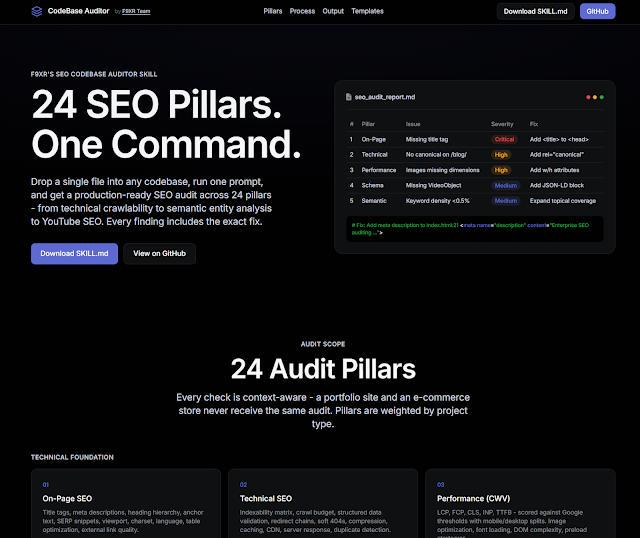
I built a free, open-source SKILL.md file that turns Cursor/Claude/Copilot into a 24-pillar pre-deployment SEO auditor

Post image
1 Upvotes

r/coolgithubprojects • • 1d ago

Zaku 26.1 - Local-first API client written in Rust with GPUI

Thumbnail gallery
3 Upvotes

Hey, I wanted to share that Zaku 26.1 is out with support for environments and variables in requests.

About the app, it stores collections as folders and requests as TOML files. Everything is stored locally on user's filesystem, it doesn't have any login functionality (and never will).

It is available on Linux, macOS and Windows.

I've been working on this for the last 10 months full-time.

Here's what's new:

  1. Define variables at the project, folder and environment level.
  2. Switch between environments with the environment selector.
  3. Use the new variables panel to manage environments and variables.
  4. Autocomplete variables as you type, with highlighting and hover previews.
  5. Switch, create and delete Git branches with the branch picker.
  6. Scale the UI with zoom controls.
  7. Prevent accidental overwrites when files change on disk.

I have lots of things planned, if you try it out please let me know if there's something missing, not working or things you'd like to see added.

Repository:

https://github.com/buildzaku/zaku

Download:

https://zaku.dev/download


r/coolgithubprojects • • 1d ago

Cloud RPC: Self-hosted, tokenless 24/7 Discord Rich Presence & device spoofer dashboard powered by OAuth2 (Node.js)

Post image
0 Upvotes

I open-sourced Cloud RPC, a self-hosted Node.js web dashboard for running 24/7 Discord Rich Presence without needing raw user account tokens.

How it works under the hood: Instead of scraping or storing user tokens like traditional self-bots, users log in through Discord's official OAuth2 flow requesting only identify and sdk.social_layer_presence. The backend manages the token lifecycle (proactive refresh + 4004/401 recovery), opens a Gateway WebSocket session per user, handles op: 2 device identification (Desktop, Mobile, Web, VR, PS5, Xbox), proxies external images through Discord's external-assets endpoint with an LRU cache, and broadcasts updates via op: 3.

Main features:

  • Multi-user web dashboard (EN/AR) with live preview and hardened auth/CSP
  • 6-platform Gateway device spoofing with fast session re-identification
  • Live Spotify presence spoofer with auto-looping timestamps
  • 10 saved preset profiles, Auto-Rotator, and dual-mode Smart Sleep scheduler
  • Local searchable cache of 24,000+ Discord detectable games

Repo (MIT License): https://github.com/Mohammask/cloud-rpc

Full setup instructions (including enabling the Social SDK scope in the Discord Developer Portal) are in the README. Feedback on the architecture or security hardening is always welcome.


r/coolgithubprojects • • 1d ago

Neural Canvas, CNN Visualization

Post image
1 Upvotes

Neural Canvas, CNN Visualization

Neural Canvas can now recognize basic shapes like apples, moons, cars, and more using Google's Quick, Draw! dataset.

20 classes with 1,000 samples per class

2 convolutional layers with 16 and 32 filters

2 fully connected layers with 60 and 40 neurons

91% test accuracy

Trained using JAX on Google Colab

Neural Canvas can also visualize CNN feature maps in real time while drawing, showing how convolutional layers extract features from input images.

GitHub: https://github.com/MuhammadEssa2002/neural_canvas

Live demo: https://muhammadessa2002.github.io/neural_canvas/


r/coolgithubprojects • • 1d ago

hydo: simulation testing software - finds bugs in your programs autonomously

Thumbnail github.com
1 Upvotes

What it does:

  • Runs your services, their databases and their client in one VM, unmodified: Linux programs or Docker/OCI images
  • Injects faults: process kills and pauses, network delay, loss and partitions, power cuts, disks that drop acknowledged writes, clock jumps, thread timing changes
  • Execution is deterministic -> the same seed gives a bit-identical run, so every failure replays exactly
  • hydo explore generates fault schedules from seeds, runs each failure again to confirm it reproduces, and shrinks it to the fewest faults that still cause it

It autonomously found previously unknown and later confirmed bugs in the hardest projects like Clickhouse, Redpanda, Pulsar, Meilisearch, Dragonfly, NATS, etc.

Supported platforms:

  • Linux: the KVM engine or hydo's own kernel module on Intel VT-x
  • macOS on Apple Silicon

Repo: https://github.com/kakoc/hydo

Any feedback is very welcome, especially from people who test distributed systems or databases. If you need to any help to bootstrap it in your project - please DM me and I'll help. But in general you can just install LLM skill and it'll do all the heavylifting/guidance for you.


r/coolgithubprojects • • 1d ago

I switched from One UI + Good Lock to a Chinese OEM that kills background apps & breaks third-party launcher animations — so I built Lightspeed (Android control layer, Shizuku, v1.5.0)

Thumbnail github.com
4 Upvotes

GitHub: https://github.com/SBFlabs/Lightspeed

I moved from Samsung One UI + Good Lock to a Chinese OEM with almost no customization and aggressive battery management that kept killing my Accessibility services. Switching to a third-party launcher wasn't an option either because it breaks native Recents animations on modern Android.

So I built Lightspeed (Kotlin / Jetpack Compose, Android 8.0–16, no root) — a source-available control layer that runs over your stock launcher so native animations stay intact.

Core features:

  • Deflectors + Shizuku edge overrides: I wanted every side gesture I could think of without fighting the OS back swipe, so optional Shizuku overrides zero out Android's native edge back-gesture insets.
  • One Launch Pad, Three Workstations: Category Cruise (categorized app drawer), Cockpit (quick access to favorite apps and actions), and Central Command (all settings and extra tools).
  • Watchdogs (via Shizuku): Built to protect Lightspeed and other Accessibility services from aggressive OEM battery killers.
  • Hardware remapping & scrubbing: Back-tap triggers, volume-rocker remapping with 8 mappable gestures, and edge brightness scrubbing with Extra Dim.
  • Offline Voice Isolation & Screenshot Blur Engine: I liked Prime Video's dialogue boost, so I added offline 48 kHz voice isolation (integrating Microsoft's MIT-licensed speech-enhancement model via a local C++ JNI + ONNX bridge, credited in CREDITS.md), plus an on-device screenshot-based blur engine inspired by how Infinix handles blur on devices without native window blur, powering multiple themes including HUDs for scrub actions.
  • Zero network permissions: No INTERNET permission in AndroidManifest.xml (0 detections on VirusTotal across all signed APKs).

License & pricing: Source-available (public for code audit and personal builds; non-commercial license, not OSI open-source). All core features are free with zero ads/trackers; an optional $1.99 one-time offline unlock adds extra visual themes and cosmetics.

Releases & SHA-256: https://github.com/SBFlabs/Lightspeed/releases/tag/v1.5.0


r/coolgithubprojects • • 1d ago

I made a website that generates an RSS feed for new releases of an actor or a director. Now it also sends email alerts

Thumbnail gallery
1 Upvotes

I posted here a month ago for this website. Now i added an option for users to receive alerts in email.

You'll receive alerts from magnanium.noreply@gmail.com. It's gmail as you can see. I chose it because i didn't want to pay for an email and it still gets the job done. It may end up in your spam mail list so make sure to check the spam.

It's completely free and don't have ads. Visit https://magnanium.vercel.app

You can still use the RSS feed the same way.


r/coolgithubprojects • • 1d ago

Vetted teachers stream dozens of free yoga, qi gong and tai chi-with-horses classes live every day, but Insight Timer's website stopped showing the schedule, so I rebuilt it with GitHub Actions

Thumbnail matman-dev.github.io
0 Upvotes

r/coolgithubprojects • • 1d ago

I built RunMind — a Windows desktop AI assistant combining local/remote LLMs, system management, developer tools, and automation

Thumbnail gallery
1 Upvotes

Hey everyone! 👋

I'm Omid, and I've been building RunMind, an open-source Windows desktop AI assistant that brings together AI models, intelligent automation, developer tools, system monitoring, and extensible integrations in one application.

I wanted to build something broader than another AI chat window.

Something that could bring AI closer to the actual desktop environment: development projects, system information, tools, and everyday workflows.

After a lot of development, I'm happy to share that RunMind is publicly available, with version 3.5.0 as the current source release.

Here's a better overview of what it is.

🧠 AI assistant and model connectivity

RunMind supports both local and remote LLMs.

The idea is to let you work with different model setups rather than tying the entire application to one AI provider.

Its ecosystem includes integrations around:

  • Ollama
  • LM Studio
  • OpenAI-compatible APIs
  • Local and remote model backends

RunMind also supports agentic workflows, allowing the assistant to work with available tools and integrations instead of being limited to text-only conversations.

💻 Developer tools and code understanding

Development assistance is another important part of RunMind.

Its current code-analysis focus is JavaScript, TypeScript, and JSX/TSX.

The goal is to work with the structure of source code, not just search for matching text.

This includes AST-oriented parsing and structural analysis, with concepts such as declarations, references, scopes, and relationships between code elements.

I'm deliberately keeping the supported language scope focused rather than claiming that RunMind understands every programming language.

🖥️ System Manager and system monitoring

This is an important part of RunMind that I don't want to leave out.

RunMind isn't exclusively a developer assistant. It also brings system monitoring and system-related management into the same desktop environment.

The System Manager direction is about making system-level information and tools accessible alongside the AI assistant, rather than requiring users to treat system information as an entirely separate workflow.

I want the desktop assistant to be useful beyond writing code.

⚙️ Automation, tools, and extensibility

RunMind is designed to work with more than its built-in conversational interface.

It brings together intelligent automation and extensible integrations, including plugin support and MCP-related tooling.

That provides a foundation for connecting the assistant to external tools and extending its capabilities.

The idea is to make RunMind adaptable to different workflows instead of prescribing one fixed way to use it.

🚀 Four ways to access the same complete experience

I also wanted flexibility in how people launch and interact with RunMind.

There are four access options:

  1. Standalone

Open the full RunMind chat application directly.

2. RunMind Runner

Use a compact launcher as an additional entry point, with access to the complete chat application.

3. PowerToys Run Plugin

Interact with RunMind through the PowerToys Run workflow, while retaining access to the full application.

4. PowerToys Command Palette Extension

Access RunMind through the Command Palette, including its inline/docked interaction experience, alongside the full application.

These aren't different editions or feature tiers. They're different ways to access the same complete RunMind experience.

🔐 Local-first options and privacy-conscious design

I also care about giving users flexibility over their AI setup.

Being able to connect local models is important, particularly for people who prefer running models on their own hardware.

RunMind also supports remote model connections, so the application isn't restricted to local inference.

As always, the actual data path depends on the selected provider and configuration. I don't want to imply that every configuration is automatically offline or local-only.

100% open source.

What's next?

RunMind is officially launched, but it's also an actively developed project.

Version 3.5.0 is publicly available, and I'm continuing to improve the application.

I'm especially interested in feedback from people who work with local LLMs, Windows desktop applications, developer tooling, system utilities, and AI automation.

Explore RunMind

🌐 Website: https://omid.navy/runmind

💻 Public source: https://github.com/omidnavy/RunMind

I'd genuinely appreciate feedback, suggestions, and constructive criticism.

I'm building this project myself, and I want to keep making it more useful.

Thanks for reading! ❤️


r/coolgithubprojects • • 1d ago

DSMaster – An open-source, fast DualSense emulator built with Rust & GPUI

Thumbnail github.com
1 Upvotes

r/coolgithubprojects • • 1d ago

Fully Neurally Rendered object - ~2.7 ms average GPU frame time (256*256)

Post image
4 Upvotes

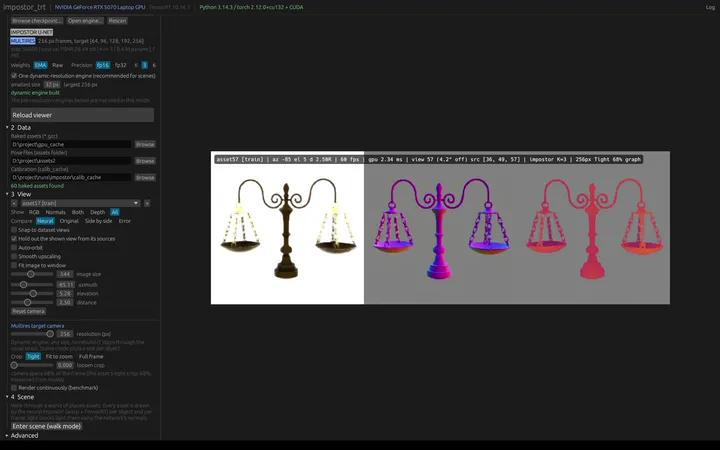
Fully neurally rendered asset (RGB, Normals, and Depth) rendered at an average of ~2.7 ms frame time on 8 GB RTX 5070 Laptop GPU by a custom model architecture in custom inference engine made with Rust, TensorRT, and CUDA kernels. Check out the README in this repo for details. Thanks.


r/coolgithubprojects • • 1d ago

workflow-walker: a durable DAG runner for Vercel Workflow, Inngest, Cloudflare Workflows and AWS Lambda durable functions

Thumbnail github.com
1 Upvotes

I built workflow-walker for pipevals, an open-source LLM evaluation platform, where it runs the evaluation pipelines. I've extracted it into its own MIT-licensed package so other projects can use it.

You give it a graph of steps, a persistence adapter and your step handlers. It runs the graph level by level, runs the steps within a level in parallel, follows conditional branches, and can suspend on a hook, for example to wait for a human review.

What it does

  • Resumes after a crash. Every step has a deterministic name (node:<id>:handler and so on), so the engine can replay a run and pick up at the first unfinished step.
  • Runs on several engines. Vercel Workflow ("use step"), Inngest (step.run), Cloudflare Workflows (step.do) and AWS Lambda durable functions (context.step) through a small adapter, or in-process with no engine.
  • Gates on branches. A node behind a branching node runs only on its branch, even if it also takes data from upstream.
  • Always finishes the run. A run ends in a terminal status even when something fails outside a step.

Repo: https://github.com/pipevals/workflow-walker npm: https://www.npmjs.com/package/@pipevals/workflow-walker

It's early, so the API can still change. I'd like to hear what's missing for your engine or use case.


r/coolgithubprojects • • 1d ago

Malhound: GPL-2.0 desktop malware reverse-engineering tool with a graph view and pseudo-C output

Thumbnail github.com
0 Upvotes

r/coolgithubprojects • • 1d ago

Maglev: a free, open-source Android app that downloads any link

Post image
138 Upvotes

Paste a link, a magnet or a page, and it downloads. That now includes videos: share a YouTube, Instagram or X link to Maglev, pick a quality, and it saves one file. Search for a film, download it and grab its subtitles, all without leaving the app.

- Videos from YouTube, Instagram, X and other sites, with up to 6 qualities or audio only. In the built-in browser, long-press a video and pick Download this video.

- Torrents, normal links and videos from web pages. The torrent engine is librqbit (Rust).

- Search 50+ public sources at once.

- A built-in browser with tabs and ad blocking that finds the videos and files on a page, including HLS and DASH streams. Pick the quality and audio track and it saves one file.

- Subtitles from 20+ sources, right from your download. No account needed.

- Watch while it downloads, and follow a show or RSS feed so new episodes download on their own.

- Share a link from any app, or select one and pick Download with Maglev.

- No ads, no account, no tracking. GPL-3.0, Android 7+, updates in the app or through Obtainium.

I was bored with the old UI of ADM, 1DM and Flud and with how they're no longer maintained, so here is my honest attempt to fill that gap as an alternative.

- GitHub: https://github.com/Kaos599/Maglev

- Download: https://github.com/Kaos599/Maglev/releases/latest


r/coolgithubprojects • • 1d ago

Meet SavComponents: 80+ vanilla JS web components you use as plain HTML tags (MIT)

Post image
7 Upvotes

Hi everyone! For the past few weeks I've been working on SavComponents, a free, open-source library of web components. I wanted UI pieces I could drop into any page, whether it's a static HTML file, a server-rendered site or an app, without installing a framework or setting up a build step.

Getting started is two lines:

<link rel="stylesheet" href="https://savcomponents.com/v/1.3.2/sav.css">
<script src="https://savcomponents.com/v/1.3.2/sav.js" defer></script>

<sav-button>Hello</sav-button>

What's in it

  • 80+ components: buttons, inputs, select with search, date and time pickers, colour picker, OTP, password strength, dialogs, popovers, action sheets, toasts, tabs, tables, charts, timeline, drag-and-drop sorting, and more
  • Five visual styles (Soft, Tilt, Sharp, Brutal and Glass), switched with a single class on <html>, plus light, dark and auto mode
  • About 2,000 icons, loaded only when you use them
  • English and Italian built in, and you can add any language with Sav.addStrings()

How it's built

It's all vanilla JavaScript on web standards: no dependencies, no framework. Each component is a custom element with its own Shadow DOM, with styles shared through adoptedStyleSheets. Form fields are form-associated custom elements (attachInternals()), so they submit inside a normal <form> and work with native validation (required, checkValidity()…), with no hidden inputs. Theming goes through CSS custom properties (--sav-color-primary, --sav-radius, --sav-font…), and there's a customiser on the site that exports them for you.

Since they're standard custom elements, they work in plain HTML and alongside most frameworks.

Accessibility

I tried to treat this as a requirement, not an afterthought. Keyboard navigation and screen reader support are built in, and every component page has a WCAG 2.2 AA section that documents keyboard behaviour and roles, and measures contrast live in the current style and theme.

Versioned URLs

Each release lives at its own frozen address (/v/1.3.2/), so your site won't change when a new version comes out. You move to a new version when you decide to.

Used in real projects

I use SavComponents myself in a few apps I'm building, so it gets tested on real interfaces and not just on demo pages:

Where it's at

It's still a young project, and there's plenty I want to improve. For example, the JS isn't minified yet (it's about 180 KB gzipped). I'd love honest feedback: what's missing, what feels off, or anything that breaks.

→ Docs and live demos: https://savcomponents.com
→ Source: https://github.com/Sav22999/savcomponents


r/coolgithubprojects • • 1d ago

Mega Mixer – a per-app audio router for Windows with a drag-and-drop patch bay, boost up to 200% and MIDI control

Post image
0 Upvotes

Mega Mixer is a small Windows app that lets you decide where every app's sound goes, and how loud, with a mixer and a patch bay.

GitHub: https://github.com/CafeConFenix/MegaMixer

---

What it does

Drag a cable from an app to an output. That's it. Each app (or game) can play on 1, 2 or 3 outputs at the same time: your game on the headphones, Spotify on the speakers and the TV, Discord only on the headset.

Faders that go past 100%

Every app gets its own fader, and you can push it up to 200%. Useful when a friend on Discord sounds like they're whispering from another room. There's a soft limiter so the boost doesn't distort.

The mic is just another channel

Patch your microphone to any output and hit Listen to monitor yourself. Turn it off and the cables stay where they were.

Any MIDI controller

nanoKONTROL, X-Touch Mini, MIDImix, whatever you have. Pick what to control, press *Learn*, move a fader. Done. It only grabs the MIDI port when you've actually assigned something, so your DAW can still use it.

Works with whatever audio hardware you have

Onboard audio, USB headsets, Bluetooth, HDMI, audio interfaces, virtual cables. Unplug your headphones and their apps fall back to the default output; plug them back in and everything returns where it was. It even runs with no sound card at all and tells you what to plug in.

If you have a GoXLR with GoXLR Utility, the physical faders and the on-screen ones move together.

---

Tech bits, for the curious

- Rust + Tauri 2, plain HTML/CSS/JS for the UI (no framework)

- For each app it picks the cheapest path: if an app only goes to one output at ≤100%, Windows does the routing natively and Mega Mixer uses no CPU for it. It only captures and copies audio (WASAPI process loopback) when you ask for boost or multiple outputs.

- Starts with Windows, lives in the tray

- English and Spanish, x64 and ARM64 installers, MIT licensed

Honest limitations

- Boost and multi-output work best with a free virtual cable (VB-Cable) to "park" the original sound. Without it, it still works but in a limited mode.

- Copies to extra outputs have ~20–30 ms of delay. Unnoticeable in most cases, but if you play the same source on two speakers in the same room you might hear a slight echo.

- Full features need Windows 10 2004 or newer.

---

It's free and open source. Feedback, bug reports and translations are very welcome, especially if you have unusual audio setups I haven't been able to test.


r/coolgithubprojects • • 1d ago

create-tigra — MIT npm generator for Next.js + Fastify; feedback and repo roasts welcome

Thumbnail github.com
0 Upvotes

Source: https://github.com/blessandsoul/create-tigra

I maintain create-tigra and have opened its published 5.0.2 source baseline for review. It generates a TypeScript project with a Next.js frontend foundation, a separate Fastify API, Prisma/MySQL, auth/session code, Redis-backed limits, tests, CI, and Docker configuration.

The idea is to start with the infrastructure connected and build your own application pages. Forms and API/auth wiring are included; the product screens are yours. That trades repeated setup work for a larger initial stack.

I would appreciate recommendations and honest feedback on the source: what is unnecessary, what is hard to follow, and what would stop you from using or contributing to it? Feel free to roast the repo, especially with a concrete file or alternative approach.

It is free and MIT-licensed. Known dependency advisories are listed in KNOWN_ISSUES.md; the source snapshot is not presented as ready to deploy unchanged.


r/coolgithubprojects • • 1d ago

I built goastro, a local visual editor for Astro Markdown and MDX

Thumbnail goastro.dev
0 Upvotes

I wanted a simpler way to make content edits on my Astro sites. Fix a typo, change a publish date, or swap an image, then see exactly what changed before saving. So I built goastro.

Run it from your Astro project and it opens an editor in your browser. Your content stays in the .md and .mdx files already in your repo. The editor runs locally, with no account, no telemetry, and no content uploads.

  • Write or edit the source. Edit headings, links, lists, and images visually, or switch to the raw Markdown. Frontmatter fields like dates and tags have their own form.
  • Keep your MDX components intact. Visual edits preserve components, imports, and HTML as written.
  • Review before saving. You get a diff before each save, and goastro backs up the original file.
  • Preview the actual page. After saving, you can see the page rendered by your Astro dev server. You publish through your usual workflow.

It’s MIT-licensed and available on npm. To try it, run this from your Astro project with Node.js 22.18 or newer.

Try the browser demo · GitHub · npm