MyLumineyes is the only provider of eye color change surgery in the world to utilize the newly invented IRIS laser. My Lumineyes Laser Eye Color Change Clinic's Dr. Mustafa Mete is the sole physician in the entire globe to use a laser to cure heterochromia. While investigating this issue in the eye, he discovered a safe, selective, and unique laser that may irreversibly change eye color. This technique is called "Mylumineyes." Currently, there is no alternative to this method in the world.
Changing eye color permanently via surgery or laser
Did you know there are alternatives to colored contact lenses and surgery for altering the color of your eyes? You will undoubtedly be shocked when you find out that we can change the color of your eyes using a laser that is extremely safe. In addition, this laser can effectively and organically alter the color of your eyes. There is no way to alter the natural color of an individual's iris. On the other hand, a number of medical conditions or treatments, such as some ocular illnesses, medications, and others, may be to blame for spontaneous variations in eye color. Iris pigmentation can range from light brown to black. The Tyndall effect can cause the iris to appear blue, green eye color or hazel eyes, depending on how light is scattered in the iris stroma. In the future, it may be possible to change a person's natural iris color in less than one minute using intravenous laser therapy that eliminates pigment.
How to Change Your Eye Color Prior to and Following Laser Eye Color Change Surgery
Numerous techniques exist for altering the appearance of one's irises. Laser pigment change is a low-cost process. Laser eye coloring is the only method that produces natural, healthy results. An experienced ophthalmologist's laser surgery will result in permanently colored eyes. In addition to a skilled eye surgeon, the type of laser employed is also essential. How does one change the pigmentation of their eyes? The Mylumineyes laser selectively targets melanin compounds in the iris. When melanin cells absorb myopic laser energy, a chemical reaction occurs. The body's defensive system is activated in reaction to this biological and chemical response. Melanin cells are normally eliminated from the organism. Using natural physiological responses, the "Mylumineyes Laser Eye Color Change Technique" operates in this manner. If you want to change the color of your eyes with a laser, the two most essential factors to consider are your practitioner's qualifications and experience.
Is it possible for the pigment in the eyes to change? Why Should You Consider Changing Your Eye Color?
We believe that everyone has a vivid ocular fantasy. The colors blue, green, and gray are inspiring to many people. Mylumineyes is a healthier alternative to colored contact lenses for modifying eye color. In the long term, it is less expensive than colored contact lenses. There is no need for surgical intervention. It is innocuous and causes few negative effects. The Mylumineyes laser technique is non-invasive. Through our investigation, we found no long-term consequences. What Should You Know About Complications from Eye Color Surgery? Unprofessional eye-pigmentation procedures can result in a variety of adverse effects. Although less risky than ophthalmic surgery, extensive training is still necessary. The pre-laser examination is important. This examination requires precision from your ophthalmologist. The laser's characteristics and selectivity are crucial. Our medical facility utilizes the most sophisticated laser on the market. Our clinical experience in implementing this procedure for the first time around the world is extensive.
Possible complications associated with laser therapy on fragile hands include:
Iridocyclitis
Corneal injuries
Glaucoma associated with the e-angle closure
Cataract
A lack of endothelial cells causes irreversible vision loss.
The 10 Most Important Facts Regarding Eye Color Changing
What Effect Does Changing Eye Color Have on Your Health?
What are the leading causes of eye color change? Due to our DNA, every individual has a unique eye color. Everyone has pigmentation in their iris. The amount of melanin a person possesses determines the color of their irises. More melanin allows the sclera to absorb more light, resulting in eyes that are darker brown. Iris is the pigmented portion of the eye. It has two layers and enough pigmentation to make the underside brown. Although there are significant differences, the upper layer, or stroma, also contains melanin. This variant results in a distinct eye color. Melanin is the chemical responsible for determining the pigment of the skin, hair, and eyes. Melanin is a pigment that darkens as its concentration increases. This is because melanin increases the pigment's capacity to absorb light. If your irises are dark, then your melanin levels are high. If a person has tawny eyes, there is likely an excess of melanin in both the lower and upper layers of the retina.
People with lighter-colored iris have significantly less or lighter-colored melanin in the upper layer (and sometimes in the lower layer as well). Individuals with blue eyes have little to no pigment in the cornea's uppermost layer.
Consequently, light absorption is proportional to the concentration of melanin. Those with low melanin density absorb less light than others. As a consequence, there is increased light reflection. Due to this, the irises appear blue. Because of their distinctiveness and attractiveness, we favor blue, green, and other eye colors over brown eyes. However, there is something to be wary of currently. In actuality, anyone can have green or blue irises. There are numerous conditions that can cause variations in eye color. Heterochromia refers to a difference in pigmentation between the two eyes. There are hundreds of potential heterochromia causes. Laser-assisted modification of eye pigment
Is it possible to change the pigmentation of one's iris permanently?
İris Implantation
keratopigmentation
Mylumineyes Laser Procedure
What are the benefits of having brown eyes over blue or green eyes?
Brown eyes are less susceptible to age-related macular degeneration. The incidence of type 1 diabetes is decreasing. What are the benefits of having blue or green eyes over brown eyes? Depression risk is decreased. reduce anxiety and agitation. improved sleep confidence Surgical permanent eye pigment alteration Where does the eye color gene come from? Eye color is ultimately an inherited property. Certain eye colors are more common than others. This is because the gene responsible for specific eye colors is uncommon and recessive. Iris is a muscle that controls the size of the pupil by expanding and contracting. In low-light conditions, the pupil dilates, while in high-light conditions, it contracts. The iris contracts or relaxes in response to changes in pupil size. Consequently, the color of the eye changes.
eye color change results
What factors influence eye pigment maturation and determination?
Fuchs disease, which affects the pigmentation of the eyes and causes cataracts, also causes glaucoma. Fuchs also characterizes uveitis as a progressive change in the color of the iris, as brown eyes turn green and green eyes turn blue. Age can also cause variations in eye color. Irises that are brown can metamorphose into a mixture of brown, green, and hazel.
What Color Will Your Baby's Eyes Be?
The DNA of a family determines the hue of a baby's irises. There are more eyes with green and blue iris colors than with hazel ones. The dazzling eye gene is recessive. If the infant inherits the dark-eyed gene from the light-eyed father of the mother, the infant will have dark eyes. The DNA of the parents affects an infant's eye color. If a family member has pigmented irises, it is probable that the neonate will as well. However, brown-eyed parents can have children with colored eyes, and colored-eyed parents can have children with brown eyes.
What Foods Are Sources of the Pigment Melanin?
Melanin is a pigment that imparts color to skin, hair, and eyes. Carrots, peppers, and yams are foods that contain melanin. What causes an increase in melanin levels? Principally responsible for our ability to tan is the body's synthesis of melanin. Therefore, substances that stimulate or accelerate the production of melanin in the body have a pigmentation effect. Vitamin A and carotenoid-rich substances stimulate the body's melanin production. There is no food really change eye color!
How to Reduce Melanin Pigment With the aid of a low-energy laser, we can reduce melanin pigmentation. Consequently, the dark pigment diminishes, and the eye color changes. Our photographs of laser eye color change surgery before and after are readily available. Due to their increased susceptibility, pigmented eyes require more protection than hazel eyes. Those without eyeglasses may experience irreversible vision loss due to exposure to solar radiation. The pigment melanin, which is reduced in irises with pale colors, shields the body from ultraviolet radiation. Therefore, eyes with paler pigmentation are more susceptible to the sun's damaging rays.
These Easy Tips and Tricks Will Assist You in Maintaining Your Blue or Brown Eyes!
As previously stated, sunglasses should be worn in all seasons. In the beginning, maintain a safe distance from electronic devices. Patients with diabetes should receive routine eye exams. Employ contact lenses with caution. Before using contact lenses, a physician should be consulted. Do not neglect eye exams throughout your lifetime. Early detection is essential if you have any concerns! How to Naturally change Your Eye Color Unfortunately, diet cannot change the natural pigmentation of the iris. The claim that certain substances cause eye color changes is false. As previously noted, natural eye color change is only possible using a laser. Therefore, mylumineyes laser color therapy is the only option for safely altering eye color.
The Influence of the Five Eye Color Varieties on Mood and Personality
Eye color evaluation People who prefer to be steadfast, energetic, capable of making decisions, optimistic, and receptive make up Blue Eye's character. Their primary problem is that they have difficulty recognizing reality and are daydreamers. What do the other eyes believe, though?
Green Eye's Personality: Green-eyed People with a structure that prevents them from offending their loved ones are able to control their anger and refrain from being disagreeable, even when they are extremely distressed. They possess emotional stability.
Hazel Eye: A Personality Analysis Individuals with hazel irises are extremely perceptive. Regardless of how compassionate and understanding they are, hazel-eyed people are extremely self-centered and will never reconcile if their dignity is wounded.
Characterization of "Black Eye" The emotional structure of people with black eyes and rapid arousal in response to events positions them in an interminable state of dread. People with a large amount of both affection and malice have a tender heart.
Brown Eye's Personality: Malicious are those with hazel eyes who are fearless to discuss their personal affairs in any circumstance. One of their greatest disadvantages is that they only have one eye. They are frequently let down. Psychological influence of eye color on human behavior. Each color is correlated with psychological and emotional responses.
Colors have permeated every aspect of human existence. Color may be present in our homes, businesses, frequented locations, clothing, and all objects of daily use. The influence of color has also been scientifically demonstrated. Even in the present day, industries use color to establish their identities and decorate their offices and service locations. It illuminates our color preferences, emotions, and personalities. As a result, we are now compensated in all professions. Colors are capable of influencing both the mind and the body. Consequently, it is essential to research colors from both an architectural and psychological perspective. Some colors are considered monotonous, while others are energizing and vibrant. Colors can have a variety of effects, including being moving or still, constructive or destructive, repulsive or alluring.
The perception of heat and chill is the first effect of colors on individuals. Yellow-like hues are perceived as warm, whereas blue-like hues are perceived as chilly. Warm colors make people appear closer, while cool hues make them seem further away. Taste and color perception vary between individuals. People apply their preferred color to the objects they use and the environments they inhabit. A color that one individual considers attractive and startling may be repugnant to another. Color had no impact on this situation; instead, it was the person's psychological actions.
How to Appreciate and Maintain the Health and Beauty of Your Eye Color Immediately After "Laser Eye Color Change Surgery or Procedure"
"With proper laser treatment, the eye pigment changes in a healthy way. Mylumineyes's individualized program and mapping preserve eye health. By targeting the melanin pigment in the iris selectively, it is possible to securely change the eye color from brown to blue-green or other colors. The Mylumineyes laser has no effect on the structure of the eye. The duration of this procedure is between 5 and 7 days. Various pharmaceuticals are utilized to manage adverse effects during and after treatment.
I have had a stye for about a week now and throughout this time it has only gotten worse. i first went to my primary doctor 4 days after my stye appeared to which she gave me eye drops to use three times a day and advised me to continue doing warm compresses. my vision in that eye was also a little blurry at that time so she told me to book an appointment with my optometrist if the blurriness is still there after it heals.
that was two days ago and it has gotten significantly worse to the point that the entire side of my face is swollen despite doing everything my doctor told me to. i have had headaches, a dull pressure on my eye, my vision is worse, i have a stinging/shooting pain in my eye and the area is so red that it looks like i was punched in the face. i just got back from the er and now i’m just left confused and in even more pain?
i told the er nurse all of my symptoms and concerns especially about my vision but they kinda just brushed it off. when the doctor came in he looked under my eyelid and told me that he was going to drain the stye. at first he tried to squeeze it which was already very painful but that didn’t get it to drain so he poked my eyelid with a needle and went back to squeezing. still didn’t work so he poked again but even deeper and started pushing down on my eye. it only drained a little bit in the end and he sent me back home with antibiotics and directions to keep up the warm compresses to get it to drain. this whole process was so painful and so uncomfortable that i’m left wondering what even happened. im in even more pain now, my symptoms have worsened and i just hope my eye is going to be ok. i’m sorry if this is a lot but if anyone has any insight about this it would really give me some peace of mind.
Hello everyone, I want to ask if anyone know what this is in my eye. I think I’ve had it for a while and I have noticed no sort of symptoms or pain. For context I have 20/20 vision and I’ve never had a problem with my vision in my life, but I’ve always noticed this in recent years. Anyone can give me an idea of what this is greatly appreciate it.
Why is spherical equivalent used in some literature to define high myopia? As I understand, myopic astigmatism is either corneal or lenticular not related to axial elongation. Wouldn't using the spherical equivalent overestimate myopia severity? For example if a pt comes in with -3.50 sphere but -3 cylinder wouldn't they be categorized as high myopia by WHO definition? I mean it makes sense their visual acuity will be worse than someone with -3.50 sphere no cylinder but risk of complication should be less than with someone with -5 sphere?
I've been struggling with vision problems for the past two years, frequently changing my glasses as my cylindrical power kept increasing. After consulting multiple doctors and receiving different explanations, I was finally diagnosed with keratoconus on March 10 and underwent C3R on March 26.
It's been almost 8 months now, but my vision is still unclear despite changing my prescription 3–4 times. I'm still wearing my January glasses because they give me the best vision for my daily work.
I'm honestly scared and mentally exhausted. Will keratoconus keep progressing throughout my life, even after C3R? What are my options now? Should I consider RGP or scleral lenses?
Please help me with my eye problems !! Give me some tips , who are doctor out here
Heyy , inam from Calcutta India,, an young f here who are especially in the optimistry field ,help me !! When I was just 4, I got Power in my both eyes and both have plus and minus power , from just the age of 4, the doctor gave me heavy spectacles, none of my family members generally have eye power , now after 15 y , but between this many years, my power significantly reduced but yeah still I have to wear spectacles 24/7, 😭😭it feels too disgusting, coz , I have to wear it 24/7, since I am also in modeling field also will join corporate world, so it will never be an perfect advice for me to stop screen lights etc , shooting lights etc , I also eat good foods , very hardly i eat fast food , like 1-2 per year , i eat carrots , in morning I see green grashes, also planning to do tratak meditation , but plss give me some good advice , it's been long I am wearing this , plss help me to get out of this , although I go everyear for eye checkup in Disha Eye Hospital, they give medicine, but yk what , no hospital or doctor wants, that my problem to get solved easily, cause they will loose the money right , they need to loot more , now enough is enough plss cooperate with and plss don't joke on me , rather then give some genuine advices who are in specific field that I mentioned top of my post🙏also , I don't have that much money and permission form home to eye surgery, also I am genuinely scared , plsss plss give me some genuine tips , which will work for me atleast to little extent 🙏
Just learned about the amsler grid and have an appt upcoming anyways - hoping its just the blind spot due to the odp causing wavy/crushed lines to the far left of the grid in only the left eye that has the odp?
Not sure if that's par for the course or if things have gotten worse. 27, only just saw the odp on my chart, hadn't even been aware of it unfortunately
The relationship between iris pigmentation, laser–tissue interaction, and aqueous humor dynamics may be more complex than we currently understand.
In ophthalmology, pigment dispersion is generally discussed in relation to trabecular meshwork obstruction and elevated intraocular pressure (IOP). This association is well established, particularly in pigment dispersion syndrome and pigmentary glaucoma.
But an interesting question emerges when we examine the longer-term biological response to selective laser–iris interactions:
Could certain laser-induced tissue responses influence aqueous outflow physiology in ways that are not immediately apparent?
An observation from longitudinal clinical practice
Over several years of follow-up involving staged laser iris pigment modification, I have repeatedly encountered patients whose IOP measurements at later visits were lower than their pretreatment values.
This observation has motivated a closer investigation of the relationship between iris pigment modification, biological adaptation, and aqueous outflow regulation.
The observation alone cannot establish causation. A properly structured longitudinal analysis is needed to determine the magnitude, consistency, and potential determinants of these changes.
What can we learn from selective laser trabeculoplasty?
Research by Alvarado and colleagues demonstrated that selective laser trabeculoplasty (SLT) can stimulate monocyte recruitment and biological responses associated with improved aqueous outflow facility.
Their findings suggest that aqueous drainage is not exclusively a passive mechanical process. Cellular signaling, immune activity, and tissue remodeling also participate in its regulation.
However, SLT and laser iris depigmentation involve different anatomical targets. The mechanisms demonstrated for SLT cannot simply be assumed to operate following iris-directed laser treatment.
This distinction makes further investigation particularly interesting.
Beyond pigment dispersion: a longitudinal perspective
The response to laser–pigment interaction may involve several overlapping processes:
Transient pigment release and clearance
Changes in anterior-segment cellular activity
Local inflammatory and immune signaling
Potential alterations in aqueous outflow regulation
Biological adaptation across successive observation periods
The key question is whether these processes can be distinguished through systematic longitudinal measurements.
An important next step is the evaluation of paired baseline and follow-up IOP records, with careful attention to measurement conditions, medication use, baseline pressure, and other potential confounding factors.
An open question for the ophthalmology community
Could some sustained IOP changes observed after anterior-segment laser procedures reflect biological processes that extend beyond the immediate effects of pigment release?
And how should we investigate these changes while distinguishing genuine physiological responses from measurement variability and other confounders?
I would be particularly interested in hearing perspectives from glaucoma specialists, anterior-segment surgeons, and researchers studying aqueous outflow physiology.
Has anyone encountered unexpected long-term IOP trends following laser procedures involving pigmented ocular tissues?
— Mustafa Mete, MD Ophthalmologist | Lumineyes / SSMM Research
Scientific reference: Alvarado JA, Katz LJ, Trivedi S, Shifera AS. Monocyte modulation of aqueous outflow and recruitment to the trabecular meshwork following selective laser trabeculoplasty. Archives of Ophthalmology. 2010;128(6):731–737.
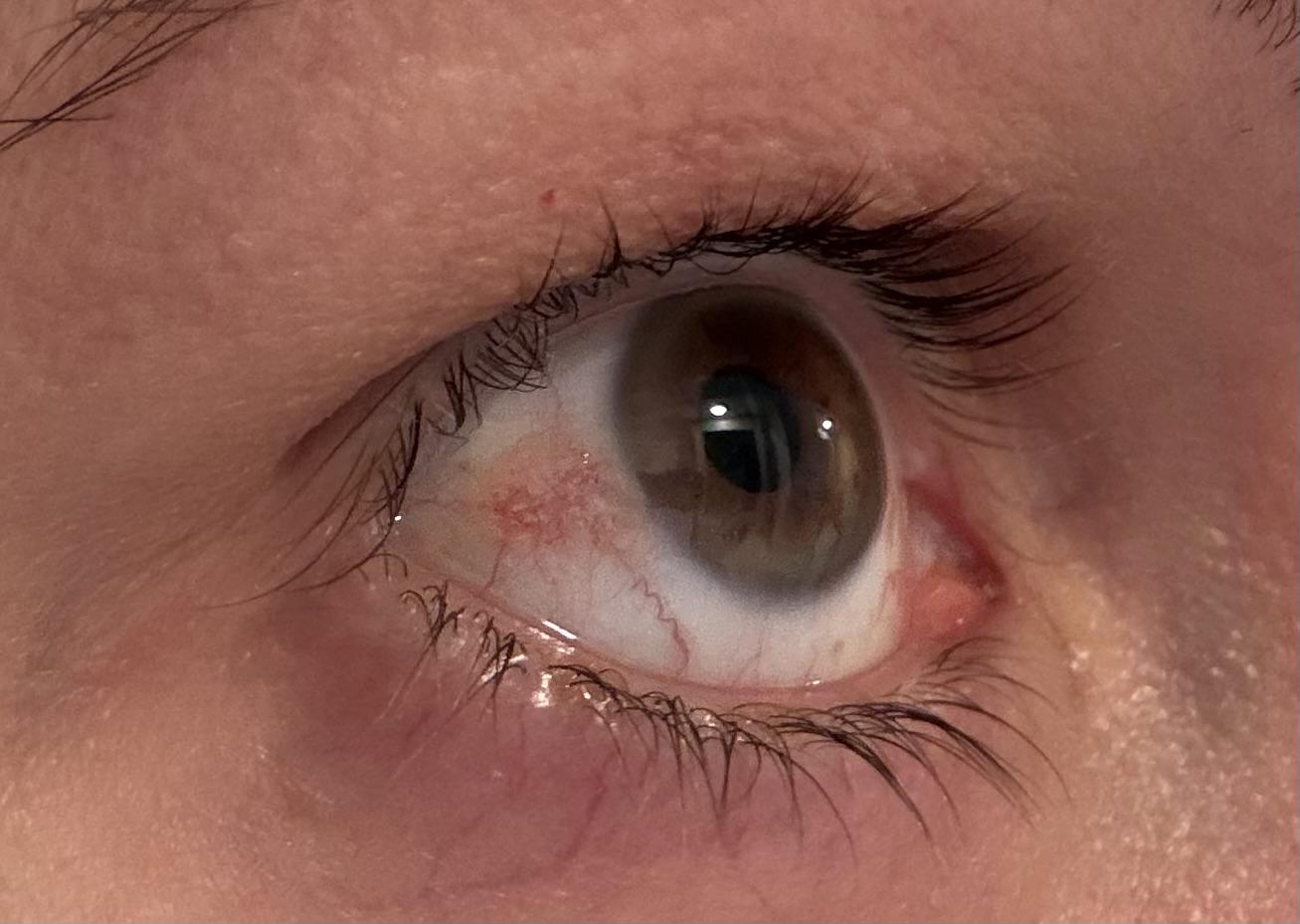
My opthamologist is willing to remove this irritated pinguecula from my right eye. For several years it has been painful, burns, and it feels like I have something in my eye. Usually I can get it under control with steroid drops, but that is not helping much anymore. I also have severe dry eyes and I think the pinguecula is contributing to it. It always looks red and the surface of the pinguecula is rough.
Questions about the procedure:
Is there a chance my eye will feel worse after the procedure in the long term? I know it will be uncomfortable during the healing process, but is it possible/likely that the removal further damages my ocular surface? I am already in a lot of pain, and even more long term pain is not what I want.
Should the doctor be using some type of graft over the removal site? He has said he probably won't.
Should I opt for the operating room or the minor procedure room? My understanding is the OR provides full sedation while the procedure room only offers localized numbing. I have a choice depending on my comfort level with the procedure.
Had this since my last severe allergy attack. Had allergies my whole life but the last one it swelled up a ton and now I’m left with this and it never goes away. Should I get checked out, does it look concerning?
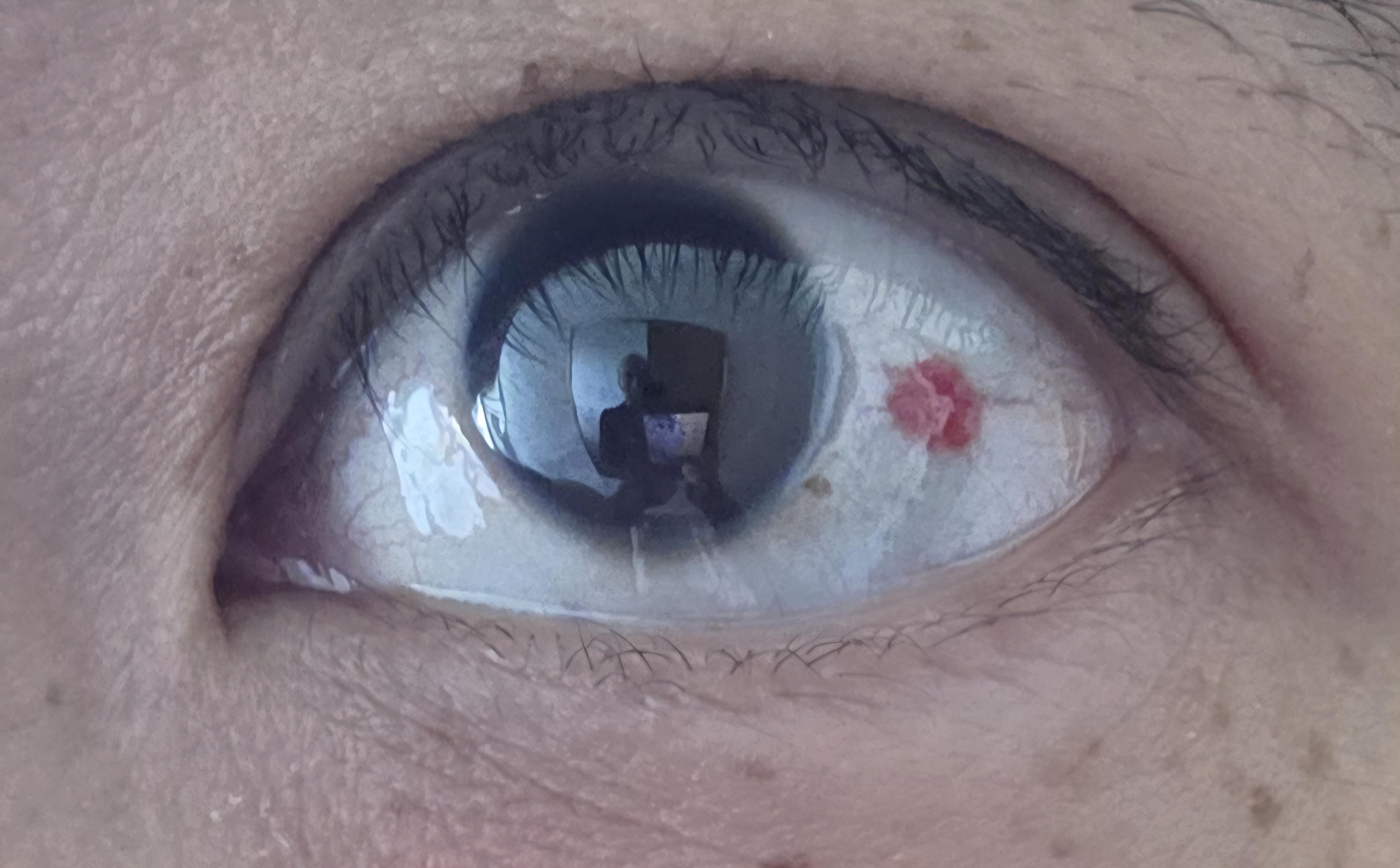
Hi everyone, I have this spot on my right eye (on the white part of the eye). Does this look like a Bitot's spot or something else? Here is a little history about the spot:
About 3 years ago, I noticed a transparent spot on the white part of my right eye. I went to an ophthalmologist for an examination, and they were not sure whether it was a Bitot's spot, so they told me to get a Vitamin A (Retinol) test. After seeing the test report, they told me that my Vitamin A levels were borderline. For context, I have stomach issues where, an hour or two after eating, I have to poop, and the stool is like a thick or smooth paste with fuzzy acid in it—after flushing, there are acid-like bubbles in the toilet. After reviewing everything, they told me I had dry eyes and prescribed Systane DS drops, though they still didn't give me a clear answer about the spot.
A few days after that hospital visit, I got pink eye in the same right eye. They initially gave me some steroids which made my eye look white at first, but after a few days, it worsened. I went back to the hospital, and another doctor told me to stop taking those steroids because they were making it worse, prescribing Megamox eye drops and Lotepred Forte eye drops instead. After 3 to 4 weeks, my eye got better and the infection went away.
On my next visit to this new doctor, she told me to take cod liver oil capsules (Blackmores 1000mg Cod Liver Oil) for the spot—which was still very thin and transparent back then—along with an ophthalmic Vitamin A gel at night and Lubricaine eye drops for dryness. I took these for around 3 months, then stopped the drops and gel and only continued with the capsules. After 1 more month, I stopped the capsules and didn't pay much attention to the spot.
Two months later, I went back for a checkup with the same doctor. She told me the spot had become more prominent, my eye dryness had increased, and my left eye had also developed dryness. She advised me to start the cod liver oil capsules again (twice a day) and use Lubricaine eye drops every hour in both eyes (at that point, the red veins in my eyes were also more prominent). I followed this for 2 months, then stopped the capsules and continued just the drops for 1 more month before stopping everything.
Around 8 months later, I noticed the spot had become more prominent and had divided into smaller patches/spots instead of that old, thin, transparent single spot. I went back to the same doctor, and she told me to start taking Recuro PF eye drops 4 times a day along with the cod liver oil capsules again. I did this for 3 months, then continued only the drops for another two months before stopping them.
After stopping, I noticed the spots had increased in number and become whiter, thicker, and more prominent, so I went back to her. This time, she wrote on my slip that these are not Bitot's spots, but rather some kind of conjunctival wrinkling or conjunctival thickening that has been there for many years. On the next visit, she referred me to another eye department, where they told me to take a Vitamin A test again before they could confirm whether it's a Bitot's spot or not.
By the way, I see clearly at night and in dim light and I still have that stomach issues with that acid like liquid fuzz in poop.I have attached pictures of my right eye showing these small white patches.
If anyone can help in diagnosiing my case it will be very helpful though I know that the pics are not much clear and I have now set appointments with other opthalmologist as well.
While in the waiting room at America's Best waiting for my second eye exam, I was expecting the ophthalmologist to tell me I'm dying of something. After the exam he gave me a diagnosis of "recent binocular vertical diplopia" and ptosis. I didn't ask him if it could be caused by something fatal, nor did he mention anything like that. Any insight on my prognosis?
My 9month olds pediatrician looked in his eyes and said his retina was fine (glowing red ring) and his pupils dilate normally. She had 4 doctors come look at his iris. She said in the 4 “corners” of his iris have light shining through almost looking like diamond sparkles on both eyes. Only visible with lights in room off and her flashlight on. She referred to ophthalmology but that’s 3 months out. Any ideas??? He can clearly see and has fine vision.
I've had sunken-looking eyes since I was around 11–13 years old. During that time, I used to spend almost the entire day looking at screens and watching TV, often from a relatively close distance.
Over the years, I've noticed that my eyes appear increasingly sunken, making me look tired and sleep-deprived even when I've had enough sleep.
I've consulted multiple ophthalmologists, but none have really addressed my concerns about the sunken appearance. Instead, they've mainly prescribed eye drops and medications for eye allergies or infections.
I'm quite frustrated because this has started affecting my overall appearance and confidence.
My questions:
Can prolonged screen exposure contribute to a sunken-eye appearance?
Could this be related to eye anatomy, loss of orbital fat, or another underlying condition?
Which specialist would be best to consult for a proper evaluation?
Edit: my eyesight is bad too and i have been wearing glasses since. 6 years now
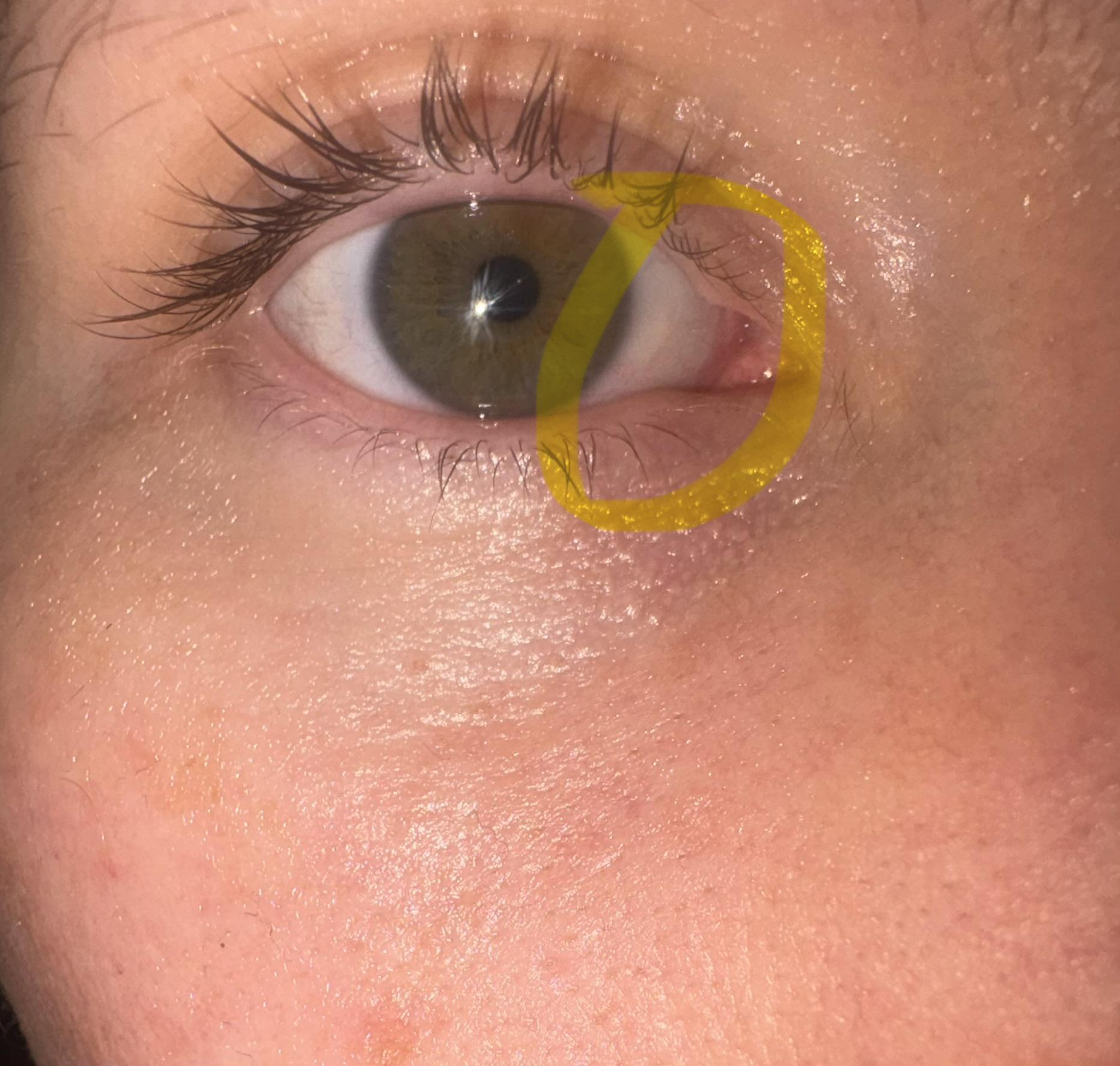
This small white bump at the base between eyelid and eyelash. It's white and looked like mucus and I tried to remove it thinking it's dirt but it's not. Randomly saw this today only idk how long it has been there....
I’ve noticed a huge change in how my eyes show up in photographs the last few weeks. I can hardly open my left eye to be as wide as my right eye. I’m concerned about what is going on. What kind of eye doctor should I see? I’ve also noticed a change in my smile as well and overall my face has become way more asymmetrical than usual. What could be causing this? Any advice or input is appreciated
It's been 2.5 years since my last eye exam, and I want new glasses. Should I do one of those at home online exams? I have both options for free, but one saves time. I don't have any issues with my current prescription, but then again, I don't know if it has changed slightly. No eye issues whatsoever.
Hello, I am 13 years old and I suspect I have jaundice in my eyes, and this is exhausting me. I think about it every day, even though my mother says there's nothing wrong. Can doctors tell me something? My eyes have been like this for the last 1-2 months since I last noticed it.
I’m looking for some opinions regarding my mother’s left eye.
She has had persistent redness in this eye for a little over a month now. The redness is particularly noticeable on the lower conjunctiva. There has also been some crusting/discharge. Her other eye is completely unaffected.
What is somewhat unusual is that she has no itching, no burning, no pain, no light sensitivity, and no change in vision.
Because my mother is completely immobile and unable to leave the house, it is unfortunately very difficult to have her properly examined by an ophthalmologist in person.
An ophthalmologist via telemedicine suspected bacterial conjunctivitis and prescribed ofloxacin. She used it for three days, but there has been no clear improvement in the redness. Today, we were assigned to a different ophthalmologist on the same telemedicine platform, and she recommended stopping ofloxacin and switching to moxifloxacin.
I’m starting to wonder whether this is actually bacterial conjunctivitis at all, or whether something else could be causing a chronic unilateral red eye — for example blepharoconjunctivitis/blepharitis, a tear drainage problem, eyelid-related irritation, ocular rosacea, or another local cause.
I will attach photos from before starting treatment (first four photos) and from today (last four photos), after three days of ofloxacin.
Has anyone seen a similar presentation? Does the absence of itching, burning, pain, and visual changes fit with bacterial conjunctivitis, and would you normally expect more improvement after three days of ofloxacin?
Of course, I understand that nobody can diagnose this from photos alone. I’m mainly trying to understand what possibilities should be considered and what should ideally be checked if we manage to arrange an in-person examination.