all reviews @ link in bio!
Long Season
Fishmans (1996)
The underground East Asian scene really is something. Not the East Asian pop scene though, god no. K-Pop might just be the worst music out there. But, dig a little deeper and there are some gems. There’s a surprising amount of really unique music. They fuse more traditional styles with modern hip-hop, rock, and electronic. What results is some of the most unique sounding music out there.
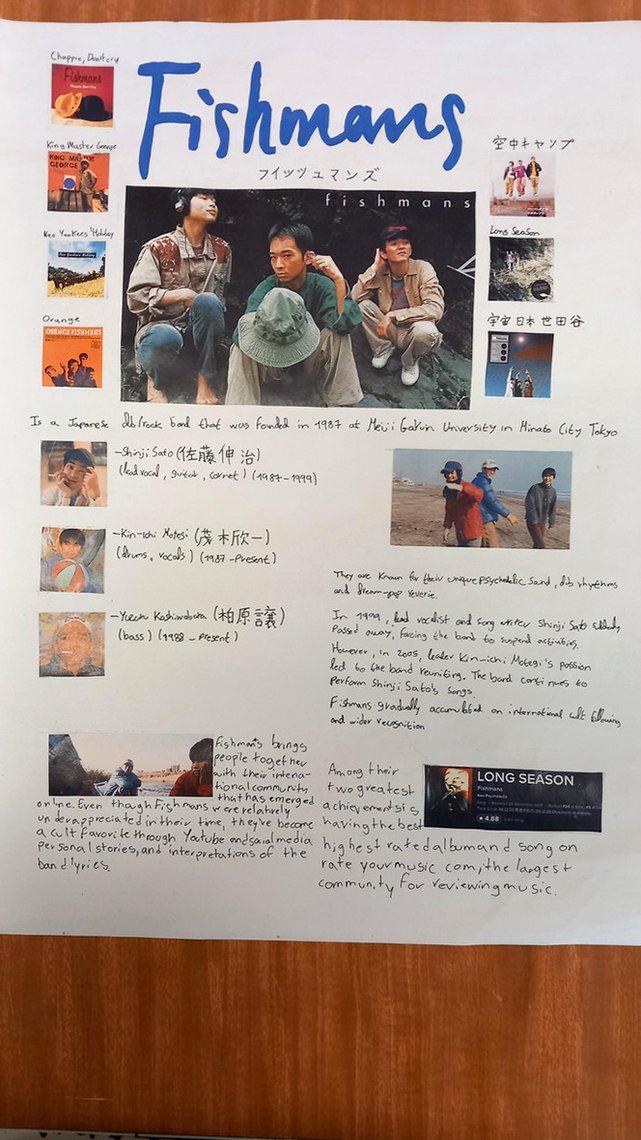
The largest perpetrator of this is Fishmans. Formed in 1987 in Tokyo, Fishmans released seven studio albums between 1991 and 1997. Despite having virtually zero commercial success internationally, they would thrive in the Japanese underground scene before their frontman, Shinji Sato, died unexpectedly in 1999. However, more than fifteen years later, their music would be found on forums like Reddit and RateYourMusic, eventually propelling their LPs to extreme critical acclaim. It’s insane to me just how much traction an artist can get, from playing venues of a thousand people in the nineties, to over a quarter million monthly listeners, thirty years later.
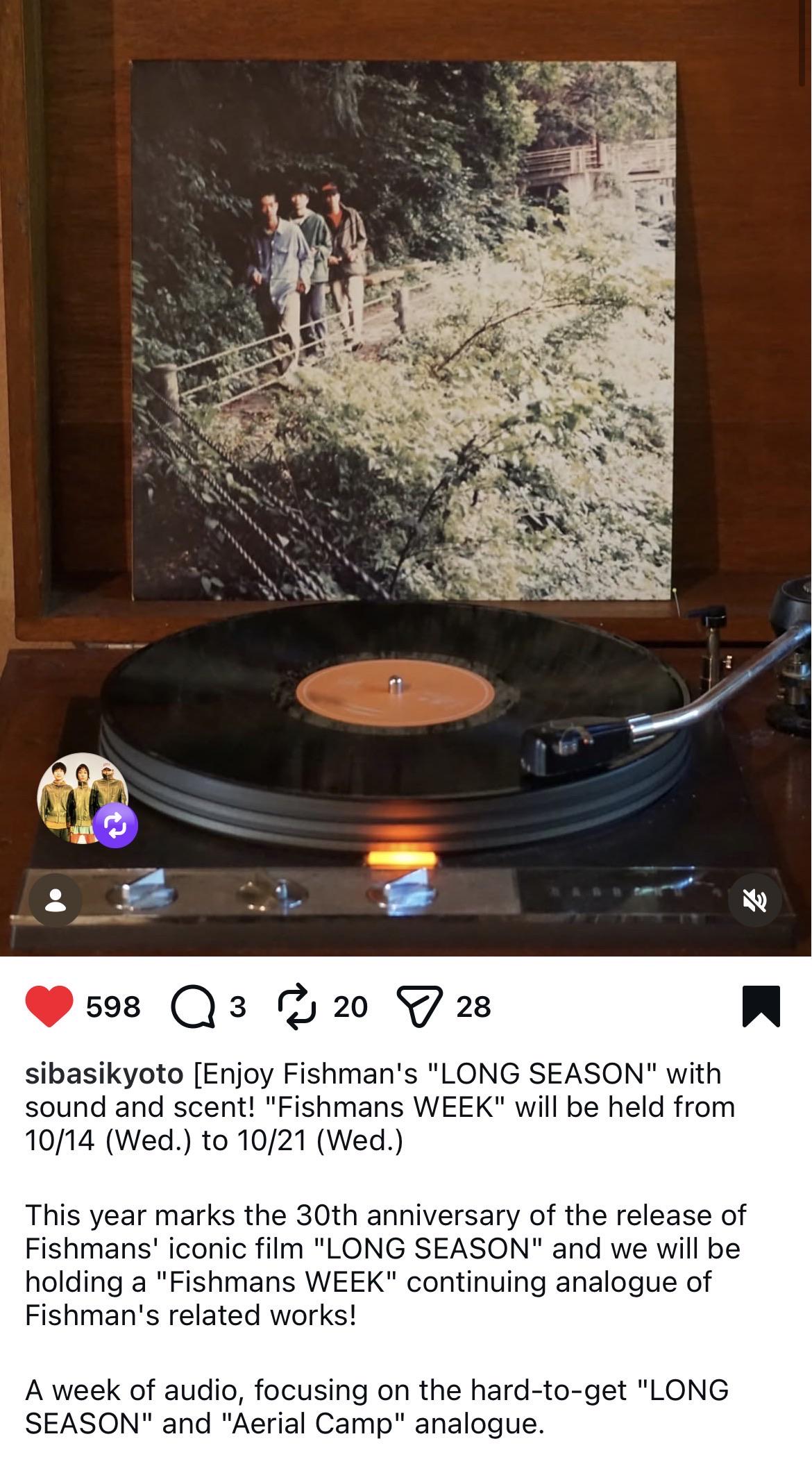
Today, I’m talking about their legendary 1996 album, Long Season. I have a core memory of listening to this album for the first time and just having my mind blown. I thought “man, this must sound so good on vinyl,” and subsequently looked for it on Discogs.
So, it turns out being a tiny cult band in Japan thirty years ago makes for some pretty hard to come by LPs. The cheapest listing I found was literally six hundred dollars.
Jokes aside, Long Season comes in the form of a single, thirty-five minute song. It’s a bit daunting to see an album labelled “1 song, 35 minutes,” which was maybe what put me off listening to it for a while. But, after going through what I like to call the “post-rock effect,” long songs don’t really matter anymore to me. In fact, I really like long songs. They take me on a journey and progress in a way that you can’t do in four minutes. Long Season itself is usually classified as dream pop, but that’s another one of those really vague genre labels. Although, I have no idea how I’d label it either, it combines post-rock, neo-psychedelia, jazz, and a bunch of other stuff in a way that makes it sound distinctly Fishmans. I think the only music that remotely sounds like Long Season are Fishmans’ other albums, specifically 宇宙 日本 世田谷 (Uchu Nippon Setagaya).
Long Season is divided into five distinct, unnamed movements. The first four represent each season: spring, summer, autumn, and winter. The final movement represents the cycle of each season coming and going.
Alright, time to get into the meat and bones. The thirty-five minute epic begins with a simple bassline. Already, we can hear the clear dubstep influences, especially with how the bass is articulated. It’s soon accompanied by a simple piano, playing chords on each whole note, as well as a repeating acoustic guitar riff. The bass drops out, leaving the guitar riff suspended in some other noise, until a synth is also added to the mix.
The drums kick in, and it feels like we’re starting to groove. However, the drums are one-and-done here, playing a fill and dropping out. What is added is a new cascading piano, playing the same four notes with a few variations. Also added are the bass, as well as a new heavily processed guitar. It plays a simple, yet effective melody. This whole song feels like a dream.
The first movement is reminiscent of Spring in a unique way. Many other artists would use their lyrics as the primary method of getting ideas across, not the music. But Fishmans’ groove here is unmistakably cheerful and bright, representing the rebirth that nature sees in spring. The return of plant life, animals coming out of migration. It’s a stark contrast to the winter we’ll hear later.
The drums finally kick in, playing a simple rim-kick groove. This also marks the start of Sato’s vocals, singing in Japanese. The end of the spring movement is marked as Sato sings “足ってる” (hashitteru), and the drums are readded. I’ll talk about these lyrics later, though.
Later in the verse, an accordion is also added, as well as a light electric guitar. These instruments don’t provide anything new harmonically but they do everything texturally. The first two movements entirely just sound like a haze of different instruments, all being added and leaving at different times. In fact, the accordion only plays the melody that was previously played by a synth.
At about nine minutes in, the song's pace changes, but keeps the same chord progression and vibe. The drums drop out as well as the bass, but the cascading piano remains. There are several textural keyboards used, my favorite of which sounding a little like a xylophone, giving a little percussive feedback. Of course, the bass and drums are readded, along with Sato’s vocals, this time singing in English. The electric guitar plays a couple phrases, filling space masterfully. Another keyboard is also added, playing a slower, descending motif as opposed to the faster one we’ve been hearing. The song thus far has been nothing short of groovy.
The groove carries on as Sato improvises with his voice. He doesn’t say any words, yet he says everything at the same time. Again, this movement is unmistakably summer. The pleasant groove, the bright tones. I’ve always felt that summer is the strangest season. Not in terms of climate, it’s the simplest in that case, but in terms of how it makes you feel. As a student, summer’s always been tied to long days of free time, lazy hangouts with friends, or travelling. Yet, there’s a strange undertone that everyone feels. It’s not dread, but it’s a creeping feeling that everything’s going to end soon. Summer often represents the last months you have before a big change in your life, whether that be graduating high school, saying goodbye to friends you made at a summer camp, or the strange, unspoken understanding that everything’s going to change soon. The song moves into a snare-driven backbeat, with all the instruments dropping out and a warm-sounding piano solo taking place. The instruments slowly fade out, marking the end of the second movement, the end of summer and entering autumn.
Part three is where it gets weird. The instruments fade out, eventually only leaving a synth, faintly playing chords on a swung rhythm. The more notable feature is the water dropping sounds. To go along with those, there’s a number of ambient sounds, like wind chimes and whistling. It’s a really odd representation of autumn, but it does kind of make sense. Autumn is a transitional period, between warm and cold. It represents the start of a school year for students, too. Just as life transitions in autumn, the song transitions in the third movement.
About halfway through the song, the synths are replaced by heavy percussion. The drops are still heard, but they take a back seat. It sounds like the drums are played on a pair of congas, as well as the drum set. It acts as a rhythmic breakdown, a reflection of sorts, for how the year’s been thus far.
There’s an odd beauty in winter. It’s cold, dark, and hostile, yet undeniably gorgeous. The reduced color palettes that the landscape takes are grayer, less colorful. It’s a different kind of beauty than what you see in spring, the blooming of flowers, wildlife thriving. In winter, you see beauty in the serenity and quaintness of the wilderness. The untouched snow, the bare and exposed trees.
In the fourth movement, the song comes back. It starts with a soft acoustic guitar and crowd vocals, singing a simple melody that repeats itself for quite a while. It’s a wordless, repetitive moment, yet, following the third movement, it has an oddly welcome freshness to it. Some of the elements from autumn are still here, the whistling especially. However, it takes a different form. The whistling goes from an ambient, environmental sound in part three to a complementary countermelody in the fourth.
Sato repeats the same phrase in Japanese (again, I’ll talk about it later). His vocals are filtered and emotional. It’s the Twin Fantasy effect, where sometimes you like things better because they sound worse. It feels more nostalgic and emotional. Throughout the entire movement, the vocals remain the same. It’s a long, dark descent, just as winter is. Though we all know that after a few short months, it’ll be spring again. And Fishmans knows that too.
A lone violin plays the melody as the song rebuilds itself. First it’s the piano, the same cascading chords we heard in spring and summer. A delay is put on it, just for fun. Next, it’s the vocals that make a comeback, though they don’t stay for long. Finally, everything else falls into place. The bass and drums fall back into the familiar dubstep groove, bringing us all the way home, back to the beginning. The electric guitar here is an amazing touch, giving the sound texture and variation, as well as being an amazing solo in its own right. I also love the violin’s usage here, contrasting the groove from the beginning of the song.
This movement acts as the triumphant beginning to a new year. It represents the endless cycle that the world moves through, regardless of the people in it. No matter what atrocities the human race commits, no matter the kindness felt through countless hearts every year, the world spins the same. In the end, your life is ultimately going to be meaningless. So why live your whole life feeling bad about it? Life is a good thing. It’s insane to me how many people don’t seem to know that.
Alright, now for the lyrics. The song’s lyrics are a dreamlike haze in Japanese. When translated, they read something like:
“Quietly
During the evening
We do it together
Calling the wind
Calling you
From one corner to the other corner of the city of Tokyo
We are halfway in a dream”
Throughout the song, the lyrics remain pretty similar. Just as the song does, the lyrics repeat in the final movement. The line “夢の中” (We are halfway in a dream) does a lot for me. It encapsulates the songs’ dreamlike nature, while being perfect within the song’s lyrics. The other lyrics speak of the year going by, the change of climate, of people’s activity. A lot can change in a year. People come and go, relationships start and end, personal goals are met or fall flat. There’s only one constant throughout the whole year: you.
Long Season: 95/100
Overall: 95/100