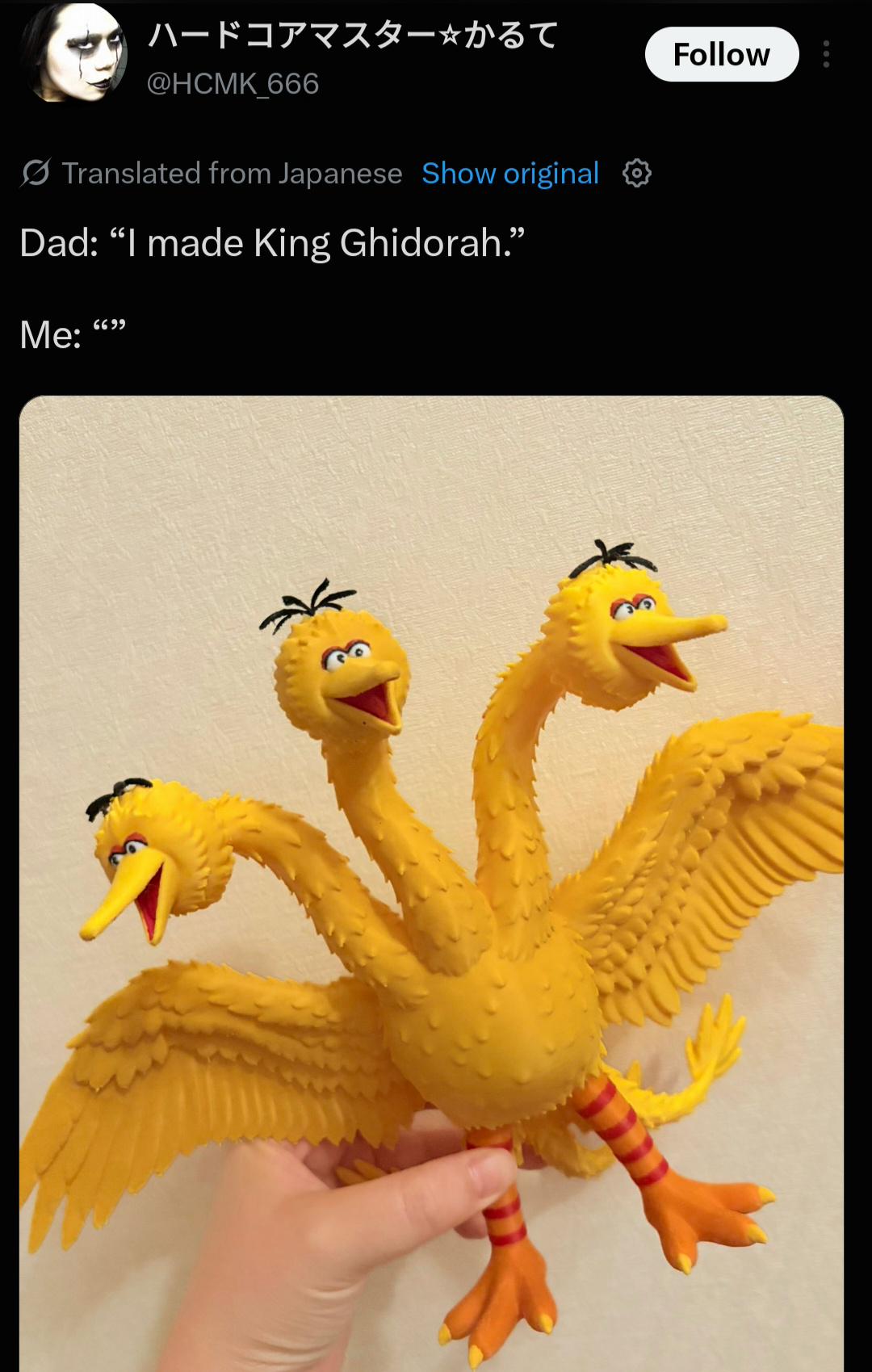
Alright, got a Tweet and a full Twitter article showing off Ghidorah pre-classic form and how that side of things was developed!
-
Standalone Tweet:
https://twitterviewer.net/g_minus_zero/status/2125092052681597286
-
The following article was translated using a translation extension. If you have more accurate translations, please do share them!
https://twitterviewer.net/g_minus_zero/status/2125095869406224435
[Spoiler Alert] Director Takashi Yamazaki talks about "Narukami Sakusen"
—Following the "Operation Sea God" from the previous film, "Godzilla-1.0," where did the naming and concept for this "Operation Narukami" come from?
Since we used a name related to Japanese mythology for the previous film, Operation Sea God, we wanted to use a similar mythological name related to lightning, a name associated with a god, this time as well. Regarding the development of the operation, we had in mind from the beginning that just when it seemed like things were going to go well at the last minute, a major reversal would occur, and ultimately it would backfire. When we decided to use lightning, we were concerned that long-time fans might wonder, "Is it really okay to use lightning against Ghidorah?", but we thought that the betrayal, along with the overall plot twist, would make for an interesting development, so we structured it that way.
—Was the character of Makoto Aoyama, who devised this Narugami Operation, designed from the beginning to be in charge of the operation?
Since the enemy this time is Ghidorah, "weather" is an extremely important element. Working backward from that, I created a character with the profession of "weather forecaster," a weather expert. The drama comes alive when Aoyama's plan, which seems to be a brilliant success, backfires spectacularly, precisely because he mobilized all of his meteorological knowledge to come up with it. I shaped the profession and character by working backward from the story's mechanics and development.
—Were there any changes made during the actual production or editing stages compared to the initial concept?
Initially, I had envisioned a three-headed character from the start, but then someone suggested, "How about having the character develop three heads at this point?" and I thought that was interesting. I found the idea of the character's appearance changing as it absorbs energy very appealing, so I incorporated that suggestion.
—I understand that the sound of the Skyraider that appears in the aerial combat scenes was recorded from an actual aircraft. How do you feel about the final result?
First and foremost, it all comes down to the fact that it's "authentic sound." Using sounds recorded from an actual Skyraider aircraft for the aircraft in the film might seem obvious, but we were truly grateful to have the environment to actually make that happen. The impact is completely different. Because the sounds were recorded with calculations like "this is how we'll record it for this kind of scene," everything is completely custom-made. The persuasiveness and sound pressure effect are overwhelmingly different from processing and using existing library sound sources.
—Could you also tell us about the attention to detail in the camerawork during aerial combat?
Since we were also considering IMAX screenings, we asked the filmmakers to create shots that emphasized a "ride-like" experience as much as possible. The goal was to create an immersive feeling, as if the audience were actually on board the plane and flying along with the crew. We included many shots that give the viewer the sensation of being aboard an aircraft performing acrobatic maneuvers with rapid changes in up, down, left, and right, and looking out at the scenery from that perspective.
--I understand that animator Atsushi Sato was involved in the animation and movements of King Ghidorah.
Mr. Sato is a legendary animator who has worked on projects all over the world. He is particularly fond of dragons, and he readily agreed to participate, saying, "I would love to work on King Ghidorah." The actual finished product was truly magnificent. Even the internal undulations of its body were expressed solely through animation, and it was overwhelmingly wonderful. This can be said about King Ghidorah in general, but I feel that the expression of "undulation" and "spiral," which embodies a uniquely Japanese sense of the body, was fully utilized, and I am truly glad about that.