Namaste,
Jay SitaRam
TL;DR (Summary):
Antim Janm (Final Birth) is the journey from Rahu (worldly attachment) to Ketu (detachment and Kaivalya). In the Moksha Trikona (4th, 8th, and 12th watery signs), Wisdom (Jupiter), Renunciation (Ketu), and Selfless Devotion (Venus) get exalted, while restless Mind (Moon) and Logic (Mercury) get debilitated—proving that Moksha requires conquering the mind and surrendering the ego. Through Maharshi Parashara’s 12th-house principles, Bhagavad Gita, and Adi Shankaracharya’s verses, the soul finally transcends the cycle of birth and death (from Krittika to Bharani) and merges into The One Supreme Reality.
Final Birth (Antim Janm) = Liberation (Moksha)
1. Freedom from Bondages:
In the final birth, all worldly attachments fall away. In Astrology, Rahu works to bind and attach, whereas Ketu works to sever and detach (the significator of renunciation and Moksha).
2. The First Nakshatra in the Vedas:
In the Vedas, the first Nakshatra is considered to be Krittika (Note: In Vedang Jyotish, the first Nakshatra is Ashwini), whose presiding deity is Agni (Fire) — who purifies and reduces everything to ashes, and Ash (Bhasma) is the true symbol of the Soul. (Krittika = To Cut)
3. The Final Nakshatra:
If we count starting from Krittika as the first Nakshatra, then Bharani becomes the final (27th/28th) Nakshatra. Its symbols are the Ankush (restraint/control) and the Y*ni (the gateway of birth and death), and its presiding deity is Lord Yamraj himself.
Upon attaining Moksha, the soul is never born again into any womb (y*ni). At this stage, even Yamaraj, the deity of Bharani, is left with No Yampash (noose of death) to bind the soul—because the soul has now transcended every law of birth and death.
4. The Moksha Trikona (4th, 8th, and 12th Houses / Signs):
According to the Kalapurusha Kundli (Aries Ascendant), in each of these signs, one set of planets gets exalted while another gets debilitated in the very same sign:
- 4th Sign (Cancer): Jupiter is exalted, while Mars is debilitated.
- 8th Sign (Scorpio): Ketu is exalted, while Rahu and the Moon are debilitated.
- 12th Sign (Pisces): Venus is exalted, while Mercury is debilitated.
The Moksha Trikona and Planetary Balance:
The Exaltation of Jupiter, Ketu, and Venus in these watery signs (Cancer, Scorpio and Pisces) signifies that to attain Moksha, Wisdom/Knowledge [Jupiter], Detachment/Absolute Liberation [Ketu], and Selfless Love, Devotion, and Spiritual Practice [Venus] are most essential. Conversely, the Debilitation of Mercury [intellect/logic] and the Moon [restless mind] indicates that the Supreme Reality can only be realized by letting go of excessive logic and worldly emotionality. The Debilitation of Mars signifies that jealousy in the heart is detrimental. And the Debilitation of Rahu signifies that one must stay away from temptations — History bears witness that celestial nymphs [Apsaras] broke the Penance of even the greatest ascetics.
Saturn is Karaka of 6th, 8th and 12th House (Dusthanas). [2 Houses of Moksha Trikona.]
According to astrological principles, in terms of beneficence, Venus and Jupiter are far more auspicious than the Moon and Mercury—both are Gurus, and both are wise. And Ketu is the wisest among the wise; ultimately, Ketu alone is Absolute Knowledge (Kaivalya).
This song from the 1950 movie 'Jogan' fits the essence of Ketu perfectly:
"Ghoonghat ke pat khol tohe piya milenge
Bahar ke pat (Rahu) band kar, andar ke pat (Ketu) khol...
Dhan joban ka garva na kije, jootha inka mol..."
(Meaning: Open the veil within, and you shall meet your Beloved... Close the outer doors (Rahu), and open the inner doors (Ketu) and... Do not take pride in wealth and youth, for their value is false.)
Now only 1 planet remains — the Sun: The Sun is the significator of the Soul itself, and Ketu is its ray ('Kujavat Ketu' / 'Ketu behaves like Mars'). And Mars is the 'Mumukshu' (the seeker of liberation)—the energy that grants the courage and determination to complete this spiritual journey. Karak of 3rd house is Mars.
5. Ultimately, the Mind Must Be Conquered:
(Song: Tora Mann Darpan Kehlaye)
"Praani apne prabhu se poochhe, kis vidhi paaun tohe,
Prabhu kahe tu mann ko paa le, paa jaayega mohe..."
(Meaning: The mortal asks his Lord, "By what method can I attain You?" The Lord replies, "Conquer your own mind, and you shall attain Me.")
6. Devotion and Liberation (Saint Narsinh Mehta Ji):
While on one hand Moksha is considered the ultimate goal of human life, true saints do not even ask for liberation; instead, they ask for repeated births just to serve the Lord:
"Harina jan to mukti na maage, maage janmo-janam avtaar re;
Nitya seva, nitya kirtan-ochchhav, neerakhva Nandkumar re.
Dhanya Vrindavan, dhanya e leela, dhanya e Vraj na vaasi re;
Asht mahasiddhi aanganiye ubhi, mukti chhe eni daasi re." (Saint Narsinh Mehta Ji)
(Meaning: The devotees of Lord Hari do not ask for liberation [Mukti]; rather, they ask to be born again and again for eternal service, constant devotional singing [kirtan], and the divine sight of Nandkumar [Lord Krishna]. Blessed is Vrindavan, blessed is His divine play, and blessed are the residents of Vraj; the eight great mystic powers [Ashta Mahasiddhis] stand waiting in their courtyard, and Liberation itself serves as their Maidservant.)
(The Pinnacle of Knowledge and Devotion: While Adi Shankaracharya ji’s Bhaja Govindam and Shatpadi Stotra pray for freedom from the cycle of birth and death, Saint Narsinh Mehta’s hymn reveals the pinnacle of Navadha Bhakti [ninefold devotion], where for a devotee, Love [5th House] and Service [6th and 11th Houses] become even greater than Moksha itself.)
7. Adi Shankaracharya Ji (The Womb and Liberation):
"Punarapi jananam punarapi maranam, punarapi janani jathare shayanam |
Iha samsare bahudustare, kripaya'pare pahi Murare ||"
(Meaning: Repeated birth, repeated death, and lying repeatedly in a mother's womb — O Murari, by Your boundless grace, save me and grant me liberation from this difficult ocean of worldly existence.)
"Avinayamapanaya Vishno damaya manah shamaya vishayamrigatrishnam |
Bhutadayam vistaraya taraya samsarasagaratah ||"
(Meaning: O Lord Vishnu, remove my ego, subdue my mind, quench the mirage of sensory desires, expand my compassion for all living beings, and ferry me across this ocean of worldly existence.)
8. Renunciation and Peace — Shrimad Bhagavad Gita (Chapter 12, Verse 12):
"Shreyo hi jnanamabhyasajjnanaddhyanam vishishyate |
Dhyanatkarmaphalatyagastyagachchhantiranantaram || 12 ||"
(Meaning: Knowledge is better than mere practice, meditation is superior to knowledge, and renunciation of the fruits of actions is even superior to meditation; for peace immediately follows such renunciation).
(In Astrology, the 12th House represents 'Renunciation' [Tyag] and 'Moksha'. When a human being renounces the fruits of their actions [12th House], only then do they attain supreme peace and liberation).
9. Shrimad Bhagavad Gita (Chapter 7, Verse 19):
"Bahunam janmanamante jnanavanmam prapadyate |
Vasudevah sarvamiti sa mahatma sudurlabhah || 19 ||"
(Meaning: At the end of many births, the wise one takes refuge in Me, realizing that Vasudeva [the Supreme Lord] is all that exists. Such a great soul is exceedingly rare.)
Bahunam = Minimum 3, i.e., more than 2 (Dharma Trikona: 1, 5, 9):
Janma... 1st House
Anu Janma... 5th House
Tri Janma... 9th House
10. Everything is the Play of the Sun and the Moon:
(Song: Original Bum Lehri — "Chandrama Ne Shrishti Rachayi...")
The Moon is Earth's satellite...
The Sun is also a Nakshatra (Star)... and Nakshatra (Na + Ksharati = that which never perishes) signifies the imperishable journey of the soul that leads it to its ultimate destination (Moksha).
Ab Na Aana Aur Na Jana
11. Combinations for Moksha in Astrology and Maharshi Parashara's Verses:
There are numerous combinations for Moksha in Jyotish—among which two well-known practical applications are:
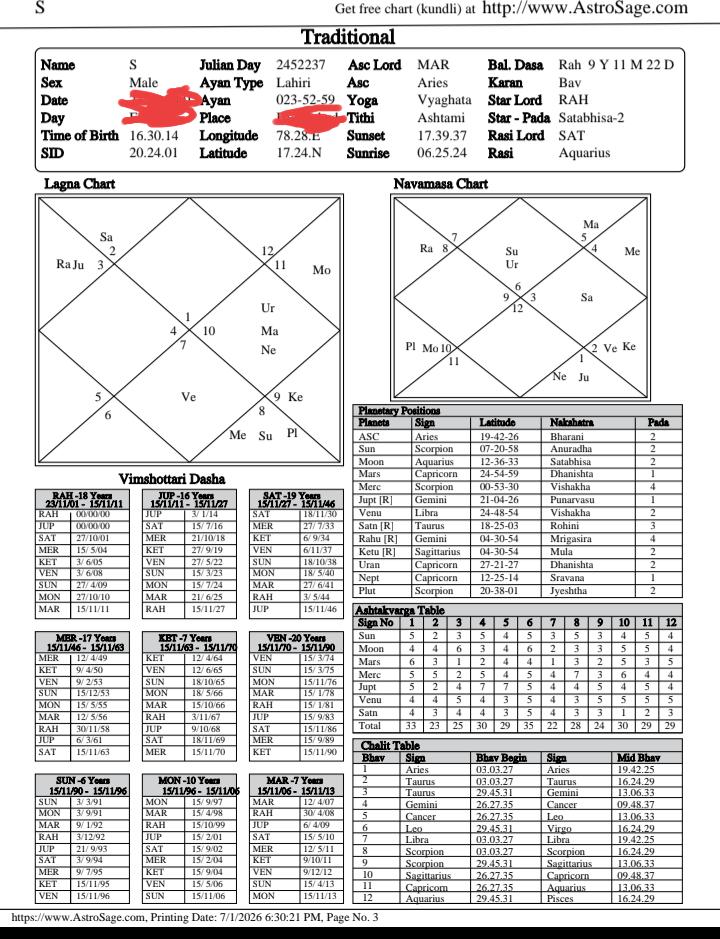
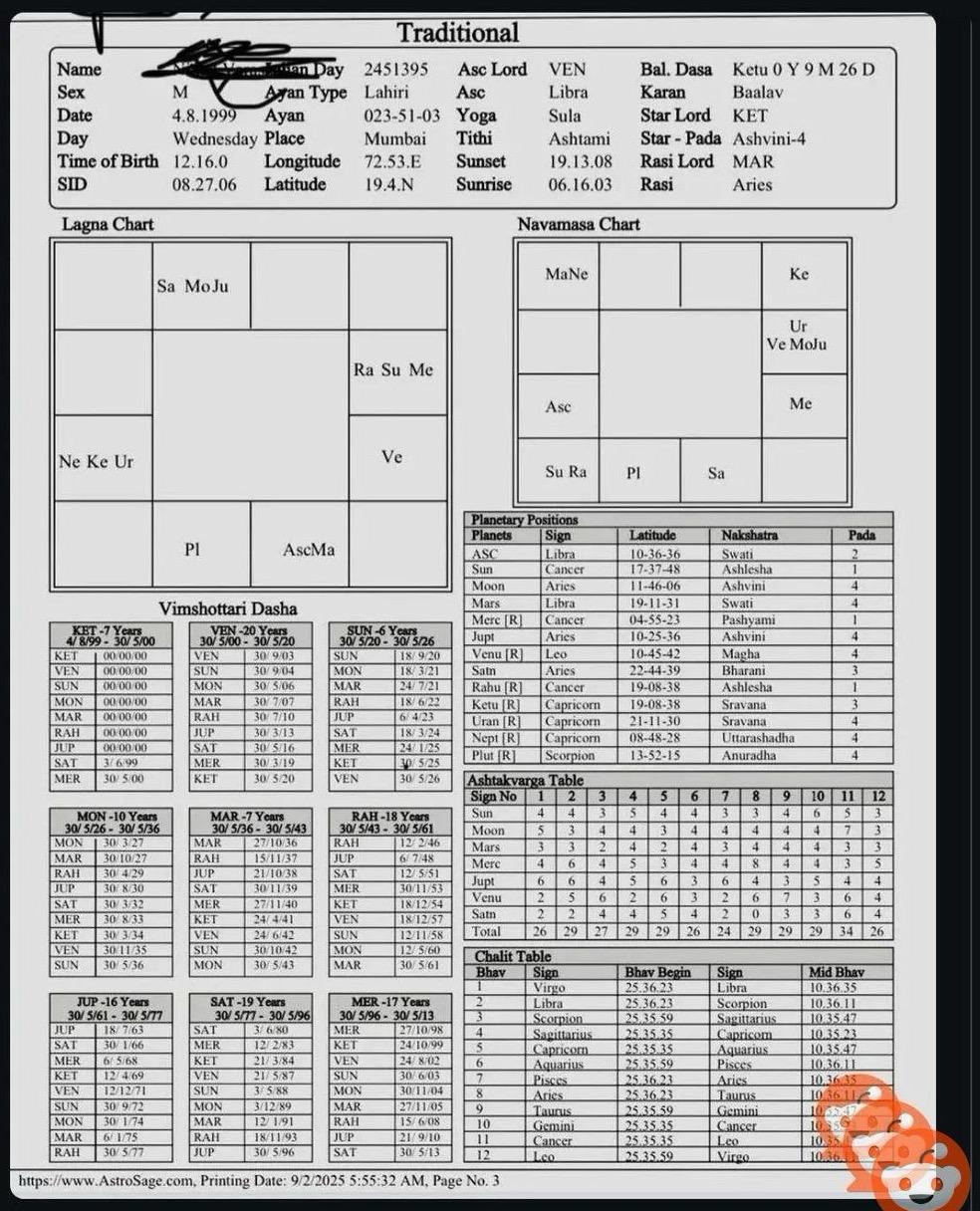
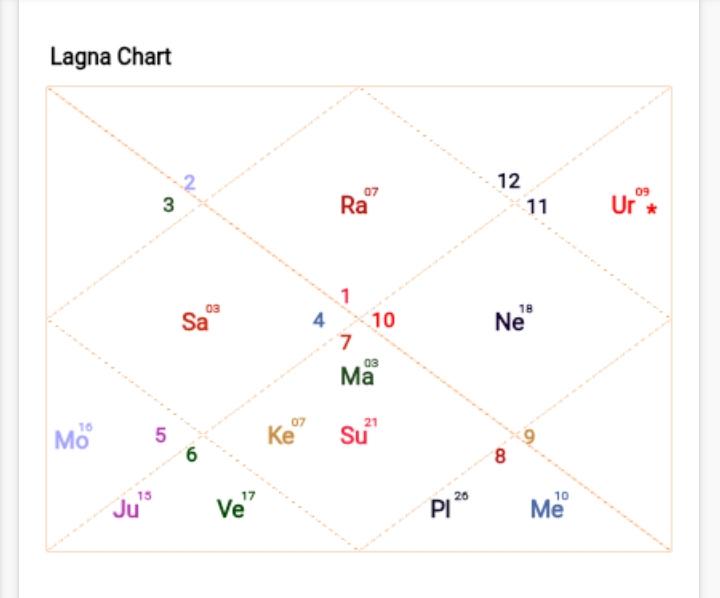
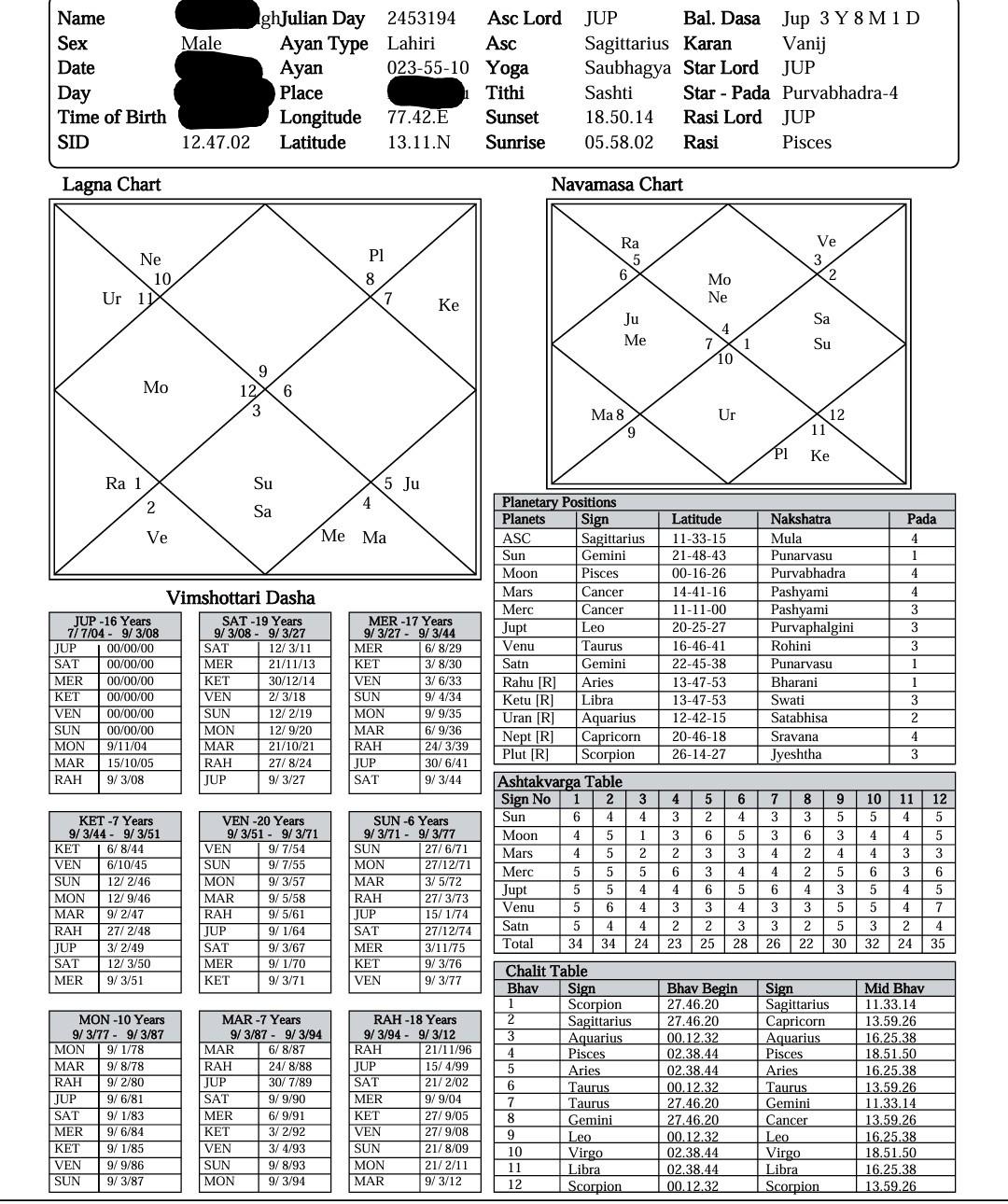
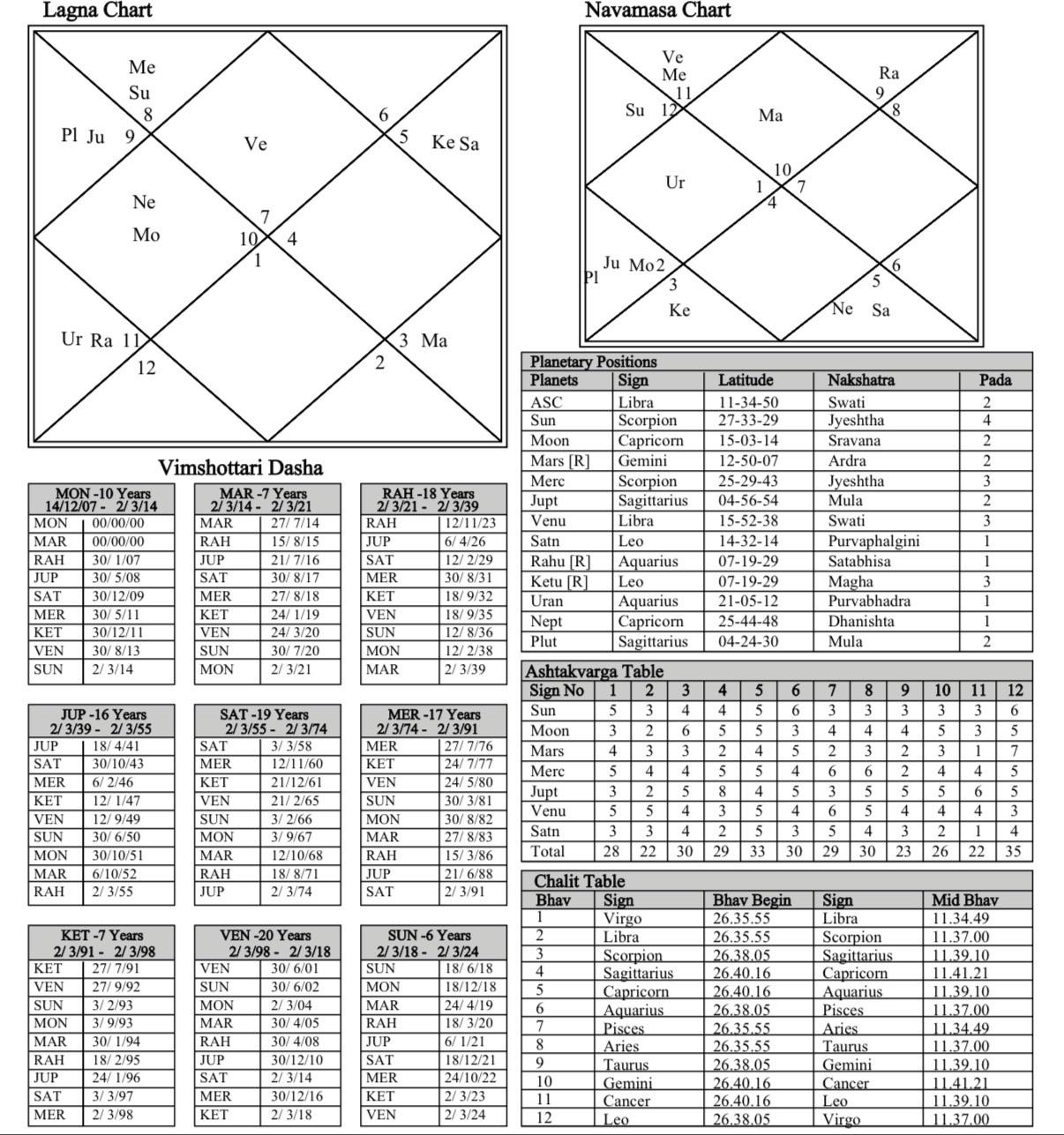
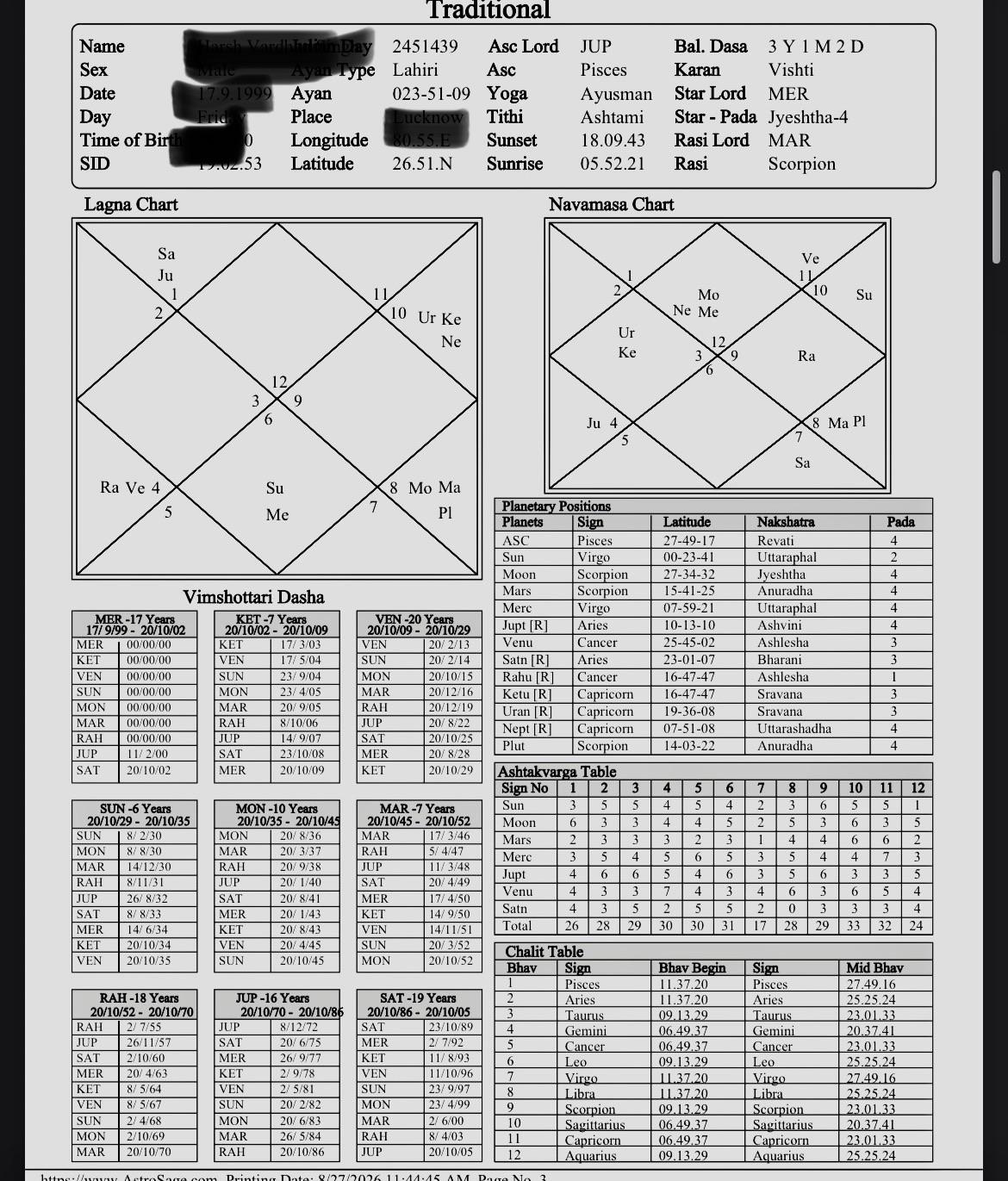
1. The conjunction of top benefics (Jupiter and Venus) in the 12th house, and 2. The conjunction of malefics/renunciates (Saturn and Ketu) in the 12th house.
In Brihat Parashara Hora Shastram (Chapter 23), Maharshi Parashara states the foundational rules for benefics and malefics in the 12th house as follows:
- Benefics in the 12th House (Foundation for Jupiter & Venus) — Brihat Parashara Hora Shastram (Chapter 23, Verse 10):
"Vyayasthanagate saumye tadishe svochcharashige |
Shubhayukte shubhairdrishte mokshah syannatra samshayah || 10 ||"
(Literal Meaning: If natural benefic planets [Shubhagrahas] are posited in the 12th house, and the 12th lord is exalted or conjoined/aspected by benefics, one attains Moksha [final liberation]. Since Jupiter and Venus are the two foremost natural benefics, their placement in the 12th house strongly fulfills this principle.)
2. Malefics in the 12th House (Foundation for Saturn & Ketu) — Brihat Parashara Hora Shastram (Chapter 23, Verse 11):
"Vyayeshe papasamyukte vyaye papasamanvite |
Papagrahena samdrishte deshaddeshantaram gatah || 11 ||"
(Literal Meaning: If the lord of the 12th house is conjoined with malefic(s), and natural malefic planet(s) [Papagraha(s)] is/are posited in or aspecting the 12th house, the native leaves their birthplace or homeland and goes to a foreign or distant land. Natural malefics like Saturn and Ketu placed here trigger this exact detachment from one's roots.)
3. Traditional Verse on Saturn-Ketu Conjunction (Karmic / Pitru Shaap Yoga):
"Shanina samyute Ketau vyaye va randhrasamsthite |
Pitrishapat sutakshayo dhanahanistathaiva cha ||"
(Meaning: According to classical curse/karmic traditions, the conjunction of Saturn and Ketu in the 12th or 8th house indicates pending ancestral or past-life karmas [Pitru/Pret Dosha], which can manifest as loss of wealth, distance from family, and detachment.)
4. Practical and Spiritual Results (Essence):
- Spiritual Growth & Moksha: The 12th house signifies Moksha and Ketu is the Moksha Karaka. Combined with Saturn (the planet of karma and austerity), this conjunction detaches the native from worldly illusions and turns them toward deep meditation, solitude, and spirituality.
- Foreign Travel & Relocation: As stated in BPHS 23.11, malefics in the 12th house uproot a person from their birthplace and settle them in a distant or foreign land.
- Expenditure and Sleep: The 12th house governs bed comforts and losses; Saturn-Ketu here often brings insomnia, pain in the legs/feet, and sudden expenses.
12. The Night of Diwali and the Solitary Truth of the Soul:
On the night of Diwali, during Amavasya (New Moon), when neither the Sun (Father) nor the Moon (Mother) is visible in the sky, we light the Diya (Knowledge = Light of Guru = Auspiciousness/Mangal)—so that there is auspiciousness (Mangal... Mangal... Ho) everywhere in life.
(Song: "Jyot se jyot jalake chalo, pyar ki ganga bahate chalo...")
On the final journey, neither father, nor mother, nor any relative accompanies the soul. Adi Shankaracharya ji expressed this ultimate truth in 'Bhavani Ashtakam':
"Na tato na mata na bandhurna data
Na putro na putri na bhrityo na bharta |
Na jaya na vidya na vrittirmamaiva
Gatistvam gatistvam tvameka Bhavani || 1 ||"
(Meaning: Neither father, nor mother, nor relative, nor benefactor, nor son, nor daughter, nor servant, nor husband/master, nor wife, nor knowledge, nor livelihood belongs to me. O Mother Bhavani, You alone—and only You—are my refuge and ultimate liberation.)
"When the car is stationary, it is Shankar (Shiv); when it moves (Gati/Dynamic Energy), it is Bhavani (Shakti)."
Chalti Ka Naam Gadi...
Thank you for your profound Patience while reading 📚 . 🙏