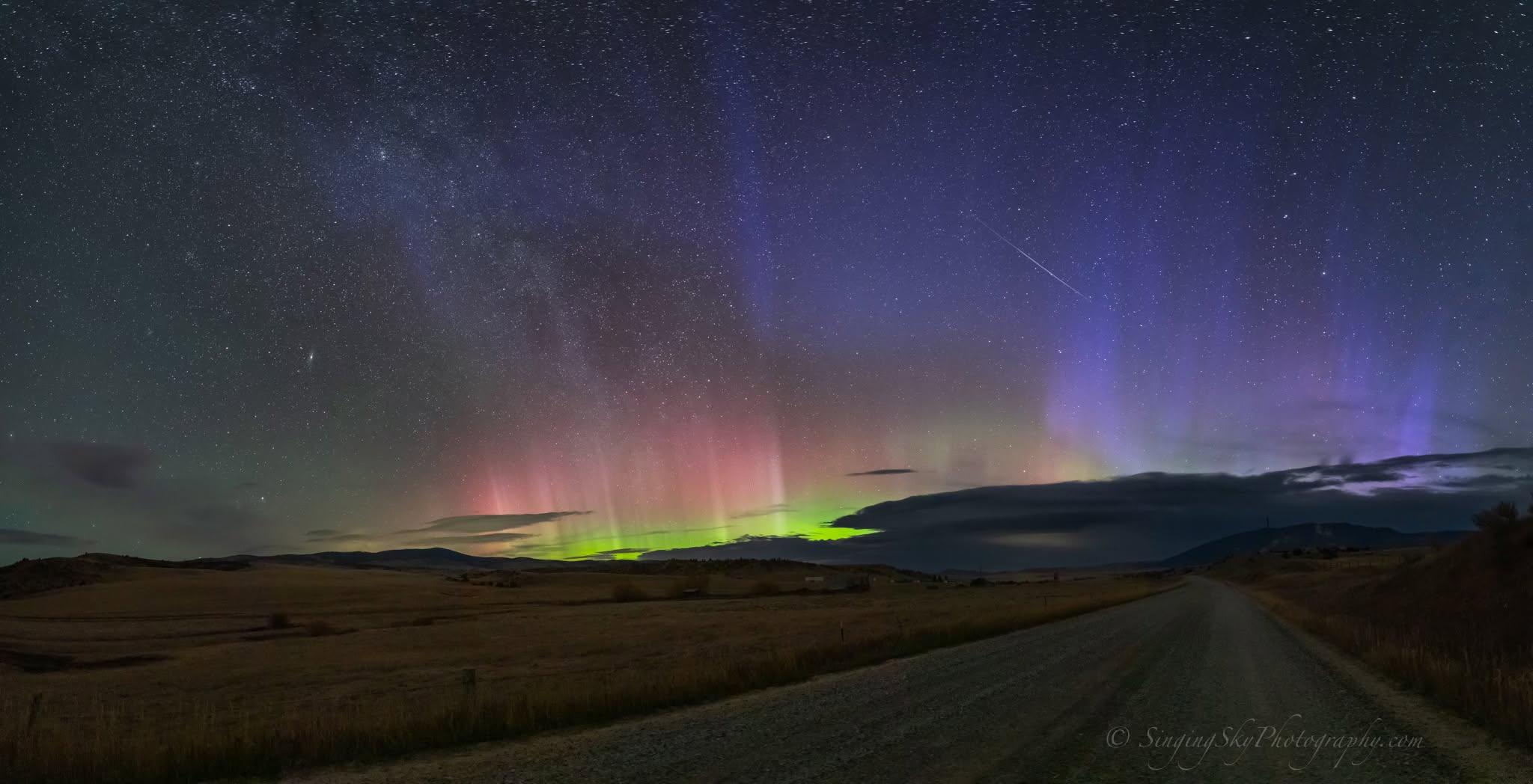
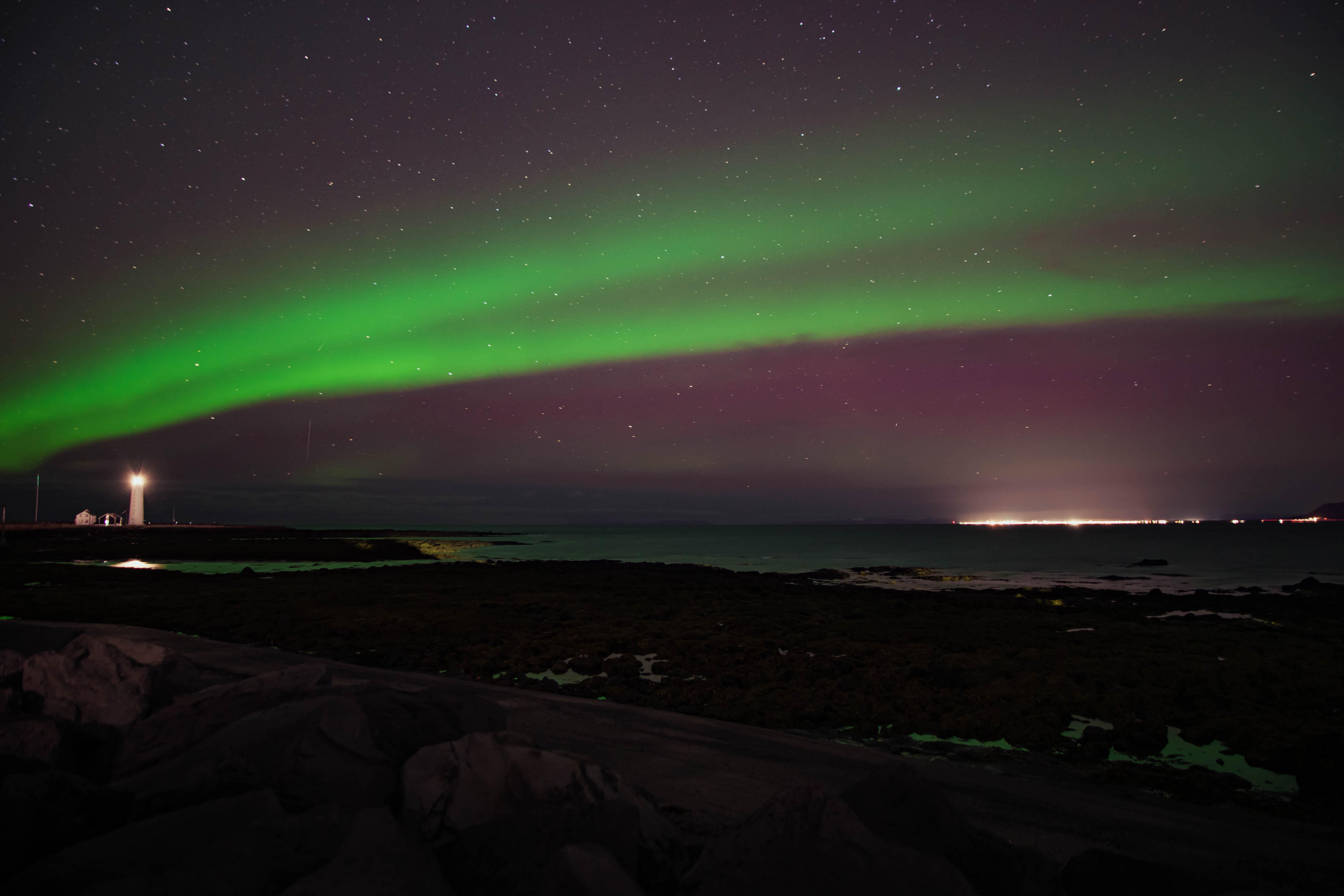
This is perhaps THE question everybody asks: can you see auroras with the naked eye? And the answer is: of course you can! But here are some things you need to know.
Photography has conditioned our brains and expectations to find things that THEY - the devices - captured. Whether it's close-up photographs of birds in mid-flight or tiny micro-organisms, photography can represent life like never seen before. And we usually don't question it, except for Auroras. The dazzling and colourful spectacle as it's captured is after all what we want to see. But there are some human limitations we need to discuss first.
Our eyes at night. After 10 to 45 minutes in the dark, our eyes have enabled "night vision" - but at a trade-off: Colour perception.
At night our eyes can become 100,000 times more sensitive to light than during the day, helping us to see well in very dark environments. Our retina contains two types of photoreceptors: cones for colour vision, and rods for very low-light. Cones require lots of light, and in such an environment we can perceive millions of colours. Rods on the other hand kick in at night, but only allow us to see in "grayscale".
When we're chasing Auroras, we do so mostly in complete darkness. Weak Auroras will become visible to the naked eye once they have adjusted to the night within 5-10 minutes, and fully adjusted after about 45 minutes. Their initial appearance will often be a gray-green hue or to some simply gray, but as the light intensifies, we perceive light and colour again almost instantly. Greens become visible again.
Cameras don't have these human limitations. On top of that they control the amount of light that can hit their "retina" - or camera sensor - in a single frame, meaning that they can saturate the image with photons and produce more vivid colours than our eyes can.
Strong Auroras will be very visible to our eyes, and the Carrington Event of 1859 - Earth's strongest recorded solar storm - produced visible colours in reds, greens and purples across the world. People saw these colours with their eyes, and colour photography hadn't been invented yet.
So when you're out chasing, use your cameras and smartphones as tools to help you "see". Technology has always helped us to overcome our physical limitations, and night vision is simply one of them.