It's not that I think that your solution is wrong. It is convenient, it's extensible, but a bit slow due to extra indirection. Usually, the performance difference is negligible for high-level abstractions like UI.
The container_of compiles essentially to "subtracting constant from a pointer", a single line of register-only assembly. Moreover, the macro does type checking, thus it is safer than a plain void*. (btw.. type-safe container_of can be written in C89-compliant way).
This pattern works best for static-inheritance but it lets use type-safe dynamic inheritance if necessary. Thus, imo, it is more suited to low-level and high-performance systems.
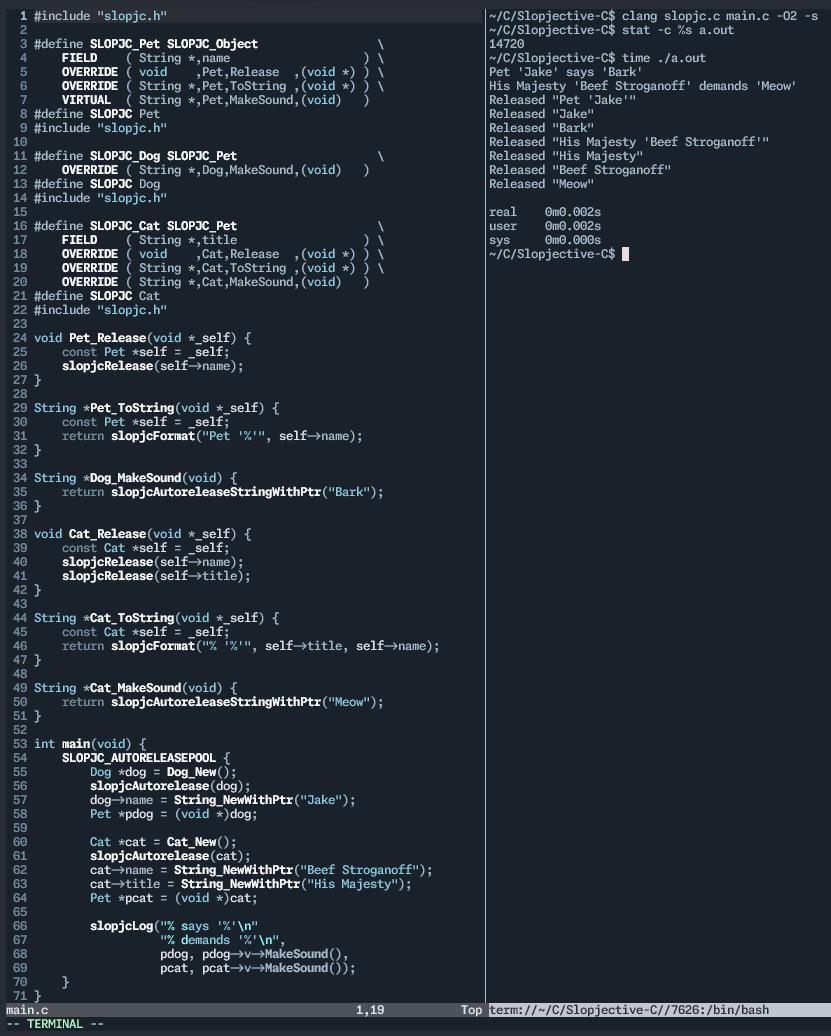
Oh yeah no this isn't meant to be fast or production ready! This isn't a testament to the speed of V-Table generation. You can embed them (removing an indirection) depending on the size of the V-Table. They are just, again, something I don't like to write manually because of the boilerplate
View all comments
Show parent comment
3
u/tstanisl Jul 05 '26 edited Jul 05 '26
It's not that I think that your solution is wrong. It is convenient, it's extensible, but a bit slow due to extra indirection. Usually, the performance difference is negligible for high-level abstractions like UI.
The
container_ofcompiles essentially to "subtracting constant from a pointer", a single line of register-only assembly. Moreover, the macro does type checking, thus it is safer than a plainvoid*. (btw.. type-safecontainer_ofcan be written in C89-compliant way).This pattern works best for static-inheritance but it lets use type-safe dynamic inheritance if necessary. Thus, imo, it is more suited to low-level and high-performance systems.
EDIT. Added "not"