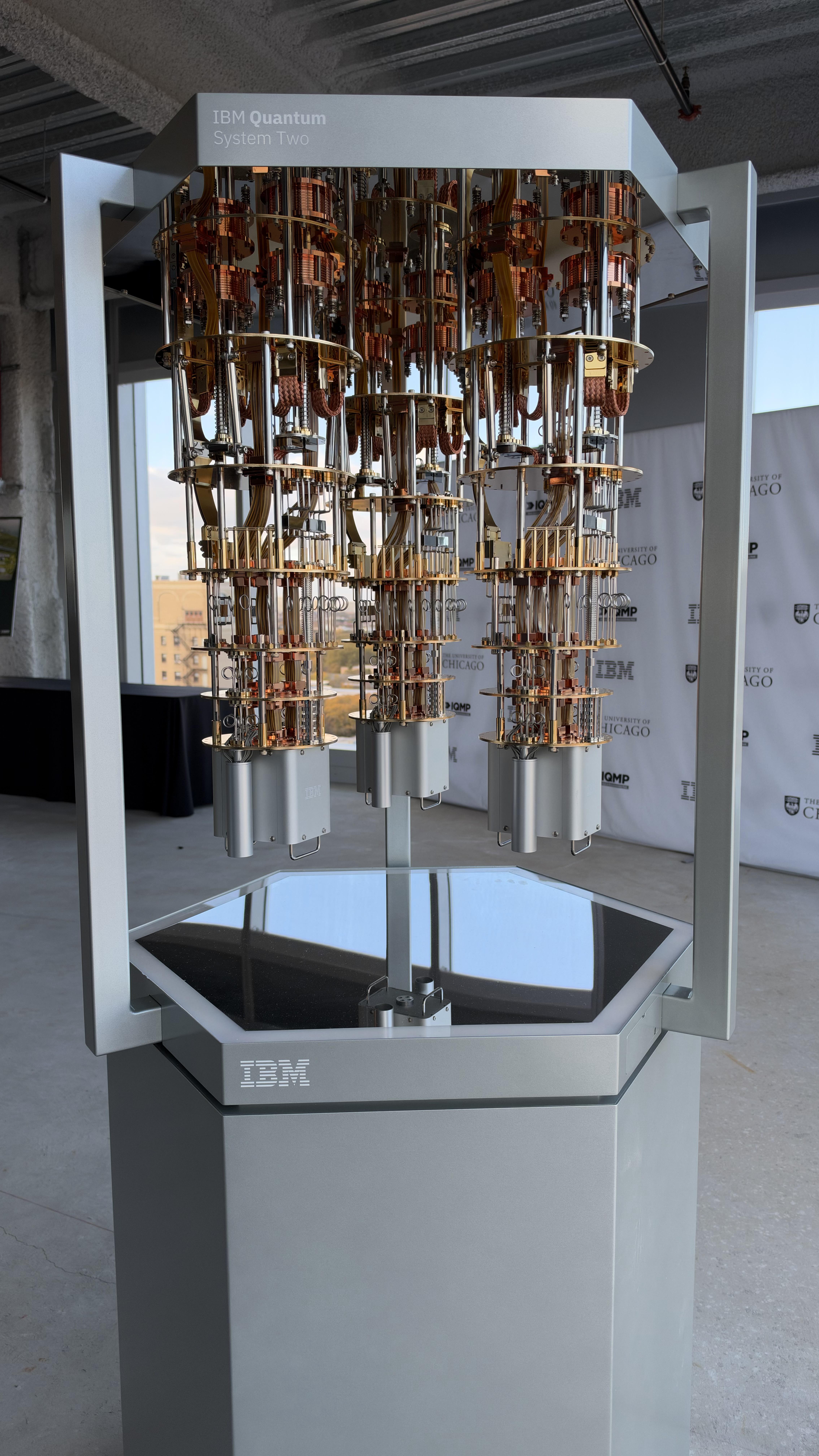
I’m currently pursuing an MS in Artificial Intelligence and considering a thesis combining Quantum Computing and Reinforcement Learning (QRL).
How difficult is this domain for an MS-level thesis, particularly for someone with a computer science and AI background?
Would selecting a recently published base paper, reproducing its results, and introducing incremental improvements be a feasible approach to completing an MS thesis and potentially publishing a research paper?
I’d appreciate recommendations for relatively straightforward, recent papers that could serve as a starting point, along with insights into the difficulty, computational requirements, and realistic publication prospects
Greetings from Polygonal Research and Development Lab.
In light of the NIST FIPS 203 (ML-KEM) transition and the computational overhead that standard Number Theoretic Transform (NTT) polynomial multipliers impose on FPGA DSP slices and embedded microcontrollers, our R&D lab has engineered TernaryShield-v2.
We have published our 4-page engineering specification and comparative benchmarks:
Over 11 international research clusters (including Canadian cryptanalysis teams from Montreal and ZOHO Corporation) have downloaded the challenge package, and the cipher remains completely unbreached.
We would be deeply honored if you or your research scholars and students could review our whitepaper and test the cipher in your lab. We welcome your technical critique and would be delighted to arrange a brief technical exchange or present our findings to your research group.
Weekly Thread dedicated to all your career, job, education, and basic questions related to our field. Whether you're exploring potential career paths, looking for job hunting tips, curious about educational opportunities, or have questions that you felt were too basic to ask elsewhere, this is the perfect place for you.
Careers: Discussions on career paths within the field, including insights into various roles, advice for career advancement, transitioning between different sectors or industries, and sharing personal career experiences. Tips on resume building, interview preparation, and how to effectively network can also be part of the conversation.
Education: Information and questions about educational programs related to the field, including undergraduate and graduate degrees, certificates, online courses, and workshops. Advice on selecting the right program, application tips, and sharing experiences from different educational institutions.
Textbook Recommendations: Requests and suggestions for textbooks and other learning resources covering specific topics within the field. This can include both foundational texts for beginners and advanced materials for those looking to deepen their expertise. Reviews or comparisons of textbooks can also be shared to help others make informed decisions.
Basic Questions: A safe space for asking foundational questions about concepts, theories, or practices within the field that you might be hesitant to ask elsewhere. This is an opportunity for beginners to learn and for seasoned professionals to share their knowledge in an accessible way.
Hi I'm finally happy to launch a brand new module narrated by a professor in education in Quantum Odyssey that covers how to port an actual real use case on a quantum computer. Besides this, the latest update brings a ton of new improvements, big ones being latec for all the mathematics in the game and translations so that nobody ever gain will have to be forced to learn about qc not in their native language.
If you are remotely interested in deep diving how differently quantum computers work compared to our transistor-based and also the algebra behind in a fully interactive way that teach computer science from scratch, oh boy this is for you. I am the Dev behind Quantum Odyssey (AMA! I love taking qs) - worked on it for about 9 years (3+ during PhD, the visual method I developed ended up being my thesis, it is a complete Hilbert space visualizer), the goal was to make a super immersive space for anyone to learn quantum computing through zachlike (open-ended) logic puzzles and compete on leaderboards and lots of community made content on finding the most optimal quantum algorithms. The game has a unique set of visuals capable to represent any sort of quantum dynamics for any number of qubits and this is pretty much what makes it now possible for anybody 15yo+ to actually learn quantum logic without having to worry at all about the mathematics behind.
This is a game super different than what you'd normally expect in a programming/ logic puzzle game, so try it with an open mind.
Stuff you'll play with
Boolean Logic – bits, operators (NAND, OR, XOR, AND…), and classical arithmetic (adders). Learn how these can combine to build anything classical. You will learn to port these to a quantum computer.
Quantum Logic – qubits, the math behind them (linear algebra, SU(2), complex numbers), all Turing-complete gates (beyond Clifford set), and make tensors to evolve systems. Freely combine or create your own gates to build anything you can imagine using polar or complex numbers.
Quantum Phenomena – storing and retrieving information in the X, Y, Z bases; superposition (pure and mixed states), interference, entanglement, the no-cloning rule, reversibility, and how the measurement basis changes what you see.
Core Quantum Tricks – phase kickback, amplitude amplification, storing information in phase and retrieving it through interference, build custom gates and tensors, and define any entanglement scenario. (Control logic is handled separately from other gates.)
Famous Quantum Algorithms – explore Deutsch–Jozsa, Grover’s search, quantum Fourier transforms, Bernstein–Vazirani, and more.
I’m coming at this from an electromechanical engineering background rather than quantum physics, and I’m trying to better understand the practical manufacturing bottlenecks inside modern quantum systems—specifically around motion control, thermal management, and noise isolation. From what I understand, keeping qubits coherent requires extreme isolation from mechanical vibration, electromagnetic interference (EMI), and stray heat loads, especially inside dilution refrigerators and vacuum chambers. When systems rely on actuators, cryo-coolers, pumps, or positioning stages (whether for optical alignment in trapped-ion/photonic setups or mechanical tuning/valves in superconducting rigs), a few engineering questions come up:
Vibration and Quality of Motion: How sensitive are current architectures to micro-vibrations or torque ripple from motorized stages and cryo-pumps? Is ultra-smooth, low-cogging motion a major bottleneck, or is most mechanical actuation isolated outside the coldest stages?
Thermal Dissipation: In cryogenic or vacuum environments where convection doesn't help, how do engineers manage resistive heating and eddy-current losses from nearby actuators or motors?
Electronic and Magnetic Noise: Standard iron-core DC motors can introduce stray magnetic fields, EMI, and cogging vibration. How are teams shielding or designing around this when precision positioning is needed near sensitive qubit environments? For context, I work with axial-flux PCB stator technology—essentially replacing traditional heavy copper windings and laminated iron cores with etched printed circuit board stators. Because they are coreless (zero cogging torque, ultra-smooth motion), significantly lighter and thinner, generate minimal stray magnetic flux, and have very predictable thermal profiles, I’m curious whether hardware teams see real-world bottlenecks where a flat, coreless, low-EMI actuator or pump drive could actually solve a pain point. For anyone working on the hardware, cryogenics, or mechanical engineering side of quantum systems, where do vibration, motor heat, or actuator noise still give you headaches?
Hi everyone! I'm a university student currently working on my graduation thesis, and I would really appreciate some advice from people with more experience in quantum computing and machine learning. My project is about classifying quantum algorithms based on their quantum circuits using machine learning. The main idea is to convert quantum circuits into graphs and train a Graph Neural Network (GNN) to recognize which quantum algorithm a given circuit belongs to. So far, I've collected a dataset of approximately 1,900 quantum circuits covering 15 classes, including Grover's algorithm, QFT, QPE, Shor's algorithm, Deutsch–Jozsa, Bernstein–Vazirani, Simon's algorithm, VQE, VQC, QAOA, quantum teleportation, and several others. The dataset includes circuits from sources such as MQT Bench, QASMBench, Hugging Face, and custom-generated examples. I've already implemented the graph conversion pipeline and trained several models, including GNNs and Random Forest classifiers. The results revealed an interesting problem. On my original validation dataset, the best GNN achieved approximately 99.65% accuracy. However, when I tested the models on a small collection of circuits from independent GitHub repositories, their performance dropped considerably. I also experimented with decomposing circuits into a different gate basis. The models turned out to be very sensitive to these changes. My current suspicion is that the models are learning not only the actual structure of quantum algorithms, but also patterns specific to the libraries and generators used to create the training data. Another interesting observation is that my GNN does not significantly outperform a much simpler Random Forest classifier. This made me reconsider the direction of my research. I'm now looking for additional, independent sources of quantum circuits. Ideally, I would like to find implementations of known quantum algorithms written by different developers, using different frameworks and approaches. I'm particularly interested in repositories or datasets containing OpenQASM files, Qiskit circuits, or other formats that could be converted into Qiskit. My main goal is not simply to collect thousands of additional circuits, but to obtain genuinely diverse implementations of the same algorithms. I would also appreciate advice on a few questions: Are there any public datasets or repositories of quantum algorithms that you would recommend? How would you approach building a dataset that avoids overrepresenting circuits generated from nearly identical templates? Is classifying quantum algorithms from their circuits alone a reasonable research goal, considering that different algorithms can share similar circuit structures? Would you recommend any particular methods for improving generalization across different circuit implementations and gate decompositions? I'm also considering a system that focuses on well-represented algorithm classes while treating classes with insufficient training data as experimental and reporting uncertainty rather than making confident predictions. I understand that my current results are far from proving that the system can reliably recognize arbitrary quantum algorithms. That's exactly why I'm trying to improve the methodology before going further. I'm still learning, so constructive criticism, suggestions, references to papers, and links to useful repositories would all be greatly appreciated! One final note: English is not my strongest language, so I used an AI assistant to help me write and organize this post. Thank you for reading!
Hello, I'm a layman when it comes to quantum computing. If I'm not mistaken then I believe quantum computers can find repeating patterns across large datasets.
I was wondering if we could this use this feature of quantum computers to greatly enhance data compression of regular data on the cloud (like videos, pictures, songs) by finding repeating patterns that would otherwise be too compute intensive for normal computers to find.
Maybe we could get future data compression closer to the Shannon Limit and cut the need for data racks? This would come at the expense of more classical computing power to decompress all the files, but normal computers are constantly improving. Or if this not feasible or possible then why so?
Who do you think will dominate the new post-quantum era? What will happen with the internet and most banks, businesses, and governments? I know there are already measure being taken to ensure quantum-level cryptography for major institutions, but what about everyone else? What about communications?
Lots of curiosity surrounding this.. let me know your thoughts!
I've been reading about the global quantum computing race lately, and one thing that caught my attention is how Israel is building its own quantum ecosystem.
What's interesting is that it's not just about developing quantum computers. There's a lot happening around research, startups, hardware development and collaboration between universities and industry. The Israel Innovation Authority is also playing a role here through its support for the country's National Quantum Initiative, including investment in quantum research infrastructure.
But I think there's a bigger question worth discussing.
We often hear about the US and China when quantum computing comes up. Where does Israel fit into this picture?
It seems like Israel is trying to build strength in specialised areas rather than compete in every part of the technology at once.
I'm curious to hear from people who follow this field. Can smaller countries become important players in quantum computing without matching the resources of the US or China?
Would love to hear some informed opinions, especially from people working in quantum research or hardware development.
For anyone with experience in high-level quantum frameworks ( e.g. Qrisp ,etc) : Which one accepts abstract algebraic formulations or raw equations to convert it into valid quantum code ? Designing oracles for quantum algorithm to address small real-world problems using basic Qiskit quantum gates alone feels impractical.
Thanks in advance for any insights or recommendations!
Usually, state-vector simulations around 27–30 qubits are reserved for workstations or cloud nodes due to the exponential memory scaling (\(2^n \times 16\text{ bytes}\) in double precision). Just to see where mobile silicon hits a wall, I compiled QuEST (Quantum Exact Simulation Toolkit) natively for ARM64 on an unrooted $150 Moto G Play (2024) (Snapdragon 680, 4GB LPDDR4X RAM) via Termux.
• State Vector Footprint: 2,048.0 MB (locking up 50% of the phone's total physical RAM while Android 14 and a screen recorder stayed running underneath)
• Parallelization: OpenMP enabled across all 8 cores (4x Cortex-A73 + 4x Cortex-A53)
• Runtime & Normalization: Completed in 229.25 seconds (~3m 49s) with Total Prob: 1.000000 (and zero OOM-killer intervention from Android).
Obviously, 28 qubits is a hard wall in double precision since 4,096 MB immediately starves the OS, though compiling with -DPRECISION=1 (single precision) should theoretically let this little Snapdragon squeeze into a 28-qubit state space.
Here is the live execution alongside htop if anyone wants to watch a budget ARM chip grind through a 27-qubit circuit:
Note: My YouTube channel only had 3 subs, and 5 videos with less than 300 views combined. It's not monetized. I only posted the link because native video uploads are not enabled on this sub.
Most new quantum algorithms seem to be just applied algorithm from QFT, QPE, Grover, hybrid optimization etc. Would there be actual brand new algorithms to discover?
The Moth hypothesis is that creative quantum tools will pull more users into the industry and create a bigger user base. Not sure you can really argue with that, I guess the question is will that user base be able to push the technology forward? Will how these creative users use it inspire the hardware and algorithm developers/researchers to explore new pathways? Interesting discussion at least.
A lot of research in quantum physics has recently focused on black holes and how information seems to be a fundamental part of the description. As a physicist working on some dense mathematical work, it is truly an exciting time. The goal of the program we are working is to better understand how the universe stores information through the lens of a black hole. If correct, our work will have implications on how we may efficiently store and propagate data in quantum states.
My work has focused on better understanding Dirac steps on a hexagonal grid. Work has been ongoing for years with more and more research consolidating around this area recently. I would love to discuss with anyone else working in a similar area. This Arxiv paper was extremely foundational to the current project and worth a read:
Dirac quantum walks on triangular and honeycomb lattices
Gareth Jay∗
Physics Department, The University of Western Australia, Perth, WA 6009, Australia
Fabrice Debbasch†
Sorbonne Universit´e, Observatoire de Paris, Universit´e PSL, CNRS, LERMA, F-75005, Paris, France
Weekly Thread dedicated to all your career, job, education, and basic questions related to our field. Whether you're exploring potential career paths, looking for job hunting tips, curious about educational opportunities, or have questions that you felt were too basic to ask elsewhere, this is the perfect place for you.
Careers: Discussions on career paths within the field, including insights into various roles, advice for career advancement, transitioning between different sectors or industries, and sharing personal career experiences. Tips on resume building, interview preparation, and how to effectively network can also be part of the conversation.
Education: Information and questions about educational programs related to the field, including undergraduate and graduate degrees, certificates, online courses, and workshops. Advice on selecting the right program, application tips, and sharing experiences from different educational institutions.
Textbook Recommendations: Requests and suggestions for textbooks and other learning resources covering specific topics within the field. This can include both foundational texts for beginners and advanced materials for those looking to deepen their expertise. Reviews or comparisons of textbooks can also be shared to help others make informed decisions.
Basic Questions: A safe space for asking foundational questions about concepts, theories, or practices within the field that you might be hesitant to ask elsewhere. This is an opportunity for beginners to learn and for seasoned professionals to share their knowledge in an accessible way.
NIST finalized the first three post-quantum standards in August 2024: FIPS 203 (ML-KEM), FIPS 204 (ML-DSA), FIPS 205 (SLH-DSA). the dates that follow for US national security systems (CNSA 2.0):
Jan 1, 2027: new NSS acquisitions have to be CNSA 2.0 compliant
2030: gear that can’t support it gets phased out; networking equipment and firmware signing go CNSA-only
2033: OS, web, cloud and custom apps go CNSA-only
2035: all NSS quantum-resistant (NSM-10)
for everyone else, NIST’s draft IR 8547 deprecates quantum-vulnerable public-key crypto after 2030 and disallows it after 2035.
TLS is the easy part, since browsers and CDNs already do hybrid X25519MLKEM768. the slow parts are firmware signing, PKI roots, SSH, encrypted backups, and IoT devices that can’t be patched.
the reason it matters now: harvest now, decrypt later. any session keyed with classical ECDH/RSA today can be recorded and decrypted once a CRQC exists, which matters for anything that has to stay secret 10+ years. migration takes years, so the clock started at migration, not Q-day.
where are you in your stack?
edit: corrected the CNSA 2.0 dates (procurement gate is 2027, not 2025)
As a computer science student and researcher, I usually try to understand algorithms by tracing their operations step by step.
However, when I first encountered a quantum algorithm, specifically Grover's search algorithm, I struggled to understand its oracle and amplitude amplification in terms of familiar classical computational operations.
This led me to two related but different questions.
1. Computational efficiency: Can classical computation reproduce quantum algorithms, but only with significantly more operations? For example, can a quantum algorithm solve a search problem in substantially fewer oracle queries than a classical algorithm? The established theoretical understanding is that quantum algorithms can be mathematically simulated on classical computers, but the simulation may require significantly greater computational resources.
2. Mathematical interpretation: Even if we can mathematically describe quantum operations, can we understand how they actually work using classical computational intuition? How does an oracle operate on a superposition of possibilities? How does amplitude amplification produce the desired result? What exactly happens between the initial quantum state and the final measurement?
The mathematical description of quantum algorithms is well established, and classical mathematics provides tools to represent their operations. However, does this mathematical representation also provide an intuitive explanation of their underlying mechanisms in terms of familiar classical computational concepts?
Does the mathematical description of quantum operations provide a complete explanation of their underlying mechanisms, or is there a gap between mathematical representation and intuitive understanding through classical computational concepts?
I'd particularly appreciate perspectives from people working in quantum computing, computational complexity, and mathematical physics.