r/Stargazing • u/picsfromthedark • 8h ago
r/Stargazing
•
u/TheMuspelheimr
•
Jun 14 '21
A beginner's guide to stargazing
Writing this to help out the people coming to this subreddit looking to get started in stargazing. Don't know if the mods can pin it to the top or not. Note that this is for the Northern hemisphere - I've never been stargazing in the southern hemisphere, so I don't know what the sky looks like from there.
Starting gear
- Get a book. I started out with Stargazing for Dummies, I would completely recommend it for anybody looking to get into stargazing. Get it as an actual, physical book, not as an e-reader document - you can take it with you when you go out stargazing and not have to worry about charging it up, and the light won't ruin your night vision.
- Get a star map. Most decent books will have a set of star maps in them to help you out, but a single, full-sky map is always a boon, if a little unwieldy due to size. Here's mine, if you don't want to go searching. You can also get something called a planisphere, which is a circular map with a disk over the top that you can rotate to highlight what stars you can see on what nights.
Get a program on your computer, or an app on your phone. The one I use is called Stellarium, it's free and high quality. You can use this to see what's on show at night, including planets and satellites passing overhead. Personally, I use this for research beforehand but don't use it when actually out stargazing, but that's just me.
- USA-224 and USA-245 are American spy satellites, and Kosmos 2486 and Kosmos 2506 are the Russia equivalents. If you find that one of these is passing over, give them a wave and say hi!
- Get a deckchair, a backpack, a Thermos, and a warm fleece. Even at the height of summer, it still gets cold at night, so wrap up warm. A deckchair will give you something to sit on, and allow you to look up without craning your neck, and a backpack will help you carry all your stuff with you.
- Get a pair of handheld binoculars. By "handheld" I don't mean a small pair you can fit in your pocket, I mean the biggest pair you can carry without hurting your elbows. A pair of 7x50 (7x magnification, 50mm eyepieces) is the bare minimum you should be carrying. I personally have a pair of 10x50 (10x magnification, 50mm eyepieces) that I got from Argos. If at all possible, go for bigger eyepieces (the number after the x) rather than bigger magnification (the number before the x), as they'll collect more light and help you see dimmer objects more clearly.
Telescopes
- Get your ass over to r/telescopes! They know far more than I ever will, and can help you make an informed choice so that you're not spending tonnes of money on a crappy telescope.
Light pollution and the Bortle Scale
- Light pollution is exactly what it sounds like, an excess of light that washes out the sky and makes it harder to see the stars.
- The Bortle Scale (created by John E. Bortle) is a nine-point scale to make it easy to understand how much light pollution you've got. At the top of the scale, Bortle 1, are the best dark skies on Earth, way out in the middle of nowhere with minimal light pollution. At the opposite end, Bortle 9, you're in the middle of a major city and you can't see anything because of the city lights.
- It is possible to stargaze from highly light-polluted areas - I live in a Bortle 7 area, and I can see plenty - but you're always better going out to a darker place if you want to see more. Lightpollutionmap is an online map with light pollution levels across the globe - just click on an area and it'll tell you the details, including its Bortle level.
Dark adaptation and averted vision
- Dark adaptation is where your eyes get used to the darkness, allowing you to see more. It generally takes around 15-30 minutes.
- Don't take any sources of light with you when you go stargazing - learn to read in the dark instead
- If you absolutely must take light with you, wrap some red cloth around it. Red light doesn't affect your dark adaptation as much as other colours do. Even then, use the dimmest light source that you need.
- If you look at a bright light, it'll ruin your dark adaptation and you'll have to start over. If you're out at a really dark site, some of the planets (Venus and Jupiter) are bright enough to mess up your dark adaptation.
- Averted vision is where you look at something out of the corner of your eye. This helps with seeing dimmer objects. This works because your eye has two types of light receptors - one that can see colours, and one that can see in the dark - and the ones that can see in the dark are more concentrated around the edges of your eye.
Magnitude
- Magnitude is a measure of how bright objects in the sky are.
Confusingly, magnitude goes back to front - smaller magnitudes represent brighter objects.
- Blame the Ancient Greeks! They came up with it. "First magnitude" were the first stars to appear in the evening, then "second magnitude" were the next ones, and so on.
- Negative magnitudes represent really bright objects. The brightest (the Sun) is magnitude -26.7.
- Magnitude isn't linear. If you go up by five magnitudes, you get one hundred times dimmer. This equates to about two and a half times dimmer per magnitude.
- Apparent magnitude is how bright something appears from the surface of the Earth. Absolute magnitude is how bright something would appear if viewed from a fixed distance (10 parsecs, if you're interested). Our Sun has a really bright apparent magnitude (because we're really close to it), but a quite dim absolute magnitude, since it's not actually a very bright star.
Limiting magnitude is the limit of how dim an object you can see
- With the naked eye, the limiting magnitude is magnitude 6, although this varies depending on how much light pollution there is, and how good your eyesight is.
- If you have a pair of 7x50 binoculars, the limiting magnitude is 9.5
- A decent telescope will give you a limiting magnitude of around 12-14. Most astronomical telescopes will include their limiting magnitude in the product description.
OK, so what should I look at, then?
- That's up to you! Whatever floats your boat.
Let me be more specific. What is there up there for me to look at in the first place?
Stars. These are the main feature of the night sky. Most stars look white, but if you pay attention, there is some variation - some of them are orange or red, some of them have a faintly blue tinge. If you look really close, you'll see that some stars are actually two stars close together.
- If you look over a long time, you'll see that some stars appear to change how bright they are. These are called "variable stars", and they can make for good long-term observing targets.
- Constellations and asterisms. Strictly speaking, you can't see a constellation - a constellation is just an area of the sky. Patterns of stars are technically called asterisms, but the main one in each constellation is usually just called a constellation. Asterisms come in all shapes and sizes, and don't necessarily fit within a single constellation. The Big Dipper is a famous asterism, used for finding which way is north.
- Planets. Use a program to find where these are, or look it up on the internet. Mercury, Venus, Mars, Jupiter and Saturn are all visible with the naked eye, and most of them are brighter than the stars, making them easy to distinguish. Uranus (ha ha, you said Uranus) is technically visible with the naked eye, but it's very dim, and you have to know where you're looking (ha ha, looking at Uranus... I'll stop now). Neptune can't be seen with the naked eye - you need a good pair of binoculars or a telescope.
Deep Sky Objects. This is anything that isn't a star and isn't a part of our solar system.
- Star clusters. These come in two types. Open clusters are young groups of newly-formed stars, often containing a few thousand stars. They tend to be more white, or slightly blue. Globular clusters are older, and larger, containing hundreds of thousands of stars, and have a defined spherical shape, getting denser towards the middle. They tend to be more red or orange than open clusters.
- Galaxies. Galaxies are vast collections of stars, gas and dust hurtling through space. The Milky Way is our home galaxy. Galaxies have a vast range of types, from little blob-like dwarf galaxies, to grand and majestic spirals like the Andromeda and Triangulum galaxies (and our very own Milky Way), to barred spirals like the aptly-named Great Barred Spiral Galaxy, to the vast and ancient elliptical galaxies. Galaxies are much, much further away than other types of deep-sky objects, although in some cases, we have been able to spot deep-sky objects in other galaxies.
Nebulas. These are clouds of gas and dust in space. They come in five main types, and lots of sub-types.
- Emission nebulas are heated up by a nearby star, to the point where they start glowing. These typically appear orange or pink in photos. When a new star forms in a nebula like this, it can emit powerful jets of gas that slam into the nebula and create shockwaves, called Herbig-Haro objects (try getting your mouth around that!).
- Reflection nebulas aren't heated up, but they reflect the light from a nearby star towards Earth. They normally look blue in photos.
- Dark nebulas aren't heated up or reflecting light, so they appear as dark patches, either against the background stars or against other nebulas. The Horsehead Nebula, in Orion, is a famous dark nebula. Bok globules (it's fun to say, try it!) are little bubbles of dark nebula inside bigger nebulas, where they act as incubators for forming stars.
- Planetary nebulas have nothing to do with planets! They just look (somewhat) like them. These are formed by dying stars puffing off shells of gas. They usually have the appearance of concentric rings, and can have complex structures threaded through them.
- Supernova remnants are what's left after a big star goes kaboom. Most of the gas in the star isn't consumed in the explosion, so it gets blasted out into space and forms a supernova remnant. These are some of the most visually complex nebulas out there.
Transients
- Transients are brief events that don't hang around. Usually, a transient bright enough to see from Earth is a big explosion - either a nova or a supernova - so keep an eye out for them, as they can be quite exciting to see!
So how do I go about finding these things, then?
- Start by learning the most obvious constellations and asterisms. Orion, Cassiopeia, the Big Dipper, and the Summer Triangle are good starting points.
Use these as signposts. The most common example is using the Big Dipper to find the Pole Star, by following the two stars on the right of it.
- The two stars on the right of the Big Dipper point to Polaris and the Little Dipper
- The two stars on the left of the bowl shape in the Big Dipper point to Thuban, a dim red star that used to be the Pole Star in Ancient Egyptian times. Thuban is a part of the constellation Draco. It's quite a winding constellation, and it helps to have a star map so that you know where to go between each star, but it can be worthwhile to find it.
Cassiopeia points to the constellations that are a part of the Perseus legend
- Cepheus - follow the two stars at the right of the W of Cassiopeia
- Andromeda - the three stars at the right of the W in Cassiopeia form an arrowhead, pointing down. Follow them to find Andromeda.
- Pegasus - the two stars that form the middle top point and the bottom right point in the W of Cassiopeia - follow that line to a large square of stars. It helps if you've already found Andromeda, Pegasus is to the right of it.
- Perseus - the two stars that form the middle top point and the bottom left point in the W of Cassiopeia - follow that line to a bright star
- Cetus - follow the same method as to find Andromeda, then go in the same direction twice as far as what you've already gone from Cassiopeia to Andromeda.
Orion can be used to find the constellations around it, since it's fairly bright and obvious.
- Go from the star in the bottom-right, through the middle of the belt, and through the red star at the top-left. Keep going in this direction towards a pair of bright stars. You've found Gemini.
- Go from the star at the bottom-left, through the right-most star in the belt, and keep going until you get to a bright red star. You've found Taurus. The red star is Aldebaran (not to be confused with Alderaan). The V shape to the right of Aldebaran is the Hyades star cluster.
- Go from the star at the top-right of Orion, through Aldebaran, and it'll point you to the Pleiades star cluster. Well worthy seeing, especially through binoculars!
- Follow the belt off to the left, and it'll point you to Canis Major. This should be pretty obvious - Sirius, in Canis Major, is the brightest star in the sky.
- Go from the star at the top-right of Orion and through the red star at the top-left. This will point you to another quite bright star - Procyon, part of Canis Minor.
- Go to the star at the bottom-right of Orion, then go up and right slightly. There should be a dim star there. This is Cursa, the start of the constellation Eridanus. Eridanus is long and winding, and most of the stars in it are really dim, so binoculars are recommended.
- The Summer Triangle is an asterism of the brightest stars in Cygnus, Lyra and Aquila, so obviously it can be used to find Cygnus, Lyra, and Aquila
- Once you've got the hang of navigating to the dimmer constellations, try navigating around within a constellation to find the dimmer stars and deep sky objects. Everybody has their own ways of doing this. A star map is your best friend here.
r/Stargazing • u/ikeartz • 10h ago
New to Astro - not sure what I captured
I took this is Joshua Tree NP last Friday. Any insight is appreciated! Thank you.
r/Stargazing
•
u/Candid-Environment67
•
1d ago
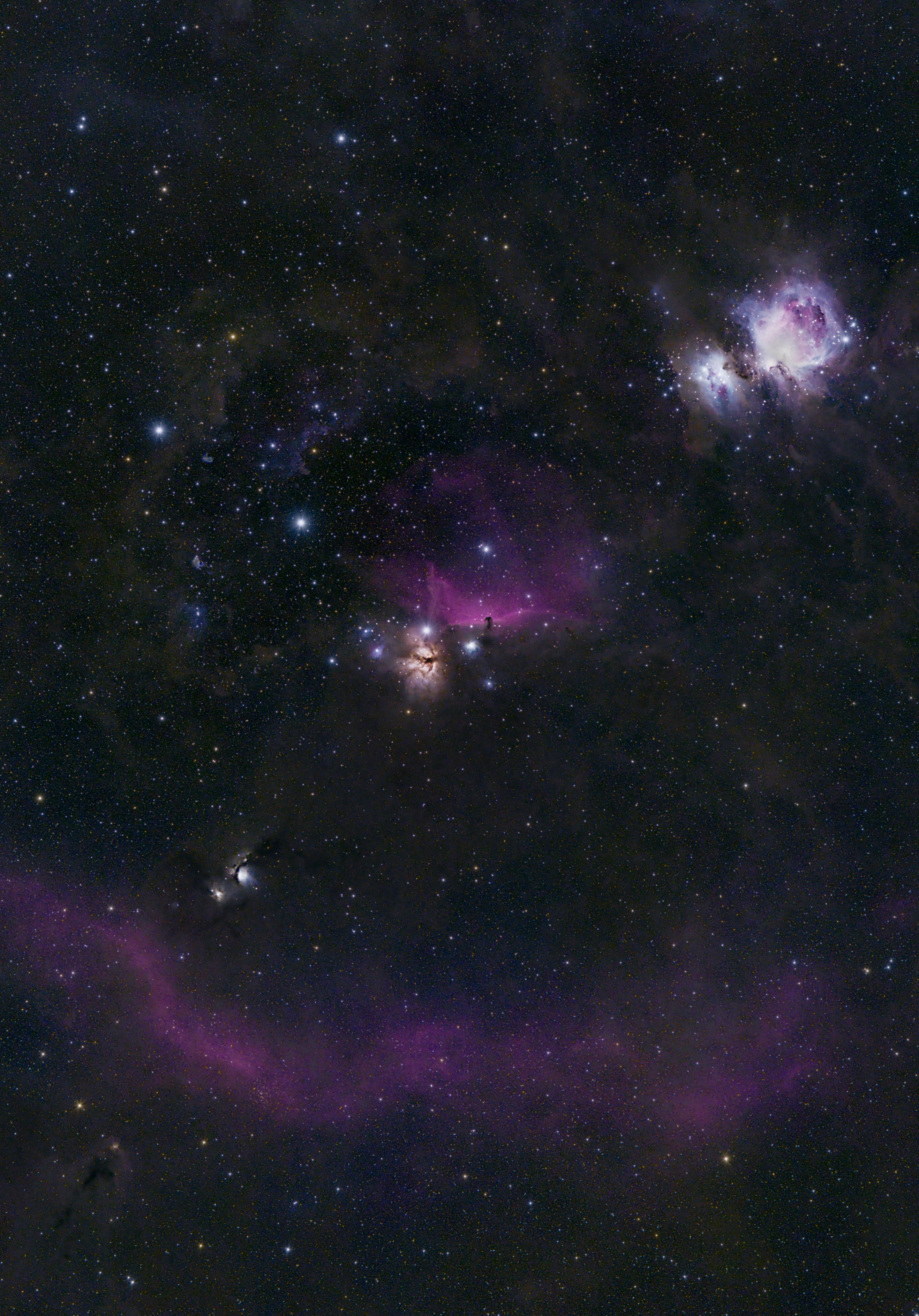
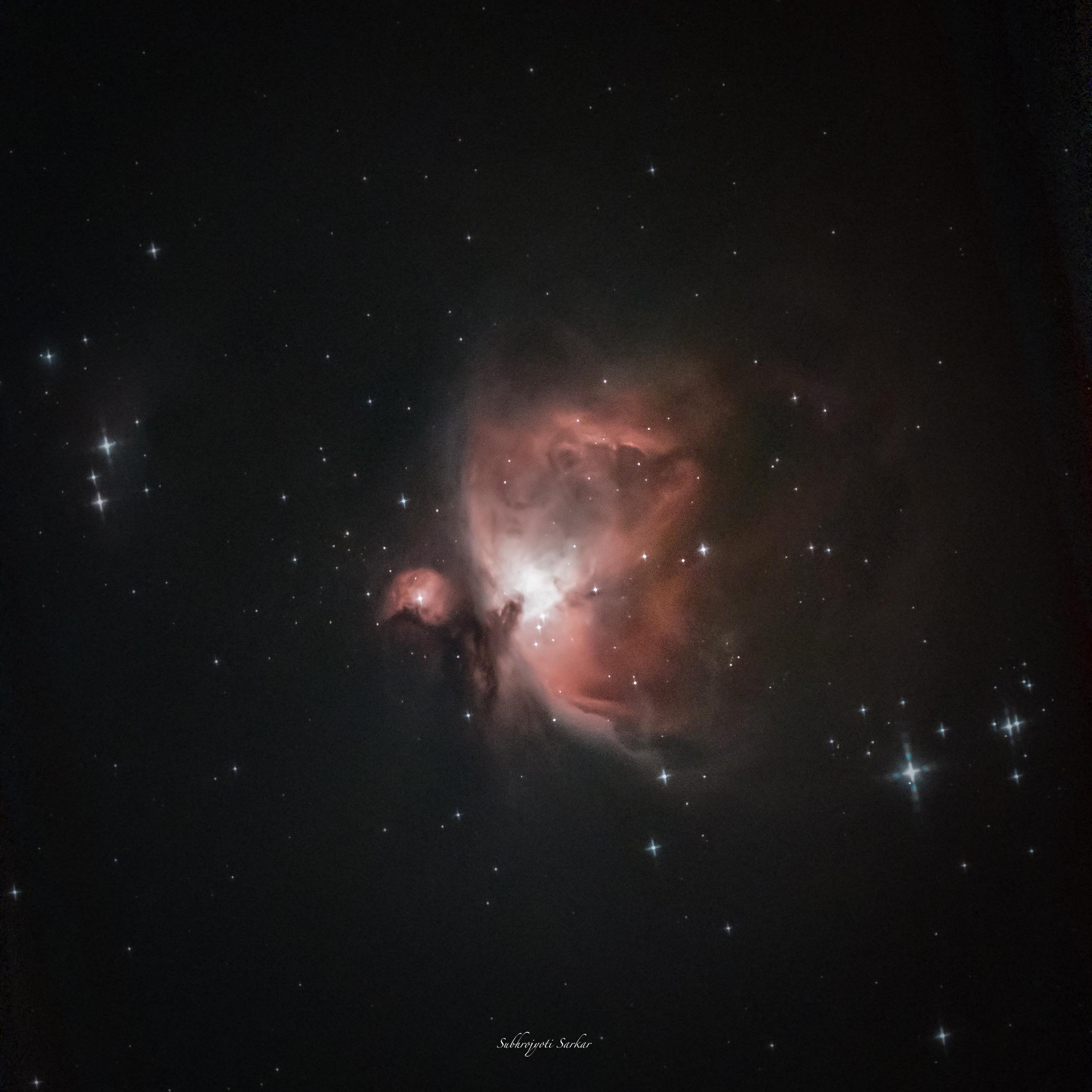
Orion nebulas
Nikon Z6II
Rokinon 135mm F2
SWSA
ZWO Asi 120mm mini
Sbvony 165 40mm
40x120s with calibrate frames
Postprocesing Siril, Photoshop and Lightroom
r/Stargazing • u/Straight_Run1871 • 9h ago
Aurora Borealis, 3D/Blender
I wanted to share a 3D artwork I created recently in Blender. Inspired by nature. No AI was used anywhere in this project.
r/Stargazing • u/Balrog-2602 • 18h ago
Saturn
galleryBack in September we visited an astronomical park in Italy and saw Saturn through a telescope. It was one of the most memorable moments of my life and a once in a lifetime experience. The first 2 photos are the ones we took through the telescope, the last one we received from the place after our trip.
r/Stargazing • u/Far_Number255 • 6h ago
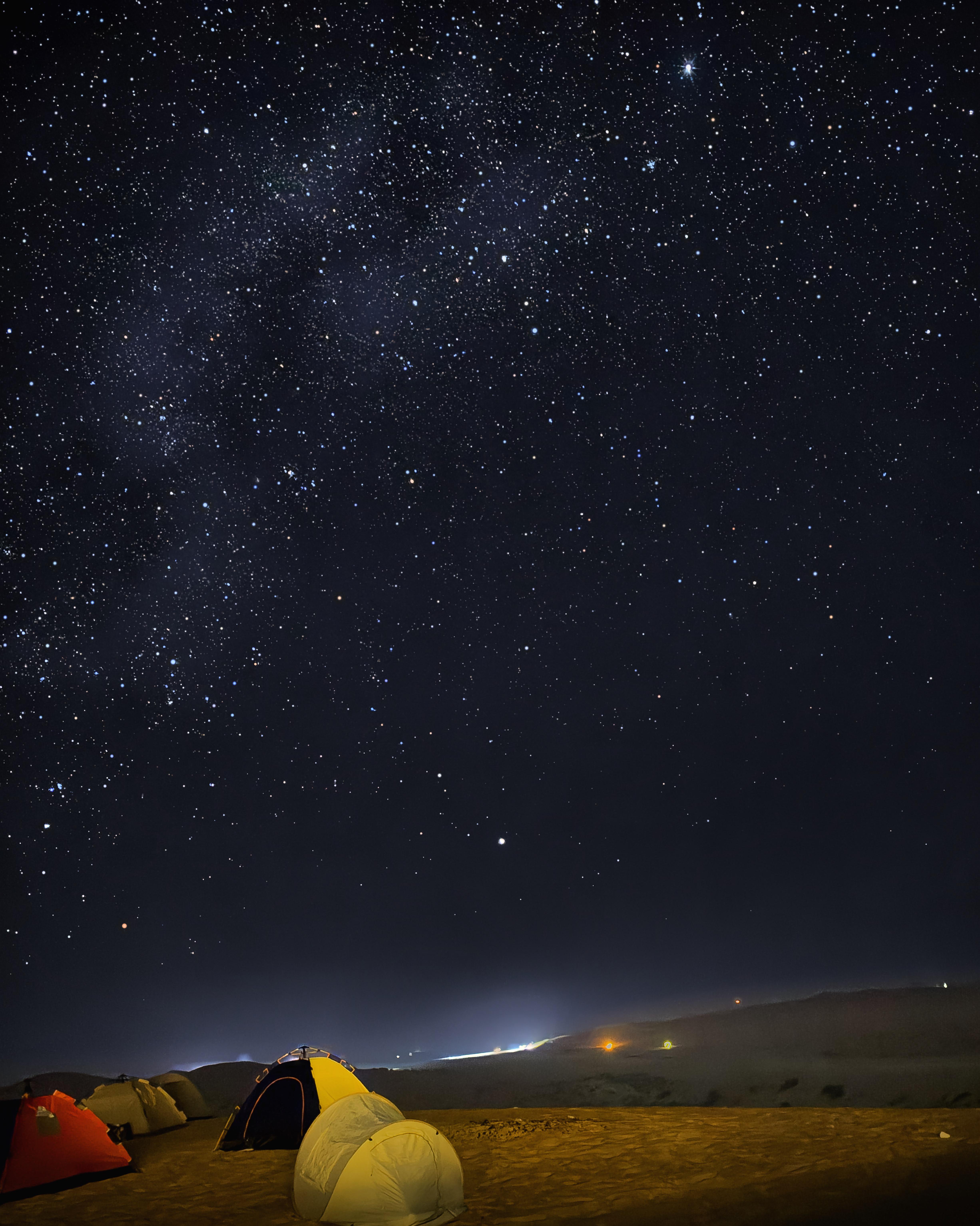
Far away from the city, the night sky is incredibly clear.
galleryr/Stargazing • u/huffpostuk • 19h ago
The November Supermoon Is On Its Way. Here’s When To See It In The UK
huffingtonpost.co.uk
r/Stargazing
•
u/Slow_Contribution114
•
2d ago
The Ghost of Cassiopeia
Captured using my Seestar S50 in EQ mode.
2000 x 20 second exposures in LP
1950 x 10 second exposures in IR Cut
Multiple nights and around 16 hours of integration total, throughout October to date.
Stacked in APP allowing the algorithm to detect IR Cut and Dual Narrowband subs, creating two separate stacks then blending them together.
I wanted to capture both the emission and reflection aspects of this region.
BGE, deconvolution and de-noise in Graxpert.
Star removal using StarNet through Siril.
GHS using human weighted luminance.
Curves adjustment using VeraLux Curves.
HDR Multiscale.
Conversion to SHO palette using Siril Dual Narrowband OSC to Hubble Palette.
Recombination of stars.
Slight saturation and contrast increase.
Thanks for looking
r/Stargazing • u/Adam-AstroNext • 19h ago
AstroNext Space: exploring star trails, eclipses and the sky in 3D
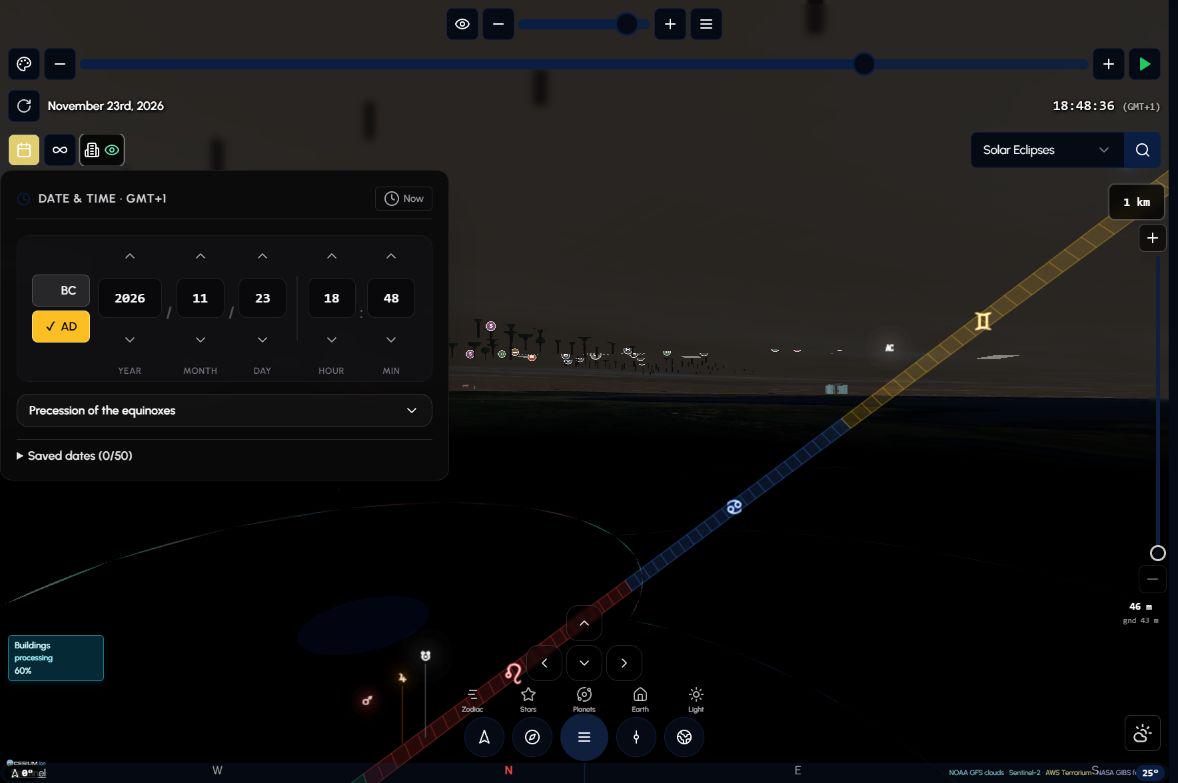
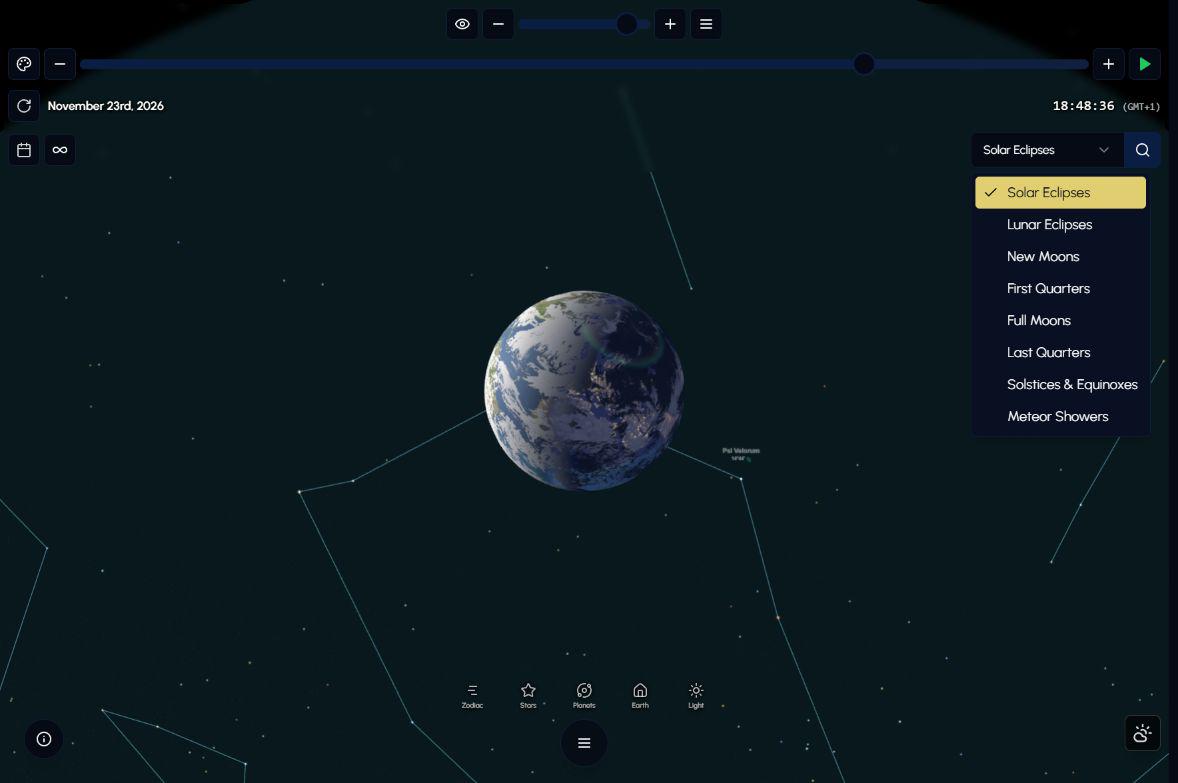
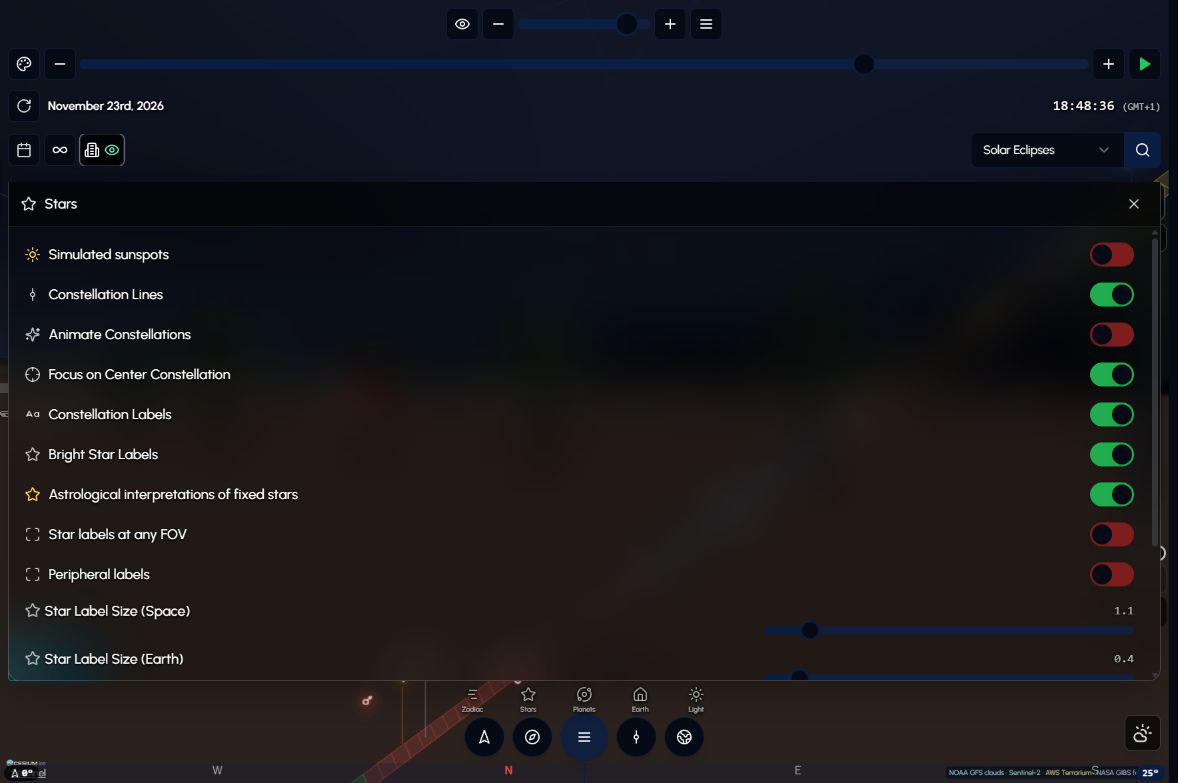
Hi everyone! I’m Adam, the creator of AstroNext Space, a browser-based 3D sky and space simulator. I wanted to share a few views and hear what fellow stargazers think.
You can explore the sky from different locations and dates, display stars and constellations, trace the apparent motion of stars, and compare the Sun’s path and analemmas throughout the year. You can also view solar and lunar eclipses from Earth or space, explore planetary orbits, and find astronomical events.
More features from the simulator:
• Search for eclipses, lunar phases, solstices, equinoxes and meteor showers, and move through dates to explore the sky in other eras.
• Use the phone’s gyroscope to orient the sky view; an experimental augmented-reality mode is available on compatible devices.
• Recreate views inspired by Apollo and Artemis imagery, comparing date, viewpoint and framing.
• Explore the changing day and night, atmospheric refraction, weather information and simulated auroras.
The screenshots are simulations from the app, not astrophotographs. Terrain and buildings are approximate, and 3D buildings are still experimental. The app is in early access and the base program is a paid, one-time purchase (€39.95).
Landing page: https://app.astronext.org/
I’d especially appreciate feedback on which features would be most useful for learning about or planning a night under the stars.

r/Stargazing • u/Newhorizons1975 • 2d ago
Nebusa cabeza de caballo y flama
Mosaico 1 por 1.3 tomada con dwarf mini, total tomas 240, obturador 30, ganancia 60, filtro duo band, apilado y procesado con stelar studio y snapseed.
r/Stargazing • u/RecentSorbet1214 • 1d ago
Captured mars 🔥🌻
Two days ago I possibly captured mars for the First time not edited yet but wait for the result until I get my primary telescope for better experience 🌻 I will try all of my best to remove light pollution and make it more obvious✨
r/Stargazing • u/JazzGuiselle • 1d ago
Hice una telescopio completo, con trípode y enfocador incluidos. Primera mirada a la Luna, pero necesito ayuda para que se vea más nítido
galleryr/Stargazing • u/Fresh_Heron7556 • 1d ago