
Track
Academic
Focus
Science, Technology, Engineering, Mathematics, Research
Key Subjects
- Specialized courses like Pre-Calculus, Basic Calculus, General Chemistry, General Physics, General Biology, and Research
- Hands-on projects like lab experiments, scientific research, and data analysis
Advantages
- Learning environments that combine theory with experimentation and real-world application
- A natural fit for students who enjoy patterns, solving technical problems, and understanding how things work
- A mindset grounded in logic, precision, and evidence-based thinking
- Exposure to breaking down and understanding complex systems
Science, Technology, Engineering and Mathematics
Thinking of pursuing the STEM strand in Senior High School? Not sure what to expect or where it might lead you? Whether you're a future innovator, problem-solver, or just someone fascinated by how things work, Science, Technology, Engineering, and Mathematics (STEM) might be your launching pad.
In this wiki guide, we’ll walk you through the essentials of the STEM strand in the Philippines — what it covers, the subjects you’ll explore, and the college courses and careers it can unlock. If you're curious about the universe, passionate about solving real-world problems, or dreaming of a future in medicine, tech, or engineering — this is for you.
What’s STEM All About? 📚
The Science, Technology, Engineering, and Mathematics (STEM) strand is one of the academic tracks available in the Senior High School program in the Philippines. This two-year curriculum is designed for students who are drawn to scientific discovery, technical skills, problem-solving, and analytical thinking.
STEM builds a strong academic foundation across the core sciences and math— from understanding how the natural world works, exploring the principles of engineering, to applying technology in innovative ways. It emphasizes both conceptual learning and hands-on experience through experiments, research projects, and lab work, helping students develop critical thinking skills that are essential in modern fields.
STEM students are trained to approach challenges methodically, think logically, and create data-driven solutions. The strand opens up diverse college and career paths, especially in areas like engineering, medicine, computer science, architecture, and environmental science.
Redditor’s Take: Honest Thoughts on the STEM Strand 🗣️👀
Who is STEM For? 🙋♂️
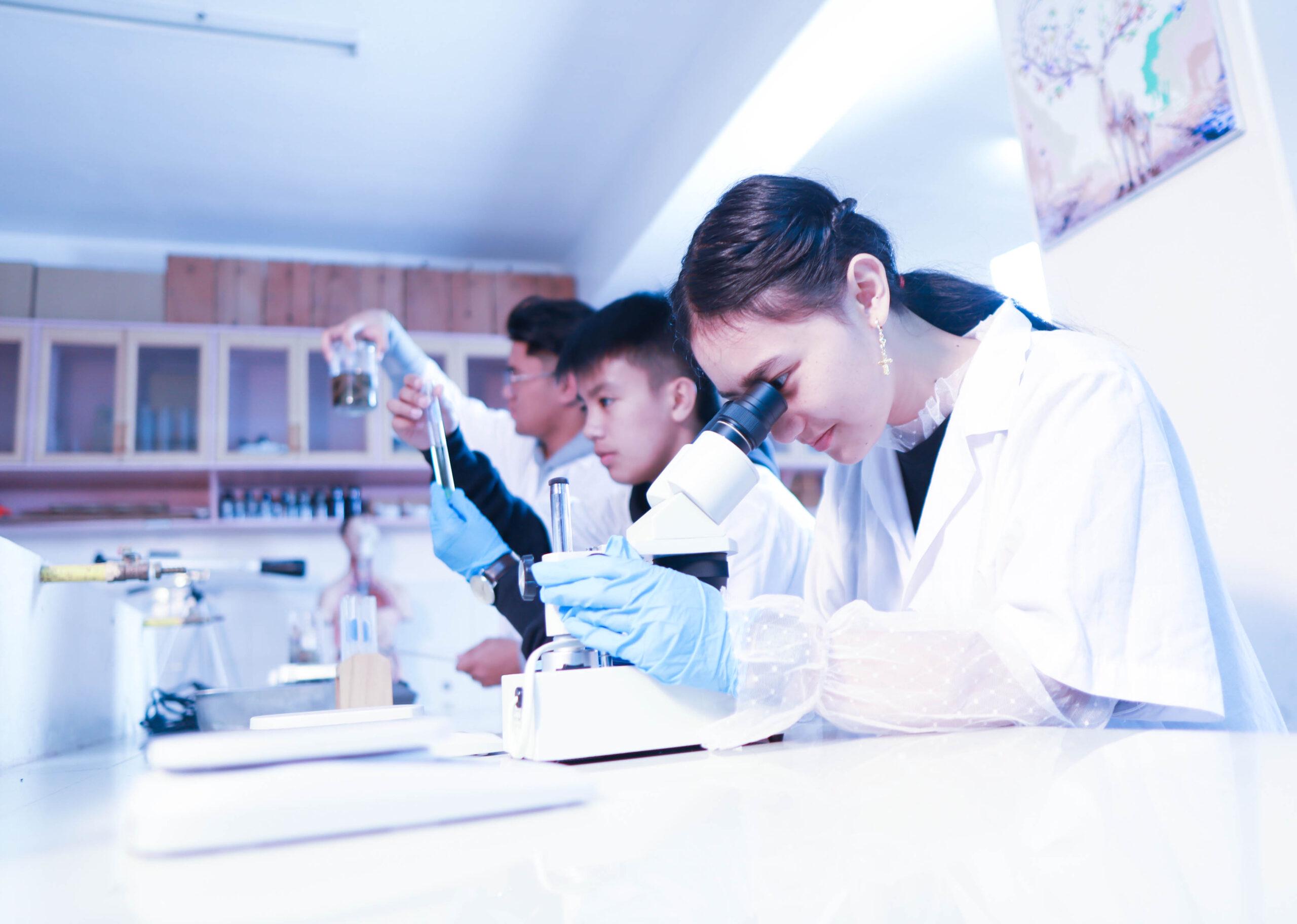
- Excel in or enjoy math, science, and research
- Enjoy solving puzzles, doing experiments, or coding
- Can think critically and process information systematically
- Are interested in careers that involve innovation, design, discovery, or diagnostics
- Are open to learning technical skills such as coding, data analysis, or lab work
STEM students often:
- Have strong problem-solving skills and a methodical mindset
- Are comfortable with numbers, formulas, and patterns
- Value accuracy, precision, and logical reasoning
- Enjoy building, designing, or experimenting
If you enjoy thinking deeply, working through challenges step by step, and using logic to understand or improve the world around you — STEM will help you sharpen those skills even further.
Why Choose STEM? A Redditor’s Perspective 🧩
STEM Curriculum 📝
The STEM strand features a rigorous and specialized curriculum designed to strengthen your skills in science, mathematics, and technology. The subjects are structured to build a deep understanding of scientific principles, analytical thinking, and problem-solving — essential foundations for fields like engineering, medicine, IT, and research.
Each course is intended to challenge your logic, enhance your quantitative skills, and introduce you to the scientific method through hands-on experiments and technical applications.
According to the Department of Education, this is the 2-year suggested curriculum for Science, Technology, Engineering, and Mathematics students.
Grade 11, 1st Semester
| Subject | Classification | Prerequisite |
|---|---|---|
| Oral Communication in Context | Core Subject | N/A |
| Komunikasyon at Pananaliksik sa Wika at Kulturang Pilipino | N/A | |
| General Mathematics | N/A | |
| Earth and Life Science | N/A | |
| Introduction to the Philosophy of the Human Person | N/A | |
| Physical Education and Health | N/A | |
| Empowerment Technologies (ETech): ICT for Professional Tracks | Contextualized Subject | N/A |
| Pre-Calculus | Specialization Subject | N/A |
Grade 11, 2nd Semester
| Subject | Classification | Prerequisite |
|---|---|---|
| Reading and Writing Skills | Core Subject | N/A |
| Pagbasa at Pagsusuri ng Iba’tIbang Teksto Tungo sa Pananaliksik | N/A | |
| Statistics and Probability | N/A | |
| Disaster Readiness and Risk Reduction | N/A | |
| Personal Development / Pansariling Kaunlaran | N/A | |
| Physical Education and Health | N/A | |
| Research in Daily Life 1 | Contextualized Subject | N/A |
| Basic Calculus | Specialization Subject | N/A |
| General Chemistry 1 | N/A |
Grade 12, 1st Semester
| Subject | Classification | Prerequisite |
|---|---|---|
| 21st Century Literature from the Philippines and the World | Core Subject | N/A |
| Contemporary Philippine Arts from the Regions | N/A | |
| Media and Information Literacy | N/A | |
| Understanding Culture, Society and Politics | N/A | |
| Physical Education and Health | N/A | |
| English for Academic and Professional Purposes | Contextualized Subject | N/A |
| Pagsulat sa Filipino sa Piling Larangan (Akademik) | N/A | |
| General Physics 1 | Specialization Subject | Pre-Calculus, Calculus |
| General Biology 1 | N/A |
Grade 12, 2nd Semester
| Subject | Classification | Prerequisite |
|---|---|---|
| Physical Education and Health | Core Subject | N/A |
| Research in Daily Life 2 | Contextualized Subject | Statistics and Probability |
| Entrepreneurship | N/A | |
| Research Project | N/A | |
| General Physics 2 | Specialization Subject | General Physics 1 |
| General Biology 2 | General Biology 1 | |
| General Chemistry 2 | General Chemistry 1 | |
| Research/Capstone Project | N/A |
Specialization Subjects in STEM: What to Expect 🎯
| Subject | Description |
|---|---|
| Pre-Calculus | Introduces you to advanced algebra, trigonometry, and analytical geometry—essential tools for tackling higher-level math and science problems. |
| Basic Calculus | Delves into limits, derivatives, and integrals, providing a foundation for understanding change and motion in various scientific contexts. |
| General Chemistry 1 | Explores the structure of matter, chemical bonding, and stoichiometry, laying the groundwork for understanding chemical reactions and properties. |
| General Physics 1 | Covers mechanics, kinematics, and energy principles, helping you grasp the physical laws that govern motion and forces. |
| General Biology 1 | Introduces cell biology, genetics, and molecular biology, offering a microscopic view of life processes and heredity. |
| General Physics 2 | Examines electricity, magnetism, and optics, providing insights into the behavior of electric circuits and light phenomena. |
| General Biology 2 | Explores anatomy, physiology, and ecology, broadening your understanding of organism functions and environmental interactions. |
| General Chemistry 2 | Focuses on thermodynamics, chemical kinetics, and equilibrium, deepening your comprehension of chemical processes and systems. |
Note: Some schools might have unique subjects such as Medical Technology, Nursing, etc. It is best to ask your school administrator about this.
STEM Tip from a Redditor 💡
College Courses and Career Opportunities After STEM 🔍
So, what’s next after finishing the STEM strand? Whether you’re pursuing higher education or planning for future specializations, STEM opens up a wide range of science and technology-based fields where logic, precision, and innovation are key.
College Courses You Can Take After STEM 🎓
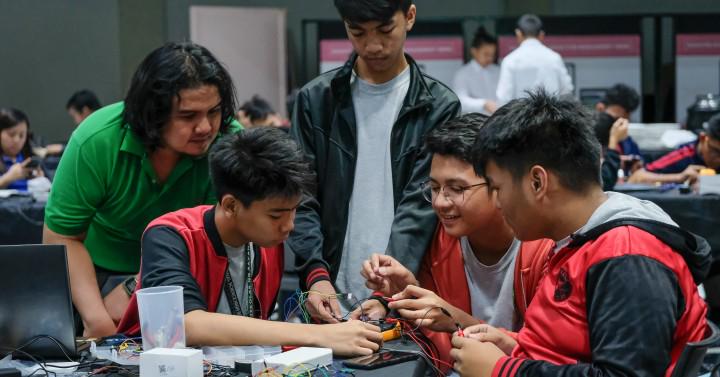
The STEM strand provides a strong academic foundation for any course related to science, engineering, health, math, and technology. Here are some of the most popular college programs for STEM grads:
- BS in Engineering (Civil, Mechanical, Electrical, Electronics, etc.)
- BS in Architecture
- BS in Biology / Molecular Biology and Biotechnology
- BS in Chemistry / Biochemistry
- BS in Computer Science / Information Technology
- BS in Mathematics / Applied Math / Statistics
- BS in Physics / Applied Physics
- BS in Nursing / Medical Technology / Radiologic Technology
- BS in Pharmacy

Career Paths You Can Explore 🧪
Depending on your college path and long-term interests, here are some roles you could grow into:
- Engineer (Civil, Mechanical, Electrical, etc.)
- Architect
- Medical Doctor
- Nurse / Medical Technologist / Pharmacist
- Software Developer / Web or App Developer
- Data Analyst / Statistician
- Scientist / Researcher
- Environmental Specialist
- IT Specialist / Network Administrator
- Science Educator / Academic Researcher