r/worldbuilding • u/OuterPlanets I love making planets • 10d ago
Lore Sorkyon: God's blindspot.
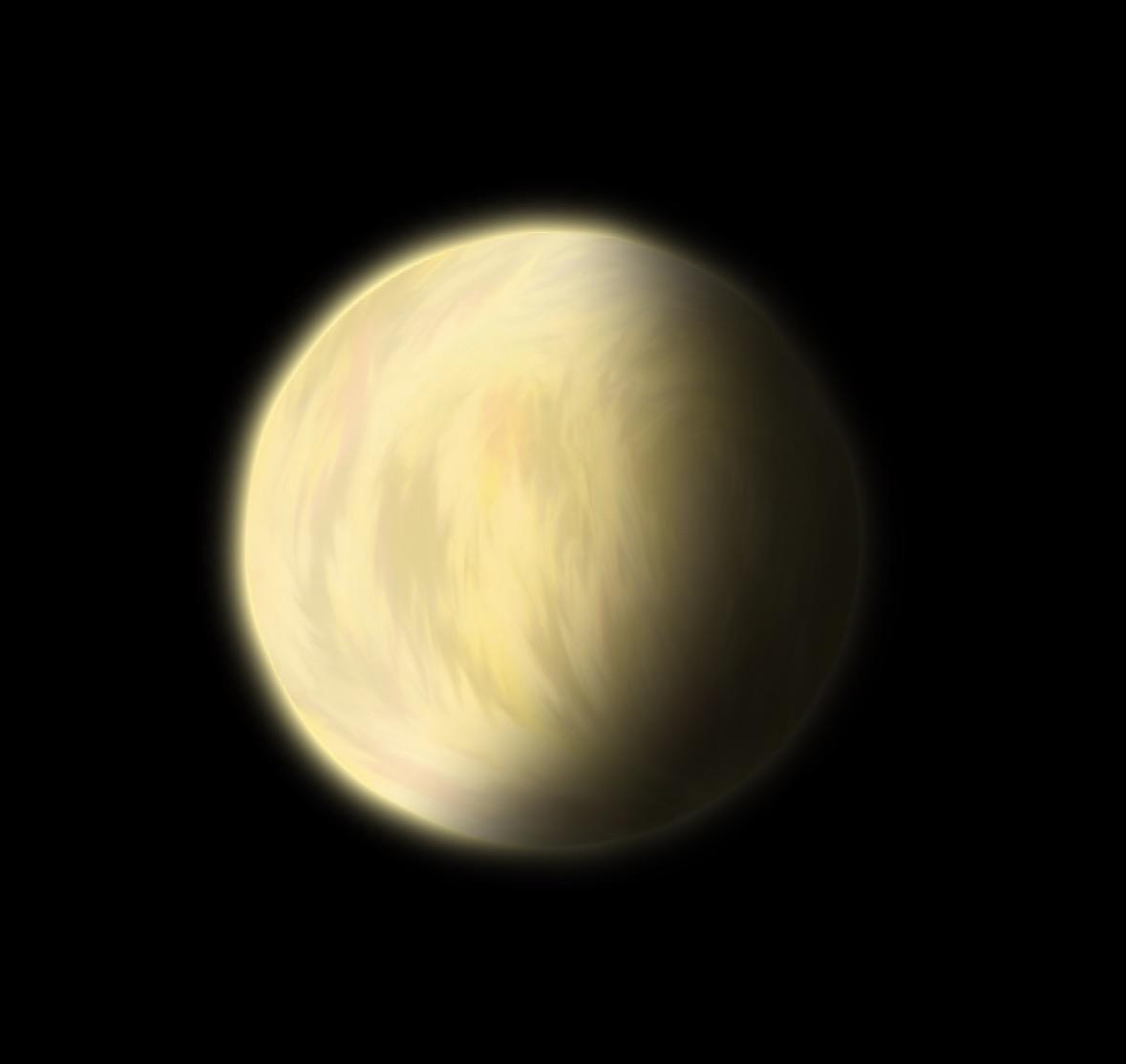
(For Th'zoitrk, a semi-sci-fi worldbuilding project.)
Sorkyon is the central habitable zone planet, nested right in between the other two habitable zone planets Oukapul and Th’zoitrk, making it the 10th planet in the solar system. It is not habitable.
Sorkyon’s surface area is roughly ~416,599,588 square kilometers. Sorkyon has an equatorial diameter of 11,516 kilometers. Overall, this makes Sorkyon very close to earth in size. Sorkyon is only marginally smaller than earth, but a fair bit denser, leading to a surface gravity of 1.15 G’s. Sorkyon’s atmosphere is composed of ~76% nitrogen, ~14% oxygen, and ~10% carbon dioxide, sitting at 3.11 bar. This is, also, very earth-like (at least, earth-like for any non-earth planet.) Sorkyon even has water in the form of liquid rain.
That’s where the similarities end.
Sorkyon is the single most geologically active body in the entire solar system, even more active than Pimine, a sub-moon which is literally blowing itself apart with lava geysers via tidal forces. Sorkyon experiences frequent, almost daily earthquakes across much of the planet’s surface. Any given location on Sorkyon sees an earthquake of magnitude 3.0 or above at an average of once every 14 hours.
Any given location on Sorkyon sees an earthquake of magnitude 5.0 or above at an average of once every week.
Sorkyon is criss-crossed by mountain ranges across much of its surface, the vast majority of which are volcanos. Sorkyon has more volcanos than every other terrestrial body in the solar system, including moons, combined. The meridian ridge, a ‘volcano range’ set as Sorkyon’s prime meridian line, is a continuous, 8,442km mountain range comprised exclusively of volcanos which runs almost perfectly north-to-south. Only three of these volcanos are inactive.
Sorkyon’s three moons, Elzoitrk, Sirkaun, and Oukamu’oh, have names which when translated from Ikshish mean ‘fear’, ‘panic’, and ‘dread.’
And they earned them.
Sorkyon’s surface experiences frequent fissures. Through these ‘cracks’ in the crust sulfur particles from the deeper interior of the planet leech into the atmosphere. Sulfur aerosols give Sorkyon its golden hue. These sulfur aerosols combine with water vapor in the air to form sulfuric acid rain clouds. This sulfuric acid slowly leeches back into the crust like groundwater on earth, returning the sulfur to the dirt. But before they can get there they form oceans of sulfuric acid which stretch across nearly a quarter of the planet.
Due to Sorkyon's extreme surface temperature, these sulfuric acid oceans are in a continuous state of boiling away as they are replenished by sulfuric acid vapors in the air & those seeping up from the soil below.
The carbon dioxide of the air creates an intense greenhouse effect, keeping Sorkyon’s surface unbearably hot, far above the boiling point of water. At an average of ~302°C, Sorkyon is the fourth hottest planet in the solar system after Puloshi, Ripazuru, and Pikaravi.
The higher you go in the atmosphere, the cooler the air gets. In the upper atmosphere water vapor can cool down low enough to condense into rain clouds which then rain liquid water droplets down toward the ground. However, they never reach the surface.
Long before any water rain can reach the ground they pass through the thick layer of aerosolized sulfur material and enter the much, much hotter lower atmosphere. This water evaporates almost instantly, turning into water vapor. The expansion of this vapor as the conversion from liquid to gas decreases density causes the steam to begin rising very rapidly, creating columns of super-heated steam tunneling upwards into the upper atmosphere of Sorkyon at speeds reaching as high as 240 km/h.
These vertical convection currents create large amounts of friction in the atmosphere as the water vapor moves up, rains down, evaporates, and moves up again at much, much greater speed than on earth. This friction creates even more extreme temperature variations in the air and, as a result, electric charges are built up. These charges power lightning storms across the entire surface.
Sorkyon sees an average of 6-8 lightning strikes per minute, per 100 square kilometers. This is roughly 13,500x more lightning than earth. With any given patch of land on Sorkyon receiving more lightning per day than an equivalent piece of land would see per decade on earth.
So much lightning that the flashes of storms on Sorkyon light up the night side of the planet with a faint glow visible from space, one of only a few planets with a self-illuminated night hemisphere.
Sorkyon's very low CO2 content in the air is extremely surprising, and has lead to the belief that this behavior on Sorkyon is very new. It's unlikely that Sorkyon's current state of tectonic hyper-activity has been going for more than a few hundred-thousand years.
Sorkyon is the closest planet to Th’zoitrk, with a close size, close gravity, and close atmospheric composition, but it is not habitable.
We cannot go there.
We cannot live there.