r/AIDKE • u/Bayou-Lafourche • 7h ago
Reptile Armadillo girdled lizard (Ouroborus cataphractus) in defensive mode
126
Upvotes
r/AIDKE • u/Bayou-Lafourche • 1d ago
This was filmed in 4K in Monterey Canyon at a depth of 600 m in Oct 2026.
r/AIDKE
•
u/Bayou-Lafourche
•
1d ago

r/AIDKE • u/Bayou-Lafourche • 2d ago
This lobate ctenophore is flaring its lobes in reaction to the ROV's propeller-driven thrusters. The video was recorded at a depth of roughly 3753 ft (1144 m) in the Indian Ocean off the east coast of Africa near an offshore oil/gas drill wellhead. Credit: Captain JRD

This poriferan has stunning red color and usually comes with hermit crab inside! They live in ocean near North Gyeongsang Province and usually found attached to fish net. They are found in 80~100m depth and called as “Youngil Pseudo-Cork Sponge” in Korean! The Image is from a book called “Korean Invertebrate Fauna”.
r/AIDKE • u/Bayou-Lafourche • 3d ago
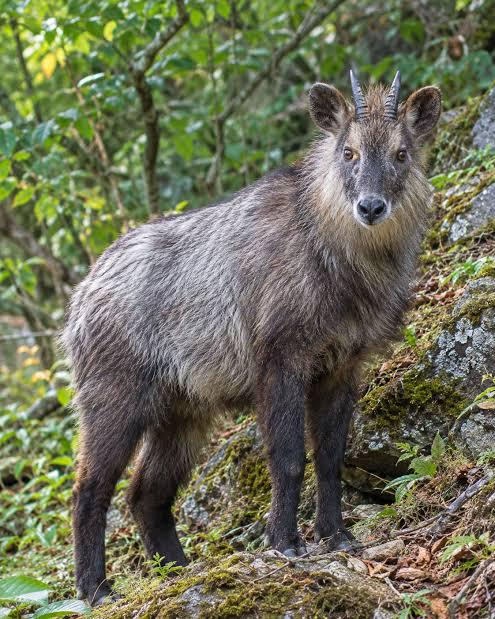
Native to high-elevation forests of Mexico
r/AIDKE • u/Openly_Unknown7858 • 3d ago

The Siberian Musk Deer male grows long canines instead of antlers, and the pod on it's abdomen is where genuine musk is harvested before being used in perfumes or soaps. They are also the only deer with a gall bladder.
r/AIDKE • u/gold-raspberry-roses • 4d ago

The Mount Kaputar pink slug (Triboniophorus sp. nov. 'Kaputar') is a giant, fluorescent pink slug found exclusively on Mount Kaputar, an extinct volcano and high-altitude "sky island" in New South Wales, Australia. It grows up to 8 inches long.
r/AIDKE • u/littlelexilassen • 5d ago

Obsessed with this blue mini dinosaur! Found nowhere else on earth, down to fewer than 25 wild adults I read! Thought it was super cool and wanted to share.
r/AIDKE • u/kazthelad • 6d ago

r/AIDKE • u/Bayou-Lafourche • 7d ago
No species name is currently available
r/AIDKE • u/schlutty • 8d ago

Average Length: 12-18 inches (30-45 cm) excluding the tail
Average Weight: 5.5-9.9 lbs (2.5-4.5 kg) with males being larger than the females
Average Lifespan: 6-10 years in the wild, 10-12 years in captivity
I know you're wondering why it's named that. Let's work backwards on that name and save the best for last! Armadillo, their Spanish name, means "little armored one" due to their protective carapace. As you can also see, they're covered in long, fine hairs which sets it apart from other armadillo species. And finally, they let out a high-pitched scream when feeling scared or threatened which can be heard from up to 200 meters away. A video of their namesake scream can be found HERE.
This South American animal was first described to science in 1865 by J.E. Gray and has two recognized subspecies (C. v. vellerosus and C. v. pannosus), though their subspecies status is subject to an ongoing debate.
They are primarily a desert inhabitant and prefer the loose sandy, soil in which they create extensive tunnels. These tunnels, in turn, provide aeration to the soil. To beat the scorching heat, they spend most of their time deep in their cooler burrows while being nocturnal during summer and diurnal in winter. Other than for mating or rearing pups, these armadillos are solitary in nature. The females' gestation period lasts about 60-75 days, and she produces two litters of 1-3 pups each per year.
Their diet is omnivorous and consists of (primarily) insects, vertebrates, and plants. When they come across a carcass, the armadillo will burrow underneath and ambush any bugs that were drawn to the area to feast on the carcass. Because of the landscape and way they catch/ingest their prey, it's been found that sand can take up as much as 50% of the volume of their stomachs! Their kidneys are highly efficient which allows them to go long periods without water. Most of their water consumption comes from the foods they eat.

This unique armadillo is found in parts of the Gran Chaco and Pampas areas of Argentina, Bolivia, and Paraguay with another isolated population found in the eastern Buenos Aires Province in Argentina.
The Screaming Hairy Armadillo is currently listed as Least Concern per the IUCN. However, it still faces threats from being hunted for meat or for the carapace to make charangos (a type of musical instrument), being killed my hunting dogs as it is sometimes seen as an agricultural nuisance, and mining in parts Argentina.