r/AIProgrammingHardware • u/Safe-Dentist565 • 1d ago
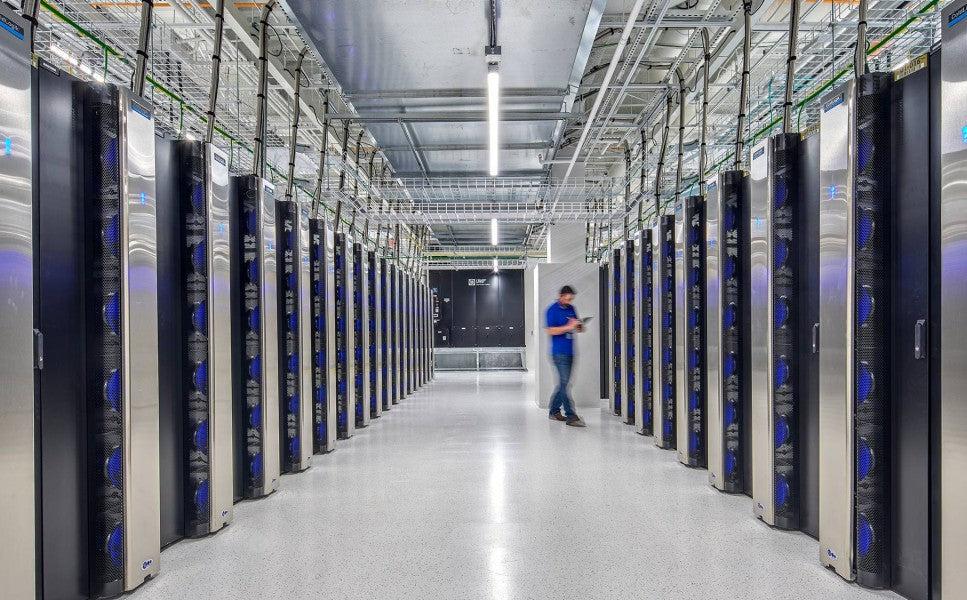
Looking for Recommendations: Best On-Premise AI Cluster for Company Use
1
Upvotes
r/AIProgrammingHardware • u/Safe-Dentist565 • 1d ago
r/AIProgrammingHardware • u/javaeeeee • 2d ago
r/AIProgrammingHardware • u/clay-tri1 • 2d ago
Curious if this would have been a better place to post my question. I’m torn on what to do with this laptop.
r/AIProgrammingHardware • u/delicoban33 • 3d ago
r/AIProgrammingHardware • u/javaeeeee • 3d ago

r/AIProgrammingHardware • u/javaeeeee • 3d ago

r/AIProgrammingHardware • u/javaeeeee • 3d ago

r/AIProgrammingHardware • u/javaeeeee • 3d ago
r/AIProgrammingHardware • u/TheseAd5095 • 4d ago
r/AIProgrammingHardware • u/PhysicsDisastrous462 • 5d ago
so, i've got another release out! v0.2.6 is now published, and this one ended up being a pretty big performance improvement over v0.2.5.
for a bit of context, v0.2.5 introduced the P3 update to the Full FP16 WMMA path. that improved the final accumulator merge by summing all eight partials in FP32 before rounding once to FP16. i wanted to keep that work intact and see if i could get more performance out of the kernel without changing the actual math.
that's where C1 came in.
the main change is in how operand data gets loaded and staged into shared memory. previously, each thread was doing four global loads and shared-memory stores in sequence, with each store following its corresponding load. C1 changes that ordering: it issues the four 32-bit global loads first, then does the shared-memory stores.
it's a fairly small change when you look at the code, but it gives the GPU more opportunity to overlap the memory operations instead of waiting on each load/store pair. the arithmetic and accumulation order haven't changed.
and importantly, P3 hasn't been removed. C1 is used when the workload meets the required geometry checks, while P3 is still there as the fallback for everything that doesn't qualify. i didn't want a performance optimization to accidentally turn into a regression on shapes it wasn't designed for.
the performance results were honestly a lot better than i expected:
these are measured against the v0.2.5 P3 kernel, using GPU timestamps and 24 paired measurement blocks per workload.
2048×768×2048 — 1.7074× faster512×2048×768 — 1.3286× faster512×768×768 — 2.0920× faster128×8192×768 — 1.3782× fasterthat's roughly a 70.7%, 32.9%, 109.2%, and 37.8% improvement respectively. all four workloads passed independently, and even the lower bounds of their corrected 95% confidence intervals stayed above 1.31×.
i also wanted to make absolutely sure that the performance wasn't coming at the expense of numerical consistency.
across eight seeds and five configurations, the new production path produced 120/120 bit-identical outputs compared with the preserved v0.2.5 results. the production tile16 numerical gate also passed 37/37 on every seed, with the maximum absolute error staying at 0.03125, exactly within the existing hard limit.
so, at least for the workloads i've qualified, this is a pretty nice situation: substantially faster, without changing the outputs.
there's a bit more going on with the dispatch selection too.
C1 isn't just enabled for anything that happens to be large enough. the host checks full tile coverage, even packed-pair strides, the actual operand buffer capacities, and the relevant 32-bit index bounds before selecting it. if a shape doesn't meet those requirements, it uses P3 instead.
i tested this with the packaged binaries as well. a rows=64 workload selected C1 and produced 8 cooperative C1 dispatches. a rows=80 workload, despite being above the existing profitability floor at around 20.97 million MACs, didn't meet the tile coverage requirements and correctly fell back to P3 for 4 dispatches. with WMMA disabled, there were zero cooperative dispatches.
the packaged logits checks also completed successfully. the C1 route had a maximum absolute difference of 0.00079345 and an RMS difference of 0.00012127; the P3 fallback had the same maximum absolute difference, with an RMS difference of 0.00012087.
the portable Windows package is included again.
it's a Windows x64 portable package with seven executables, built with a statically linked MSVC runtime. you shouldn't need to install Rust, Cargo, Python, PyTorch, Visual Studio, or the MSVC redistributable just to run it.
you will still need a compatible Vulkan-capable GPU driver and the Vulkan runtime loader, and model weights aren't included.
WMMA is still opt-in globally, so the default remains off. to use this path, you need to explicitly select --wmma-mode full-fp16. C1 is now the preferred implementation inside Full FP16 when the workload qualifies, with P3 handling the fallback cases. the Mixed precision path is separate and hasn't been replaced.
there are still some limitations worth mentioning. i've only qualified this on my AMD Radeon Graphics adapter, PCI ID 1002:15bf (RDNA3 / Phoenix), running Windows 11 with driver 32.0.32015.14001. i haven't tested a second GPU, non-AMD hardware, or independent clean-machine acceptance yet. the binaries are also still unsigned.
there's a small reporting issue too: precision-info still reports full_fp16_qualified=false on this newer driver because its driver allowlist hasn't caught up with the qualification profile. the actual v0.2.6 qualification results are documented separately. i also haven't exercised the native V4.1 trainer and hierarchos-infer end-to-end yet.
anyway, i'm really happy with how this release turned out. i went into this wanting to see if there was still meaningful performance left in the Full FP16 path without messing with the numerical behavior that took so long to get right. seeing all four workloads improve this much, while keeping the outputs bit-identical, was a pretty great result.
a lot of time went into testing this one, and i'm glad i can finally get it out there instead of continuing to sit on it!
Release: https://github.com/necat101/Hierarchos-Native/releases/tag/v0.2.6
Source: https://github.com/necat101/Hierarchos-Native
thank you to everyone who's been following the project, testing things, reporting issues, or just keeping an eye on development. it genuinely means a lot!!
also, sorry for the AI posts lately. i've been trying to save as much time as possible to work on the project itself, especially with live events getting tough. i really do appreciate everyone who's stuck around while i've been working on this. thank you so much everyone!! :3
r/AIProgrammingHardware • u/PopeDetective • 5d ago
Hey all,
So I'm a frontend dev and lately I've decided to get a bit more into advanced AI and architecture.
I have this gaming PC with 32GB RAM and an RTX 4070 SUPER 16GB and I've decided to turn it into a workstation to install a small LLM and have it run a couple agents. These agents will run 24/7 and pick up tasks based on some Trello board (still haven't decided how it will pick up new tasks or even if running it 24/7). I also have an old Razer Blade laptop that will handle orchestration, provide tasks to the PC and basically act as the control panel where i can see logs, results etc.
I guess one thing i wanted to ask is is the GPU any good to run a local LLM, what about image & video generation? Is Ollama the best open source option out there? Also, does anyone have any advice for someone who is just getting started with this stuff? Projects, any setup advice, etc.?
Thanks!
r/AIProgrammingHardware • u/javaeeeee • 5d ago

r/AIProgrammingHardware • u/Pendraks • 6d ago
r/AIProgrammingHardware • u/PhysicsDisastrous462 • 6d ago
so, after quite a bit of work since the v0.2.0 release, i've finally managed to get v0.2.5 published!
for anyone who followed the previous release, v0.2.0 was where i first introduced the opt-in RDNA3 WMMA implementation. since then i've been working on improving the Full FP16 path, specifically its numerical accuracy and performance, without having to sacrifice the execution structure that was already working.
the biggest change in this release is something i've been calling P3.
previously, the Full FP16 WMMA kernel merged its eight accumulator-bank partials using multiple intermediate FP16 additions. this meant that the result was rounded to FP16 several times along the way. P3 changes that final merge so all eight partials are summed in FP32, with just one final rounding to FP16.
the actual two-wave workgroup structure, K-slice stream, bank assignment, staging, cooperative multiplication and barriers are all preserved. i wanted to improve the accuracy of the final result without having to redesign the kernel all over again.
some of the results from the new qualification:
0.03035259 to 0.02593803.0.03125, meeting the existing hard numerical limit.i also ran another full performance sweep. this time using 24 paired measurement blocks per workload, GPU timestamps, and corrected 95% confidence intervals.
the measured improvements against the preserved Main kernel baseline were:
2048×768×2048 — 1.0243×512×2048×768 — 1.1246×512×768×768 — 1.1163×128×8192×768 — 1.2722×all four protected workloads passed independently, including the lower bounds of their confidence intervals. the largest measured improvement was around 27%.
just to clarify, these are per-dispatch GPU GEMM measurements, not end-to-end training speedups. i don't want to imply that an entire training run is suddenly 27% faster when that isn't what was measured.
there were some other changes too.
i tightened up the production dispatch admission so the profitability predicate is checked against each actual batch, rather than relying only on the maximum batch size supplied when creating the projection. the existing 16,000,000 MAC profitability floor has not changed.
i also went through the actual portable binaries and verified that they dispatch the P3 kernel when an eligible workload is supplied. the packaged trainer produced 8 cooperative P3 dispatches, and the packaged logits executable produced another 3. disabling WMMA resulted in zero cooperative dispatches, as expected.
the numerical comparison for the packaged logits test covered 262,144 finite elements, with a maximum absolute difference of 0.000738330 and RMS difference of 0.000122237.
the new release is available as a portable Windows x64 package too.
i've included seven executables, and the package was built with a statically linked MSVC runtime. there's no need to install Rust, Cargo, Python, PyTorch, Visual Studio, or the MSVC redistributable just to run it.
you will still need a compatible Vulkan-capable GPU driver and the Vulkan runtime loader. model weights aren't included.
one thing i want to make clear is that WMMA is still opt-in globally. the default is still off, and you have to explicitly select full-fp16 to use the P3 path. P3 is simply the default implementation within that mode. the Mixed precision path is separate and hasn't been replaced.
the hardware qualification was performed on my AMD Radeon Graphics adapter, PCI ID 1002:15bf (RDNA3 / Phoenix). i haven't qualified this on every RDNA3 GPU, RDNA3.5, RDNA4, Intel or NVIDIA hardware, so please don't assume universal compatibility.
there are still things i haven't been able to test, including independent clean-machine/second-device acceptance, GUI interaction, Windows 10 acceptance, and code signing. the executables are currently unsigned.
anyway, i'm really happy to finally have this one out. v0.2.0 was the first public release of the WMMA implementation, and v0.2.5 is a pretty substantial improvement to that foundation. a lot of time went into checking that the numerical improvements were real, that the performance was actually measurable, and that the distributed binaries were doing what they were supposed to do.
Release: https://github.com/necat101/Hierarchos-Native/releases/tag/v0.2.5
Source: https://github.com/necat101/Hierarchos-Native
thank you to everyone who's been following the project, testing things, reporting issues, or just keeping an eye on development. it genuinely means a lot! thank you so much everyone!! :3 also, sorry for the AI posts lately, I've been trying to save as much time as possible to work on the project itself due to live events getting tough! this one is completely human written! :3
r/AIProgrammingHardware • u/xrothgarx • 6d ago

r/AIProgrammingHardware • u/Zyzzerone • 7d ago

r/AIProgrammingHardware • u/javaeeeee • 7d ago

r/AIProgrammingHardware • u/Tricky_School_4613 • 8d ago
r/AIProgrammingHardware • u/M83Spinnaker • 9d ago
Reposting here out of curiosity in the marketplace.
r/AIProgrammingHardware • u/javaeeeee • 9d ago

r/AIProgrammingHardware • u/jackalka • 10d ago

r/AIProgrammingHardware • u/javaeeeee • 10d ago

r/AIProgrammingHardware • u/PhysicsDisastrous462 • 11d ago
Hey everyone! It's been a little while since my last update, and I've been working pretty intensely on Hierarchos-Native, my Rust + Vulkan project for training, fine-tuning, and running language models without relying on Python, PyTorch, CUDA, ROCm, or oneAPI in the native runtime.
I wanted to share some of the bigger things that have landed over the past 18 days. There's been quite a bit of progress across GPU acceleration, multimodal training, numerical correctness, and general performance.
The new v0.2.0 release is now available!
GitHub: https://github.com/necat101/Hierarchos-Native
Release / Windows portable download: https://github.com/necat101/Hierarchos-Native/releases/tag/v0.2.0
One of the biggest additions is an opt-in Vulkan cooperative-matrix implementation for AMD RDNA3.
The new Mixed WMMA execution arm uses:
The important part is that this isn't simply converting an entire model to FP16. The optimizer and master parameters retain their FP32 representation.
I also added capability detection, CLI/GUI integration, and separate counters for actual cooperative-matrix dispatches and FP32 fallbacks.
Some of the isolated GEMM results on the qualified Ryzen Z1 Extreme / AMD Radeon Graphics device (1002:15bf) are pretty interesting:
| Workload | Measured kernel speedup |
|---|---|
| QKV projection | 2.17× |
| FFN up projection | 2.12× |
| FFN down projection | 2.31× |
| Vocabulary projection | 1.83× |
These are individual GEMM measurements, not whole-model speedups.
There is an important caveat: WMMA has a real crossover point. Small matrices can actually run slower because conversion, staging, and dispatch overhead outweigh the matrix-core benefit. I implemented a profitability policy that keeps smaller operations on their existing FP32 kernels.
In fact, the measured end-to-end training step was slower with Mixed WMMA in the initial 512-row fixture (14.0444 ms versus 12.2911 ms for FP32). That is why Mixed remains opt-in and disabled by default. I'm much more interested in making it genuinely faster than advertising misleading kernel-level numbers.
WMMA is currently physically qualified on the specific RDNA3 device and Windows driver configuration documented in the project. Other GPUs should not assume equivalent support.
Full FP16 accumulation is also available as a separate, narrowly qualified experimental mode.
Documentation: RDNA3 WMMA guide
Another major development area has been the image-text pipeline.
The project now has native image processing and training paths that connect image inputs to language-model outputs through Vulkan.
Some of the implemented work includes:
This is actual training work, not simply passing precomputed image embeddings into an otherwise frozen language model.
For the CLIP/LLaVA pipeline, the tests cover image sensitivity, gradients into image inputs, changes to image-tower/projector/text parameters, multiple AdamW updates, and export/reload behavior.
The qualification work has also expanded considerably:
The maintained strict FP32 visible-logit gate remains max_abs < 2e-7, with rtol=0.
These are bounded qualification fixtures, not a claim that every production-size multimodal checkpoint or every architecture is fully supported. Audio and video pipelines are still outside the current qualified scope.
Documentation:
I haven't been focusing exclusively on reduced precision. A substantial amount of work over the same period has gone into improving the existing FP32 execution paths.
This includes vendor-specific shader work and scheduling optimizations for both Intel Gen9 integrated graphics and AMD RDNA3.
Some examples:
RDNA3 FP32 work
Intel Gen9 work
One particularly interesting area has been reducing unnecessary Vulkan submissions and host/device transfer overhead in the DeepSeek V4.1 training pipeline.
On the measured Gen9 fixtures, upload batching reduced timed submissions from 1,102 to 982 per step, with paired throughput improvements of 1.052× and 1.067×.
On the separate RDNA3 V4.1 measurements, sharing the compute session and batching uploads reduced submissions from 970 to 509 per step, with measured improvements of 1.295× and 1.217× on two fixture geometries. A later session-wide upload optimization reduced that count further to 241 submissions per step, with measured improvements of 1.464× and 1.366×.
These are specific, paired benchmark results rather than promises of equivalent production-model speedups. The output comparisons remained word-identical in the recorded tests.
An important part of introducing WMMA was making sure that the existing FP32 path didn't regress.
I added a dedicated seven-workload FP32 non-regression comparison against the previous main revision:
All seven workloads stayed within the ±2% performance band, and the logits were bit-identical in every recorded round.
The worst paired performance ratio was 1.0007.
This is particularly important to me: I don't want acceleration features to silently make the existing default execution path worse.
The new v0.2.0 GitHub Release includes a prebuilt Windows x64 portable package with the CLI, desktop GUI, Vulkan companion executables, runtime assets, and build metadata.
You don't need to install Rust or Python just to run the released package. You do need Windows 11 x64 and a Vulkan 1.x compute driver for GPU operations.
Model weights are downloaded separately or supplied through a local model directory.
After extracting the archive, you can run:
.\bin\hierarchos-native-cli.exe doctor
.\bin\hierarchos-native-cli.exe devices
.\bin\hierarchos-native-cli.exe precision-info
The final command is especially useful for checking which precision capabilities your GPU actually exposes.
Download: https://github.com/necat101/Hierarchos-Native/releases/tag/v0.2.0
There is still a lot I'd like to improve.
In particular, I want to investigate reducing WMMA conversion overhead, improving activation and gradient reuse, finding more workloads that genuinely benefit from cooperative matrices, and expanding the range of qualified multimodal architectures.
I'd also like to continue improving the FP32 kernels rather than treating lower precision as the only route to better performance.
If you're interested in Rust, Vulkan compute, AMD GPU optimization, native LLM training, or multimodal model execution, I'd genuinely appreciate people taking a look.
Feedback from people with different Vulkan devices is especially valuable. Please include your GPU, driver, model geometry, and relevant execution counters when reporting results.
Repository: https://github.com/necat101/Hierarchos-Native
Stars, issue reports, testing feedback, and contributions are all appreciated. There is also a voluntary developer-support link in the repository README for anyone interested in helping the project continue.
r/AIProgrammingHardware • u/javaeeeee • 11d ago

