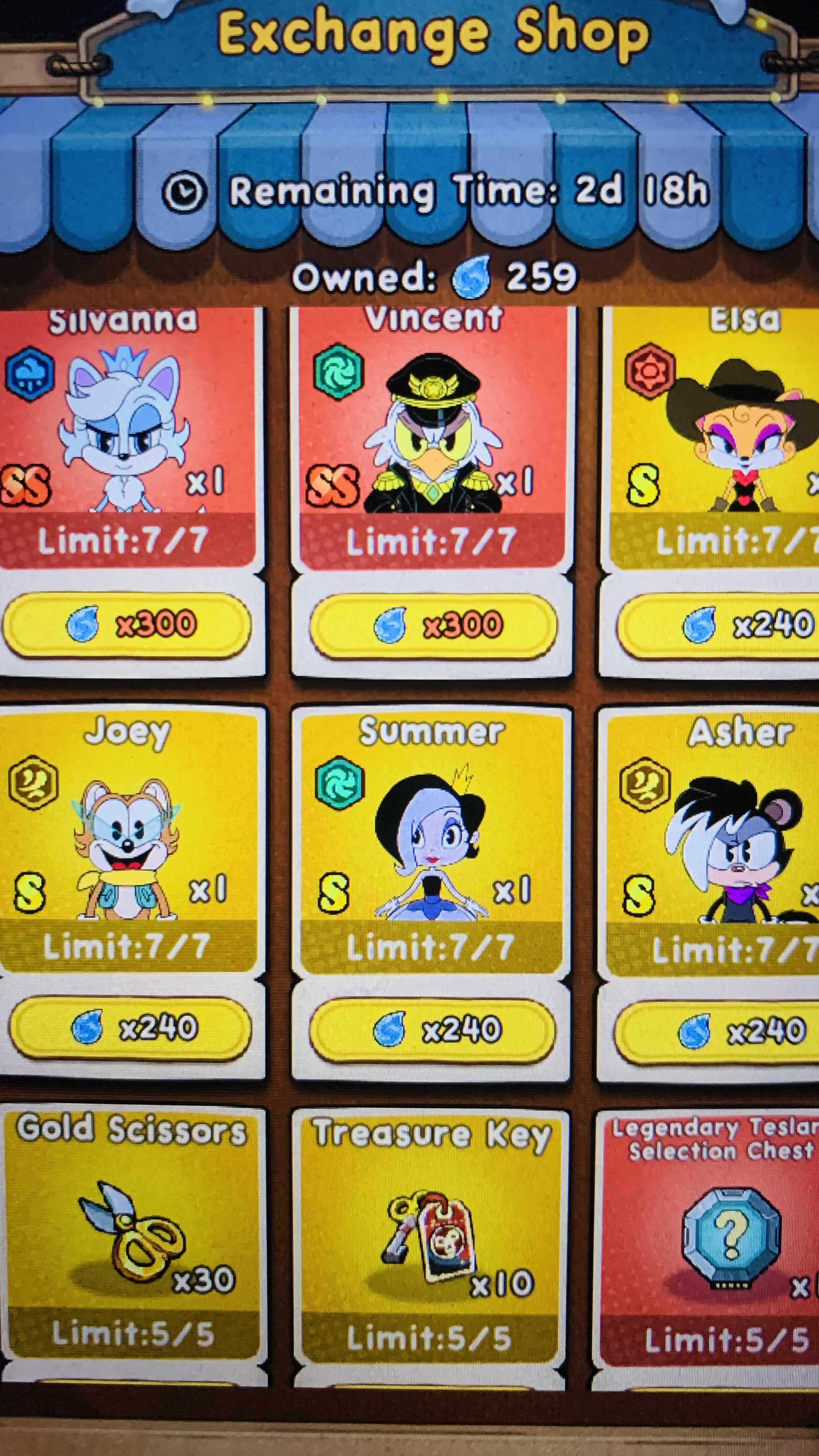
TL;DR: The extracted client and captured server configurations contain explicit mechanisms for targeting offers by spending history, repeating purchase prompts, and presenting timed offers. There is also a client implementation for a first-purchase popup triggered by a configured defeat. These are evidence of purchase incentives. They do not establish rigged draws, deliberately manufactured losses, or worse odds for paying players.
I wanted to check whether the concern that ACECRAFT pushes players toward spending was supported by actual data. This audit examined 216 tables containing 73,014 records, searched 2,289 available Lua files, and analyzed an existing capture containing 107 activities and 22 decoded commercial configurations.
The static files came from build 13.1.37.3691, collected on November 8, 2026. The captured server configurations are from November 14, 2026. These are dated snapshots, not a claim about every account or future version. The audit was performed offline; it did not make purchases, run draws, or change an account.
1. Offers can depend on how much you have already spent
SpecialOfferPackageActivity checks total payments against a configured threshold, iTotalRecharge. In captured activity 626010706, page 3 contains a threshold of 9999, an account-age field of 5, and 10 offers.
Other offer code, including ShopPermanentGiftActivity and ShopLimitGiftActivity, checks the player’s largest previous single payment against iUnlockSingleRechargeAmount.
That establishes spending-based offer eligibility. It does not establish different prices for the same product or spending-based manipulation of draw results. The monetary units of these thresholds were not established, so 9999 must not be read as $99.99 or any other real-world price.
2. A first-purchase offer can be triggered after a loss
FirstChargeActivity.lua subscribes to eGameEvent_LoseStageEvent, compares the defeated stage with iFailPopupStageId, and can queue the first-purchase offer, subject to conditions and a configured limit.
That is a concrete link between a loss event and a purchase prompt in the preserved client. However, the corresponding old activity type was absent from the 107 activities in the capture. Its effective stage, frequency, and actual display were not observed. This is not evidence that the game causes losses to sell the offer.
3. Repeat prompts and expiring offers are explicitly configured
- A captured monthly-card configuration allows up to 10 renewal prompts per day for one card type. The code requires an active card with more than zero and at most three days remaining. Another type allows two per day. These are configured limits, not observed display counts.
- A captured newcomer-purchase activity has three phases, each with
iDailyLoginPopUpTimes=2 and iTotalPopUpTimes=10. A detail worth checking: despite its name, the second field is compared with a counter that advances on the first popup check of a new day. It is not a simple ten-popup lifetime cap, and the checks can consume counters before actual display. - A captured triggered-offer activity contains 12 groups with 12- or 24-hour durations. The client calculates expiration from the trigger time. This demonstrates deadlines, not fake or resetting countdowns.
A separate captured product configuration also links a product to the effect described as “Ad-Free Rewards.” A temporary ad-free effect exists too, so it would be inaccurate to say every ad skip requires payment.
4. The standard recruitment rate mixes pilots and wings
For the standard recruitment configuration, sequence 4, the displayed rates are:
| Category or pilot | Displayed percentage |
|---|
| All S pilots combined | 0.8499% |
| All S wings combined | 0.8499% |
| S pilots and S wings combined | 1.6998% |
| Joey | 0.2125% |
| Elsa | 0.2125% |
| Botto | 0.2125% |
| Asher | 0.2124% |
Calling 1.6998% the chance of an S pilot would be incorrect: half of that combined percentage belongs to wings.
The scale was checked against the UI code: it divides the stored value by 10,000 and appends %. For example, a stored value of 2125 is displayed as 0.2125%.
The extracted subtitle is “Consolidated (Includes Guarantee)” — translated from the extracted Portuguese text. These figures therefore must not automatically be treated as independent base odds for every draw. I did not use 1/p to claim an official average cost or calculate an independent-draw probability after a given number of attempts.
5. The captured event previews contain different rate sets
The captured server configuration includes display sets selected by language, with fallback behavior in the client:
| Featured reward / activity | Set 10 | Set 23 |
|---|
Explorer Joey, SP / 626103005 | 1.36% | 0.16% |
Edith, S / 626111212 | 1.36% | 0.16% |
In those pilot events, the other four S pilots each have 0.085% in set 10 and 0.01% in set 23. Names and rarities were matched by ID to the extracted static tables.
The display-data difference is real. Its cause and relationship to actual server-side draw probabilities remain unresolved. It does not prove that players in different countries receive different RNG. These event previews also must not be substituted for the separate standard recruitment table.
Another unresolved detail: each pilot event’s set 10 sums to 100.1000% across 59 distinct item entries. Ordinary rounding to four decimal places cannot explain that excess if all entries are mutually exclusive outcomes. However, exclusivity was not established: the protocol supports reward vectors, and guarantees or overlapping rewards may matter. The total was preserved without renormalization; it is a question requiring explanation, not proof of fraud.
6. Rare Pappo fragments are not complete rare Pappos
The Pappo preview calculates 100 × weight / total weight, separately for each recruitment type and level. There are 18 groups, each with total weight 10,000.
Examples at recruitment level 7:
| Recruitment type | S group | SS fragment preview group | SSS fragment preview group |
|---|
| Type 1 | 36% | 6% | 2% |
| Type 2 | 30% | 24% | 8% |
| Type 3 | 22% | 32% | 16% |
These are different pools, and the table above omits other reward categories. The SS/SSS columns refer to fragment preview groups, not complete pets. All ten SS/SSS Pappos in the extracted table require 15 specific fragments for composition. A group percentage does not establish the chance of a particular fragment or the attempts needed to assemble a specific pet.
7. What the 70-draw guarantee actually says
For standard recruitment, the client uses 300 diamonds for one draw or 3,000 for ten when tickets are missing, with available tickets reducing the diamond requirement in the ten-draw flow.
The 70-draw milestone says “Epic Pilot or Wing,” not a specific pilot. Seventy draws fully paid at that nominal price would total 21,000 diamonds. That is a conditional arithmetic example, not the expected cost of a target, a real-money price, or proof that 70 paid draws are necessary. Full server-side guarantee and carryover behavior were not reconstructed.
What this evidence does and does not support
The evidence supports a specific conclusion: ACECRAFT contains spending-based offer selection, repeat prompts, time-limited offers, and a conditional loss-triggered purchase prompt implementation. Several displayed percentages also require careful distinctions between pilots and wings, consolidated rates and base odds, or fragments and complete rewards.
The audit did not establish rigged RNG, reduced odds after spending, deliberate difficulty manipulation, fake discounts, or fake countdowns. Free acquisitions and ad rewards also exist. The preserved capture contains only two wing-draw RPC responses, not a statistically useful sample of independent draws, and the full server-side selection algorithm was not recovered.
Evidence references
The audit files include source hashes, exact code excerpts, and these datasets:
rates_estaticos_164_com_entidades.csv: 164 static probability entries, including entity and rarity identification.rates_servidor_362_entradas.csv: 362 captured preview entries, separated by activity and language set.pappos_18_grupos_121_linhas.csv: Pappo weights and display calculations.configuracoes_servidor.json: sanitized captured configurations; no account state or keys.EVIDENCIAS_CODIGO.md: exact excerpts with source paths, line numbers, and hashes.SHA256SUMS.txt: integrity checks for the audit files.
The useful question for the developer is: how do these consolidated previews, guarantees, and language-specific display sets map to the actual server-side selection rules? The extracted data alone cannot fully answer that.