https://en.wikipedia.org/wiki/Carol_II_of_Romania
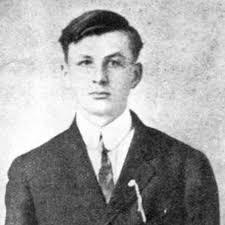
Carol was born in October 1893 in Peleș Castle as the son of the German-born Crown Prince Ferdinand and the British-born Crown Princess Marie. He was the first male member of the royal family to be born in Romania. However, he spent most of his childhood under the thumb of his domineering great-uncle, King Carol I, who blocked the younger Carol's parents from any role in raising him. Romania in the early 20th century had a famously relaxed "Latin" sexual morality, and Marié had a long series of affairs with various Romanian men with whom she could obtain more emotional and sexual satisfaction than with Ferdinand, who fiercely resented being cuckolded. The stern Carol I felt that Marie was unqualified to raise Prince Carol because of her affairs and her young age, as she was only seventeen when Carol was born, while Marie regarded the King as a cold, overbearing tyrant who would crush the life out of her son.
The childless Carol I, who had always wanted a son, treated Prince Carol as his surrogate son and thoroughly spoiled him, indulging his every whim. Ferdinand was a rather shy and weak man who was easily overshadowed by the charismatic Marie, who became the most loved member of the Romanian royal family. Growing up, Carol felt ashamed of his father, whom both his grand-uncle and mother pushed around. Carol as a child was caught in an emotional tug-of-war between Carol I and Marie, who had very different ideas about how to raise him. The Romanian historian Marie Bucur described the battle between Carol I and Princess Marie as one between traditional 19th-century Prussian conservatism as personified by Carol I versus the 20th-century liberal, modernist, and sexually deviant values of the "New Woman" as personified by Princess Marie. Aspects of both Marie's and Carol I's personalities were present in Carol II. Largely because of the battle between the King and Marie, Carol ended up being both spoiled and deprived of love.
During his teenage years in the first decade of the 1900s, Carol (Romanian for "Charles") acquired the "playboy" image that was to become his defining persona for the rest of his life. Carol expressed some concern at the direction that Prince Carol was taking, as the young Prince's only serious interest was stamp collecting and he spent an inordinate amount of time drinking, partying, and chasing after women. Young Carol fathered at least two illegitimate children by the teenage schoolgirl Maria Martini by the time that he was 19 (in 1912). Carol rapidly became a favorite of gossip columnists around the world owing to the frequent photographs that appeared in the newspapers showing him at various parties with him holding a drink in one hand and a woman in the other.
To teach the prince the value of Prussian virtues, the King had the prince commissioned as an officer in 1913.[4] His time with the 1st Prussian Guards regiment did not achieve the desired results, and Carol remained the "playboy prince". Romania in the early 20th century was an intensely Francophile nation, indeed perhaps the most Francophile nation in the entire world as the Romanian elite obsessively went about embracing all things French as the model for perfection in everything. To a certain extent, Carol was influenced by the prevailing Francophilia, but at the same time, he inherited from Carol I, in the words of the American historian Margaret Sankey, a "profound love of German militarism" and the idea that all democratic governments were weak governments.
Sometime before the First World War, the Romanian and Russian royal families held talks about the marriage of Carol, at that time the heir to the throne of the Kingdom of Romania, to the Grand Duchess Olga Nikolaevna of Russia, the eldest daughter of the Russian emperor at the time, Tsar Nicholas II: Sergey Sazonov, the Foreign Minister of the Russian Empire between 1910 and 1916, wanted Olga to marry Carol to ensure Romania's position as an ally of Russia in the eventuality of a war, as Romania was an ally of Germany at the time. Both royal families, including the Tsar and his wife Alexandra, gave their support for the idea, and there were high expectations that the marriage would take place. However, neither Carol or Olga demonstrated an interest for the other: Carol wasn't fond of Olga's appearance, and Olga expressed her wish to remain in Russia (should the marriage have taken place, Olga would have become the Crown Princess, and later the Queen of Romania). This was best seen during the visit of the Romanian royal family to Russia in March 1914, and during a visit of Nicholas and his family to Romania a few months later.
After the failure of the planned joining of Carol and Olga, the idea of a possible marriage of a Romanian royal to a Russian royal faded until 1917, when Carol began showing interest in the younger sister of Olga, the Grand Duchess Maria Nikolaevna. In a visit to Russia in January of that year, he made a formal proposal to Nicholas for Maria's hand, but Nicholas "good-naturedly laughed the proposal aside", and argued that Maria "was nothing more than a schoolgirl". Maria was only 17 at the time, and shared her older sister's desire to marry a Russian and remain in Russia.
In November 1914, Carol joined the Romanian Senate, as the 1866 Constitution guaranteed him a seat there upon reaching maturity. Known more for his romantic misadventures than for any leadership skills, Carol was first married in the Cathedral Church of Odesa, Ukraine, on 31 August 1918 (under the occupation of the Central Powers at that time), to Joanna Marie Valentina Lambrino (1898–1953), known as "Zizi", the daughter of a Romanian general, Constantin Lambrino. The fact that Carol technically had deserted as he left his post at the Army without permission to marry Zizi Lambrino caused immense controversy at the time. The marriage was annulled on 29 March 1919, by the Ilfov County Court. Carol and Zizi continued to live together after the annulment. Their only child, Mircea Gregor Carol Lambrino, was born on 8 January 1920.
On 10 March 1921, Carol next married Princess Helen of Greece and Denmark in Athens, Greece; his new bride was known in Romania as Crown Princess Elena. They were second cousins, both of them great-grandchildren of Queen Victoria, as well as third cousins in descent from Nicholas I of Russia. Helen had known of Carol's dissolute behavior and previous marriage, but her love for him was undeterred. The intent behind this arranged marriage was to help organize a dynastic alliance between Greece and Romania. Bulgaria had territorial disputes with Greece, Romania, and Yugoslavia, and all three of the latter states tended to be close during the interwar period owing to their shared fears of the Bulgarians. Helen and Carol's only child, Michael, was born seven months after their marriage, sparking rumors that Michael was conceived out of wedlock. Apparently close at first, Carol and Helen drifted apart. Carol's marriage with Princess Helen was an unhappy one, and he frequently engaged in extramarital affairs. The elegant wallflower Helen found the bohemian Carol, with his love of heavy drinking and constant partying, rather too wild for her tastes. For his part, Carol disliked royal and aristocratic women, whom he found too stiff and formal, and had an extremely marked preference for commoners, much to the chagrin of his parents. Carol found low-born women to have the qualities that he sought in a woman, such as informality, spontaneity, humor, and passion.
In the early 1920s, the nascent marriage soon collapsed in the wake of Carol's affair with Elena (Magda) Lupescu (1895–1977), the Roman Catholic daughter of Jewish parents who had converted to Christianity. Magda Lupescu had formerly been the wife of Army officer Ion Tâmpeanu. The National Liberal Party, which dominated Romania's politics, made much of Carol's relationship with Lupescu to argue that he was unqualified to be king. One of the leading figures of the National Liberals was Prince Barbu Știrbey – who was also Queen Marie's lover, and Carol had a strong dislike of Știrbey, who had humiliated his father via his indiscreetly disguised relationship with Marie, and hence of the National Liberals. Knowing that Carol was ill-disposed towards them, the National Liberals waged a sustained campaign to keep him from the throne. The campaign waged by the National Liberals had less to do with disgust with Carol's relationship with Madame Lupescu than with an effort to remove a potential "loose cannon", as Carol made it clear when he succeeded to the throne that he would not be content to let the National Liberals dominate politics in the way that the previous Hohenzollern kings had.
Even without betraying his vows to Helen, Carol could not marry Lupescu and become king, as the constitution barred the crown prince from marrying a Romanian citizen. As a result of the scandal, Carol renounced his right to the throne on 28 December 1925, in favor of his son by Crown Princess Helen, Michael I (Mihai), who became king in July 1927 upon the death of his paternal grandfather, King Ferdinand I. Helen divorced Carol in 1928. After renouncing his right to the throne, Carol moved to Paris, where he lived openly in a common-law relationship with Madame Lupescu. The National Liberal Party was largely a vehicle for the powerful Brătianu family to exercise power and, after the National Liberal prime minister Ion I. C. Brătianu died in 1927, the Brătianus were unable to agree upon a successor, causing the fortunes of the National Liberals to go into decline. In the 1928 elections, the National Peasant Party under Iuliu Maniu won a resounding victory, taking 78% of the vote. As Prince Nicolae, the chief of the Regency Council that governed for King Michael, was known to be friendly with the National Liberals, the new prime minister was determined to dispose of the regency council by bringing back Carol.
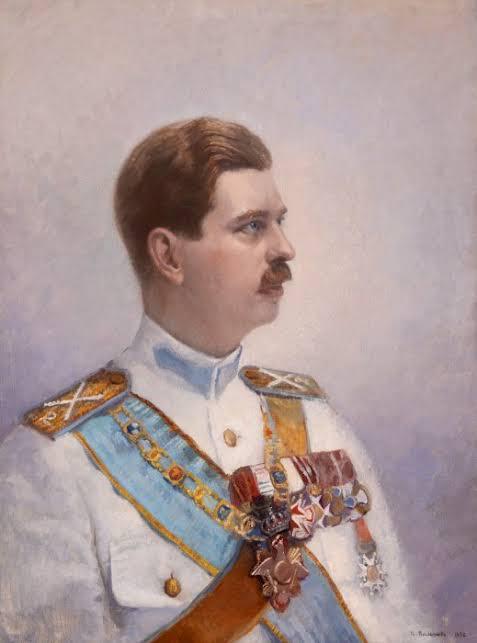
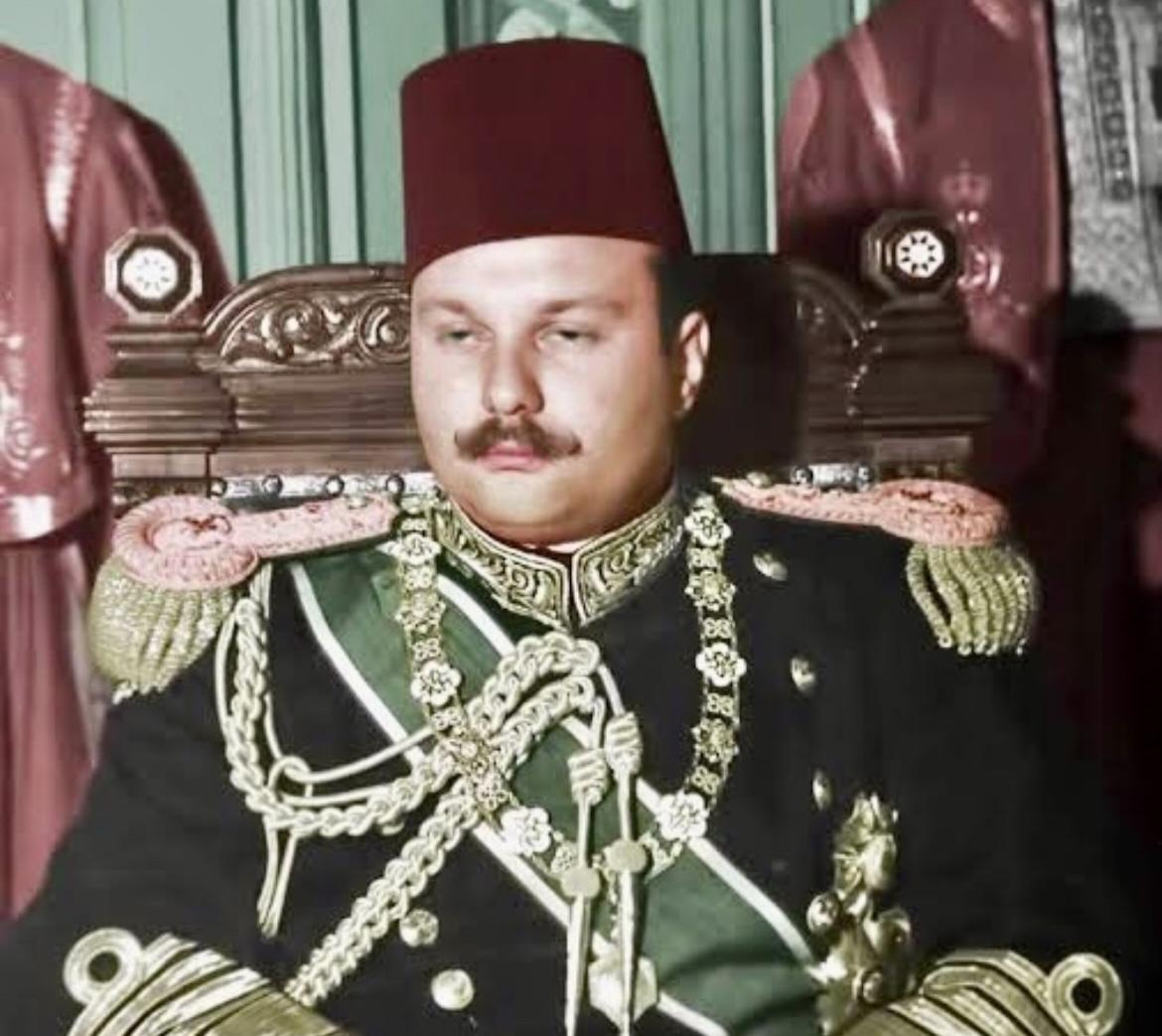
Returning to the country on 7 June 1930, in a coup d'état engineered by National Peasant Prime Minister Iuliu Maniu, Carol deposed his son Michael (who was still under a regency due to his minority) and was recognized by the Parliament as king of Romania the following day. For the next decade, he sought to influence the course of Romanian political life, first through manipulation of the rival Peasant and Liberal parties and antisemitic factions, and subsequently (January 1938) through a ministry of his own choosing. Carol also sought to build up his own personality cult against the growing influence of the Iron Guard, for instance, by setting up a paramilitary youth organization known as Straja Țării in 1935. The American historian Stanley G. Payne described Carol as "the most cynical, corrupt and power-hungry monarch who ever disgraced a throne anywhere in twentieth-century Europe". A colorful character, Carol was in the words of the British historian Richard Cavendish: "Dashing, willful and reckless, a lover of women, champagne and speed, Carol drove racing cars and piloted planes, and on state occasions appeared in operetta uniforms with enough ribbons, chains, and orders to sink a small destroyer."
The Romanian historian Maria Bucur wrote about Carol:
"Of course, he loved luxury; being born to privilege he expected nothing less than the grand lifestyle he saw in the other courts of Europe. Yet his style was not outlandish or grotesque like Nicolae Ceaușescu's unique brand of kitsch. He liked things large but relatively simple – his royal palace testifies to that trait. Carol's true passions were Lupescu, hunting, and cars and he spared no expense on them. Carol liked to present an impressive and populist persona to the public, wearing garish military uniforms adorned with medals, and being the benefactor of every philanthropic endeavor in the country. He loved parades and grandiose festivals and watched them closely, but he was not taken in by these events as more than shows of his power. He did not take them as a show of sincere popularity as Ceaușescu did during his later years."
Carol had sworn in his coronation an oath to uphold the constitution of 1923, a promise he had no intention of keeping, and right from the start of his reign, the king meddled in politics to increase his own power. Carol was an opportunist with no real principles or values other than the belief that he was the right man to rule Romania and that what his kingdom needed was a modernizing dictatorship. Carol ruled via an informal body known as the camarilla, comprising courtiers together with senior diplomats, army officers, politicians, and industrialists, who were all in some way dependent upon royal favor to advance their careers. The most important member of the camarilla was Carol's mistress, Madame Lupescu, whose political advice Carol greatly valued. Maniu had brought Carol to the throne out of the fear that the regency for Michael I was dominated by National Liberals, who would ensure that their party would always win the elections. Madame Lupescu was deeply unpopular with the Romanian people, and Maniu had demanded that Carol return to his wife, Princess Helen of Greece, as part of the price for being given the throne. When Carol broke his own word and continued to live with Madame Lupescu, Maniu resigned in protest in October 1930 and was to emerge as one of Carol's leading enemies. At the same time, Carol's return had prompted a break in the National Liberals with Gheorghe I. Brătianu breaking away to found a new party, the National Liberal Party-Brătianu that was willing to work with the new king. Despite his dislike of the National Liberals, Maniu's enmity towards Carol left the king with no choice, but to enlist as his allies the break-away factions of the National Liberals against the National Peasants, who demanded that Carol banish Lupescu and return to his wife.
The "Red Queen," as Lupescu was known to the Romanian people on account of the color of her hair, was the most hated woman in 1930s Romania. She was a woman whom ordinary Romanians saw as "the embodiment of evil," in the words of the British historian Rebecca Haynes. Princess Helen was widely viewed as the wronged woman, while Lupescu was seen as the femme fatale who had stolen Carol away from the loving arms of Helen. Lupescu was Roman Catholic, but because of her parents' background, she was widely viewed as Jewish. Lupescu's personality did not win her many friends, as she was arrogant, pushy, manipulative, and extremely greedy, with an insatiable taste for buying the most expensive French clothes, cosmetics, and jewelry. At a time when many Romanians were suffering from the Great Depression in Romania, Carol's habit of indulging Lupescu's expensive tastes caused much resentment, with many of Carol's subjects grumbling that the money would have been better spent on alleviating poverty in the kingdom. Further adding to Lupescu's immense unpopularity, she was a businesswoman who used her connections to the Crown to engage in dubious transactions that usually involved large sums of public money – going into her pocket. However, the contemporary viewpoint that Carol was a mere puppet of Lupescu is incorrect, and Lupescu's influence on political decision-making was much exaggerated at the time. Lupescu was primarily interested in enriching herself to support her extravagant lifestyle and had no real interest in politics, beyond protecting her ability to engage in corruption. Unlike Carol, Lupescu had utterly no interest in social policy or foreign affairs and was such a self-absorbed narcissist that she was unaware of just how unpopular she was with ordinary people.[8] Carol by contrast was interested in the affairs of the state, and though he never sought to deny his relationship with Lupescu, he was careful not to display her too much in public, as he knew that this would bring him unpopularity.[8]
Carol sought to play the National Liberals, the National Peasant Party, and the Iron Guard off against each other with the ultimate aim of making himself a master of Romanian politics and disposing of all the parties in Romania. With regards to the Legion of the Archangel Michael, Carol had no intention of ever letting the Iron Guard come to power, but insofar as the Legion was a disruptive force that weakened both the National Liberals and the National Peasants, Carol welcomed the rise of the Iron Guard in the early 1930s, and he sought to use the Legion for his own ends. On 29 December 1933, the Iron Guard assassinated the National Liberal prime minister, Ion G. Duca, which led to the first of several bans placed on the Legion. The assassination of Ion Duca, which was Romania's first political murder since 1862, shocked Carol, who saw the willingness of Codreanu to order the assassination of the Prime Minister as a clear sign that the egomaniacal Codreanu was getting out of control and that Codreanu would not play the role assigned by the king as a disruptive force threatening the National Liberals and National Peasants alike. In 1934, when Codreanu was brought to trial for ordering Duca's assassination, he used as his defense the argument that the entire Francophile elite was completely corrupt and not properly Romanian, and as such, Duca was just another corrupt National Liberal politician who deserved to die. The jury acquitted Codreanu, an act that worried Carol as it showed that Codreanu's revolutionary message that the entire elite needed to be destroyed was winning popular approval. In the spring of 1934, after Codreanu was acquitted, Carol, together with Bucharest police prefect Gavrilă Marinescu and Madame Lupescu, were involved in a half-hearted plot to kill Codreanu by poisoning his coffee, an effort that was abandoned before being attempted. Until 1935, Carol was a leading contributor to the "Friends of the Legion", the group that collected contributions to the Legion. Carol only stopped contributing to the Legion after Codreanu started calling Lupescu a "Jewish whore". Carol's image was always that of "the playboy king", a hedonistic monarch more interested in womanizing, drinking, gambling, and partying, than in affairs of state, and to the extent that he cared about politics, Carol was viewed as a scheming, dishonest man only interested in wrecking the democratic system to seize power for himself.
In September 1937, Carol paid an extended visit to Paris, during which he indicated to the French Foreign Minister Yvon Delbos that Romanian democracy would soon end. In a campaign speech for the general elections due that December, Corneliu Zelea Codreanu, "Captain" of the Archangel Michael Legion, called for an end to the alliance with France and stated: "I am for a Romanian foreign policy with Rome and Berlin. I am with the states of the National Revolution against Bolshevism. Within forty-eight hours of a Legionary movement victory, Romania will have an alliance with Rome and Berlin". Without realizing it, Codreanu had sealed his doom with that speech. Carol had always insisted that control of foreign policy was his own exclusive royal prerogative, which no one else was allowed to interfere with. Despite the constitution, which stated that the foreign minister was responsible to the prime minister, in practice, the foreign ministers had always reported to the king. By challenging Carol's right to control foreign policy, Codreanu had crossed the Rubicon in the king's eyes and from that time on, Carol was committed to the destruction of the arrogant upstart Codreanu and his movement who had dared to challenge the king's prerogative. In the December 1937 elections, the National Liberal government of Prime Minister Gheorghe Tătărescu won the largest number of seats, but less than the 40% required to form a majority government in parliament. After assassinating Prime Minister Duca in 1933, the Iron Guard had been banned from participating in elections, and to get around the ban Codreanu founded the All for Fatherland! party as a front for the Legion. The All for Fatherland! the party won 16% of the vote in the 1937 election, marking the high point of the Iron Guard's electoral success.
On 28 December 1937, Carol swore in the radical anti-Semitic poet Octavian Goga of the National Christian Party, which only won 9% of the vote, as prime minister. Carol's reasons for appointing Goga Prime Minister were partly because he hoped that anti-Semitic policies Goga would bring in would win him support from the All for Fatherland! voters and thus weaken the Legion and partly because he hoped that Goga would prove so incompetent as prime minister as to provoke such a crisis that would allow him to seize power for himself. Carol wrote in his diary that the markedly stupid Goga could not possibly last long as prime minister and that Goga's failure would allow him to "be free to take stronger measures which will free me and the country from the tyranny of party interests". Carol agreed to Goga's request to dissolve parliament for new elections on 18, 1938. As leader of the fourth party in parliament, Goga's government was certain to be defeated on a vote of no-confidence when parliament convened as the National Liberals, National Peasants and All for the Fatherland Party had all come out against Goga, albeit for very different reasons. The election got off to a violent start with a brawl in Bucharest between Goga's Lăncieri paramilitary group and the Iron Guard that left two dead, 52 hospitalized and 450 people arrested. The 1938 election was one of the most violent elections in Romanian history, as the Iron Guard and Lăncieri battled one another for control of the streets while seeking to establish their anti-Semitic creditations by assaulting Jews. As Parliament never met during the Goga government, Goga had to pass laws via emergency decree, which all had to be countersigned by the king.
The harsh anti-Semitic policies of the Goga government impoverished the Jewish minority and led to immediate complaints from the British, French and American governments that Goga's policies were going to lead to a Jewish exodus out of Romania. Neither Britain, France, nor the United States had any wish to take in the Jewish refugees that Goga was creating by imposing increasingly oppressive anti-Semitic laws, and all three governments pressed for Carol to dismiss Goga as a way of nipping the developing humanitarian crisis caused by Goga in the bud. The British minister Sir Reginald Hoare and French minister Adrien Thierry both submitted notes of protest against the Goga government's anti-Semitism, while President Roosevelt of the United States wrote a letter to Carol complaining about the anti-Semitic policies he was tolerating. On 12, 1938, Goga stripped all Romanian Jews of their Romanian citizenship, a preparatory move towards Goga's ultimate goal of the expulsion of all Romanian Jews. Carol was personally not an anti-Semite, but in the words of his biographer, Paul D. Quinlan, the king was "simply indifferent" to the sufferings of his Jewish subjects caused by Goga's oppressive anti-Semitic laws. The opportunistic Carol did not believe in antisemitism anymore than he believed in anything else other than power, but if raison d'état meant tolerating an anti-Semitic government as the price of gaining power, Carol was quite prepared to sacrifice the rights of his Jewish subjects. At the same time, Goga proved himself a better poet than politician, and there was a crisis atmosphere in early 1938 as the Goga government, which obsessed with solving the "Jewish Question", to the exclusion of everything else, was clearly floundering. Weinberg wrote about Goga, saying that he was "Unprepared for office and untouched by any leadership ability..." and whose clownish antics left diplomats stationed in Bucharest "half-amused, half-appalled". As Carol had expected, Goga proved to be such an inept leader as to discredit democracy while his anti-Semitic policies ensured that none of the democratic great powers would object to Carol proclaiming a dictatorship.
Coming to realize belatedly that he was being used by Carol, Goga had a meeting with Codreanu on 8 February 1938, at the house of Ion Gigurtu to arrange for a deal under which the Iron Guard would withdraw its candidates from the election to ensure that the radical anti-Semitic right would have a majority. Carol quickly learned of the Goga-Codreanu pact and used it as the justification for the self-coup he had been planning since late 1937. On 10 February 1938, Carol suspended the Constitution and seized emergency powers. Carol proclaimed martial law and suspended all civil liberties under the grounds that the violent election campaign was at the risk of plunging the nation into civil war.
Having outlived his usefulness, Goga was sacked as prime minister and Carol appointed Patriarch Elie Cristea, the head of the Romanian Eastern Orthodox Church, as his successor. Carol knew he would command wide respect in a country where the majority of the population was Orthodox. On 11, 1938, Carol drafted a new constitution. Although it was superficially similar to its 1923 predecessor, it was actually a severely authoritarian and corporatist document. The new constitution effectively codified the emergency powers Carol had seized in February, turning his government into a de facto legal dictatorship. It concentrated virtually all governing power in his hands, almost to the point of absolute monarchy. The new constitution was approved in a plebiscite held under far-from-secret conditions; voters were required to appear before an election bureau and verbally state whether they approved the constitution; silence was deemed as a "yes" vote. Under these conditions, an implausible 99.87 percent were reported as having approved the new charter, against fewer than 5,500 votes against it.
At the time of his coup in February 1938, Carol informed the German minister Wilhelm Fabricius of his wish for closer ties between his country and Germany. Thierry told Carol in a meeting after the coup that his new government was "well received" in Paris and that the French would not allow the end of democracy to affect their relations with Romania. The new government of Patriarch Cristea did not introduce new anti-Semitic laws but did not repeal the laws passed by Goga either, though Cristea was less extreme about enforcing these laws. When asked by a Jewish friend if his citizenship would be restored now that Goga was gone, Interior Minister Armand Călinescu, who detested the Iron Guard and antisemitism, replied that the Cristea government had no interest in restoring citizenship back to the Jews.