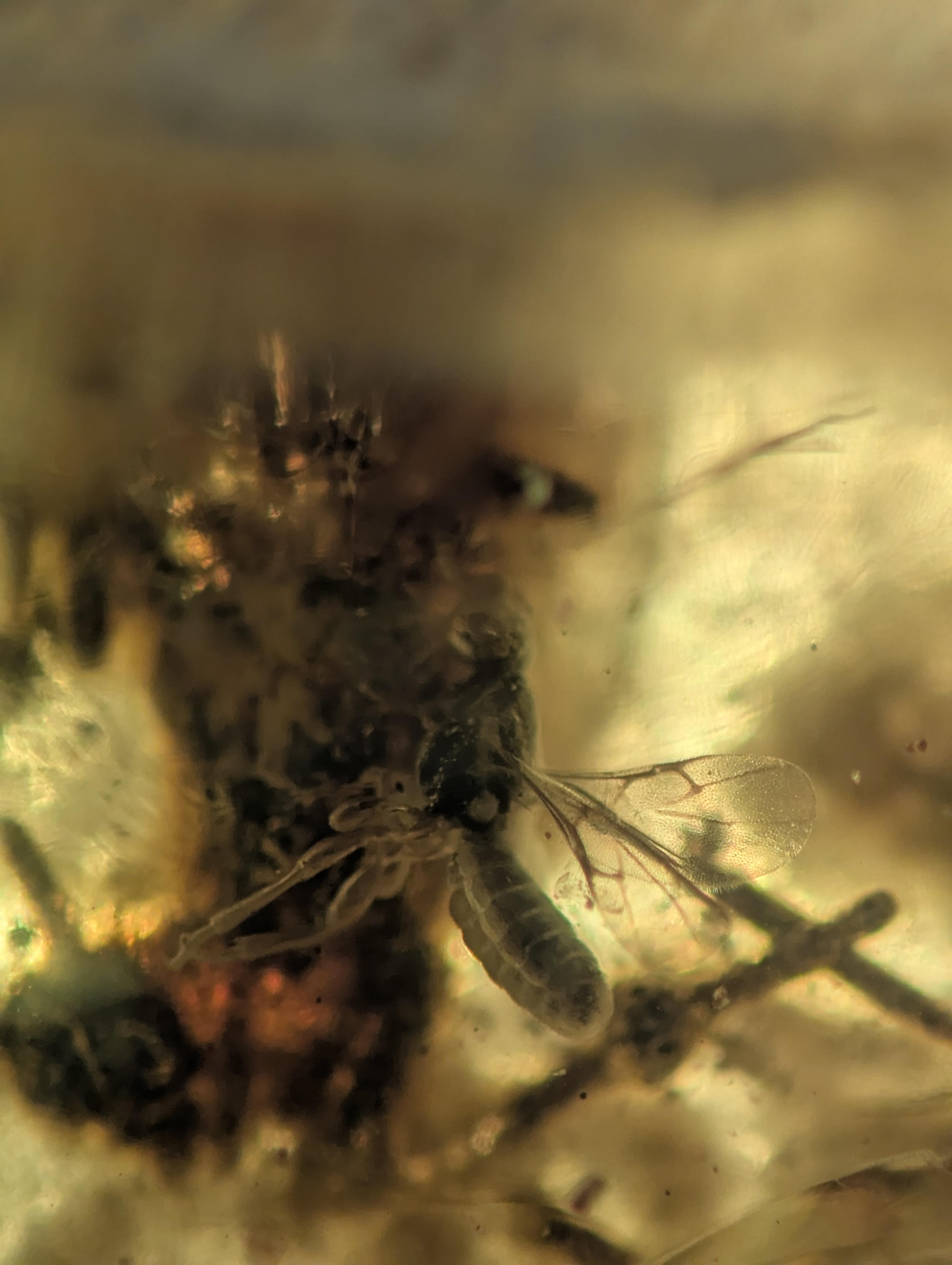
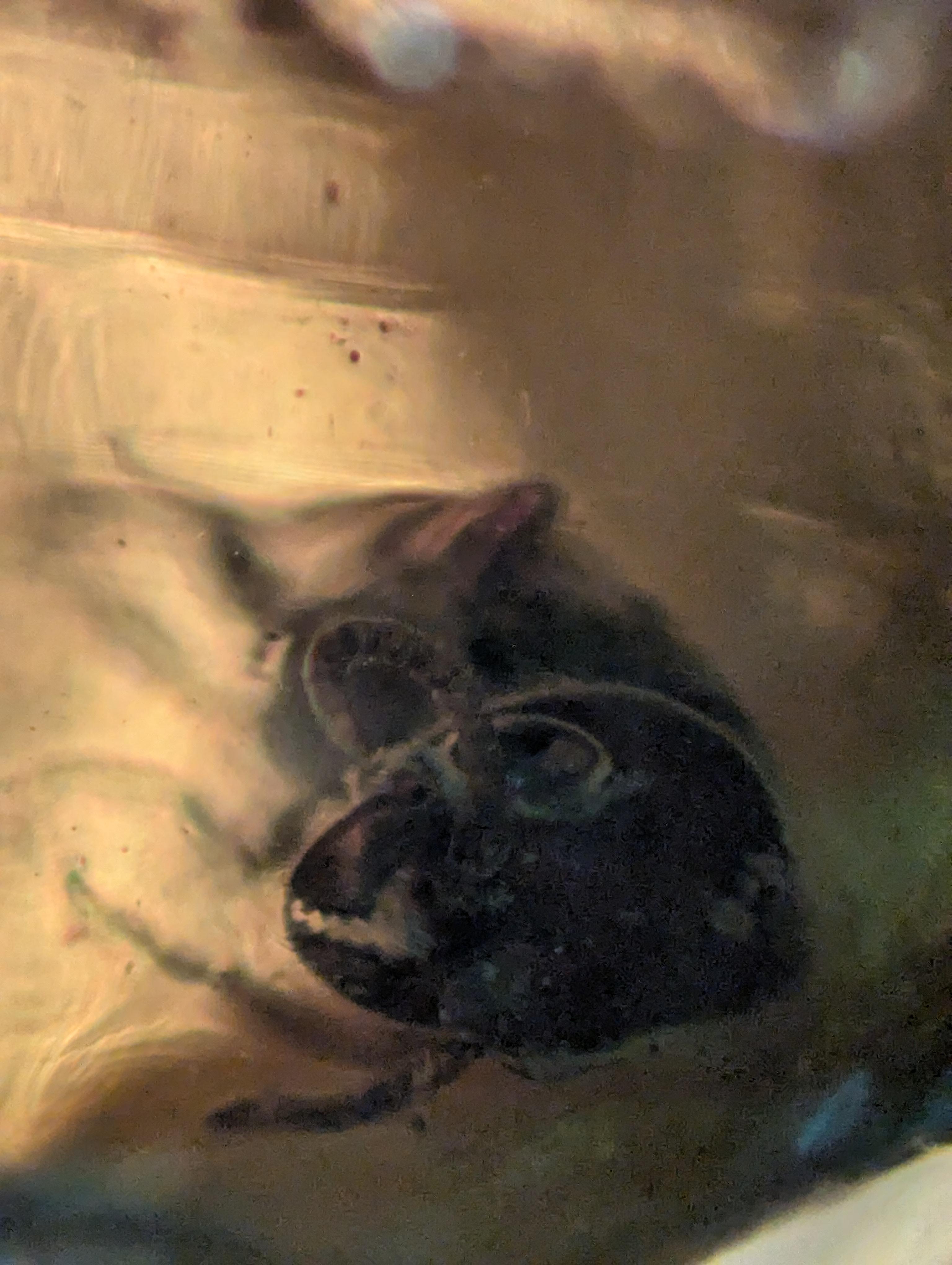
RARE Strepsiptera in Burmese Burmite amber fossil
Size: 26 x 13 x 4 mm
Age: 99 Million Years Ago
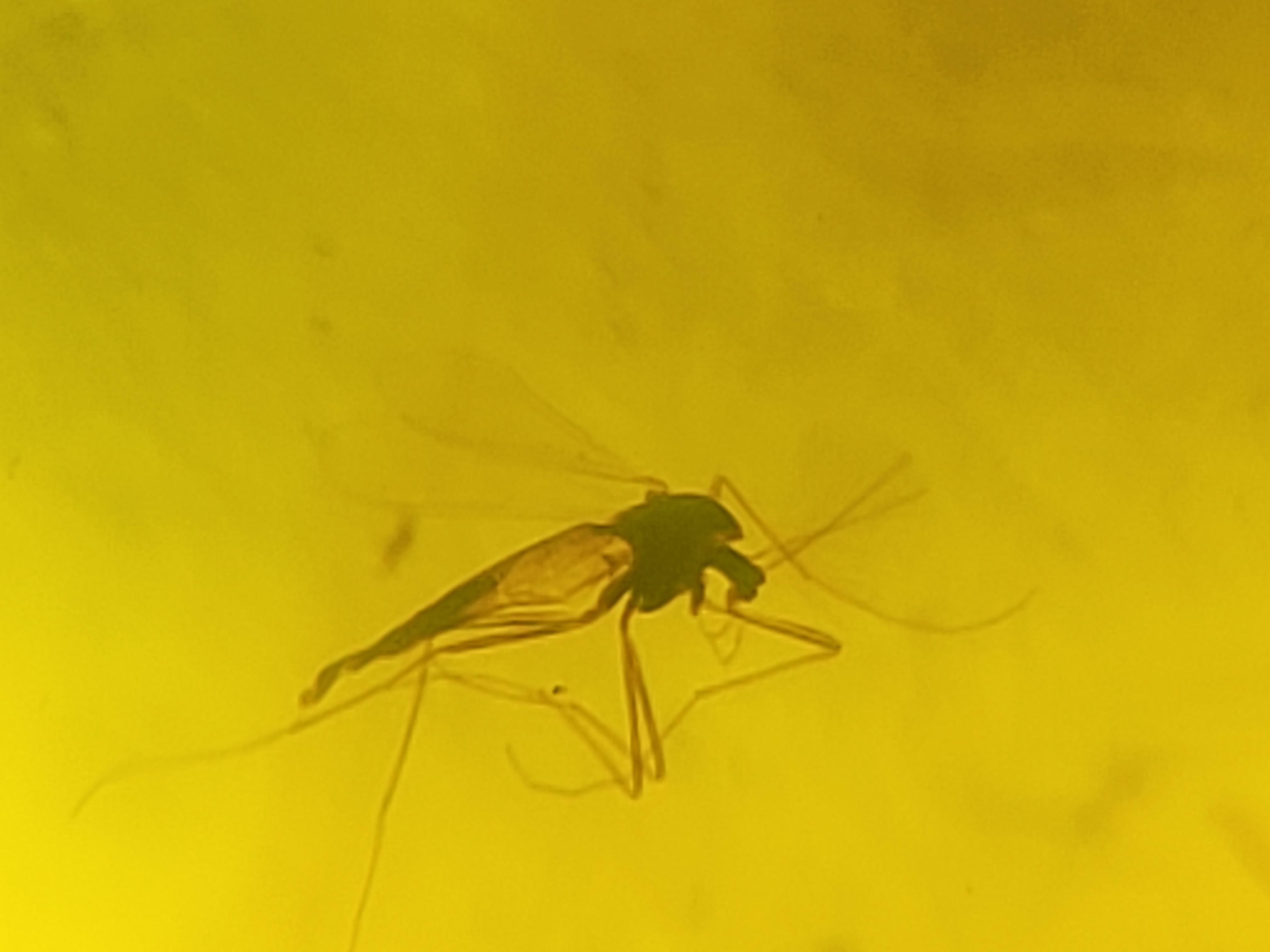
RARE Strepsiptera and Thrips Swarm in Burmese Burmite amber fossil.
Strepsiptera, commonly known as twisted-wing parasites, are a bizarre order of small, highly specialized insects known for their extreme sexual dimorphism and unique parasitic lifestyle. There are roughly 600 described species globally, and they live as obligate endoparasites inside other insects like bees, wasps, cockroaches, and leafhoppers.
The differences between adult males and females are among the most dramatic in the entire insect world,
Males: Free-living but survive for only a few hours. They possess large, raspberry-like compound eyes, comblike antennae, reduced stubby forewings (halteres), and large fan-like hindwings used to fly and locate mates. They do not have functional mouthparts and cannot feed.
Females: In almost all families, females never leave their host and remain completely hidden inside the host's abdomen. Through a process called neoteny, they retain a maggot-like larval appearance and entirely lack wings, legs, eyes, and antennae. Only their heads protrude slightly between the abdominal segments of the host.
*This is an extremely rare inclusion preserved in Burmese amber, the likelihood of male Strepsipterans getting caught in resin is very low even compared to Mayflies (who typically fly in small swarms in the mating season).*
Other notable inclusions: a prominent Thrips swarm (Thysanoptera) also in the piece.