r/ApolloProgram • • Sep 24 '26

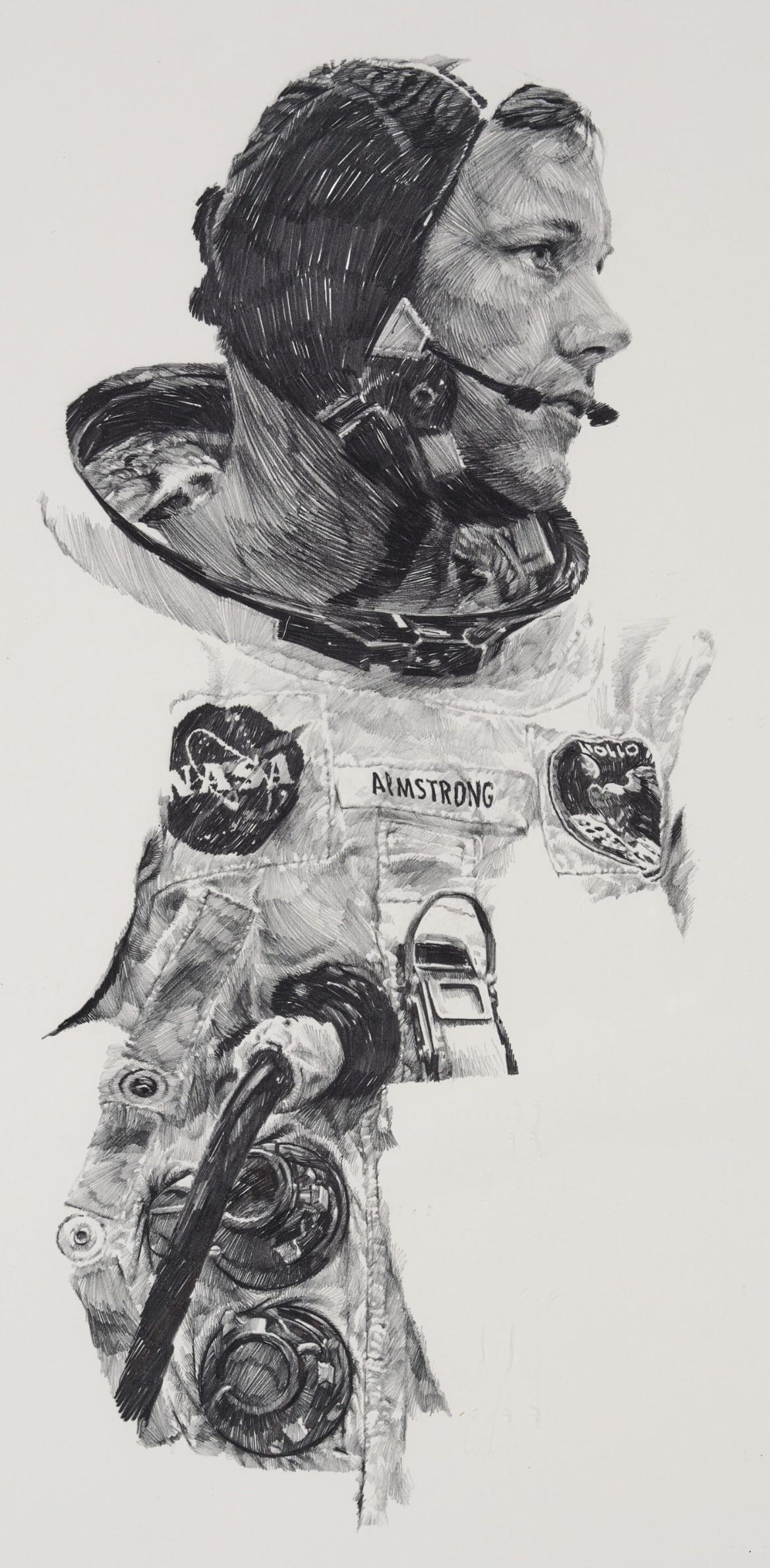
Neil Armstrong on the Morning of the Apollo 11 Launch, 16 July, 1969, by Paul Calle

Post image
19 Upvotes

Paul Calle was the only artist present with the Apollo 11 crew on the morning of July 16, 1969. His sketches captured the astronauts as they prepared and suited up for their mission to the Moon, creating a unique visual record of that moment. What a fantastic artist he was.


r/ApolloProgram • • Sep 23 '26

Have you ever met an astronaut?

Post image
14 Upvotes

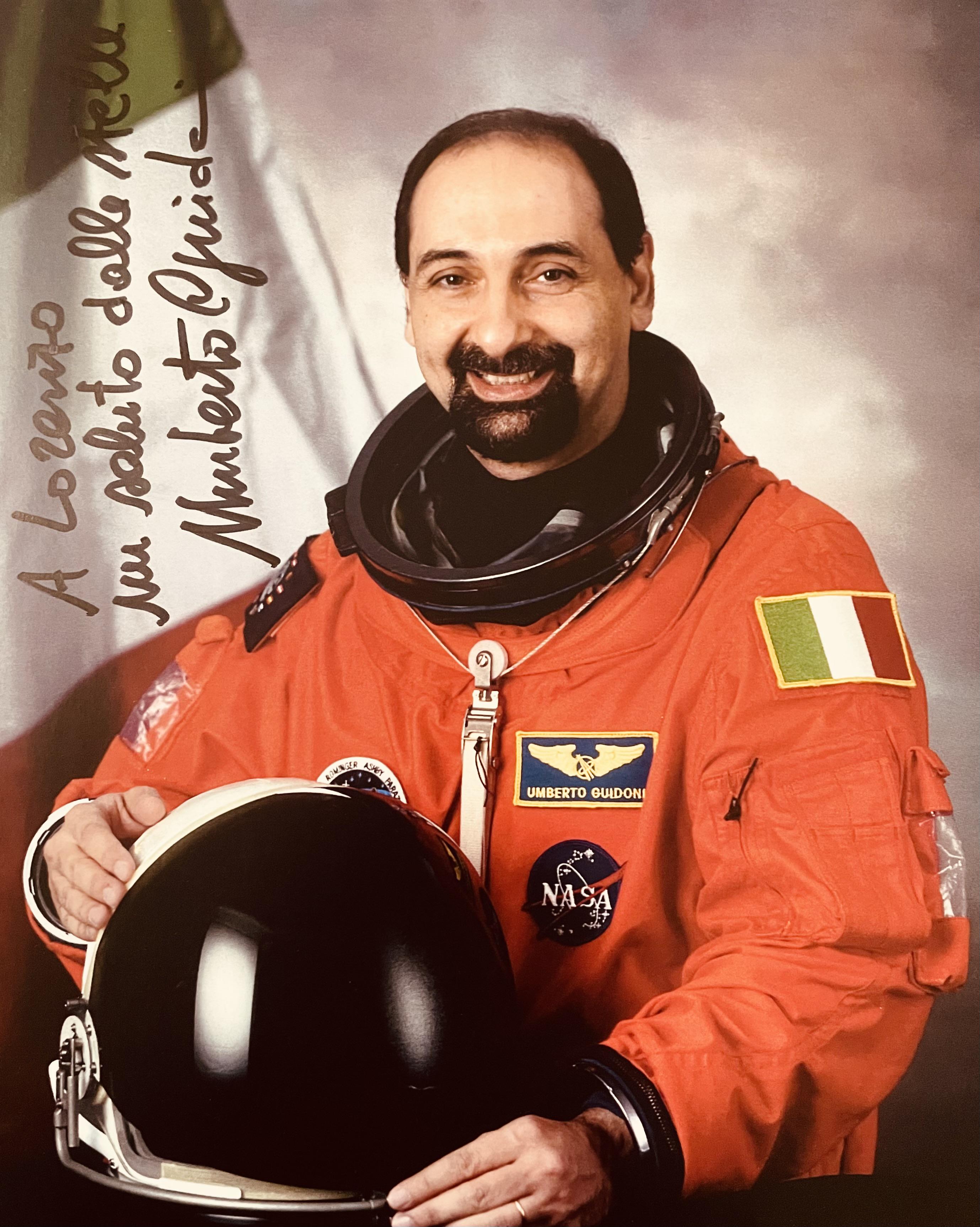
For as long as I can remember, I have dreamed of having the chance to talk to someone who has been to space, especially someone who has walked on the Moon. Unfortunately, living in Italy does not make that dream particularly easy to achieve.

Still, I would like to share my own experience with you because, yes, I have met an astronaut.

A few years ago, I attended an event that could probably be compared to Comic-Con in the United States (but waaay smaller!). While walking through the exhibition stands, I noticed a familiar face: Umberto Guidoni, the first European astronaut to visit the International Space Station.

I approached him and, to my surprise, we ended up having a long and fascinating conversation.

I took the opportunity to ask some questions. One of them concerned what I believe is one of the greatest challenges humanity will face when exploring beyond our Moon: if we communicate using radio waves, which travel at the speed of light, how will we be able to communicate in real time with astronauts on Mars? Even under the most favorable conditions, a signal traveling from Earth to Mars and back would take 6 minutes, more or less (when the two planets are farther apart, the round-trip delay can exceed forty). Unlike lunar missions, where communication delays are barely noticeable, Mars missions will have to deal with the reality that immediate communication simply will not exist.

That led us to discuss Apollo 13 and how crucial communication with Mission Control was in helping the astronauts return safely to Earth. If a similar emergency were to happen near Mars, the situation would be far more difficult to manage. In some cases, astronauts might have to solve critical problems entirely on their own before receiving any guidance from Earth.

He agreed and he told me that future missions will rely increasingly on automation and artificial intelligence. Spacecraft systems will become more autonomous, capable of diagnosing problems and responding to emergencies without waiting for instructions from Earth. As a result, astronauts may gradually become more like supervisors of highly automated systems rather than the hands-on operators we often imagine today.

At first, the idea sounded strange, but I guess that’s the only feasible way. Since you surely cannot win against the rules of physics, the only option is to make spacecraft and crews increasingly capable of operating independently.

And that was it. Sometimes, the most interesting part of meeting an astronaut is not hearing stories about space. It is realizing how many challenges still stand between us and the next giant leap into the Solar System. And occasionally, a simple question can reveal just how different the future of space exploration might be from what we imagine today.
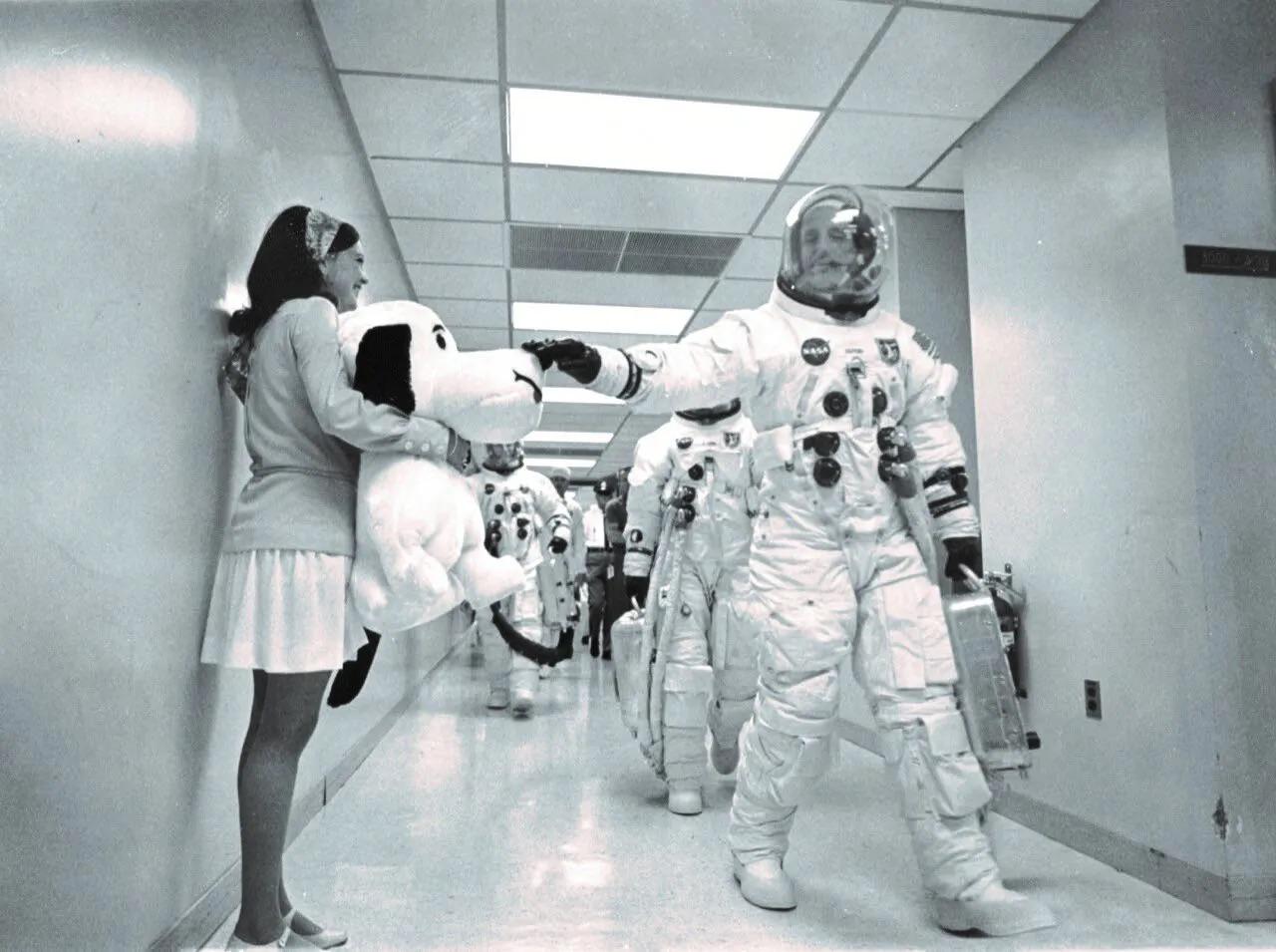
r/ApolloProgram • • Sep 22 '26

Apollo 10 crew pet Snoopy plushie for good luck while walking towards their spacecraft the morning of launch. May 18, 1969

Post image
37 Upvotes

r/ApolloProgram • • Sep 22 '26

The S-IC-T ground-test stage and its five F-1 engines at KSC

Thumbnail
gallery
10 Upvotes

The S-IC-T is the non-flight ground-test first stage of the Saturn V rocket, built by Boeing and NASA to qualify the propulsion system before crewed Apollo missions.
Equipped with five Rocketdyne F-1 engines arranged in a cross pattern, it generated 7.5 million pounds of thrust while consuming 15 tons of propellant per second. Measuring 33 feet in diameter, it underwent extensive static test firings in 1965 at Marshall Space Flight Center and Stennis Space Center before being placed on permanent display at Kennedy Space Center.


r/ApolloProgram • • Sep 22 '26

AS11-40-5903

Thumbnail gallery
8 Upvotes

r/ApolloProgram • • Sep 22 '26

The Full Stack at Ignition and Swing Arms Retracting (NASA ID: S69-39962 and S69-39959)

Thumbnail
gallery
10 Upvotes

r/ApolloProgram • • Sep 22 '26

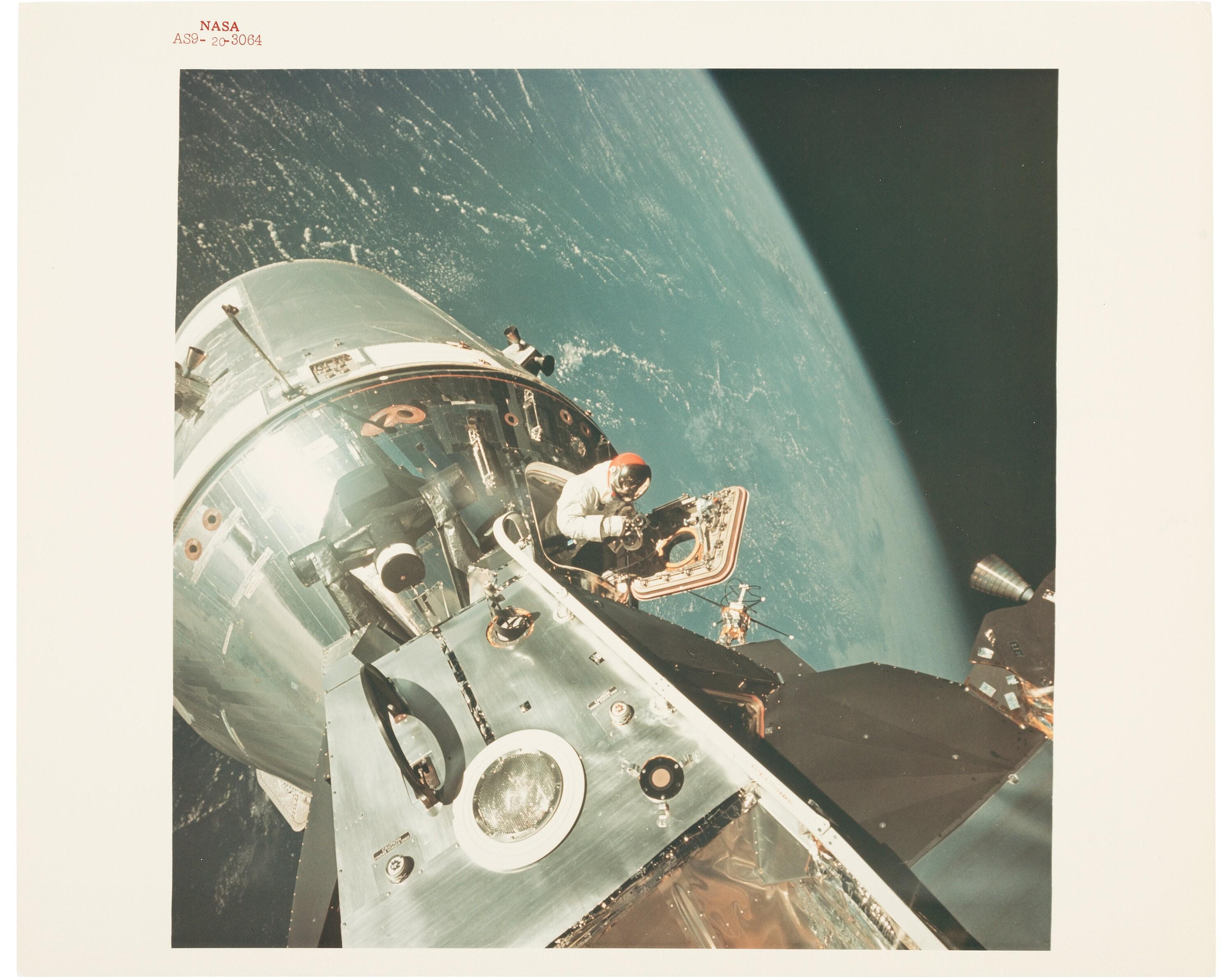
Apollo 9 NASA Red Number Color Photo, "Scott at the Hatch". Image AS9-19-3064.

Post image
9 Upvotes

r/ApolloProgram • • Sep 21 '26

Apollo 11 Vintage NASA Red Number Color Photo. Image S-69-39959

Post image
15 Upvotes

r/ApolloProgram • • Sep 21 '26

My pride and joy

Post image
28 Upvotes

I wanted to share a piece of my collection that I’m really excited about: a Hasselblad 500 EL/M "20 Years in Space" edition.

For those unfamiliar with the background, back in October 1962, astronaut Wally Schirra took his personal modified Hasselblad 500 C on board Mercury-Atlas 8 (Sigma 7). That single event sparked a legendary partnership between Hasselblad and NASA.

Why the 500 EL model and the grey finish?
NASA adopted the motor-driven 500 EL in the late '60s. In July 1969, a modified version of this exact base model—the Hasselblad Data Camera (HDC)—was taken to the lunar surface by Neil Armstrong and Buzz Aldrin on Apollo 11.
The Grey/Silver Color: Standard studio Hasselblads were black or cromo. The cameras taken to the Moon were coated in a special silver/grey finish to reflect radiation and help stabilize internal temperatures in the extreme conditions of space (ranging from -65°C to over 120°C).
To commemorate the 20th anniversary of Schirra’s flight, Hasselblad released this limited run in 1982 (only 1,500 units worldwide), styled in that iconic spacecraft-inspired metallic grey leatherette with matching trim. 

It has been fully serviced/overhauled, though I haven't run a roll of film through it yet... Who knows, maybe one day I'll take it out for a spin!


r/ApolloProgram • • Sep 20 '26

Photo Montage of the Mobile Launcher Base Construction (1963–1964), Erecting the Launch Umbilical Tower (1964), Finished Infrastructure and Early Operations (1966–1967). I apologize for not crediting the photographers as these picturare from a relative's archive- he worked at the Cape for 34 years.

Thumbnail
gallery
8 Upvotes

r/ApolloProgram • • Sep 19 '26

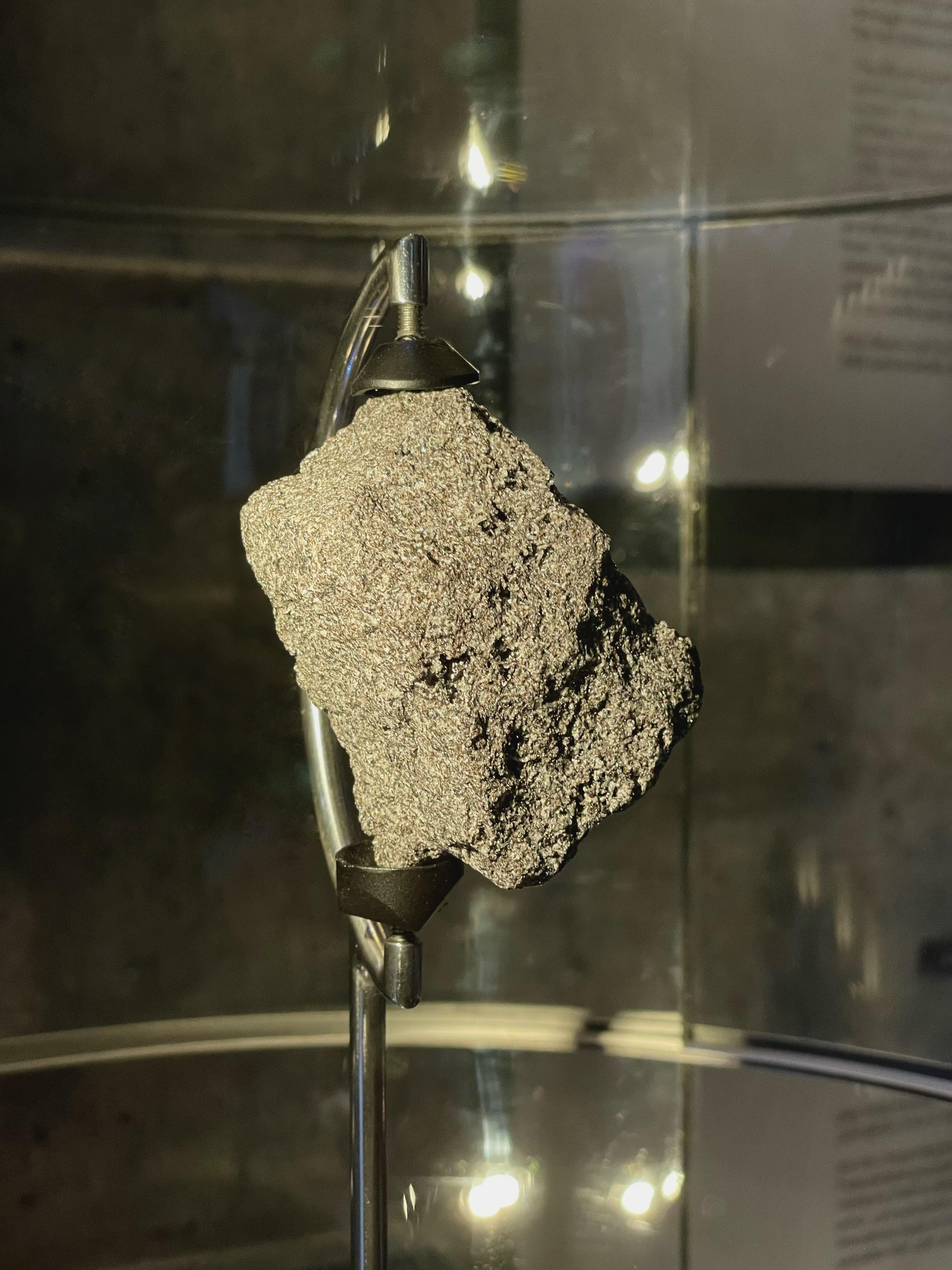
The largest Moon rock on display outside the USA at the Copenhagen Planetarium

Post image
15 Upvotes

During my visit to the Planetarium in Copenhagen, I came across an incredible piece of space history: an original 206.6-gram lunar sample on loan from NASA, with an estimated value of around 85 million DKK. This rock was collected in December 1972 during Apollo 17 - the sixth and final crewed lunar landing - by astronauts Eugene Cernan and Harrison Schmitt at Camelot Crater in the Taurus-Littrow Valley.
Consisting primarily of basalt and ilmenite, it provides direct evidence of lunar volcanic activity from roughly 3.7 billion years ago. Standing just inches away from a piece of the Moon that was brought back after a 75-hour stay on the lunar surface feels unreal, especially considering that no human has set foot on the Moon since Apollo 17 returned on December 19, 1972.


r/ApolloProgram • • Sep 19 '26

The pen that helped save Apollo 11

Thumbnail
gallery
10 Upvotes

During Apollo 11, Buzz Aldrin discovered a small but potentially disastrous problem inside the Lunar Module Eagle.

A circuit breaker connected to the ascent engine had been damaged. Without that circuit, Armstrong and Aldrin might not have been able to start the engine that would take them off the Moon.

Mission Control couldn’t find a way to bypass it.

Then Aldrin remembered a simple felt-tip pen he had brought with him as a personal item.
It was a Duro Rocket pen.

Because the pen had a non-metallic felt tip, Aldrin realized he could use it to push the damaged circuit breaker back into position without creating an electrical hazard.

He did.

And it worked.

That tiny improvisation helped restore the circuit and allowed the ascent engine to be armed.

On July 2026, more than five decades later, the pen — together with the damaged circuit-breaker component — was offered at auction by Sotheby’s.
You find the link here: https://www.sothebys.com/en/buy/auction/2026/space-exploration-2/apollo-11-16

The estimated value was $800,000–$1.2 million.
It ultimately sold for $857,600!

A humble felt-tip pen that had been carried to the Moon as a personal item had become part of one of Apollo 11’s most remarkable little stories.

Apollo was extraordinary technology — but sometimes, getting home came down to improvisation!


r/ApolloProgram • • Sep 19 '26

Before this decade is out

Post image
10 Upvotes

On May 25, 1961, President John F. Kennedy stood before a joint session of Congress and set a goal that, at the time, sounded almost unimaginable:

“I believe that this nation should commit itself to achieving the goal, before this decade is out, of landing a man on the Moon and returning him safely to the Earth.”

The United States had sent only one man into space at that point. Alan Shepard’s first American spaceflight had lasted just 15 minutes. No human had ever orbited Earth. No spacecraft had ever traveled to the Moon.

And yet Kennedy wasn’t asking for a gradual program. He was setting a deadline.

The Soviet Union had just put Yuri Gagarin into orbit the previous month, and the Space Race was already underway. Kennedy’s proposal called for a massive expansion of the American space effort and the resources needed to make the lunar goal possible.

Just over a year later, on September 12, 1962, Kennedy would make the challenge even more famous at Rice University:

“We choose to go to the Moon.”

And then came the words that would define the spirit of Apollo:

“We choose to go to the Moon in this decade and do the other things, not because they are easy, but because they are hard.”

At that moment, the Moon was still a destination no human being had reached.
Seven years later, on July 20, 1969, Neil Armstrong and Buzz Aldrin stepped onto its surface.

Kennedy did not live to see it. But the deadline he had set in 1961 was met — with Apollo 11 landing on the Moon before the decade was over.

This is where Apollo begins.