r/ApolloProgram • • 1d ago

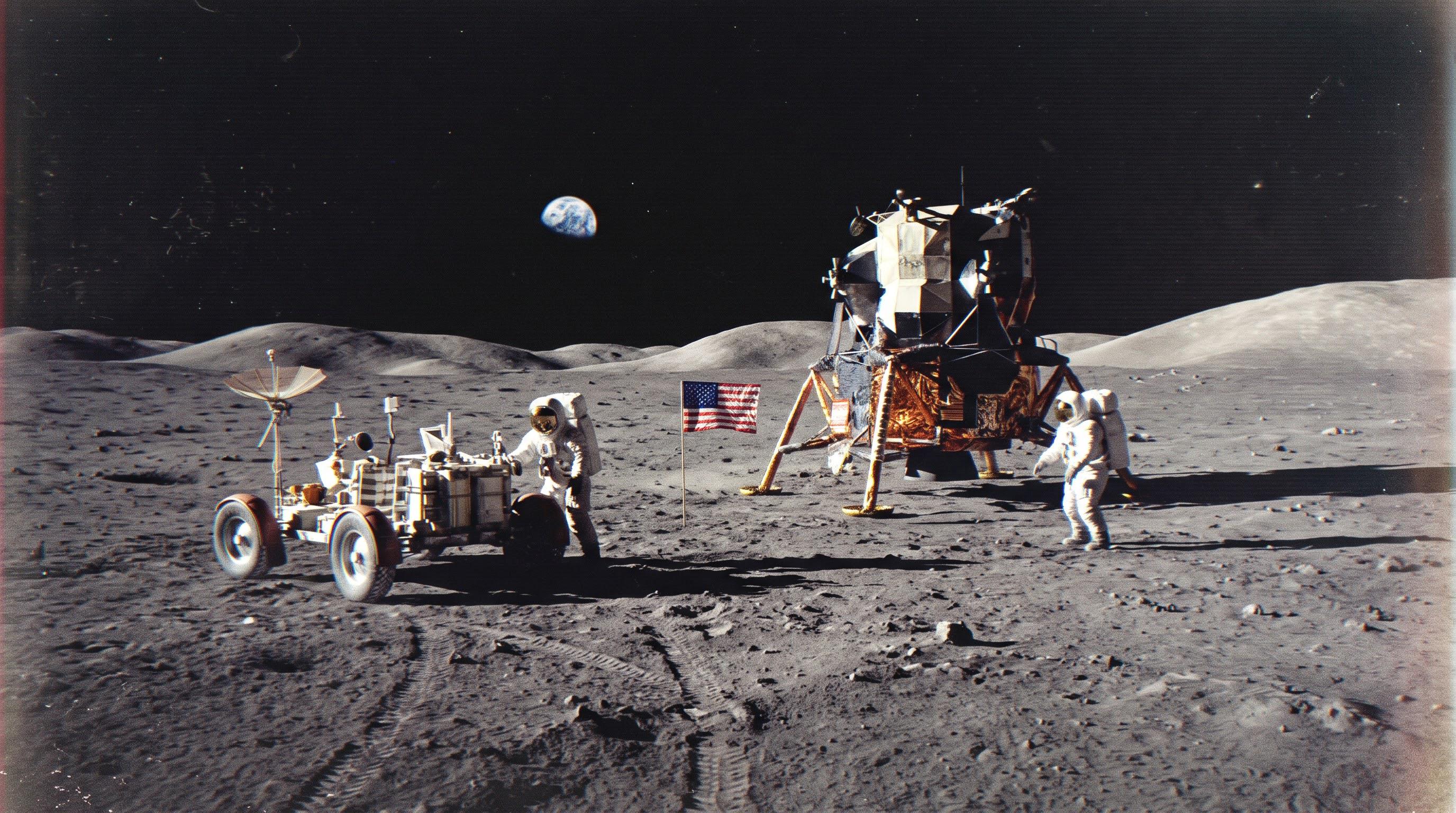
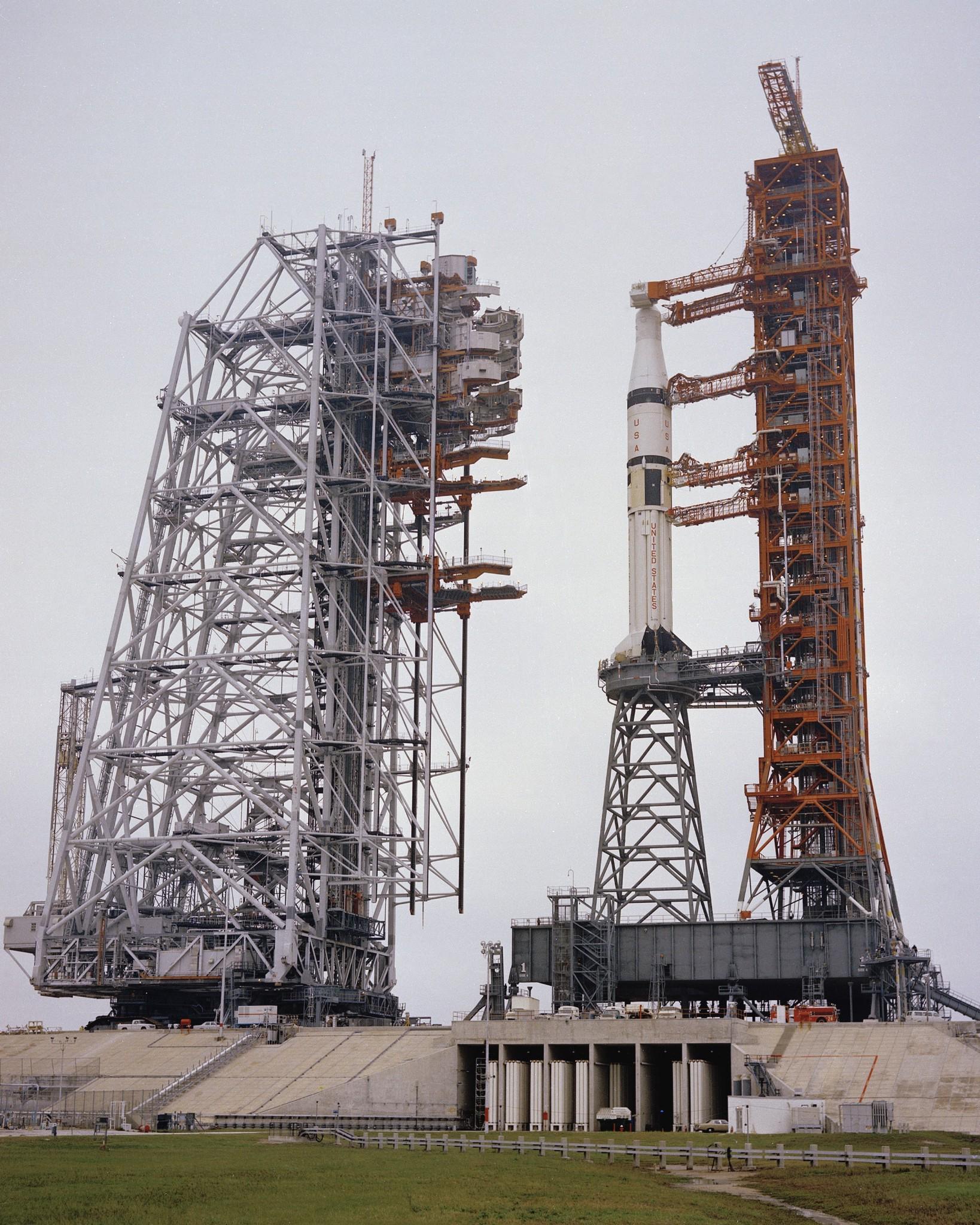
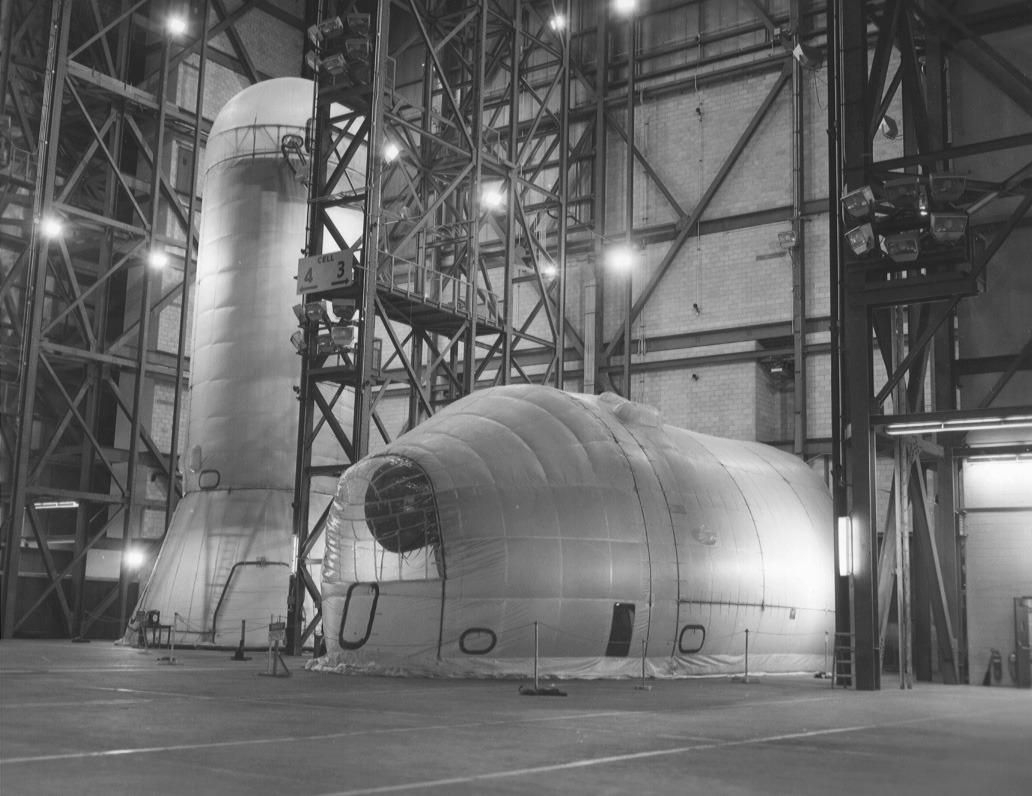
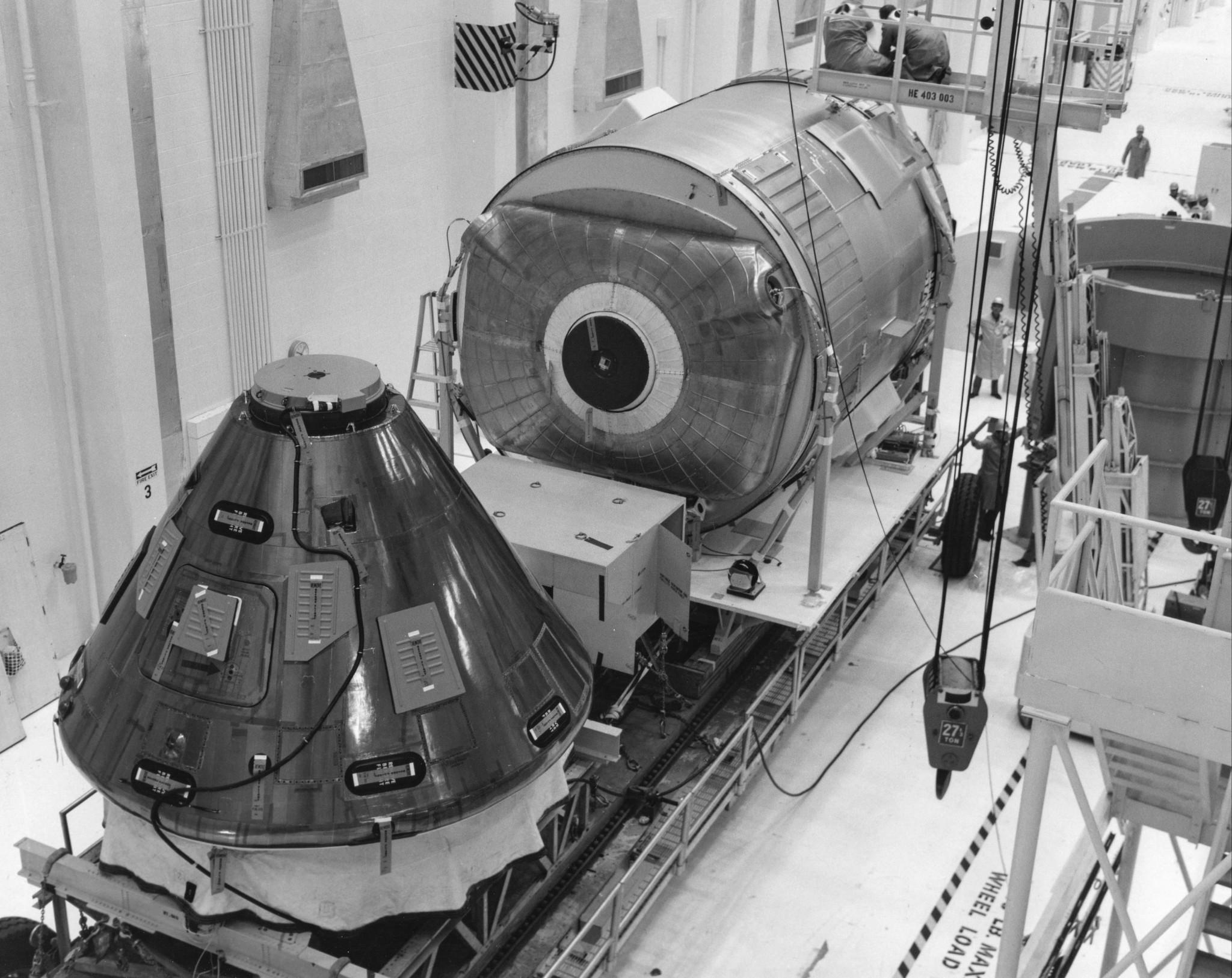
What are these big concrete domes at the launch pads here at KSC?

Thumbnail
gallery
83 Upvotes

They are at the entrance to the launch pads, and they look like they are from the 60's. Obviously no longer in use.


r/ApolloProgram • • 4d ago

Apollo Mission code translation to Lean 4

Post image
77 Upvotes

Recently I began translating legacy code to lean 4, and I started with this group from the Apollo Lunar Mission, which in my opinion were the most informative historically, which are available for downloading here

https://github.com/CreizyLabs/Lean_4_Translations/tree/main/ApolloMission


r/ApolloProgram • • 4d ago

Workmen at the Kennedy Space Center hoist the Saturn Lunar Module (LM) Adapter into position during assembly of the 204/LM-1, an unmanned Apollo mission that tested the Apollo Lunar Module in Earth orbit.

Thumbnail
gallery
113 Upvotes

Date: November 19, 1967

"Also known as Apollo 5, the spacecraft was launched on the fourth Saturn IB launch vehicle. Developed by the Marshall Space Flight Center (MSFC) as an interim vehicle in MSFC's "building block" approach to the Saturn rocket development, the Saturn IB utilized Saturn I technology to further develop and refine a larger booster and the Apollo spacecraft capabilities required for the manned lunar missions of".

NASA ID: 108-KBC-670-9962, S67-62210


r/ApolloProgram • • 4d ago

57 years ago today, Apollo 12 landed on the Moon—and Pete Conrad made history with a “Whoopie!”

240 Upvotes

On November 19, 1969, Apollo 12 landed in the Ocean of Storms, making Pete Conrad and Alan Bean the third and fourth humans to walk on the Moon.
Stepping off the Lunar Module Intrepid, Conrad famously shouted:
“Whoopie! Man, that may have been a small one for Neil, but that’s a long one for me!”
At just 5’6” (1.68 m), he certainly had a long jump from the ladder to the lunar surface. But the words also had a purpose: Conrad claimed he had made a $500 bet with Italian journalist Oriana Fallaci, who believed NASA scripted everything astronauts said on the Moon. He later joked that she never paid up.
Interestingly, Fallaci subsequently claimed she had helped come up with the line herself.
Despite being struck by lightning twice during launch, Apollo 12 completed a remarkably precise landing near the Surveyor 3 probe, proving that the second lunar landing could be just as memorable as the first.


r/ApolloProgram • • 5d ago

On This Day: Apollo 12 Landed on the Moon! 🌕🚀#universe#apollo12#nasa #spacefacts #physics #nasa

6 Upvotes

r/ApolloProgram • • 5d ago

Gemini XII astronauts Jim Lovell and Buzz Aldrin orbiting Earth during the final mission of NASA’s Gemini program, November 12, 1966.

Thumbnail gallery
185 Upvotes

r/ApolloProgram • • 7d ago

Inside Apollo-Era Crawler-Transporter 2 During the 2012 Overhaul

Thumbnail
gallery
405 Upvotes

r/ApolloProgram • • 8d ago

Artemis II flew around the Moon in April, so I built a free app for kids to learn and practice a south-pole mission

14 Upvotes

r/ApolloProgram • • 8d ago

The Mobile Service Structure (MSS) being moved from its park site into position at Launch Complex 39B and surround the Skylab II Saturn IB (CSM-116/SA-206).

Post image
156 Upvotes

Date: November 16, 1972

NASA ID: KSC-73PC-0019


r/ApolloProgram • • 9d ago

Apollo development: Phase A or Apollo A

Thumbnail
gallery
161 Upvotes

"Apollo A was a lighter-weight July 1961 version of the Apollo spacecraft.

Status: Study 1961.

It was specifically designed for long-duration operations in space; to conduct re-entry tests at near-parabolic speeds; and then for manned circumlunar missions.

At the time of the Apollo bidder's conference in August 1961 an evolutionary approach to the Apollo program was expected. After completion of the Mercury project both the Apollo spacecraft and Saturn launch would gradually fly multi-man crews on a series of ever-more ambitious scientific and technological missions in earth-moon space. This program would begin with manned earth satellite flights of extended lifetime, proceed to lunar circumnavigation, to lunar satellite flights, and ultimately to the lunar landing. Although the Apollo A designation was applied only to the first unmanned Apollo tests at this time, we would use the term here to designate the Apollo design and program plan as envisioned by NASA prior to the Apollo bidder's conference in the summer of 1961.

The return to earth and the recovery of the manned spacecraft were important parts of these missions. The development of the Apollo spacecraft was to proceed in several phases. Each phase, to the extent possible, would serve as qualification for the subsequent phase. The objectives of Apollo Phase A was:

• Qualification of systems and features for the lunar missions within the constraints or the environment of earth satellite orbits of up to 500 km altitude by manned flights.

• Qualification of the re-entry heat protection for the lunar missions in unmanned re-entry tests from super-circular and near-parabolic velocities.

• Study of physiological and psychological reactions and capabilities of a multiman crew in the space environment during extended periods of time (at least two weeks). In the adapter between the Saturn second stage and the Apollo spacecraft, as an integral part, was a section to be used as an orbiting laboratory. Preliminary designs indicated this laboratory would be a cylindrical section about 3.9 m in diameter and 2.4 m in height. The laboratory would provide the environment and facilities to conduct scientific experiments related to the manned operation of spacecraft. Experiments that might be conducted from an Earth-orbiting laboratory included: astronomical observations; monitoring the Sun's activity; testing man's ability to work outside the vehicle; zero-g testing; and micrometeoroid impact study.

• Development of flight and ground operational techniques and equipment for the support of space flights of extended periods

• Conduct of experimental investigations as needed to acquire information for the subsequent lunar missions.

The two-stage Saturn C-I launch vehicle system would be utilized to carry the Apollo A spacecraft into the low earth-satellite orbits and to accelerate the capsule only to re-entry trajectories during the Apollo A phase.

The mass breakdown of the Apollo A earth-orbit version was nearly 1/3 less than that of the later Apollo capsule final design:

• Command Module: 3600 Kg

• Equipment-Propulsion Module (less Main Motors): 1600 kg

• Main Motors: 1300 kg

• Space Laboratory: 1400 kg

• Launch Escape Propulsion: 1700 kg (separated after first stage burn-out)

• Total Launch Weight: 9500 kg

• Total Weight in Low Earth Orbit: 7800 kg

As of the summer of 1961 it was planned that Apollo A boilerplate flights in the earth-orbit configuration would take place in October/December 1963 using Saturn C-1's SA-7 and SA-8. SA-9 and SA-10 would launch 3400 kg capsule-only payloads in February-April 1964 to near parabolic velocities in tests of the capsule's hypersonic aerodynamics and heat shield. These prototype capsules would be equipped with parachutes and be recovered.

These proving tests would be followed by Apollo A manned earth orbit space laboratory missions in the 1965-1967 period. Manned circumlunar flights would occur at the same time. The booster for such missions was originally intended to be the Saturn C-2. This was changed to the Saturn C-3 in June 1961 when it became clear the Apollo spacecraft would weigh too much for such missions. The C-3 in turn was cancelled in favor of the C-5, and discussion of circumlunar Apollo disappeared by the end of 1962."

-Information from Astronautix.com: link

SDASM Archives: Apollo Doc003, Apollo Doc036, Apollo Doc013, Apollo Doc006

NASA ID: M-MS-G-102-61, 63-APOLLO-15

NASA Document ID: 19650024284

source


r/ApolloProgram • • 9d ago

Pergunta sobre o filme ‘O Primeiro Homem’

Post image
7 Upvotes

r/ApolloProgram • • 9d ago

Saturn IB vehicle SA-208 stages (S-IB, S-IVB) in storage in the Vertical Assembly Building, Kennedy Space Center. This vehicle was used to launch Skylab 4.

Post image
147 Upvotes

Date: November 15, 1971

NASA ID: KSC-71C-5535


r/ApolloProgram • • 10d ago

OTD: Launch of Apollo 12 (AS-507)

Thumbnail
gallery
143 Upvotes

Date: November 14, 1969

Launch of Apollo 12 Saturn V (CSM-108/LM-6/SA-507) from Launch Complex 39A, at 11:22 a.m. (EST). Aboard were astronauts Charles Conrad Jr., commander; Richard F. Gordon Jr., command module pilot; and Alan L. Bean, lunar module pilot.

2nd pic: "Interior view of the White Room atop Pad A, Launch Complex 39, Kennedy Space Center (KSC), during the insertion of the Apollo 12 crew. In the center background preparing to ingress the spacecraft is astronaut Charles Conrad Jr., commander. Astronaut Alan L. Bean, lunar module pilot, stands in the right foreground. Awaiting his turn to ingress, but out of view, is astronaut Richard F. Gordon Jr., command module pilot. The Apollo 12 is the United States' second lunar landing mission."

12th pic: Apollo 12, Kind Of A Rough Start by James Hervat.

13th pic: "Effects of an electrical discharge are seen at Pad A, Complex 39, following the launch of the Saturn V space vehicle on the start of the Apollo 12 mission at 11:22 a.m. EST, Friday, November 14. Project officials are investigating to determine if such an electrical phenomenon was the cause of the shutdown of the spacecraft fuel cells some 36 seconds into the flight. The Apollo 12 astronauts brought the fuel cells back on line a short time later."

NASA ID: S69-58885, S69-58879, S69-58564, S69-58883, KSC-69PC-0669, KSC-69PC-0672, S69-58884


r/ApolloProgram • • 10d ago

The Apollo 14 Command and Service Module (CSM-110) Kitty Hawk being moved to altitude chamber.

Post image
117 Upvotes

Date: November 14, 1969

NASA ID: 108-KSC-69P-932

Photo from Mike Acs's collection.


r/ApolloProgram • • 10d ago

On this day…

Thumbnail
gallery
86 Upvotes

r/ApolloProgram • • 10d ago

I've released an interactive 1:3 scale cockpit of the Apollo 11 Lunar Module "Eagle". My largest custom Lego Apollo model: 5,023 parts.

Thumbnail
gallery
92 Upvotes

Move the four hand controllers, flip every switch, turn every dial, activate the Master Alarm and Lunar Contact lights. I've put a lot of care in representing the details as accurately as possible at this scale (approximately between 1:3-1:4) in Lego form.

As with all of my models, it has been physically built and tested (as seen above).

Dimensions: 
Width: 26 inches (66 cm)
Height: 18 3/4 inches (47.6 cm)
Depth: 8 1/4 inches (21 cm), including armrests 
Weight: 15.8 lbs.

3 Instruction pdf files- 1189 pages in total

Features Include: 

  1. 4 moveable hand controllers: 2 Attitude Control Assemblies (ACAs) and 2 Thrust/Translation Control Assemblies (TTCAs)
  2. Every switch can be flipped, every dial can be rotated, and gauges, indicators, and lights are all positioned to reproduce the real cockpit layout
  3. 2 Master Alarms using Lego LED light bricks, which can both be activated with a single button push
  4. 2 Lunar Contact lights, one of which (Lego LED light brick) can be activated by a button push above the ACA hand controller
  5. Iconic LM triangular windows
  6. Built-in lunar landscape background
  7. A full Display and Keyboard (DSKY) build, the interface to the Lunar Module’s guidance computer (LGC).
  8. Crew Optical Alignment Sight (COAS)
  9. Maurer 16 mm Data Acquisition Camera (DAC)
  10. Alignment Optical Telescope (AOT)
  11. Abort Guidance System (AGS)- Data Entry and Display Assembly (DEDA)
  12. 2 Flight-Director Attitude Indicators (FDAI) "8-Ball"
  13. Upper portion of the forward hatch beneath the instrument panel
  14. Folding armrests for the Thrust/Translation Controller Assemblies

r/ApolloProgram • • 10d ago

On this day in 1969…

Thumbnail gallery
26 Upvotes

r/ApolloProgram • • 10d ago

Katherine Johnson at her NASA Langley desk (1966)—whose orbital mechanics equations guided Apollo 11 to the Moon

Post image
39 Upvotes

r/ApolloProgram • • 10d ago

Skylab 2 (Saturn IB SA-206) Gallery- including the first operational use of the LC-39 pedestal platform (May 1973)

Thumbnail
gallery
339 Upvotes

r/ApolloProgram • • 11d ago

Astronaut Jim Lovell and friends during Apollo 13 rollout.

Post image
350 Upvotes

Photo credit: Drew Granston.


r/ApolloProgram • • 11d ago

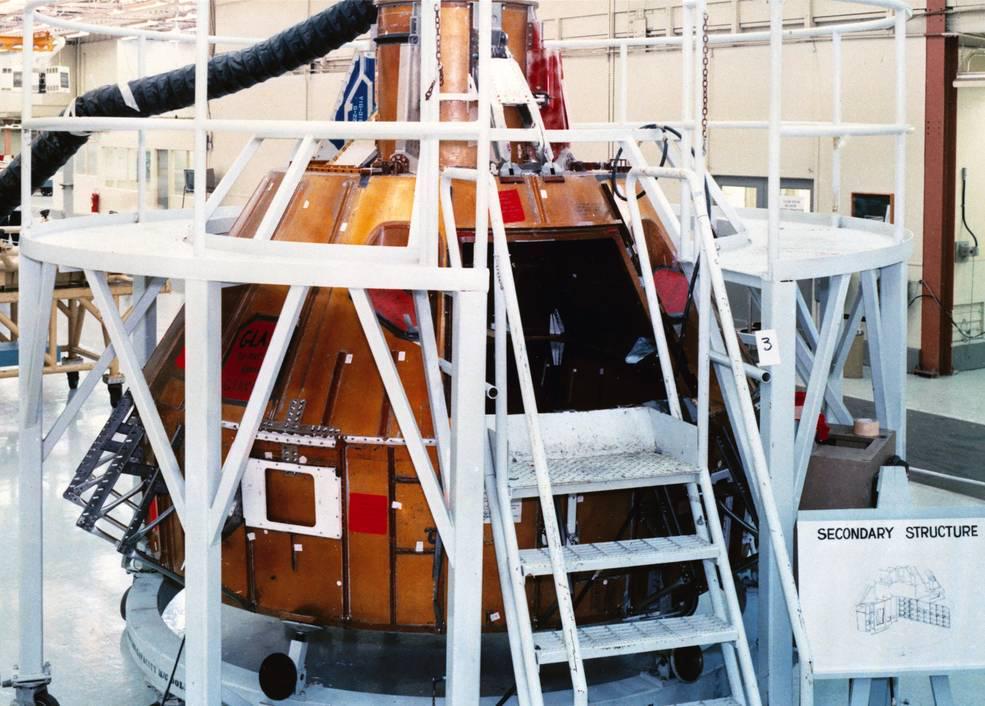
AS-201 Apollo Command Module (CM-009) under construction at North American Aviation’s plant in Downey, California.

Post image
75 Upvotes

Date: November 13, 1964

NASA ID: S64-07845


r/ApolloProgram • • 11d ago

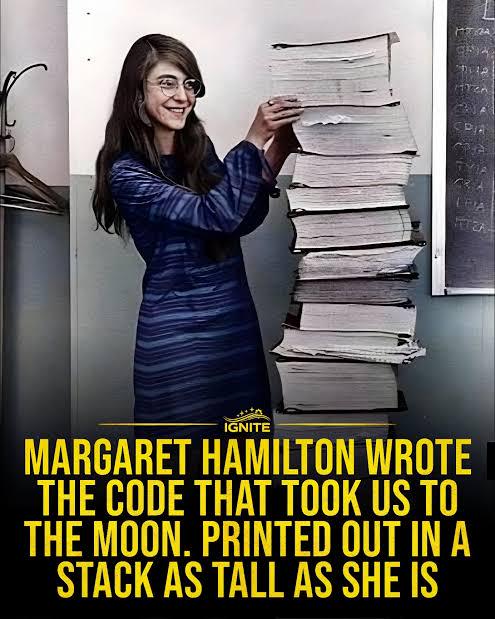
Margaret Hamilton standing next to the handwritten Apollo 11 Guidance Computer source code she and her team wrote to land humans on the Moon, 1969

Post image
29 Upvotes

r/ApolloProgram • • 11d ago

Man on the Moon, New York Times

Thumbnail gallery
82 Upvotes

r/ApolloProgram • • 12d ago

View of the Apollo 8 launch from the Mobile Service Structure

Post image
92 Upvotes

r/ApolloProgram • • 12d ago

SA-3 Saturn I rocket sitting on LC-34.

Thumbnail
gallery
141 Upvotes

Date: November 12, 1962

"The third Saturn C1 configuration fully mated on its launch pedestal at Cape Canaveral ready for countdown."

NASA ID: SAT-3-26, 62-SA3-7, SAT-3-24

Harry S. Truman Historical & Museum: 97-714