r/ApolloProgram • • Oct 07 '26

NASA engineers reacting to LEGO (Nov 2004): Pictures of the LEGOLAND CA Space Shuttle display that pad crews emailed each other

Thumbnail
gallery
150 Upvotes

r/ApolloProgram • • Oct 06 '26

The Hammer and the Feather

1.4k Upvotes

r/ApolloProgram • • Oct 05 '26

Cancelled Missions: Testing Shuttle Manipulator Arms During Earth-Orbital Apollo Missions (1971-1972)

Thumbnail
gallery
44 Upvotes

Photo 1: "In this drawing by NASA engineer Caldwell Johnson, twin human-like Space Shuttle robot arms with human-like hands deploy from the Apollo Command and Service Module (CSM) Scientific Instrument Module (SIM) Bay to grip the derelict Skylab space station."

Photo 3: "Caldwell Johnson's depiction of a prototype Shuttle manipulator arm with a hand-like end effector. The manipulator grasps the Docking Module meant to link U.S. Apollo and Soviet Soyuz spacecraft in Earth orbit during the Apollo-Soyuz Test Project (ASTP) mission."

"Caldwell Johnson, co-holder with Maxime Faget of the Mercury space capsule patent, was chief of the Spacecraft Design Division at the NASA Manned Spacecraft Center (MSC) in Houston, Texas, when he proposed that astronauts test prototype Space Shuttle manipulator arms and end effectors during Apollo Command and Service Module (CSM) missions in Earth orbit. In a February 1971 memorandum to Faget, NASA MSC's director of Engineering and Development, Johnson described the manipulator test mission as a worthwhile alternative to the Earth survey, space rescue, and joint U.S./Soviet CSM missions then under study.

At the time Johnson proposed the Shuttle manipulator arm test, three of the original 10 planned Apollo lunar landing missions had been cancelled, the second Skylab space station (Skylab B) appeared increasingly unlikely to reach orbit, and the Space Shuttle had not yet been formally approved. NASA managers foresaw that the Apollo and Skylab mission cancellations would leave them with surplus Apollo spacecraft and Saturn rockets after the last mission to Skylab A. They sought low-cost Earth-orbital missions that would put the surplus hardware to good use and fill the multi-year gap in U.S. piloted missions expected to occur in the mid-to-late 1970s.

Johnson envisioned Shuttle manipulators capable of bending and gripping much as do human arms and hands, thus enabling them to hold onto virtually anything. He suggested that a pair of prototype arms be mounted in a CSM Scientific Instrument Module (SIM) Bay, and that the CSM "pretend to be a Shuttle" during rendezvous operations with the derelict Skylab space station.

The CSM's three-man crew could, he told Faget, use the manipulators to grip and move Skylab. They might also use them to demonstrate a space rescue, capture an 'errant satellite,' or remove film from SIM Bay cameras and pass it to the astronauts through a special airlock installed in place of the docking unit in the CSM's nose.

Faget enthusiastically received Johnson's proposal (he penned 'Yes! This is great' on his copy of the February 1971 memo). The proposal generated less enthusiasm elsewhere, however.

Undaunted, Johnson proposed in May 1972 that Shuttle manipulator hardware replace Earth resources instruments that had been dropped for lack of funds from the planned U.S.-Soviet Apollo-Soyuz Test Project (ASTP) mission. President Richard Nixon had called on NASA to develop the Space Shuttle just four months before (January 1972). Johnson asked Faget for permission to perform 'a brief technical and programmatic feasibility study' of the concept, and Faget gave him permission to prepare a presentation for Aaron Cohen, manager of the newly created Space Shuttle Program Office at MSC.

In his June 1972 presentation to Cohen, Johnson declared that '[c]argo handling by manipulators is a key element of the Shuttle concept.' He noted that CSM-111, the spacecraft tagged for the ASTP mission, would have no SIM Bay in its drum-shaped Service Module (SM), and suggested that a single 28-foot-long Shuttle manipulator arm could be mounted near the Service Propulsion System (SPS) main engine in place of the lunar Apollo S-band high-gain antenna, which would not be required during Earth-orbital missions.

During ascent to orbit, the manipulator would ride folded beneath the CSM near the ASTP Docking Module (DM) within the streamlined Spacecraft Launch Adapter. During SPS burns, the astronauts would stabilize the manipulator so that acceleration would not damage it by commanding it to grip a handle installed on the SM near the base of the CSM's conical Command Module (CM).

Johnson had by this time mostly dropped the concept of an all-purpose human hand-like 'end effector' for the manipulator; he informed Cohen that the end effector design was 'undetermined.' The Shuttle manipulator demonstration would take place after CSM-111 had undocked from the Soviet Soyuz spacecraft and moved away to perform independent maneuvers and experiments.

The astronauts in the CSM would first use a TV camera mounted on the arm's wrist to inspect the CSM and DM, then would use the end effector to manipulate 'some device' on the DM. They would then command the end effector to grip a handle on the DM, undock the DM from the CSM, and use the manipulator to redock the DM to the CSM. Finally, they would undock the DM and repeatedly capture it with the manipulator.

Caldwell Johnson's depiction of a prototype Shuttle manipulator arm with a hand-like end effector. The manipulator grasps the Docking Module meant to link U.S. Apollo and Soviet Soyuz spacecraft in Earth orbit during the Apollo-Soyuz Test Project (ASTP) mission.

Johnson estimated that new hardware for the ASTP Shuttle manipulator demonstration would add 168 pounds (76.2 kilograms) to the CM and 553 pounds (250.8 kilograms) to the SM. He expected that concept studies and pre-design would be completed in January 1973. Detail design would commence in October 1972 and be completed by 1 July 1973, at which time CSM-111 would undergo modification for the manipulator demonstration.

Johnson envisioned that MSC would build two manipulators in house. The first, for testing and training, would be completed in January 1974. The flight unit would be completed in May 1974, tested and checked out by August 1974, and launched into orbit attached to CSM-111 in July 1975. Johnson optimistically placed the cost of the manipulator arm demonstration at just $25 million.

CSM-111, the last Apollo spacecraft to fly, reached Earth orbit on schedule on 15 July 1975. By then, Caldwell Johnson had retired from NASA. CSM-111 carried no manipulator arm; the tests Johnson had proposed had been judged to be unnecessary.

That same month, the U.S. space agency, short on funds, invited Canada to develop and build the Shuttle manipulator arm. The Remote Manipulator System — also called the Canadarm — first reached orbit on board the Space Shuttle Columbia during STS-2, the second flight of the Shuttle program, on 12 November 1981."

Info and drawings from "No Shortage of Dreams" blog


r/ApolloProgram • • Oct 05 '26

The scientific and Hollywood techniques that produced NASA "Red Number" Color Photo S-66-42758: Atlas-Agena D Launch with Acoustic/Vibration Overlay, July 18, 1966.

Post image
67 Upvotes

r/ApolloProgram • • Oct 04 '26

Inside the Decommissioned Apollo Emergency Blast Room and Chute System Preserved 40 Feet Beneath Launch Complex 39A

Thumbnail
gallery
1.0k Upvotes

r/ApolloProgram • • Oct 04 '26

On October 4 , 1967, "NASA informed the Boeing Company that it was terminating procurement of 10 S-IC stages, S-IC-16 through S-IC-25."

Thumbnail
gallery
66 Upvotes

Note: photos are not of S-IC-16 and S-IC-17.

"Boeing had submitted a proposal on July 3 and an adjusted proposal on September 20 covering the necessary supplies and services for fabrication and delivery of the stages."

-MAF, Historical Report, Jan. 1-Dec. 31, 1967, p. 28.

These were for the second production run of the Saturn V, possibly corresponding to Apollo 21-30 and later two were planned to launch Voyager 1 and 2. The long lead items for S-IC-16 and S-IC-17 had already started when the decision was announced and any materials already gathered were scrapped. Although NASA concluded to lobby for funding for SA-516 and SA-517 (along with Saturn IBs SA-215 and SA-216) until August 1968.

NASA Doc: link

source


r/ApolloProgram • • Oct 04 '26

Apollo 10: Original "Snoopy Astronaut"

Thumbnail
gallery
44 Upvotes

r/ApolloProgram • • Oct 02 '26

The video of Apollo 17 launching from the Moon was a masterclass in split-second remote timing.

2.0k Upvotes

The iconic footage of Apollo 17’s Lunar Module lifting off from the Moon was captured by a camera mounted on the Lunar Roving Vehicle (LRV). The Rover was parked about 145 meters (475 ft) away, and the camera was controlled remotely from Mission Control in Houston by Ed Fendell.
Previous attempts during Apollo 15 and 16 hadn’t gone perfectly. On Apollo 15, a problem with the camera’s tilt clutch prevented it from tracking the Lunar Module during ascent. On Apollo 16, the camera worked, but the tracking wasn’t quite right: the Rover had been parked too close to the LM, and the camera couldn’t tilt upward fast enough to keep up with it.
The biggest challenge was the communication delay. Radio signals take roughly 1.25 seconds to travel between Earth and the Moon, meaning Fendell couldn’t simply watch the screen and react in real time. His camera commands had to be carefully timed in advance, anticipating exactly when the engine would ignite and how quickly the Lunar Module would climb.
On Apollo 17, the third attempt was the charm. Fendell got the timing and tracking just right, producing one of the most remarkable pieces of footage of the entire Apollo program.
And since that day, December 14, 1972… We haven’t been back.
For now.


r/ApolloProgram • • Oct 03 '26

Workforce photos of an engineering walkdown inside the Launch Pad 39B flame trench on June 29, 2005. This occurred exactly one day prior to NASA’s final Flight Readiness Review (FRR) for Space Shuttle Discovery (STS-114).

Thumbnail
gallery
46 Upvotes

r/ApolloProgram • • Oct 03 '26

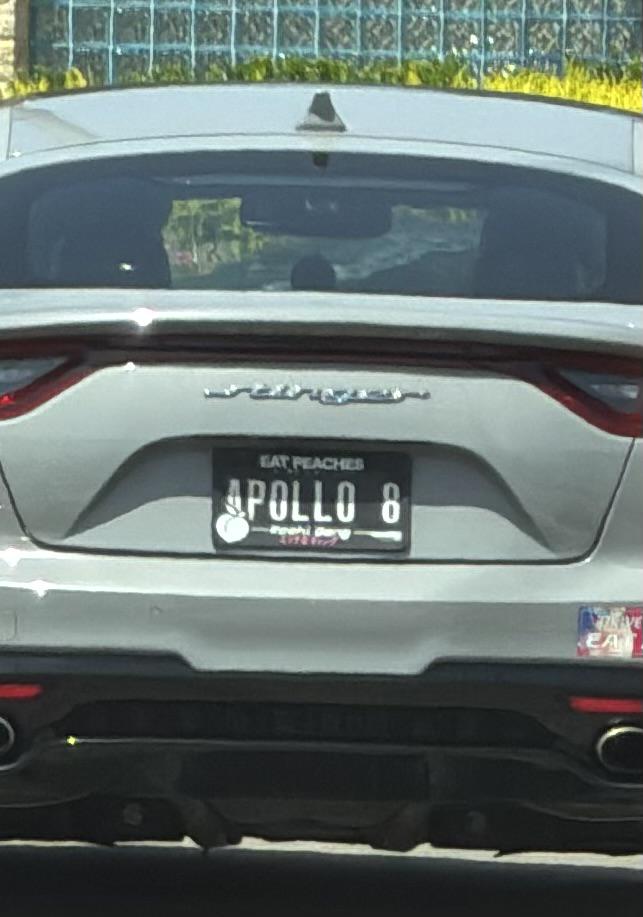
AP0LL0 8

Post image
15 Upvotes

r/ApolloProgram • • Oct 02 '26

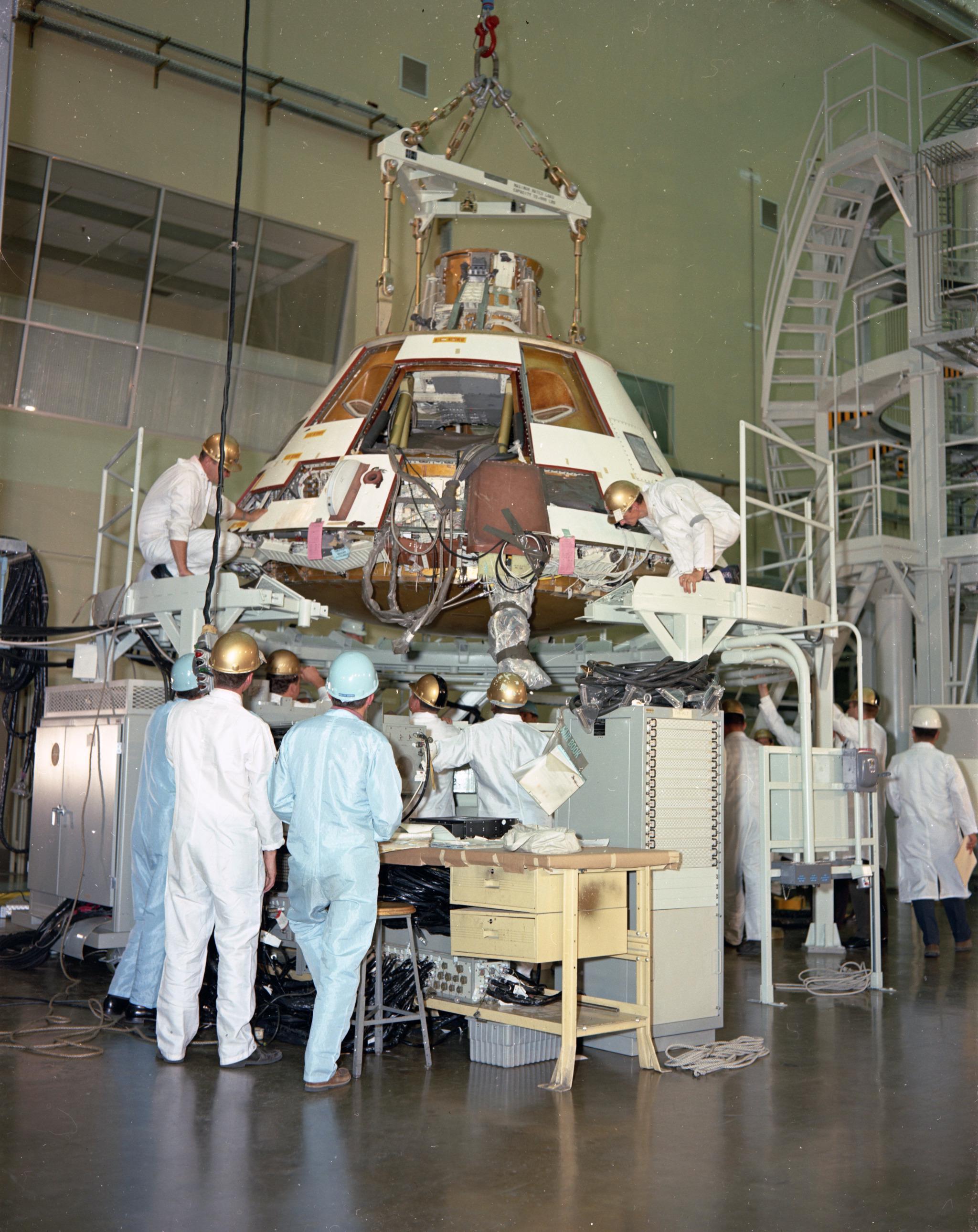
AS-201 Command Module (CM-009) under construction at North American's facility in Downey, California.

Post image
144 Upvotes

Date: 1965

North American Photo: NAR-D120B - 9155-9C


r/ApolloProgram • • Oct 02 '26

Apollo 11- 98,000 Miles/160,000 Kilometers above the Eastern Hemisphere. NASA "Red Number" Color Photo (Image AS11-36-5355)

Thumbnail
gallery
24 Upvotes

r/ApolloProgram • • Oct 01 '26

Apollo 7 (Oct 11, 1968) — High-altitude engineering photography of the Saturn IB launch, captured over the Atlantic from a C-135 tracking jet using the A-LOTS 70mm camera pod.

Thumbnail
gallery
111 Upvotes

r/ApolloProgram • • Oct 01 '26

In 1994, Playmates made a set of Ninja Turtle figures to commemorate the 25th Anniversary of Apollo 11. It was one small step for toys, but one giant leap for mutantkind.

Thumbnail
gallery
22 Upvotes

r/ApolloProgram • • Sep 30 '26

The non-flight prototype Space Shuttle Enterprise (OV-101) during pad fit-check and pathfinder testing at Pad 39A, mid-1979. Behind the vehicle stands the Fixed Service Structure (FSS), newly constructed using repurposed steel from Apollo's Saturn V Launch Umbilical Tower 2 (LUT-2).

Thumbnail
gallery
232 Upvotes

r/ApolloProgram • • Sep 29 '26 Bravo

Neil Armstrong’s narrow escape from the LLRV

724 Upvotes

On May 6, 1968, Armstrong narrowly avoided a fatal crash during a training flight with the Lunar Landing Research Vehicle (LLRV) at Ellington Air Force Base, Texas. When a sudden loss of helium pressure caused the vehicle to lose control at an altitude of 200 feet, Armstrong was forced to use his ejection seat just seconds before impact. He landed safely by parachute, suffering only a minor cut to his tongue, while the prototype crashed and exploded in flames. Armstrong later credited his training on the LLRV as crucial to the successful manual landing of Apollo 11's Eagle module on the Moon a year later.


r/ApolloProgram • • Sep 28 '26

Contractors hundreds of feet in the air repairing the Vehicle Assembly Building (VAB) following the devastating 2004 hurricane season, October 2004.

Thumbnail
gallery
73 Upvotes

r/ApolloProgram • • Sep 27 '26

Lunar Observation chart signed by Apollo moonwalkers.

Thumbnail
gallery
28 Upvotes

r/ApolloProgram • • Sep 27 '26

Snoopy as the "Worlds Most Famous Astronaut". After the Apollo 1 fire, NASA approached Charles M. Schulz with a request to use Snoopy as a safety mascot. His likeness is even used to this day with the Silver Snoopy Award.

Thumbnail
gallery
20 Upvotes

r/ApolloProgram • • Sep 25 '26

The N-1: the Soviet Union's massive rocket intended to send cosmonauts to the Moon in 1967. Unlike the Saturn V, the N-1 was integrated horizontally and raised to a vertical position at the launchpad

Post image
22 Upvotes

r/ApolloProgram • • Sep 25 '26

Alan Bean's painting "Fender Lovin Care". Are there any other astronaut/artists?

Post image
29 Upvotes

r/ApolloProgram • • Sep 25 '26

What is your favourite photo of the Apollo program?

8 Upvotes

Mine is this picture of James Irwin with the lunar rover from Apollo 15. I have it printed out in picture frame in my room. The hill in the background is just absolutely stunning. Every time I look at this picture I can't comprehend that all of this really happened. I am very much hoping to see similar achievments in my life time. Inspires me every single day.


r/ApolloProgram • • Sep 24 '26

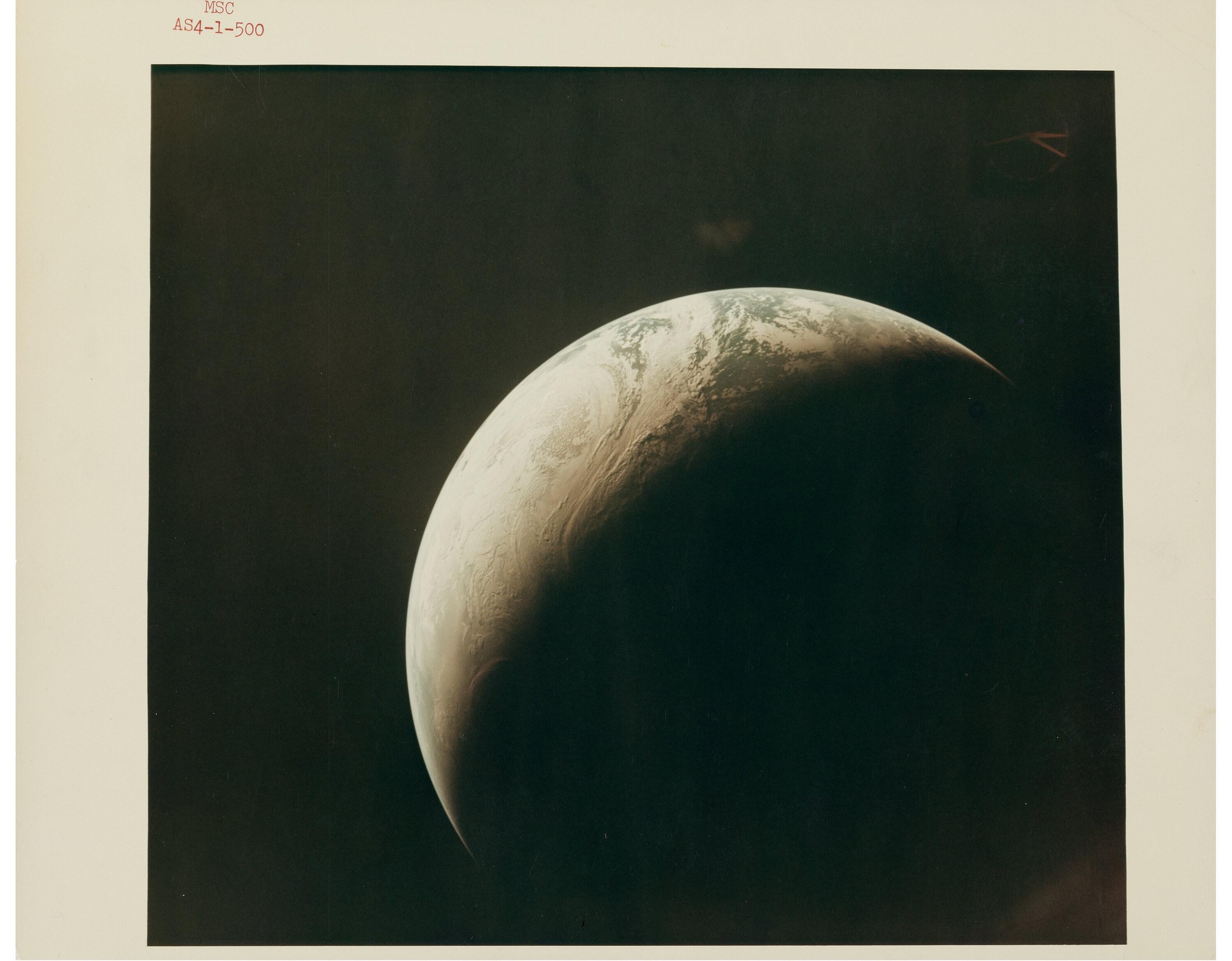
Apollo 4- NASA Red Number Color Photo, Image AS4-1-500

Post image
12 Upvotes

r/ApolloProgram • • Sep 24 '26

Early Concept art of Space Station for the Apollo Application Program

Post image
20 Upvotes

"This space station, which appears from the art style to be a Grumman design, is a single-launch space station to be launched atop a Saturn V. The two arms would fold back for storage on the launch vehicle and would deploy once in orbit. An Apollo CSM is shown approaching for docking along the centerline; it’s not clear if the docking cone was rotationally decoupled. if it was not, the two Apollo-like capsules hanging off the sides of the cone are a bit of a head scratcher."

Date:1969

NASA ID: S69-1636


r/ApolloProgram • • Sep 24 '26

The Apollo 17 Spacecraft (CSM-114/LM-12/SLA-21) (right) crosses paths with the S-IB and S-IVB stage for Saturn IB (SA-206), intended for the first manned Skylab mission (SL-2).

Post image
19 Upvotes

Date: August 23, 1972

NASA ID: KSC-72P-454