r/ApolloProgram • • Oct 20 '26

Apollo 13, interior view of “mail box” for purging carbon dioxide from Lunar Module

Post image
619 Upvotes

AS13-62-8929 (11-17 April 1970)
Interior view of the Apollo 13 Lunar Module (LM) showing the "mail box," a jury-rigged arrangement which the Apollo 13 astronauts built to use the Command Module (CM) lithium hydroxide canisters to purge carbon dioxide from the LM. Lithium hydroxide is used to scrub CO2 from the spacecraft's atmosphere. Since there was a limited amount of lithium hydroxide in the LM, this arrangement was rigged up to utilize the canisters from the CM. The "mail box" was designed and tested on the ground at the Manned Spacecraft Center (MSC) before it was suggested to the problem-plagued Apollo 13 crew men. Because of the explosion of one of the oxygen tanks in the Service Module (SM), the three crew men had to use the LM as a "lifeboat".

r/ApolloProgram • • Oct 18 '26

"The prime crewmembers for the first manned Apollo Mission AS-204 (later renamed Apollo 1) prepare to enter their spacecraft inside the altitude chamber at the Kennedy Space Center (KSC)...

Thumbnail
gallery
314 Upvotes

Photographed on October 18, 1966

...Entering the hatch is astronaut Virgil I. Grissom, command pilot; behind him is astronaut Roger B. Chaffee, pilot; standing at the left with chamber technicians is astronaut Edward H. White II, senior pilot."

source


r/ApolloProgram • • Oct 18 '26

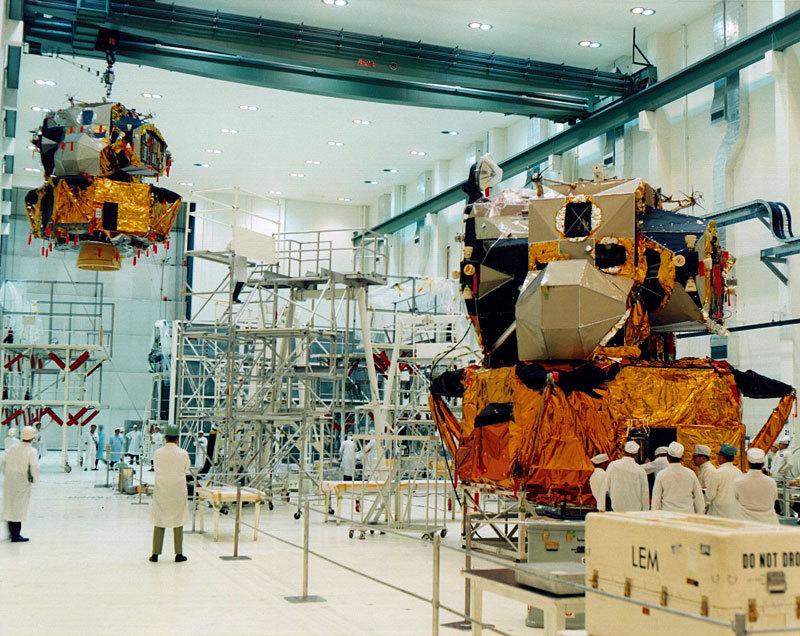
The Apollo 14 Lunar Module (LM-8) Antares (right) undergoes checkout with Apollo 15's LM-10 Falcon (left) in the background.

Post image
224 Upvotes

Date: October 16, 1970


r/ApolloProgram • • Oct 18 '26

The Descent and Ascent Stages of the test Lunar Module (LTA-3) being to mating together in vibration test fixture at Grumman's Lab Facilities in New York.

Thumbnail
gallery
114 Upvotes

Date: October 17, 1966

NASA ID: S66-57284, S66-57285, S66-57290


r/ApolloProgram • • Oct 18 '26

Removal of the 1975 Apollo-Soyuz lightning mast atop the Fixed Service Structure (FSS) at Launch Complex 39B (March 2009)

Thumbnail
gallery
164 Upvotes

r/ApolloProgram • • Oct 16 '26

Before the Saturn V Met the Moon, the Scrappy Little Joe Rocket Tested the Apollo Escape Tower.

Thumbnail
gallery
355 Upvotes

r/ApolloProgram • • Oct 15 '26

LM-1, the very first flight-configured Apollo Lunar Module, inside the Manned Spacecraft Operations Building (MSOB) at the Kennedy Space Center (June 24, 1967).

Post image
188 Upvotes

r/ApolloProgram • • Oct 15 '26 Bravo

The different configurations of the Saturn IB and the planned missions for each.

Post image
93 Upvotes

Several things of note:

This graphic shows the planned mission configuration for AS-201 through AS-212. The AS-2XX was the mission nomenclature before AS-204 was changed to Apollo 1. This change was requested by the Astronauts' wives to honor their husbands, who lost their lives in the fire. The plans before the Apollo 1 disaster deserve its own post.

Only AS-204/Apollo 5 launched carrying only the Lunar Module (LM-1). There were plans for a second mission but after the success of the first, it was not needed.

After AS-205/Apollo 7, the rest of the Saturn IBs were placed into storage and refurbished for the Skylab and ASTP missions.

It's interesting AS-212 was scheduled to carry both an Apollo module and a Lunar Module as the Saturn IB did not have enough Delta-V to carry both into orbit. Nor did it have enough to launch a fully fueled Apollo CSM, as all missions carrying it had to be partially loaded.

Missing from this list is SA-213 and SA-214. Both were not completed before funding ran out and what was built (the S-IB stage), was scrapped. SA-212's S-IVB was converted into the backup Skylab space station (aka Skylab B) and its S-IB stage was scrapped.

SA-215 and SA-216 were cancelled before they were started in July 1968.

Date: 1968

NASA ID: 0100803


r/ApolloProgram • • Oct 14 '26

The Saturn V SA-500F rolled back to the VAB onOctober 14, 1966, following facilities checkout at LC-39A

Thumbnail
gallery
210 Upvotes

r/ApolloProgram • • Oct 14 '26

Utilization of current hardware for Apollo Applications program, including the Dry Workshop (aka Skylab) and extended Apollo missions to Earth orbit and the moon.

Post image
33 Upvotes

Date: October 14, 1969

NASA ID: 69-H-1901 (aka NASA HQ MR69-6334)


r/ApolloProgram • • Oct 14 '26

KSC environmental crews wrangle an alligator. A KSC/CCAFS patrol officer bravely watches nearby. (early 2000's)

Post image
17 Upvotes

r/ApolloProgram • • Oct 13 '26

"Eighteen Million Pounds of Power": An Inside Look at the Rebuild of Crawler-Transporter 2 at KSC.

Thumbnail
gallery
518 Upvotes

r/ApolloProgram • • Oct 13 '26

The full-size Mockup Apollo Lunar Module (M-5) at Grumman Aircraft Engineering Corporation’s facility in Bethpage, Long Island, New York.

Thumbnail
gallery
118 Upvotes

Date: October 13, 1964

"The space-suited test subject demonstrates entry through the forward hatch of the Lamar Excursion Module (LEM) M-5 Mock-up."

Note: "the laid out components, photos, graphics, schematics, displays, etc. of LEM systems. I assume for VIP/NASA visitations/presentations in conjunction with their attendance at testing, evaluations, meetings, conferences, etc."

links to the sources


r/ApolloProgram • • Oct 13 '26

Alan Bean’s 1969 Corvette with the Saturn V rocket at JSC.

Post image
198 Upvotes

r/ApolloProgram • • Oct 12 '26

Before the Apollo era: Neil Armstrong and the X-15

Thumbnail
gallery
495 Upvotes

Long before becoming the first person to walk on the Moon, Neil Armstrong was a test pilot flying the North American X-15, a rocket-powered research aircraft designed to explore the limits of high-speed flight. Its main purpose was to investigate hypersonic flight, high-altitude aerodynamics and atmospheric reentry, helping advance the knowledge needed for human space exploration.
The X-15 was air-launched from a B-52 at an altitude of around 45,000 feet (13.7 km). Its rocket engine burned for roughly 80–120 seconds, accelerating the aircraft to hypersonic speeds. The remainder of a typical flight was essentially an unpowered glide back to the landing site.
Armstrong flew the X-15 seven times between 1960 and 1962, reaching a maximum speed of Mach 5.74 — approximately 3,989 mph (6,420 km/h).
One of his most remarkable flights took place on April 20, 1962, aboard the X-15-3. During the descent from 207,000 feet, Armstrong inadvertently established a positive angle of attack while pulling out of a dive. This altered the aircraft’s trajectory, causing him to overshoot Edwards Air Force Base. Heading south at Mach 3 and an altitude of 100,000 feet, Armstrong eventually managed to turn back while over the Rose Bowl in Pasadena. He had just enough energy remaining to glide safely onto Rogers Dry Lake at Edwards.
The knowledge gained from the X-15 program contributed to the development of America’s crewed spaceflight programs, including Mercury, Gemini and Apollo.


r/ApolloProgram • • Oct 12 '26

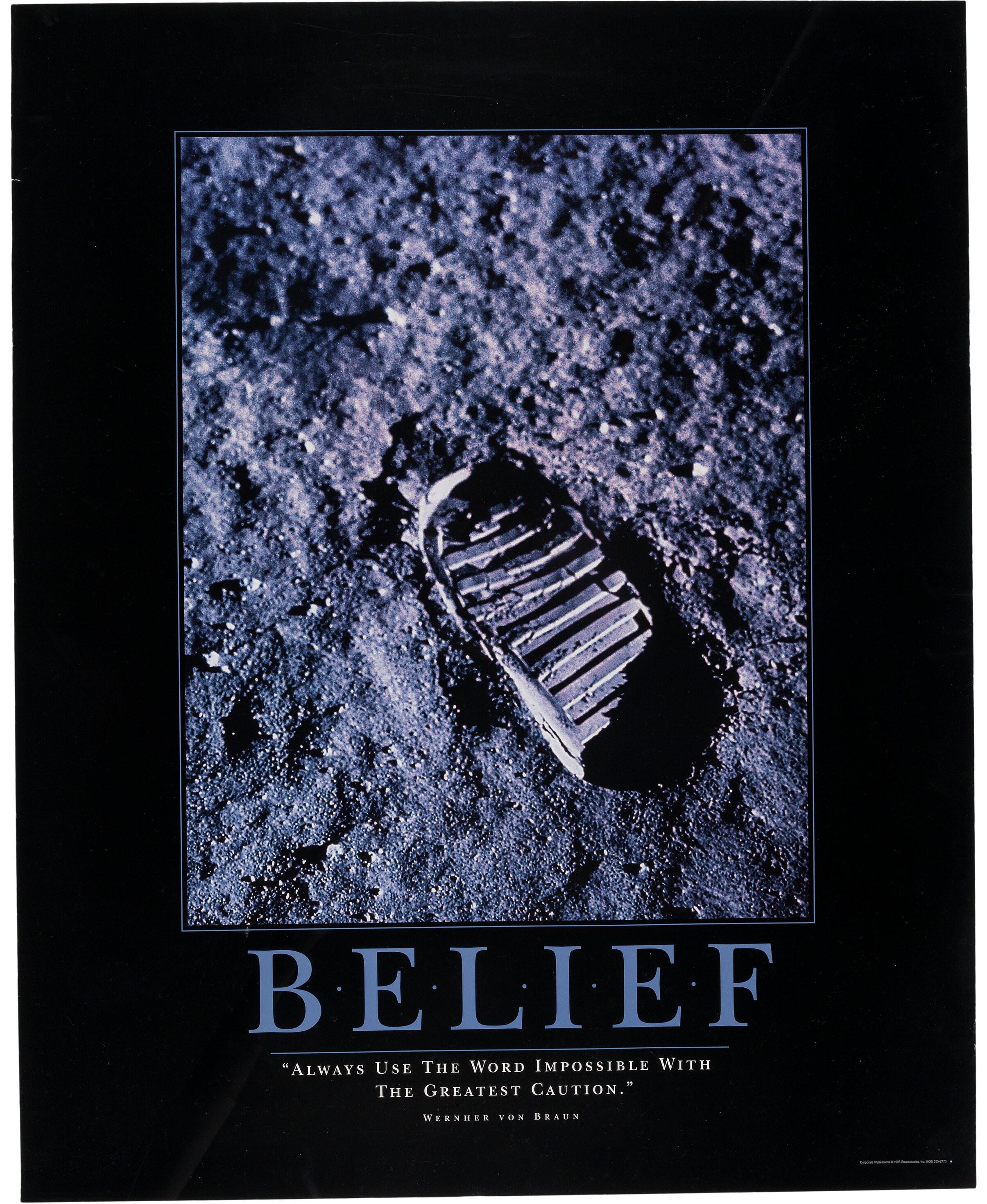
A fusion of Apollo history and 90's middle management

Post image
59 Upvotes

r/ApolloProgram • • Oct 12 '26

Launch of Apollo 7 (AS-205)

Thumbnail
gallery
202 Upvotes

"CAPE CANAVERAL, Fla. -- The Apollo 7 spacecraft, atop a Saturn IB rocket, lifts off from Complex 34, Cape Kennedy, at 11:03 a.m. EDT. The spacecraft achieved orbit to begin an 11-day mission. The flight is intended to qualify Apollo for a manned flight to the moon."

Date: October 11, 1968


r/ApolloProgram • • Oct 11 '26

Snoopy "Up up & AWAY" NASA Manned Flight Awareness (MFA) poster

Post image
48 Upvotes

r/ApolloProgram • • Oct 11 '26

NASA Image S-68-2590 vs. The Final Product. This pre-launch artwork was used as the illustration on the Apollo 11 Type 1 Quarantine Insurance Covers

Thumbnail
gallery
33 Upvotes

r/ApolloProgram • • Oct 10 '26

Inside the VAB Rafters. The 1965 structural "Topping Out" beam at the 518-ft level. A spaceflight time capsule originally signed by the Apollo-era KSC workforce and construction crews, with the tradition kept alive to this day.

Thumbnail
gallery
265 Upvotes

r/ApolloProgram • • Oct 10 '26

Looking for Apollo movie recommendations 🍿

6 Upvotes

Hello guys,
Any suggestions for a good Apollo-themed movie/documentary to watch, obviously excluding Apollo 13 and First Man?
Thanks!


r/ApolloProgram • • Oct 09 '26 Bravo

Florida Air National Guard F-15C & F-15D Eagles flying Combat Air Patrol over NASA's Kennedy Space Center during the historic STS-114 "Return to Flight" mission. (July 2005)

Thumbnail
gallery
252 Upvotes

r/ApolloProgram • • Oct 08 '26

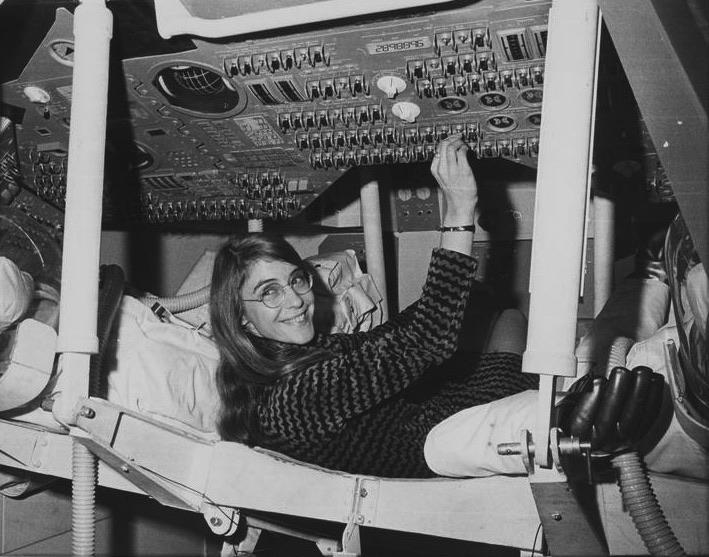
Remembering Margaret Hamilton, the Pioneer Behind Apollo’s Software

Post image
1.1k Upvotes

We honor the life and legacy of Margaret Hamilton, the visionary computer scientist and software pioneer who passed away at the age of 90.
As Director of the Software Engineering Division at MIT’s Instrumentation Laboratory, Hamilton led the team that developed the onboard flight software for NASA’s Apollo missions. Their innovative software was designed to prioritize critical tasks during system overloads — a capability that proved crucial during the final minutes of the Apollo 11 lunar landing, when the onboard computer was overwhelmed by unexpected data and triggered the famous 1201 and 1202 alarms.
Thanks to this design, the Apollo Guidance Computer was able to recover from the overload, prioritize critical tasks, and continue providing the guidance needed for the lunar landing.
Hamilton also helped establish software engineering as a recognized discipline and became one of the field’s most influential pioneers, inspiring generations of women and engineers in STEM.
Rest in peace, Margaret Hamilton — a true pioneer of the Space Age.


r/ApolloProgram • • Oct 08 '26

Food packages developed for the Apollo 11 mission (1969). A strange overlap between the space race, appliance manufacturers, and big tobacco.

Thumbnail
gallery
227 Upvotes

r/ApolloProgram • • Oct 07 '26 Heartwarming

Ever seen a rally race on the Moon? Meet the Apollo 16 “Lunar Grand Prix”

771 Upvotes

The Apollo 16 “Lunar Grand Prix” was an iconic high-speed test drive performed by astronaut John Young on April 21, 1972, across the Descartes Highlands using the Lunar Roving Vehicle (LRV). Filmed by Charles Duke with a 16mm camera, this maneuver was a planned engineering test designed to evaluate the rover’s acceleration, steering, braking, and suspension performance in the Moon’s 1/6 gravity.
As Young pushed the rover up to about 10 km/h (6.2 mph), the vehicle sent beautiful “rooster tails” of fine lunar dust soaring into the air, forming perfect arcs without creating clouds thanks to the Moon’s complete lack of an atmosphere.
This wasn’t even the fastest the Lunar Roving Vehicle would go. During Apollo 16’s third EVA, Young reached about 17 km/h (10.6 mph) while driving downhill, setting a lunar speed record that was broken just a few months later by Gene Cernan during Apollo 17, when he reached about 18 km/h (11 mph). For obvious reasons, that record still stands.
What began as a carefully planned engineering test became one of the most playful and unforgettable moments of the Apollo era.