r/ApolloProgram • u/carbonlandrover • 1d ago
What are these big concrete domes at the launch pads here at KSC?
They are at the entrance to the launch pads, and they look like they are from the 60's. Obviously no longer in use.
r/ApolloProgram • u/Kesselrun_89 • Sep 19 '26
Welcome aboard!
r/ApolloProgram was created to be an open, inspiring, and respectful space dedicated to NASA’s Apollo missions and the incredible human achievement of lunar exploration.
Whether you're here to dive deep into historical technical specs, share rare mission trivia, restore archival photography, or showcase original digital art and design inspired by space exploration — you are in the right place.
What you’ll find here:
🚀 Historical Archives & Media: High-resolution photos, audio clips, and restored footage from the Apollo era.
🧠 Engineering & Trivia: In-depth breakdowns of the Saturn V, Apollo Guidance Computer, Lunar Module, and lesser-known mission facts
🎨 Original Artwork & Graphic Design: Creative interpretations, custom posters, 3D renders, and digital art celebrating space history (all creators are welcome to share their work freely).
💬 Constructive Discussions: Open dialogue built on respect, curiosity, and shared passion.
Community Rules:
Feel free to introduce yourself in the comments or drop your first submission below.
“We set sail on this new sea because there is new knowledge to be gained.”
r/ApolloProgram • u/carbonlandrover • 1d ago
They are at the entrance to the launch pads, and they look like they are from the 60's. Obviously no longer in use.
r/ApolloProgram • u/BenCreizy • 4d ago
Recently I began translating legacy code to lean 4, and I started with this group from the Apollo Lunar Mission, which in my opinion were the most informative historically, which are available for downloading here
https://github.com/CreizyLabs/Lean_4_Translations/tree/main/ApolloMission
r/ApolloProgram • u/tybarious • 4d ago
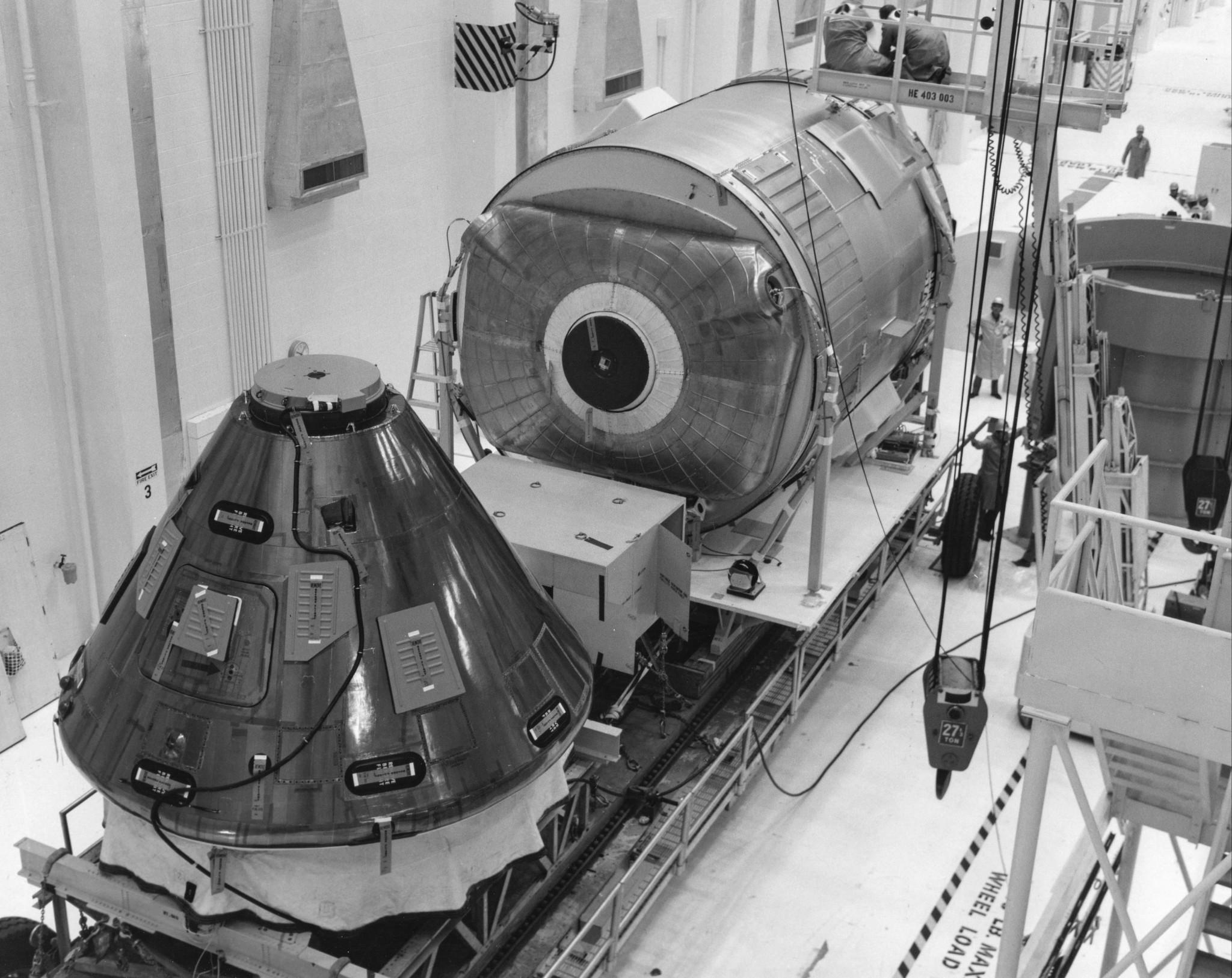
Date: November 19, 1967
"Also known as Apollo 5, the spacecraft was launched on the fourth Saturn IB launch vehicle. Developed by the Marshall Space Flight Center (MSFC) as an interim vehicle in MSFC's "building block" approach to the Saturn rocket development, the Saturn IB utilized Saturn I technology to further develop and refine a larger booster and the Apollo spacecraft capabilities required for the manned lunar missions of".
NASA ID: 108-KBC-670-9962, S67-62210
r/ApolloProgram • u/Kesselrun_89 • 5d ago
On November 19, 1969, Apollo 12 landed in the Ocean of Storms, making Pete Conrad and Alan Bean the third and fourth humans to walk on the Moon.
Stepping off the Lunar Module Intrepid, Conrad famously shouted:
“Whoopie! Man, that may have been a small one for Neil, but that’s a long one for me!”
At just 5’6” (1.68 m), he certainly had a long jump from the ladder to the lunar surface. But the words also had a purpose: Conrad claimed he had made a $500 bet with Italian journalist Oriana Fallaci, who believed NASA scripted everything astronauts said on the Moon. He later joked that she never paid up.
Interestingly, Fallaci subsequently claimed she had helped come up with the line herself.
Despite being struck by lightning twice during launch, Apollo 12 completed a remarkably precise landing near the Surveyor 3 probe, proving that the second lunar landing could be just as memorable as the first.
r/ApolloProgram • u/Front-Coconut-8196 • 5d ago
r/ApolloProgram • u/jazzjazz_6648 • 5d ago
r/ApolloProgram • u/More_Fee_5936 • 7d ago
r/ApolloProgram • u/tybarious • 8d ago
Date: November 16, 1972
NASA ID: KSC-73PC-0019
r/ApolloProgram • u/Working_Hat5120 • 8d ago
r/ApolloProgram • u/tybarious • 9d ago
"Apollo A was a lighter-weight July 1961 version of the Apollo spacecraft.
Status: Study 1961.
It was specifically designed for long-duration operations in space; to conduct re-entry tests at near-parabolic speeds; and then for manned circumlunar missions.
At the time of the Apollo bidder's conference in August 1961 an evolutionary approach to the Apollo program was expected. After completion of the Mercury project both the Apollo spacecraft and Saturn launch would gradually fly multi-man crews on a series of ever-more ambitious scientific and technological missions in earth-moon space. This program would begin with manned earth satellite flights of extended lifetime, proceed to lunar circumnavigation, to lunar satellite flights, and ultimately to the lunar landing. Although the Apollo A designation was applied only to the first unmanned Apollo tests at this time, we would use the term here to designate the Apollo design and program plan as envisioned by NASA prior to the Apollo bidder's conference in the summer of 1961.
The return to earth and the recovery of the manned spacecraft were important parts of these missions. The development of the Apollo spacecraft was to proceed in several phases. Each phase, to the extent possible, would serve as qualification for the subsequent phase. The objectives of Apollo Phase A was:
• Qualification of systems and features for the lunar missions within the constraints or the environment of earth satellite orbits of up to 500 km altitude by manned flights.
• Qualification of the re-entry heat protection for the lunar missions in unmanned re-entry tests from super-circular and near-parabolic velocities.
• Study of physiological and psychological reactions and capabilities of a multiman crew in the space environment during extended periods of time (at least two weeks). In the adapter between the Saturn second stage and the Apollo spacecraft, as an integral part, was a section to be used as an orbiting laboratory. Preliminary designs indicated this laboratory would be a cylindrical section about 3.9 m in diameter and 2.4 m in height. The laboratory would provide the environment and facilities to conduct scientific experiments related to the manned operation of spacecraft. Experiments that might be conducted from an Earth-orbiting laboratory included: astronomical observations; monitoring the Sun's activity; testing man's ability to work outside the vehicle; zero-g testing; and micrometeoroid impact study.
• Development of flight and ground operational techniques and equipment for the support of space flights of extended periods
• Conduct of experimental investigations as needed to acquire information for the subsequent lunar missions.
The two-stage Saturn C-I launch vehicle system would be utilized to carry the Apollo A spacecraft into the low earth-satellite orbits and to accelerate the capsule only to re-entry trajectories during the Apollo A phase.
The mass breakdown of the Apollo A earth-orbit version was nearly 1/3 less than that of the later Apollo capsule final design:
• Command Module: 3600 Kg
• Equipment-Propulsion Module (less Main Motors): 1600 kg
• Main Motors: 1300 kg
• Space Laboratory: 1400 kg
• Launch Escape Propulsion: 1700 kg (separated after first stage burn-out)
• Total Launch Weight: 9500 kg
• Total Weight in Low Earth Orbit: 7800 kg
As of the summer of 1961 it was planned that Apollo A boilerplate flights in the earth-orbit configuration would take place in October/December 1963 using Saturn C-1's SA-7 and SA-8. SA-9 and SA-10 would launch 3400 kg capsule-only payloads in February-April 1964 to near parabolic velocities in tests of the capsule's hypersonic aerodynamics and heat shield. These prototype capsules would be equipped with parachutes and be recovered.
These proving tests would be followed by Apollo A manned earth orbit space laboratory missions in the 1965-1967 period. Manned circumlunar flights would occur at the same time. The booster for such missions was originally intended to be the Saturn C-2. This was changed to the Saturn C-3 in June 1961 when it became clear the Apollo spacecraft would weigh too much for such missions. The C-3 in turn was cancelled in favor of the C-5, and discussion of circumlunar Apollo disappeared by the end of 1962."
-Information from Astronautix.com: link
SDASM Archives: Apollo Doc003, Apollo Doc036, Apollo Doc013, Apollo Doc006
NASA ID: M-MS-G-102-61, 63-APOLLO-15
NASA Document ID: 19650024284
r/ApolloProgram • u/tybarious • 9d ago
Date: November 15, 1971
NASA ID: KSC-71C-5535
r/ApolloProgram • u/tybarious • 10d ago
Date: November 14, 1969
Launch of Apollo 12 Saturn V (CSM-108/LM-6/SA-507) from Launch Complex 39A, at 11:22 a.m. (EST). Aboard were astronauts Charles Conrad Jr., commander; Richard F. Gordon Jr., command module pilot; and Alan L. Bean, lunar module pilot.
2nd pic: "Interior view of the White Room atop Pad A, Launch Complex 39, Kennedy Space Center (KSC), during the insertion of the Apollo 12 crew. In the center background preparing to ingress the spacecraft is astronaut Charles Conrad Jr., commander. Astronaut Alan L. Bean, lunar module pilot, stands in the right foreground. Awaiting his turn to ingress, but out of view, is astronaut Richard F. Gordon Jr., command module pilot. The Apollo 12 is the United States' second lunar landing mission."
12th pic: Apollo 12, Kind Of A Rough Start by James Hervat.
13th pic: "Effects of an electrical discharge are seen at Pad A, Complex 39, following the launch of the Saturn V space vehicle on the start of the Apollo 12 mission at 11:22 a.m. EST, Friday, November 14. Project officials are investigating to determine if such an electrical phenomenon was the cause of the shutdown of the spacecraft fuel cells some 36 seconds into the flight. The Apollo 12 astronauts brought the fuel cells back on line a short time later."
NASA ID: S69-58885, S69-58879, S69-58564, S69-58883, KSC-69PC-0669, KSC-69PC-0672, S69-58884
r/ApolloProgram • u/tybarious • 10d ago
r/ApolloProgram • u/DadBricks • 10d ago
Move the four hand controllers, flip every switch, turn every dial, activate the Master Alarm and Lunar Contact lights. I've put a lot of care in representing the details as accurately as possible at this scale (approximately between 1:3-1:4) in Lego form.
As with all of my models, it has been physically built and tested (as seen above).
Dimensions:
Width: 26 inches (66 cm)
Height: 18 3/4 inches (47.6 cm)
Depth: 8 1/4 inches (21 cm), including armrests
Weight: 15.8 lbs.
3 Instruction pdf files- 1189 pages in total
Features Include:
r/ApolloProgram • u/More_Fee_5936 • 10d ago
r/ApolloProgram • u/Sufficient_Host9593 • 10d ago
r/ApolloProgram • u/ImageExact5491 • 11d ago
Photo credit: Drew Granston.
r/ApolloProgram • u/tybarious • 11d ago
Date: November 13, 1964
NASA ID: S64-07845
r/ApolloProgram • u/Sufficient_Host9593 • 11d ago
r/ApolloProgram • u/tybarious • 12d ago
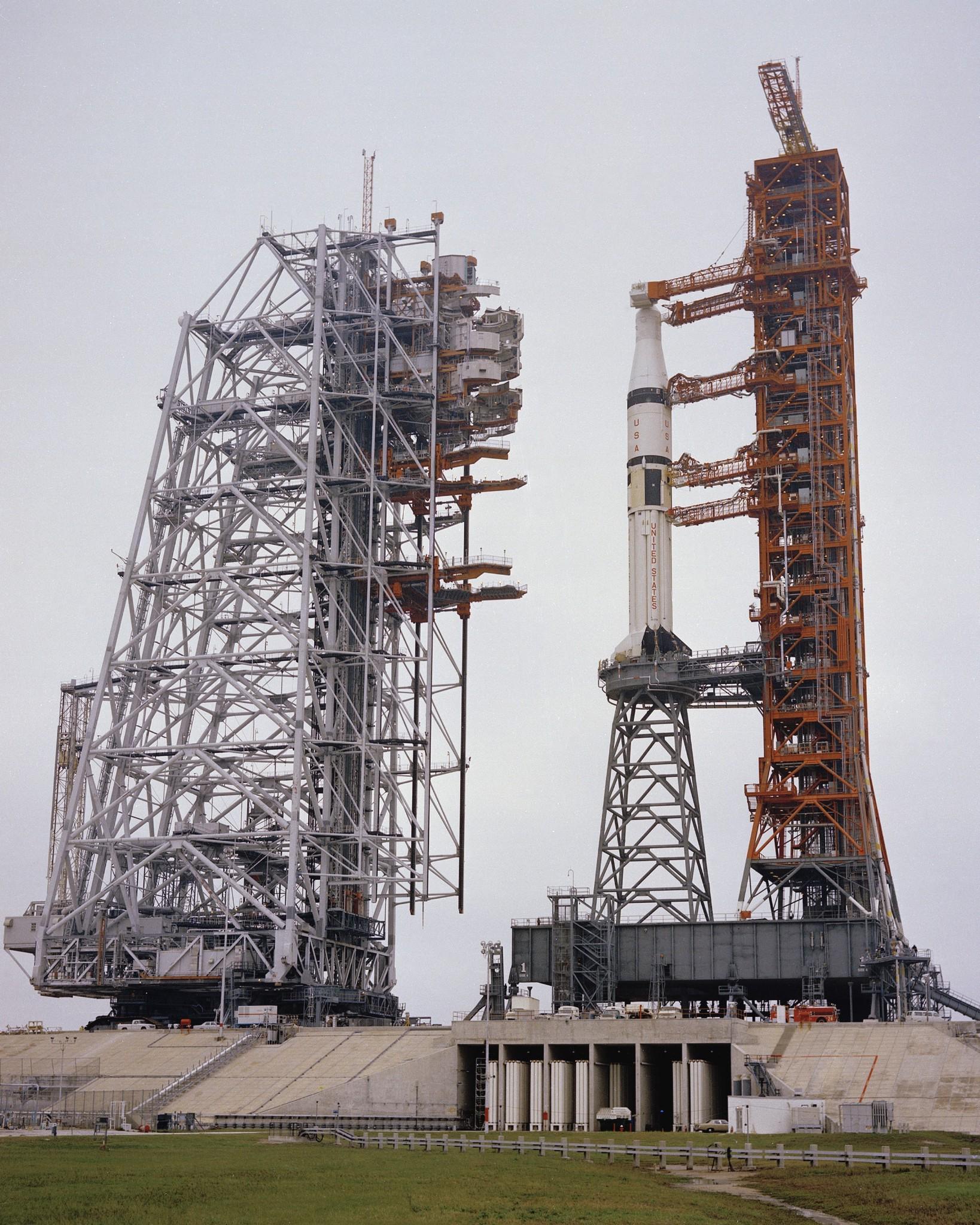
Date: November 12, 1962
"The third Saturn C1 configuration fully mated on its launch pedestal at Cape Canaveral ready for countdown."
NASA ID: SAT-3-26, 62-SA3-7, SAT-3-24
Harry S. Truman Historical & Museum: 97-714