r/ApolloProgram • u/tybarious • Oct 22 '26
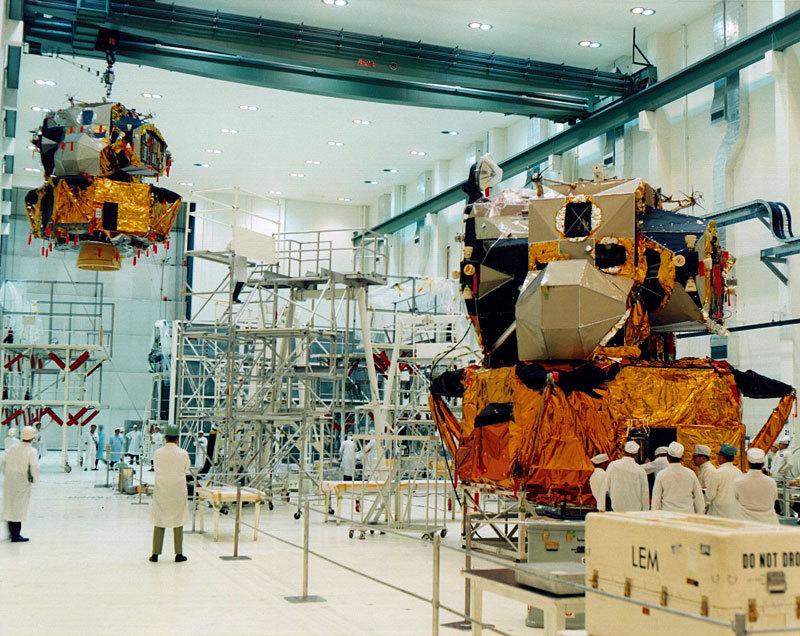
Martin Lifting Body Spacecraft, derived from the X-23 PRIME and X-24, as a resupply/support craft for USAF Manned Orbiting Laboratory missions.
r/ApolloProgram • u/tybarious • Oct 22 '26
Date: 1965 and 1967
r/ApolloProgram • u/Kesselrun_89 • Oct 20 '26
AS13-62-8929 (11-17 April 1970)
Interior view of the Apollo 13 Lunar Module (LM) showing the "mail box," a jury-rigged arrangement which the Apollo 13 astronauts built to use the Command Module (CM) lithium hydroxide canisters to purge carbon dioxide from the LM. Lithium hydroxide is used to scrub CO2 from the spacecraft's atmosphere. Since there was a limited amount of lithium hydroxide in the LM, this arrangement was rigged up to utilize the canisters from the CM. The "mail box" was designed and tested on the ground at the Manned Spacecraft Center (MSC) before it was suggested to the problem-plagued Apollo 13 crew men. Because of the explosion of one of the oxygen tanks in the Service Module (SM), the three crew men had to use the LM as a "lifeboat".
r/ApolloProgram • u/tybarious • Oct 18 '26
Photographed on October 18, 1966
...Entering the hatch is astronaut Virgil I. Grissom, command pilot; behind him is astronaut Roger B. Chaffee, pilot; standing at the left with chamber technicians is astronaut Edward H. White II, senior pilot."
r/ApolloProgram • u/tybarious • Oct 18 '26
Date: October 16, 1970
r/ApolloProgram • u/tybarious • Oct 18 '26
Date: October 17, 1966
NASA ID: S66-57284, S66-57285, S66-57290
r/ApolloProgram • u/More_Fee_5936 • Oct 18 '26
r/ApolloProgram • u/More_Fee_5936 • Oct 16 '26
r/ApolloProgram • u/More_Fee_5936 • Oct 15 '26
r/ApolloProgram
•
u/tybarious
•
Oct 15 '26
Several things of note:
This graphic shows the planned mission configuration for AS-201 through AS-212. The AS-2XX was the mission nomenclature before AS-204 was changed to Apollo 1. This change was requested by the Astronauts' wives to honor their husbands, who lost their lives in the fire. The plans before the Apollo 1 disaster deserve its own post.
Only AS-204/Apollo 5 launched carrying only the Lunar Module (LM-1). There were plans for a second mission but after the success of the first, it was not needed.
After AS-205/Apollo 7, the rest of the Saturn IBs were placed into storage and refurbished for the Skylab and ASTP missions.
It's interesting AS-212 was scheduled to carry both an Apollo module and a Lunar Module as the Saturn IB did not have enough Delta-V to carry both into orbit. Nor did it have enough to launch a fully fueled Apollo CSM, as all missions carrying it had to be partially loaded.
Missing from this list is SA-213 and SA-214. Both were not completed before funding ran out and what was built (the S-IB stage), was scrapped. SA-212's S-IVB was converted into the backup Skylab space station (aka Skylab B) and its S-IB stage was scrapped.
SA-215 and SA-216 were cancelled before they were started in July 1968.
Date: 1968
NASA ID: 0100803
r/ApolloProgram • u/tybarious • Oct 14 '26
Date: October 14, 1969
NASA ID: 69-H-1901 (aka NASA HQ MR69-6334)
r/ApolloProgram • u/More_Fee_5936 • Oct 14 '26
r/ApolloProgram • u/More_Fee_5936 • Oct 13 '26
r/ApolloProgram • u/tybarious • Oct 13 '26
Date: October 13, 1964
"The space-suited test subject demonstrates entry through the forward hatch of the Lamar Excursion Module (LEM) M-5 Mock-up."
Note: "the laid out components, photos, graphics, schematics, displays, etc. of LEM systems. I assume for VIP/NASA visitations/presentations in conjunction with their attendance at testing, evaluations, meetings, conferences, etc."
r/ApolloProgram • u/tybarious • Oct 13 '26
r/ApolloProgram • u/Kesselrun_89 • Oct 12 '26
Long before becoming the first person to walk on the Moon, Neil Armstrong was a test pilot flying the North American X-15, a rocket-powered research aircraft designed to explore the limits of high-speed flight. Its main purpose was to investigate hypersonic flight, high-altitude aerodynamics and atmospheric reentry, helping advance the knowledge needed for human space exploration.
The X-15 was air-launched from a B-52 at an altitude of around 45,000 feet (13.7 km). Its rocket engine burned for roughly 80–120 seconds, accelerating the aircraft to hypersonic speeds. The remainder of a typical flight was essentially an unpowered glide back to the landing site.
Armstrong flew the X-15 seven times between 1960 and 1962, reaching a maximum speed of Mach 5.74 — approximately 3,989 mph (6,420 km/h).
One of his most remarkable flights took place on April 20, 1962, aboard the X-15-3. During the descent from 207,000 feet, Armstrong inadvertently established a positive angle of attack while pulling out of a dive. This altered the aircraft’s trajectory, causing him to overshoot Edwards Air Force Base. Heading south at Mach 3 and an altitude of 100,000 feet, Armstrong eventually managed to turn back while over the Rose Bowl in Pasadena. He had just enough energy remaining to glide safely onto Rogers Dry Lake at Edwards.
The knowledge gained from the X-15 program contributed to the development of America’s crewed spaceflight programs, including Mercury, Gemini and Apollo.
r/ApolloProgram • u/More_Fee_5936 • Oct 12 '26
r/ApolloProgram • u/tybarious • Oct 12 '26
"CAPE CANAVERAL, Fla. -- The Apollo 7 spacecraft, atop a Saturn IB rocket, lifts off from Complex 34, Cape Kennedy, at 11:03 a.m. EDT. The spacecraft achieved orbit to begin an 11-day mission. The flight is intended to qualify Apollo for a manned flight to the moon."
Date: October 11, 1968
r/ApolloProgram • u/More_Fee_5936 • Oct 11 '26
r/ApolloProgram • u/More_Fee_5936 • Oct 10 '26
r/ApolloProgram • u/Kesselrun_89 • Oct 10 '26
Hello guys,
Any suggestions for a good Apollo-themed movie/documentary to watch, obviously excluding Apollo 13 and First Man?
Thanks!
r/ApolloProgram
•
u/More_Fee_5936
•
Oct 09 '26
r/ApolloProgram • u/Kesselrun_89 • Oct 08 '26
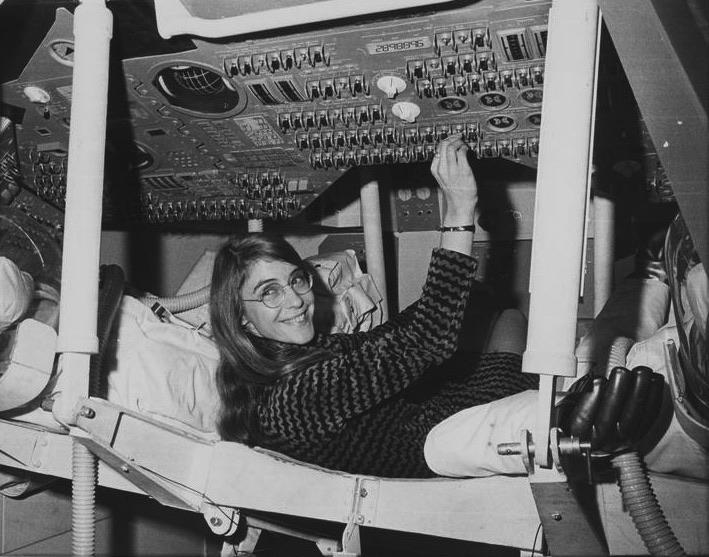
We honor the life and legacy of Margaret Hamilton, the visionary computer scientist and software pioneer who passed away at the age of 90.
As Director of the Software Engineering Division at MIT’s Instrumentation Laboratory, Hamilton led the team that developed the onboard flight software for NASA’s Apollo missions. Their innovative software was designed to prioritize critical tasks during system overloads — a capability that proved crucial during the final minutes of the Apollo 11 lunar landing, when the onboard computer was overwhelmed by unexpected data and triggered the famous 1201 and 1202 alarms.
Thanks to this design, the Apollo Guidance Computer was able to recover from the overload, prioritize critical tasks, and continue providing the guidance needed for the lunar landing.
Hamilton also helped establish software engineering as a recognized discipline and became one of the field’s most influential pioneers, inspiring generations of women and engineers in STEM.
Rest in peace, Margaret Hamilton — a true pioneer of the Space Age.