r/archeologyworld • u/Optimal_Newspaper_39 • 8h ago
prehistoric music recs??

3
Upvotes
r/archeologyworld • u/BubblyViya • 1d ago

r/archeologyworld • u/desertgodfather • 18h ago

r/archeologyworld • u/Responsible_Ideal879 • 3d ago
r/archeologyworld • u/desertgodfather • 3d ago
Savanna Engravings and the Alphabet in the Arabian Peninsula
November 20, 2026
Dr. Eid Al-Yahya (@eidelyehya) presents an Arabic Thamudic alphabetic script engraved beside a lion and a zebra, in the same style and with the same patina of age. If it is proven to date from their time, the story of the origin of the alphabet may need to be revisited.
The Prevailing View: Where Was the Alphabet Born?
Historians relate that the alphabet was born roughly 3,000–4,000 years ago between Egypt and Sinai. There, workers who spoke Semitic languages borrowed symbols from hieroglyphics and made each symbol stand for a single sound.
The Phoenicians then carried this script along with their trade and ships. It passed to Greece and then Rome, and many alphabets branched off from it. This is the account that generations have learned in schools and books. In it, the Arabian Peninsula appears as a recipient of the alphabet, not a source of it.
The Arabian Peninsula When It Was Savanna
The Arabian Peninsula was not always a desert. Some 6,000–7,000 years ago, and perhaps earlier, it went through a wet phase in which grasslands and seasonal lakes covered it. This is known as the Savanna Age.
The Peninsula's engravings include images of animals resembling those we see in the savanna today, such as the lion and the zebra. Dr. Eid Al-Yahya believes they date from that phase. Rock preserves what is carved on it for thousands of years, so these engravings can serve as a witness to the life of people and animals in that era.
What Is Dr. Eid Al-Yahya Presenting?
In his videos, Dr. Eid Al-Yahya presents sites in the Arabian Peninsula with engravings of a lion and a zebra. He points to Arabic Thamudic writing engraved beside them. He observes that the alphabetic script and the two animals share a single engraving style and the same patina, that is, the same degree of weathering on the rock surface. He believes this suggests that whoever engraved the two animals may also have engraved the writing.
The age of the animal engravings is estimated at no less than 6,000–7,000 years, and it may reach 10,000. On this basis, the alphabetic script beside them would be of roughly the same age. This is Dr. Eid's own reading and estimate, not yet a peer-reviewed scientific finding.
Why Does This Matter?
If the alphabetic script beside the two animals is proven to be as old as they are, it would be far older than the prevailing account (3,000–4,000 years). The story of the alphabet's origin would then need to be reconsidered. Did the Arabian Peninsula play a bigger role than we think? Were its ancient inhabitants pioneers of writing?
The value of the question is that it opens a door to research, not that it settles the answer in advance.
What Is Needed to Prove It?
Before any account changes, specialists require specific evidence. The most important are:
Direct scientific dating of the rock or of the deposits covering the engraving, since a similar patina alone does not determine the date.
Superimposition: does one engraving cut across another? The more recent one lies over the older one.
Patina comparison inside the carved grooves of both the animals and the writing.
Proof that the marks are writing: alphabetic writing with phonetic values, not mere symbols or signs, with a line of descent connecting it to the later alphabets.
Documentation and careful surveying, with close-up shots and coordinates, and examination by specialists in archaeology and inscriptions.
None of this diminishes the value of the discovery. It is the path by which a field observation becomes a result accepted by scientific studies.
Conclusion
We were told that the alphabet came from outside the Arabian Peninsula. Yet here are the Peninsula's rocks telling a story that may be different: a lion and a zebra from the Savanna Age, and beside them an Arabic Thamudic letter in the same style and with the same patina.
Today we cannot be certain of its age. But the Arabian Peninsula deserves to have its sites documented and its engravings studied by specialists, before time erases them. If what Dr. Eid Al-Yahya sees is proven, the story may have begun right here!
r/archeologyworld • u/dreamboat92 • 4d ago

r/archeologyworld • u/oladojawahab • 3d ago
What does it mean in dating the camp site?
r/archeologyworld • u/Proof-Performer3226 • 4d ago

at the Uruq al-Julaybah site Prof. Chris Clarkson and Dr. Faisal Al-Jibreen's team uncovered over 5,000 stone tools and hippo fossils near an ancient 125,000-year-old lake. remarkable residue analysis shows they used plant-based poison on spear tips for hunting. this challenges the old view that early humans merely passed through the region proving they actually settled and hunted around these lakes.
image credit - saudi heritage commission / kaust
r/archeologyworld • u/oladojawahab • 3d ago

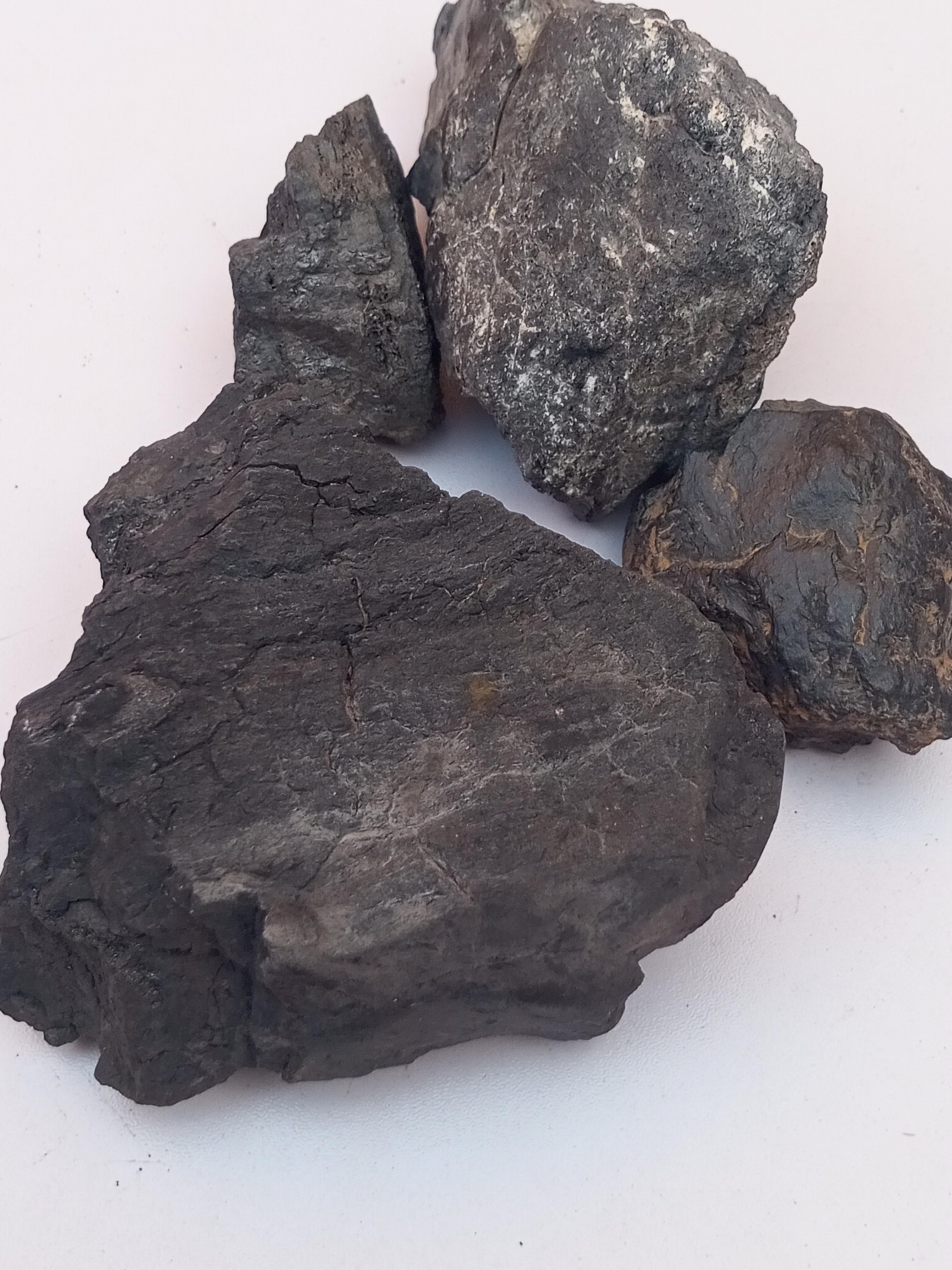
This charcoal was found in an ancient camp, what does it mean?
r/archeologyworld • u/oladojawahab • 3d ago

Ancient ceramics port shard.
What is the historical importance of them.
r/archeologyworld • u/petrastales • 4d ago
r/archeologyworld • u/HollowReef • 4d ago
r/archeologyworld • u/Iron-Will07 • 4d ago
r/archeologyworld • u/Lost_Arodin • 6d ago

Following the death of Arghun Shah - The Mongol Ilkhan, construction was initiated through the persistent efforts of Oljai Khatun—sister of Sultan Muhammad Khudabandeh—but it was never completed.
In the Turkic language, "Dashkasan" means "stonecutter." This site is also sometimes known as the "Dragon Temple."
The dragon motifs, measuring 5 meters in length and 1.5 meters in width, constitute the largest decorative elements in this temple.
Additionally, the temple’s niches feature delicate muqarnas (ornamental vaulting). Islimi (arabesque) patterns in a variety of designs are also present among the temple's decorations. Longitudinal symmetry was a key consideration in the construction of the temple and is evident throughout all its sections.
Links:
https://en.wikipedia.org/wiki/Dashkasan
https://fa.wikipedia.org/wiki/%D9%85%D8%B9%D8%A8%D8%AF_%D8%AF%D8%A7%D8%B4%E2%80%8C%DA%A9%D8%B3%D9%86
r/archeologyworld • u/MystUna • 6d ago
r/archeologyworld • u/More_Juice4735 • 7d ago
Hey everyone,
After taking a long break from making videos, I spent the past period filming and editing an on-site investigation in Iraq al-Amir (Wadi Al-Seer, west of Amman) about one of Jordan’s most fascinating and historically misrepresented monuments: Qasr al-Abd.
What pushed me to work on this episode is the amount of confusion and competing narratives surrounding the site—ranging from local folklore (the story of a servant who built the palace to marry the ruler's daughter) to politically driven narratives that rely on the writings of Flavius Josephus to frame the monument as a Hasmonean shrine or mausoleum proving ancient Jewish sovereignty in Jordan.
In the video, I went back to the historical sources and the physical evidence on the ground to break down:
Bullet The Ammonite Caves & Aramaic Inscription: How the 11 caves overlooking the palace and the carved Aramaic inscription of the name "Tobiah" (the language of administration and diplomacy across the Fertile Crescent) prove that the Tobiads were a powerful local Ammonite aristocratic family governing Amman during the Ptolemaic era.
Bullet The Engineering & Architectural Evidence: Why the presence of 16 carved lions, 8 eagles, and an advanced water-cooling system (the lioness fountain) completely contradicts the "mausoleum" or "religious temple" narrative, especially during an era when Jewish religious architecture strictly forbade graven images of living creatures.
Bullet The Story of Dr. Paul Lapp: How the American archaeologist who excavated Qasr al-Abd in the 1960s uncovered the site's true architectural layers and challenged the Biblical Archaeology school before his mysterious death in Cyprus in 1970, followed by the assassination of archaeologist Albert Glock in 1992.
I’d really appreciate your thoughts and feedback on the episode and the storytelling approach.https://youtu.be/3lD-iiQGsF8?si=riDmBV7XRVzfhIwe
r/archeologyworld • u/Secure_Web6807 • 8d ago

r/archeologyworld • u/Big-Definition1830 • 8d ago
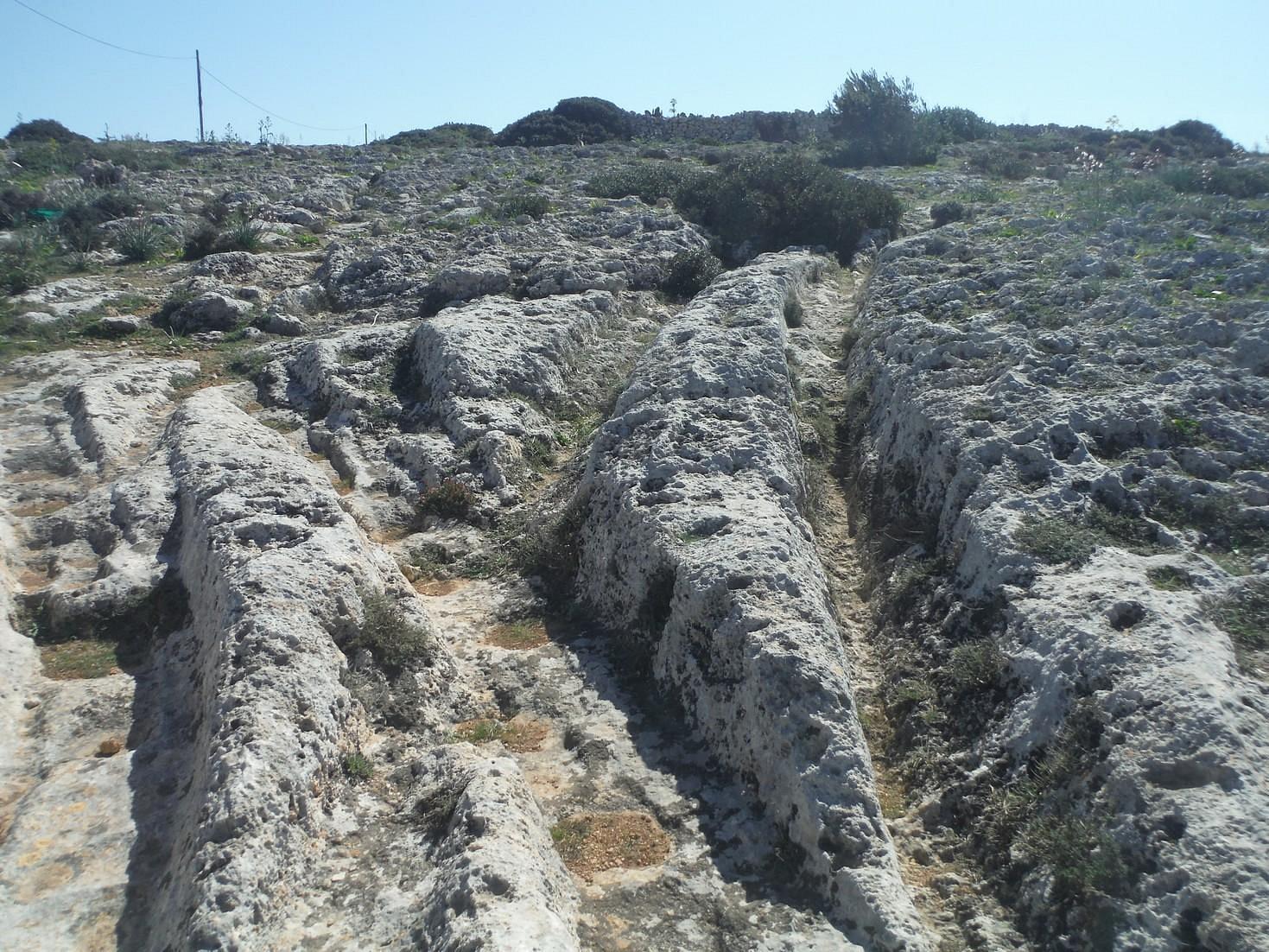
Some of Malta's mysterious limestone tracks end at cliffs or continue beneath the Mediterranean Sea. For decades, these features have been used to argue for extremely ancient origins, including theories involving a forgotten prehistoric civilization.
But a new survey of 2,628 tracks across Malta and Gozo presents a much more complicated picture.
The researcher, Joel Grima, initially favored an earlier Bronze Age interpretation. After examining the wider archaeological relationships, however, he concluded that the evidence points predominantly toward a Classical-period transport network.
I made a video going through how the cliff-truncated and underwater ruts fit that picture, and what the study can’t tell us. Curious how others read the dating evidence.
Malta's Cart Ruts: Do They Rewrite History? https://youtu.be/INqq6S-Md_8
r/archeologyworld • u/tommyno5 • 9d ago

Visited yesterday, love it ❤️
r/archeologyworld • u/ha1lyeah • 9d ago
Researchers have uncovered evidence of human activity dating back approximately 125,000 years at Uruq Al-Julaybah, near an ancient lake in what is now the Empty Quarter (Rub' al Khali), one of the driest deserts on Earth.
These findings challenge the perception of the Arabian Peninsula as merely a passageway for early human migrations. Instead, they suggest that ancient Arabia provided environments where human populations could repeatedly settle, survive, and develop sophisticated technologies.
It's interesting to imagine that one of the world's harshest deserts was once a thriving landscape filled with lakes, hippos, and early human communities.
r/archeologyworld • u/Ill_Policy1891 • 8d ago

Can anyone help identify and date this amphora? Ancient original or modern replica?
Message / Post (Treść):
Hello everyone,
Could you please help me identify and date this terracotta amphora? I would like to know if it is an authentic ancient piece or a modern decorative replica.
I have attached photos showing the overall shape, a close-up of the rim/neck, and two close-ups of the pointed base. Any information regarding its material, surface texture, craftsmanship, or possible origin would be greatly appreciated.
Thank you in advance for your help!
r/archeologyworld • u/kaliyasambha • 9d ago
A popular claim says skeletons at Mohenjo-daro were as radioactive as Hiroshima victims. I tried to follow the number back to its source.
- By around 2000, it appears in American books about lost civilisations, citing Soviet writer Alexander Gorbovsky.
- Gorbovsky's 1966 book "Riddles of Ancient History" (Moscow) says a skeleton found in India had radioactivity 50 times higher than normal. He doesn't say Mohenjo-daro, just "India".
- Researchers who traced it further (including Jason Colavito) link it to early-1960s papers on natural radioactivity in ancient bone. A British study found an ancient Egyptian bone was about the same as modern people. A Soviet paper reported roughly 50% above modern levels for an unnamed bone about 4,000 years old.
So: 50% → 50 times. Unnamed bone → Indian skeleton → Mohenjo-daro.
And there's a physics problem. The worst fallout isotopes, like caesium-137, have a half-life of about 30 years. After 4,000 years there'd be essentially nothing left to measure.
No measurement of a Mohenjo-daro skeleton has ever been published that I can find. If anyone knows of one, I'd genuinely like to see it.
