r/archeologyworld • u/lappaside • 9h ago
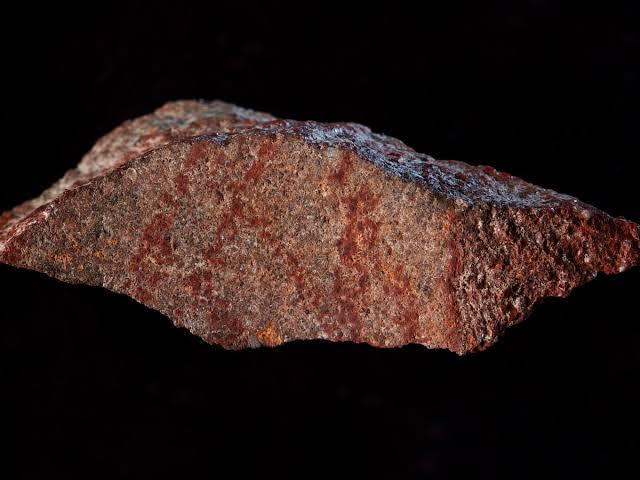
One of the oldest human drawings…
24
Upvotes
r/archeologyworld • u/DapperRecognition732 • 5h ago

r/archeologyworld • u/swarrenlawrence • 1d ago

AAAS: "Europe’s earliest farmers offered milk to their dead," by Andrew Curry.
"Pitted ceramic bowls suggest dairy, not booze, was the preferred libation 5300 yrs ago"
The practice of “pouring one out” for departed loved ones is an old tradition, stretching back to ancient Egyptians, Romans, + Greeks, among others. Some of the earliest farmers in Europe similarly offered drinks to their dead, setting out beakers + bowls in monumental communal tombs.
"But the liquids decomposed long ago, leaving behind nothing more than corroded clay." Research published recently in Antiquity shows the dead were probably given something dairy-based for their final voyage.
"Beginning around 3300 B.C.E., prehistoric farmers in Denmark stacked slabs of rock to form tombs, burying their dead in + around the tunnel-like constructions for almost 1000 yrs." Near the interred, archaeologists have also found the broken remnants of pots, some of which are pitted + corroded on the inside.
"Based on ethnographic research on ceramic vessels used for beer consumption in Africa + elsewhere, researchers guessed these early farmers were toasting their deceased with alcoholic brews—but they couldn’t be sure." So Museum West Zealand archaeologist Lone Claudi-Hansen asked a potter to make replicas of the Stone Age ceramic vessels + set them up in her garden shed.
She "filled the open-mouthed pots with beer, mead, vinegar, raw milk, whey left over from cheesemaking, + a fermented dairy drink called kefir + let them sit for 10 weeks, through most of a chilly Danish fall." The results—with the brief exception of a nice white cheese that developed in the pot full of kefir—were not pretty.
"End of the experiment, only the jars containing dairy products showed traces of pitting + corrosion, likely caused by acids produced when the milk fermented + spoiled."
"Claudi-Hansen + co-author Adam Cordes, an archaeologist at the National Museum of Denmark, also examined 330 pots from prehistoric tombs across Denmark + nearby settlements occupied at the same time." Fewer than 1 in 10 vessels showed signs of corrosion. Corroded vessels were almost exclusively found in tombs.
As a major consumer of dairy in both my cereal + in coffee, I salute our ancestors.
r/archeologyworld • u/Key-Addition6815 • 4d ago
r/archeologyworld • u/AdagioUmbro • 3d ago

r/archeologyworld • u/BubblyViya • 5d ago

r/archeologyworld • u/desertgodfather • 5d ago

r/archeologyworld • u/Responsible_Ideal879 • 7d ago
r/archeologyworld • u/desertgodfather • 7d ago
Savanna Engravings and the Alphabet in the Arabian Peninsula
November 20, 2026
Dr. Eid Al-Yahya (@eidelyehya) presents an Arabic Thamudic alphabetic script engraved beside a lion and a zebra, in the same style and with the same patina of age. If it is proven to date from their time, the story of the origin of the alphabet may need to be revisited.
The Prevailing View: Where Was the Alphabet Born?
Historians relate that the alphabet was born roughly 3,000–4,000 years ago between Egypt and Sinai. There, workers who spoke Semitic languages borrowed symbols from hieroglyphics and made each symbol stand for a single sound.
The Phoenicians then carried this script along with their trade and ships. It passed to Greece and then Rome, and many alphabets branched off from it. This is the account that generations have learned in schools and books. In it, the Arabian Peninsula appears as a recipient of the alphabet, not a source of it.
The Arabian Peninsula When It Was Savanna
The Arabian Peninsula was not always a desert. Some 6,000–7,000 years ago, and perhaps earlier, it went through a wet phase in which grasslands and seasonal lakes covered it. This is known as the Savanna Age.
The Peninsula's engravings include images of animals resembling those we see in the savanna today, such as the lion and the zebra. Dr. Eid Al-Yahya believes they date from that phase. Rock preserves what is carved on it for thousands of years, so these engravings can serve as a witness to the life of people and animals in that era.
What Is Dr. Eid Al-Yahya Presenting?
In his videos, Dr. Eid Al-Yahya presents sites in the Arabian Peninsula with engravings of a lion and a zebra. He points to Arabic Thamudic writing engraved beside them. He observes that the alphabetic script and the two animals share a single engraving style and the same patina, that is, the same degree of weathering on the rock surface. He believes this suggests that whoever engraved the two animals may also have engraved the writing.
The age of the animal engravings is estimated at no less than 6,000–7,000 years, and it may reach 10,000. On this basis, the alphabetic script beside them would be of roughly the same age. This is Dr. Eid's own reading and estimate, not yet a peer-reviewed scientific finding.
Why Does This Matter?
If the alphabetic script beside the two animals is proven to be as old as they are, it would be far older than the prevailing account (3,000–4,000 years). The story of the alphabet's origin would then need to be reconsidered. Did the Arabian Peninsula play a bigger role than we think? Were its ancient inhabitants pioneers of writing?
The value of the question is that it opens a door to research, not that it settles the answer in advance.
What Is Needed to Prove It?
Before any account changes, specialists require specific evidence. The most important are:
Direct scientific dating of the rock or of the deposits covering the engraving, since a similar patina alone does not determine the date.
Superimposition: does one engraving cut across another? The more recent one lies over the older one.
Patina comparison inside the carved grooves of both the animals and the writing.
Proof that the marks are writing: alphabetic writing with phonetic values, not mere symbols or signs, with a line of descent connecting it to the later alphabets.
Documentation and careful surveying, with close-up shots and coordinates, and examination by specialists in archaeology and inscriptions.
None of this diminishes the value of the discovery. It is the path by which a field observation becomes a result accepted by scientific studies.
Conclusion
We were told that the alphabet came from outside the Arabian Peninsula. Yet here are the Peninsula's rocks telling a story that may be different: a lion and a zebra from the Savanna Age, and beside them an Arabic Thamudic letter in the same style and with the same patina.
Today we cannot be certain of its age. But the Arabian Peninsula deserves to have its sites documented and its engravings studied by specialists, before time erases them. If what Dr. Eid Al-Yahya sees is proven, the story may have begun right here!
r/archeologyworld • u/dreamboat92 • 8d ago

r/archeologyworld • u/oladojawahab • 8d ago
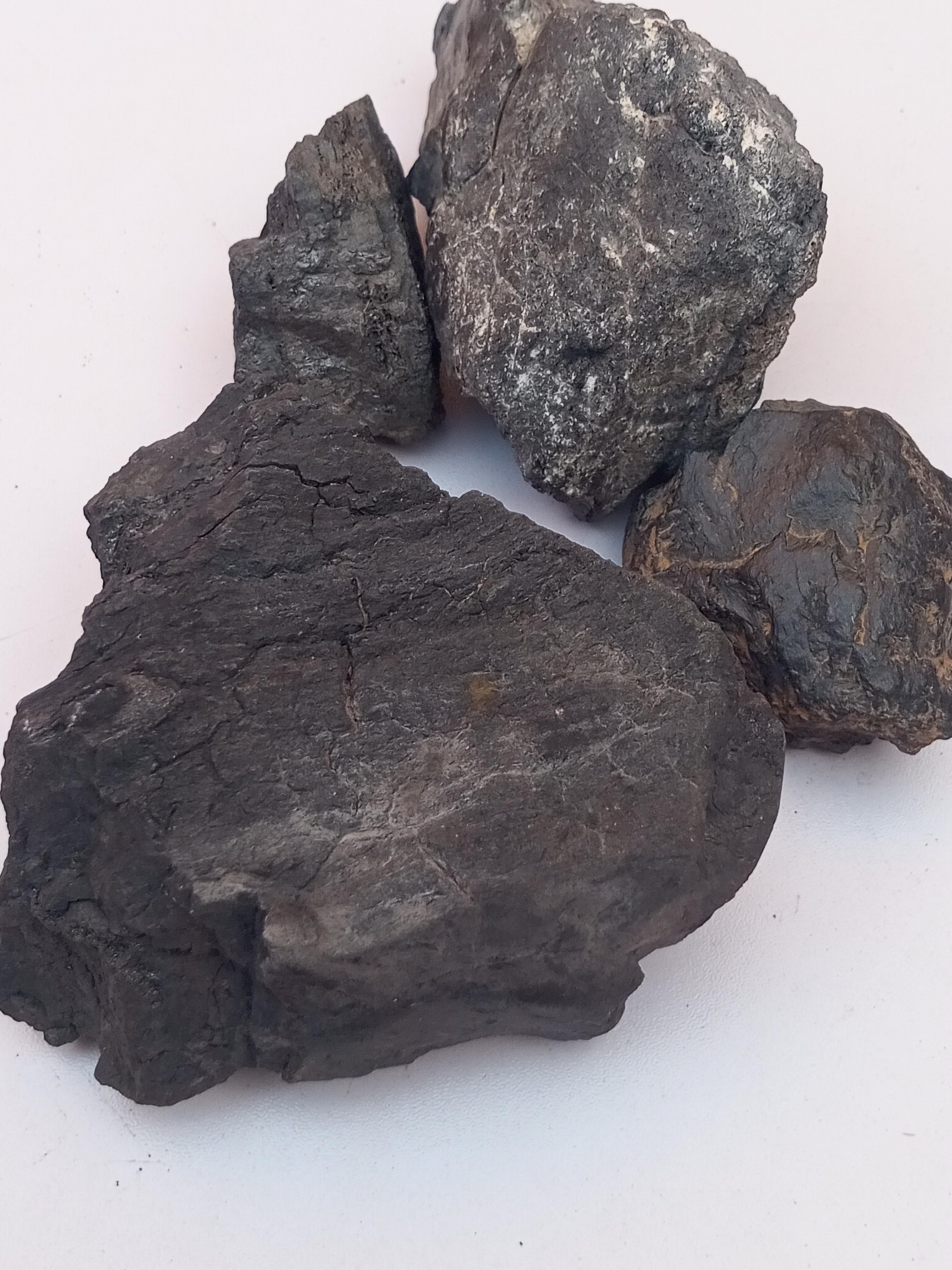
What does it mean in dating the camp site?
r/archeologyworld • u/Proof-Performer3226 • 9d ago

at the Uruq al-Julaybah site Prof. Chris Clarkson and Dr. Faisal Al-Jibreen's team uncovered over 5,000 stone tools and hippo fossils near an ancient 125,000-year-old lake. remarkable residue analysis shows they used plant-based poison on spear tips for hunting. this challenges the old view that early humans merely passed through the region proving they actually settled and hunted around these lakes.
image credit - saudi heritage commission / kaust
r/archeologyworld • u/oladojawahab • 8d ago

This charcoal was found in an ancient camp, what does it mean?
r/archeologyworld • u/oladojawahab • 8d ago

Ancient ceramics port shard.
What is the historical importance of them.
r/archeologyworld • u/petrastales • 9d ago
r/archeologyworld • u/HollowReef • 9d ago
r/archeologyworld • u/Iron-Will07 • 9d ago
r/archeologyworld • u/Lost_Arodin • 10d ago

Following the death of Arghun Shah - The Mongol Ilkhan, construction was initiated through the persistent efforts of Oljai Khatun—sister of Sultan Muhammad Khudabandeh—but it was never completed.
In the Turkic language, "Dashkasan" means "stonecutter." This site is also sometimes known as the "Dragon Temple."
The dragon motifs, measuring 5 meters in length and 1.5 meters in width, constitute the largest decorative elements in this temple.
Additionally, the temple’s niches feature delicate muqarnas (ornamental vaulting). Islimi (arabesque) patterns in a variety of designs are also present among the temple's decorations. Longitudinal symmetry was a key consideration in the construction of the temple and is evident throughout all its sections.
Links:
https://en.wikipedia.org/wiki/Dashkasan
https://fa.wikipedia.org/wiki/%D9%85%D8%B9%D8%A8%D8%AF_%D8%AF%D8%A7%D8%B4%E2%80%8C%DA%A9%D8%B3%D9%86
r/archeologyworld • u/MystUna • 11d ago
r/archeologyworld • u/kheret • 11d ago
